Combat Profile
Khalsa Transformation
grants allied warriors unshakeable conviction and martial prowess, transforming them into soldier-saints who fear neither death nor tyranny
Divine Wisdom
radiates spiritual guidance and righteous authority, elevating the consciousness and courage of all who follow the Guru's teachings
Tenth Guru | Sikh
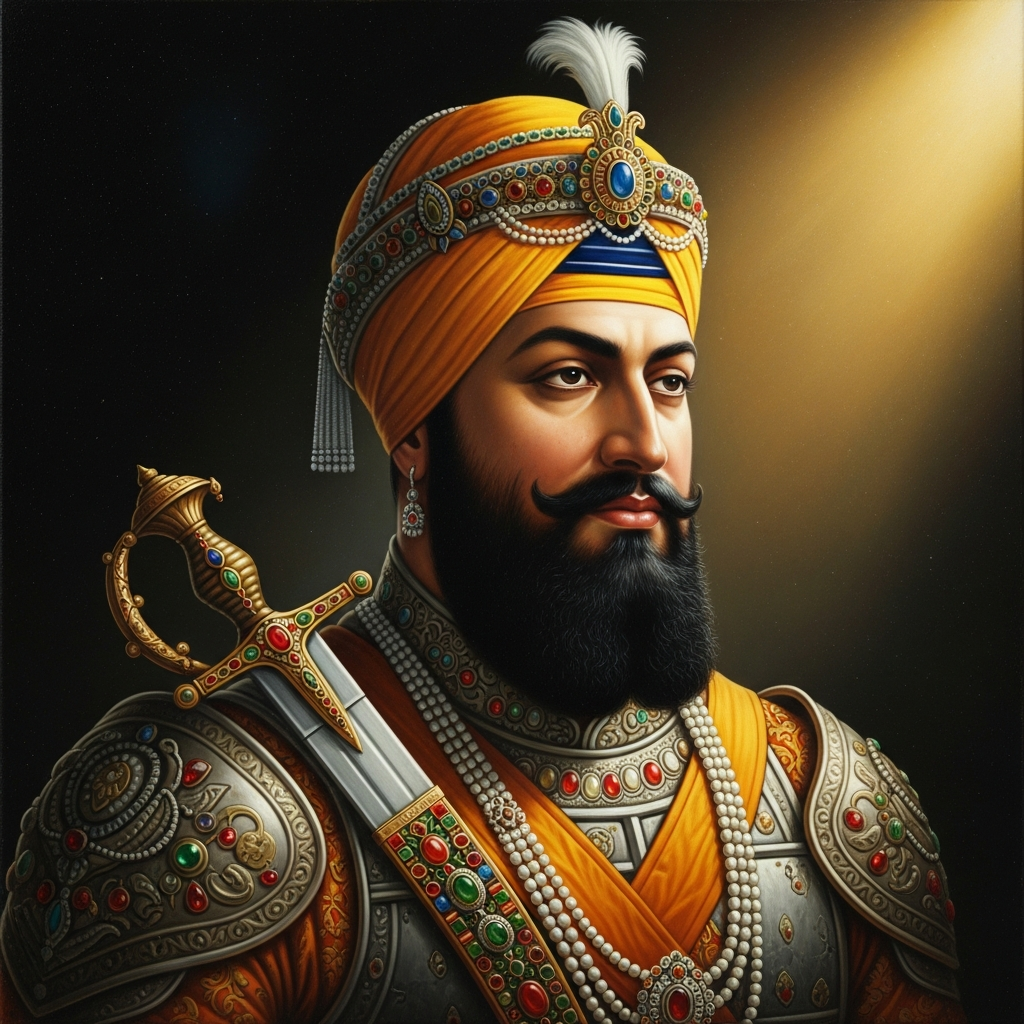
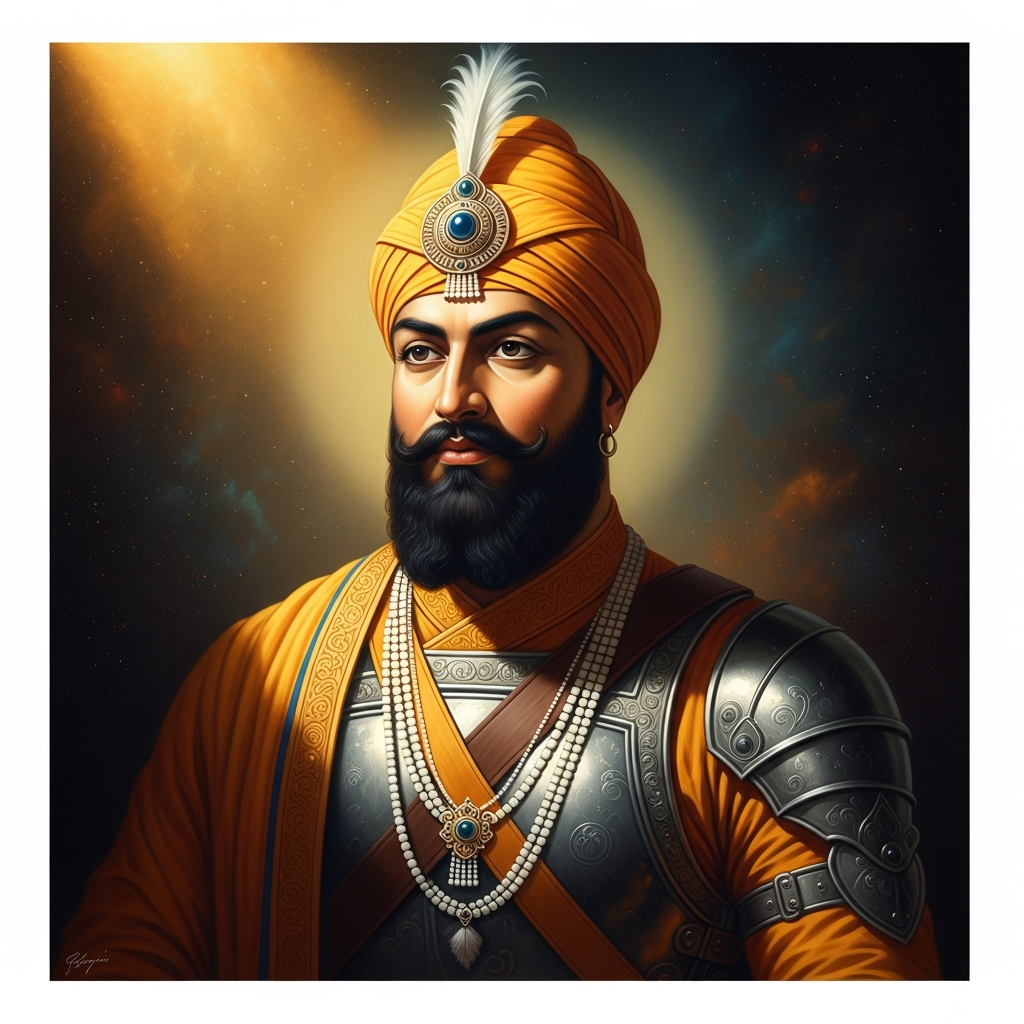
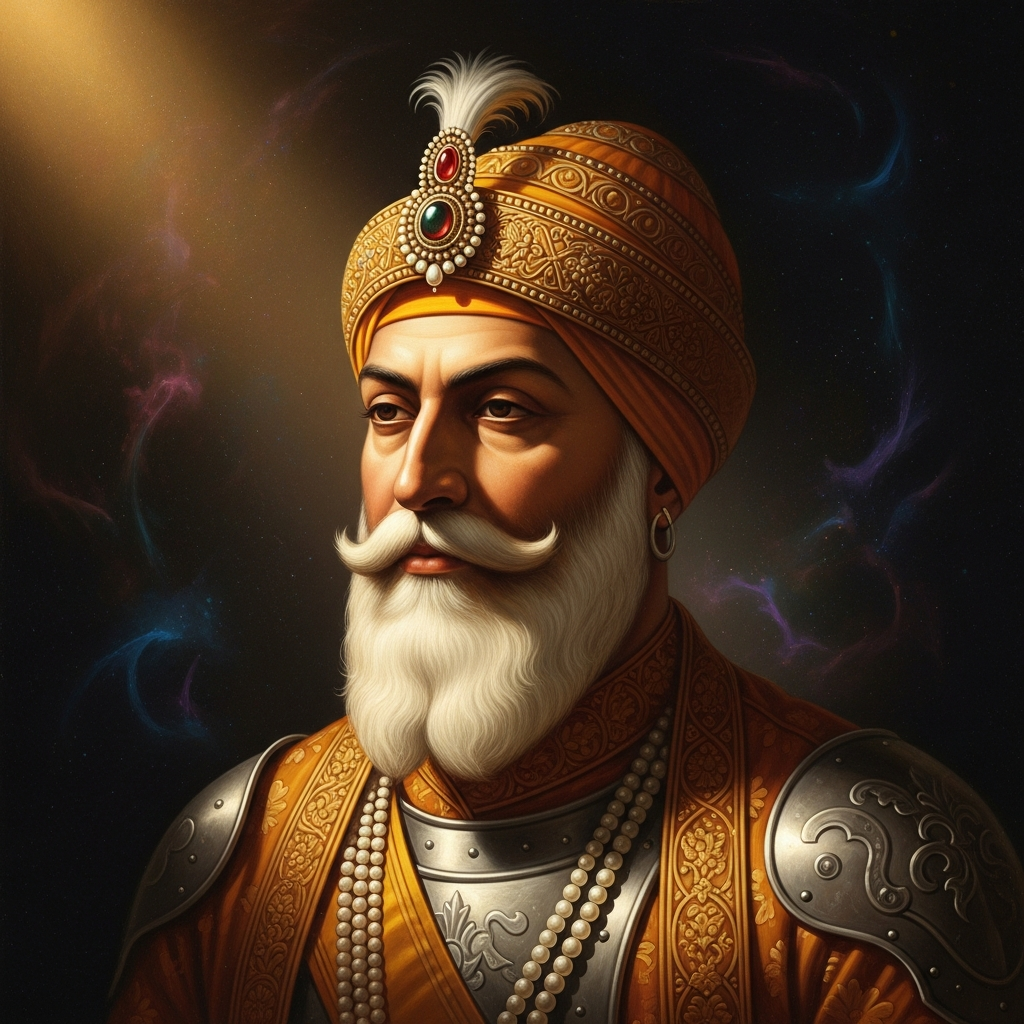
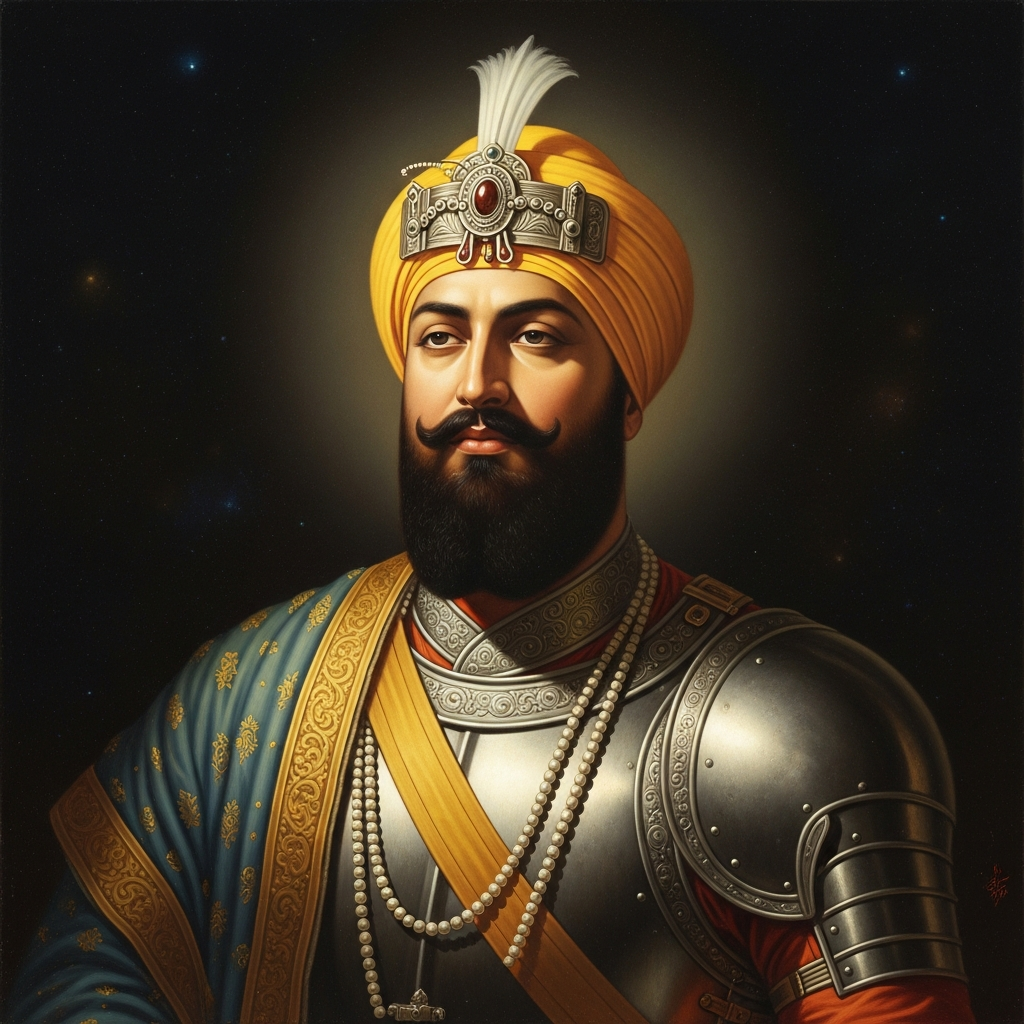
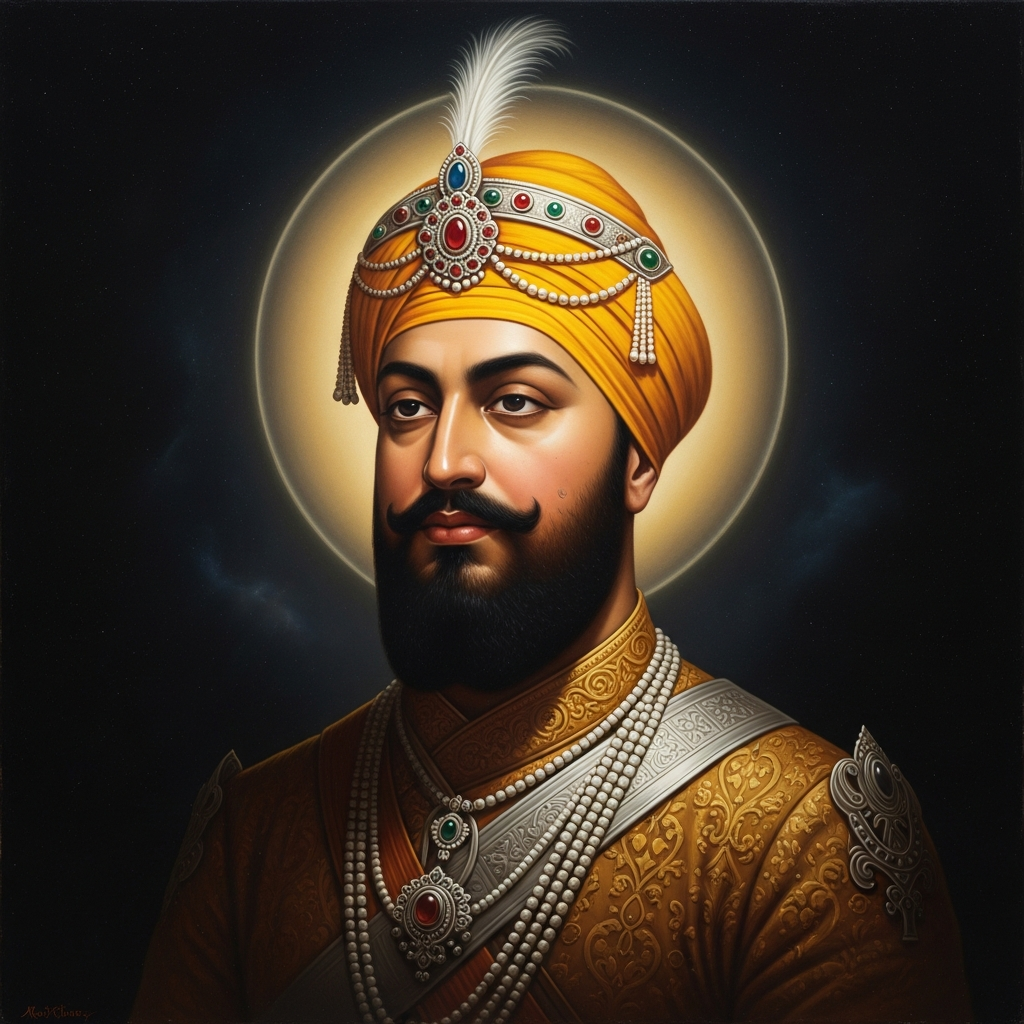
The tenth and final human Guru, Gobind Singh was born in 1666 and became Guru at age nine following his father Tegh Bahadur’s martyrdom. A poet, warrior, and theologian, he founded the Khalsa at Anandpur on Vaisakhi 1699 by asking for volunteers willing to give their lives; the five who stepped forward — the Panj Pyare, from five different castes — became the first initiated Sikhs. He gave every Khalsa man the surname Singh and every Khalsa woman Kaur, erasing caste names. He lost all four sons: two in battle, two bricked alive into a wall by the Mughal governor of Sirhind for refusing to convert. Before his death in 1708 from an assassin’s delayed wound, he made the decision that would define Sikhism’s future: no eleventh human Guru. The Guru Granth Sahib — the scripture — and the Guru Panth — the community — would be the eternal Guru forever.
| Element | Light | | Role | Sovereign | | Rarity | Mythic | | Threat | Major | | LCK | 88 | | ARC | 95 | | Special | Khalsa Transformation — grants allied warriors unshakeable conviction and martial prowess, transforming them into soldier-saints who fear neither death nor tyranny | | Passive | Divine Wisdom — radiates spiritual guidance and righteous authority, elevating the consciousness and courage of all who follow the Guru’s teachings | | Epithets | “Tenth Guru,” “Sipahi Sant” (Soldier-Saint), “Kalghidhar” (Wearer of the Crest), “Dasmesh Pita” (Father of the Tenth) | | Sacred Animals | Blue horse (neela), hawk (his personal emblem on his turban crest) | | Sacred Objects | Khanda (double-edged sword used for amrit), Dasam Granth (his compositions), Five Ks he instituted | | Sacred Colors | Saffron (sacrifice), Blue (Nihang warrior color he popularized), Gold | | Sacred Number | 10 (Tenth Guru), 1699 (Khalsa founding year), 5 (Panj Pyare), 4 (four sons — chaar sahibzaade — all martyred) | | Consort(s) | Mata Jito Ji, Mata Sundari Ji, Mata Sahib Devan Ji (three wives) | | Sacred Sites | Anandpur Sahib (Khalsa founding; one of five Takhts), Patna Sahib (birthplace), Nanded (death site; Takht Sachkhand Sri Hazur Sahib), Hemkund Sahib | | Festivals | Guru Gobind Singh Ji Gurpurab (birthday, December/January), Vaisakhi (Khalsa founding), Hola Mohalla (martial arts festival he founded) | | Iconography | Armored warrior-saint; saffron chola and armor; plumed kalgi turban aigrette; hawk on wrist; two swords; on horseback — the most iconographically elaborate of all the Gurus | | Period | 1666–1708 CE; Tenth Guru 1675–1708 | | Region | Punjab and North India; Anandpur, Nanded, and Patna Sahib are his primary sacred sites |
Parallels: King David (warrior-poet who both fights and composes; father of a dynasty he cannot hold together); Muhammad at Medina (prophet who also commands armies); Moses who dies before entering the Promised Land — Gobind Singh closes the line of Gurus and hands the tradition to the book. See also: [[Guru Tegh Bahadur Sahib Ji](/bestiary/sikh/guru-tegh-bahadur-sahib-ji-the-shield-of-india/)](#guru-tegh-bahadur-sahib-ji----the-shield-of-india), The Panj Pyare (Five Beloved Ones), [Waheguru](#waheguru)
2 min read