The Lady of the Lake and What She Gave
French prose romances, c. 1215–1235 CE; Malory's *Le Morte d'Arthur*, 1485 CE · The lake at the edge of the known world; the cave beneath the water; the roads of Britain; the battlefield at Camlann
Contents
Arthur receives Excalibur not from the stone but from a hand rising out of a lake — and from the Lady who holds it. She asks a price in return, never named at the time. Later she collects: she takes Merlin, she takes Arthur. The lake is the otherworld's interface with this one, and nothing that comes from it comes for free.
- When
- French prose romances, c. 1215–1235 CE; Malory's *Le Morte d'Arthur*, 1485 CE
- Where
- The lake at the edge of the known world; the cave beneath the water; the roads of Britain; the battlefield at Camlann
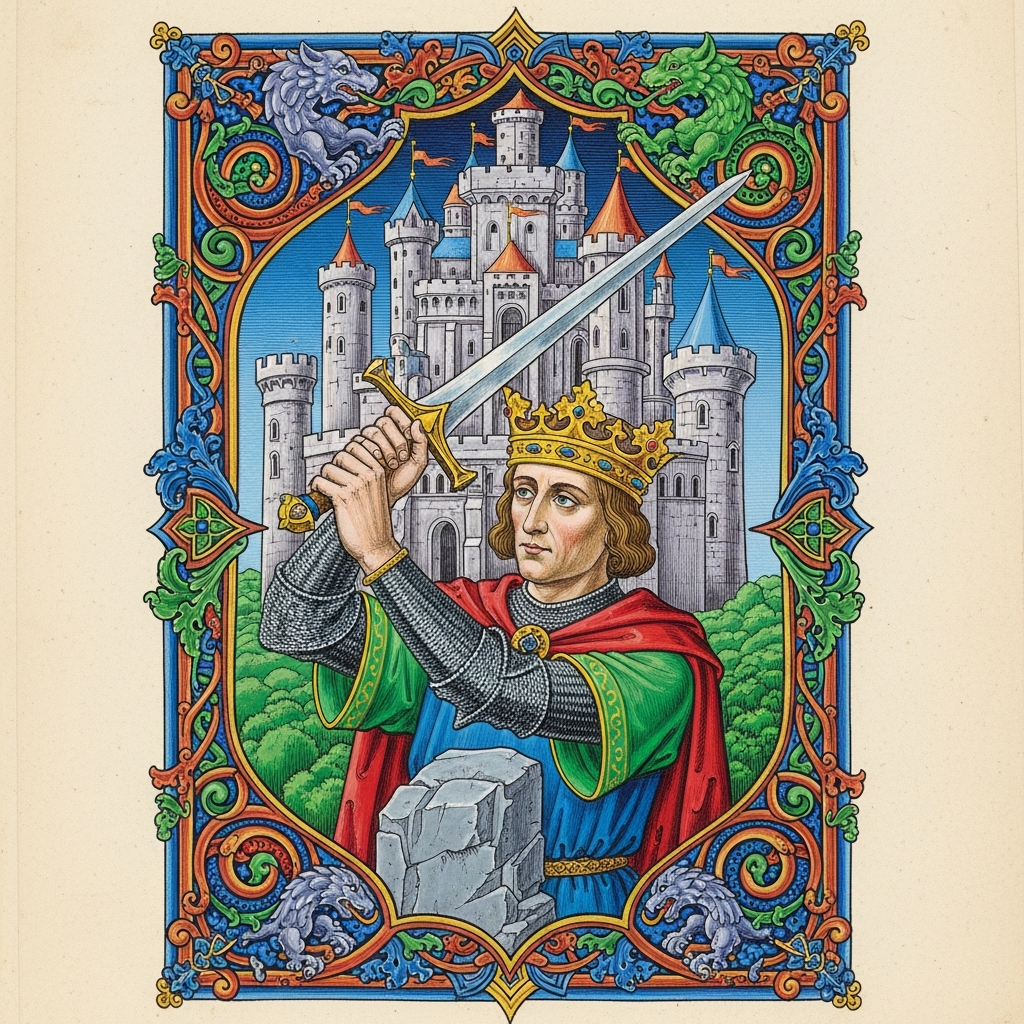
The sword in the stone was never Excalibur.
This is a confusion the tradition eventually sorted out, and Malory is careful about it: Arthur pulls a sword from the stone to prove his kingship, and that sword later breaks. The sword that matters — the sword called Excalibur, the sword whose scabbard prevents the wearer from bleeding to death — comes from somewhere else entirely. It comes from the lake.
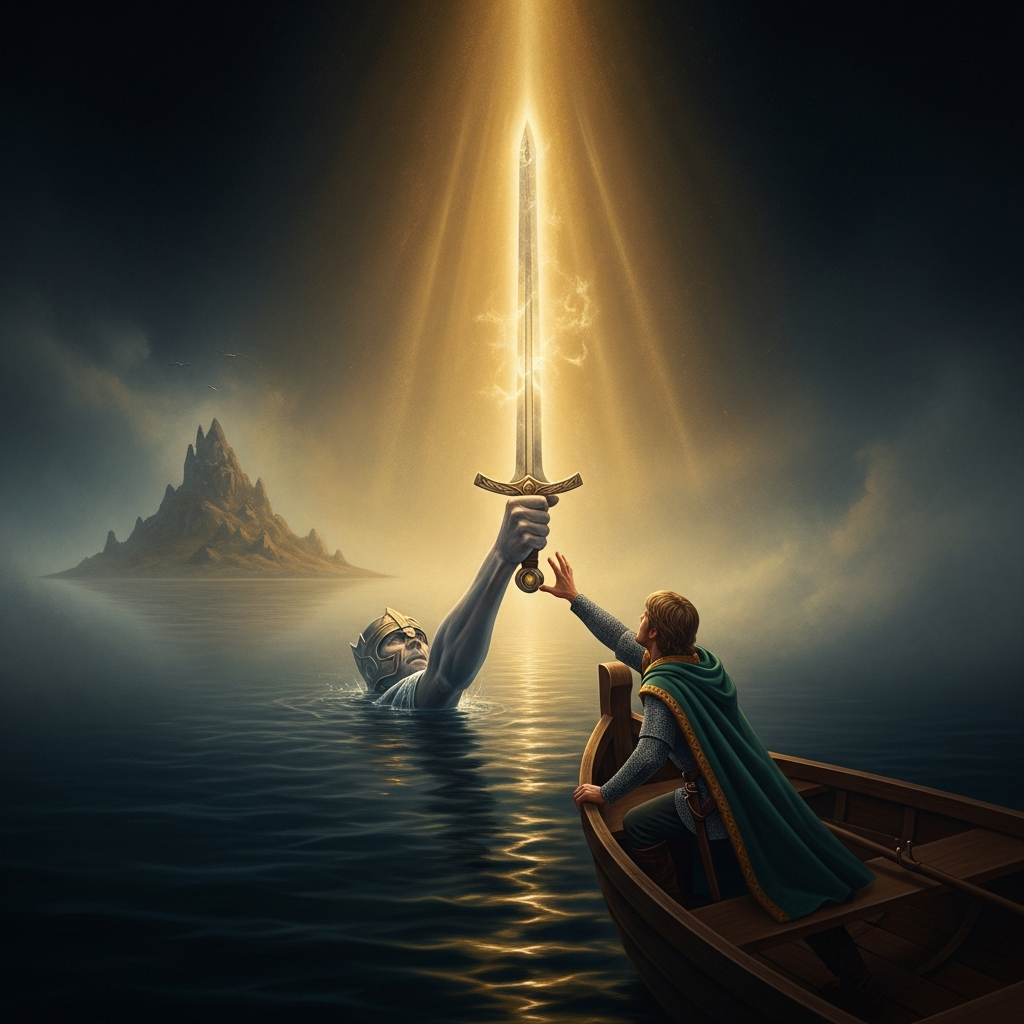
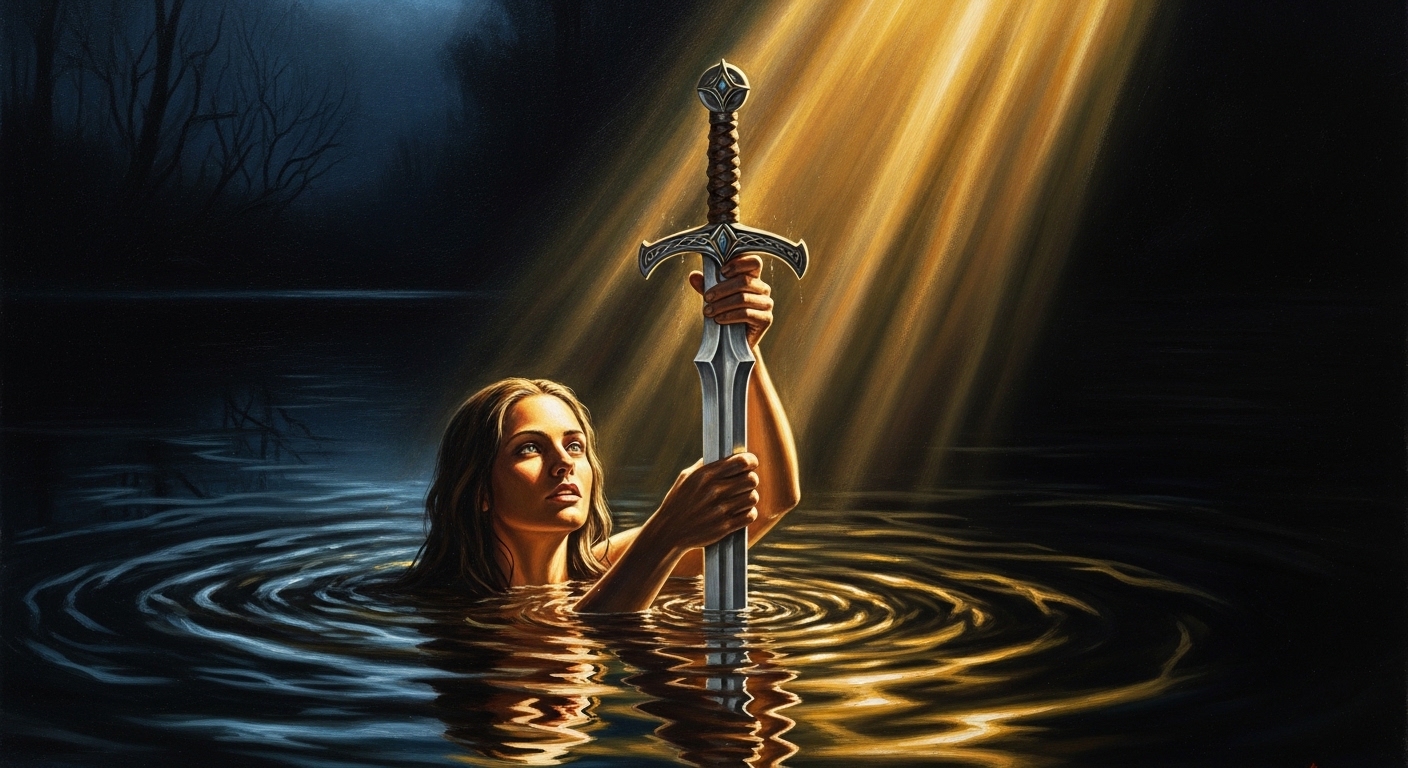
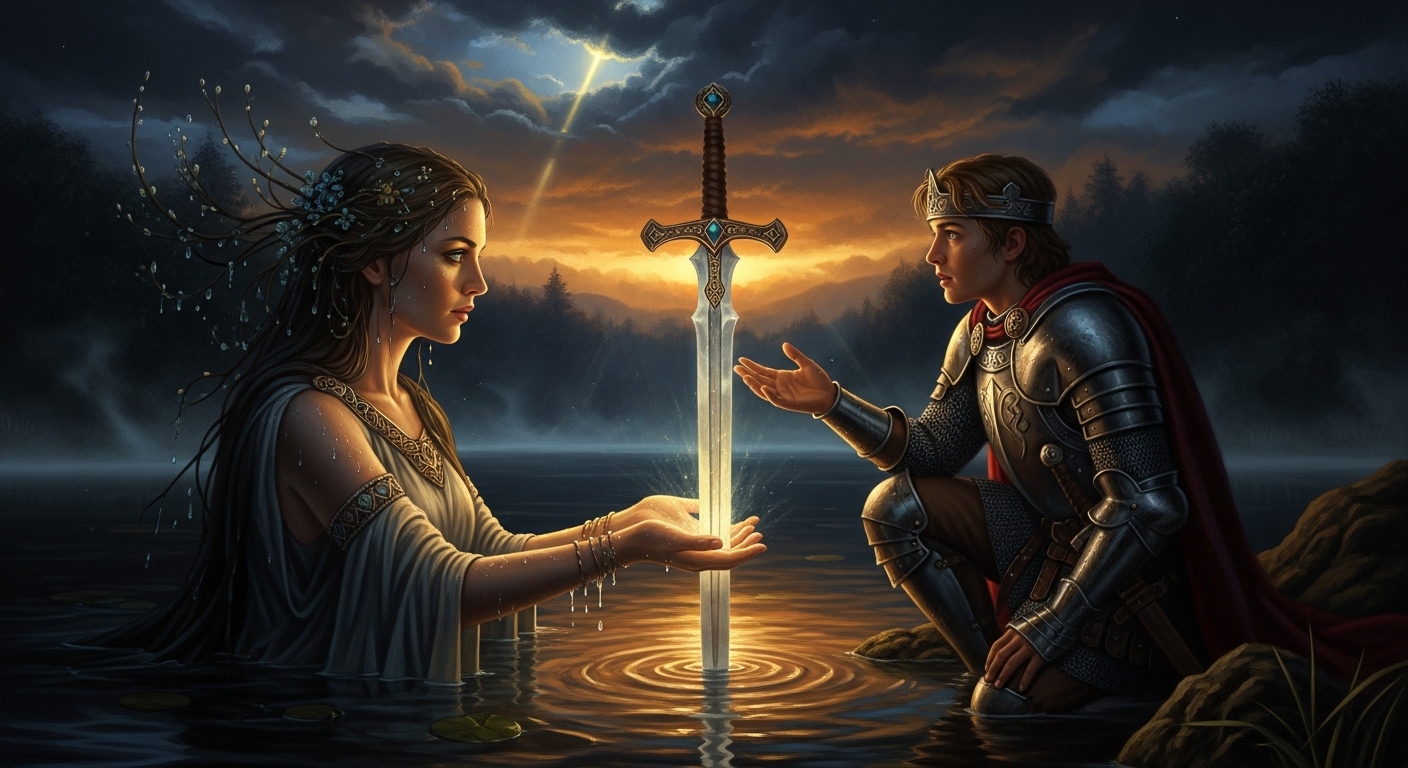
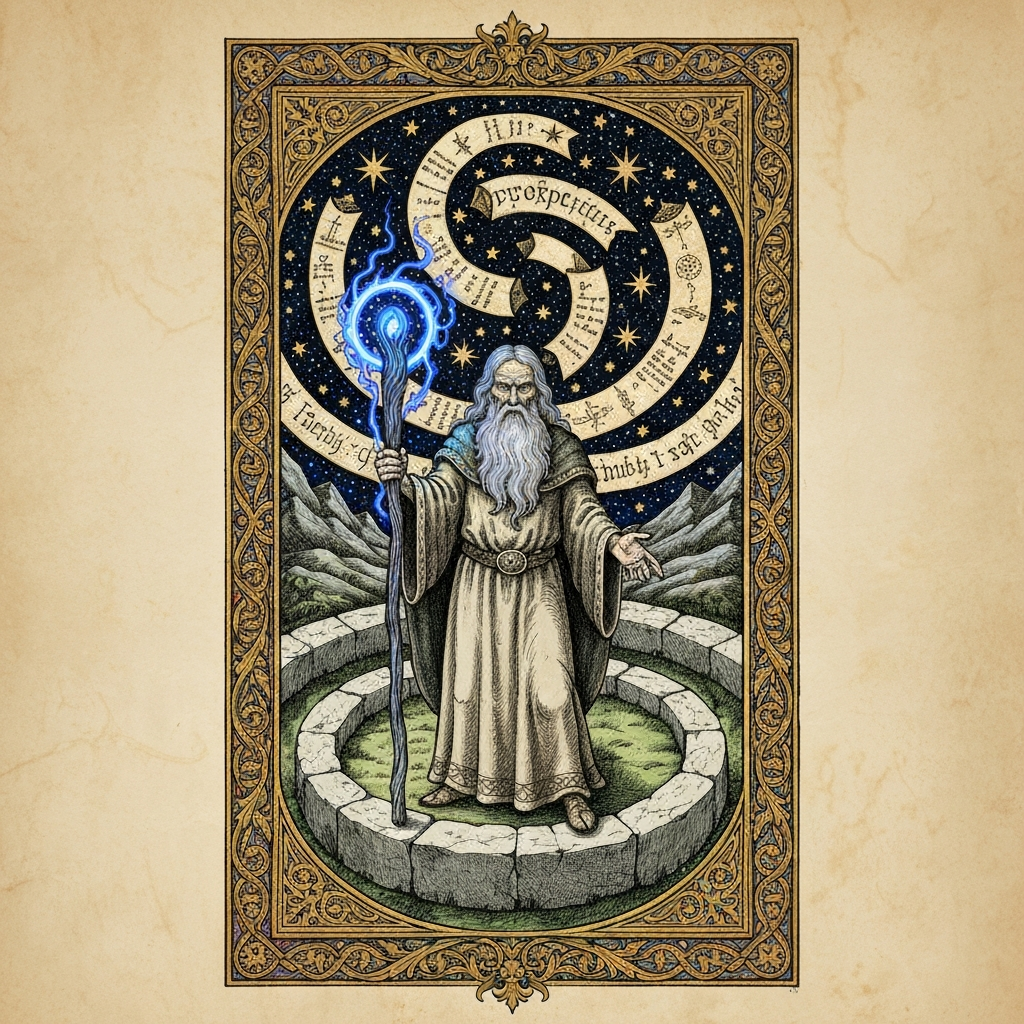
Merlin takes the newly crowned Arthur to a lake at the edge of the wild country, and they stand on the shore, and the water is still, and then an arm rises from the center of the lake.
The arm is clothed in white. The hand at its end holds a sword.
And a woman walks across the water toward them — across the surface, without sinking — and she tells Arthur that the sword is his if he will grant her a boon to be named later, and Arthur, who is young and confident and has not yet learned what it costs to agree to unnamed prices, says yes without hesitation.
He takes the sword. He rows out in the small boat and takes it from the hand. The hand sinks. The woman is gone. He is standing in the boat with Excalibur in both hands, and the blade is catching the light, and the scabbard is the color of dried blood, and Merlin is watching from the shore with an expression Arthur does not yet know how to read.
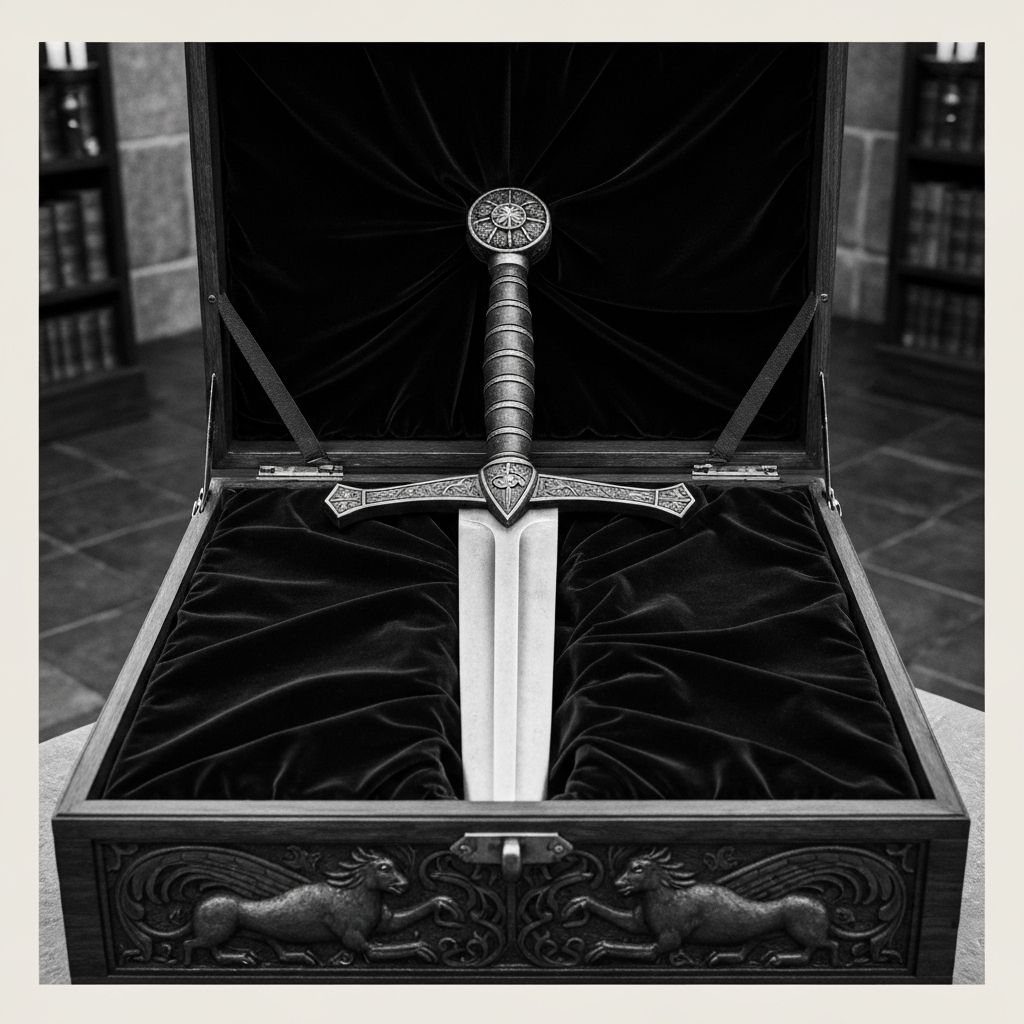
You should value the scabbard above the sword, Merlin says. The sword will wound. The scabbard will keep you from death.
Arthur looks at the sword.
He forgets about the scabbard almost immediately, which is how the tradition works.
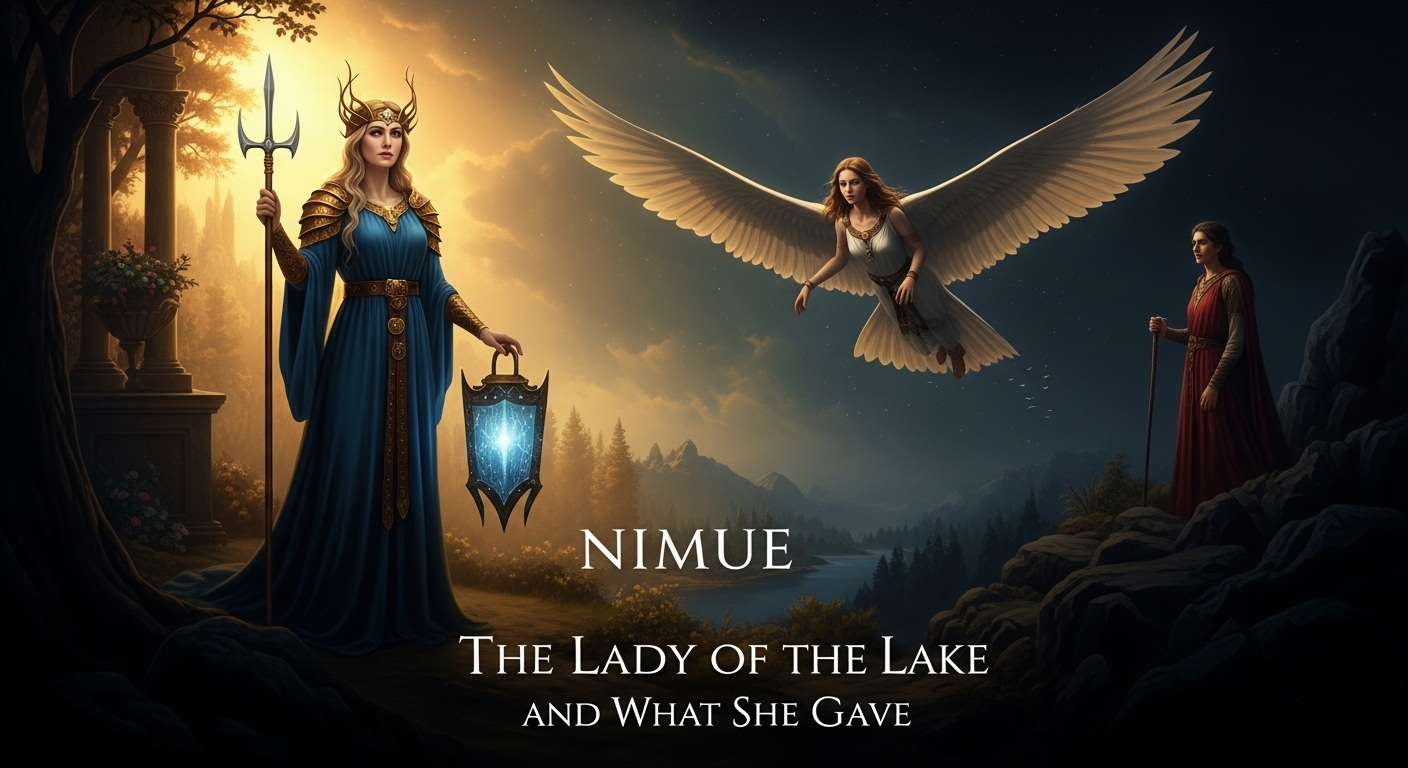
The Lady of the Lake has a name in the Vulgate Cycle — Nimue, or Viviane, the sources disagree — and a domain that is not quite described anywhere but is implied throughout. She lives below the lake, in a country that is both underground and not, both underwater and not, a place where time moves differently and the rules of the surface world do not apply. She is not human. She is not exactly divine. She is something the medieval tradition did not have a stable word for: a power indigenous to the land, pre-Christian, not subject to the Church’s taxonomy of angels and saints and demons.
She is the otherworld’s face at the water.
She appears when she chooses. She gives what she judges should be given and takes back what she judges should be retrieved. She does not ask permission and she does not explain herself. She gave Arthur Excalibur because the tradition requires Arthur to have Excalibur, and she is the figure the tradition chose to be its point of origin — the source of legitimate authority that stands outside of and beneath the human order.
The boon she named at the time she gave the sword: she wanted Merlin.
She came to Arthur’s court and she came specifically to be near Merlin, whose knowledge she wanted, and she was patient about acquiring it. She let him teach her. She let him fall in love with her, or whatever approximation of love a seer has for a person he cannot stop watching. She learned everything he could teach her, and when she had it, she used it. Merlin sealed in the rock or the tree or the tower of air is one of the tradition’s great ironies: the greatest seer in Britain, who could not be surprised, sealed away by his own student using his own arts.
The Lady did not take this maliciously. She took what she had come for.
Her second collection happens at Camlann.
She is there in the barge, or her women are there in the barge — the tradition places either Morgan or Nimue or both at the moment of Arthur’s departure, and the distinction matters less than the fact that the lake’s representative appears. They take Arthur from the battlefield. They take him to the island that the lake has always connected to, the island that is not on any map, the island that is the otherworld’s comfortable accommodation for those it has decided to keep.
This is the second price.
Arthur gave the boon without knowing its content. He got the sword and the scabbard, he got twenty or thirty years of victories, he got the kingdom that defined the Middle Ages’ image of what a kingdom could be. And at the end the barge came, and the women he did not fully understand were waiting in it, and he was carried away from Bedivere on the shore and taken back toward the source of what he had been given.
The sword is returned too, in between — Bedivere’s three attempts at the lake, the arm rising, catching it, drawing it down. Excalibur goes home before Arthur does.
Everything the lake gave, the lake reclaims.
There is nothing sinister in this, though the later tradition sometimes reads it that way.
The logic is consistent. The logic is almost generous. The otherworld lent the human world a sword and a king — lent, not gave — and the loan had terms, and when the terms were fulfilled the items were retrieved. The scabbard was stolen first, by Morgan in some versions, by a traitorous knight in others, and Arthur bled thereafter in ways he would not have bled with it. This too is part of the structure: the protection given by the otherworld is never permanent, never unconditional, always contingent on something that the human world will fail to maintain.
The Lady knew this from the beginning. She always knew. She is the oldest presence in the legend — older than Merlin, older than Arthur, older than the Round Table and the Grail quest and the whole architecture of chivalry built on top of the landscape she inhabits. She was at the lake before the legend began. She will be at the lake after it ends.
When Bedivere finally throws the sword and the arm rises to catch it, there is a moment — a single moment, Malory is precise about it — when the hand holds the sword above the water’s surface, brandishes it three times, and then draws it down.
Brandishes it three times.
Before taking it back. As if to say: this is what this was. This is what passed through the world while it was here. This is what was given and used and is now returned.
Then the water closes.
The lake is still.
Bedivere stands on the bank alone, weeping.
The Lady is below, where she has always been, with everything she came to collect.
Scenes
Echoes Across Traditions
Entities
Sources
- *Suite du Merlin* (Post-Vulgate Cycle), c. 1230–1240 CE
- *Lancelot-Grail* (Vulgate Cycle), c. 1215–1235 CE
- Sir Thomas Malory, *Le Morte d'Arthur*, Books I, IV, XXI, 1485 CE
- Norris J. Lacy, ed., *The Lancelot-Grail Cycle* (Garland, 1993–1996)
- John Darrah, *The Real Camelot: Paganism and the Arthurian Romances* (Thames and Hudson, 1981)
- Miranda Green, *Celtic Goddesses: Warriors, Virgins and Mothers* (British Museum Press, 1995)