Telepinu Vanishes: When the God of Spring Left the World
Cuneiform tablets from Hattusa, c. 1400–1200 BCE; multiple parallel versions exist · The divine realm; the fields and pastures of the Hittite world; a meadow at the edge of the world
Contents
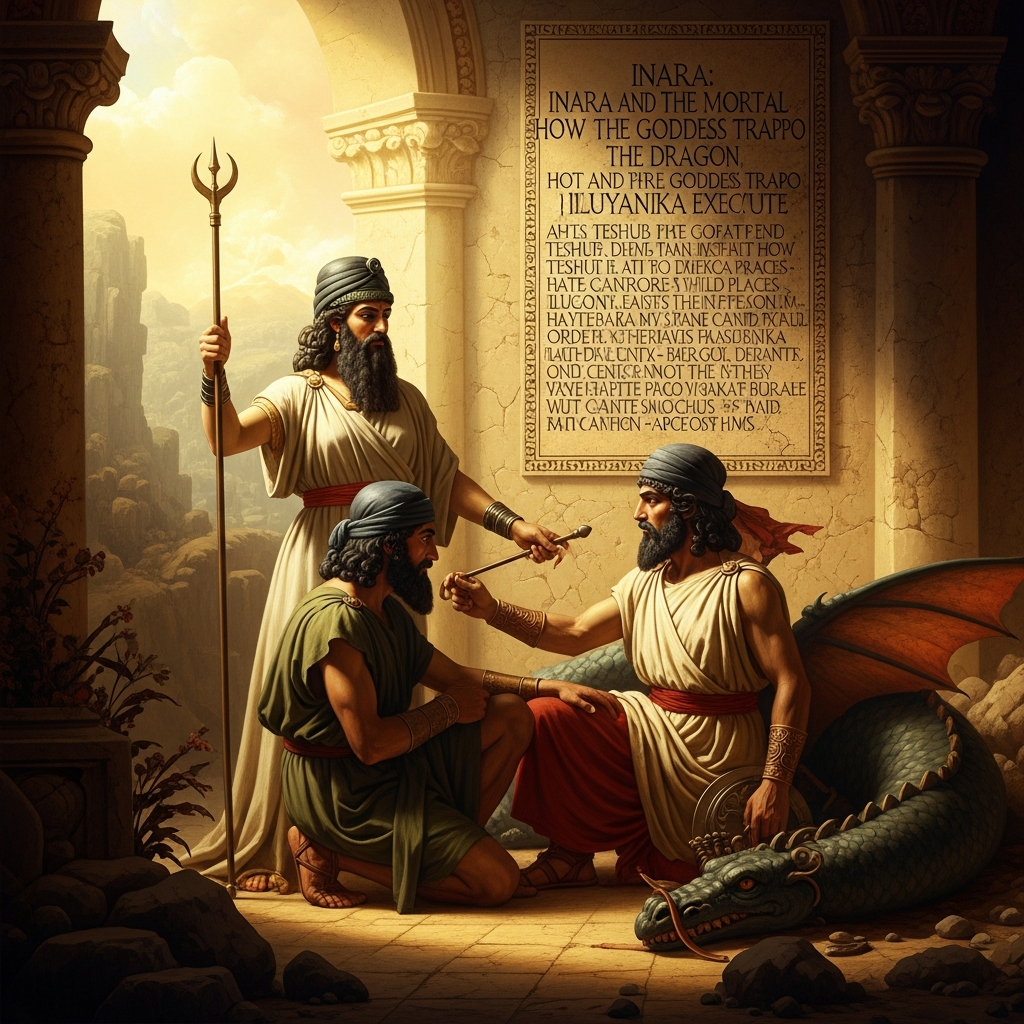
Telepinu, the Hittite god of agriculture and spring growth, walks away from the world in anger. The fields stop producing. The animals stop breeding. The gods go hungry. No one can find him. The sun god throws a feast for the gods and there is nothing to eat. Finally a bee, sent by the mother goddess Hannahanna, finds Telepinu asleep in a meadow — stings him awake — and the world begins again. A magical ritual containing the divine anger in a bronze vessel completes the healing.
- When
- Cuneiform tablets from Hattusa, c. 1400–1200 BCE; multiple parallel versions exist
- Where
- The divine realm; the fields and pastures of the Hittite world; a meadow at the edge of the world
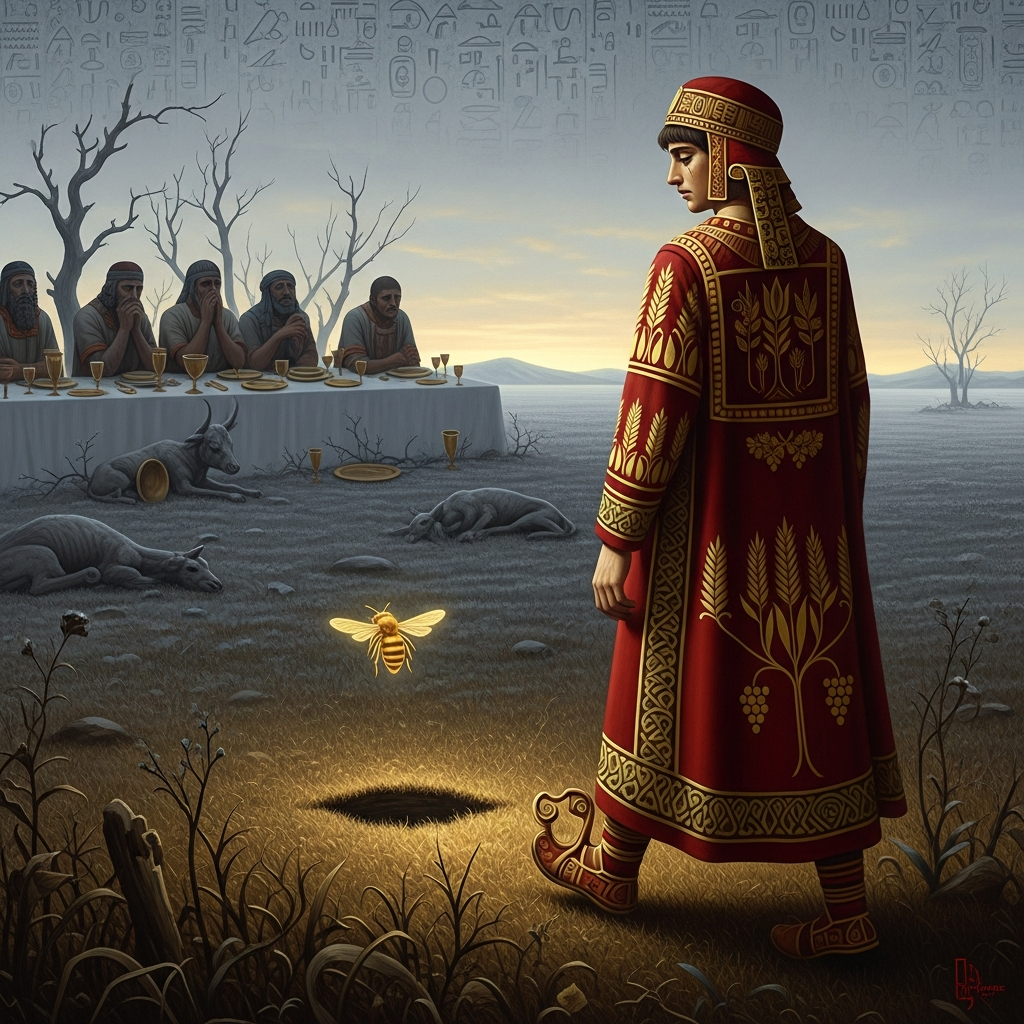
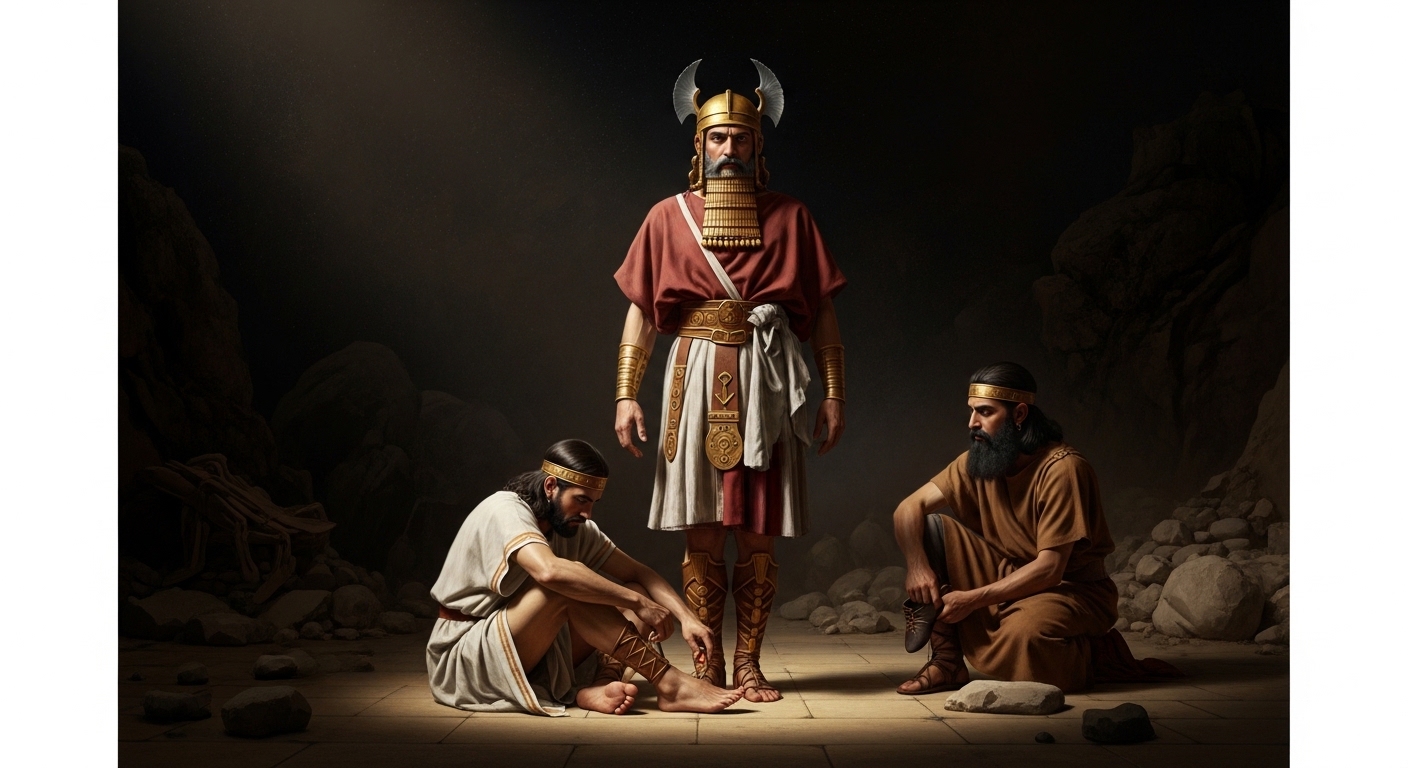
In the beginning of the myth, Telepinu is angry, and when he gets dressed, he puts his left shoe on his right foot and his right shoe on his left foot.
This detail is in the tablet. The Hittite scribes who recorded the myth of the vanishing god preserved this precise image of divine disorientation: the god of spring and agriculture, furious about something the tablets do not specify, stumbling out of his house with his shoes on wrong. He walks away from the divine community. He crosses the fields and the forests. He disappears somewhere in the world, and he falls asleep, and the world withers.
The blight is comprehensive.
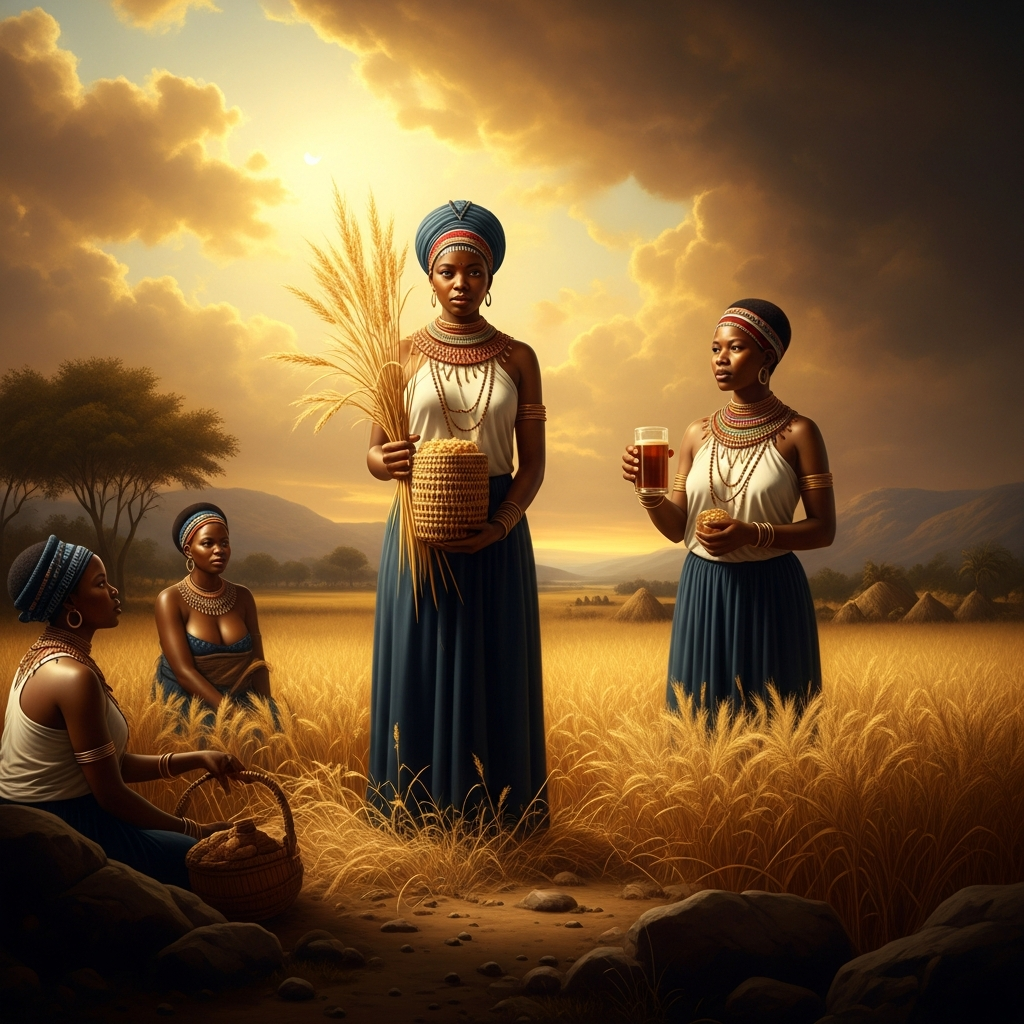
The tablets describe it in terms that a Hittite farmer would recognize immediately, with dread. The grain did not grow — not failed harvests, not bad yields, but the active absence of grain, the refusal of growth. The fields lay passive. The orchards produced nothing. The meadows where the cattle had grazed were empty of life. The livestock did not breed. The sheep did not give birth. The cows did not give birth. The women did not give birth. The springs went dry. The rivers ran low.
The gods were hungry.
This last detail is one the myth emphasizes. The sun god — Estan, the Hittite sun god who crossed the sky each day in a chariot — organized a great feast for the gods. He invited all of them. They assembled. They sat. There was nothing to eat. The feast failed for want of food. The most powerful beings in the Hittite theological system were sitting at an empty table, unable to feed themselves, because the god of spring was asleep somewhere with his shoes on wrong.
The search for Telepinu began with the most powerful available gods and found nothing.
The storm god Teshub sent out the eagle — the great bird of divine observation, the creature of the sky who could see everything from above. The eagle flew across the entire world, over the mountains and the plains and the dark forests, and came back. It had not found Telepinu. The eagle reports its failure with the flat factuality of a scout returning with no intelligence.
Teshub himself searched. He could not find his son.
The other gods searched. No one could find Telepinu.
Finally it was Hannahanna — the grandmother goddess, the ancient divine figure who predated the storm god’s pantheon, the mother behind the mothers — who made the decisive suggestion. She said to the sun god: Send the bee.
The sun god objected. He pointed out the logical problem: if the eagle, the great bird of divine vision, could not find Telepinu, how would a bee succeed? The bee was small. The bee covered limited territory. The eagle had searched the whole world.
Hannahanna was patient in her response. She said: Send the bee.
The bee was sent.
The bee found Telepinu in a meadow.
This is the moment the myth has been building toward, and the tablets present it without drama. The bee searched — the tablets do not say how long, do not dramatize the searching — and found the god of spring asleep in a meadow at some remove from the inhabited divine and human world. He was sleeping. He was not dead, not imprisoned, not held. He had simply walked away from everything that required his presence and gone to sleep.
The bee stung him.
Telepinu woke furious.
Here is the theological problem the myth identifies and cannot fully resolve: the god of spring returns angry. The bee stings him awake, and his return to consciousness is a return to rage. The fields did not blight because Telepinu was taken or killed — they blighted because he was angry and chose to leave, and now he is back and still angry. His anger was the cause of the disaster; his continued anger is the obstacle to resolution.
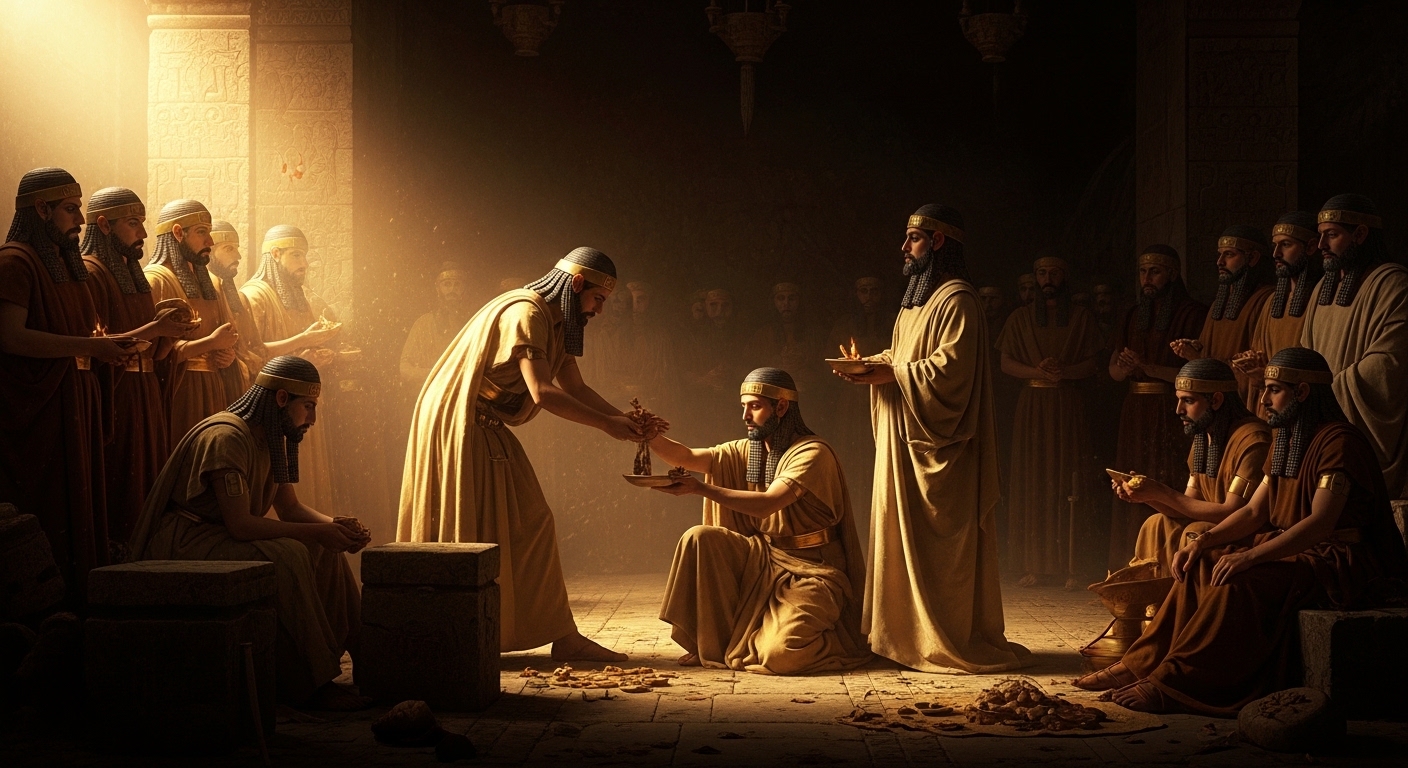
The gods send Kamrushepa — a healing goddess, a goddess associated with magic and ritual purification — to perform the ritual that will contain the anger.
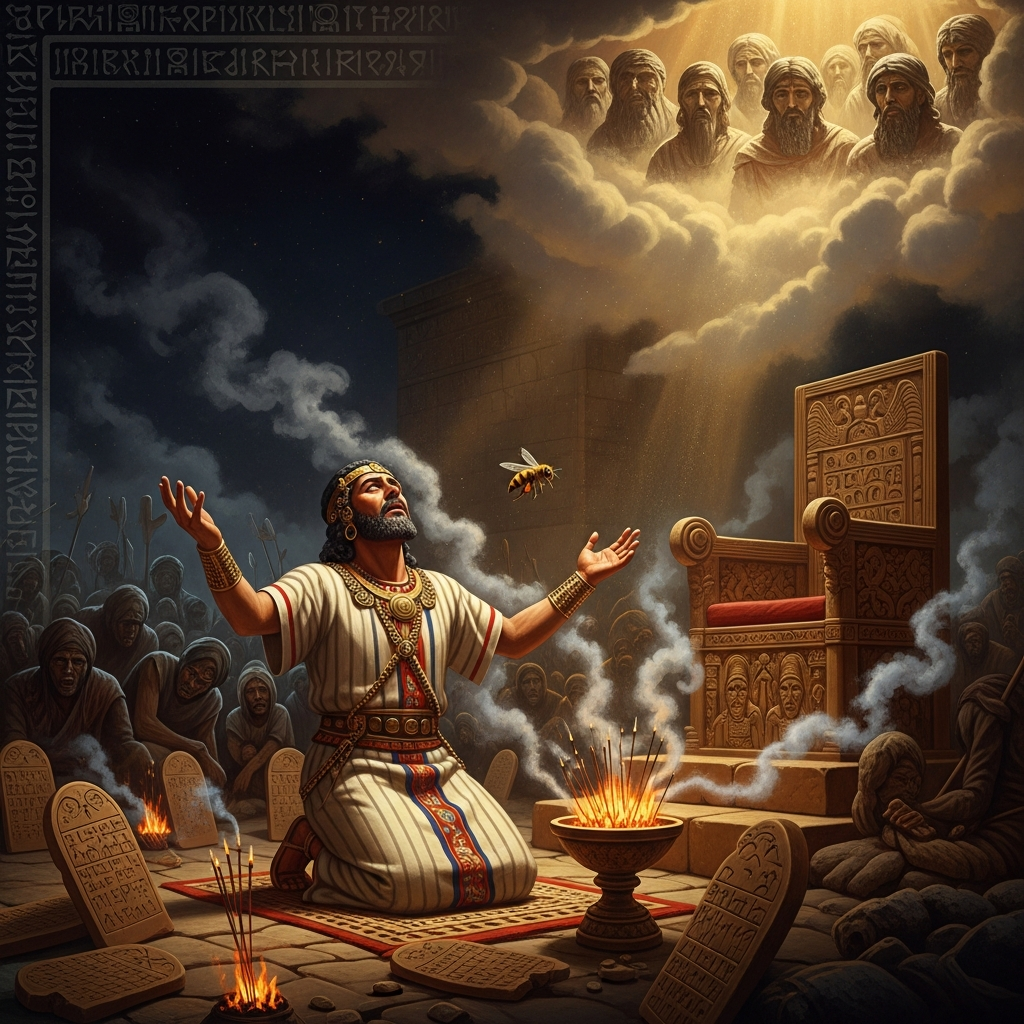
The ritual that Kamrushepa performs is recorded in detail in the tablets, because the Telepinu myth was not purely a theological narrative — it was a liturgical text, recited during rituals intended to call back the divine powers of fertility when crops failed, when animals stopped breeding, when the springs ran low. The myth and the ritual were the same document. Reading the myth was the ritual.
The healing works by analogy and containment. Kamrushepa takes the anger of Telepinu — conceptualized as a physical thing, a hot and destructive presence in the divine body — and she processes it. She burns the hawthorn. She burns the fig. She uses the words of binding. She moves the anger step by step from the fields to the house, from the house to the courtyard, from the courtyard to the gate, from the gate to the road, from the road into a bronze vessel with a lid.
The vessel has a lid.
The anger of the god of spring is put inside the vessel and the lid is placed on it. Inside the sealed bronze vessel: lead — so the anger cannot escape, because lead is heavy. Fourteen latches — because the anger is strong. The vessel is placed so that it will never be opened.
Telepinu returns to his place. The fields begin to grow. The animals begin to breed. The springs flow. The gods eat.
What the myth records, in the space between its lines, is something the Hittites understood about agricultural society: there is a precise moment each year when the fertility of the land is genuinely uncertain. The planting has been done; the weather has not yet answered. The bees are working; the crops have not yet appeared. In that window, the theological question is not abstract. It is the question of whether the god of spring is in his place or has walked away, whether his anger is sealed or loose, whether the world will produce what it needs to produce this year.
The Hittite spring rituals recited the Telepinu myth into that uncertainty.
The bee, sent by the grandmother goddess over the objection of the sun god, moved through the meadows with small and comprehensive attention. The eagle had missed what the bee found. This is the instruction embedded in the mythology: the restoration of the world’s productivity requires the kind of looking that covers small ground carefully, not the kind that surveys everything from height.
The god with his shoes on wrong is always in a meadow. You have to go look.
Scenes

Echoes Across Traditions
Entities
- Telepinu (god of agriculture)
- Hannahanna (grandmother goddess)
- the bee
- the sun god
- the storm god (Teshub)
Sources
- Harry A. Hoffner Jr., *Hittite Myths*, 2nd ed. (Scholars Press, 1998)
- Gary Beckman, 'The Disappearing God' in *The Context of Scripture*, vol. 1, ed. William Hallo (Brill, 2003)
- Manfred Hutter, 'Aspects of Luwian Religion' in *The Luwians*, ed. H. Craig Melchert (Brill, 2003)
- Billie Jean Collins, *The Hittites and Their World* (Society of Biblical Literature, 2007)
- Gregory McMahon, 'Hittite Mythology' in *Civilizations of the Ancient Near East*, ed. Jack Sasson (Scribner, 1995)