Inara and the Mortal: How the Goddess Trapped the Dragon
Recorded in cuneiform at Hattusa, c. 1400 BCE; tablet of Kella the scribe · The divine realm; a human settlement; the valley of the feast; the mountain house
Contents
After Teshub's defeat by Illuyanka the dragon, his daughter Inara devises the plan that will save the divine order — but she cannot execute it alone. She goes to the human world and finds a mortal man named Hupashiya, makes an agreement with him, uses him to trap the dragon with wine and feasting, and then hides him in a house on the mountain where she tells him one thing: do not look out the window. He looks.
- When
- Recorded in cuneiform at Hattusa, c. 1400 BCE; tablet of Kella the scribe
- Where
- The divine realm; a human settlement; the valley of the feast; the mountain house
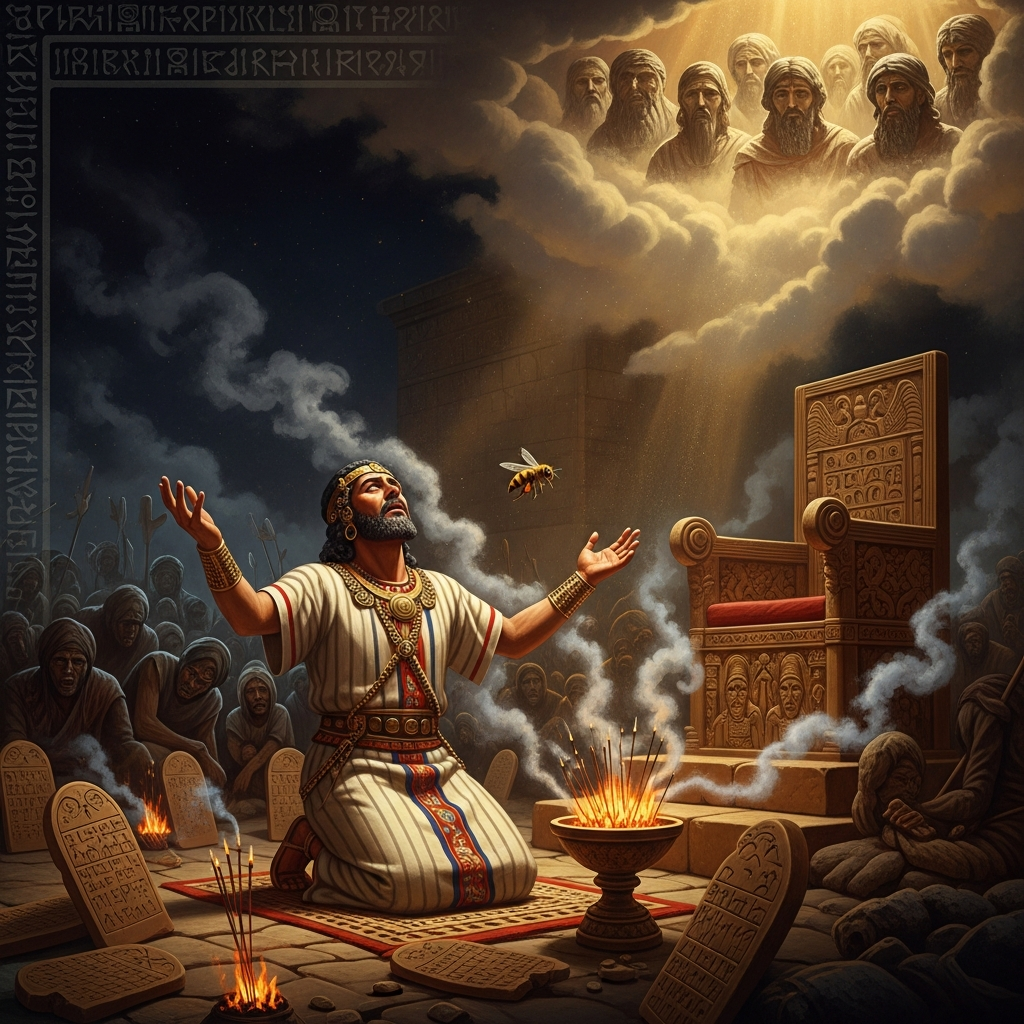
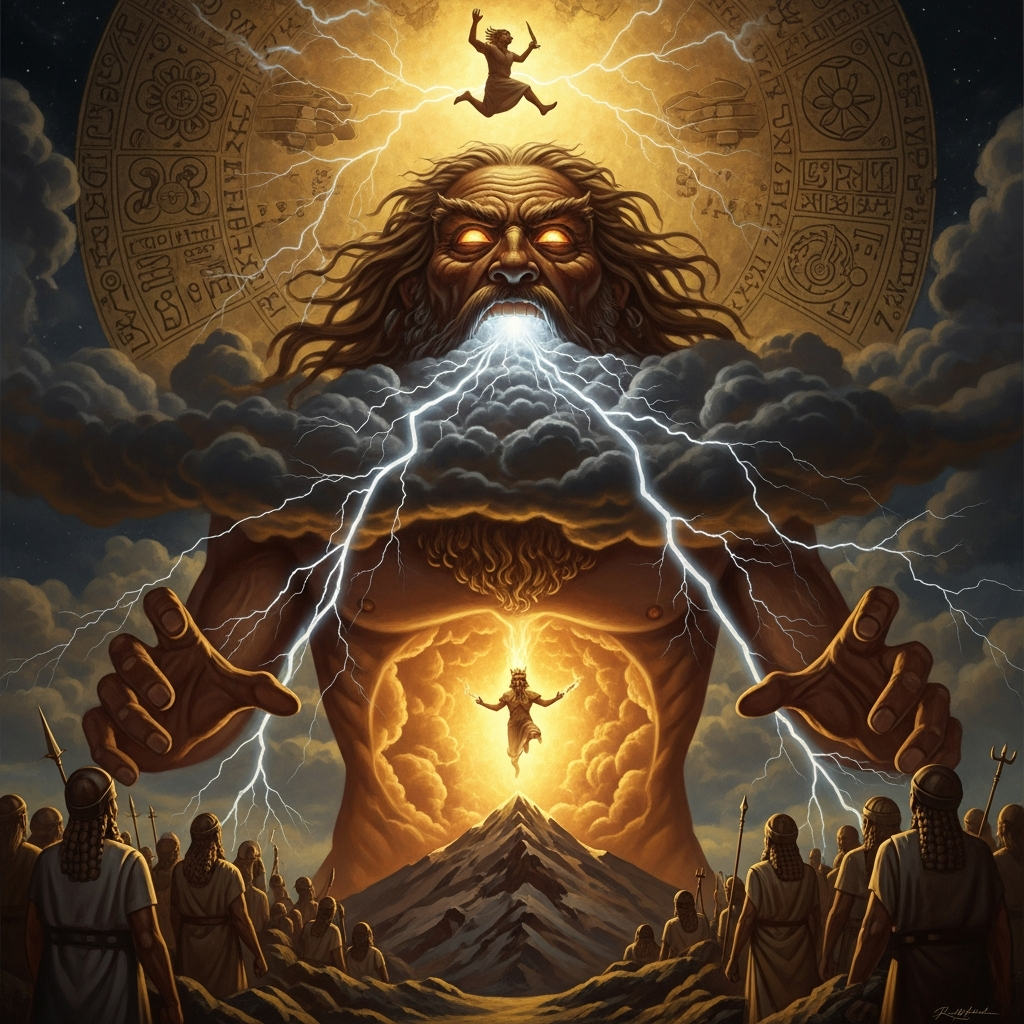
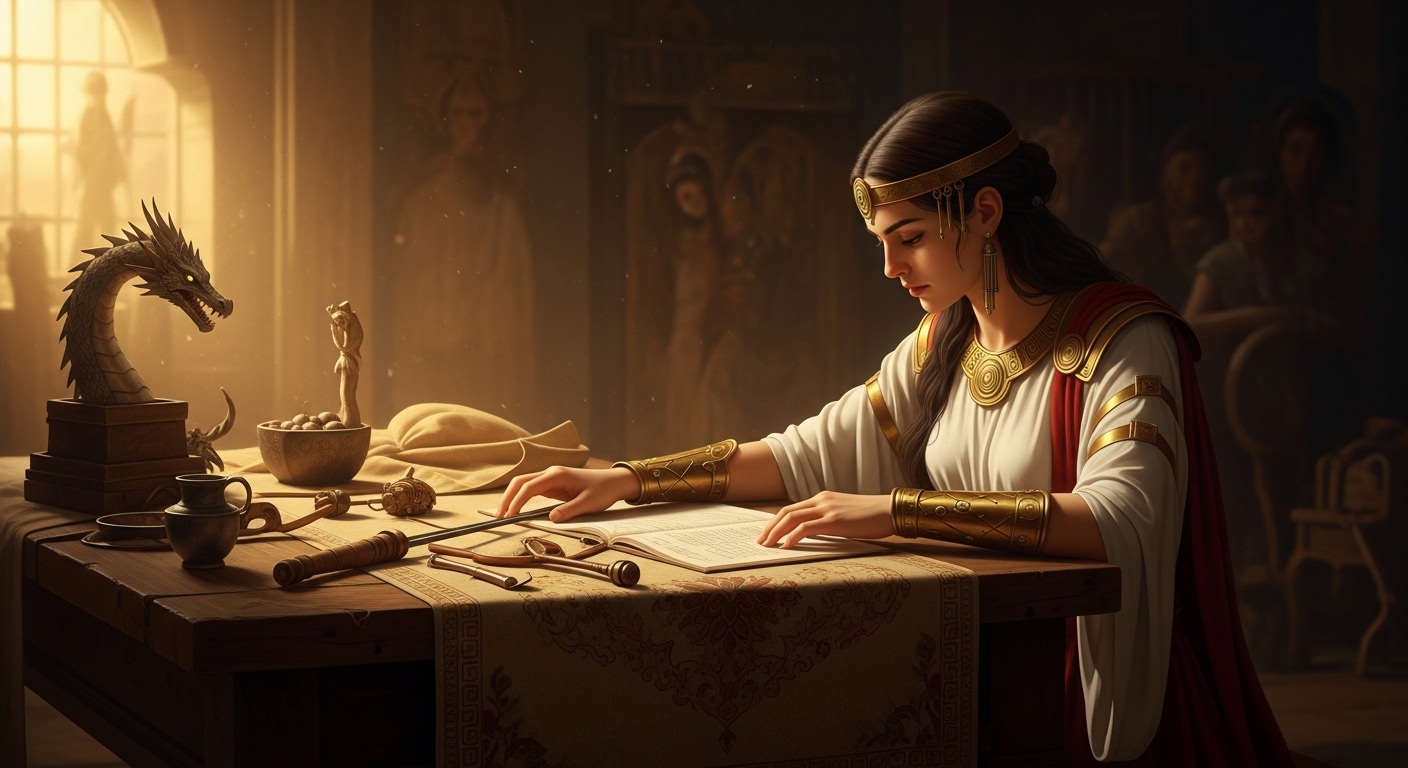
The dragon Illuyanka had defeated Teshub in the first battle, and taken his eyes and his heart, and the storm god of the Hittites was walking the world diminished. Illuyanka had returned to his hole in the earth, full and satisfied, the organs of the divine enemy stored somewhere the tablets do not specify. The divine order was disrupted. The rain did not come in its season.
Inara, who was Teshub’s daughter and the goddess of wild places, decided to fix it.
This is the version the scribe Kella recorded — the first version of the Illuyanka myth, the one in which the dragon is defeated not by the storm god’s recovered power but by his daughter’s strategy. Inara did not go to the divine assembly. She did not convene the gods. She went, instead, to the human world.
She found a man named Hupashiya.
The tablets do not introduce him with any particular credential. He is not a hero by descent, not a king, not a warrior of noted reputation. He is simply a man in the human settlements near the divine realm who happened to be present when Inara came looking for mortal assistance.
She asked him to help her.
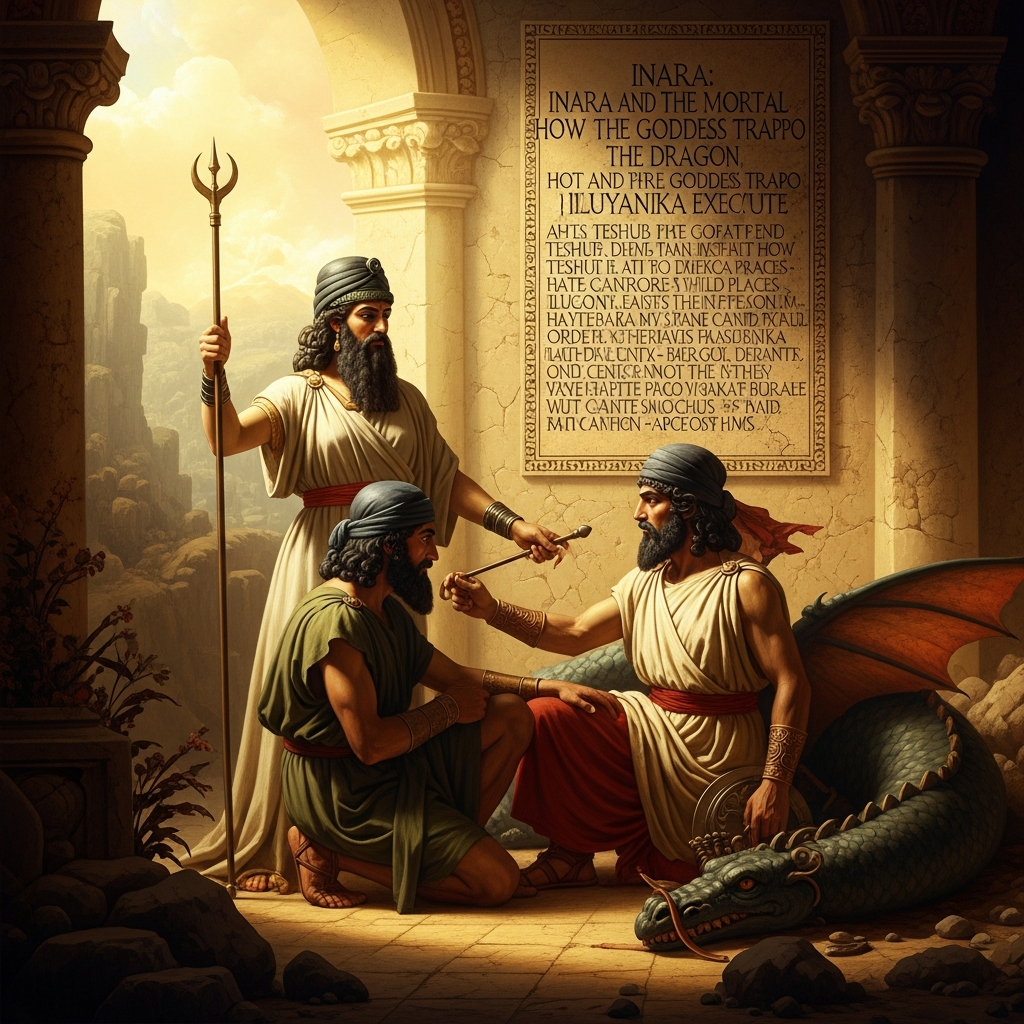
He listened to what she wanted — the feast, the trapping of the dragon — and he said: I will come with you and help you, if you sleep with me.
Inara agreed. She slept with him. Then she put him to work.
The plan required preparation. Inara prepared it with the thoroughness of someone who understands that the plan cannot fail — that the dragon is a cosmic threat and the plan is the only available countermeasure, and that therefore every element must be correct.
She prepared the vessels. Great mixing bowls. Jugs and amphoras. Every container she could find, filled with wine and with mead and with the drink called walhi — the tablets name all three, as if the specific combination was essential to the trap. She filled them until there was more than any ordinary feast would require. More than any gathering of the human world would need. She filled them for the appetite of a dragon.
She sent word to Illuyanka that a festival was being held in the valleys. She invited him and all his children. She told him there was enough food and drink for everyone, more than enough, that he should come without worry about sufficiency.
She hid Hupashiya somewhere near the feast site. He was the second part of the plan, the part that would be deployed after the first part worked.
Illuyanka came with his children. He came to the valley, to the feast that had been set out, to the wine and the mead and the walhi arranged in vessels too numerous to count. And he ate. And he drank.
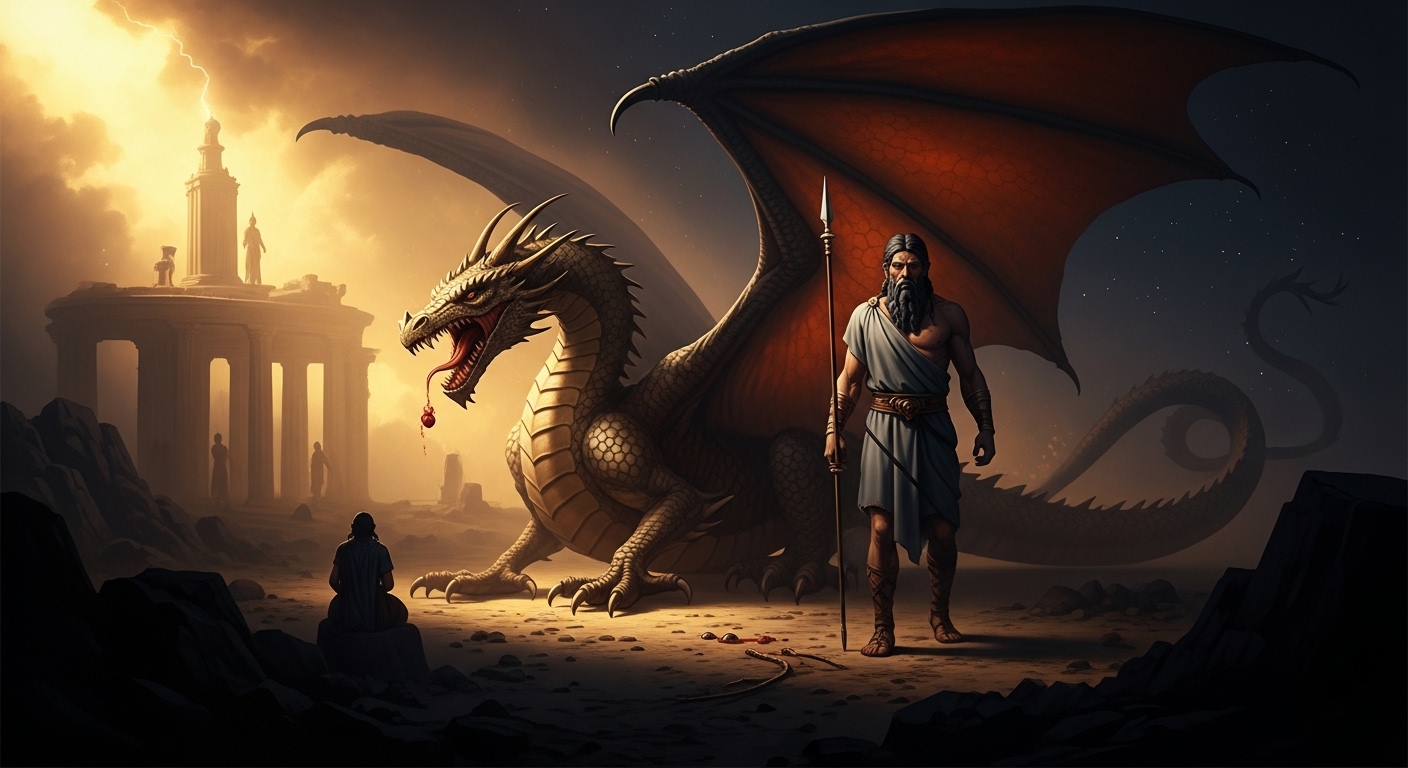
The dragon ate and drank until his children were full, and then he kept going, because the feast was there and there was no particular reason to stop — he had defeated the storm god, he was at a festival, the wine was good, the mead was in supply. He ate until he and his children had consumed everything that Inara had set out, and then there was nothing left to eat, and Illuyanka and his children lay in the valley unable to move.
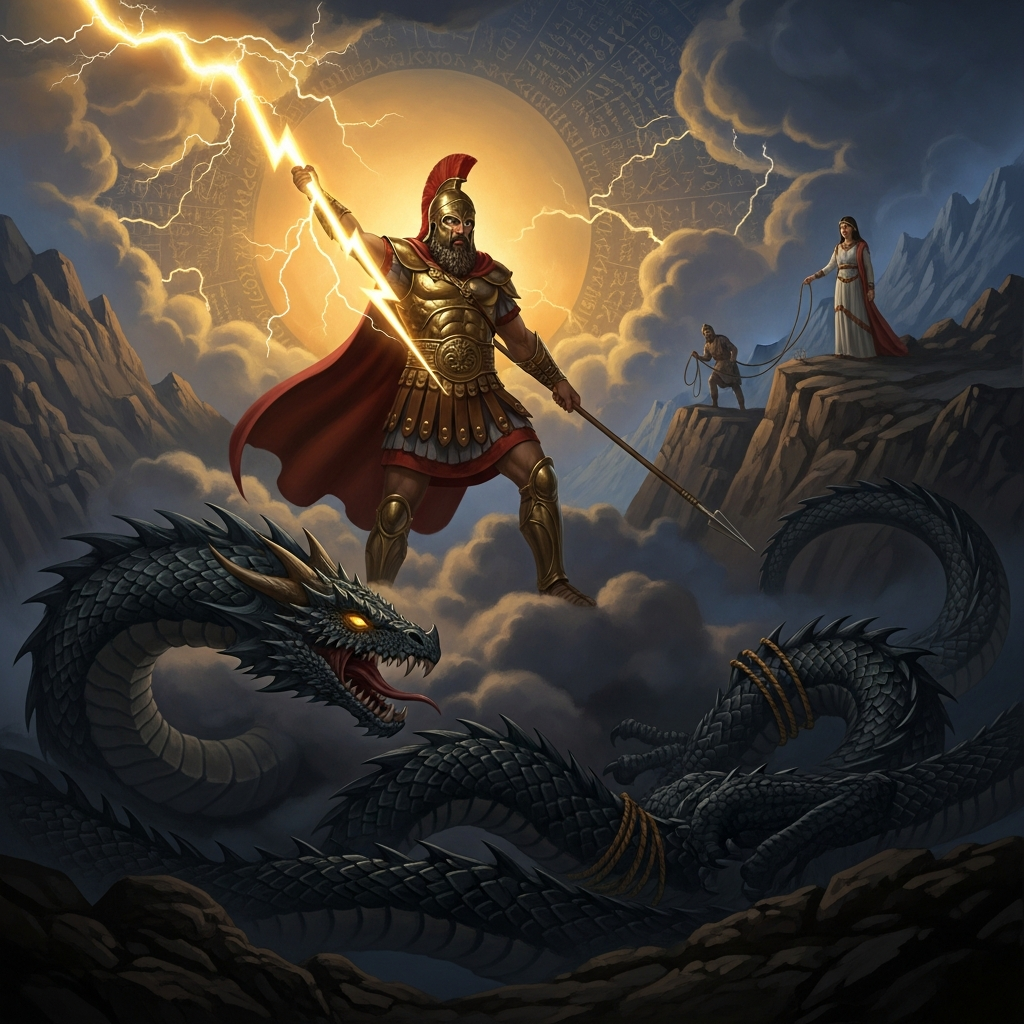
They had eaten too much. They were too large, too gorged, too expanded by the feast to fit back into their holes. The holes were sized for a dragon who had not just consumed an infinite feast. The dragon and his children lay helpless.
Hupashiya came out from where he was hidden and bound them.
He bound Illuyanka and he bound Illuyanka’s children with ropes — the tablets do not specify the nature of the ropes, whether divine or simply strong, only that the binding was accomplished. Teshub descended from wherever the diminished storm god had been waiting, and he killed the dragon.
The divine organs were recovered. Teshub’s eyes were restored. His heart was restored. The storm god of the Hittites was complete again.
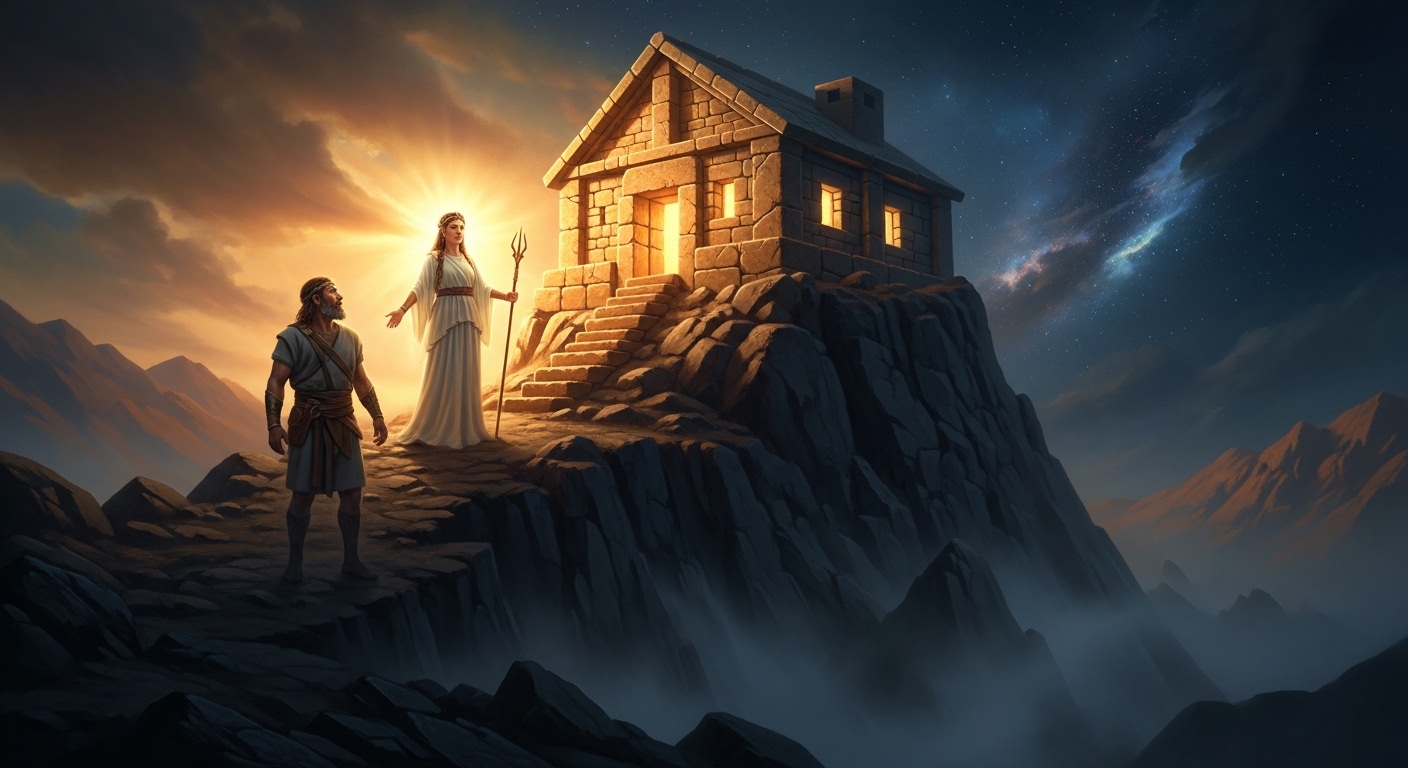
And then Inara built a house on a mountain, and she took Hupashiya to live in it.
This is the part of the story that the summary usually omits — the aftermath, the arrangement, the fate of the mortal who had participated in the restoration of the cosmic order. Inara built a house in the highlands, away from the human settlements where Hupashiya had been living, away from the valley of the feast, removed from the ordinary world. She brought him there and she established the arrangement: she would go and come on divine business, and he would remain there.
And she told him one thing.
Do not look out of the window when I am gone. If you look out of the window, you will see your wife and your children.
The instruction was the prohibition, and the prohibition was the terms of the arrangement, and the terms of the arrangement were that Hupashiya was now living in a divine space with a divine purpose, and the mortal world — the wife, the children, the settlements below — was incompatible with that space.
Inara left on divine business.
Twenty days passed. Thirty days passed. The tablets count the time, which is unusual — most Hittite myth does not count days the way this text does, and the counting suggests the count mattered, that the days were a test being administered without announcement.
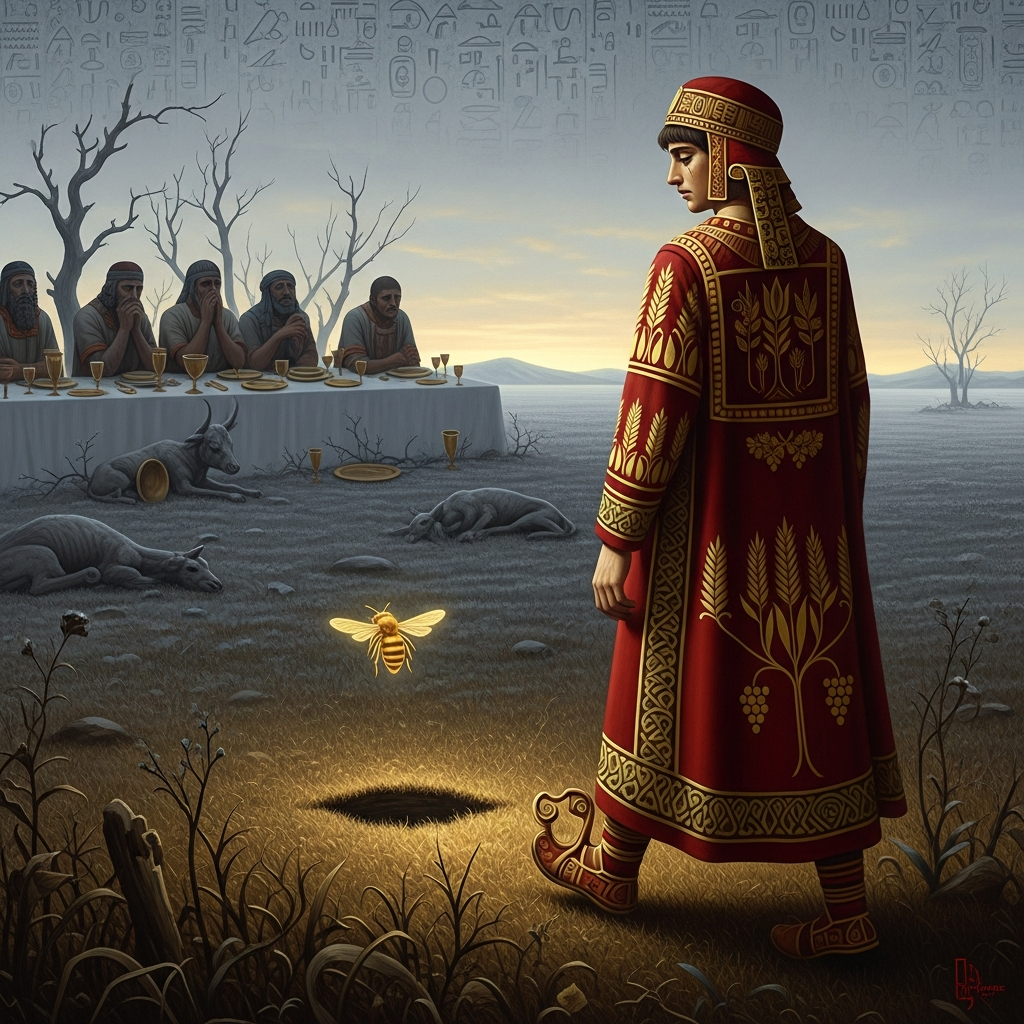
Hupashiya looked out of the window.
He saw his wife. He saw his children, in the valley below, living the life of the human settlement, doing the things that families do.
The tablets end there, or nearly there. What happens to Hupashiya after the looking is not recorded in the version of the text that survives. The scribe Kella did not record his fate. The tablet moves on to Version Two of the Illuyanka story, the other variant, without explaining what became of the man who looked through the forbidden window.
There is a tradition in mythological interpretation that treats the prohibition against looking as a test of faith, and the mortal’s failure to pass it as a moral failing. Hupashiya lacked discipline; he should have looked away; he was weak.
This reading misses what the Hittite text actually shows.
Hupashiya is not weak. He made an extraordinary bargain and held to it for thirty days in a house on a mountain, alone, while the divine world reorganized itself around the defeat he had made possible. What he could not do, after thirty days, was stop being a man with a wife and children. He had made a deal with a goddess. He had helped bind a dragon. He had been useful to the restoration of the storm god’s power. None of this unmade his family. None of it changed what he saw when he looked out.
The window was there. His family was below it. He looked.
The silence after the looking is not punishment. It is the text’s acknowledgment that two kinds of belonging cannot occupy the same space: the mortal belongs to his people in the valley, the goddess belongs to her divine work, and the house on the mountain was always a temporary arrangement between two orders of existence. The arrangement ended when Hupashiya remembered which order he belonged to.
Inara, presumably, found other mortals when she needed them.
The feast is what the Hittites remembered — the cunning of the wine, the dragon helpless and gorged in the valley, the restoration of the storm god. But the feast was possible because a man agreed to a bargain, held to it for thirty days, and then looked out a window at the life he had left.
Both things were necessary. The myth holds both.
Scenes
Echoes Across Traditions
Entities
- Inara (daughter of Teshub, goddess of wild places)
- Hupashiya (mortal man)
- Illuyanka (the dragon)
- Teshub (the storm god, Inara's father)
- Illuyanka's children
Sources
- Harry A. Hoffner Jr., *Hittite Myths*, 2nd ed. (Scholars Press, 1998)
- Gary Beckman, 'The Myth of Illuyanka' in *The Context of Scripture*, vol. 1, ed. William Hallo (Brill, 2003)
- Billie Jean Collins, *The Hittites and Their World* (Society of Biblical Literature, 2007)
- Trevor Bryce, *The Kingdom of the Hittites*, 2nd ed. (Oxford University Press, 2005)
- Calvert Watkins, *How to Kill a Dragon: Aspects of Indo-European Poetics* (Oxford University Press, 1995)