Cu Chulainn Holds the Ford
Mythic Iron Age, recorded c. 7th-8th century CE · The ford of the River Dee (Ath Fhirdiad), the border between Connacht and Ulster
Contents
The Ulster warriors lie cursed and sleeping. Only one man is immune: a seventeen-year-old demigod who holds the ford alone against Connacht's army for weeks, until the morning his foster-brother and best friend is sent to kill him.
- When
- Mythic Iron Age, recorded c. 7th-8th century CE
- Where
- The ford of the River Dee (Ath Fhirdiad), the border between Connacht and Ulster
Queen Medb of Connacht goes to war over a bull.
She has counted every head of cattle in her kingdom against her husband Ailill’s, and she is one bull short. The White-Horned Bull of Connacht that would balance the count has transferred its allegiance to Ailill’s herd, which Medb experiences as a personal insult from the universe. She raises an army — Connacht men, Leinster mercenaries, the exiled Ulster sons who are owed nothing, and the champions of the western provinces — and marches for the Brown Bull of Cooley in the north. She will take it and be even.
The Ulaid should be able to stop her. They have the greatest warriors in Ireland. They have Conall Cernach and Laegaire Buadach and the king Conchobar mac Nessa and a hundred more. What they have instead, when Medb’s army crosses the border, is the cess noinden: a curse laid on the men of Ulster by the goddess Macha, who was forced to race horses while pregnant and called down suffering-like-childbed-pangs on every Ulster warrior for nine generations. The curse activates the moment the province is threatened. The men of the Ulaid collapse where they stand — in their halls, on their training grounds, in the fields — and writhe in agony, unable to rise.
One man is immune. He was not born in Ulster. He is seventeen years old.
Cu Chulainn takes position at the ford without being ordered.
The ford at the border river is the only legal space for this kind of stand: old war-law holds that an army crossing a ford must respond to the challenge of single combat, one champion at a time, until the challenger falls or the army finds better ground. If Cu Chulainn can hold the ford, he holds Ulster. If he sleeps, or eats carelessly, or falls, Medb’s army walks through and the sleeping Ulaid are slaughtered in their beds.
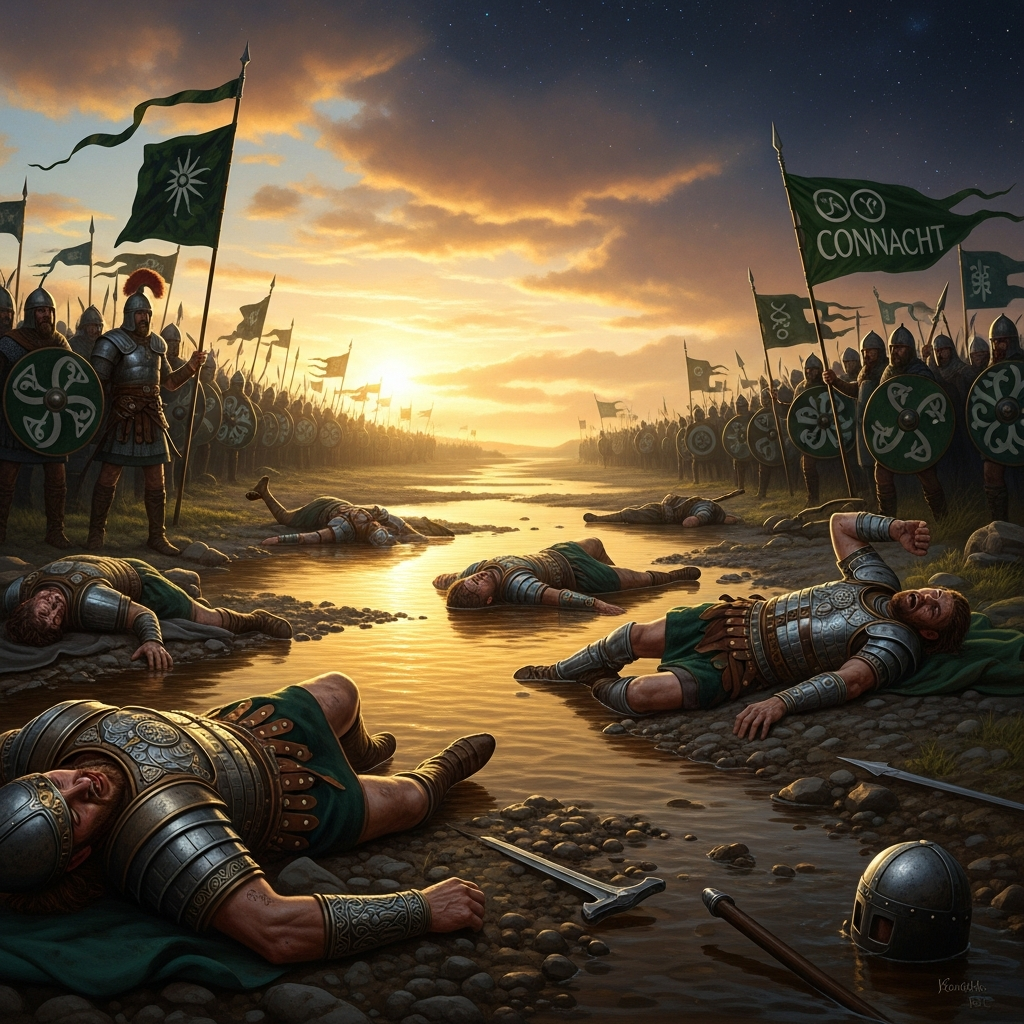
He does not sleep for the first three days. He kills the first champion Medb sends — Etarcomal, who is young and reckless and comes in full battle-cry. He kills the second, the third, the fourth. The word goes through the camp on the western bank: there is a boy at the ford who fights like something that should not exist.
Loeg mac Riangabra, his charioteer and closest companion, watches from the trees. He brings food. He binds wounds. He says nothing useful because there is nothing useful to say. The army of Connacht is thirty thousand men and the ford is twelve feet wide.
At night, between combat days, messengers sometimes come from the Connacht camp with gifts — food, wine, the offer of land and women if Cu Chulainn will step aside. He eats their food and sends the messengers back with refusals phrased so politely that Medb cannot find an insult in them. He keeps his word in every direction simultaneously. This is one of the things the stories remember about him: he is almost incapable of dishonour, even when dishonour would be the easier path.
Medb waits for the Ulster curse to lift. It does not lift. She sends better champions.
Cu Chulainn kills Nad Crantail, who comes with his weapons bound in rafters of his chariot as a ritual gesture of contempt and is dead before the rafters hit the water. He kills Calatin and Calatin’s twenty-seven sons, all fighting as one body. He kills men whose names the manuscripts preserve and men whose names they do not. He fights in the river up to his chest in winter water, and he fights on the bank, and once he fights on an island of gravel that the current shifts under him while he swings.
He does not know, yet, that Medb is saving Ferdia.
Ferdia mac Daman trained beside Cu Chulainn under the warrior-woman Scathach in Alba, on the island where she teaches the art of war to the sons of kings. They learned the same techniques on the same ground. They shared one cloak on cold nights and one cup at meals. They learned the Gae Bolga — the barbed spear cast with the foot in shallow water — at the same time from the same hands, and they swore that neither would use it on the other.
Medb offers Ferdia a bride, land grants, immunity from taxation for his descendants, and a magic brooch. He refuses. She threatens his poets. In early Ireland, the poets can sing a man’s honour into the ground; a satire circulated widely enough can make a man unfaceable in his own hall. Ferdia is an honourable man and his honour can be used against him. He comes to the ford.
They greet each other the way the manuscripts record it, which is to say: badly, with grief under every formal word. They agree on weapons for each day. On the first day they use throwing weapons and are even. On the second day they use cutting weapons and draw blood and the blood is even. On the third day there are no rules about weapons anymore and both of them know what this means. They share food across the water each evening. Their charioteers sleep in the same camp because there is no point doing otherwise. On the third night Cu Chulainn says, it is sad what we are doing, and Ferdia says, it is, but it will be done.
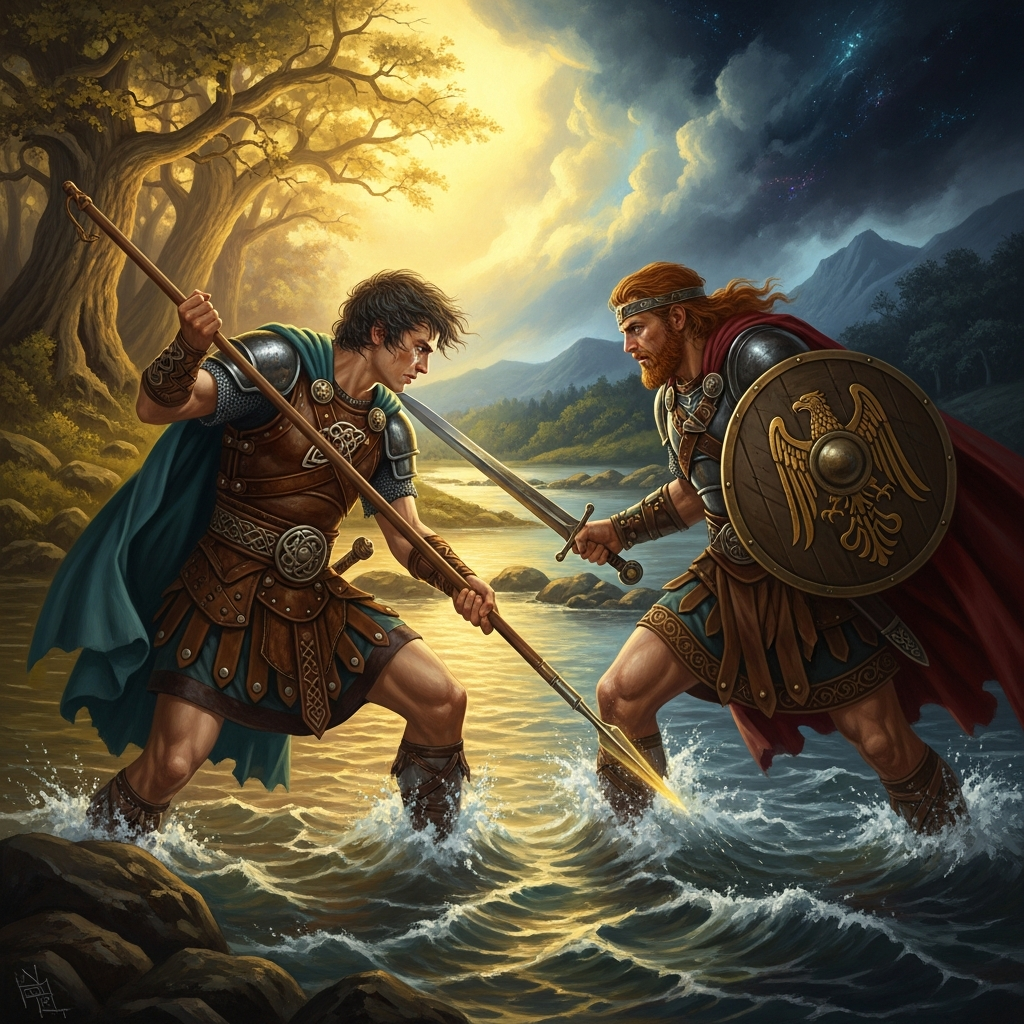
On the fourth morning Ferdia wades in first.
He is wearing his horn-skin: layers of hardened hide over the vital points, nearly impenetrable. He presses Cu Chulainn back toward the eastern bank for the first time in four days. Cu Chulainn is bleeding from cuts that would have stopped a lesser man already; his feet find poor purchase on the river stones; Loeg watches from the bank with the Gae Bolga in his hands and his face gone white.
Cu Chulainn calls for it.
The Gae Bolga is cast with the foot in the current. You send it along the water’s surface and it enters through the groin, the only opening the horn-skin does not cover. It enters as a single point and opens inside the body into thirty barbs. There is no surviving it. There is, in theory, no removing it.
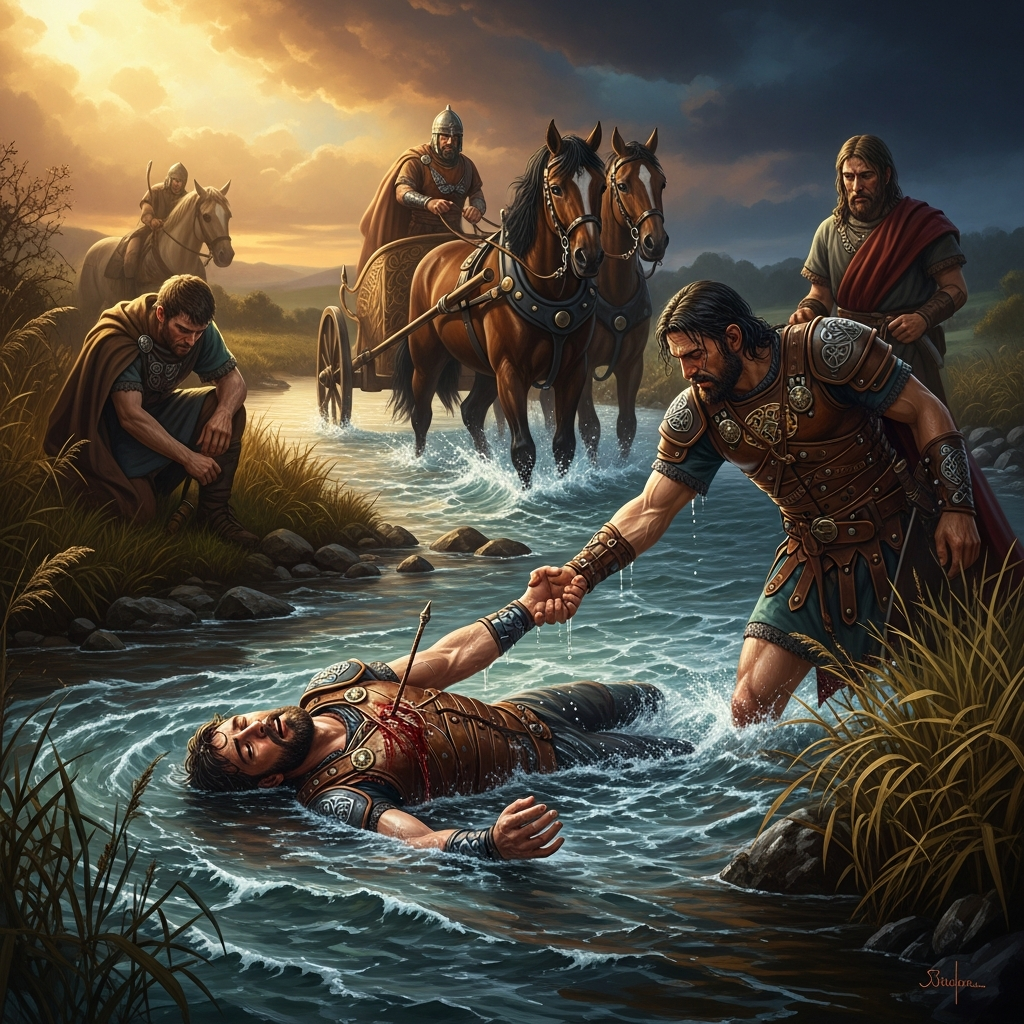
Ferdia sinks forward. The river around him reddens slowly.
Cu Chulainn drops his weapons in the water. He wades to his foster-brother and lifts him in his arms — all the armour, all the height of him, all the weight of a man that size — and carries him to the eastern bank, to Cu Chulainn’s own side, because he will not leave him in the water and he will not leave him with Medb’s army. He lays him on the grass. He sings the lament. Ferdiad of the hosts, Ferdiad of the hard blows, beloved golden pillar. He says it badly and starts over and says it again.
The army of Connacht does not cross the ford that day.
The Ulaid eventually wake from their curse and drive Medb’s army south. The Brown Bull of Cooley and the White-Horned Bull of Connacht find each other and fight the length of the island before tearing each other to pieces. The war ends as it began: in exact equilibrium, nothing gained, nothing lost except everyone who died in the middle.
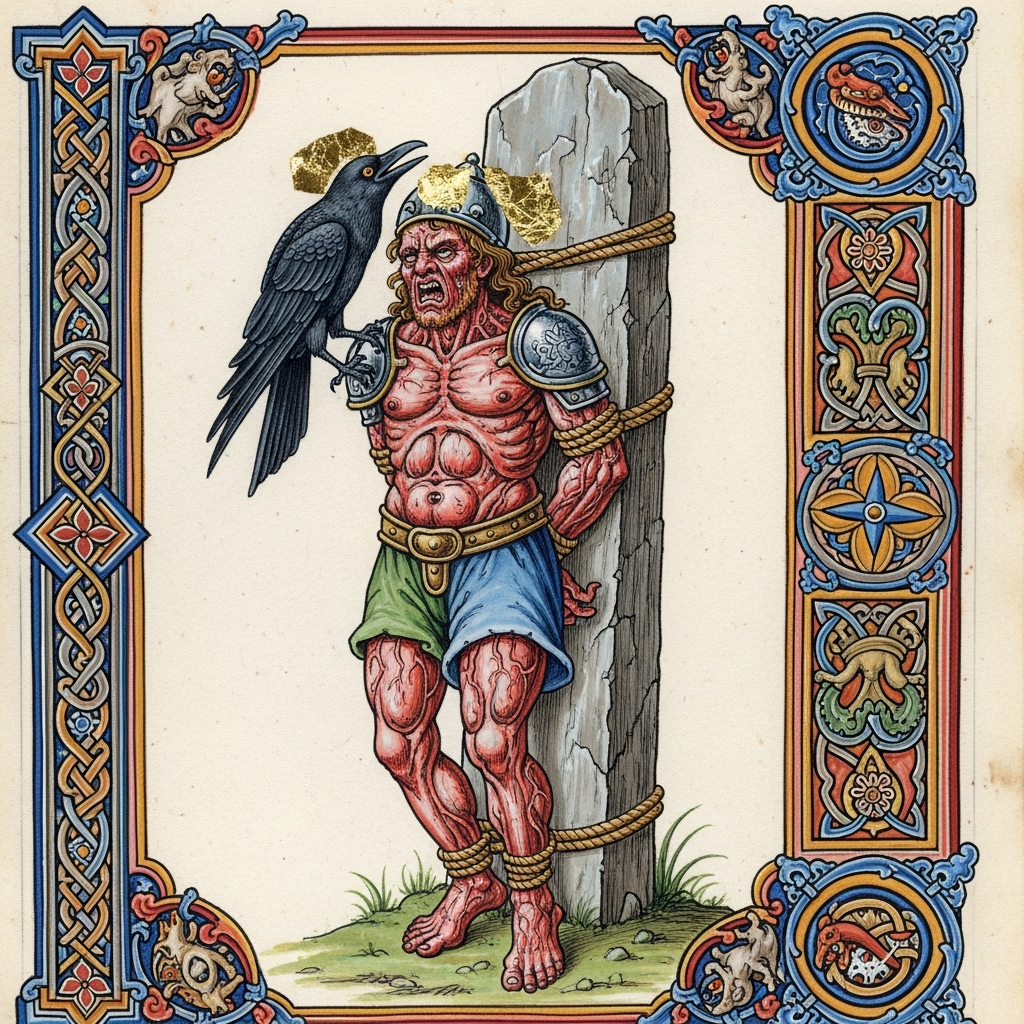
Cu Chulainn does not recover from Ferdia. This is not a medical observation — his wounds close, his strength returns — but something in the shape of him changes at the ford, some configuration of the self that cannot be reassembled the way it was before. He will live ten more years, die young at twenty-seven tied upright to a standing stone so that he can keep fighting past the moment his legs give out.
In those ten years he is never short of courage or skill or the particular ferocity that makes him what he is. What he is short of, in ways the stories register but never directly name, is the capacity to stop fighting and simply be somewhere.
The Tain is older than the manuscripts. Linguists find in its metrics a verbal stratum that predates Christianity in Ireland by centuries. The monks who copied it into the Book of the Dun Cow added marginal notes reminding readers that this was pagan material and not to be believed. They could not bring themselves to leave it out.
Every reader leaves the Ferdia section with the same question that the manuscript does not answer: what exactly did Cu Chulainn think he was defending? The bull is trivial. The sleeping kingdom barely knows he is there. The law of the ford that he is upholding is a convention that Medb could have violated at any moment by simply crossing on a bridge. He holds the ford because the ford is the thing in front of him, and he holds it because stopping would mean deciding that it was not worth holding, and he cannot arrive at that conclusion without something else becoming true about everything he has already done.
Scenes
The fourth dawn at the ford
 Generating art…
 Champion after champion wading to the ford and failing
 Generating art…
 Ferdia face-down in the current, the Gae Bolga done its work
 Generating art…
 Echoes Across Traditions
Entities
- Cu Chulainn
- Ferdia mac Daman
- Queen Medb
- Loeg mac Riangabra
- the Morrigan


Sources
- Thomas Kinsella (trans.), *The Tain* (1969)
- Cecile O'Rahilly (ed.), *Tain Bo Cualinge from the Book of Leinster* (1967)
- Jeffrey Gantz (trans.), *Early Irish Myths and Sagas* (Penguin, 1981)
- Kim McCone, *Pagan Past and Christian Present in Early Irish Literature* (1990)
- Proinsias Mac Cana, *Celtic Mythology* (1970)