The Fish That Was Itself the Sea
before mythic time — the condition of the primordial world · The Pacific Ocean — the largest body of water on earth
Contents
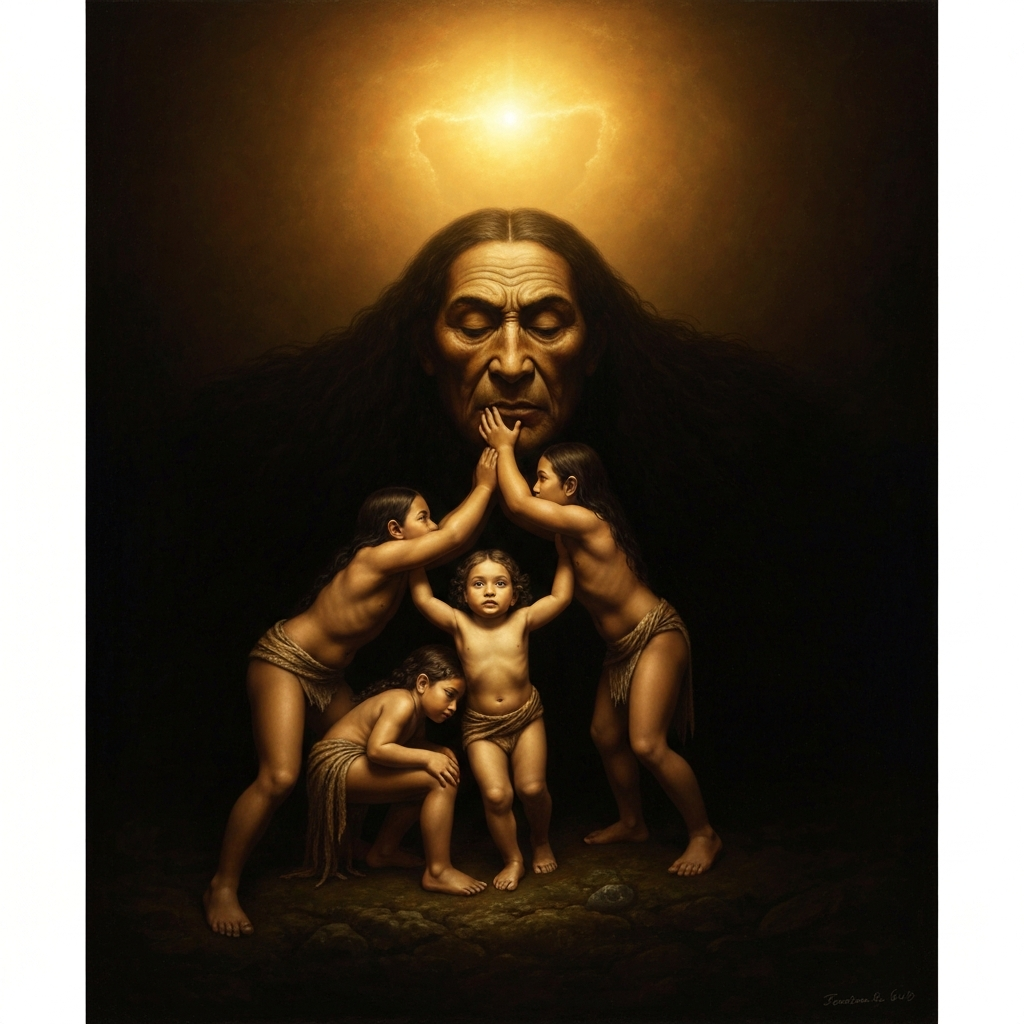
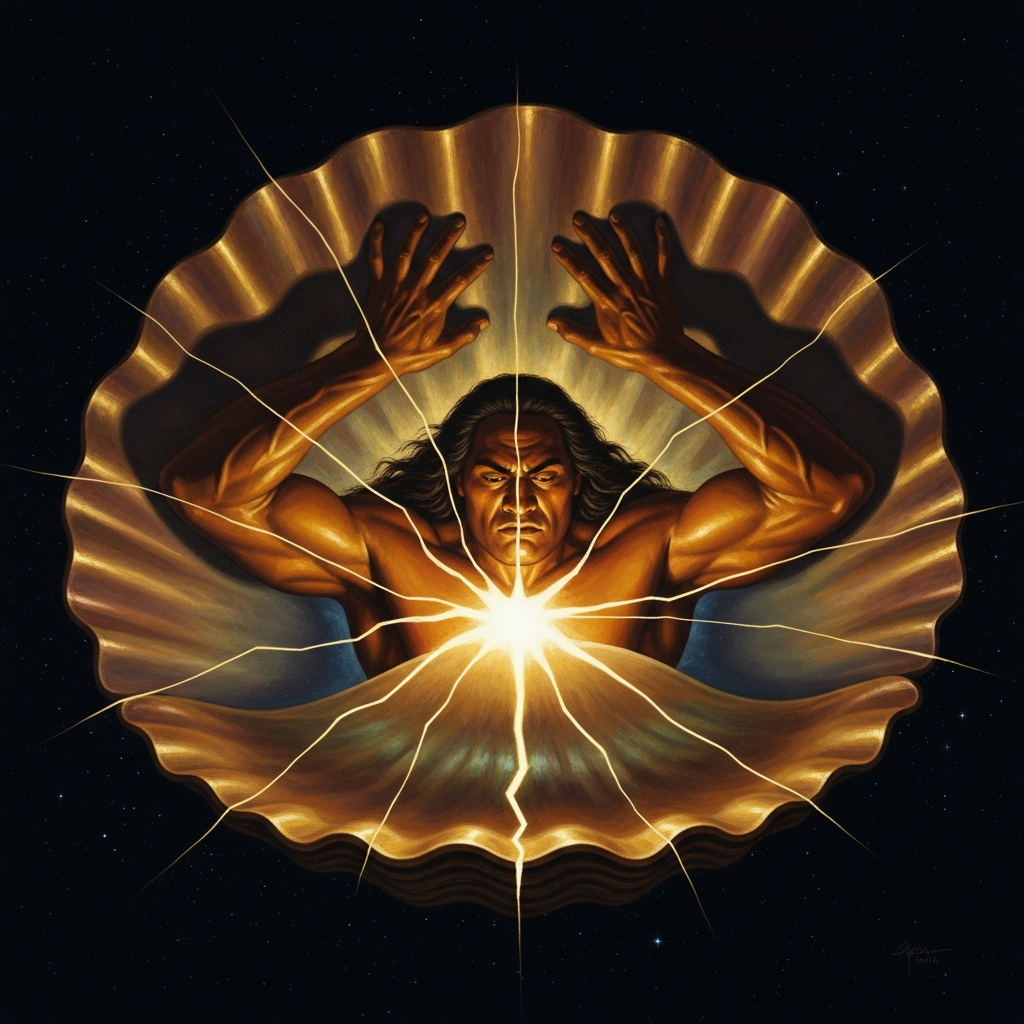
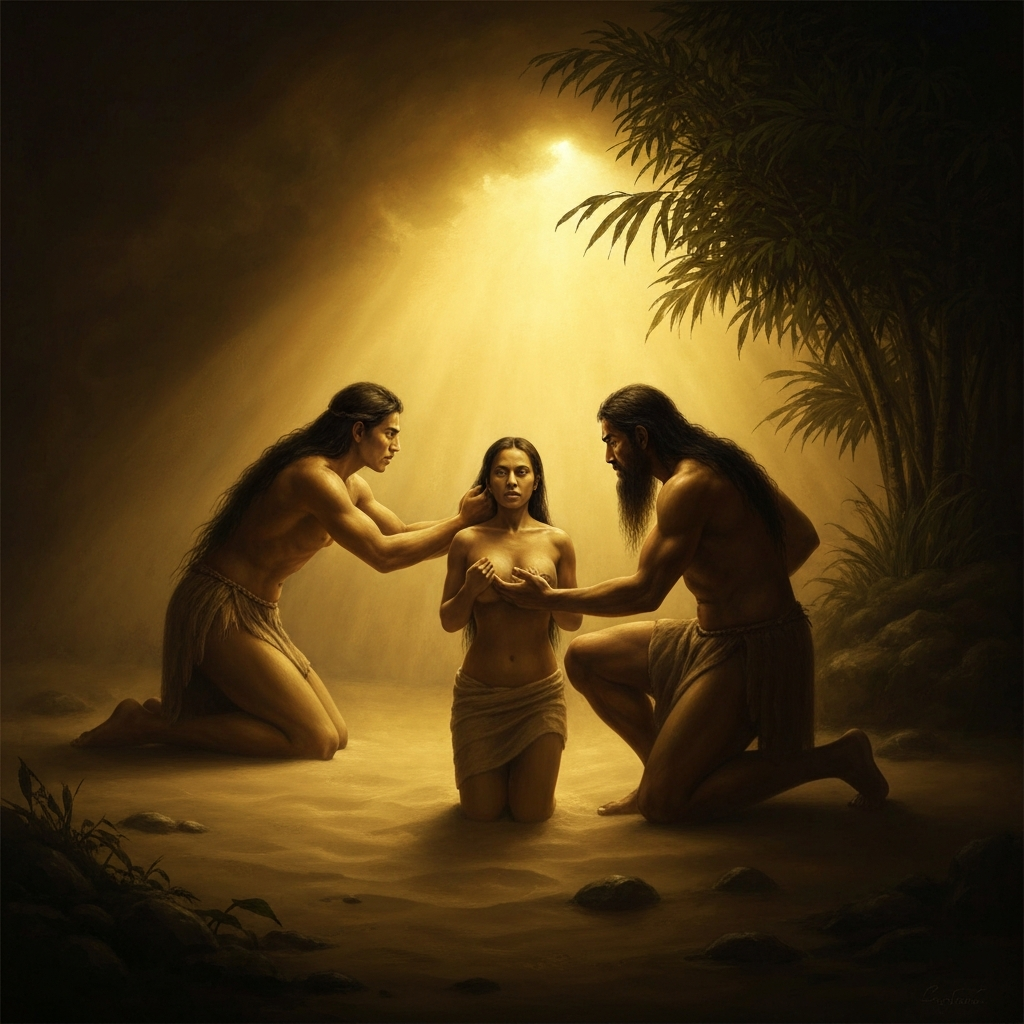
In the oldest layer of Polynesian cosmology, Tangaroa is not merely a god who rules the sea — he is the sea, his body is the ocean, and the fish that swim in him are his children, while the islands that rise from the water are his thought made solid.
- When
- before mythic time — the condition of the primordial world
- Where
- The Pacific Ocean — the largest body of water on earth
Before the fish were separate from the sea, they were the sea.
This is the oldest layer of the teaching about Tangaroa: the fish and the ocean are the same being in different modes, the way a wave and the water it moves through are the same substance expressing itself differently. The fish are Tangaroa’s thought, moving through Tangaroa’s body. The islands that rise from the ocean are where Tangaroa’s thought became solid — where the god, for reasons the cosmological chants do not fully articulate, decided to hold still and be touchable.
The Pacific Ocean is the largest single thing on the surface of the earth.
It is not a metaphor for something — it is itself. Its depth at the Mariana Trench is eleven kilometers. The pressure at that depth is a thousand times the pressure at the surface. The ecosystems in the abyssal zone are dependent on the dead bodies falling from above, snow of organic matter drifting downward for months before reaching the floor. Bioluminescent creatures generate their own light because no sunlight reaches where they live. The deep Pacific is a fully functional world that has never been seen by any human eye.
Tangaroa is in all of it.
Not symbolically present — actually present, in the way that a god who is the ocean rather than the god of the ocean is present in every molecule of salt water. The question the Pacific traditions ask about the ocean is not “who governs this?” but “what is this, essentially?” And the answer they give is: this is Tangaroa, and Tangaroa is this.
The navigators who cross Tangaroa’s body do not believe they are traveling through a thing. They are traveling through a being. The prayers they make before departure and during the voyage and after arrival are not petitions to an external authority — they are communications with the medium they are moving through. The ocean hears the prayers because the ocean is the one being addressed.
The fish that come up in the net are Tangaroa’s children offering themselves. This is the theological structure that explains the first-catch rituals, the return of part of the catch to the sea, the prayers that precede fishing. You are taking from a being. You acknowledge the taking. The acknowledgment is the relationship, and the relationship is what makes the sea willing to continue giving.
The islands that rise from the ocean — the volcanic islands, the coral atolls, the raised limestone platforms — are places where Tangaroa’s body has hardened into land. The people who live on islands are living on Tangaroa. They have built their fires and planted their taro and buried their dead in the body of the god who is the ocean. The island is the ocean’s thought made solid enough to stand on.
This is why the ocean is never far from any Polynesian settlement. Not because the islands are small and the ocean is large — though both things are true — but because the distinction between land and ocean is, in this theology, a surface distinction. Below the surface, the rock of the island and the water of the sea are the same substance in different states. Both are Tangaroa. The person standing on the black volcanic rock at the shoreline is standing at the place where the god is most clearly himself — at the edge where his solid thought meets his fluid body.
The fish swim. The ocean moves. The islands stand where they stand. Tangaroa watches with an attention that is not the attention of an observer but of something attending to its own being — the sea paying attention to what the sea does. The waves are the surface of that attention. They have been moving since before there were eyes to see them.
Echoes Across Traditions
Entities
- Tangaroa
- the fish (his children)
- the ocean (his body)

Sources
- Sir George Grey, *Polynesian Mythology* (1855)
- E.S. Craighill Handy, *Polynesian Religion* (1927)
- Te Rangi Hīroa (Peter Buck), *Vikings of the Sunrise* (1938)
- Anne Salmond, *Tears of Rangi: Experiments Across Worlds* (2017)