Tāne Shapes the First Woman
Mythic time — the age of first creation · Kurawaka (the red earth) — the sacred sand-dune where the first human body was made
Contents
Tāne, god of forests and light, molds a woman from the sand at Kurawaka, breathes life into her nostrils, and calls her Hineahuone. She bears him a daughter. He takes that daughter as his wife without telling her who he is. When she finds out, she walks into the underworld — and becomes the goddess of death, not as punishment, but as an act of love.
- When
- Mythic time — the age of first creation
- Where
- Kurawaka (the red earth) — the sacred sand-dune where the first human body was made
Before there is a woman, there is only sand.
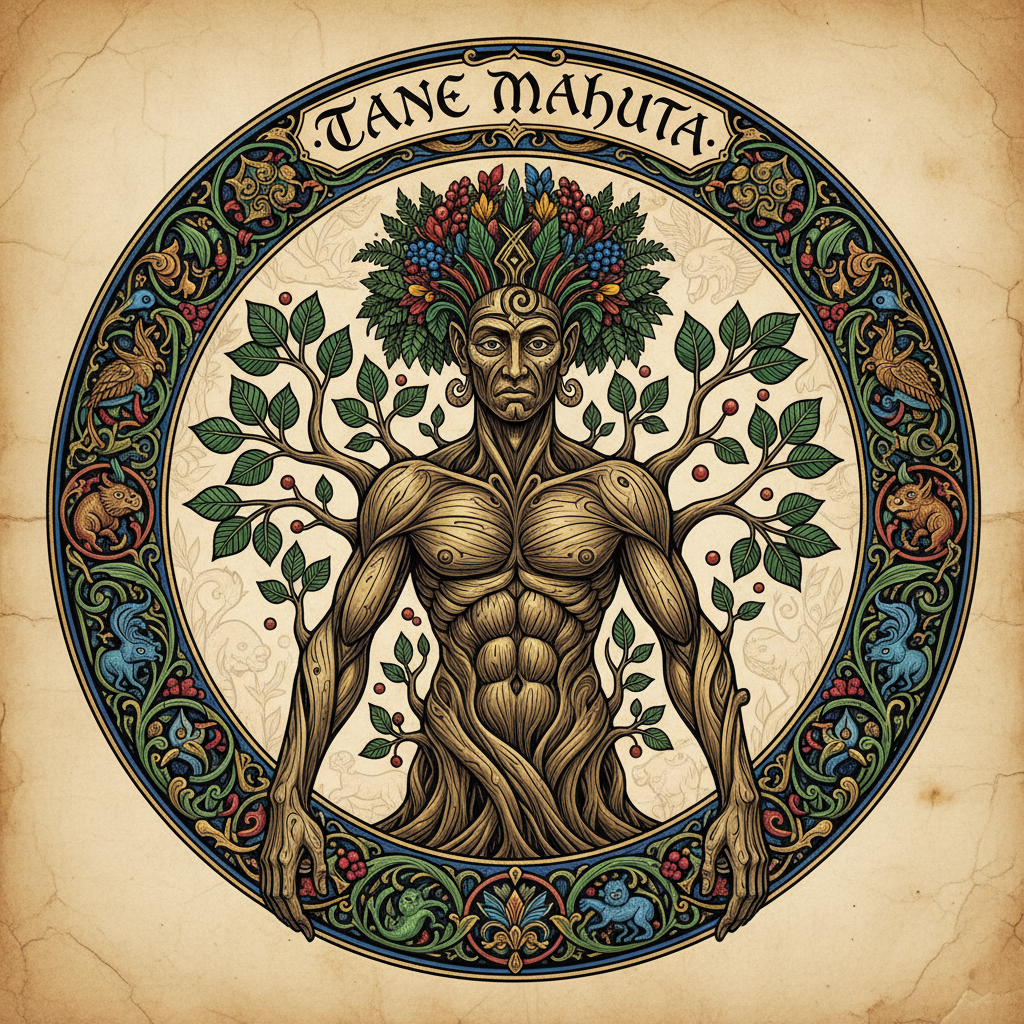
Tāne stands at Kurawaka — the red earth, the place of first making — and he is alone in a world that has everything except a person with the same shape as himself. He has already done immense things. He separated his parents, the Sky and the Earth, pushing them apart with his shoulders and his feet to let light in. He grew the first forest and hung the stars. He clothed the body of his mother Papa with trees and birds and the moss that makes stone feel ancient. He is the god of forests, of birds, of light, of men — tāne means man — and yet he is the only one.
He kneels at the sand and he begins to work.
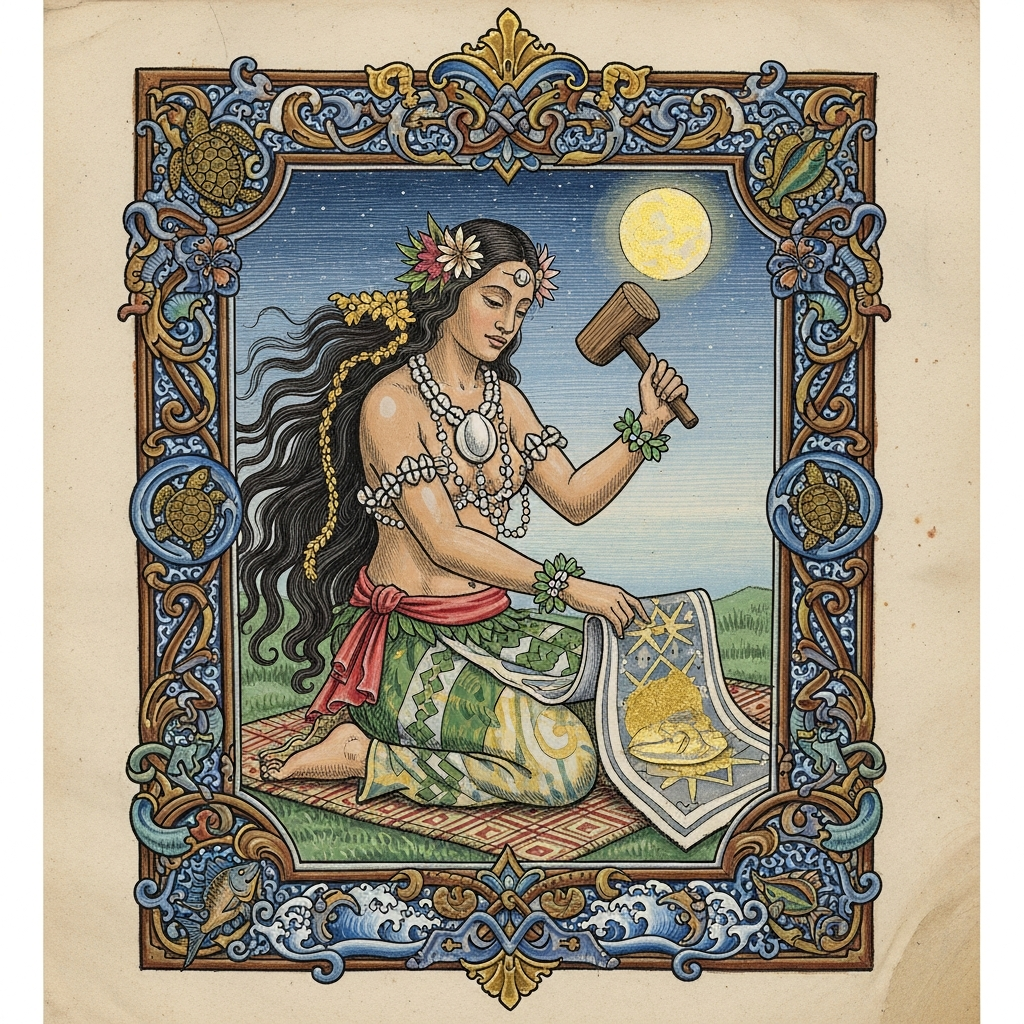
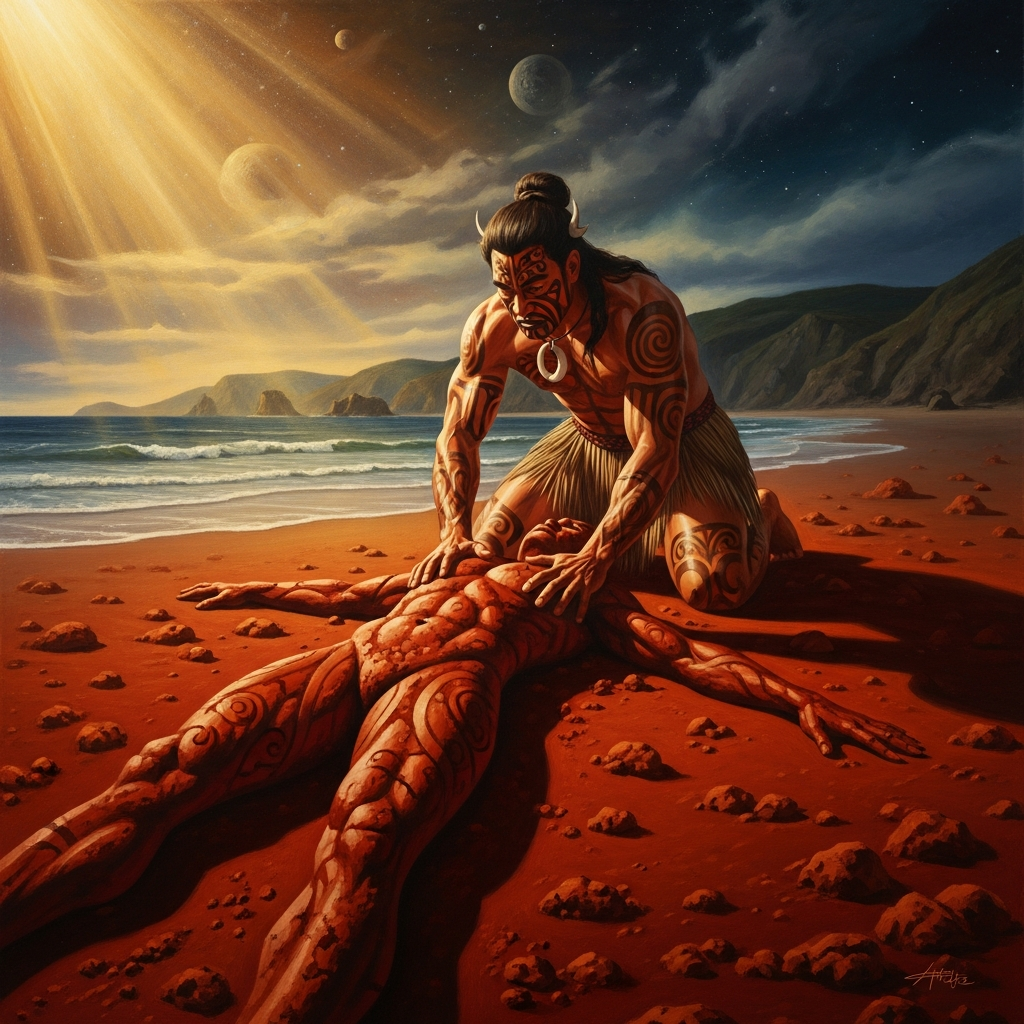
He takes the red earth of Kurawaka and molds it with his hands. He works slowly, with the attention of someone who knows this will only happen once. A head. A torso. The long bones of arms. The curved bones of ribs. He compacts the sand into something dense enough to hold, presses his thumb along the lines that will become a cheek, a chin. He gives her fingers with the same care a carver gives a figure in greenstone — not because he needs to, but because the detail is what separates a body from a shape.
When the form is finished, he bends over her face.
He puts his mouth to her nostrils and breathes.
Once. Twice.
She sneezes.
Then she opens her eyes.
He calls her Hineahuone — the Earth-Formed Maiden, the woman made from the ground. She is the first: the first human woman, the first body that was never born but assembled, the prototype of every person who will come after her. She looks up at the sky and then at Tāne and she does not know yet what she is looking at, which is both her maker and, from this moment forward, her husband.
He takes her as his wife. He does not explain this. This is the way of the age of first creation — things happen because the god who can make them happen decides they should. Hineahuone accepts. She has no context for refusal. She does not know yet that there is a world in which a choice like this could be examined.
She bears him a daughter.
The daughter’s name is Hine-titama — the Dawn Maiden. She is born luminous, the color of the sky before sunrise, and she is the most beautiful thing the world has yet produced, which is saying something in a world that already contains the forest and the stars and the deep Pacific.
Tāne takes her as his wife also.
He does not tell her who he is.
In the accounts, there is no explanation for this. Perhaps he cannot. Perhaps the admission would undo something. Perhaps what he has done exists in the mythic space before human language developed the category of wrong, and he simply moves through it the way water moves through country it does not understand, following the lowest gradient.
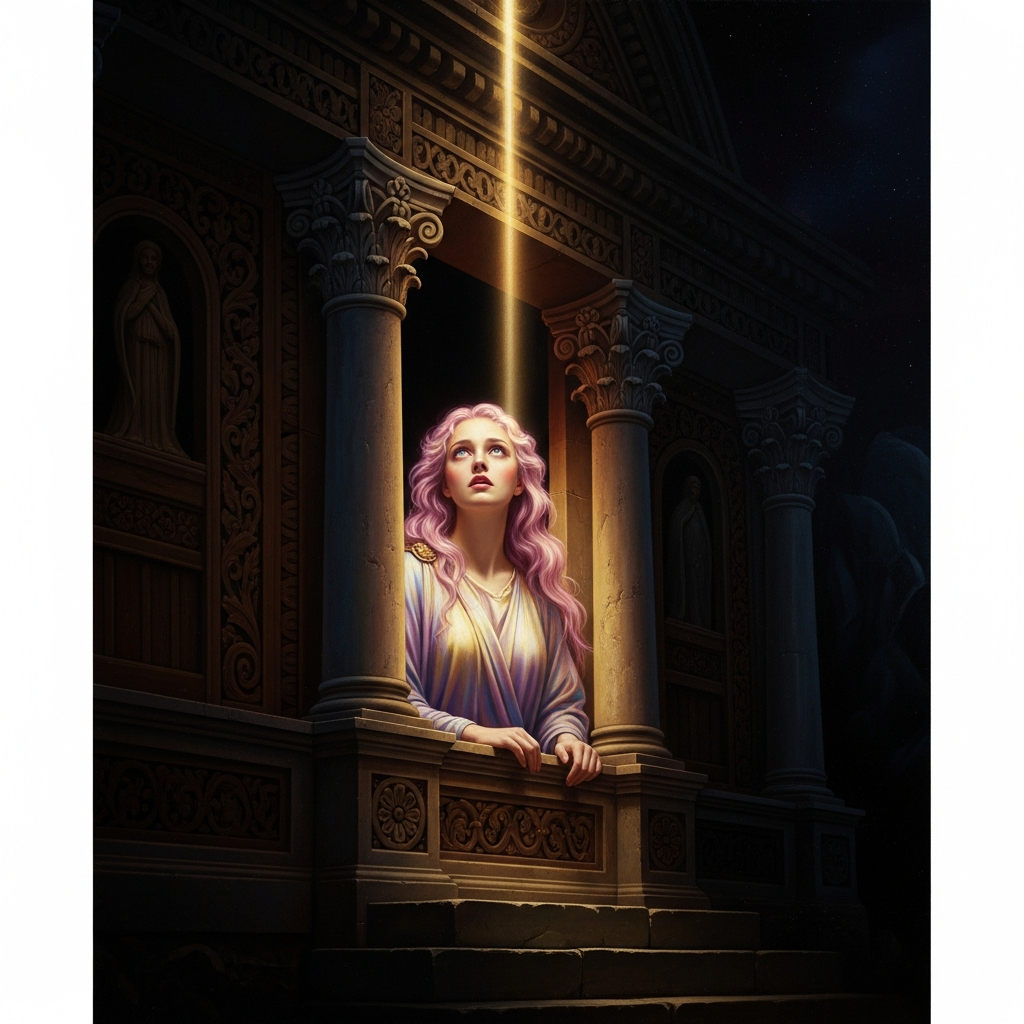
Hine-titama does not know for some time. She raises their children. She moves through the world. She asks the question eventually — the way all questions that cannot be avoided are eventually asked, not because the asker has found courage but because she has run out of places to look that aren’t directly at the thing she’s been avoiding looking at.
She asks Tāne: who is my father?
He does not answer.
The people around her gesture toward the carved posts of the house — the ancestral figures, the tīpuna, the voiceless pillars — as if to say: ask them. As if to say: it is written somewhere that is not our mouths to speak. The posts say nothing. Stone and wood cannot speak. She follows the direction they gesture, which is away — out of the house, into the world, toward the horizon that is furthest from the light.
She understands.
She does not collapse. She does not scream. The accounts give her a terrible clarity, the kind of clarity that only arrives after the story is already over and there is nothing left to protect.
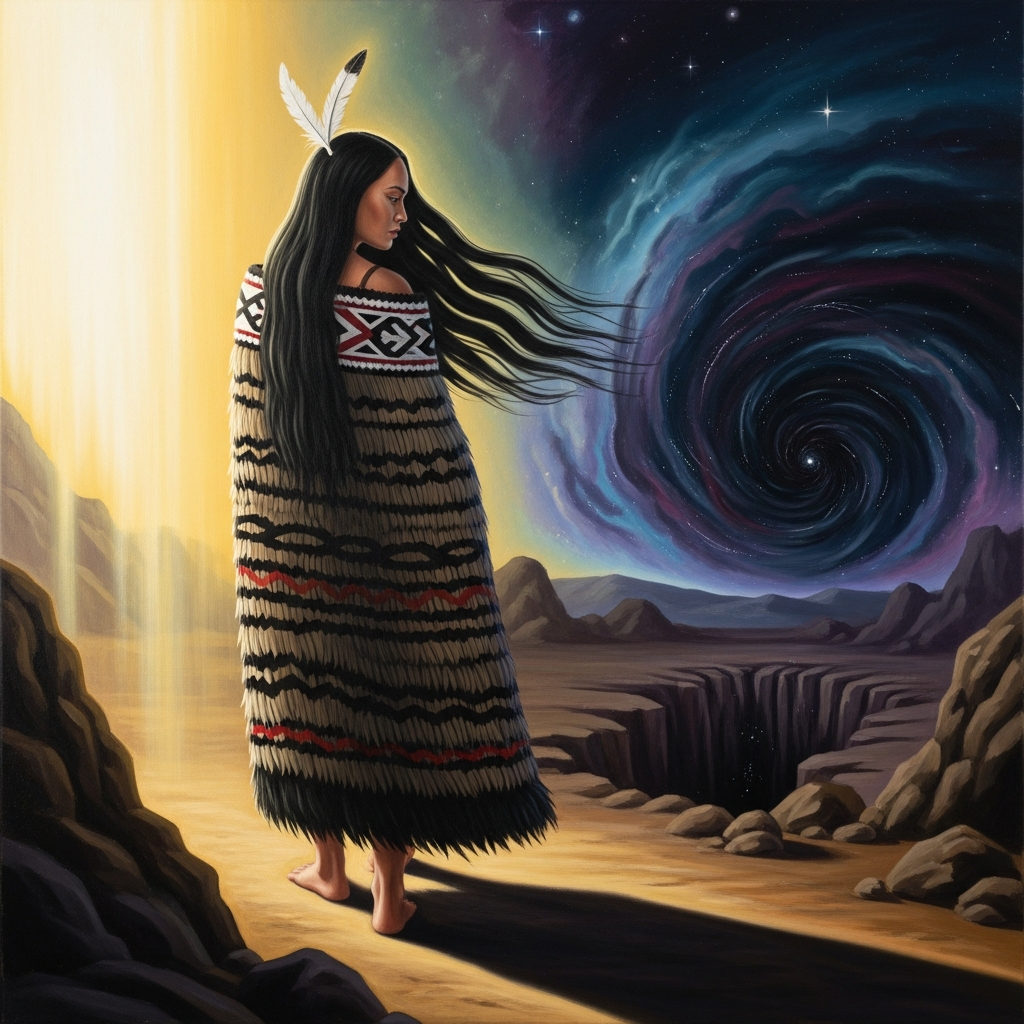
She turns toward the underworld.
At the threshold — at the place where the living world ends and the darkness begins — Tāne catches up to her. He calls after her. Come back. Return to me. The world of light is still the world of light.
She turns and speaks to him across the threshold.
I will go forward, she says, into the night. Let the threads of life remain with you, to draw our children upward toward the light. And I will go here below, to gather them in as they come down.
She is telling him something precise: she is not abandoning the children. She is going ahead of them. She will be there at the end of every life, in the dark, waiting. Not as punishment. Not as revenge. As the mother who gets to the place first and waits for the others to arrive.
She descends.
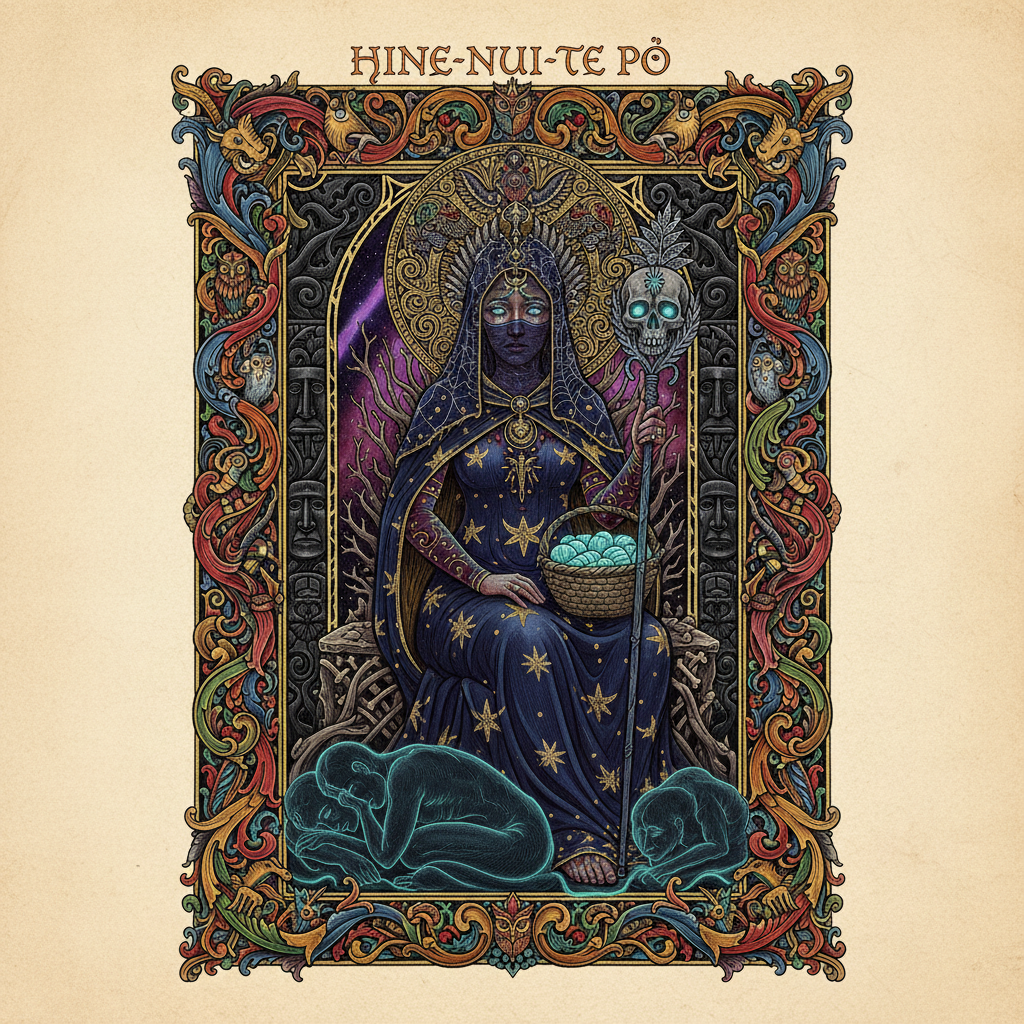
She becomes Hine-nui-te-pō — the Great Woman of the Night — the enormous presence at the edge of the world, the goddess of death whose obsidian eyes open when a trickster tries to pass through her and live. She will crush Māui there. She will receive every person who dies. She will hold them in the darkness she chose because the light had nothing in it she could trust.
The gods of death in other traditions are appointed, or cursed, or born to it. Hine-nui-te-pō applied.
She looked at what had been done to her — the father who made her mother and then made her his wife without ever letting either of them know the shape of what they were part of — and she decided she would rather govern death than live in a world where that kind of knowledge keeps arriving.
The Dawn Maiden chose the night.
She did it so that when her children come down, at the end of their lives, they do not arrive alone in the dark. They arrive to someone who has been there longer than they have, who knows the place, who is large enough to hold them.
This is why the Māori say that death is not the enemy.
She is the mother who went ahead.
Tāne’s breath is in every living person — the first breath he breathed into the red earth at Kurawaka, passed forward through every birth. And Hine-nui-te-pō holds the door at the other end. Between them, the two who destroyed each other, all human life moves: started by one, received by the other, and nowhere in between is any person ever entirely without the presence of what made them.
Scenes
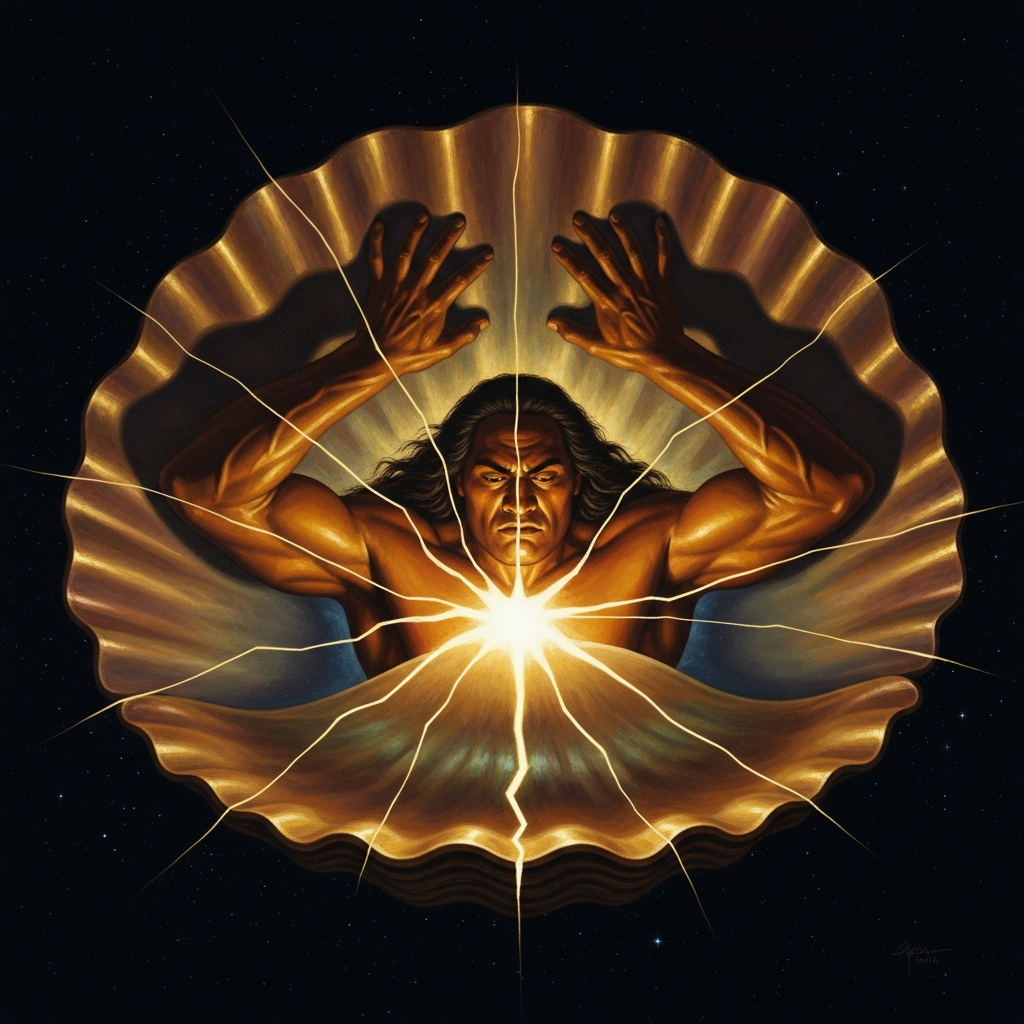
Tāne on the beach at Kurawaka, his hands pressing the red earth into a human form, the first body that has ever existed
 Generating art…
 The Dawn Maiden at the post of the house, asking who her father is — and the terrible silence that follows
 Generating art…
 Hine-titama turning toward the underworld, walking away from the light she was named for, choosing to become the darkness that will receive her children
 Generating art…
 Echoes Across Traditions
Entities
- Tāne-mahuta
- Hineahuone
- Hine-titama
- Hine-nui-te-pō


Sources
- George Grey, *Polynesian Mythology* (1855)
- Elsdon Best, *Maori Religion and Mythology* (1924)
- Margaret Orbell, *The Illustrated Encyclopedia of Maori Myth and Legend* (1995)
- Anne Salmond, *Tears of Rangi* (2017)
- Te Rangikāheke (mid-19th c. Māori manuscripts)