The Separation of Rangi and Papa
Te Kore, Te Pō — the void and the darkness, before time was counted · The place before place — between the body of the sky and the body of the earth
Contents
In the beginning, Sky Father and Earth Mother lie locked together in darkness so total that nothing can grow between them. Their children, pressed into the void between their parents' bodies, argue about what to do. Tāne places his shoulders against the earth and his feet against the sky and pushes. The scream of separation is the first light.
- When
- Te Kore, Te Pō — the void and the darkness, before time was counted
- Where
- The place before place — between the body of the sky and the body of the earth
In the beginning there is only the embrace.
Ranginui — the Sky Father — holds Papatūānuku — the Earth Mother — and she holds him, and they have been holding each other since before time understood itself as time. They are pressed together absolutely: his chest against her back, her warmth against his cold, no gap between them wide enough for light. This is not a metaphor. This is the literal condition of the primordial world — sky and earth fused, the first marriage, the marriage that precedes everything.
Their children live between them.
They live in the dark, in the compressed space between their parents’ bodies, in what the accounts call Te Kore — the void — and then Te Pō — the night. They are gods already, or will be: Tāne, who will become forests and birds and men. Tangaroa, who will become the sea and its fish. Rongo, who will tend the cultivated earth. Haumia-tiketike, who will govern the food that grows wild. Tūmatauenga, who will become war. Tāwhirimātea, who governs the wind and storm.
They are cramped. They cannot grow. Nothing can grow here. Even gods require light.
They argue in the dark.
Rongo speaks first: We should separate them. He says it gently, because he is gentle. He is the god of the kūmara, the cultivated plant, and cultivated things require care in their phrasing.
Tangaroa agrees. He is restless; he is always in motion, the way water is always in motion. Haumia agrees too, and Rongo again, and the argument gathers momentum in the dark like a current gathering in still water.
Tūmatauenga does not want to separate them. He wants to kill them.
This is his first answer to every problem, and the other brothers regard it with the affection-tinged weariness of siblings who have heard this particular suggestion before. They note it. They move past it.
Tāwhirimātea says nothing for a long time. Then he says: No. Do not separate them. I will not be part of this. And if you do it, I will be against you for as long as the world lasts.
No one understands, yet, how long that will be.
Tāne does not speak during the debate. He is the youngest voice, or nearly. When the others have said what they have to say, he lies down.
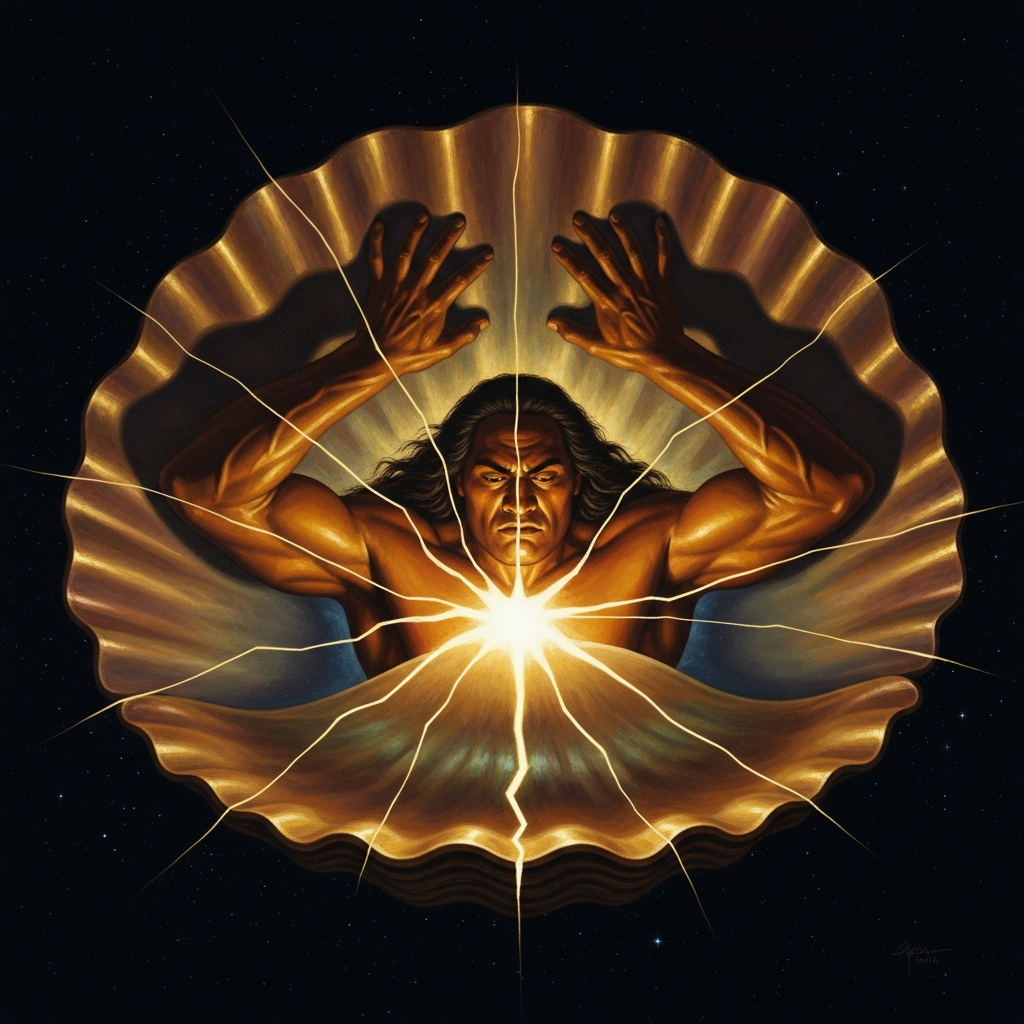
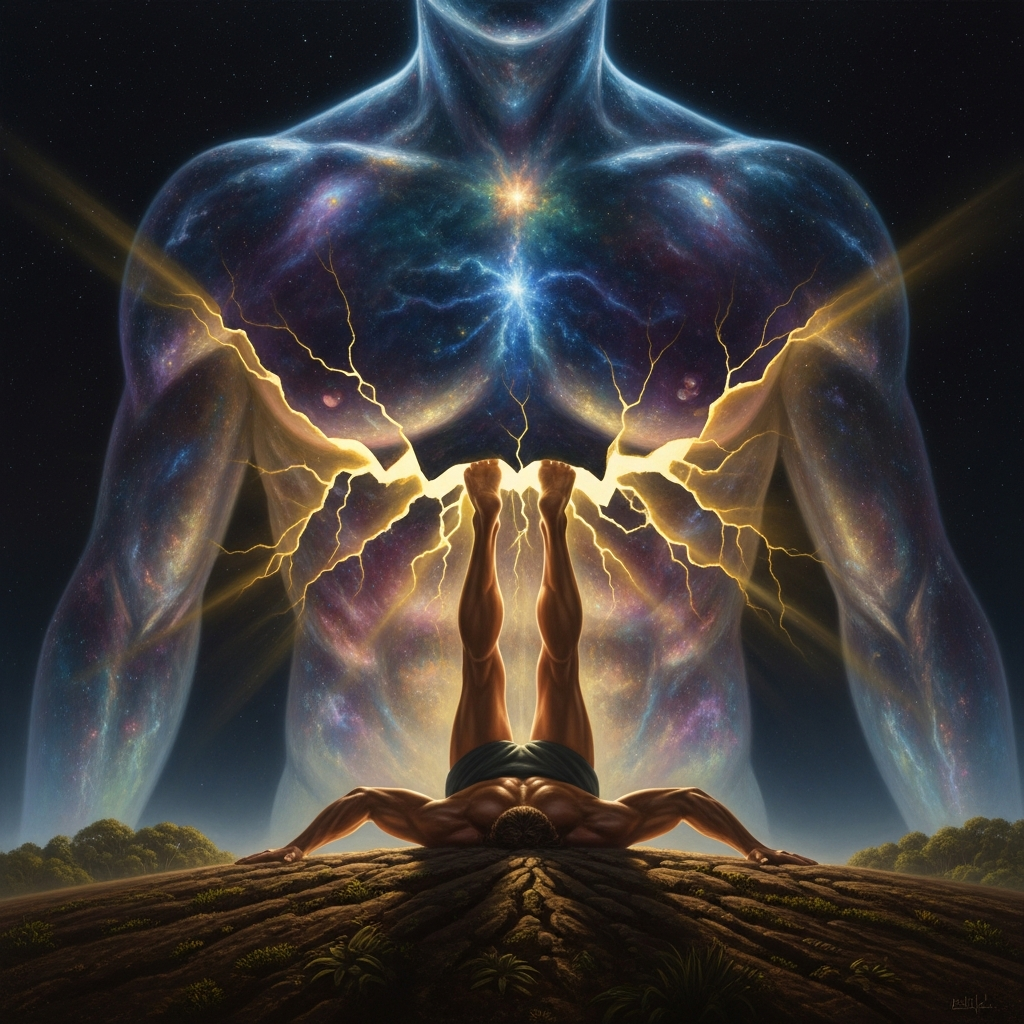
He lies on his back on his mother’s body — on the warm earth, on Papa — and he plants his shoulders into her and raises his feet toward his father’s chest. He does not ask permission. He does not announce what he is about to do. He simply positions himself, breathes in, and begins to push.
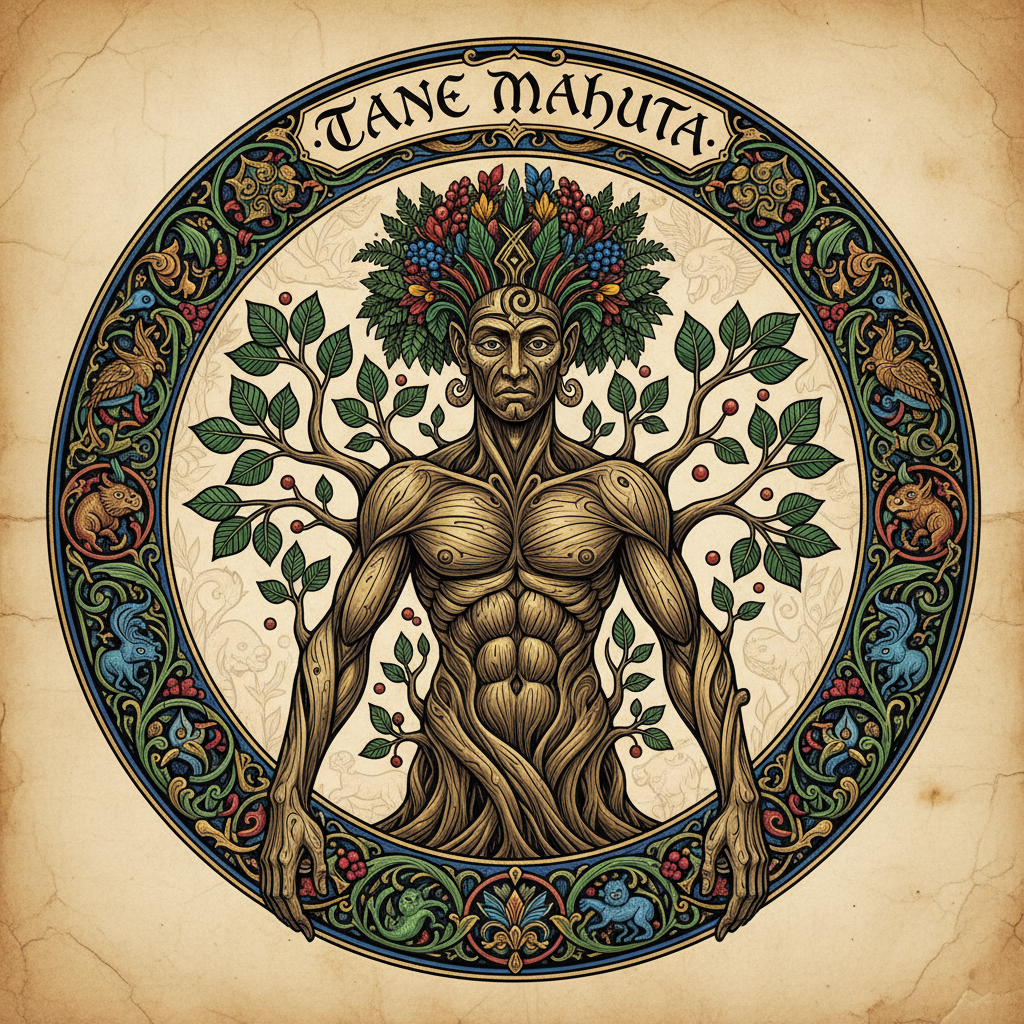
His legs are the legs of the kauri tree, the great forest tree, the tree that grows straight for a hundred years. His shoulders are the roots. He is the column between earth and sky, the living distance, the first upward gesture in a world that has never had up and down before.
He pushes.
At first nothing moves.
The embrace of Sky and Earth is not simply a posture; it is a condition of reality, the way water being wet is not a posture but a condition of water. Tāne pushes against it and the darkness does not change. His brothers watch — or rather feel, in the dark — his effort, and then Rongo puts his strength alongside Tāne’s, and Tangaroa, and Haumia, and finally Tūmatauenga, who has stopped campaigning for murder and decided that separation, while insufficient, is at least something.
The only one who does not help is Tāwhirimātea.
He stands against his mother’s body, his arms around her, weeping in the dark.
The crack is the first sound.
Not the first sound any of them have made — they have been speaking in the dark for an eternity — but the first sound the world makes. It is the sound of Rangi and Papa being pulled apart, the deep groan of stone separating from stone, of sky peeling away from earth, of two bodies that have held each other since before time began being told, by the feet of their own child, that the holding is over.
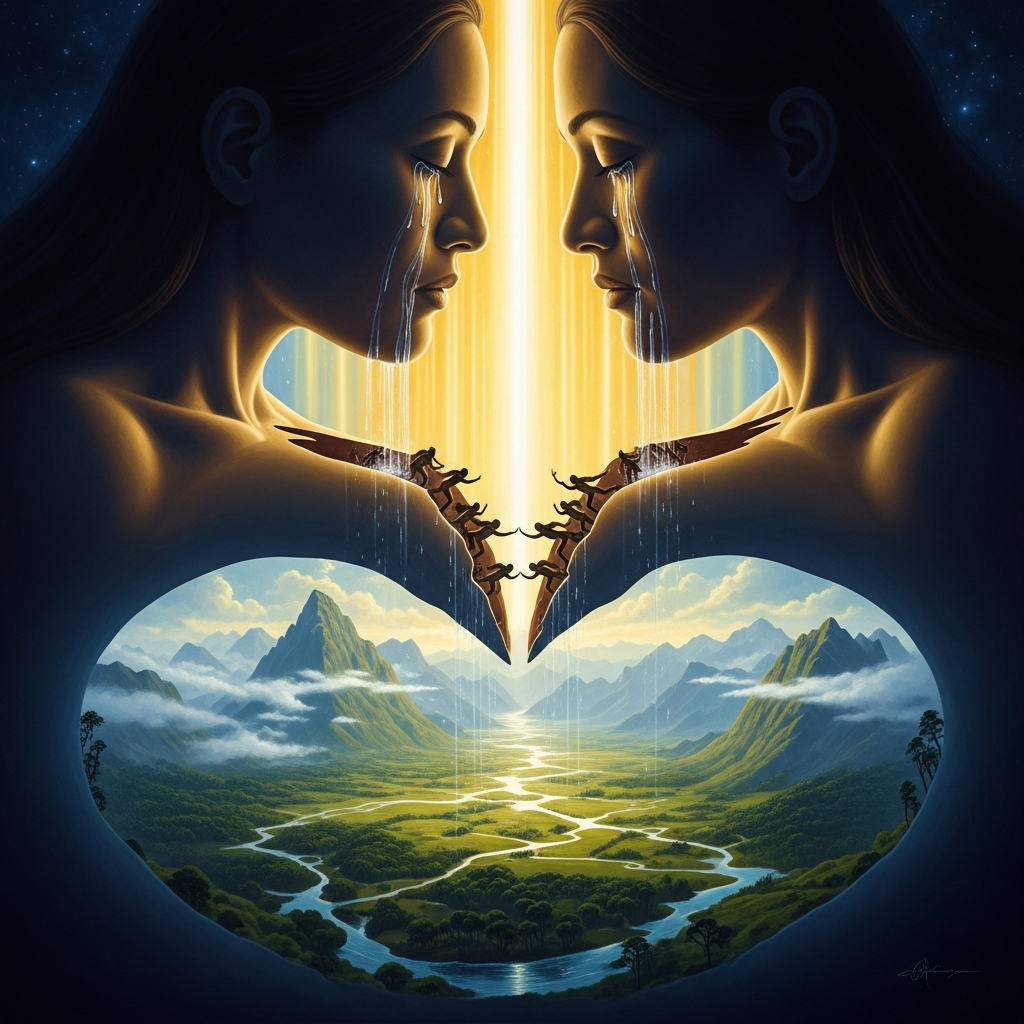
The light comes through the crack.
This is the first light. Not sunrise — that comes later, when Tāne will hang the sun in the new sky like a lantern on a cord. This is the light that exists before the sun: the raw light of separation, the light that falls through any gap wide enough to let it pass. It is cold and it is absolute and the children see each other for the first time, their own faces, their own shapes, the world they have been pressed into without ever being able to see it.
Papa below them: dark, warm, enormous, her body the whole of the ground.
Rangi above: cold, vast, his eyes fixed on the face of his wife receding below him.
The distance between them is the sky.
Rangi weeps.
His tears fall as rain. This is not a metaphor either. The Māori said: rain is the grief of the Sky Father for his separation from the Earth Mother. Every rainstorm is a god crying. The droplets that fall on the forest canopy, on the river, on the open Pacific, on the face of a person standing outside in weather — all of it is Rangi’s grief, continuous, uncountable, the grief of someone who has been held and is no longer held and cannot stop marking that difference.
Papa turns her face into the earth. The geothermal heat — the warmth that rises from deep below the ground — is her response, her grief moving in the other direction, down and inward, heating the rock from inside. She cannot look up at him. She turns away.
Tāwhirimātea, whose argument against this they did not heed, keeps his promise.
He rises into the newly opened sky and turns himself against his brothers. He is the storm, from this point forward, the wind that batters the forest Tāne grows, the gale that scatters the fish Tangaroa tends, the weather that ruins the crops Rongo cultivates. He is the brother who said no and meant it, and the world is shaped by his refusal the way shorelines are shaped by waves — relentlessly, without mercy, from a grief that does not diminish.
But the light holds.
Between the weeping sky and the warm earth, between the father who cannot stop grieving and the mother who cannot look up, the space that opened is full of everything: the forest growing upward, the fish multiplying in the sea, the first people learning to read the sky the parents make with their sorrow. The world exists in the distance between two people who wanted to stay together and couldn’t.
This is where we live.
The Māori do not call the separation a good thing. They call it necessary. There is no word in the myth for progress, for improvement, for a universe made better by what Tāne did. There is only: the light came in. Things could grow. The children could see. And their parents, above and below, grieve each other forever — which is why it rains, and why the earth is warm, and why the space between the sky and the ground feels, on certain evenings, like something more than mere atmosphere.
Scenes
The primordial embrace — Sky and Earth pressed together, their children moving in the absolute dark between their bodies, debating how to survive
 Generating art…
 Tāne inverted, shoulders on the Earth, his feet rising against the Sky Father's chest, the moment before the crack
 Generating art…
 The separation — light pouring through the gap between parents for the first time, Rangi's tears falling as rain, the world opening like a wound into beauty
 Generating art…
 Echoes Across Traditions
Entities
- Ranginui (Sky Father)
- Papatūānuku (Earth Mother)
- Tāne-mahuta
- Tūmatauenga
- Tāwhirimātea
- Tangaroa
- Rongo
- Haumia-tiketike


Sources
- George Grey, *Polynesian Mythology* (1855)
- Elsdon Best, *Maori Religion and Mythology* (1924)
- Anne Salmond, *Tears of Rangi* (2017)
- Te Rangikāheke (mid-19th c. Māori manuscripts)
- Rangi Mātāmua, *Matariki: The Star of the Year* (2017)