Māui Seeks Immortality
Mythic time — the last act of the age of demigods · Pulotu / Te Pō — the great darkness at the edge of the world
Contents
Māui, the trickster who fished up islands and lassoed the sun, attempts his final and greatest trick: crawling into the sleeping body of Hine-nui-te-pō, goddess of death, to pass through her and steal immortality for all of humankind. He has never failed. He warns the birds to be silent. A fantail laughs.
- When
- Mythic time — the last act of the age of demigods
- Where
- Pulotu / Te Pō — the great darkness at the edge of the world
Before this night, Māui has never stood still.
He was the one who hid in the canoe. Who punched himself in the nose for bait. Who lassoed the sun at dawn with a rope of his sister Hina’s hair and held it down, for hours, while it screamed and burned and bled light, because the days were too short for human work and he had decided to fix that. He has stolen fire from Mahuika, the fire-goddess, burning his hands to the wrist before she relented and gave him the last ember from her thumbnail. He has fished up islands. He has tricked the eel-god. He has deceived his own father and gotten away with it.
He has never, not once, felt genuine doubt.
He feels it now.
Hine-nui-te-pō lies before him at the edge of the world, where the sea falls off into the dark.
She is enormous — the Māori accounts do not soften this — vast as a cliff-face, her hair spread across the horizon behind her like black cloud-cover. She sleeps on her back, and her chest rises and falls with a sound like the tide shifting gravel on a beach. Her eyes, closed, are obsidian. Her mouth is open, and the teeth inside it flash like a barracuda’s caught sideways in light: flint-edged, triangular, packed in rows. She is beautiful in the way a storm is beautiful — the kind of beauty that is indistinguishable, at sufficient scale, from the end of things.
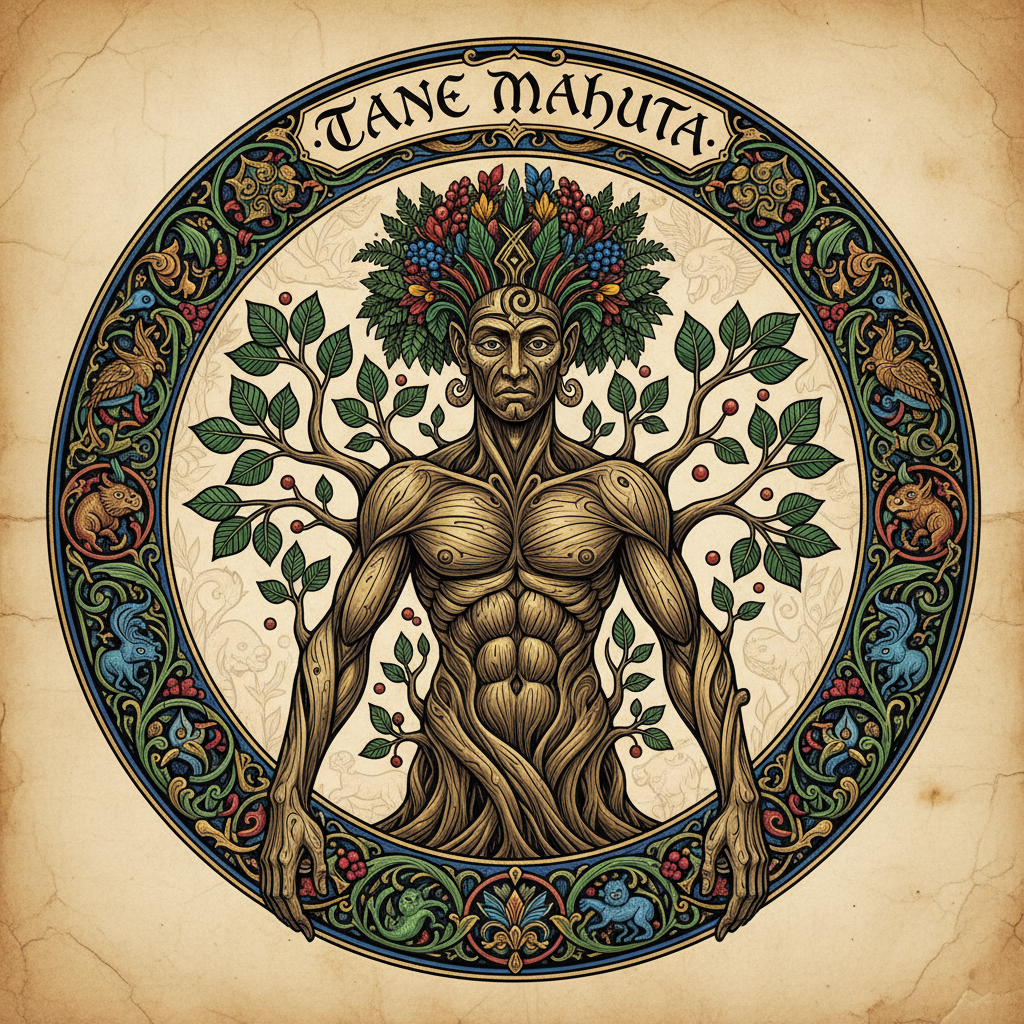
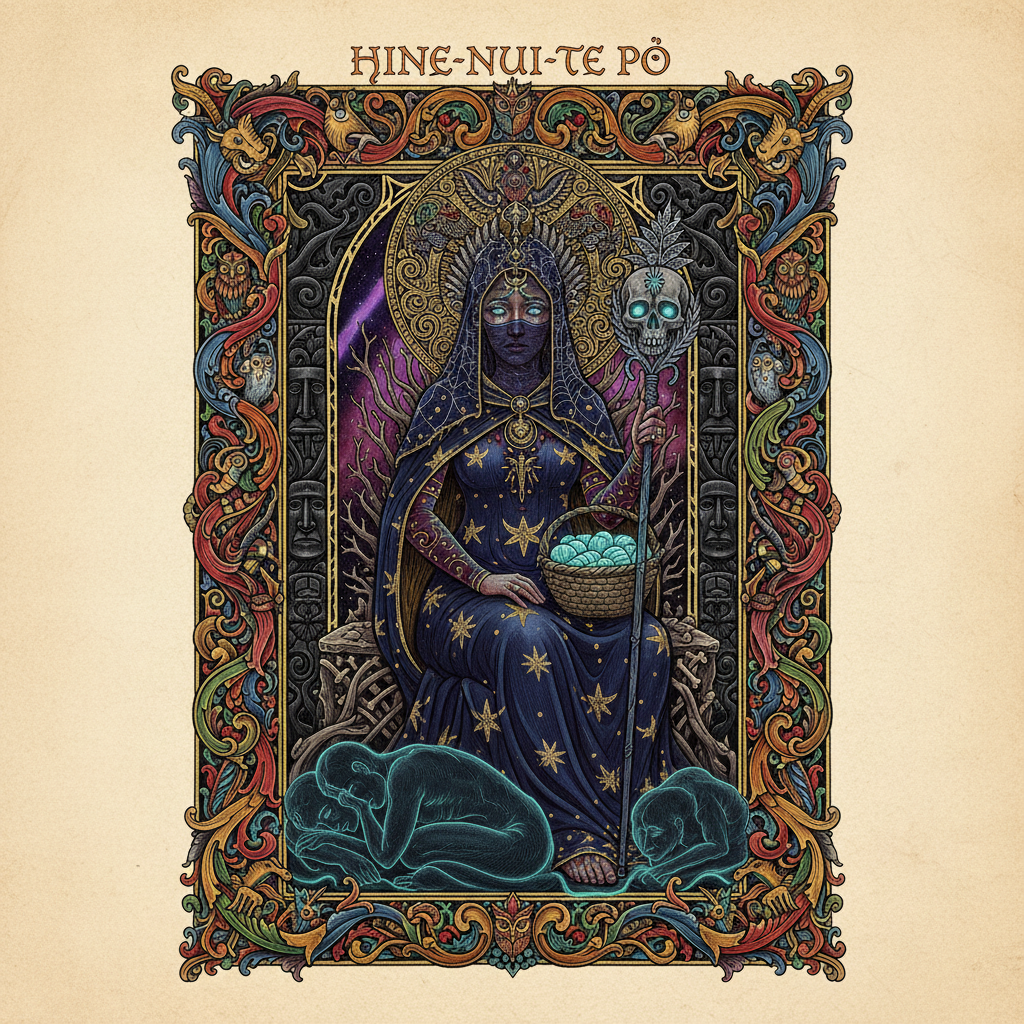
She is Hine-nui-te-pō. The Great Woman of the Night. She was once Hine-titama, the Dawn Maiden, daughter of Tane, until the day she learned who her father was — and descended into the underworld to become its guardian. She made herself into death because the alternative was worse.
Māui’s companions stand behind him. A small company: birds, mostly. The pīwakawaka — the fantail — hops from foot to foot beside him, its tail fanning and closing, fanning and closing, the way it always does, the way it cannot help doing.
Māui does not look at the fantail.
The plan is this: he will enter her body and pass through it. He will come out the other side — through her mouth, past the barracuda-teeth — and when he does, death will be reversed. Not just for him. For all of humankind. His descendants and their descendants and every person alive on the islands he fished up will wake the next morning and the morning after that, and death will be a thing that happened to the old world, before Māui fixed it.
He has explained this to the birds. He has told them to be still. Whatever you see, whatever you think is funny, whatever makes you want to make noise: don’t. Not until I’m through. If she wakes, she kills me. If she kills me, you all die eventually, which is to say: everyone dies, forever, which is the current situation, which I am attempting to resolve. So. Be. Still.
The pīwakawaka fans its tail. It does not speak.
Māui strips off his garments and stands bare in the dark. This is the custom — this is the protocol — though there is no custom for this because no one has done this before. He is the only person who has ever stood here. He breathes in through his nose, the way he breathed in before he punched himself for bait, the way he breathes before any trick, the held-breath before the thing that cannot be undone.
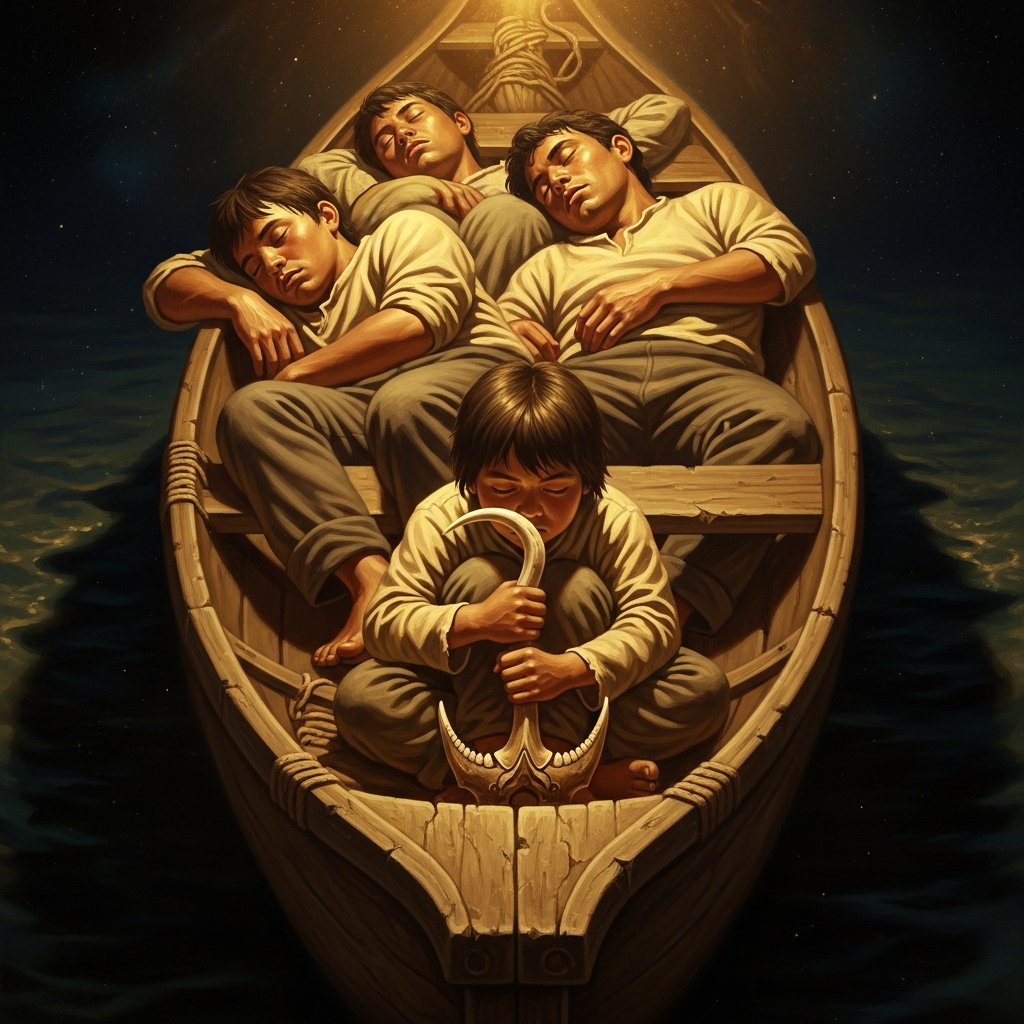
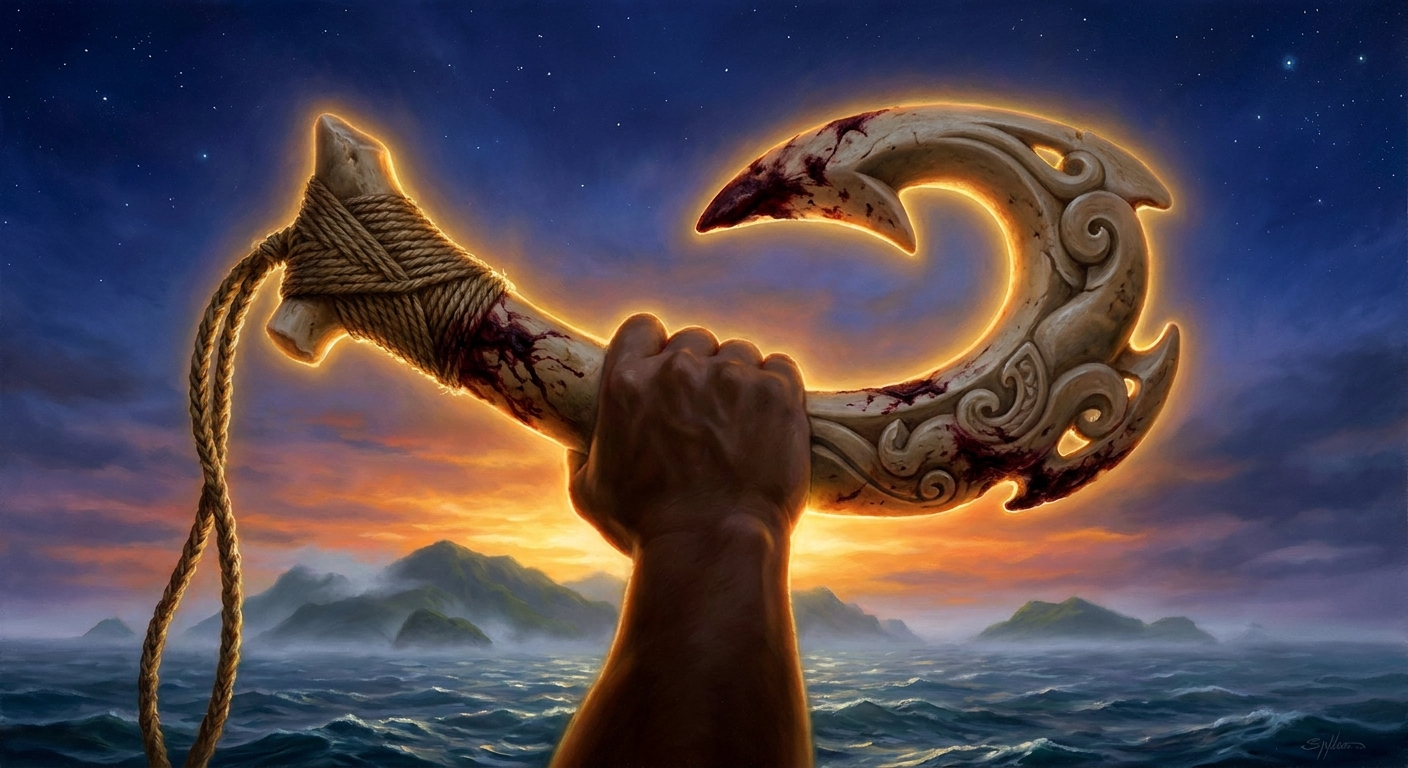
He thinks, briefly, of his grandmother. Of the jawbone she gave him. Of the hook he carved from it. Of everything he has pulled up from below.
Then he goes in.
In the dark of Hine-nui-te-pō’s body, there is no light at all.
He moves forward by feel, by the memory of the plan. He is halfway through, more than halfway, close enough that he can see the far opening, the grey-dark of the sleeping mouth ahead, the triangular teeth like an arch of flint. The cool air beyond her. The world beyond her. The world where death is broken and morning is permanent and his people will live until they decide they are finished living and then they will simply stop, the way fires stop when there is nothing left to burn.
He is almost there.
The pīwakawaka cannot help it.
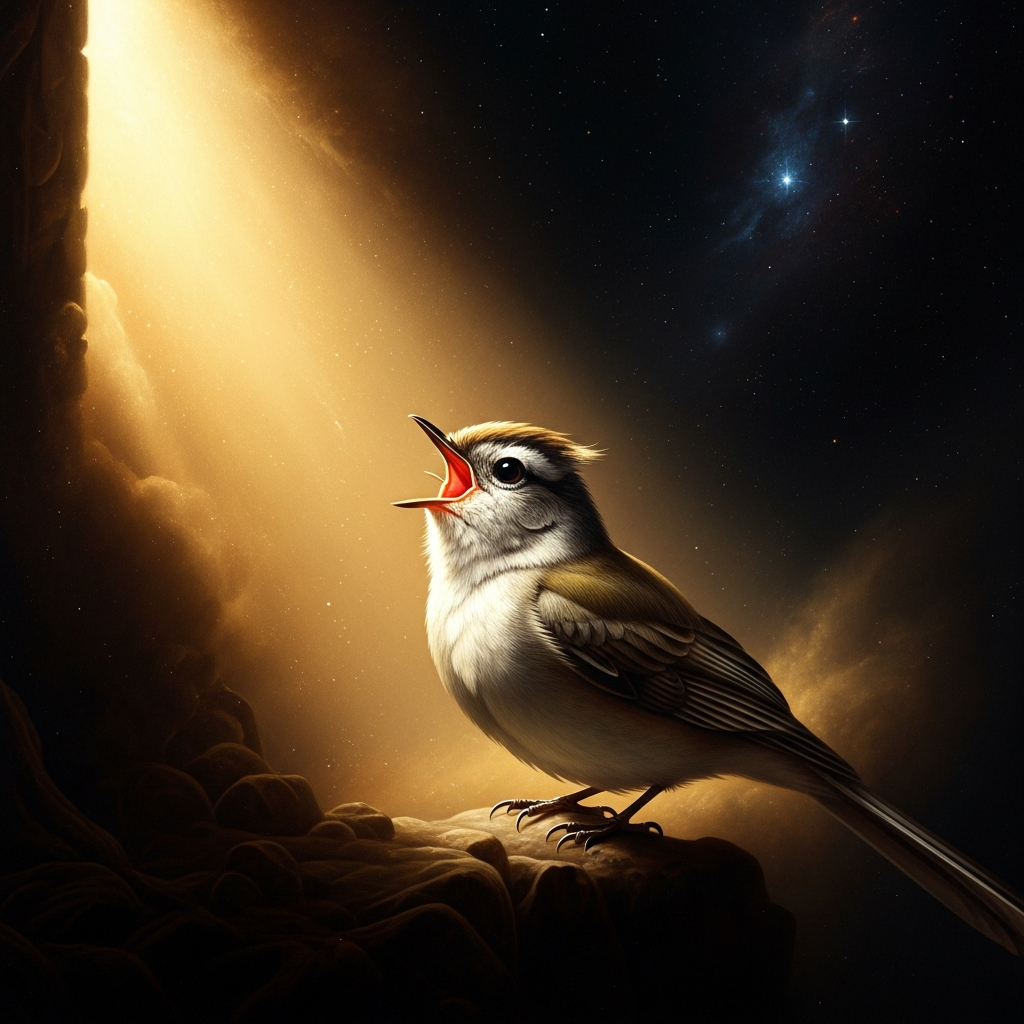
It sees Māui — naked, enormous in the context of a normal bird’s perspective — half-inside the body of the goddess of death, his legs kicking in the open air, and it is the most ridiculous thing the fantail has ever seen in a life spent watching ridiculous things. The laughter starts small, a chittering in the back of its throat, and then it simply breaks open, tumbling out into the night air, light and bright and completely unstoppable.
Hine-nui-te-pō wakes.
Her obsidian eyes open.
Her body closes.
The birds scatter into the dark. The companions run. The pīwakawaka is already gone, already lifting into the night air with its ridiculous fanning tail, carrying the laugh that ended the age of demigods.
Māui does not come out the other side.
He is the last of his kind. The trickster who tricked everything except a bird that could not hold its composure. The demigod who pulled islands out of the ocean and held the sun in place and stole fire from the deep and could not, in the end, get through the body of death without someone laughing at his legs.
This is why humans die. Not because of a design, not because of a decree from on high, not because of a sin committed in a garden. Because a fantail saw something funny and had no self-control. Because the most critical operation in the history of mortality was foiled by a bird the size of your fist.
In the morning, on every island Māui fished up, the people wake and find that death is still waiting. They have always known this. The stories of what almost happened travel with the canoes. They become part of the shape of the ocean — the Pacific’s explanation for its own grief, light and small and impossible to catch.
The pīwakawaka, the New Zealand fantail, is still known as a bird of ill omen. When one enters a house, some Māori say, it is bringing word of death. The tradition remembers. The bird has been carrying the guilt of that night ever since — flicking its tail at the edge of every human habitation, too quick to stay, too associated with what it did to ever entirely belong inside.
Māui’s failure is the Pacific’s gift to the world: the idea that death is not inevitable by nature but by accident. That we almost made it. That the cosmos bent in the right direction and then something small went wrong. This is harder to live with than predestination, and more honest.
Scenes
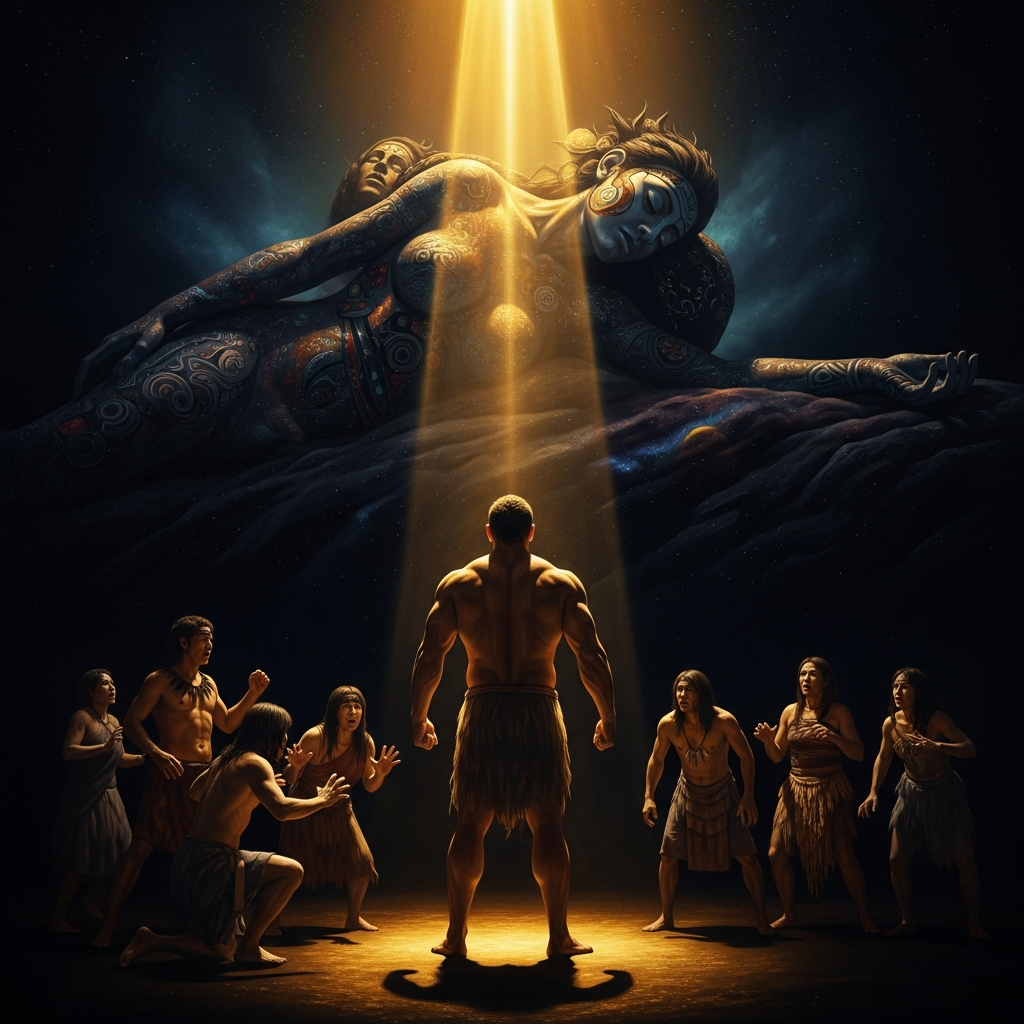
Māui stands naked at the threshold of night, before the sleeping form of the Great Woman of the Night, his companions frozen behind him
 Generating art…
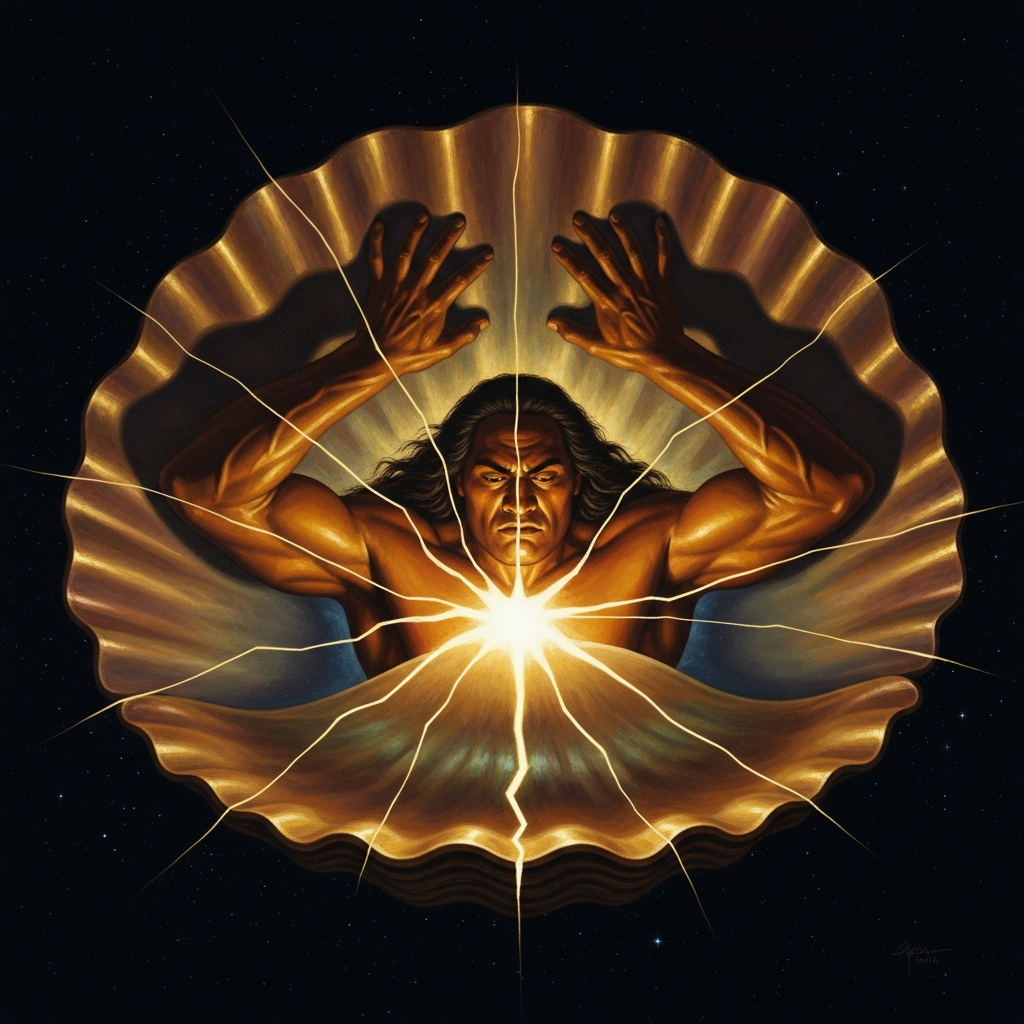
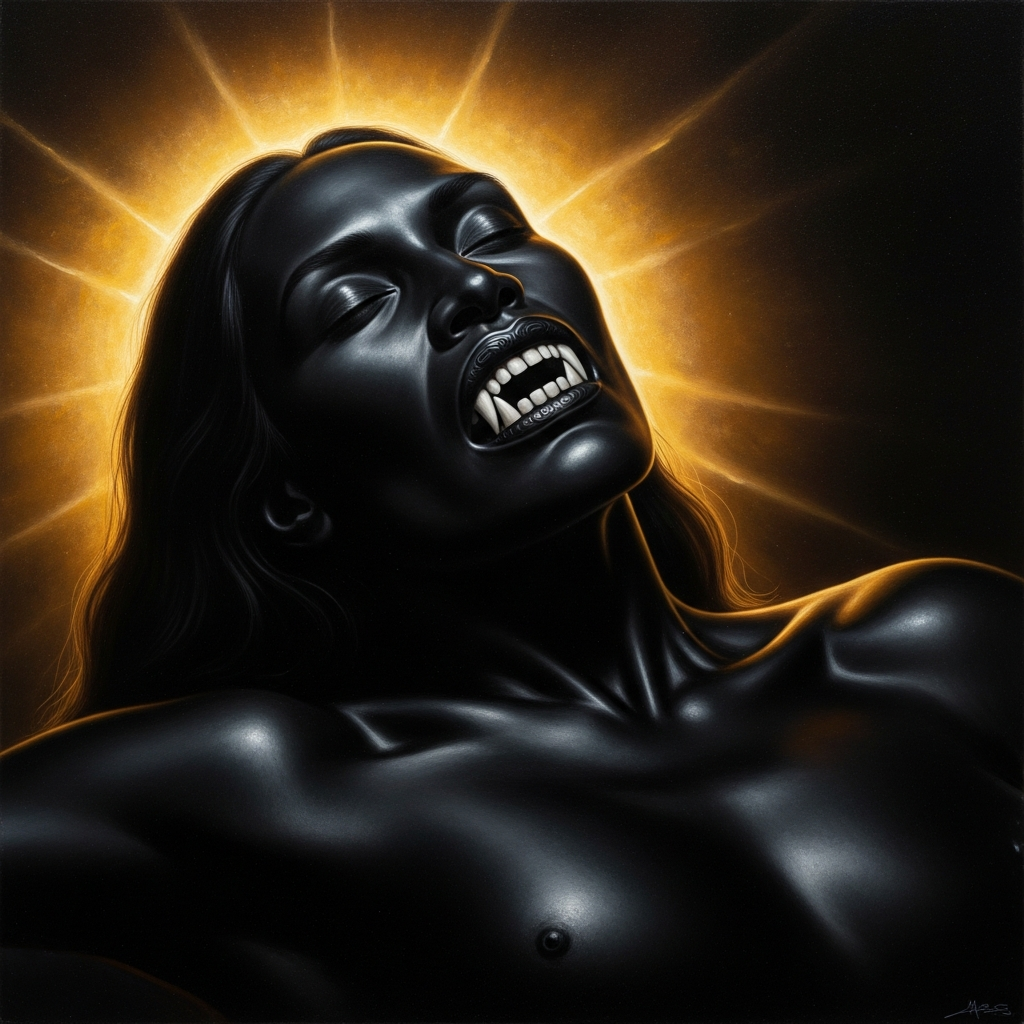
 Hine-nui-te-pō at rest — obsidian eyes closed, her mouth open like a barracuda's, the darkness of her body absolute and total
 Generating art…
 The fantail's open beak
 Generating art…
 Echoes Across Traditions
Entities
- Māui-tikitiki-a-Taranga
- Hine-nui-te-pō
- Pīwakawaka (the fantail)

Sources
- George Grey, *Polynesian Mythology* (1855)
- Martha Beckwith, *Hawaiian Mythology* (1940)
- Elsdon Best, *Maori Religion and Mythology* (1924)
- Te Rangikāheke (mid-19th c. Māori manuscripts)
- Margaret Orbell, *The Illustrated Encyclopedia of Maori Myth and Legend* (1995)