Tiki: The First Man
mythic time — the creation of humanity · The primordial world — the mythic homeland before any island
Contents
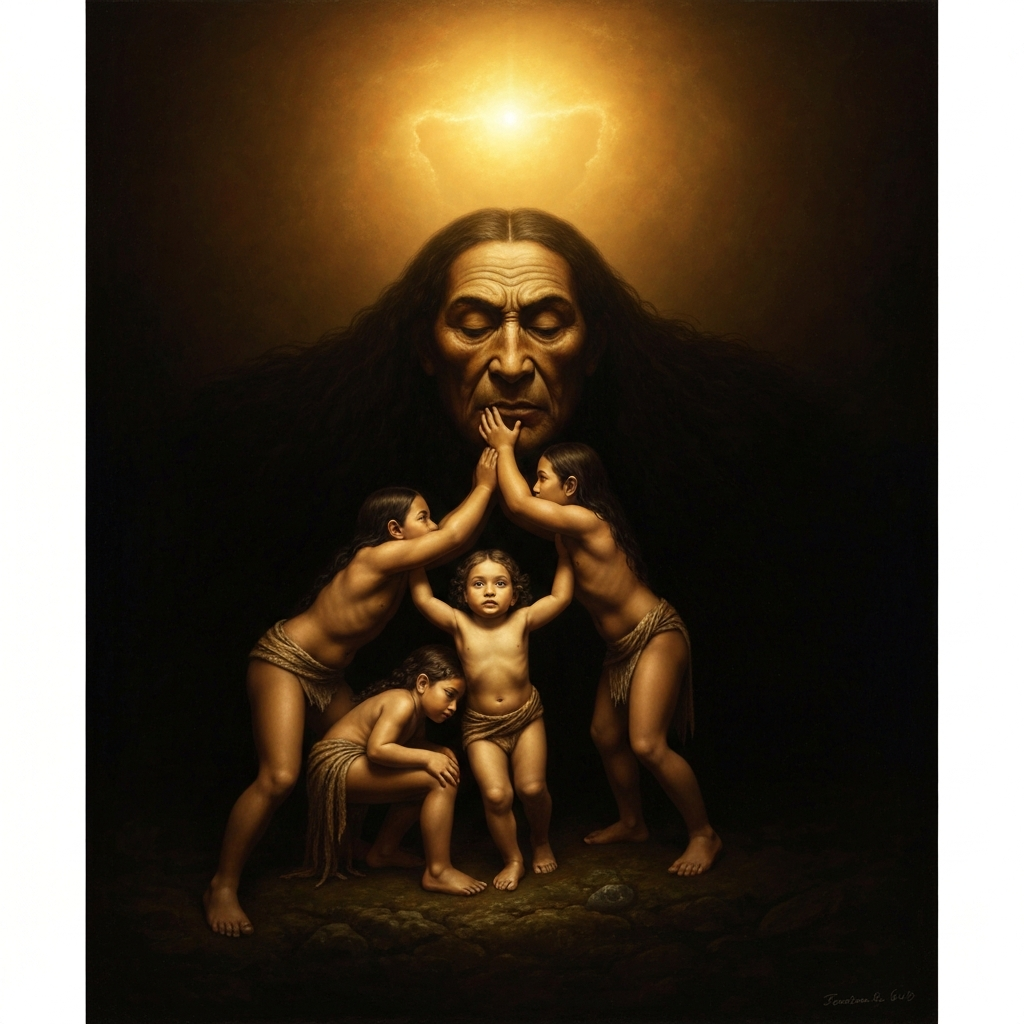
Tiki, the first human being in the Marquesan tradition, is created by the god Tane — or in some versions is himself a minor god — and becomes the ancestor of all human beings, his name carried across Polynesia wherever his descendants traveled.
- When
- mythic time — the creation of humanity
- Where
- The primordial world — the mythic homeland before any island
Before Tiki, there were gods.
There was Tāne in his forest, there was the sky and the earth and the ocean, there were all the divine beings who manage the forces of the world. But there were no people — no beings made partially of divine stuff and partially of earth, no beings who could farm and fish and navigate and build and love and die.
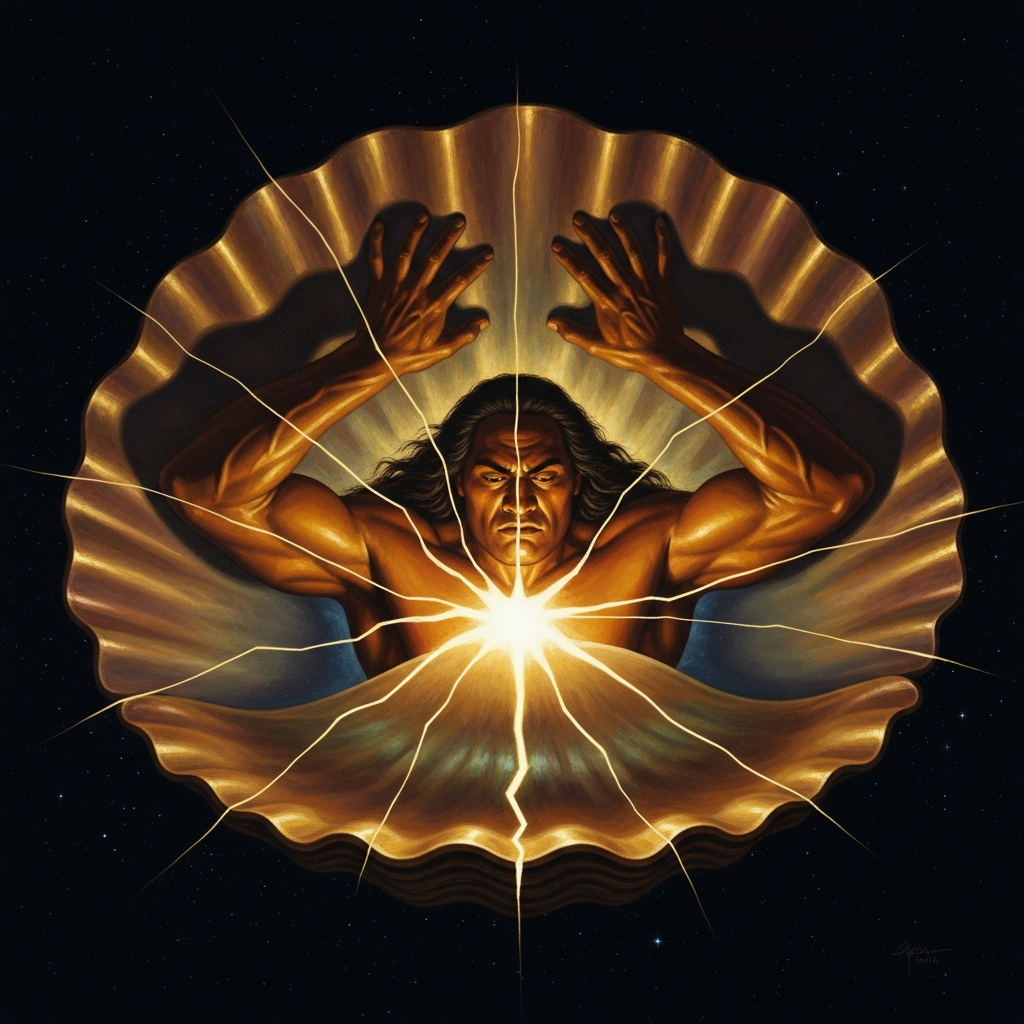
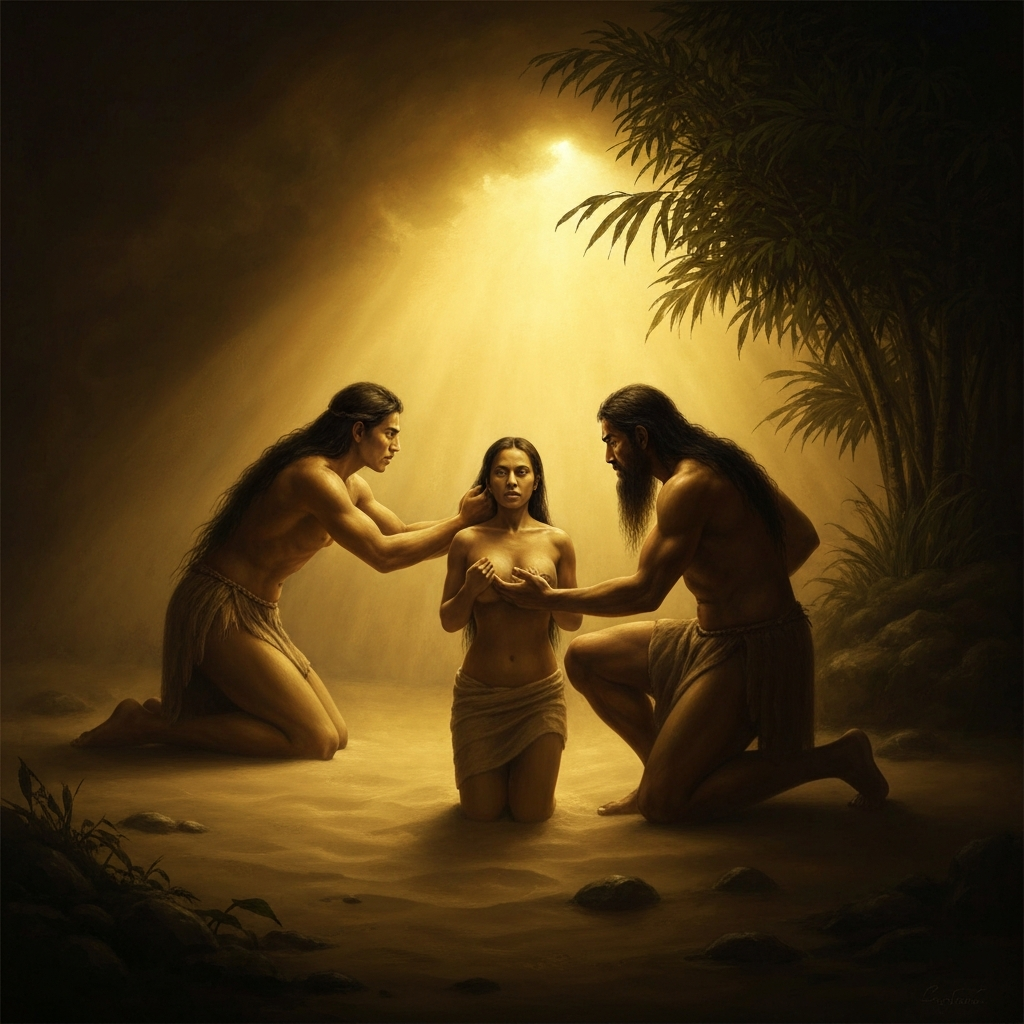
Tāne made Tiki from sand and red earth, from the materials of the beach where the ocean meets the land — the boundary place where two worlds meet, which is appropriate, since the being he was making would itself be a boundary creature, neither fully divine nor fully mortal.
He breathed into the figure. Tiki opened his eyes.
The first thing Tiki saw was the ocean. He was on a beach at the world’s beginning, and the Pacific spread before him in every direction that mattered. This is the founding image of the Marquesan tradition: the first man on the first beach, looking at the ocean that his descendants will spend thousands of years crossing.
Tiki met the first woman — named Hina in some traditions, other names in others — and the first genealogy began. Children. Children of those children. The tree of human descent spreading outward from that first beach across the islands.
Tiki’s name spread with the people. Wherever they went in the Pacific — Hawaii, New Zealand, Easter Island, Samoa, Tonga — they carried the memory of Tiki in their genealogical chants. He is the ancestor before the ancestors, the man before the named men. Every human genealogy runs back to him or to his equivalent, the figure who was the first to open his eyes on a Pacific beach and breathe without divine assistance.
The carved figures the tradition calls tiki are physical anchors for this ancestral presence. The Marquesan tiki in stone and wood — squat, powerful, large-headed, eyes wide — are the ancestor made visible. They are placed at the boundaries of sacred spaces, at the entrances to marae, at the edges of cultivated gardens, at the doorways of important buildings. They mark the threshold, which is what the ancestor does in the living world: he is the point of passage between the divine and the human, the being who stands at the boundary and holds both sides.
The moai of Easter Island — the most famous of all Pacific stone figures, the colossal heads that look out from the island toward the sea — are Tiki’s largest expressions. They are specific ancestors, not the original Tiki, but they draw their power from the same logic: the ancestor made monumental is the ancestor made permanent. The stone that contains him does not die. The face that watches the horizon watches it after everyone who carved it is gone.
Easter Island built its moai over several centuries and then stopped, toppled them, and started a different kind of ceremonial life. Scholars argue about why. The tradition on the island says the ancestors were still present in the fallen stone, that the toppling was a statement in an ongoing conversation between the living and the dead rather than an ending.
Tiki watches. He is in the stone. He is in the carved wooden figure on the doorpost. He is in the genealogical chant that names him as the first name in a list of names that leads eventually to the person standing in the circle performing the ceremony.
He opened his eyes on a beach at the world’s beginning. He has not closed them since.
Echoes Across Traditions
Entities
- Tiki
- Tāne
- Hine (the first woman)
Sources
- E.S.C. Handy, *Native Culture in the Marquesas* (1923)
- Te Rangi Hīroa (Peter Buck), *Vikings of the Sunrise* (1938)
- Douglas Oliver, *Ancient Tahitian Society* (1974)
- Alfred Gell, *Wrapping in Images: Tattooing in Polynesia* (1993)