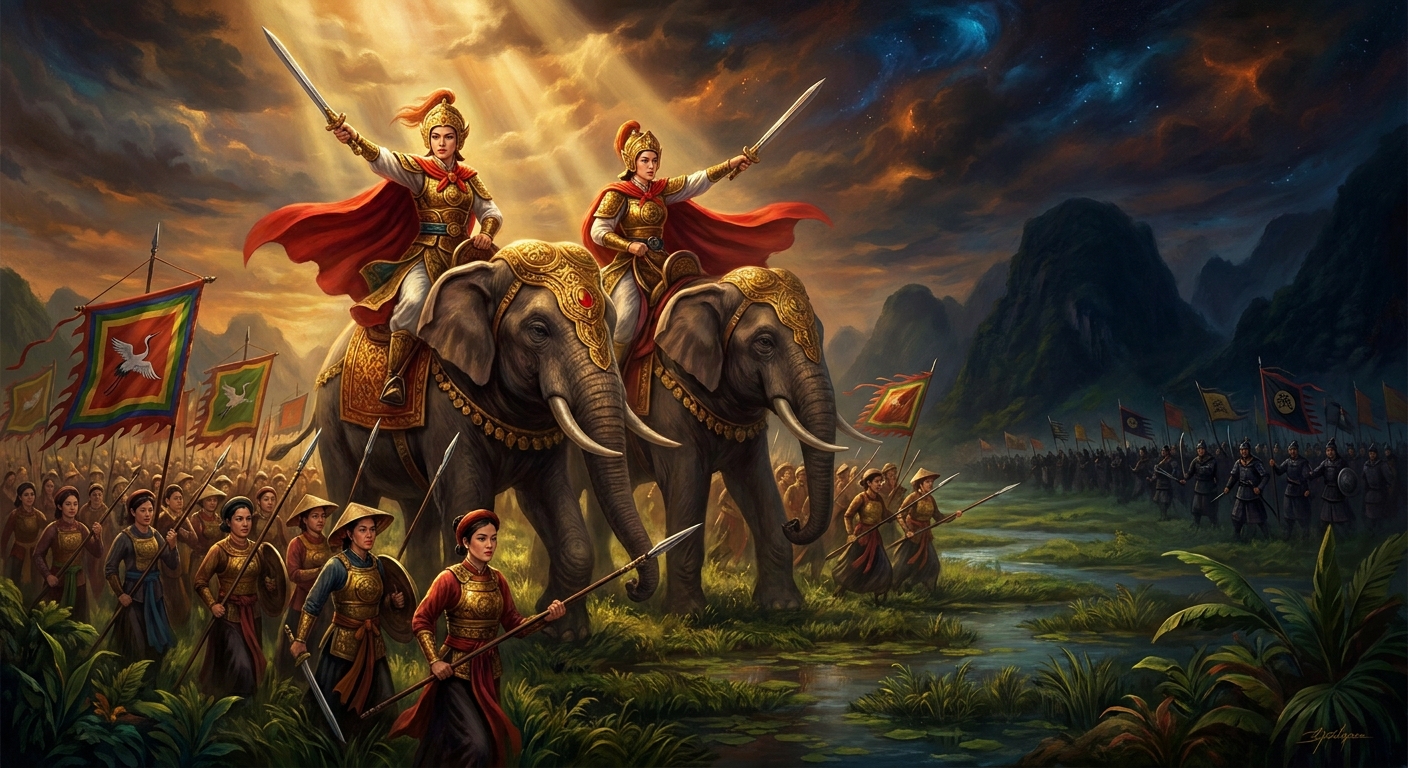
The Trung Sisters Ride
40–43 CE · Han occupation of Jiaozhi · The Red River Delta — the kingdom that will become Vietnam, then a Chinese province called Jiaozhi
Contents
40 CE. Two sisters raise a Vietnamese revolt against the Han Empire, ride war elephants at the head of an army, hold their country for three years, and walk into the Hat Giang River when the cause is lost. They are still worshipped as goddesses in Vietnam.
- When
- 40–43 CE · Han occupation of Jiaozhi
- Where
- The Red River Delta — the kingdom that will become Vietnam, then a Chinese province called Jiaozhi
The husband is dead.
His name is Thi Sách. He has been killed by To Định, the Han Chinese governor of Jiaozhi, on charges of conspiring against the imperial administration — which he was, because the imperial administration has spent forty years dismantling the local Lac aristocracy, raising taxes the peasants cannot pay, and replacing Vietnamese rituals with Confucian forms imported from the north.
His widow, Trưng Trắc, is the daughter of a Lac lord. She is twenty-six. She has a younger sister, Trưng Nhị, who is nineteen. They bury Thi Sách. They do not weep where the Han officials can see them. They begin, instead, to write letters.
The letters go to the sixty-five citadels of the Red River Delta. The letters say, in substance: the time is now. The aristocracy that survives is sympathetic. The peasantry is past tolerance. The Trung sisters are riding south within a month, gathering forces as they go.
The army is unusual.
It is led by women — not just the two sisters but their mother, Lady Man Thiện, and dozens of female commanders whose names the Vietnamese chronicles preserve and the Chinese chronicles do not: Phật Nguyệt, Lê Chân, Bát Nàn, Thánh Thiên. Some of them have raised their own banners independently and joined the Trung rising when it passed their districts. Some of them are widows like Trắc. Some of them are not. The Hou Hanshu, writing in Chinese a century later, will note this in tones of disbelief.
Their army moves on elephants.
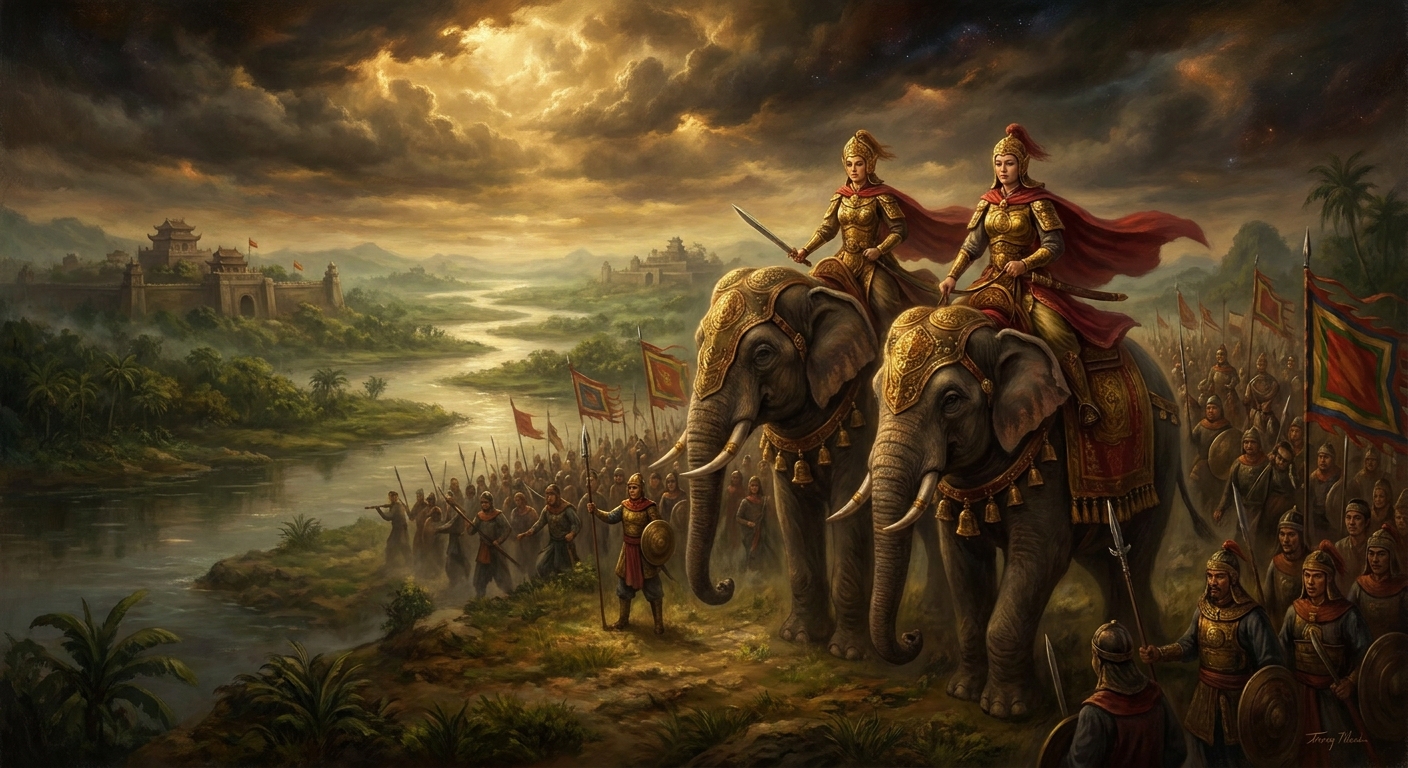
Vietnamese tradition records that Trưng Trắc rode a great war elephant at the head of the column, with Trưng Nhị on her own beside her. The elephants are a Southeast Asian asset the Han do not have in the north. They break formations the Chinese have not learned to break. The garrisons of Jiaozhi fall in sequence — Luy Lâu, Mê Linh, the citadels along the Red River. To Định, the governor who killed Thi Sách, abandons his post and flees north shaved, in disguise, having lost his command and his beard.
By the end of 40 CE, the sisters control sixty-five citadels.
Trưng Trắc is proclaimed queen.
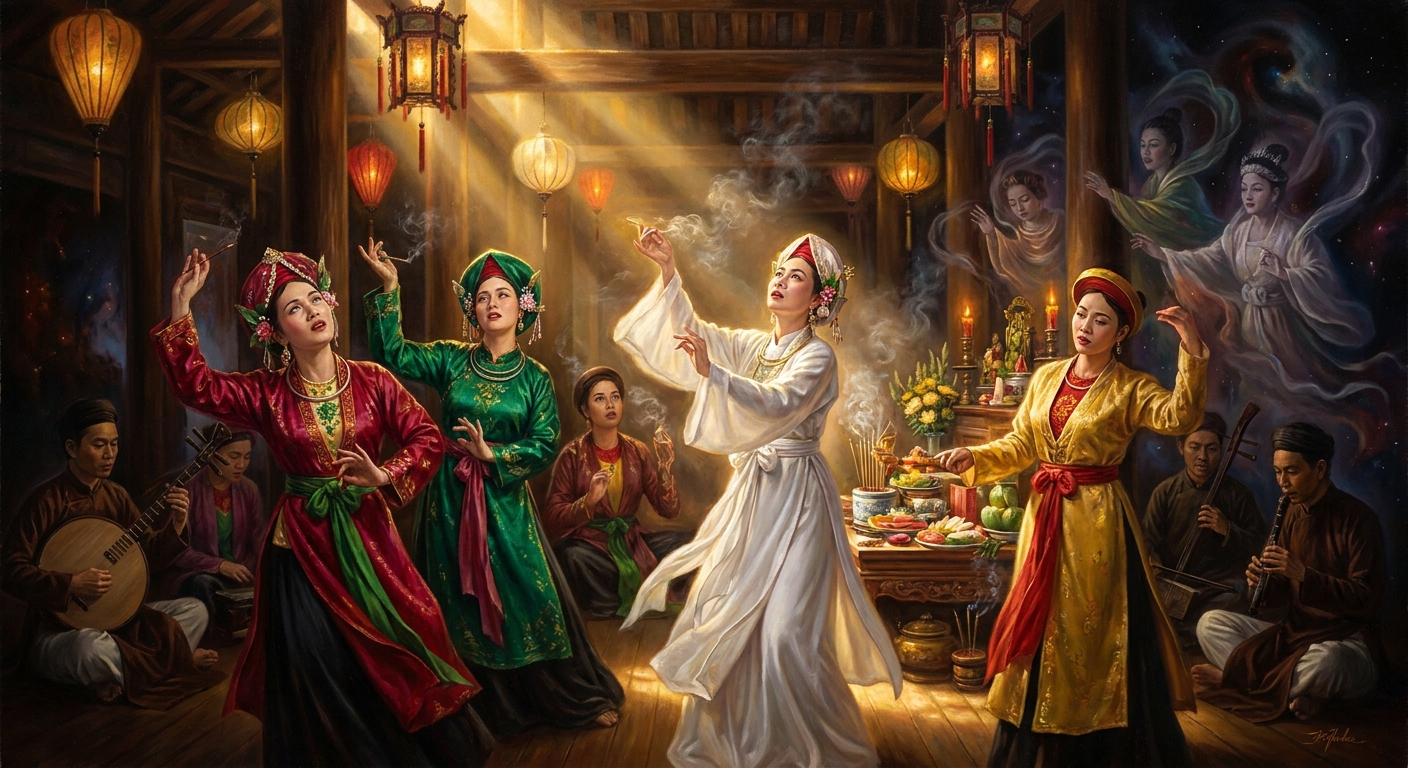
She establishes her capital at Mê Linh — her ancestral home, a few miles upstream from the modern Hanoi. She reduces the taxes the Han had raised. She begins minting coins. She honors the local spirits the Confucian administrators had tried to suppress — the spirits of the rivers, of the mountains, of the rice paddies. She is, in the language Vietnamese folk religion will use for centuries afterward, restoring the Four Palaces — Heaven, Earth, Water, and Forest, the four mother-goddess realms of the Đạo Mẫu tradition that predates the Chinese arrival.
She rules for three years.
This is the part later Vietnamese accounts emphasize — three years of independence, three years of a queen whose mandate came from the people and the spirits and not from any imperial decree. Three years in which Vietnamese was the language of court, in which female commanders held provincial governorships, in which the rituals at the family altars looked the way they had looked before Han arrived.
The Han, meanwhile, are mobilizing.
The general is Ma Yuan.
Emperor Guangwu, founder of the Eastern Han, sends his most experienced commander south with twenty thousand troops in 42 CE. Ma Yuan is sixty years old and has spent his career on frontier campaigns. He brings veteran cavalry, siege engines, and a cold strategic patience the local commanders have not seen before. He does not march directly on Mê Linh. He cuts the supply lines. He starves the citadels one by one. He fights the elephants by waiting for the dry season when fodder runs short and the beasts weaken.
The Trung sisters meet him at Lãng Bạc — somewhere near modern Hanoi, the precise site disputed.
The battle is bad. The Vietnamese sources record it briefly, the way you record a death in the family. Several thousand of the rebel army are killed. The female commanders fight in the line and several die there — the chronicles preserve their names. The Trung sisters retreat south, regroup, fight again at Cấm Khê. They lose again.
Ma Yuan pursues.
The sisters reach the Hat Giang River.
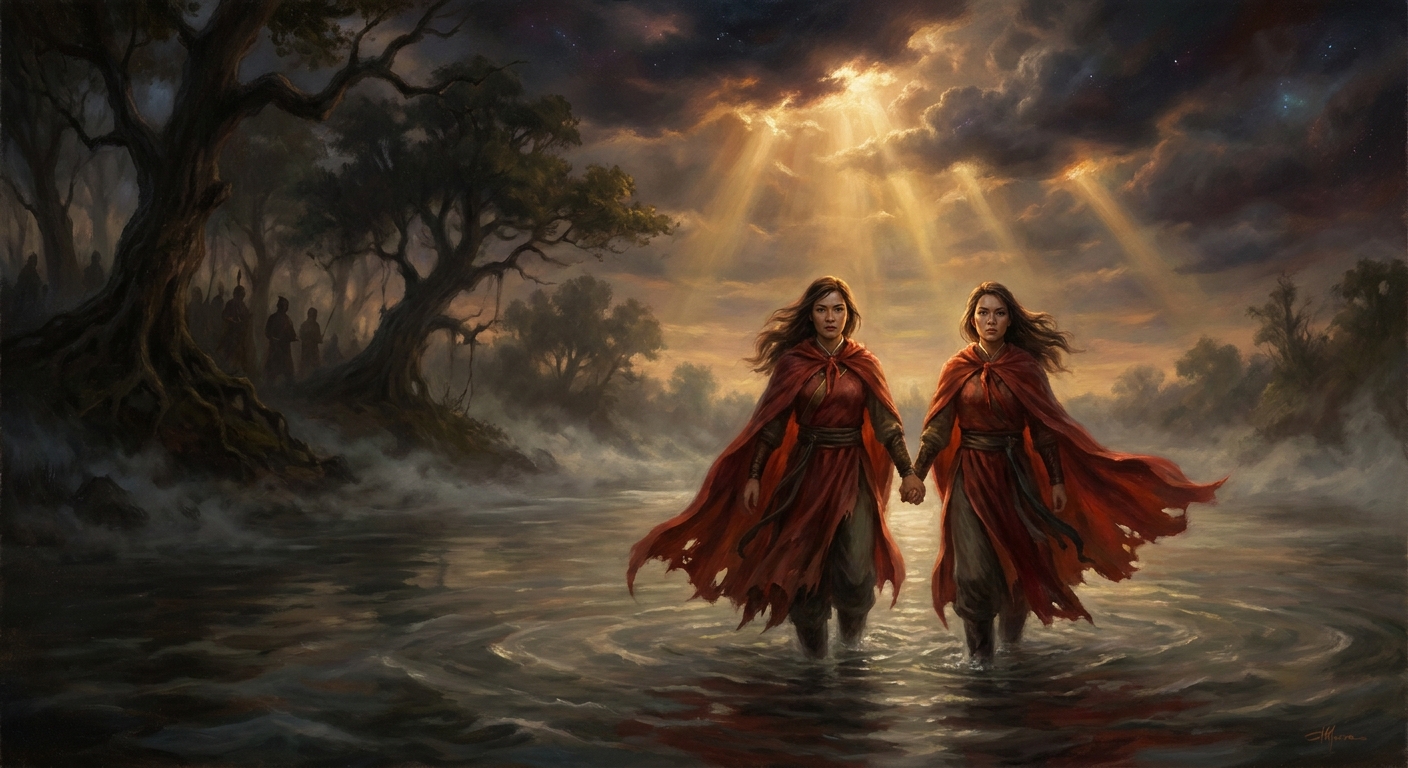
The Vietnamese tradition is specific. They do not surrender. They do not flee further. They stand on the bank with their remaining commanders, look across the water, and walk in together.
The Han chronicles say only that they were captured and beheaded and their heads sent to the Han capital. The Vietnamese chronicles, written later, give them the river. The river is the version that survived. The river is the version that the Đạo Mẫu mediums sing about in their rituals, fifteen hundred years and counting after the fact, addressing the sisters as Mẫu Thoải — the Mother of Water — installing them in the Palace of Water alongside the older river goddesses they joined in the moment of their drowning.
Ma Yuan re-pacifies the province. He erects bronze pillars at the southern frontier and inscribes them with a warning that any future rebellion will be met with the same force. He returns north a hero. The pillars do not survive. The province does not stay pacified. There will be another Vietnamese rising in 248 CE led by Lady Triệu, who will explicitly invoke the Trung sisters as her models, and another in the 6th century, and another, and another, until the Chinese give up in 938 and Vietnam becomes Vietnam.
The temples open immediately.
By the 2nd century there are shrines to the Trungs in the villages where they raised their army. By the 11th century, when Vietnam has been independent of China for more than a hundred years and is consolidating its national identity under the Lý dynasty, the cult is official. King Lý Anh Tông builds a national temple to them at Hát Môn, on the banks of the Hat Giang where they walked in. The Đại Việt Sử Ký, the canonical Vietnamese chronicle, opens its account of the Han period with their rising — not as one event among many but as the inaugural act of Vietnamese resistance.
In Hanoi today there is a temple to them at Hai Bà Trưng — the Two Lady Trungs — in a district named after them, on a street named after them, in a city whose central thoroughfare crosses theirs at right angles. Schoolchildren visit on the sixth day of the second lunar month, their birthday by tradition, and burn incense, and the older Đạo Mẫu mediums perform the lên đồng ritual in which the sisters’ spirits are invited into the bodies of the practitioners and speak through them, in red costumes and golden armor, the way they were last seen riding.
The Trung sisters lost the war. The empire reasserted itself. Ma Yuan won the battle, the campaign, and the historical record from the Chinese side. The Vietnamese kept the story anyway, and it kept the country.
Two thousand years later, when France colonizes Vietnam in the 19th century, the Trung sisters return as nationalist symbol. When Vietnam fights Japan in the 1940s, they return again. When the war with America comes, North Vietnamese propaganda invokes them on posters showing women in modern army uniform riding elephants. They are the figures Vietnam goes back to whenever Vietnam needs to remind itself it has fought before.
The Đạo Mẫu mediums, who do not concern themselves with politics, simply keep singing to them. Mẫu Thoải, Mother of Water. The river they walked into is still moving past the temple at Hát Môn. The sisters have not, in the spiritual accounting of their country, finished doing what they came to do.
Scenes
Trưng Trắc and Trưng Nhị mount their war elephants at the head of an assembled force from sixty-five citadels across the Red River Delta
 Generating art…
 Đạo Mẫu — the Mother Goddess tradition, older than the imported Confucianism and Buddhism
 Generating art…
 The Hat Giang River, 43 CE
 Generating art…
 Echoes Across Traditions
Entities
- Trưng Trắc
- Trưng Nhị
- Mẫu Thượng Ngàn
- Mẫu Thoải
Sources
- Keith Weller Taylor, *The Birth of Vietnam* (University of California Press, 1983) — the foundational English-language account of the early Vietnamese kingdoms and the Trung revolt
- Hou Hanshu (Book of the Later Han, compiled c. 445 CE) — the Chinese imperial chronicle that records the rebellion from the occupier's perspective
- Đại Việt Sử Ký Toàn Thư (Complete Annals of Đại Việt), Ngô Sĩ Liên, 1479 — the canonical Vietnamese chronicle
- Olga Dror, *Cult, Culture, and Authority: Princess Liễu Hạnh in Vietnamese History* (University of Hawaii, 2007) — on Đạo Mẫu and the female-deity stratum of Vietnamese religion
- Nhung Tuyet Tran and Anthony Reid (eds.), *Việt Nam: Borderless Histories* (University of Wisconsin, 2006)