Thomas Sold into India
c. 52 CE (arrival in India) · 72 CE (martyrdom near Chennai) · Jerusalem · Taxila (modern Taxila, Pakistan) · Kerala (South India) · Mylapore (near Chennai)
Contents
Christ sells the apostle Thomas as a slave to an Indian merchant. Thomas arrives in Taxila, receives royal commission to build a palace, gives all the money to the poor, and is nearly executed — until the king's dead brother returns from the afterlife to report that the palace in heaven is magnificent. The oldest Christian community in the world traces its founding to this man.
- When
- c. 52 CE (arrival in India) · 72 CE (martyrdom near Chennai)
- Where
- Jerusalem · Taxila (modern Taxila, Pakistan) · Kerala (South India) · Mylapore (near Chennai)
In Jerusalem, after the resurrection, the apostles draw lots for the mission fields of the world.
Thomas draws India.
He refuses.
He does not refuse quietly. He says he is not strong enough for the journey, that he cannot preach to Indians, that a Hebrew man in India will be useless. He is stubborn the way men are stubborn when they are afraid but cannot admit to being afraid, so they reach for practical objections instead. The other apostles — Peter with Syria, Andrew with Greece, Bartholomew with greater Armenia — do not argue with him. They watch.
That night, Christ appears to a merchant named Abbanes in the marketplace near the harbor. Abbanes is in Jerusalem to buy a craftsman, a builder, someone with skilled hands. Christ says: I have a slave who is a carpenter. I will sell him to you. They agree on a price — twenty pieces of silver, the exact price Judas received. Christ takes the money and goes to find Thomas.
He hands Thomas the bill of sale.
I have sold you, he says.
Thomas reads his own bill of sale. Then he accepts it.
This is the first miracle of the Acts of Thomas — not a healing, not a resurrection, but the miracle of a man accepting the thing he most feared because the person asking is the person he cannot refuse. He goes to the harbor. He boards Abbanes’s ship. India begins.
The journey is long. The ship moves east along the established trade routes — the same routes that carry pepper and spices west, the same routes that move Silk Road goods between Rome and the Indus — and Thomas prays and sings the whole way. When the ship docks at the port of the king Gundaphorus, Abbanes presents his slave to the court as a carpenter and builder.
Gundaphorus is building a palace.
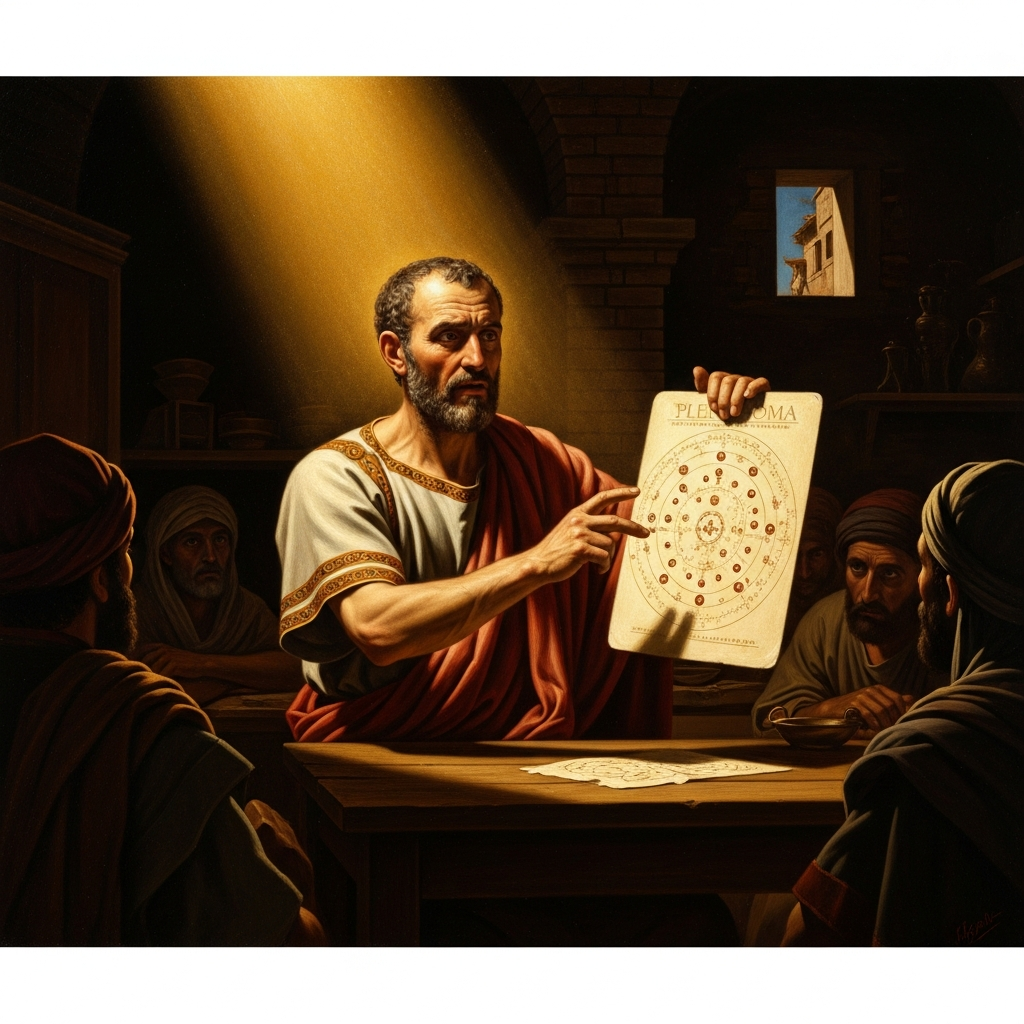
He has the plans. He has the site. He has the funds. What he lacks is a master builder who can execute a project of this scale. Thomas looks at the plans, measures the site with his eyes, and tells the king: this palace will take me through the winter months, when a builder cannot lay stone. The work begins in spring. He is given the funds in advance.
He gives all of it away.
He walks the streets of Taxila for months.
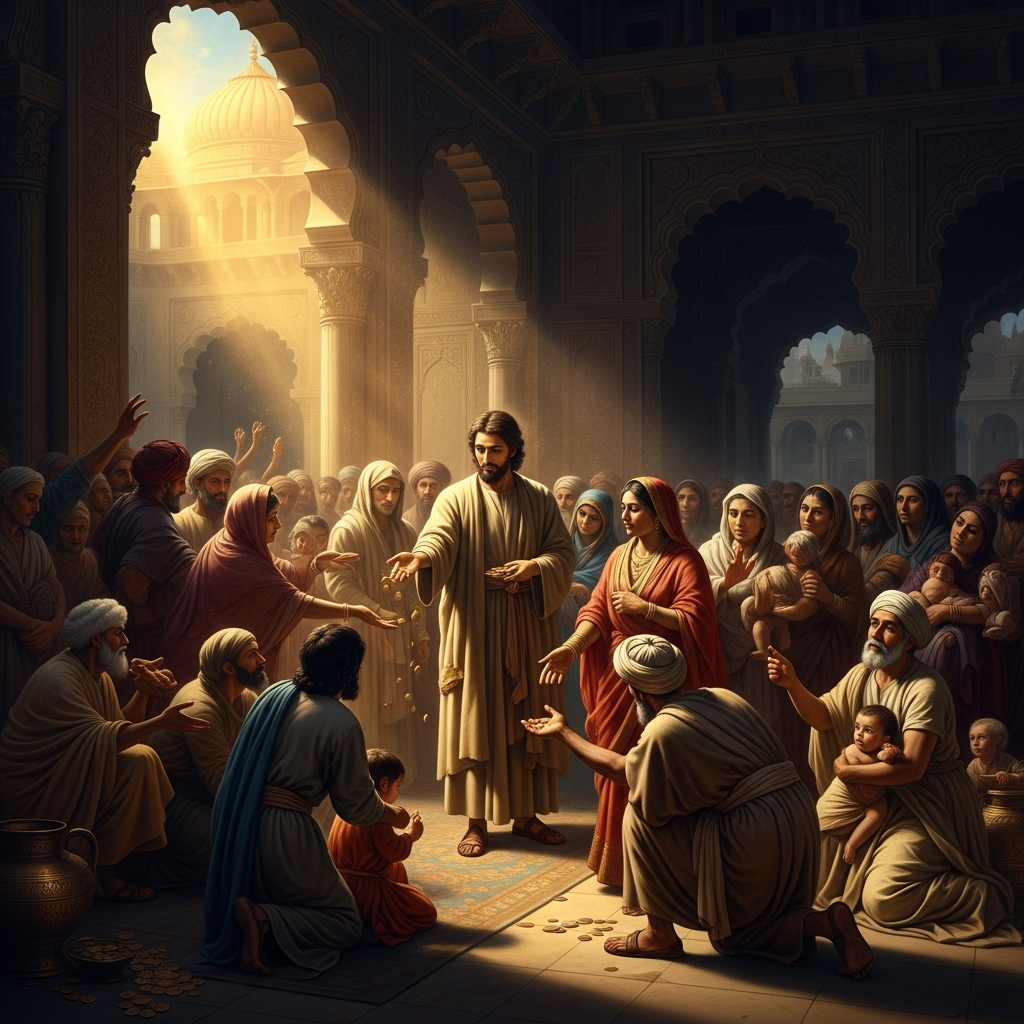
He finds the sick and feeds them. He finds the poor and clothes them. He finds prisoners and ransoms them. He finds the widows and the orphans and the strangers who have no one and gives them money and food and sits with them and tells them, when they ask who he is, that he is a slave of the God of the Hebrews, which is perfectly true. The money that was meant for the palace foundations flows outward from his hands in every direction.
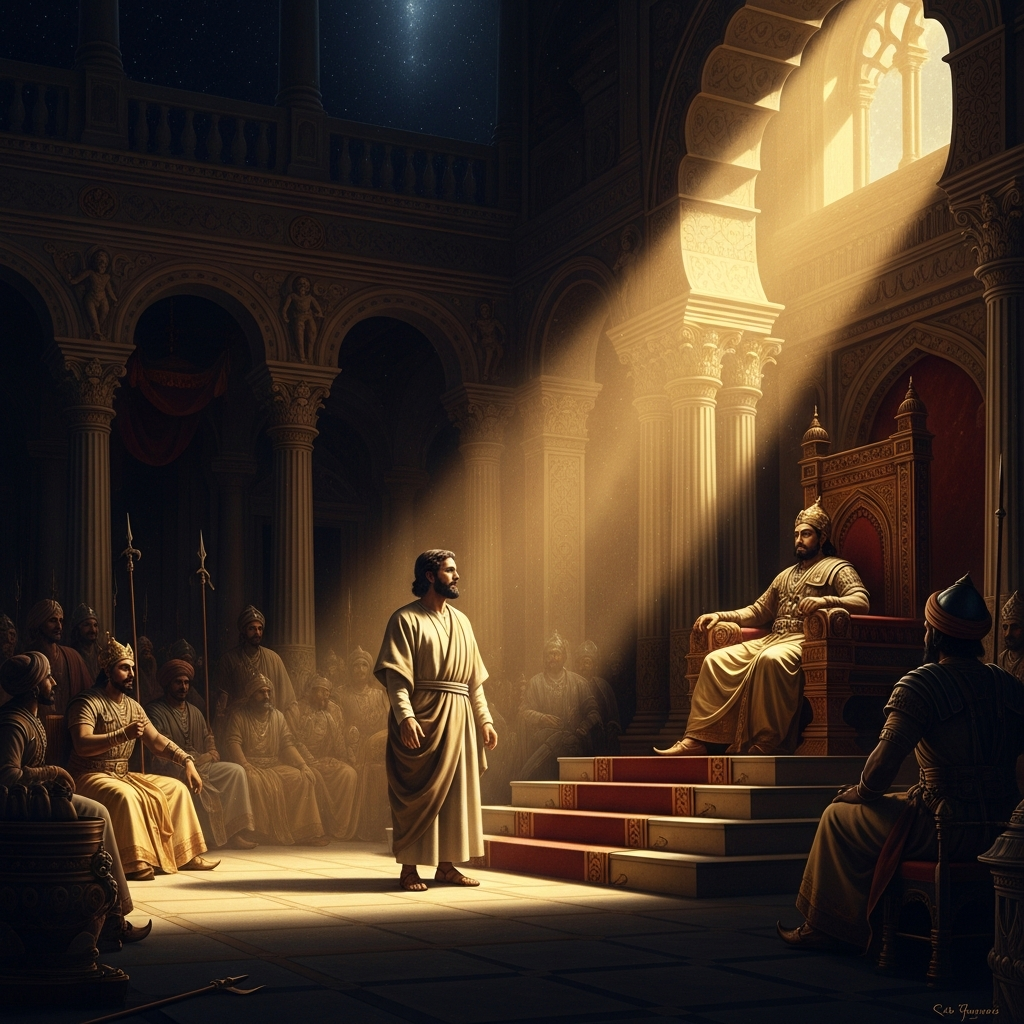
When winter ends and Gundaphorus asks to inspect the construction, Thomas arrives before the court with nothing to show but his own empty hands.
He tells the king: your palace is finished. It is in heaven. It is more magnificent than anything that could be built of stone and cedar. The poor I fed with your money are its foundations. The sick I healed with your money are its walls. Your charity is its roof. No fire can touch it, no earthquake can crack it, no enemy king can loot it.
Gundaphorus has Thomas and Abbanes arrested.
He is trying to decide how to execute them when his brother Gad, who has been ill, dies.
Gad’s soul arrives in heaven and is shown the royal estates.
The angels are giving him a tour — the mansions, the vineyards, the houses the righteous have built through their prayers and their alms — and they pass a palace of extraordinary beauty. He asks whose it is. They tell him: it belongs to your brother, King Gundaphorus. A man named Judas Thomas built it.
Gad asks if he can live in it. The angels say: no, it belongs to your brother. But perhaps your brother will sell it to you.
Gad is brought back to life. He comes to Gundaphorus and says: brother, sell me the palace the Hebrew slave built for you. I have just seen it, and there is nothing like it in the world.
Gundaphorus stares at him. Then he goes to the prison.
He opens the door. He sits across from Thomas in the dark and says: tell me how to build another one. Just like it. For my brother.
Thomas tells him to give everything away again. Gundaphorus does. Gad does. Both men are baptized. The first Christian community in the history of the Indian subcontinent is founded in the court of a king who commissioned a palace and received one he could not see.
Thomas moves south.
The Acts of Thomas is a long narrative — a road novel, really, the first of its kind in Christian literature — and the section after the Gundaphorus episode takes Thomas down the length of the subcontinent, healing, preaching, casting out demons, converting women who subsequently refuse to sleep with their husbands, which is the Syriac ascetic church’s most reliable sign of spiritual transformation and everyone else’s most reliable source of domestic crisis. He performs exorcisms. He raises the dead. He teaches, in every city, that the body is a garment and the soul a spark and the world a training ground for learning to lay both down.
He reaches the Malabar Coast — the southwest coast of India, the green and rain-heavy land the Romans call Limyrike and that is today the state of Kerala.
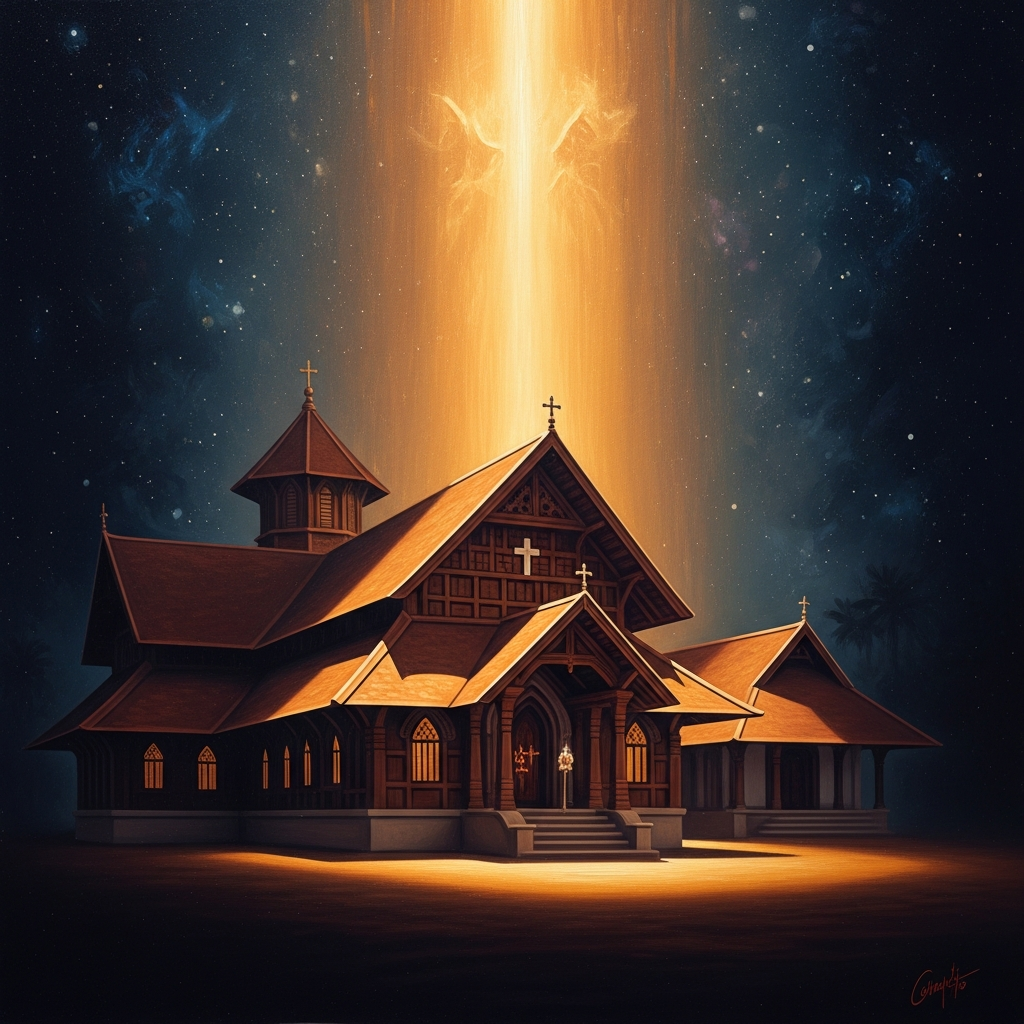
Here the tradition becomes something more than a text. The Saint Thomas Christians — the Nasrani, the Nazarenes, eight ancient communities including the Syro-Malabar and Syro-Malankara churches — have maintained, without interruption, the memory of Thomas’s arrival on the coast. The old families keep the genealogies. The old churches keep the liturgy. They were Christian before Augustine was born, before Constantine was baptized, before the Council of Nicaea settled the question of the Trinity.
Thomas, the man who refused India, walks its full length south.
He is martyred near what is now Chennai.
The site is Mylapore — a hill called Little Mount, a larger hill called the Big Mount, a cave between them where Thomas is said to have prayed. The tradition says he is killed by a Brahmin who feels his converts are threatening the old order. It says he is struck by a spear. It says he dies on what the Western church will eventually calendar as July 3.
The date assigned for the founding of the Indian church is 52 CE. The martyrdom is fixed at 72 CE. Both dates are traditional, not documentary, and the historians who argue about them are right to argue — the Acts of Thomas is theology dressed as history, not history with theological coloring.
But the church in Kerala is not in the Acts of Thomas. It is in Kerala. It has been there for two thousand years. It maintained the ancient Syriac liturgy — the Qurbana of Addai and Mari — when the Roman church had already moved to Latin. It sent bishops to the Council of Nicaea’s aftermath without ever asking Rome for permission. It buried its dead and baptized its children and sang its prayers in a language closer to the Aramaic Thomas would have spoken than any Western church has ever used.
The Acts of Thomas is literature. The Saint Thomas Christians are history.
The apostle who refused his mission field is the patron of the oldest extant Christian community in Asia. The man who had to be sold to get him on the boat is the founder of a church that has never needed Rome’s validation, has never been conquered, has never been interrupted.
The palace he built for Gundaphorus is the theological point: you build in heaven by giving everything away on earth. The man who travels to India and builds nothing there builds everything.
Thomas’s doubt is famous — the hand in the wound, the refusal to believe without touching. Less famous is what comes after the touching. He calls Jesus “My Lord and my God” — the highest Christological title in the Fourth Gospel, the climax of the entire narrative — and then he is sold, shipped east, and given away to the most stubborn mission field in the world.
The doubter becomes the builder. The slave becomes the founder. The refusal becomes the act.
Scenes
Taxila, c
Generating art… Thomas distributes the palace funds to the poor of Taxila — the sick, the hungry, the homeless — building, he says, a palace in heaven that no king can demolish
 Generating art…
 A Saint Thomas Christian church in Kerala — the oldest Christian community in Asia, tracing its founding to Thomas's arrival on the Malabar Coast around 52 CE
 Generating art…
 Echoes Across Traditions
Entities
- Thomas (the apostle, d. 72 CE)
- Gundaphorus (king of Taxila)
- Abbanes (the Indian merchant)
- Christ (in the marketplace)
- the Saint Thomas Christians of Kerala
Sources
- *Acts of Thomas* (Acta Thomae), Syriac original c. 220-240 CE, in Wilhelm Schneemelcher (ed.), *New Testament Apocrypha* vol. 2 (1992)
- A. F. J. Klijn, *The Acts of Thomas* (1962; 2nd ed. 2003)
- George Menachery (ed.), *The St. Thomas Christian Encyclopaedia of India* (1982)
- Leslie Brown, *The Indian Christians of St Thomas* (1956; rev. ed. 1982)
- Istvan Perczel, 'The Earliest Syriac Reception of Dionysius' — on the Thomas Christian tradition's philosophical inheritance