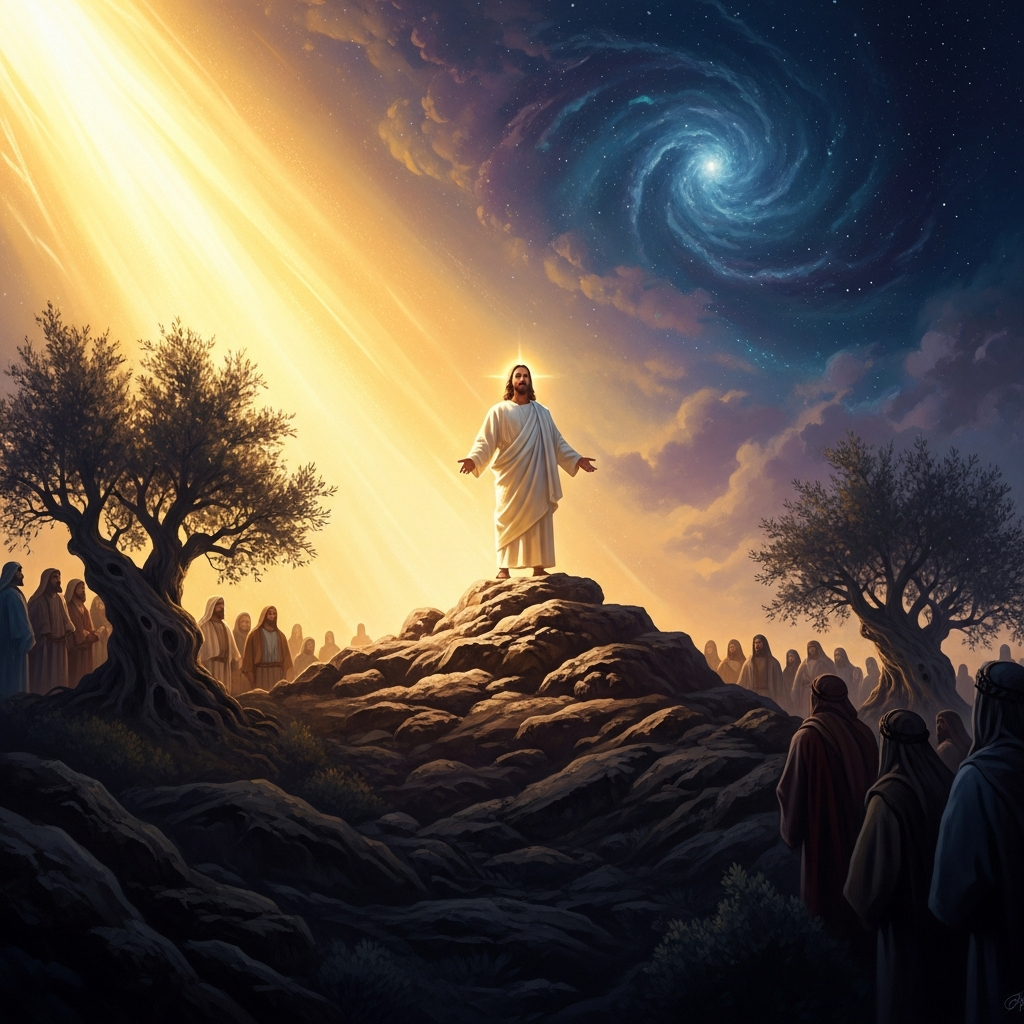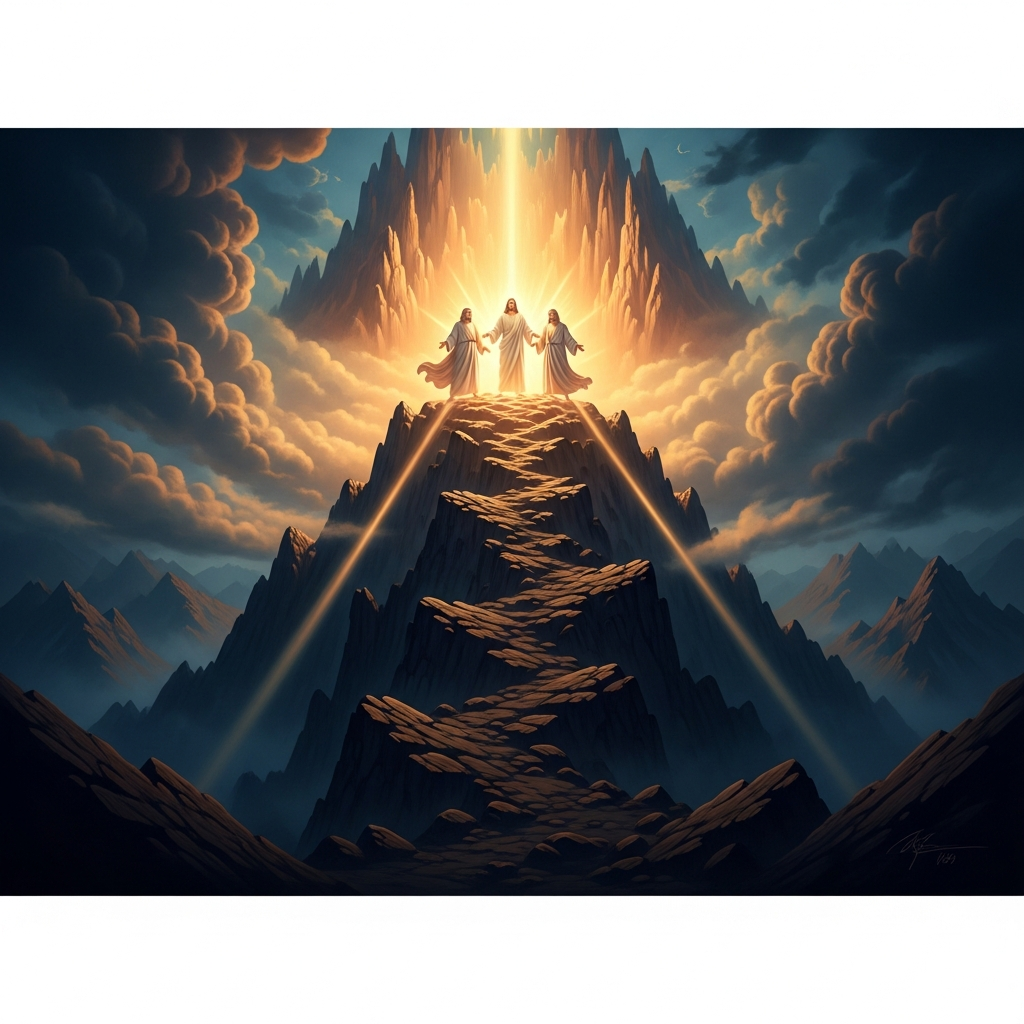
Paul on the Damascus Road
~34–36 CE · within a year or two of the crucifixion · The road from Jerusalem to Damascus, Syria
Contents
Saul of Tarsus rides north to Damascus with arrest warrants for Christians. At midday, a light brighter than the sun drops him from his horse. A voice speaks his name in Aramaic. Three days blind and without food, he rises as Paul — and Christianity escapes its borders forever.
- When
- ~34–36 CE · within a year or two of the crucifixion
- Where
- The road from Jerusalem to Damascus, Syria
He leaves Jerusalem with authority and a clear conscience.
The high priest’s letters are sealed and specific: authority to enter the Damascus synagogues, identify anyone living in the Way — the sect that follows the crucified Nazarene — and bring them back to Jerusalem in chains. Men and women both. Saul has done it here already. He stood at the edge of the crowd when they stoned Stephen and held the cloaks of the men throwing, and he did not look away. He is not a cruel man. He is a precise one. He is a Pharisee of Pharisees, trained under Gamaliel the Elder, and his zeal for the Law is the zeal of a surgeon for his instruments: exact, clean, necessary. The people following Jesus are, in his considered judgment, a cancer in the body of Israel. He is the scalpel.
The road north is six days of riding. It descends from the Judean highlands, crosses the Jordan, climbs through the basalt plain of the Hauran. He travels with companions — witnesses, men who can confirm the arrests. The sky is high and bright. The road is white with limestone dust. He is, in every sense of the word, a man who knows exactly where he is going.
Then the light comes.
No precedent exists in the catalogue of Levantine phenomena for what strikes the road at midday.
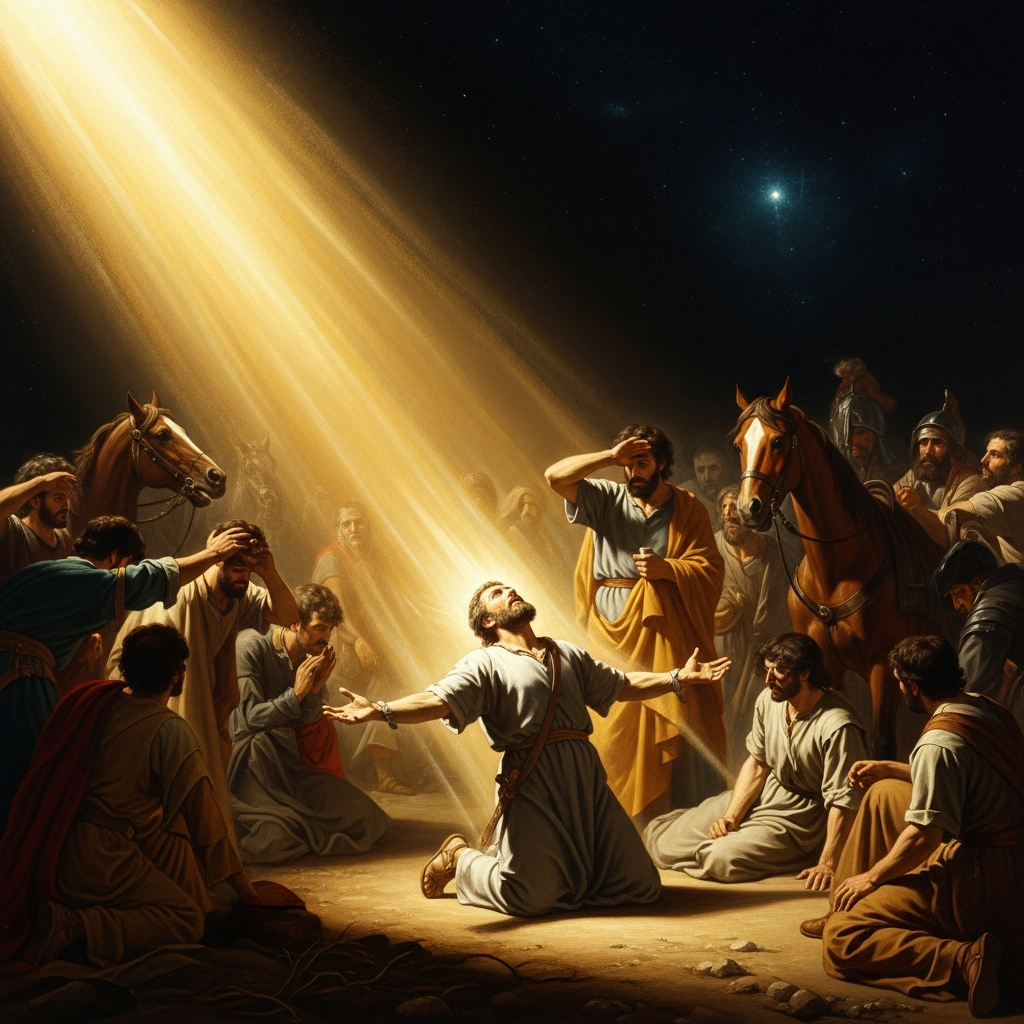
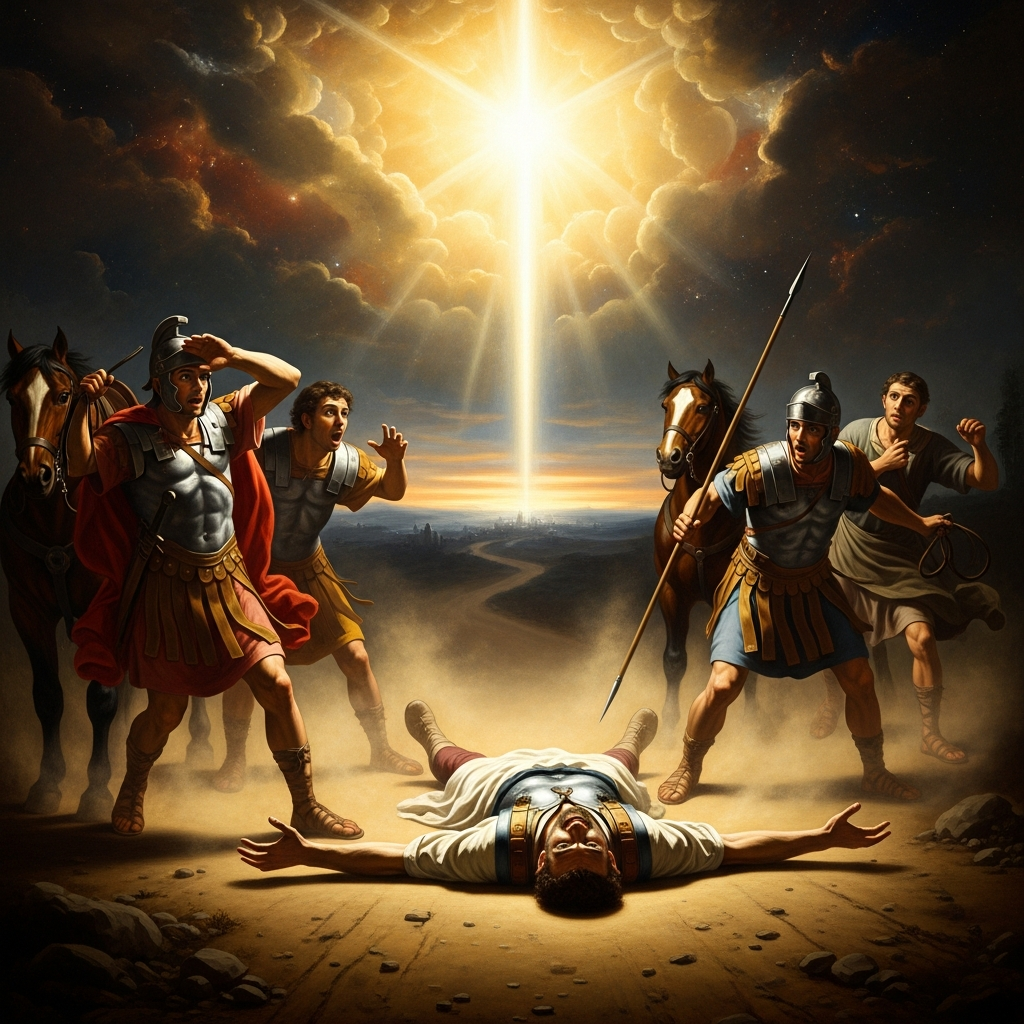
It is not the shimmer off limestone that every traveler in the region learns to read. It is not the glare that bounces off the Sea of Galilee or the chalk cliffs above the Jordan. This is something that makes the sun above it look dim — peri-astrapto, the Greek of Acts will later say, “flashed all around him.” It comes from everywhere at once, above and below and sideways, the geometry of it impossible, and Saul is on the ground before he understands he has fallen.
His face is in the road dust. His companions are standing — he will learn this later. He is prostrate, the posture of a man before a king or a god, and he has not chosen the posture. It has been chosen for him. Something is speaking, and it speaks in Aramaic — the language of Galilean fishermen, the language of the people he has been hunting — and it speaks his name twice the way God speaks to Abraham and Moses and Samuel when the call is urgent and personal.
“Saul, Saul, why are you persecuting me?”
He knows, with the clarity that arrives in certain moments of total disruption, that this is not an angel. Angels carry messages from the Lord. This speaks as the Lord speaks. He asks the only question that survives the collapse of every other question:
“Who are you, Lord?”
“I am Jesus, whom you are persecuting.”
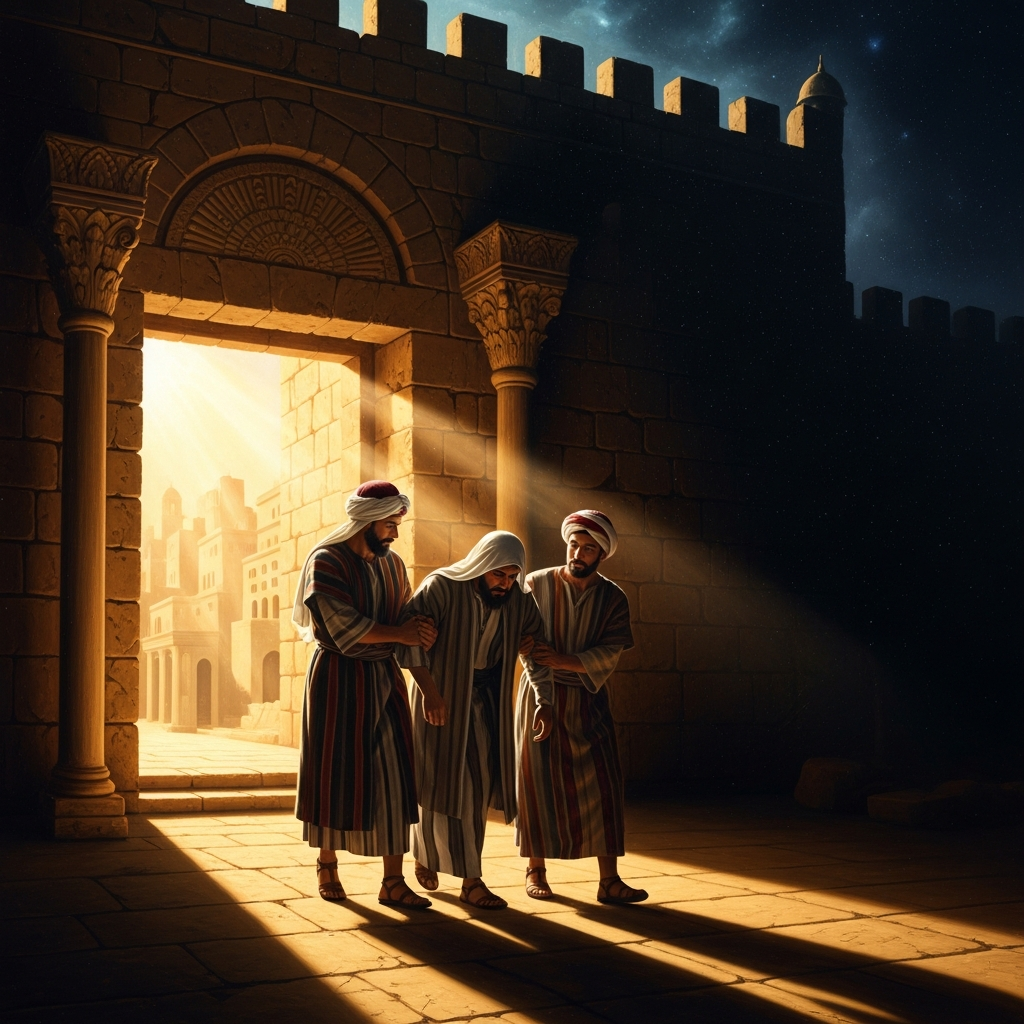
They lead him into Damascus by the arm.
Six days ago he rode north with authority and purpose. He enters the city being guided like a child because he cannot see his hand in front of his face. The companions take him to the house on Straight Street — the long Roman boulevard that bisects Damascus east to west, the kind of address a city gives to important men — and he sits there for three days. He does not eat. He does not drink. He does not move except to breathe.
What occupies those three days is not hard to reconstruct. He is the most educated man in almost every room he enters. He knows the scriptures in Hebrew, the Septuagint in Greek, the oral tradition from Gamaliel’s school. He knows the shape of the expected Messiah: Davidic king, military deliverer, restorer of national sovereignty. He has never seriously entertained the claim that Jesus of Nazareth fit that shape, and his reason was airtight: Deuteronomy 21:23 is explicit — cursed is everyone who hangs on a tree. A crucified Messiah is a logical impossibility. The law defined the curse. He enforced the definition. He held the cloaks.
Except now the crucified man has spoken to him out of a light that made the sun look tired.
The logic of what follows runs in one direction and one only. If Jesus rose from the dead, the resurrection validates the man. If the man is validated, the cross is not the curse — it is the sacrifice. If the sacrifice is real, then the law is not wrong but incomplete: the law was the scaffold, and the building has just been finished, and he has been tearing down the building with the scaffold still in his hands. He has not been protecting God’s people. He has been persecuting them. He has been persecuting the God he was protecting them for.
He sits in the dark with this for three days. He does not eat. He prays.
Ananias is afraid, and says so.
He is a disciple in Damascus — a man the tradition describes as devout by the Law’s measure, respected by all the Jews in the city, a man the Lord speaks to in visions. The vision he receives now is an address: Straight Street, house of Judas, ask for a man from Tarsus named Saul. For behold, he is praying.
Ananias knows the name. The whole community knows it. He is the reason many of them are in Damascus — they fled Jerusalem when Saul began destroying the assembly there, dragging men and women into prison. He has letters authorizing the same work here. Ananias speaks with the frankness of a man who trusts the voice but would genuinely like to contest the assignment: Lord, I have heard from many about this man, how much evil he has done to your saints in Jerusalem. And here he has authority from the chief priests to bind all who call on your name.
The Lord does not debate him. Go, for he is a chosen instrument of mine to carry my name before the Gentiles and kings and the children of Israel.
Gentiles. The word sits in the sentence like a stone. Gentiles — the nations outside the covenant, the people who do not observe the law, the boundary that every Pharisee like Saul understands to be fundamental and permanent. And the chosen instrument for crossing it is the man who held the cloaks at Stephen’s stoning.
Ananias goes.
He finds Saul exactly as the vision described: sitting, sightless, somewhere a very long distance from the man who rode south from Jerusalem with letters six days ago.
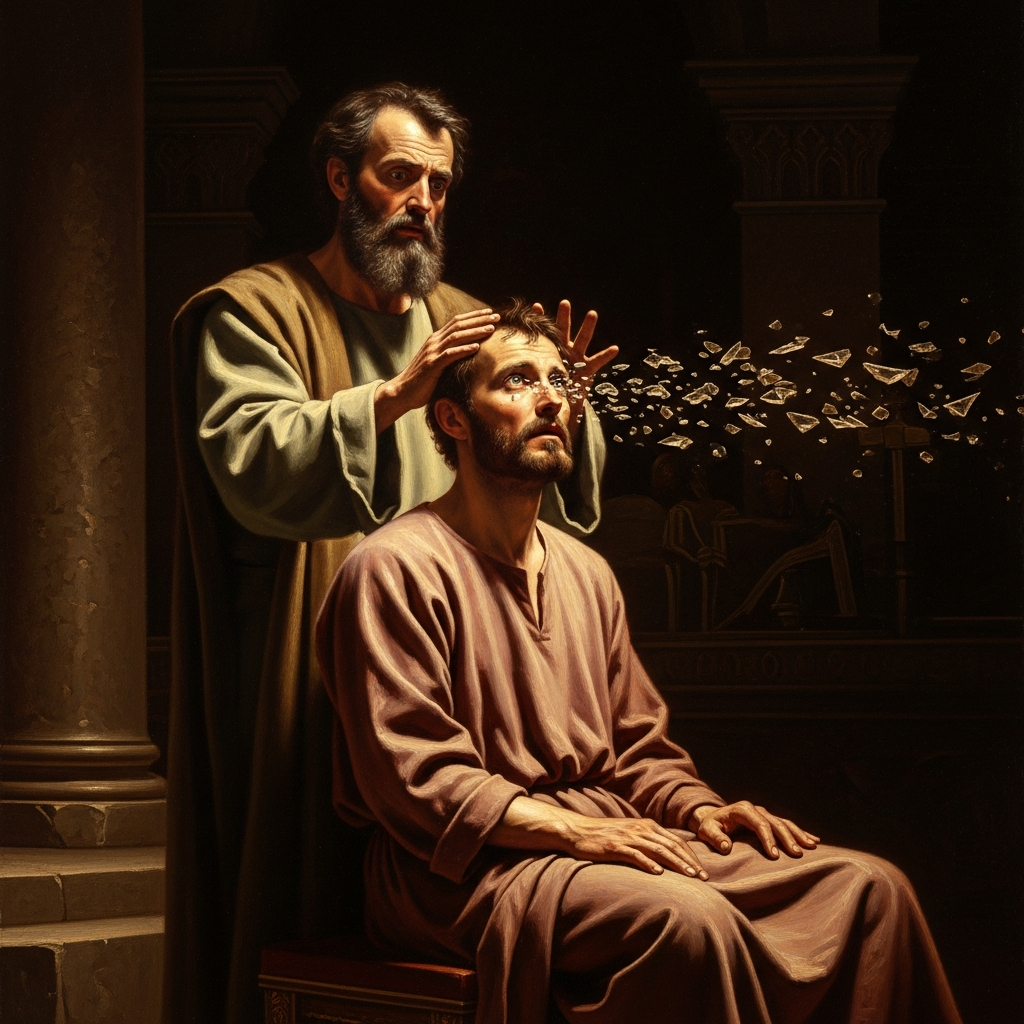
Ananias lays his hands on him. He calls him Brother Saul — two words that cost something, given who Saul has been. He tells him that Jesus, who appeared on the road, has sent him: so that Saul may regain his sight and be filled with the Holy Spirit.
Something falls from Saul’s eyes. Acts 9:18 says lepidon — scales, or something scale-like, as if the blindness had physical form, as if three days of interior reckoning had calcified into a residue that had to be shed rather than simply lifted. He sees. He rises. He is baptized. He eats. He is, by any reasonable measure, a different person than the one who fell from his horse on the Damascus road, though it will take him years and letters and controversy and shipwrecks and beatings to work out exactly how different and in what directions.
He will never call it a conversion. In Galatians 1:15–16 he uses a different word: revelation — apocalypsis — the unveiling of something that was apparently always true and that he, with all his learning, was not yet equipped to see. He was set apart, he says, before he was born. The encounter on the road did not make him something new. It removed the scale from an eye that could not see what was already there.
He spends the rest of his life trying to explain it.
He writes to the Galatians: I was advancing in Judaism beyond many of my own age among my people, so extremely zealous was I for the traditions of my fathers. But when he who had set me apart before I was born, and had called me by his grace, was pleased to reveal his Son to me, in order that I might preach him among the Gentiles, I did not immediately consult with anyone. He did not go back to Jerusalem to get permission. He went into Arabia — the desert, the solitude, the place where Moses and Elijah went to hear God in quiet — and then he came back.
The letters he writes over the next thirty years become the theological engine of the church. He writes to communities in Galatia, Philippi, Corinth, Thessalonica, Ephesus, Rome. In these letters he argues, from a position of unimpeachable Jewish learning, that the wall between Jew and Gentile has been dismantled by the cross. He writes there is neither Jew nor Greek, slave nor free, male nor female, for you are all one in Christ Jesus (Galatians 3:28), and the people reading it understand they are hearing something the man who held the cloaks at Stephen’s stoning could not have said. The fence he spent his life defending turns out to be the thing he was meant to take down.
The road to Damascus is still there. You can drive it. The house on Straight Street has a chapel above it now. What fell from Saul’s eyes on the third morning is harder to locate — it was not ignorance, exactly, because he knew more than almost anyone. It was something deeper: a category error that had become the floor, the assumption that the sacred is preserved by its boundaries, that holiness is maintained by exclusion, that God’s concern extends precisely as far as the law marks it and no further. The light on the road does not argue with this assumption. It simply falls, and falls him with it, and when the scales come off three days later, he sees that the fence was never the point.
The conversion of Paul is the hinge of Western history that almost no one names. Without it: no Gentile mission, no letters to Rome, no Augustine reading Paul and converting in a Milan garden, no Luther reading Augustine and nailing theses to a door, no Reformation, no Enlightenment reaction against the Reformation. The chain is that direct.
It begins with a man face-down in the road dust of Syria, asking a question: who are you?
The answer reorganizes everything. He is still Jewish — he never stops being Jewish, never stops knowing the law better than his opponents, never stops reading Isaiah and Abraham and Moses as his own ancestors and his own story. He just becomes convinced that the story was always bigger than he was taught, that the covenant was always headed somewhere his teachers couldn’t see from where they stood.
The persecutor became the preacher. The man who held the cloaks became the man who wrote the chapter on love.
Scenes
The midday light detonates above the road — Saul of Tarsus thrown to the ground, his companions frozen, the dust still rising around a prostrate man
 Generating art…
 His companions lead him by the arm through the gate of Damascus — the man who rode in with arrest warrants now guided like a child into the city he came to seize
 Generating art…
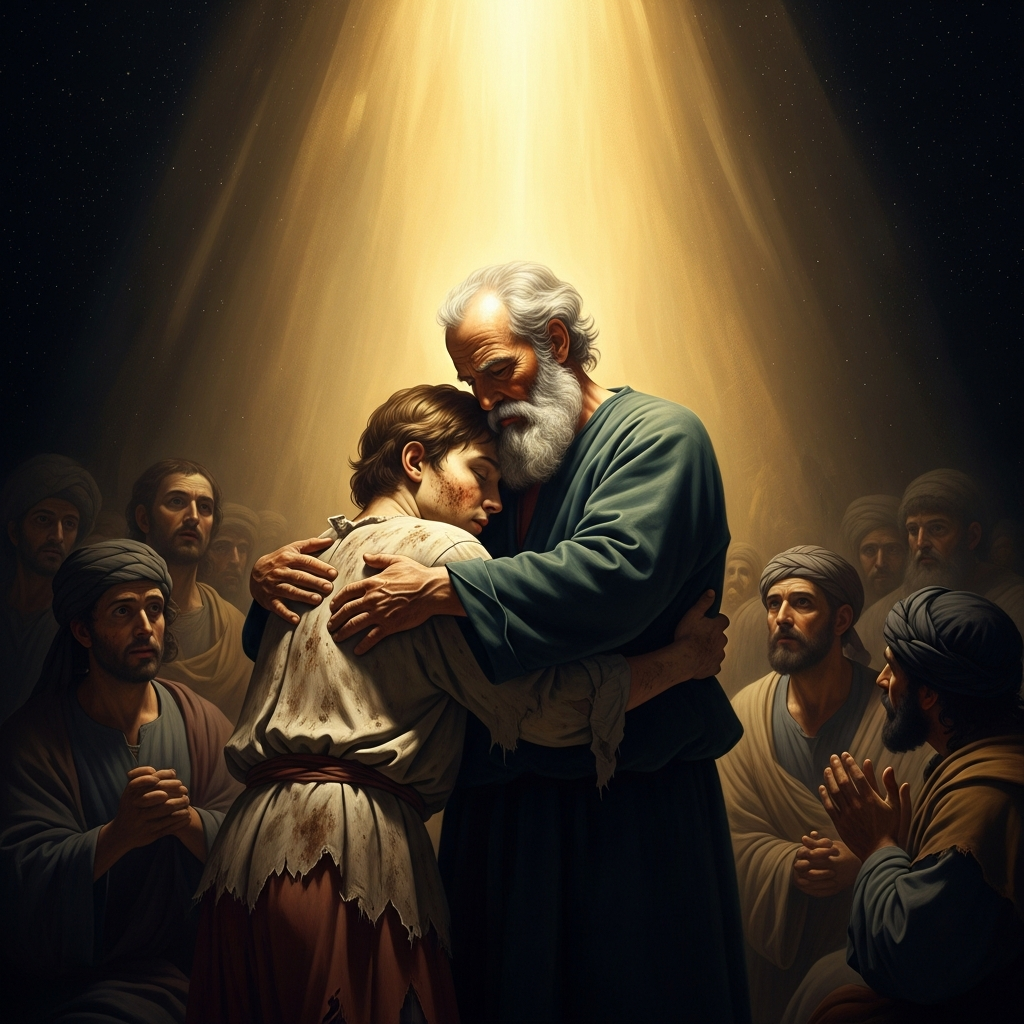
 Ananias lays his hands on the man he feared above everyone — 'Brother Saul' — and something falls from Saul's eyes like shed skin
 Generating art…
 Echoes Across Traditions
Entities
- Paul
- Ananias
- Christ
- Stephen

Sources
- Acts 9:1–19
- Acts 22:6–21 (Paul's own retelling to the Jerusalem crowd)
- Acts 26:12–18 (Paul's retelling to King Agrippa)
- Galatians 1:13–17
- Philippians 3:4–11
- N.T. Wright, *Paul: A Biography* (2018)
- Bart Ehrman, *Peter, Paul, and Mary Magdalene* (2006)