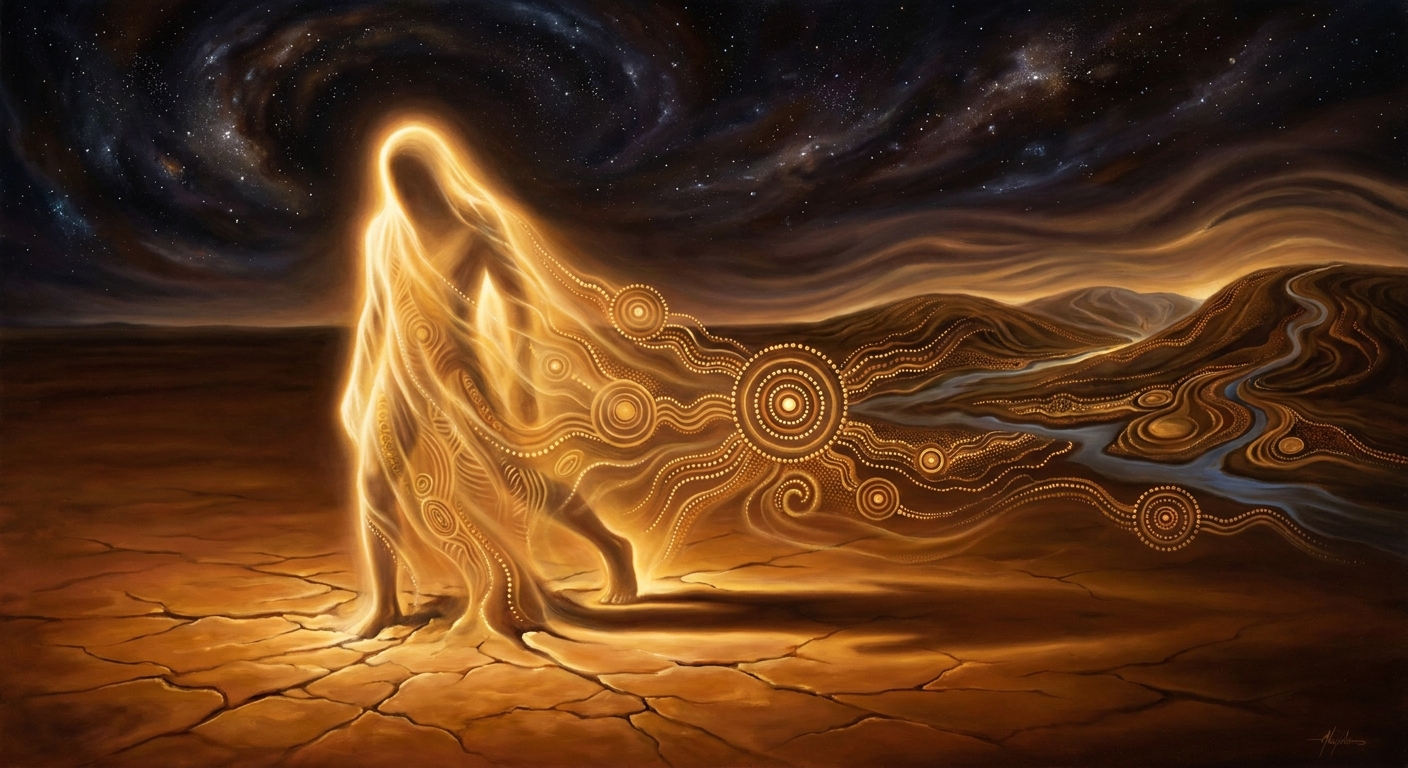
Uluru: The Living Record
The Dreaming (eternal / mythic time) · Uluru (Ayers Rock), the Uluṟu-Kata Tjuṯa National Park, Central Australia
Contents
Uluru is not a rock. It is a library — a three-dimensional record of specific Ancestor actions in the Dreaming, encoded in every cave, watermark, fold, and crack in the stone. An Anangu elder walks the accessible base of Uluru with a young woman who has the right bloodlines to receive this knowledge, and reads the rock aloud.
- When
- The Dreaming (eternal / mythic time)
- Where
- Uluru (Ayers Rock), the Uluṟu-Kata Tjuṯa National Park, Central Australia
The rock is not a rock.
This is the first thing the elder tells the young woman, and she tells it to her not as a theological proposition but as a practical instruction. A rock is a geological object. What the young woman is about to walk around has the shape of a geological object — sandstone, mostly flat on top, steeply sided, rising 348 meters from the plain in a form that draws the eye from fifty kilometers away — but its ontological status is different. It is the body of the Tjukurpa. It is the Dreaming’s law, in stone, readable by those who have the right to read it.
“You have the right to this part,” the elder says. She means: the accessible base, the publicly shared stories, the portions of the Tjukurpa that the Anangu Traditional Owners make available to people with the right lineage who are ready to receive them. The young woman’s mother’s mother’s country connects her to this place in specific ways. She is not a tourist. She is a student arriving at the library she has inherited.
The elder begins to walk, and the young woman walks beside her, and the reading begins.
The western face catches the dawn light first.
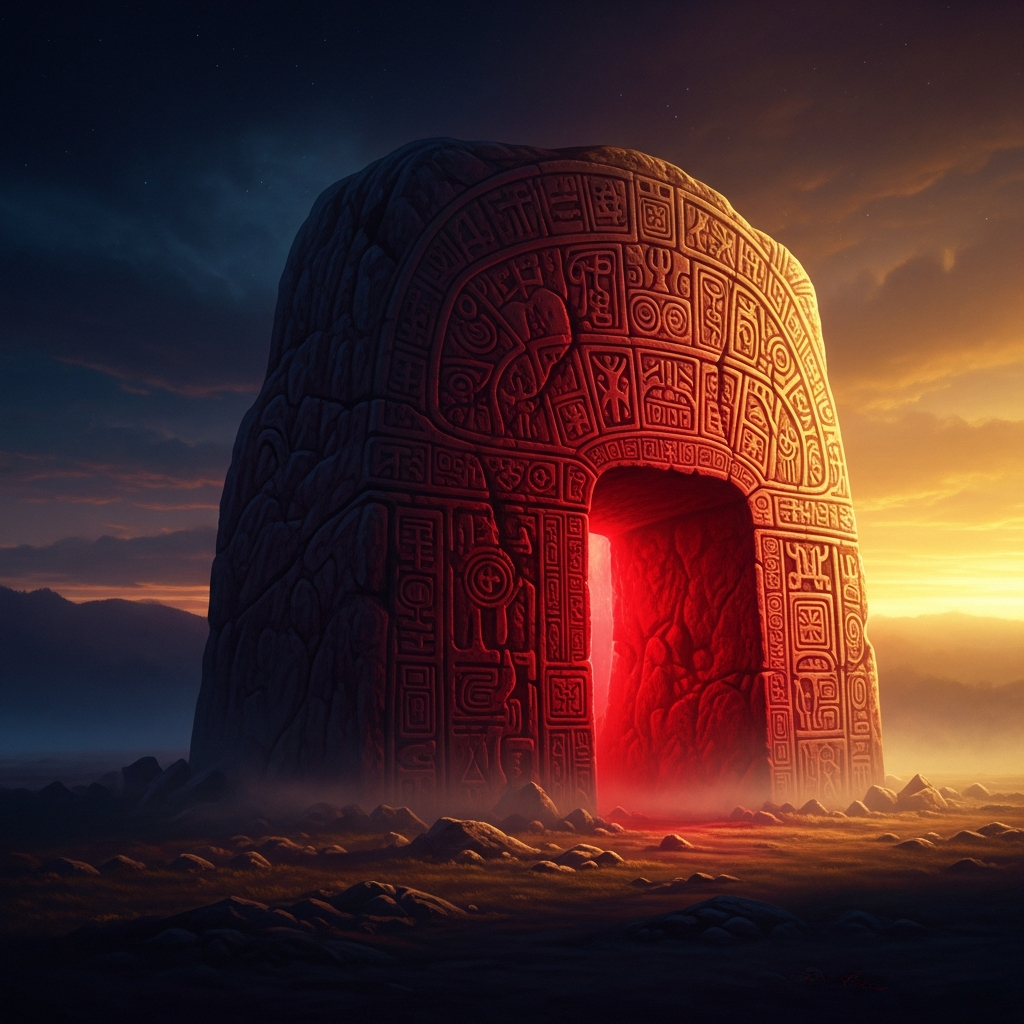
At a certain angle, in the first hour of morning, the stone appears to breathe — the color shifting from deep red to orange to a lighter, more cellular hue as the light increases, as if the rock’s surface is something more permeable than stone. The elder does not comment on this. It is not a metaphor she needs to explain. The stone is alive; the light shows this; you either see it or you learn to.
She stops at the first feature: a long depression in the stone that runs horizontally for perhaps thirty meters, at about head height, then curves downward. She says its name in Pitjantjatjara. She says what it is.
Lungkata — the blue-tongued lizard Ancestor — came here. He took something he should not have taken. The depression in the rock is not a geological feature explained by differential erosion. It is the physical record of Lungkata’s action, held in the stone the way the action was held in the Dreaming. The stone is the action. The action is still happening in the stone.
“He was punished here,” the elder says. She gestures at the depression’s lower curve, where the rock has a different texture — rougher, pitted. “This is where he fell. He didn’t die here. He went somewhere else to die. But the falling is here.”
The young woman looks at the pitted stone. She is trying to do what she has been taught to do, which is to see the thing directly rather than translating it into a Western framework. It is difficult. She has spent twenty years in a world that reads stone as geology. She is learning to read it as story, which requires not replacing one reading with another but holding both simultaneously — the geological fact of the stone and the Tjukurpa fact of Lungkata’s fall, which are both true, which coexist without contradiction, because the Dreaming did not happen despite geology. It happened through it.
The east face is in shadow until midmorning.
There is a site here that is Kuniya’s — the woma python Ancestor. The elder speaks about this story in the careful way she speaks about the stories that have restricted portions, giving the young woman the outside of the story while holding the inside where it belongs.
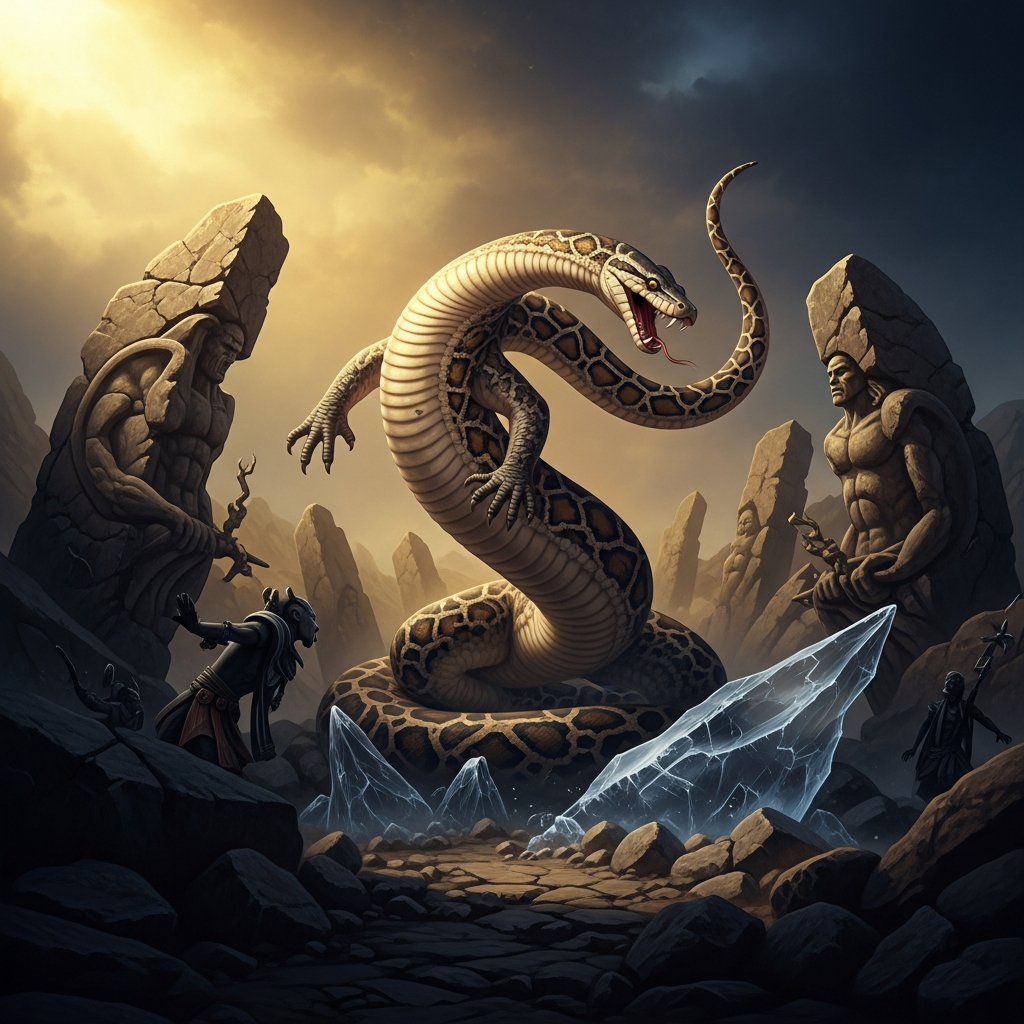
Kuniya came to Uluru with eggs. She was guarding them. There was a battle — Liru, the venomous snake Ancestor, came with warriors, and what happened at the battle is encoded in the stone at a specific location on the eastern face: the pocked surface, the long gouges, the place where the rock is a different color because of what was done there.
The elder shows the young woman Kuniya’s anger. It is in the stone. Not depicted in the stone — not carved or painted — but encoded in the stone, in the way the stone is shaped at that location. Kuniya’s grief and rage as she fought Liru’s warriors manifested as physical force on the landscape, and the landscape recorded the force and has not released it. You can stand at that location and feel the thing that happened there, if you know to look for it.
“Can you feel it?” the elder asks.
The young woman stands at the site and looks at the stone and then looks away from the stone and then looks back. She is embarrassed to say she feels something, because she is not sure if she is feeling what the elder means or something she is producing herself in response to suggestion. But she feels something. The air at that spot has a weight that the air twenty meters away does not have.
“Yes,” she says.
The elder nods. This is sufficient.
They walk the accessible base for four hours.
Each feature has a name. Each name is a verse in a song or a segment in a story. The stories interlock — Kuniya’s story connects to the story of the water site on the north face, which connects to the story of the marks on the south face, which connects back to Lungkata in the west. The rock is not a collection of separate stories. It is a single story told in three dimensions, with each physical feature as a chapter, and the chapters must be read in the right order to understand how they connect.
This is why the reading requires a guide. The rock is legible, but only to someone who knows the reading order and the reading language. A person without this knowledge can walk the base of Uluru and see beautiful sandstone — geological features, interesting erosion patterns, caves with good acoustics. They are not seeing what is there. They are seeing the surface of a text they cannot read.
The young woman has the right bloodlines and the elder has the authority to teach her this section of the text. What she receives today is not the whole story — some chapters belong to men’s ceremony, some belong to other women’s lineages, some are so restricted that she will not receive them in this conversation or perhaps in this lifetime. She receives the sections she has the right to, in the order she has the right to receive them, and she will carry those sections and be responsible for them.
This is the pedagogy of the landscape: the land teaches, but only to those who have the right to be taught that particular knowledge, and the teaching requires a person already inside the knowledge to serve as the bridge. Knowledge without lineage is not Tjukurpa knowledge. It is something else — curiosity, at best. At worst, it is the thing that got the rock climbed for sixty years: the assumption that beautiful things are public property.
In the late afternoon, they sit at the water site on the north face and rest.
The water is a natural catchment — rain fills it and it stays full for weeks after rain, which made it essential to survival before permanent water was available elsewhere. It is also a Dreaming site: a specific story is attached to this water, and the story and the water are not two things. The young woman has been told this story’s outside portion, which she can carry. She does not know the inside portion yet.
“How long does it take?” she asks. She means: how long until she knows what she needs to know.
The elder looks at the water for a while before answering.
“Your grandmother knew some of it,” she says. “Your mother knows some of it. You’re starting where your mother started. You’ll know what you know when you know it, and you’ll know what your daughters know when they tell you.”
The knowledge is not a fixed text you learn and then possess. It is a living thing that accumulates across generations, that is held collectively by a lineage, and that each generation receives in the portion appropriate to their age and readiness. The elder beside the young woman knows more than the young woman will ever know — not because she is withholding, but because the knowledge attached to her own lineage and ceremony has accumulated through her lifetime and her mother’s lifetime and her grandmother’s lifetime before that. You cannot shortcut to the end of the book by arriving at the library older.
The young woman nods. She has begun to understand that the point of this visit is not to acquire knowledge but to begin to know how to acquire knowledge — to learn the reading practice, the relationship with the stone, the posture of being a student of something that is much older and much larger than she is.
The rock is quiet in the late afternoon. The angle of the light is different now, showing different features, casting different shadows. The elder reads the shadows too. The rock has more to say at every hour of the day, and a different quality of listener is required for each hour.
What is shared in this story is drawn from what the Anangu Traditional Owners of Uluru have made publicly available through the management of Uluṟu-Kata Tjuṯa National Park and through the published ethnographic record. The specific sacred narratives, the restricted ceremonial knowledge, and the deep Tjukurpa content held by Anangu law-holders are not included here. The Anangu have been explicit: there are parts of this story that are not for everyone, and that boundary is respected.
Climbing Uluru was banned in October 2019. The Anangu had been requesting this for decades. The request was not about preventing visitors from seeing the view. It was about preventing damage to a living text — the same request a librarian makes when they ask you not to write in the margins.
The rock is not a rock. Stand at the base in the morning, in the light that arrives before the sun, and watch the stone breathe. You don’t need to know the story to see that something is there. You need the story to know what you are seeing.
Scenes
The stone glows red before the sun is fully up
 Generating art…
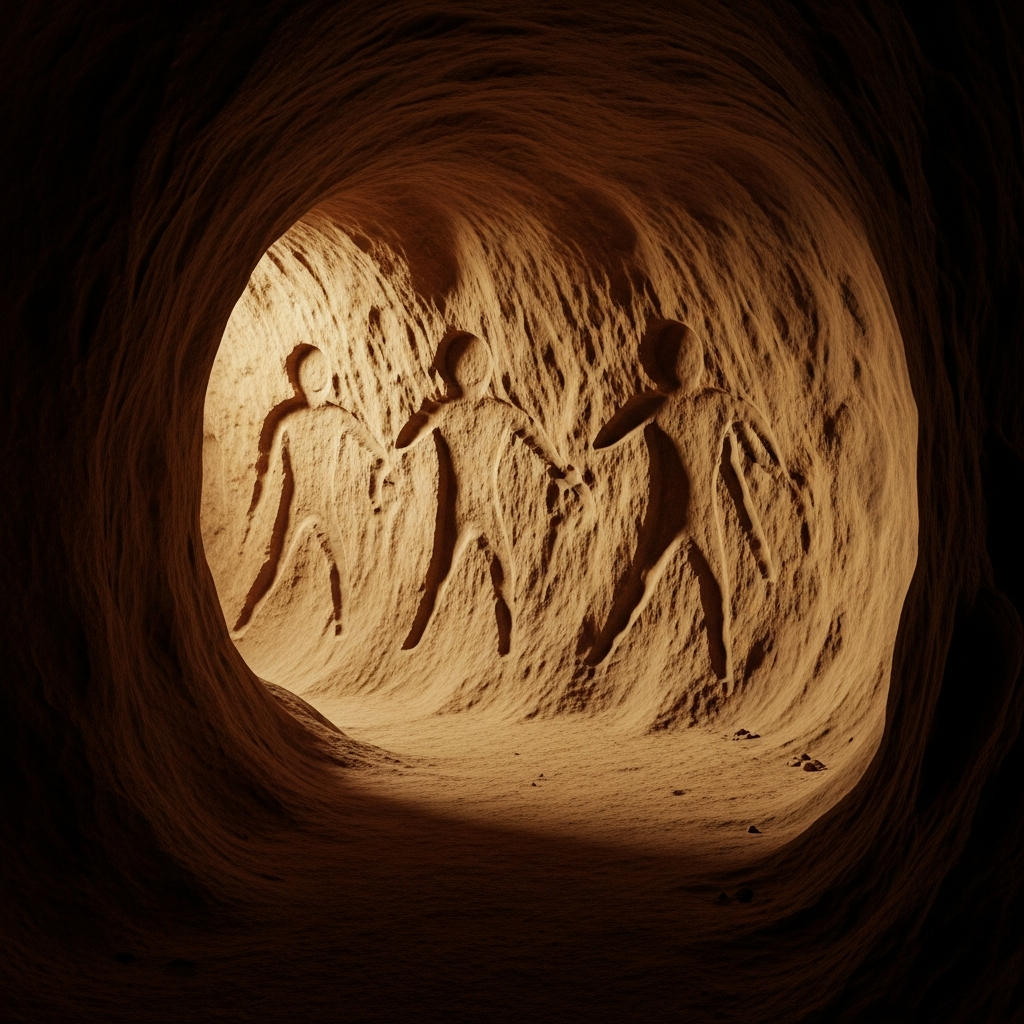
 Inside a shallow cave on the accessible base, the walls hold the shapes of the story — not painted, shaped
 Generating art…
 The woma python Ancestor rears in the story that the rock encodes
 Generating art…
 Echoes Across Traditions
Entities
- Uluru (the living stone)
- the Anangu people
- the Tjukurpa (Dreaming Law)
- Lungkata (the blue-tongued lizard Ancestor)
- Kuniya (the woma python Ancestor)
Sources
- Anangu Pitjantjatjara Yankunytjatjara Land Rights Act 1981 (South Australia) and associated materials
- Parks Australia, *Uluṟu-Kata Tjuṯa National Park Management Plan 2010–2020* (with Anangu co-authorship)
- Philip Clarke and Diana Young, 'Religion, Conservation and the Sacred,' in *The New Nature of Australia* (1997)
- Deborah Bird Rose, *Nourishing Terrains* (ATSIC, 1996)
- Chips Mackinolty and Paddy Wainburranga, eds., *Too Many Captain Cooks* (Northern Land Council, 1988)