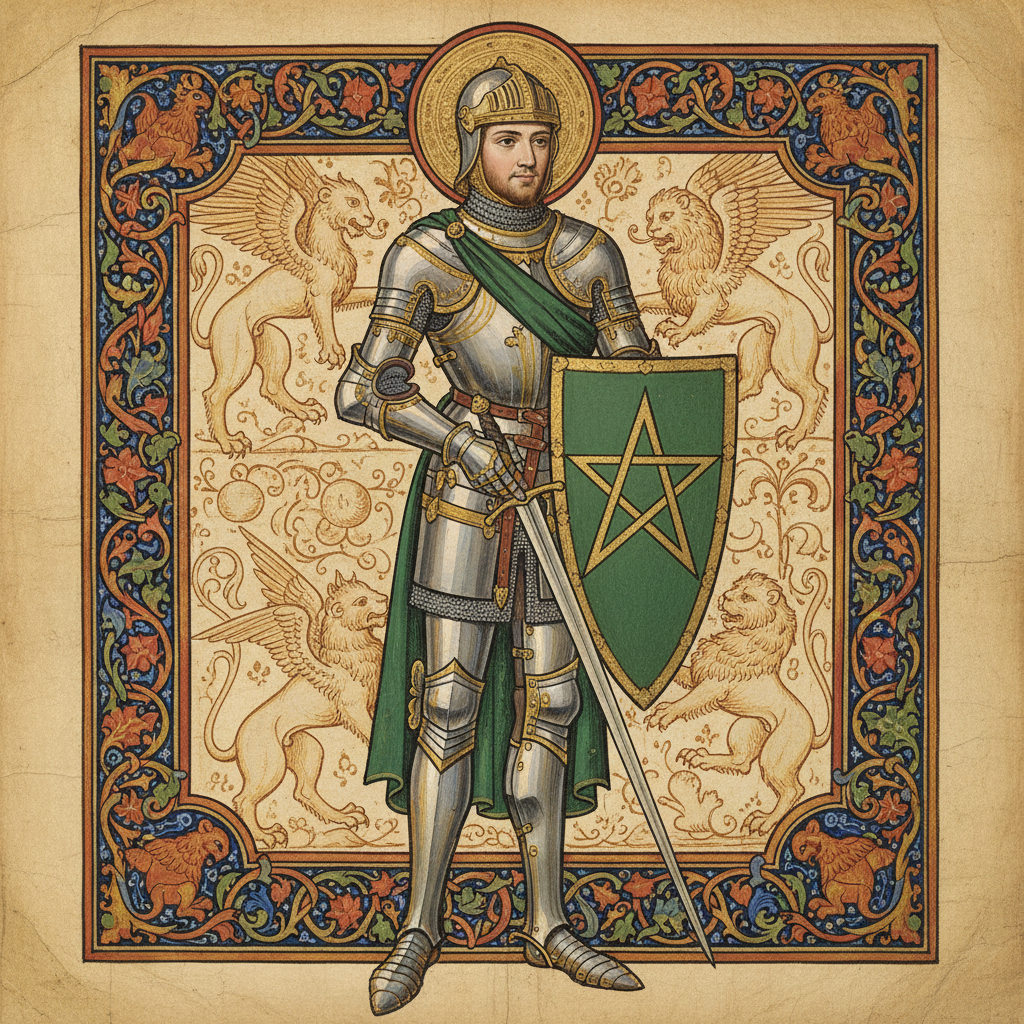
Combat Profile
Pentangle's Covenant
Gawain's strength peaks at noon and wanes toward dusk, granting him escalating power mid-battle before gradually diminishing
Courtesy of Kings
Gawain gains defensive bonuses against honorable opponents and suffers penalties when facing treachery, reflecting his code of virtue
His strength waxes and wanes with the sun (strongest at noon, weakest at night). In the French tradition, his reputation declines as Lancelot rises. His rage after Gareth's death makes him implacable and prevents peace
“The fifth five I find the knight used were Liberality and Lovingkindness leading the rest; then his Continence and Courtesy, which were never corrupted; and Piety, the surpassing virtue.” — Sir Gawain and the Green Knight (Tolkien trans.)
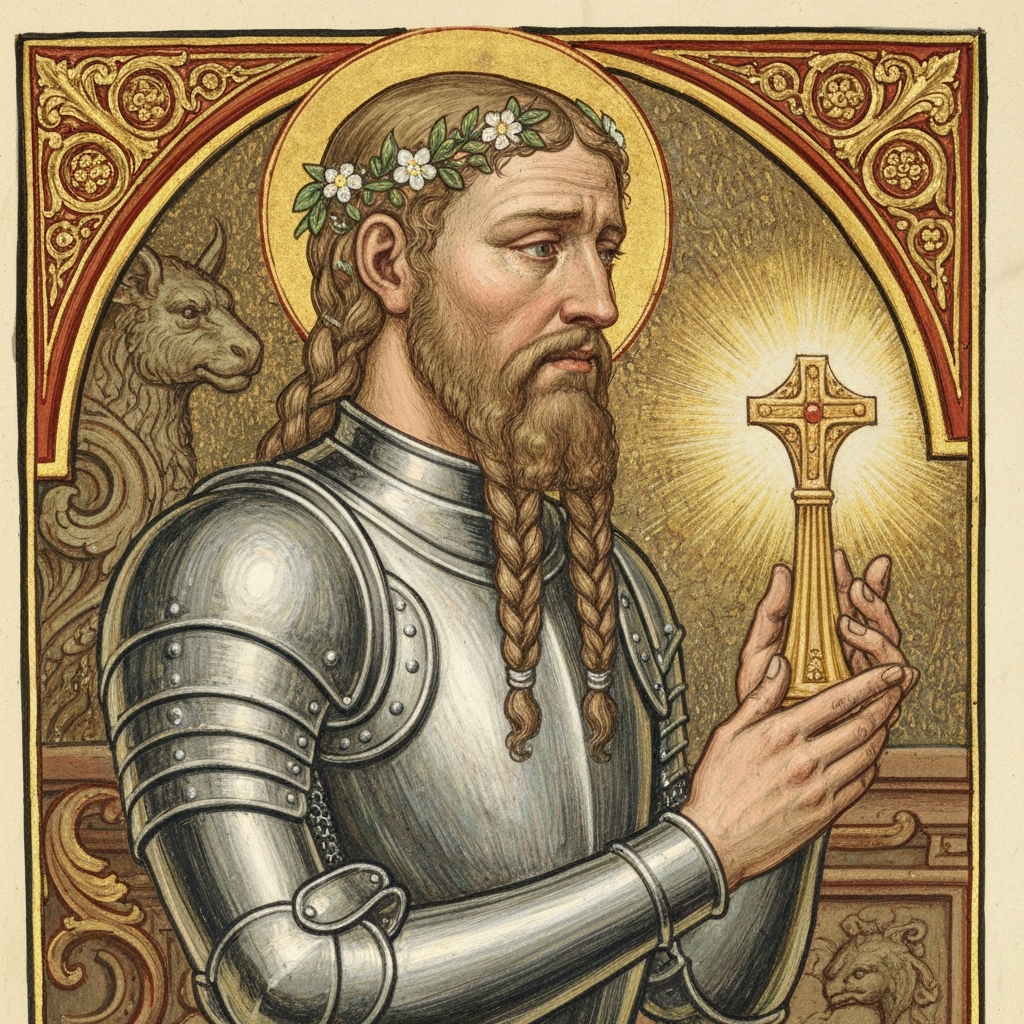
Lore: Gawain is Arthur’s nephew and, in the English tradition, the greatest knight of the Round Table (the French tradition gives that title to Lancelot). He is defined by courtesy — not merely politeness, but the entire complex of Christian knightly virtues. His pentangle shield, described in extraordinary detail in Sir Gawain and the Green Knight, represents: the five senses (mastered), the five fingers (faithful), the five wounds of Christ (meditated upon), the five joys of Mary (devotion), and the five knightly virtues (liberality, lovingkindness, continence, courtesy, piety). The Green Knight tests all of these by tempting Gawain with his wife’s seductions and the offer of a life-saving magical girdle. Gawain resists the seduction but keeps the girdle, a minor failure of honesty that he treats as a catastrophic sin. The Green Knight disagrees — he considers Gawain the finest knight alive, a man whose only flaw is loving his own life “a little too much.”
Parallel: Gawain is the Christian knight as ideal — imperfect but striving. His pentangle explicitly makes him a walking symbol of Christ’s sacrifice and Marian devotion. The Green Knight’s test parallels the testing of faith (James 1:12: “Blessed is the one who perseveres under trial”). His reaction to his minor sin — treating it as shameful — reflects the medieval Christian understanding that the truly virtuous are most aware of their unworthiness.
1 min read
The Green Knight (tests his honesty and finds him wanting -- but only slightly); Lancelot (defeats him in single combat)
*Sir Gawain and the Green Knight* (~1375-1400); Geoffrey of Monmouth; Malory; *Mabinogion* (as Gwalchmai)