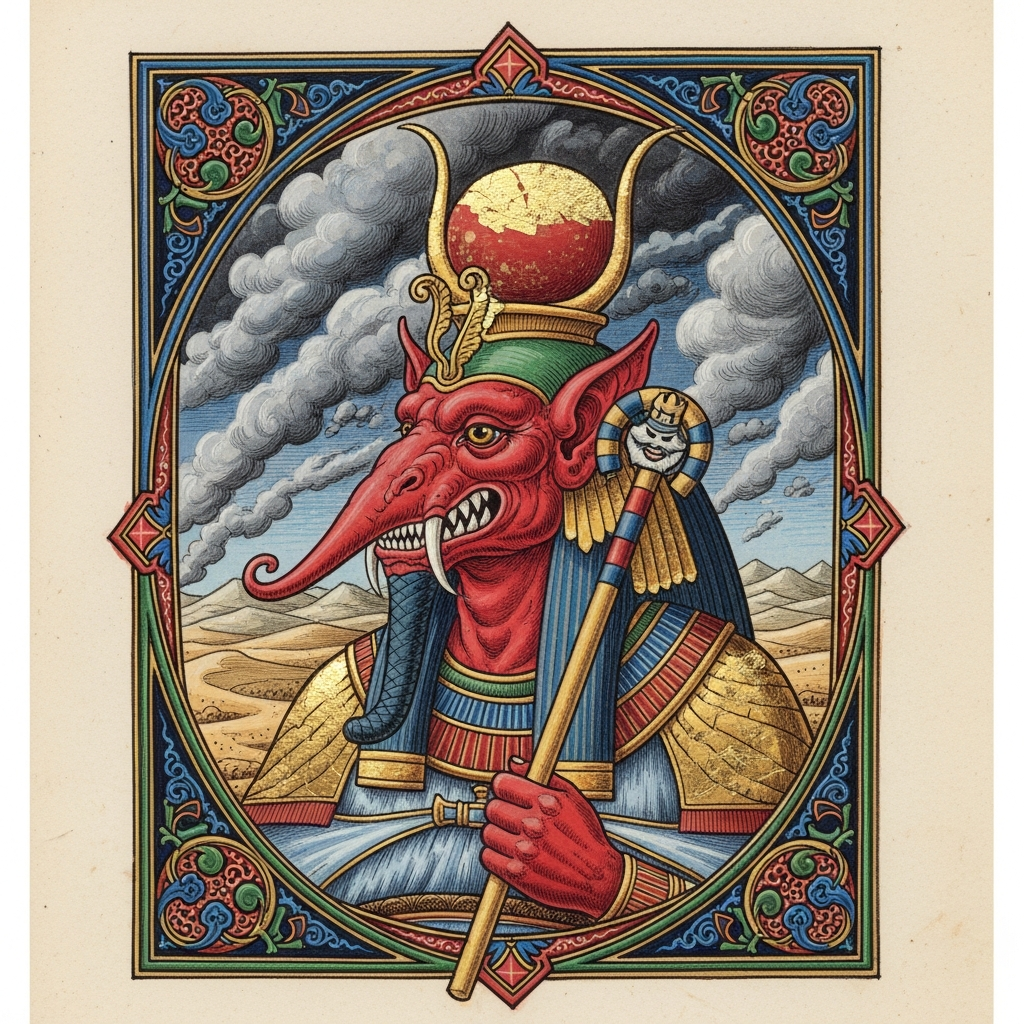
Combat Profile
Typhonic Wrath
Set unleashes a devastating storm of chaos that damages all enemies and reduces their defenses, reflecting his role as the primordial force of disorder.
Lord of the Red Land
Set's presence increases damage output in harsh environments and grants immunity to environmental hazards, embodying his mastery of the desert and untamed chaos.
Defeated by Horus in the Contendings; partially castrated
“Set is the original brother-killer, the lord of the red desert, the god who embodies everything that threatens cosmic order.”
Set is chaos incarnate — the murderer of his own brother, the adversary of Horus, the lord of storms and the barren desert. The parallels to Satan are extensive and may be more than coincidental: both are adversaries, both rebel against the divine order, both are associated with serpents (Set is sometimes depicted as a serpent or serpent-like creature), and the name “Set/Seth” is shared with Adam’s third son in Genesis 4:25. In Egyptian theology, Set is not purely evil — he rides on Ra’s solar barque and fights Apophis alongside Ra, making him a complex figure who embodies necessary chaos. But in the Osiris myth, he is the fratricidal destroyer, and his defeat by Horus mirrors the cosmic good-versus-evil pattern found throughout scripture.
1 min read
Horus (mythological)
Pyramid Texts; Plutarch, *De Iside et Osiride*; Chester Beatty Papyrus I