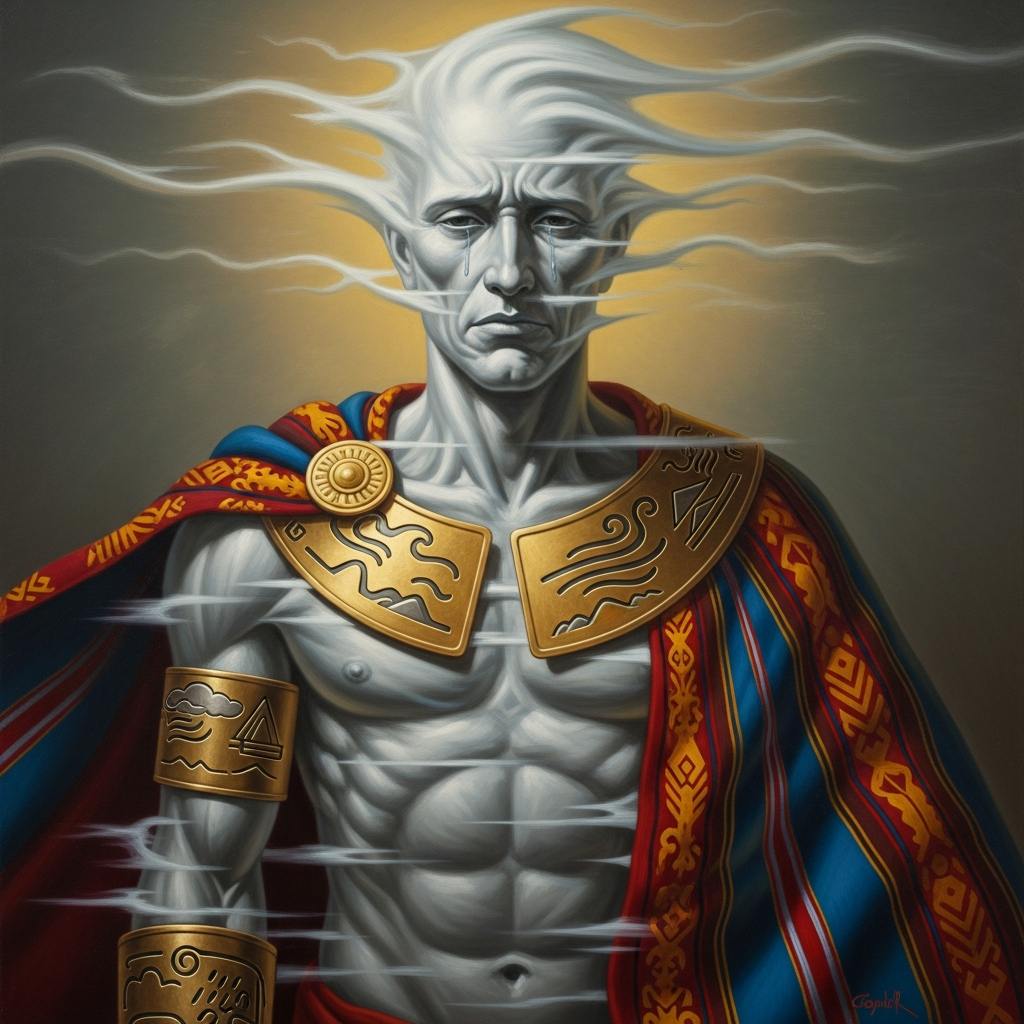
Combat Profile
Desert Wind -
Kon can drain moisture from a region entirely, converting fertile coastland to desert with a sustained exhalation
Weightless Movement -
Kon has no bones and travels as pure wind, passing through any barrier and moving at the speed of thought
Defeated and expelled by Pachacamac, who stripped him of his creative domain over the coastal peoples; his rain-bringing power was revoked as punishment
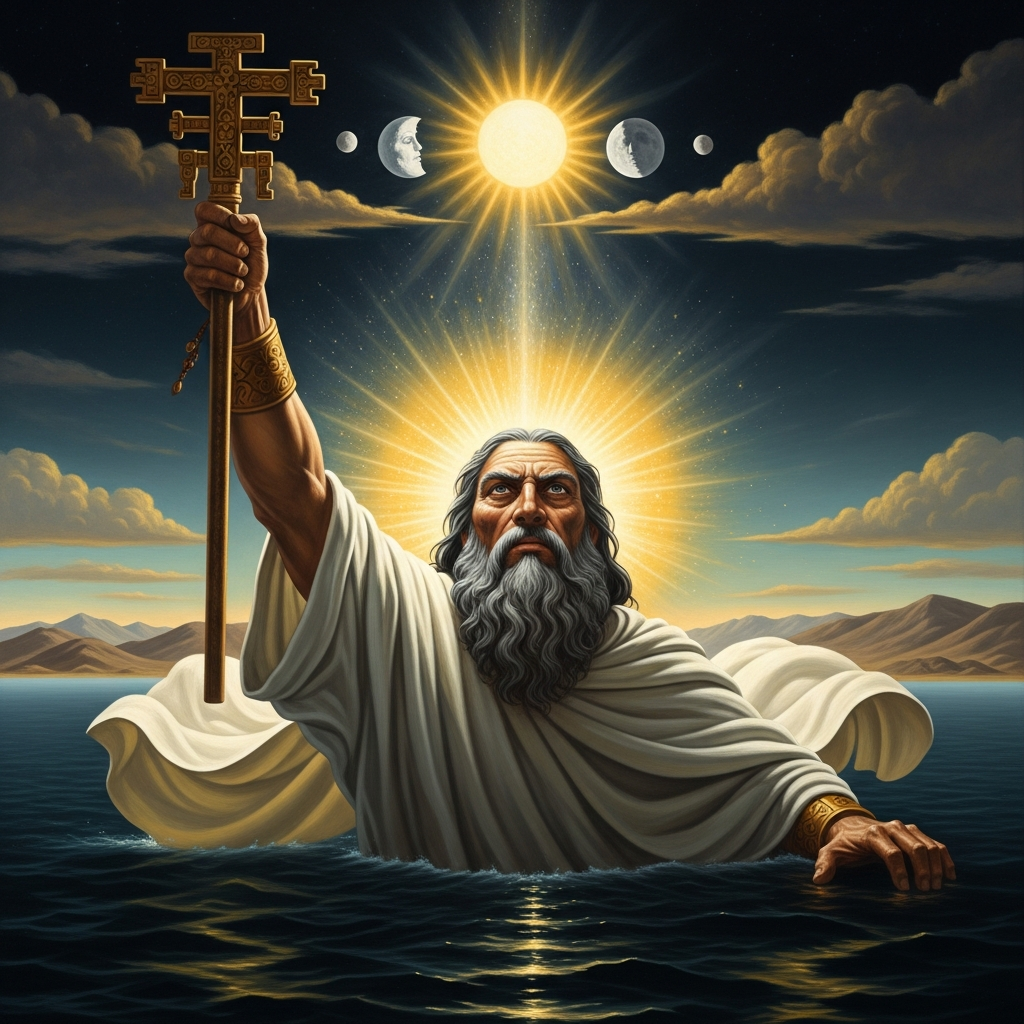
Lore: Kon is a peculiar deity even by the already-unusual standards of Andean cosmology. Recorded by Pedro Cieza de Leon in the mid-16th century from coastal informants, Kon was described as a being of pure wind — weightless, boneless, moving at impossible speed across the Peruvian coast. He was, according to these traditions, the original creator of the coastal peoples, who gave them rain and fertile land. But he was defeated by the more powerful coastal deity Pachacamac, who drove him northward. As he retreated, Kon transformed his gifts into their opposites: the fertile land became desert, the rain became the cold fog (garua) that covers the coast but brings almost no rain. The Peruvian coastal desert — one of the driest places on earth, directly beside the cold Humboldt Current ocean — was understood as the aftermath of this divine conflict. Kon did not merely lose; he turned his loss into permanent geography.
What survives of Kon’s theology is fragmentary and likely filtered through multiple cultural layers before reaching Cieza’s pen. His boneless nature recalls the Andean concept of wind as pure motion without substance, and his creative-then-destructive role follows a pattern found across Andean mythologies: the deity who creates and then withdraws or fails, leaving behind a transformed, less-generous landscape. He is not evil — he is defeated, and his transformation of the fertile coast to desert reads less as malice than as grief.
Parallel: Kon’s expulsion by Pachacamac and his transformation of gifts to barrenness parallels the Norse pattern of displaced deities transforming their domains upon defeat — the comparison to the ousted Vanir is instructive, as is the Greek Titan-Olympian succession where the older powers are not destroyed but displaced. His boneless wind-nature parallels the Slavic Stribog as a wind deity of great mobility but diffuse form.
1 min read
Pachacamac (his divine successor on the coast; the two are irreconcilable rivals)
Cieza de Leon, *Cronica del Peru* (1553); Calancha, *Cronica Moralizada* (1638); Rowe, *Inca Culture at the Time of the Spanish Conquest*