Combat Profile
Ocean's Bounty -
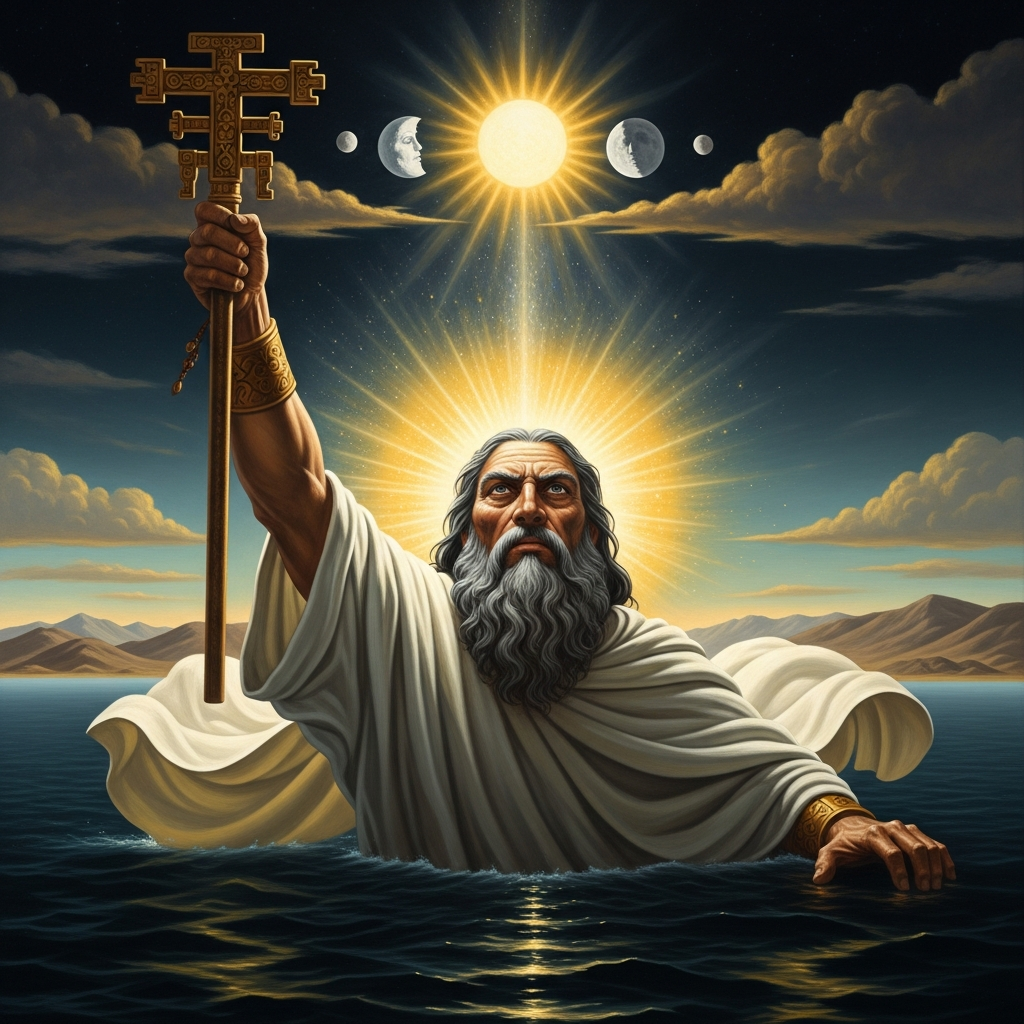
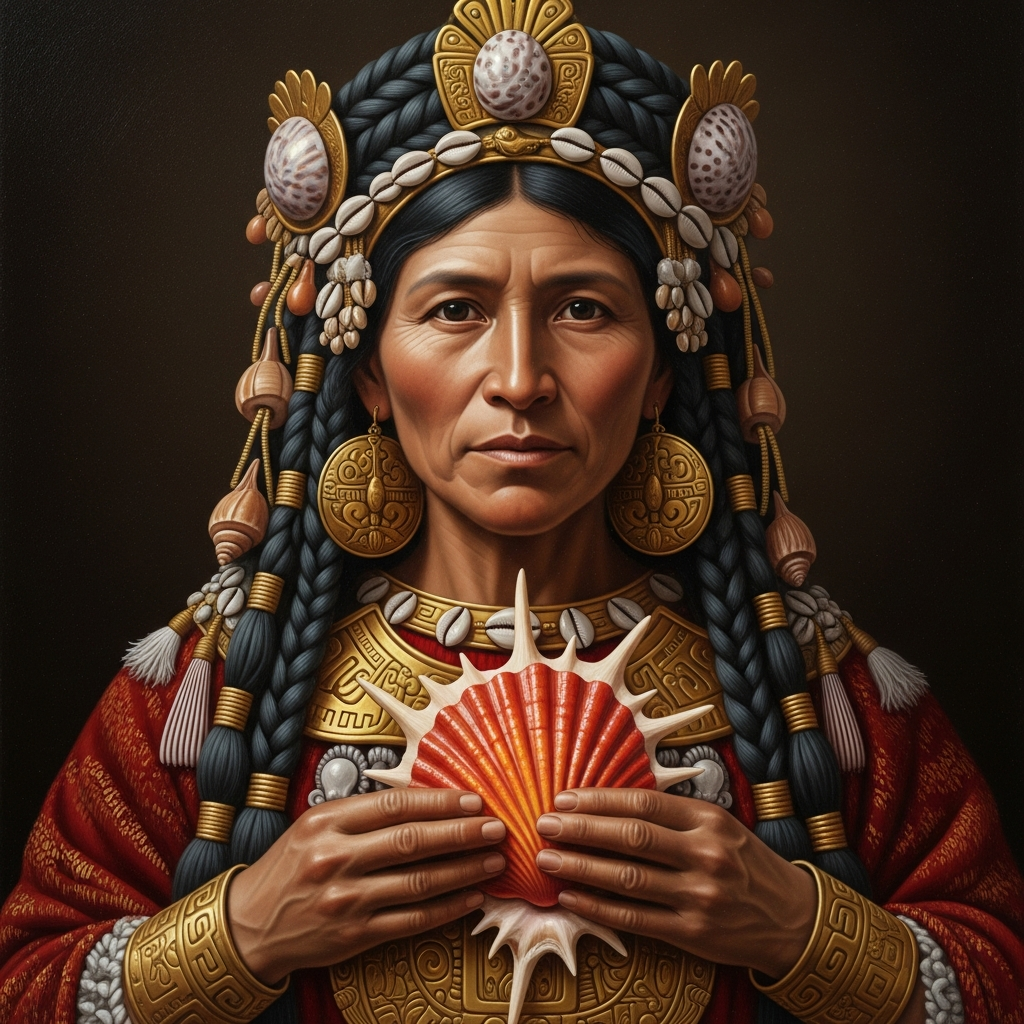
Mama Cocha commands the sea's currents, granting calm waters and abundant fish to those who honor her; she can summon or still the coastal storms
Waters of Origin -
all water in the Andean world traces its source to Mama Cocha; wells, springs, rivers, and rains all carry a fraction of her blessing, granting her pervasive protective influence across the entire hydrological cycle
Less theologically systematized than Pachamama or Mama Quilla in surviving sources; her coastal origins made her worship more peripheral in the highland-centered Inca imperial theology
Lore: Mama Cocha (Quechua: Mama Qucha, “Mother Lake/Sea” — cocha meaning any large body of water, from ocean to highland lake) is the sea goddess and the mother of all water in the Andean world. She occupies a position in Andean theology analogous to Pachamama’s in terrestrial theology: as Pachamama is the ground beneath all agriculture, Mama Cocha is the water within all hydrology. The entire Andean water cycle — rain falling on the mountains, flowing as rivers to the sea, evaporating as clouds, returning as rain — is understood as a movement through her body and back.
She is inseparable from the spondylus shell (mullu in Quechua) — the thorny oyster (Spondylus princeps) that lives only in the warm Pacific waters off Ecuador and Colombia. This shell was the single most ritually important material in the entire Inca world. It was ground into powder and scattered on agricultural fields to invoke rain. It was placed in graves. It was offered to mountain apus. It was carried in the Sapa Inca’s crown. Its transport from the warm Ecuadorian coast to Cuzco and across the empire constituted one of the major long-distance trade networks of pre-Columbian South America. To possess spondylus was to possess a piece of Mama Cocha herself — the sea’s tears, or the sea’s jewelry, or the sea’s children. The shell was so central that archaeologists use its presence as a marker of high-status Andean religious sites across 5,000 years of Andean civilization.
Her relationship with the fishermen of the Peruvian coast was intimate and practical: fishing communities performed specific pre-voyage and post-catch rituals, including the return of the first fish to the sea (her body), the blessing of nets in her name, and the invocation of her calm against the dangerous lomas fog-winds and the sudden cold swells of the Humboldt Current. When the El Nino (the warm counter-current that the Spanish named “The Child,” since it appeared near Christmas) disrupted the Humboldt Current and crashed the anchovy populations that fed the coastal food chain, it was experienced as Mama Cocha withholding her gift — a catastrophe that the coastal theologies tried to explain and propitiate through intensified offering.
Parallel: Sea mother goddesses are among the most universal divine figures in maritime cultures. The closest formal parallel is Aztec-Maya Chalchiuhtlicue (“She of the Jade Skirt”), who governed rivers, lakes, and rainfall in a similar water-mother role. Norse Ran governs the sea as a net-caster who catches the drowned. The Greek sea is governed by Poseidon (male) but the primordial sea-mother Tethys parallels Mama Cocha more closely as a generative water-matrix. In the biblical tradition, the primordial waters (tehom, Genesis 1:2) are the closest structural parallel — the deep water that existed before creation, which God divides and shapes rather than worships.
2 min read
The great cold upwelling of the Humboldt Current, which brings abundance when stable but catastrophic collapse during *El Nino* events -- her generosity is conditional on the ocean's physics
Cobo, *Historia del Nuevo Mundo* (1653); Polo de Ondegardo, *Errores y Supersticiones de los Indios* (1559); Rostworowski, *Costa Peruana Prehispanica*; Arriaga, *Extirpacion de la Idolatria*