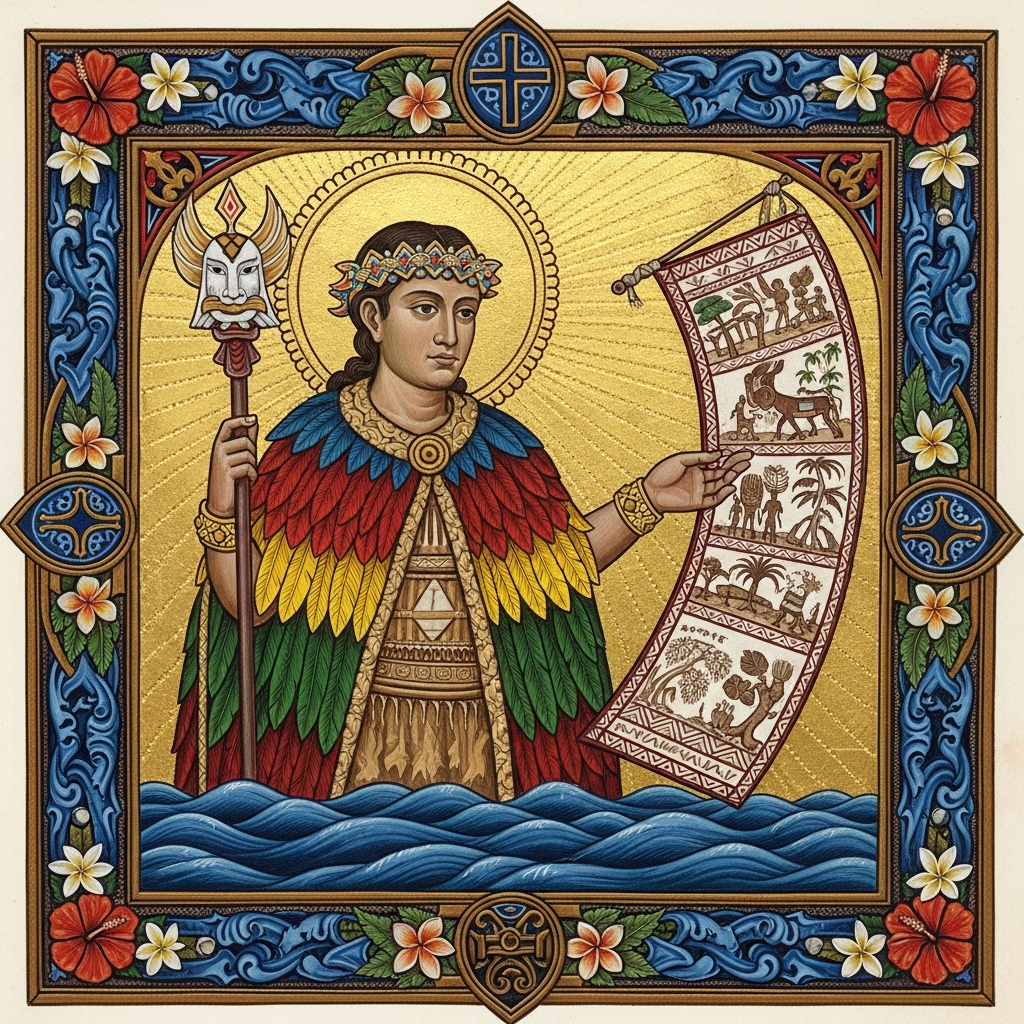
Combat Profile
Makahiki Blessing
grants all allies prosperity and abundance for a season, multiplying harvest yields and restoring spiritual balance to the land
God of the Makahiki
presides over the sacred festival period when warfare ceases and the heavens open with rain and bounty for all people
His season is the Makahiki -- four months of peace, fertility, and sport. Outside it, the warrior-god Kū takes precedence. Lono's power is cyclical, not absolute; he returns when the rains return
“When the Pleiades rose, the people put down their weapons. The heiau of Kū were closed. The rains came, and with them, Lono.”
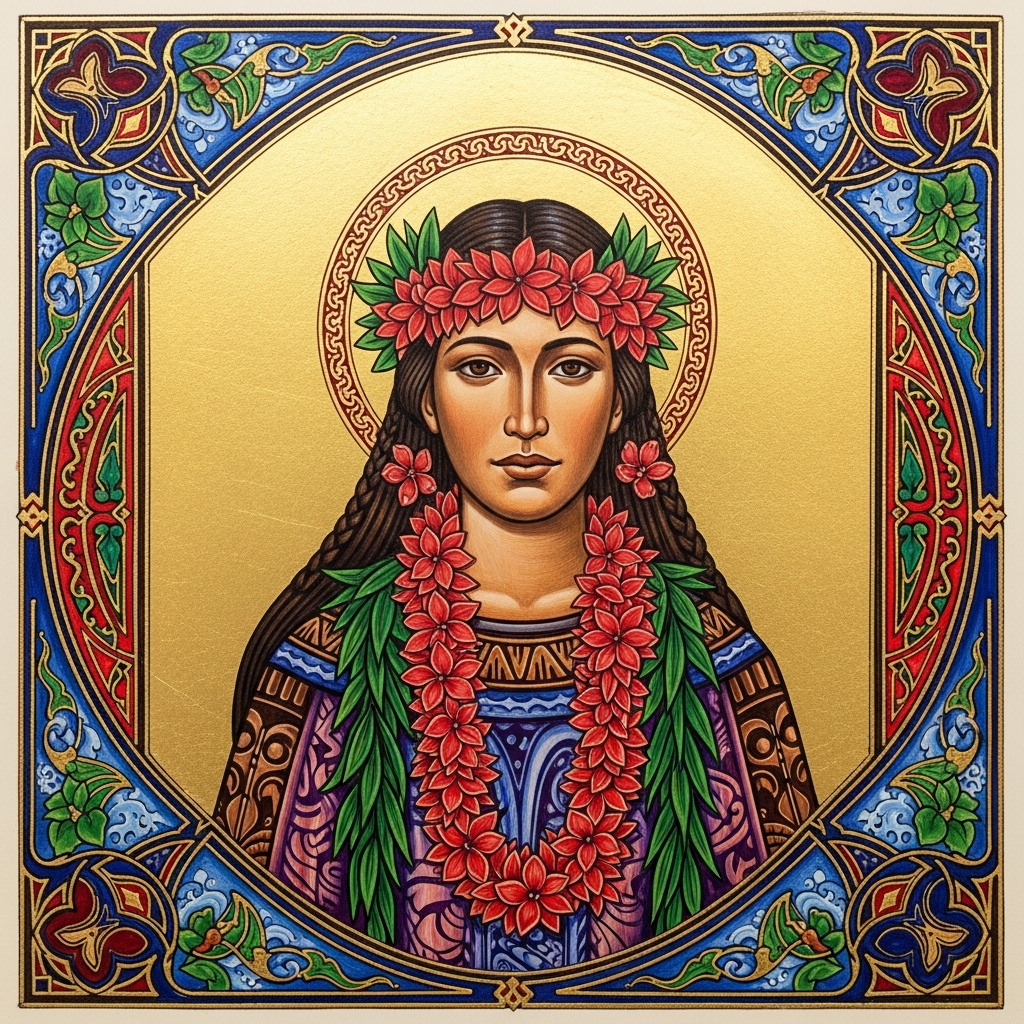
Lore: Lono is one of the four great gods of Hawaiian tradition — Kāne (creation, fresh water), Kū (war, strength), Lono (agriculture, peace, fertility), and Kanaloa (the deep ocean) — the divine quartet that governed all aspects of Hawaiian life. His domain is the land’s abundance: rain falling on taro and sweet potato fields, fish rising into nets, the fertility that makes the difference between plenty and famine on a Pacific island. He is the god of the Makahiki, the four-month annual festival of peace that began at the winter solstice when the Pleiades rose over the horizon. During the Makahiki, all warfare between chiefs ceased, taxes were collected, athletic competitions were held, and Lono’s great idol — a tall crosspiece draped with kapa cloth, feathers, and the skins of birds — was carried clockwise around the circumference of the Big Island in a procession that symbolized Lono’s own circuit of his domain.
Lono’s legend is bound to one of the most consequential cases of mistaken identity in history. When Captain James Cook arrived at Kealakekua Bay on the Big Island in January 1779, he arrived at the precise moment of the Makahiki, from the precise direction from which Lono was expected to return, in ships whose tall masts and white sails resembled the crosspiece and cloth of Lono’s idol. The Hawaiian priests received Cook with rituals appropriate for Lono’s return. Cook participated, apparently without understanding the theological dimension of what he was enacting. When he returned weeks later — outside the Makahiki season, after Lono was supposed to have departed — the theological frame shattered. Cook was killed at Kealakekua Bay on February 14, 1779, in a confrontation whose roots, some scholars argue, lay partly in the confusion of identities. The debate among historians and anthropologists over whether the Hawaiians truly believed Cook was Lono, or whether the identification was more pragmatic and contextual, has been fierce and unresolved for decades.
Parallel: The god of agriculture whose annual cycle governs the rhythm of peace and war, plenty and effort, appears across mythologies: the Greek Demeter and her daughter Persephone whose descent and return governs the seasons; the Mesopotamian Dumuzi/Tammuz, the shepherd-god who dies and rises with the agricultural cycle; the Norse Freyr, whose sovereignty over rain, fertility, and the harvest makes him indispensable in a farming society. Lono’s Makahiki resonates specifically with the Jewish festival calendar — the rhythm of sacred time in which ordinary commerce and warfare yield to designated periods of divine acknowledgment (Passover, Sukkot, Shabbat). The Cook episode adds a dimension no other agricultural deity can claim: a real-world encounter in which a European explorer was incorporated, however temporarily and controversially, into an active mythological system, with consequences measured in blood.
2 min read
Kū (the two gods represent complementary cycles: Kū's season is war and conquest; Lono's is rain, harvest, and peace. The Hawaiian calendar alternates their dominance)
Beckwith, *Hawaiian Mythology*; Valeri, *Kingship and Sacrifice: Ritual and Society in Ancient Hawaii*; Sahlins, *How "Natives" Think: About Captain Cook, for Example*