Combat Profile
Divine Resurrection
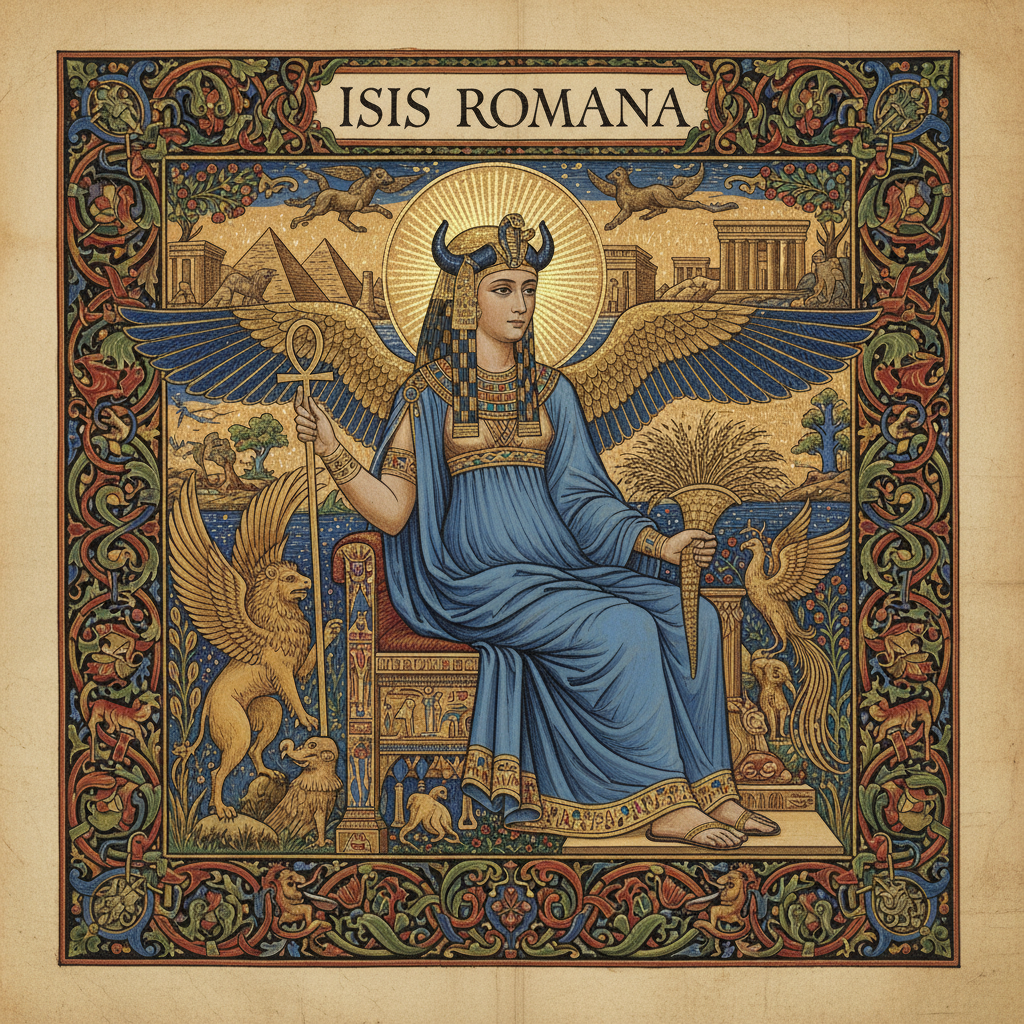
Isis restores a fallen soul to life or grants complete healing and restoration to the grievously wounded, channeling her power over death and rebirth.
Queen of Magic
All healing and restorative magic cast by Isis or her devotees is amplified, and she perceives hidden truths obscured by darkness or deception.
Too Egyptian for Roman purists; repeatedly expelled from Rome before final acceptance
“I am Nature, the universal Mother, mistress of all the elements, primordial child of time, sovereign of all things spiritual, queen of the dead, queen also of the immortals, the single manifestation of all gods and goddesses that are.” — Apuleius, The Golden Ass XI.5
The Egyptian Isis was reinvented for the Roman world as the most popular goddess in the Mediterranean. Her mysteries promised what no traditional Roman religion could: personal salvation, a direct relationship with the divine, and a guaranteed afterlife. The initiation, described in extraordinary detail by Apuleius, involved ritual death and rebirth — the initiate “approached the boundary of death” and was reborn in the light of the goddess. Her temples were magnificent; her priests shaved their heads and wore white linen; her rituals involved sacred water (from the Nile, symbolically), processions, and hymns.
The visual evidence is devastating for anyone who thinks Marian devotion sprang solely from Jewish and Christian sources: images of Isis nursing the infant Horus on her lap are virtually identical to early Christian images of the Madonna and Child. Isis was called Stella Maris (Star of the Sea) — a title later given to Mary. She was the compassionate mother who heard prayers, healed the sick, calmed the seas, and guided the dead. When Christianity displaced her, it did not destroy her archetype — it rebaptized it.
Compare: The Virgin Mary (who absorbed Isis’s titles, imagery, and functions); Kuan Yin (East Asian compassionate mother goddess); Inanna/Ishtar (earlier Near Eastern version); the Egyptian Isis entry in Egyptian Mythology.
1 min read
Christianity -- which absorbed her imagery into the cult of the Virgin Mary
Apuleius, *The Golden Ass* (Book XI); Plutarch, *De Iside et Osiride*; Marvin Meyer, *The Ancient Mysteries*