Combat Profile
Pantry's Blessing
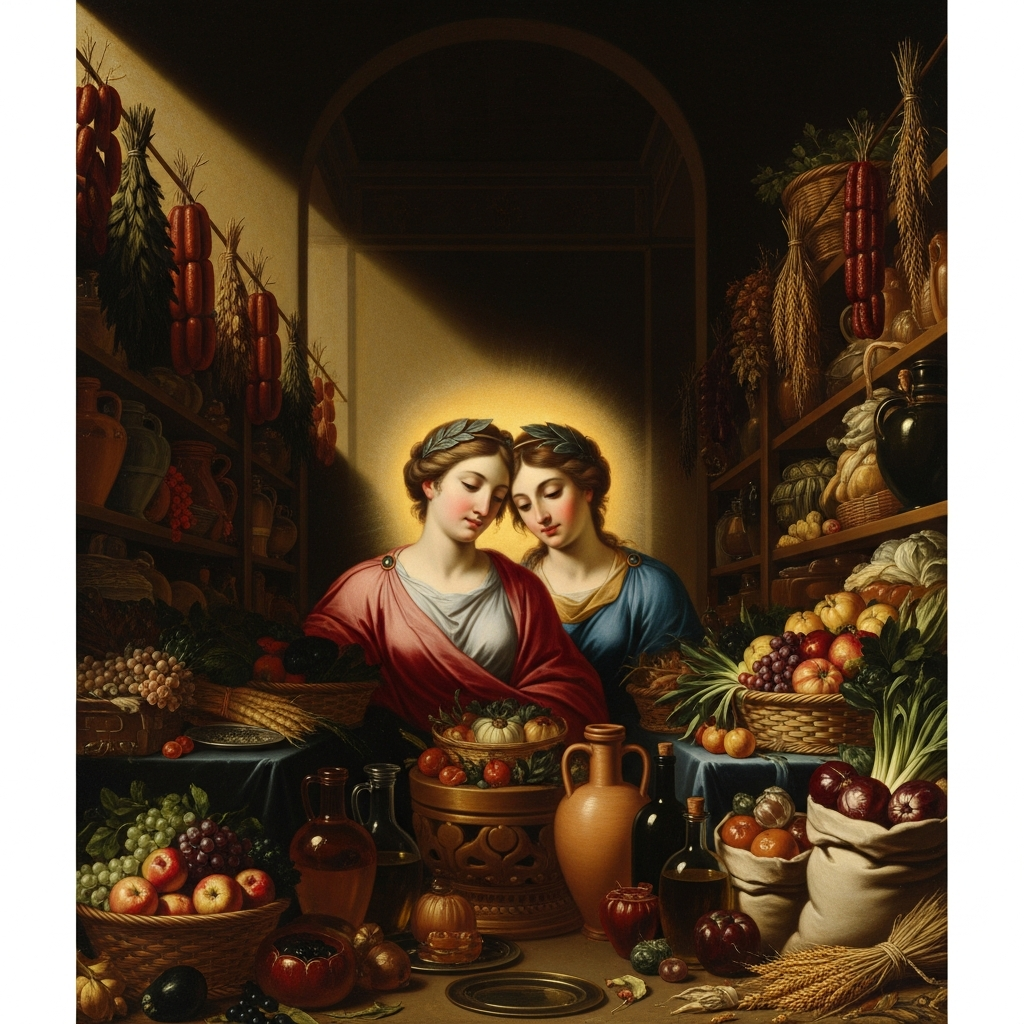
The Penates ensure that food stored under their protection neither spoils, is stolen, nor runs out unexpectedly; a properly venerated household cannot suffer famine while neighbors starve
Stores of Plenty
Households honoring the Penates daily find their food-stores last longer than calculated; small portions stretch, leftovers feed unexpected guests, and the grain-bin always seems to have one more meal in it than it should
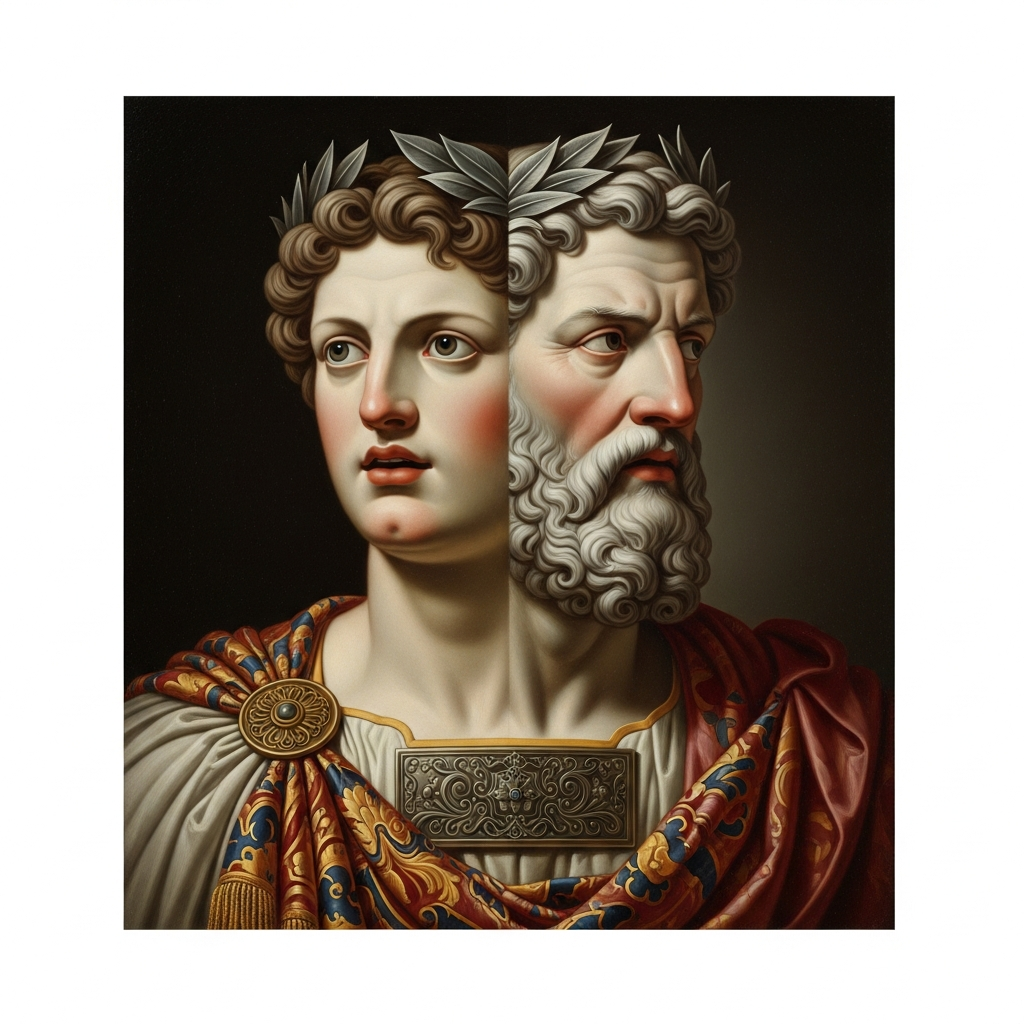
The Penates are the household gods of the penus — the pantry, the storeroom, the place where the family’s food was kept. Where the Lares protected the family-as-people, the Penates protected the family-as-economic-unit, ensuring that the granary remained full and the food stores remained uncorrupted. Their statuettes stood beside those of the Lares in the lararium, and they received offerings at every meal — a small portion of the food was set aside for them before the family ate.
The Penates were also worshipped at the state level: the Penates Publici, public Penates, were the protective deities of Rome’s collective storehouse, brought (according to legend) from Troy by Aeneas as the sacred treasures of his exiled people. They are the gods whose preservation guarantees the continuity of nourishment — a religion appropriate to a culture that knew famine intimately and treated grain-supplies with the seriousness of a national security matter.
Biblical Parallels: The Penates parallel biblical traditions of Joseph’s grain-storage in Egypt (Genesis 41), the manna of Exodus 16 (which neither spoiled nor ran out for forty years), and Elijah’s miraculous extension of the widow’s meal and oil (1 Kings 17:14-16). The principle that divine favor manifests as inexhaustible food is biblically central. Christ’s “give us this day our daily bread” (Matthew 6:11) and the multiplication of loaves (Matthew 14:13-21) extend the same theological logic.
Cross-Tradition: Parallels Vedic gods of the prajā (offspring, prosperity, livestock) and household abundance, Chinese Zaojun (the Stove God who oversees the kitchen and reports family conduct to heaven), Slavic Domovoi (household spirit guarding the home and food-stores), and Norse Hus-vættir (house-wights). The “pantry-deity who guards the food-stores” is a near-universal feature of agrarian religions.
1 min read