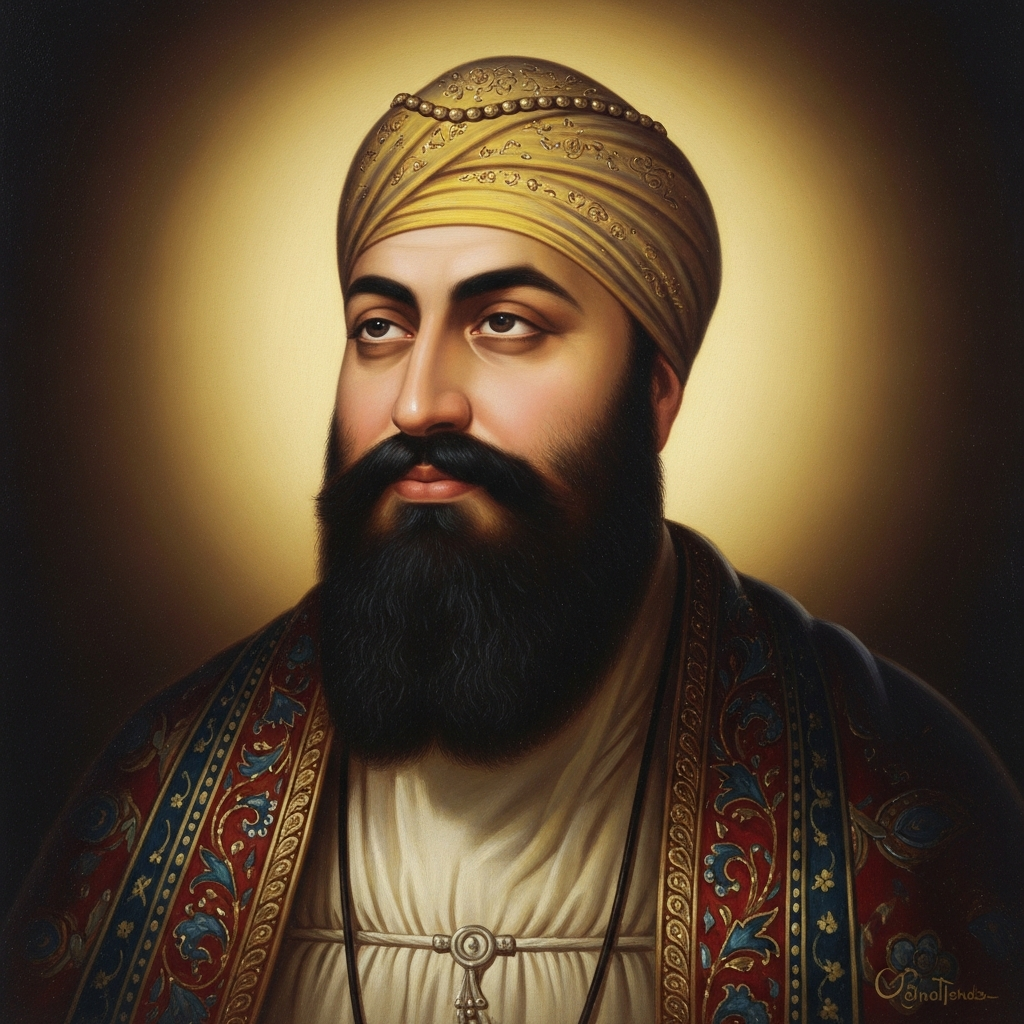
Combat Profile
Founder | Sikh
Born in 1469 at Talwandi into a Hindu merchant family, Nanak refused the sacred thread ceremony as a boy — if the thread binds you to caste, why not bind kindness and truth instead? In 1499 he walked into the Bein river at dawn to bathe and vanished for three days; when he emerged his first words were Na koi Hindu, na koi Mussulman — neither the priests nor the qazis are asking the right questions. He then spent 24 years walking an estimated 28,000 miles across four great journeys — east to Bengal, south to Sri Lanka, north to Tibet, west to Mecca and Baghdad — composing hymns at every stop, accompanied by his Muslim musician Bhai Mardana. He founded the Kartarpur community in 1521 around three commitments: Naam Japo (meditate on the divine name), Kirat Karo (work honestly), Vand Chhako (share what you have).
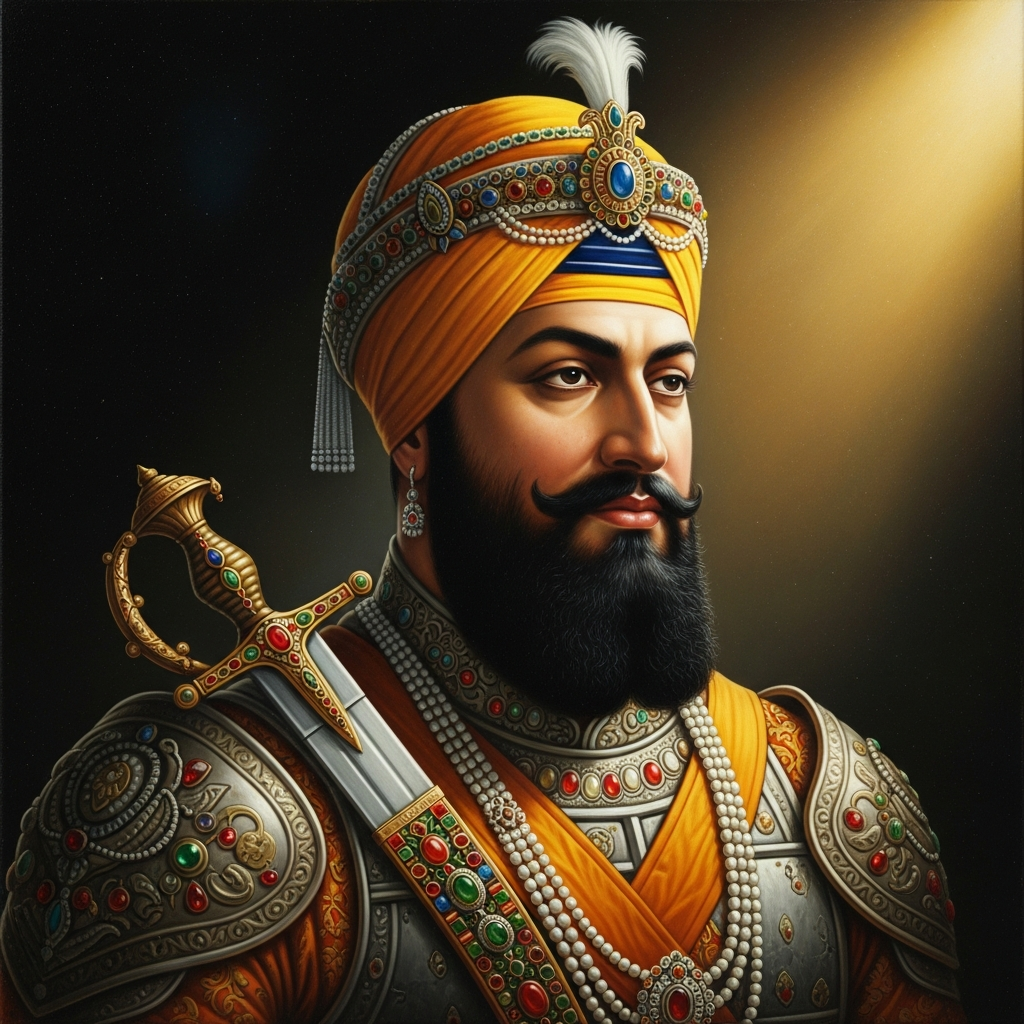
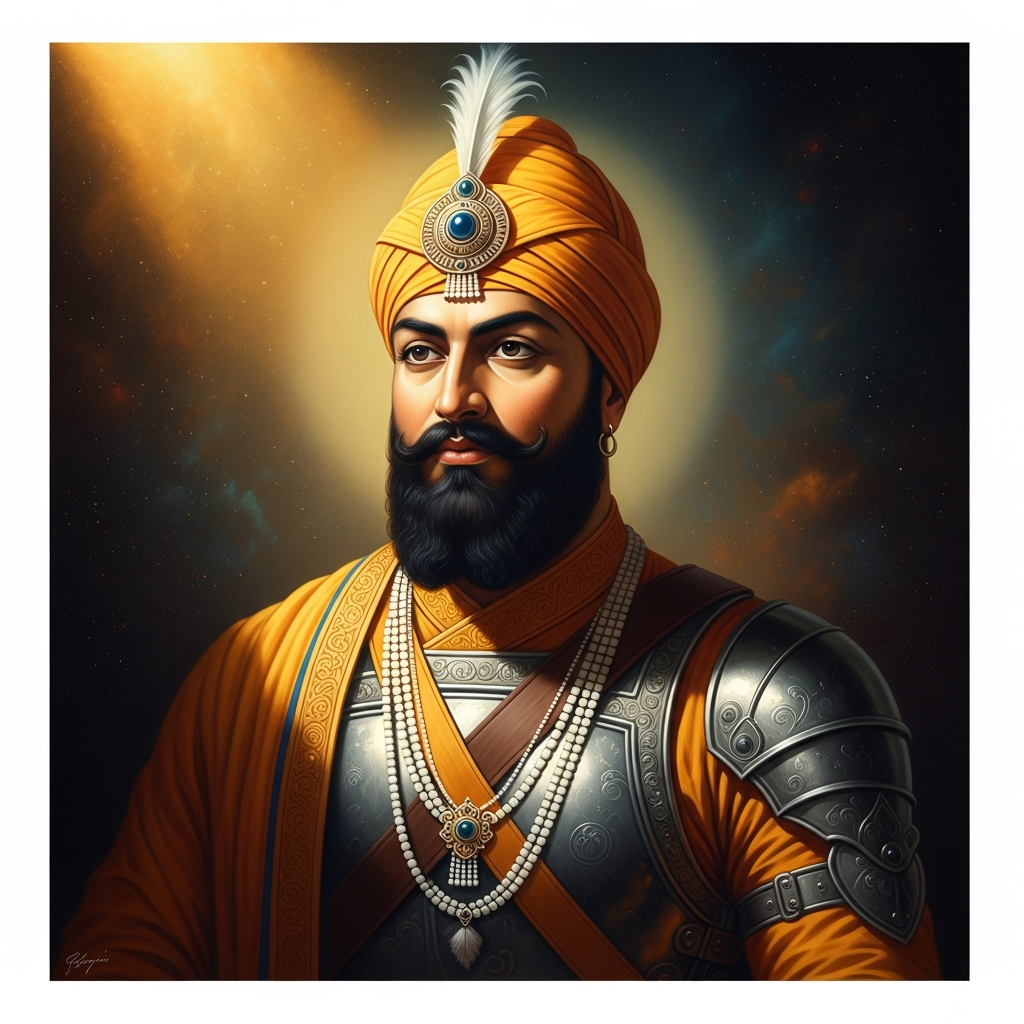
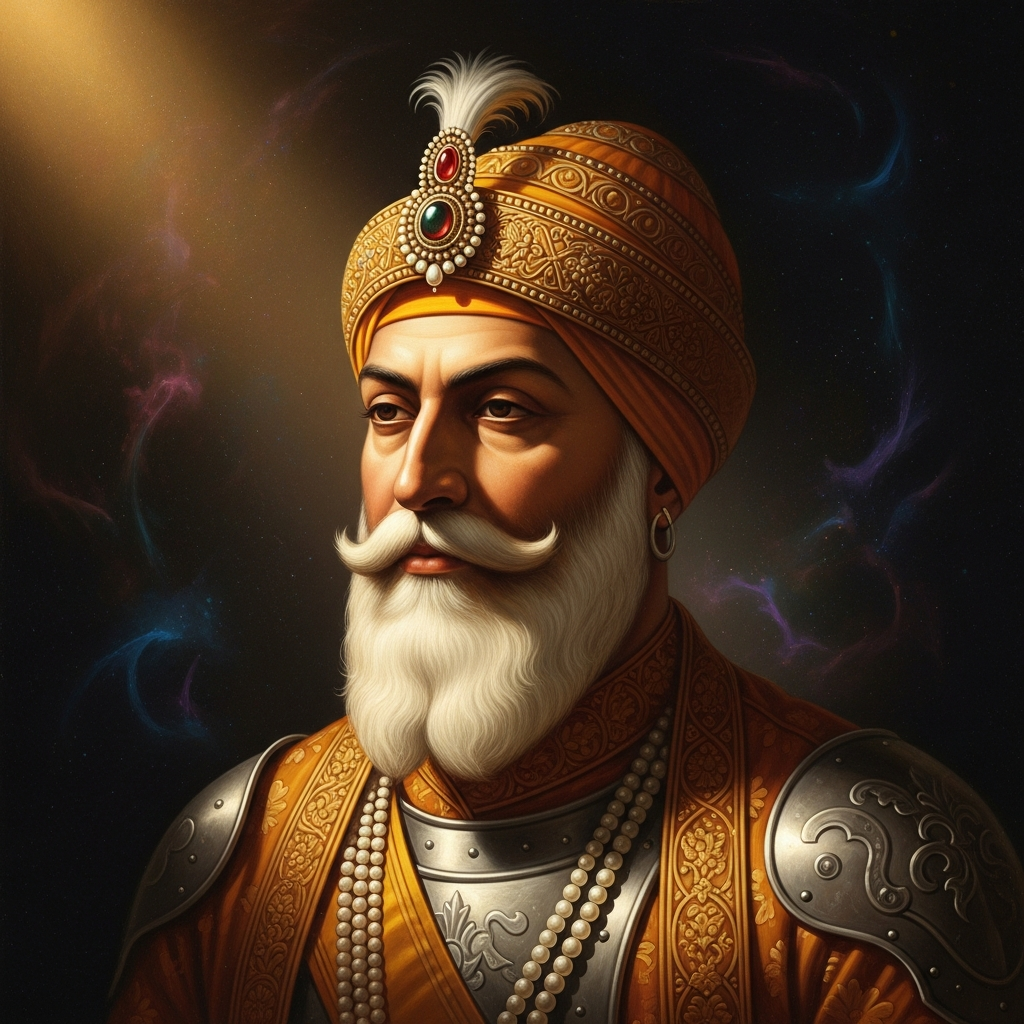
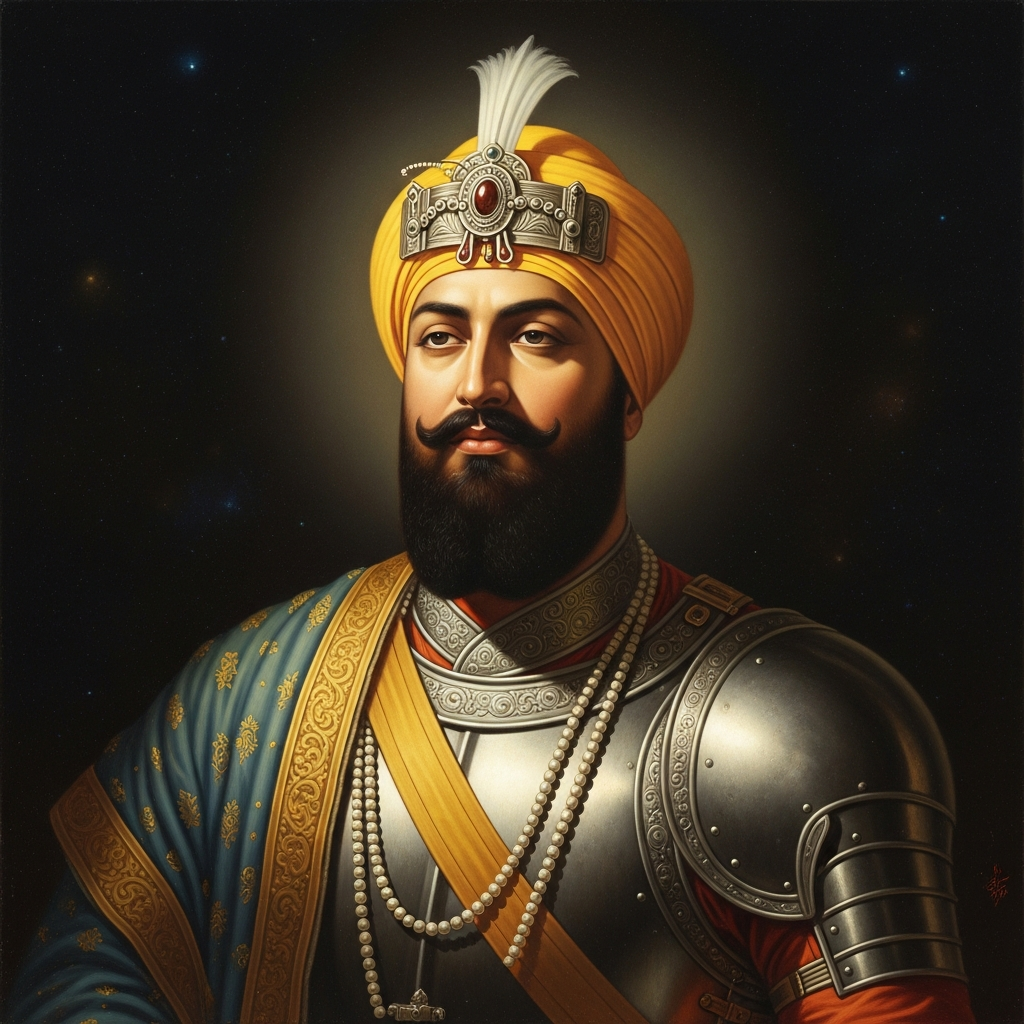
|------|-------|-------| | ATK | 1/10 | spiritual power; no martial capacity | | DEF | 8/10 | his teaching was his defense | | SPR | 10/10 | the founding spiritual vision of an entire tradition | | SPD | 7/10 | 28,000 miles across four continents | | INT | 10/10 | theological clarity that cut through both Hindu and Islamic establishment | | Epithets | “Guru Nanak Dev Ji,” “Baba Nanak,” “First Guru,” “Nanak Nirankari” (Nanak of the Formless One) | | Sacred Animals | None in orthodox practice; in Janamsakhi stories a cobra’s hood sheltered the sleeping Nanak — a symbol of divine protection | | Sacred Objects | Gutka (prayer book), the rabab (Bhai Mardana’s lute that accompanied his hymns), Kartarpur community’s langar vessels | | Sacred Colors | Saffron/Blue (Sikh tradition); depicted in white in early iconography | | Sacred Number | 1 (Ik Onkar — One God: the theological foundation), 4 (four great journeys), 10 (began the lineage of Ten Gurus) | | Consort(s) | Mata Sulakhni (wife) | | Sacred Sites | Nankana Sahib (birth city — Pakistan), Kartarpur Sahib (Pakistan — community he founded and died in), Sultanpur Lodhi (Bein river revelation site) | | Festivals | Guru Nanak Gurpurab (birthday — Kartik Purnima, October/November; the largest Sikh festival globally) | | Iconography | Serene bearded face; long white robe with halo; often seated with Bhai Mardana and his rabab beside him | | Period | 1469–1539 CE | | Region | Punjab (birth and death); his four udasis covered South Asia, Central Asia, Arabia, and Tibet |
Parallels: Moses (the founding prophet who delivers a new people a new law); the Prophet Muhammad (a merchant who received divine revelation and walked away from convention); Socrates (itinerant teacher who refused the establishment’s categories and died for it — though Nanak was not executed). See also: [[Guru Gobind Singh Ji](/bestiary/sikh/guru-gobind-singh-ji-the-founder-of-the-khalsa/)](#guru-gobind-singh-ji----the-founder-of-the-khalsa), Bhai Mardana, [Waheguru](#waheguru)
2 min read