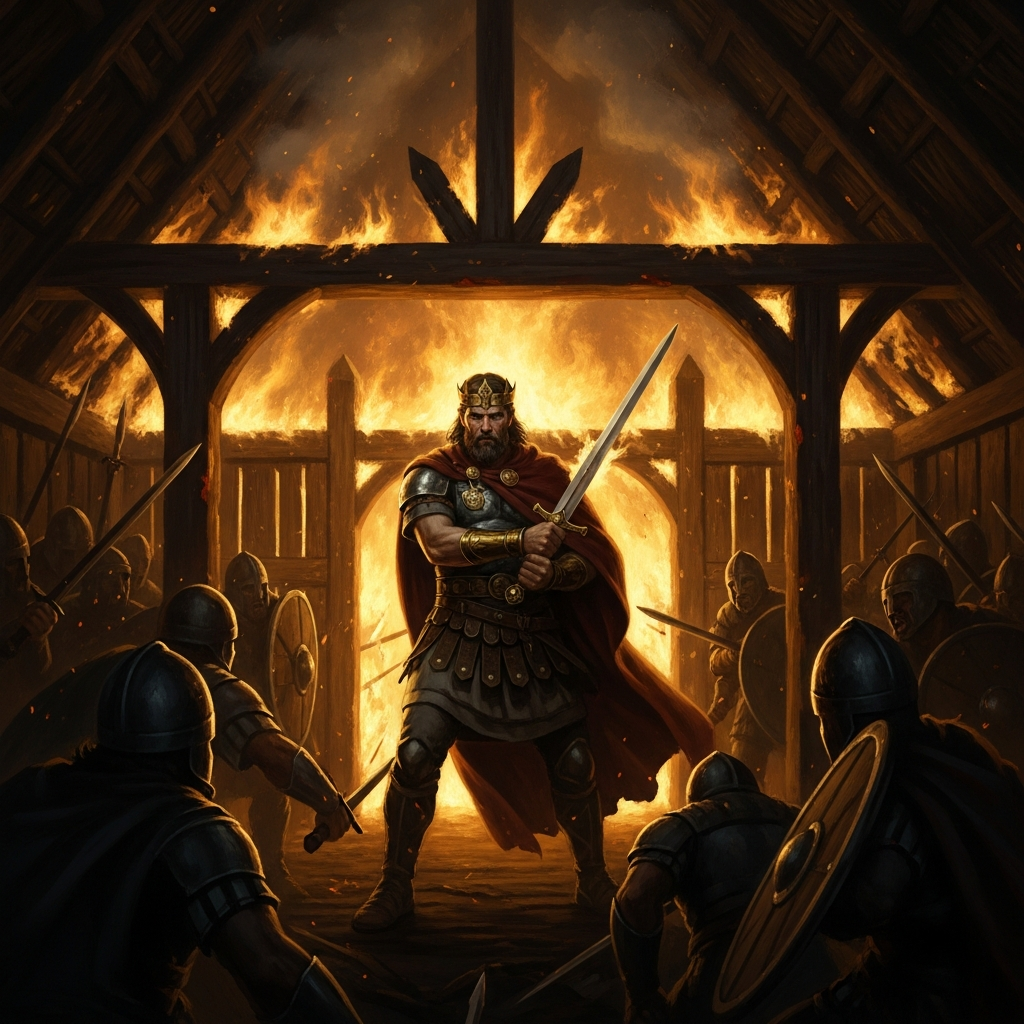
King Conaire and the Geasa That Destroyed Him
circa 100 BCE — the mythic kingship age before the Ulster heroes · The hostel of Da Derga, County Dublin, Ireland
Contents
The perfect High King of Ireland is given sacred prohibitions that govern his kingship — and then fate arranges the world so that every single taboo is violated in sequence, each violation enabling the next, until Ireland's greatest king falls surrounded by enemies at a burning guesthouse.
- When
- circa 100 BCE — the mythic kingship age before the Ulster heroes
- Where
- The hostel of Da Derga, County Dublin, Ireland
He is given the prohibitions at the moment of his kingship and each one is a sacred thread in the fabric of his reign.
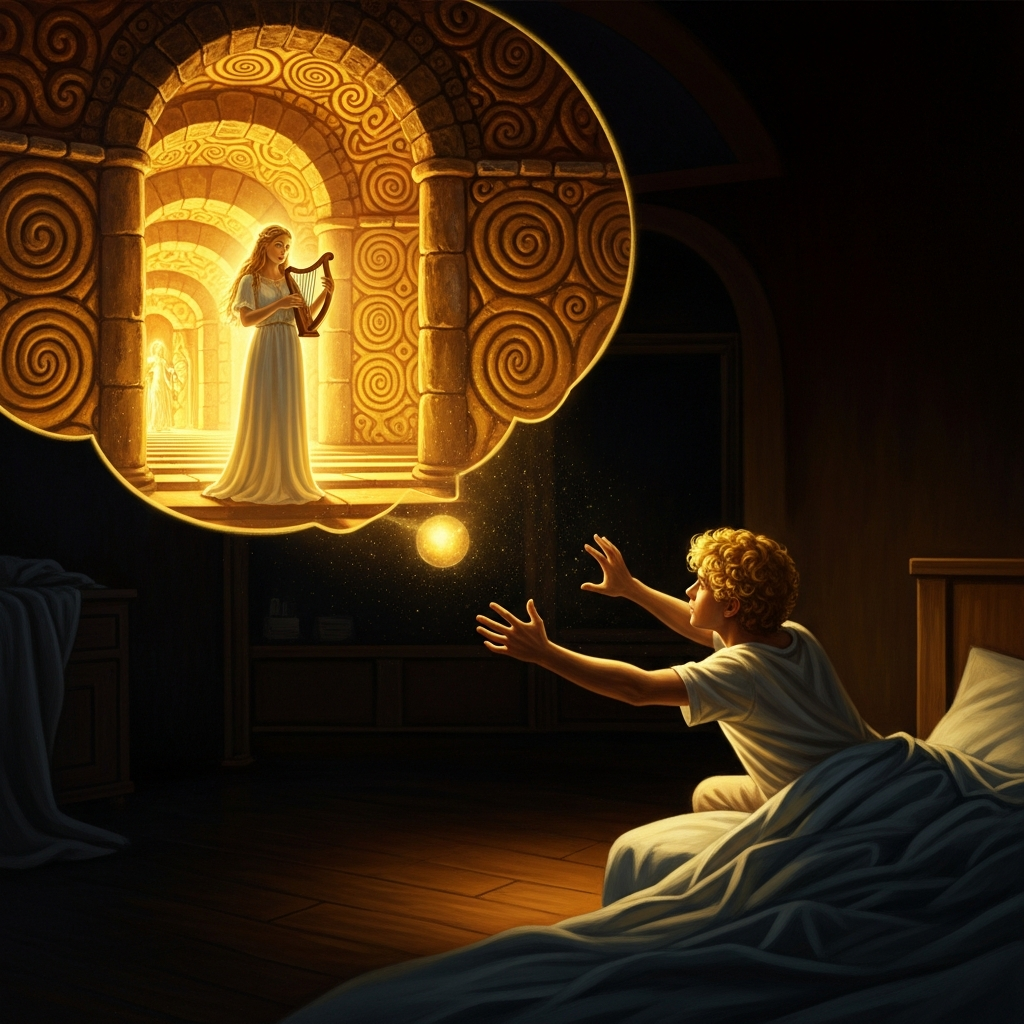
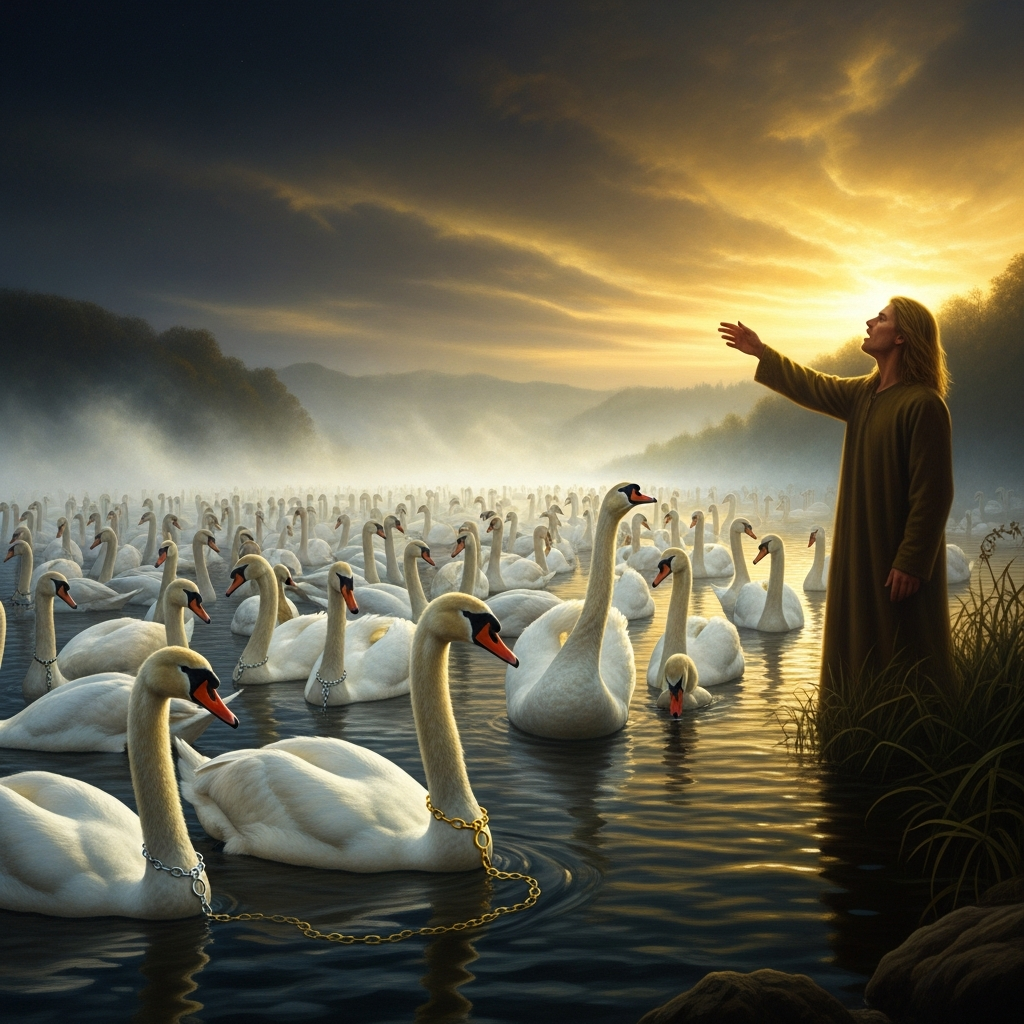
Conaire Mór comes to the kingship through a divine bird that tells him to go naked to Tara, where he will find a chariot waiting, and if the chariot fits him he is king. He arrives. The chariot fits. A group of naked horsemen escort him to the stone that cries for the right king. The stone cries.
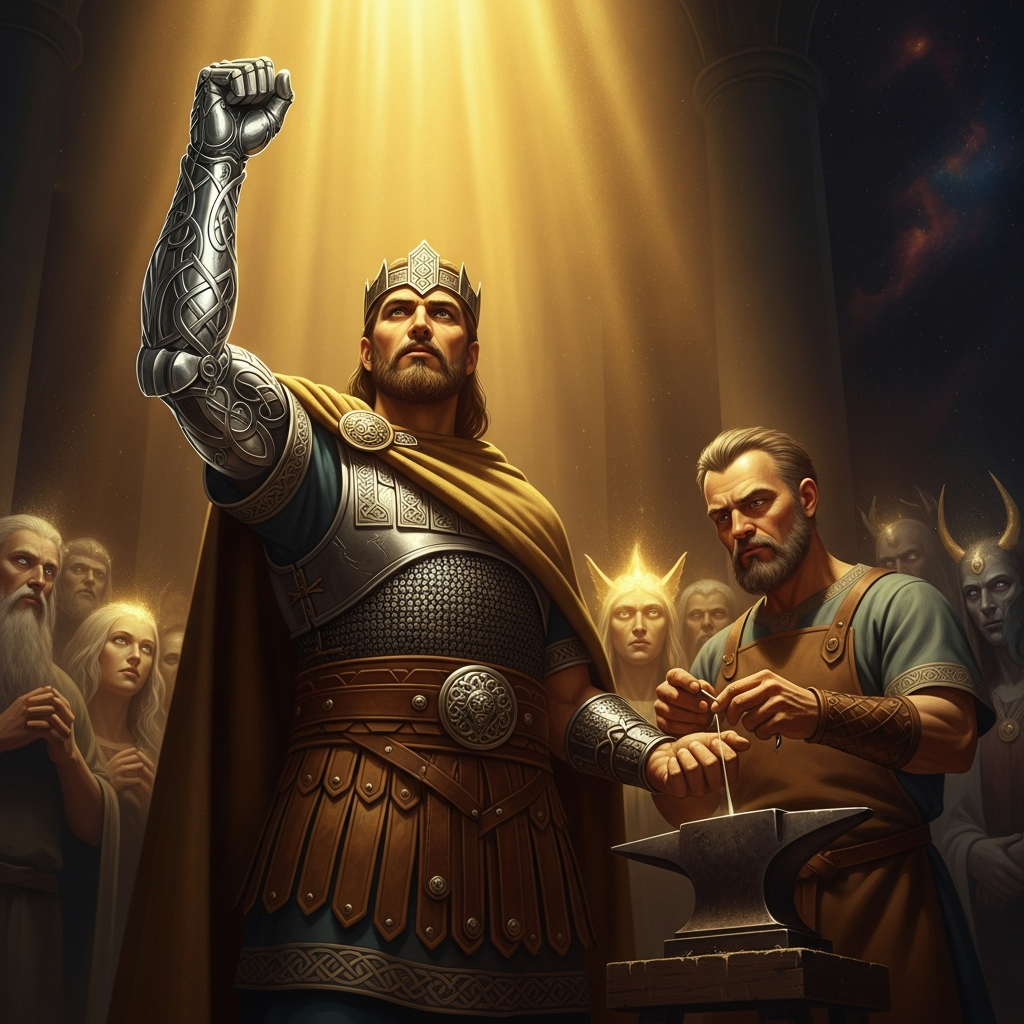
The prohibitions come with the kingship. He must not go around Tara leftward. He must not hunt the special beasts of Cernae. He must not be abroad after sunset. He must not let a woman sleep alone in his house. He must not allow three Reds to go before him to the house of a Red. He must not go to the hostel of Da Derga with a group that will destroy it. There are nine prohibitions in total, each one a specific calibration of the sacred geometry of his reign.
Under Conaire, Ireland flourishes. His reign is a golden age: the cattle are fat, the harvests sufficient, peace holds. He is the high king Ireland was built to have.
Then fate begins its work.
Three outlaws — his foster-brothers, whom he has banished for theft — are raiding in the north. He pursues them but they escape into exile and join the pirate Ingcél Cáech in Britain, where they commit terrible crimes. They sail back to Ireland intent on a great raid to restore their standing, and Ingcél demands he choose the target.
He chooses Da Derga’s hostel.
Conaire does not know they are coming. He is traveling through Leinster when a great murder of crows settles on his company and does not disperse, which is the first sign. He drives them off.
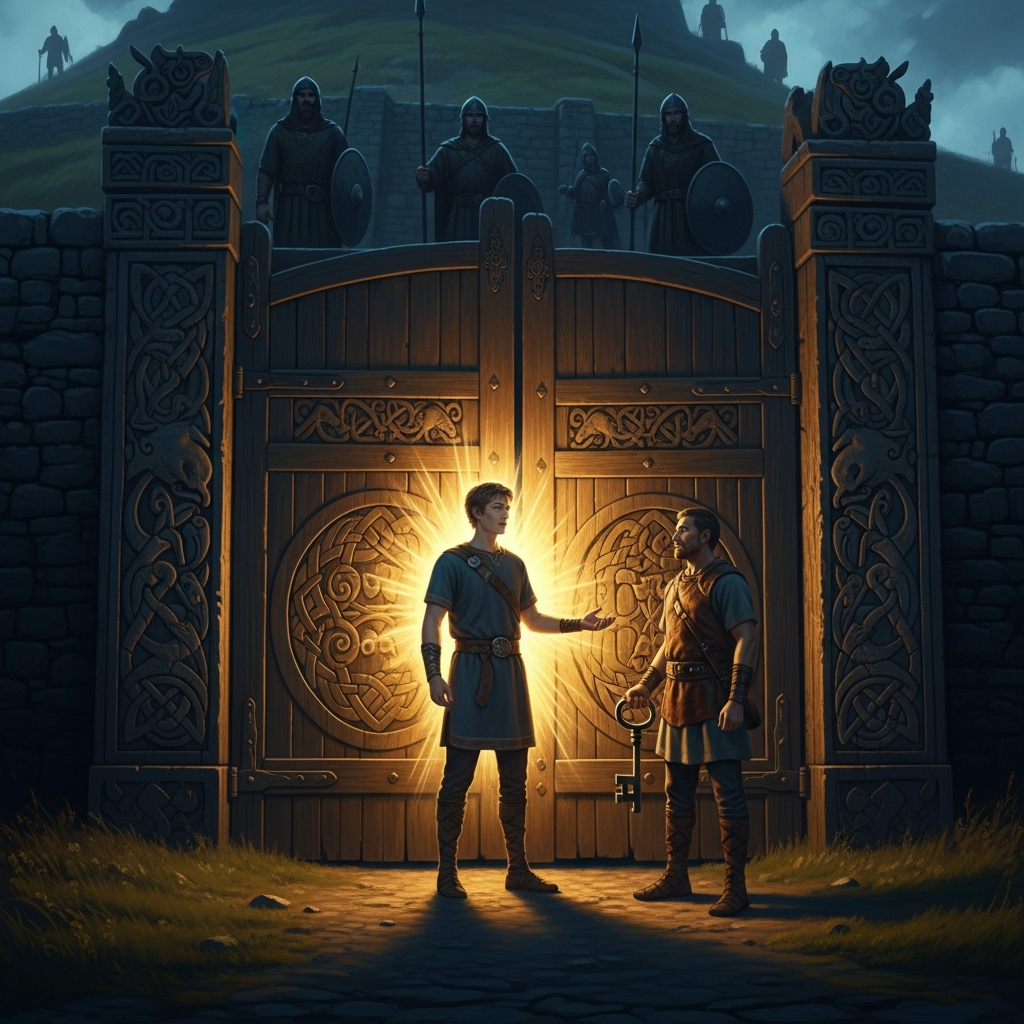
He is offered hospitality by a man he cannot refuse. Accepting means arriving at Da Derga’s hostel after dark — first prohibition violated.
He finds the hostel occupied by three men dressed in red. He cannot turn back without insulting the hospitality. He cannot advance without violating the prohibition about three Reds. He advances — second prohibition violated.
There is a woman seeking shelter at the hostel and she is alone and it is raining. He cannot leave a woman in the rain outside his hall. She enters — third prohibition violated.
The violations proceed through the night with the mechanical necessity of a lock-and-key sequence: each violation creates the condition for the next, and Conaire — who is not a bad king, who is not making bad decisions, who is doing what a good king does in each individual case — violates every prohibition in his set by acting with the quality of character that made him a good king in the first place.
Ingcél’s forces surround the hostel. The fighting is tremendous. Conaire is a devastating warrior and he kills vast numbers. But he is mortal and they are many and he has no water — the water-supply is cut off. He dies of thirst at the hostel of Da Derga, surrounded by his fallen warriors, his reign and his perfect kingship over.
A severed head — some versions say his own severed head, given a drink of water by a poet at the end — completes the last exchange. The poet pours water into the dead king’s mouth and the dead mouth thanks him.
This is the last gesture of a reign defined by proper reciprocity: even dead, Conaire thanks the one who gave him water. Even dead, the good king performs the good king’s function. The taboo-violations destroyed him but they never unmade what he was.
Echoes Across Traditions
Entities
- Conaire Mór
- Mesgegra
- Fer Gair
- Ingcél Cáech
- Da Derga
Sources
- Whitley Stokes, ed. and trans., 'The Destruction of Dá Derga's Hostel,' *Revue Celtique* 22 (1901)
- Jeffrey Gantz, trans., *Early Irish Myths and Sagas* (Penguin, 1981)
- Kim McCone, *Pagan Past and Christian Present in Early Irish Literature* (Maynooth, 1990)