The Maccabean Revolt
167-164 BCE · Hanukkah's origin · Modiin, Jerusalem, the Judean hills
Contents
167 BCE. Antiochus IV Epiphanes outlaws the Torah, defiles the Temple with pig's blood, and demands a priest bow to Zeus. Mattathias refuses. His son Judah leads a rebellion through the Judean hills. Three years later, they retake the Temple — and one day's oil burns for eight.
- When
- 167-164 BCE · Hanukkah's origin
- Where
- Modiin, Jerusalem, the Judean hills
The old man is not supposed to be the beginning of anything.
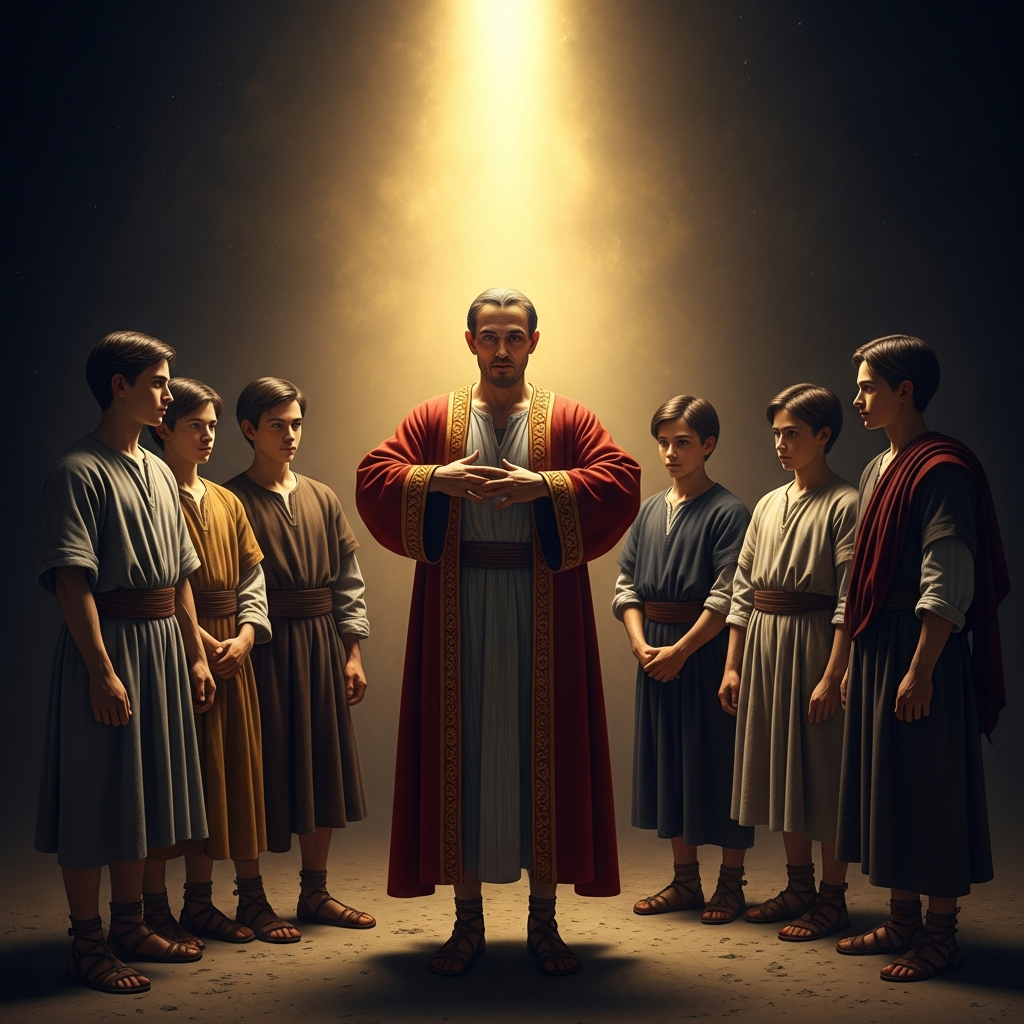
Mattathias is a priest in Modiin, a town of no consequence in the hill country between Jerusalem and the sea. He has five sons. He has kept the law his whole life — not because it was easy, not because it cost him nothing, but because the law is what separates the present from the nothing that came before it. This is what his father told him. This is what he tells his sons.
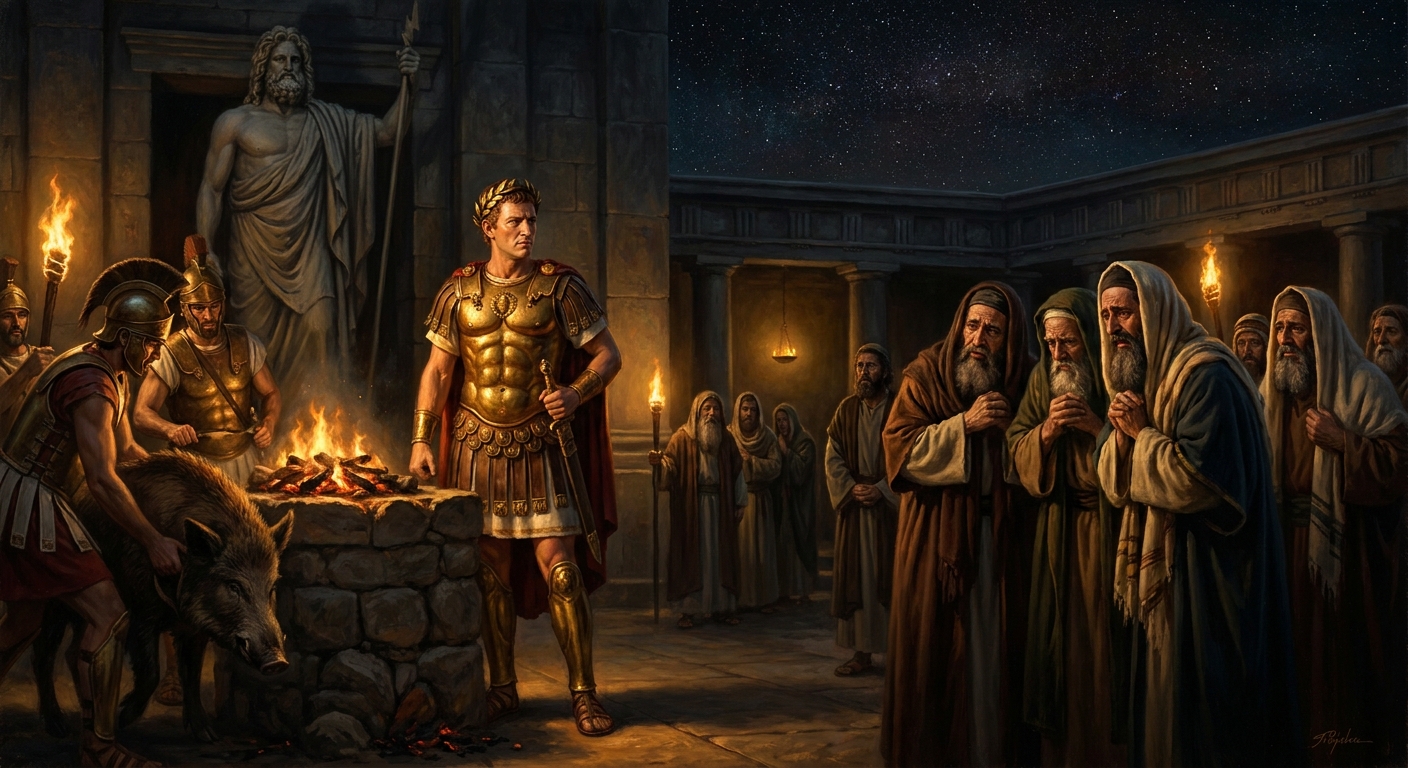
In 167 BCE, the Seleucid king Antiochus IV Epiphanes sends officers to Modiin. The order is already known throughout Judea: sacrifice to the Greek gods, or die. They have been enforcing it in Jerusalem for months. The Temple is gone — not destroyed, worse than destroyed, converted. A pig’s blood on the altar of the Lord. A statue of Zeus where the menorah stood. The priests who refused are dead. The women who circumcised their sons are dead, infants tied around their necks, thrown from the walls.
The officer in Modiin looks at Mattathias. He is old, well-known, respected. If he steps forward and sacrifices, the town will follow. The officer offers silver, friendship, the favor of the king.
Mattathias does not answer. He is watching a different man step forward from the crowd — a Hellenized Jew, someone who has already made his peace with the new order, who sees this as a simple transaction. The man approaches the altar they have set up in the town square.
What happens next is over in seconds.
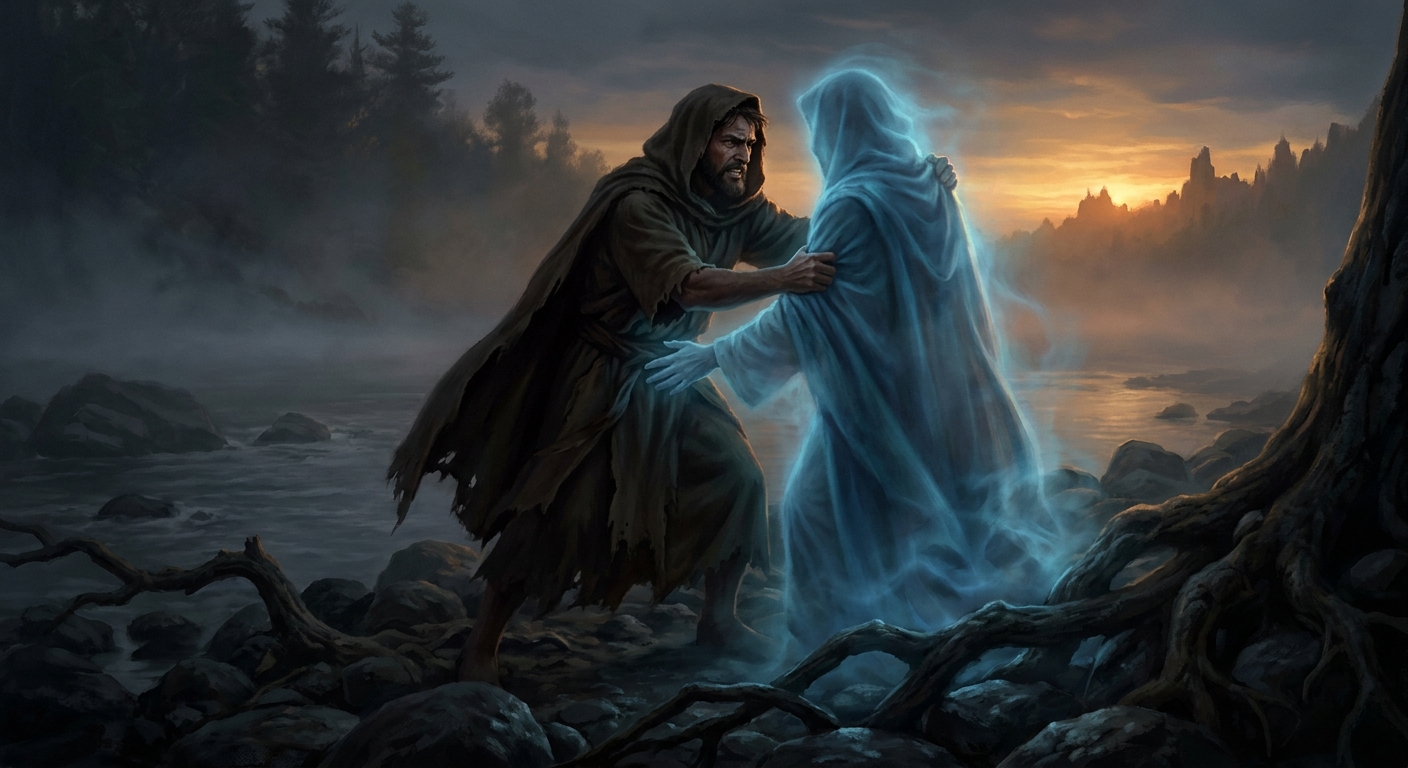
Mattathias kills him. Then he kills the officer. Then he and his five sons — John, Simon, Judah, Eleazar, Jonathan — run for the hills.
This is not a victory. Not yet. This is a fugitive priest in his seventies and five young men with knives, scrambling into the Judean wilderness while Seleucid soldiers sweep the town behind them. Other men join them in the hills: the Hasidim, the pious ones, who would rather die in the wilderness than violate the Sabbath. Mattathias tells them: if someone attacks on the Sabbath, you fight back. The law permits it. Survival is holy too.
Mattathias does not live to see what his refusal becomes. He dies within the year — of age, of grief, of the weight of what he has set in motion. He names Judah to command before he goes.
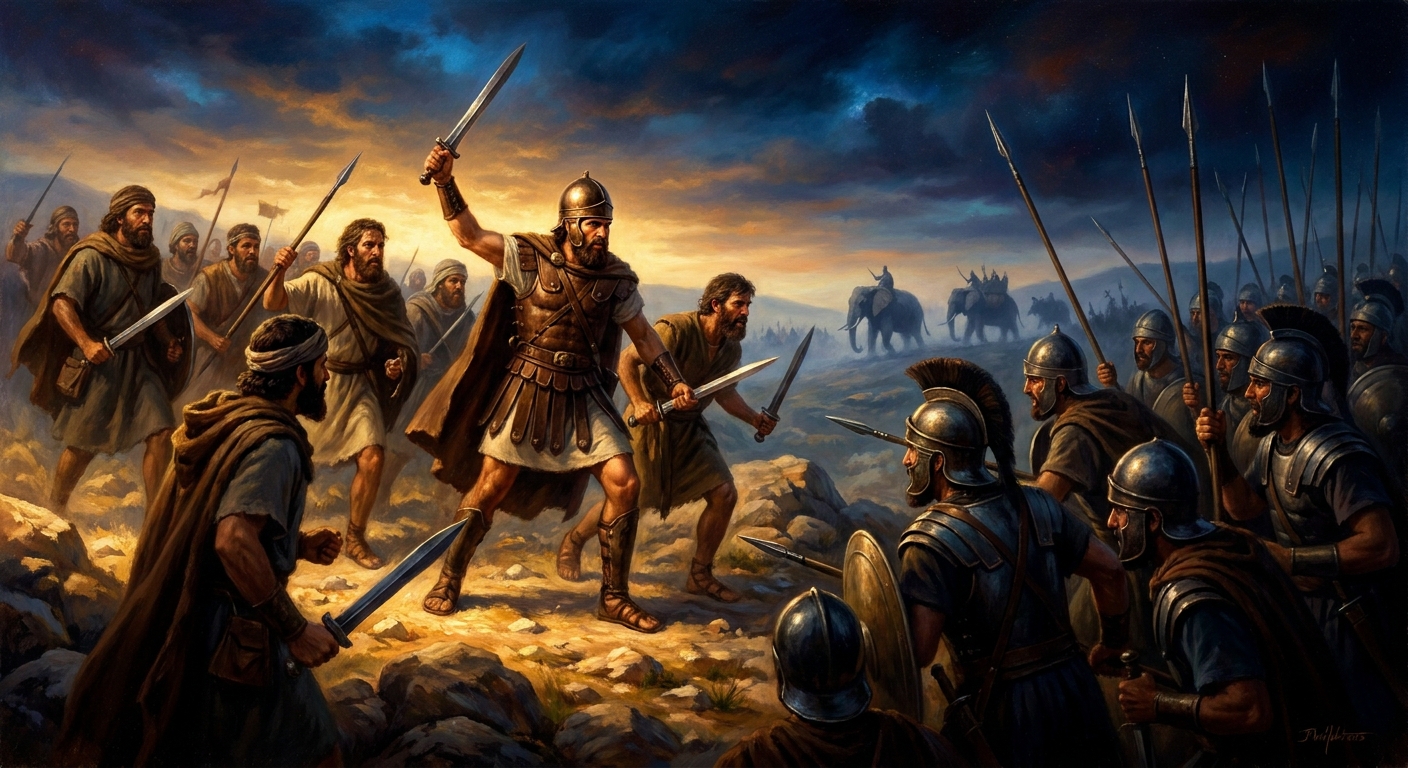
Judah the Maccabee. Ha-Makkabi — the Hammer.
What Judah has: a few hundred men, eventually a few thousand. Farmers. Shepherds. Priests who know the hills the way they know their own hands. What Judah does not have: cavalry, siege equipment, a professional army, a stable supply line, or any reason to believe this ends in anything but death.
What the Seleucids have: one of the most sophisticated military apparatuses of the ancient world. The successor state to Alexander’s empire. War elephants. Phalanxes trained to hold formation against anything. A force that has swallowed kingdoms.
The first engagement is at Wadi Haramiah. Seleucid commander Apollonius leads a column into the hill country expecting a police action. Judah lets him come into a narrow pass, then comes down from the high ground. Apollonius dies in the first assault. Judah takes his sword and carries it for the rest of his life.
At Beth Horon, Judah’s force faces Seron with four times their number on the Judean ridge road. Judah’s men are exhausted and hungry and they say so. He tells them: many are easily overcome by the few, because heaven gives victory. It is not the numbers. It is whether heaven is watching. They charge downhill. Seron retreats to the coast.
The Seleucid response escalates. Lysias sends forty thousand infantry and seven thousand cavalry under Ptolemy, Nicanor, and Gorgias. The largest force yet assembled against the revolt. Judah has ten thousand men and the hills.
He wins at Emmaus by using the terrain as a trap — Gorgias takes a detachment at night to raid his camp, finds it empty, and spends the darkness looking for men who are busy destroying his main force. He wins at Beth Zur by catching Lysias’s army before it can fully deploy in the confined valley approaches to Jerusalem.
Three years after the priest in Modiin picked up a blade, the road to Jerusalem is open.
They enter the city and find the Temple as it was left.
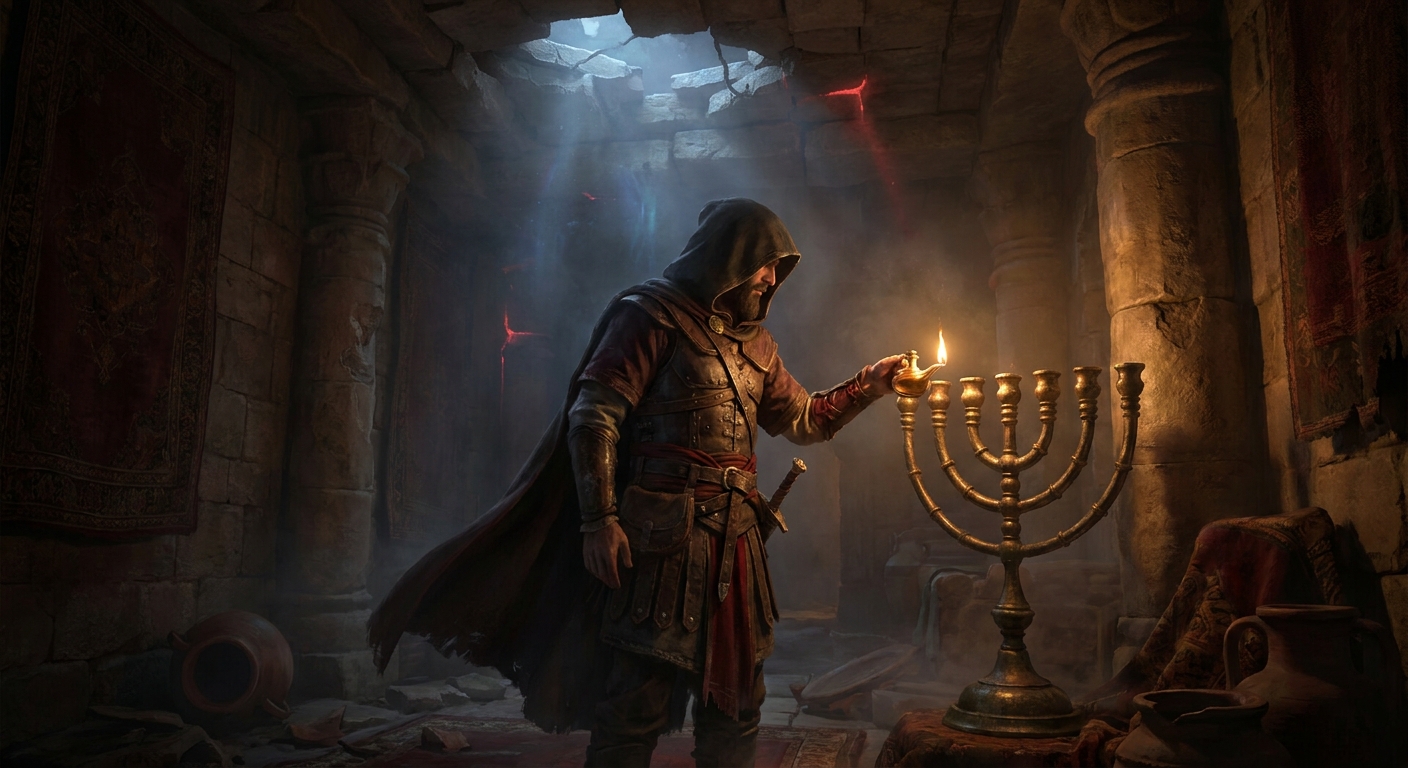
The altar is still defiled. The menorah is toppled. The courts are overgrown with weeds, the chambers broken open, the gates burned. The foreign priests are gone. The statue of Zeus is still there, staring out over the ruined sanctuary.
The priests who survived weep when they see it. They are soldiers now, these men — they have come through ambush and siege and night marches through the Judean hills — and they weep.
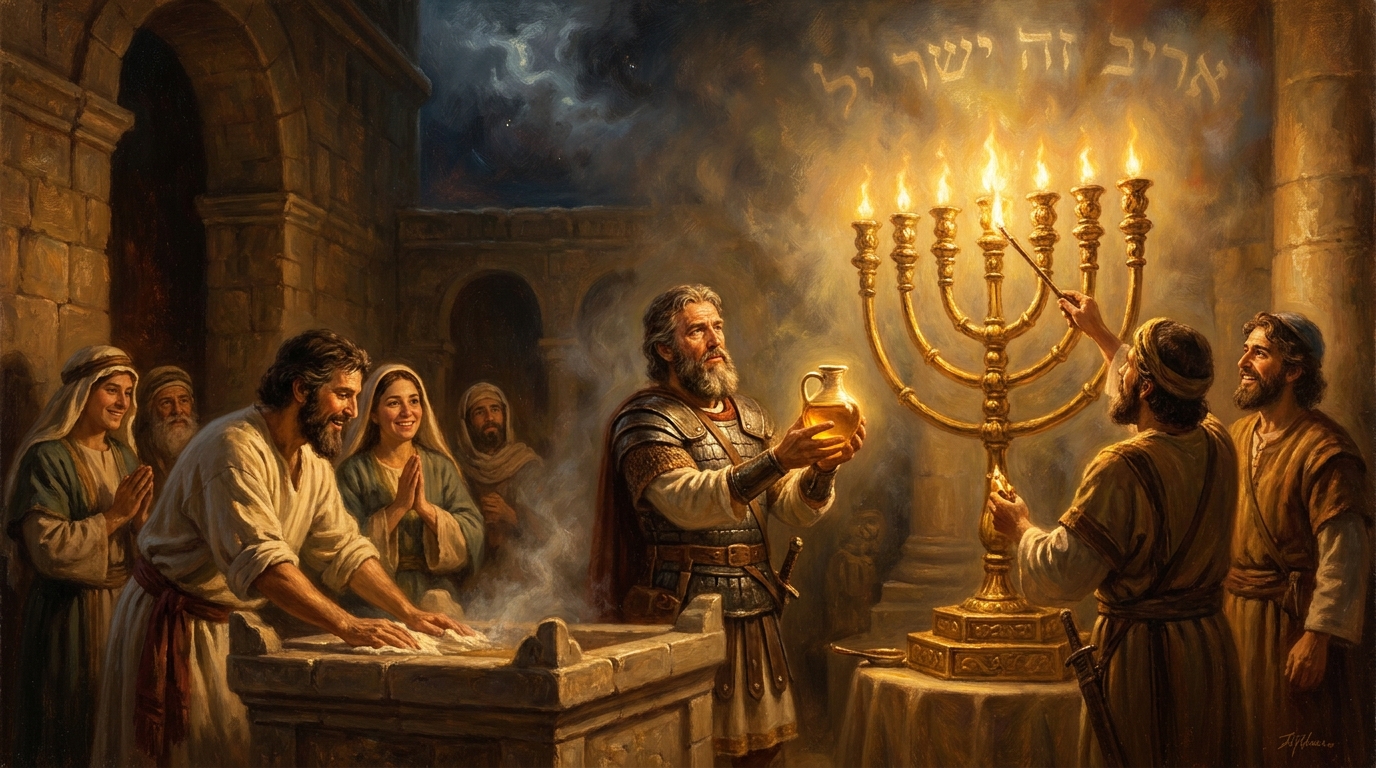
They clean it. Everything that was defiled, they carry out. They tear down the desecrated altar stone by stone and build a new one. They make new vessels. They bring new wood. They hang the curtain. They find the menorah.
What they do not find is oil. Not pure oil — oil that has been sealed with the high priest’s seal, uncontaminated by foreign hands. Months of searching, and what they find is a single small cruse, still sealed. Enough for one day. The lamp must burn continuously; this is not a suggestion, it is the law, the light that has burned since Sinai. One day’s oil. After that, the new oil will be ready, but the new oil takes eight days to purify.
They light it anyway.
The lamp burns through the first night. The second. The third. Eight days, one cruse. The priests stand watch and do not understand what they are seeing. The oil does not run low. The flame does not gutter. On the eighth day, when the new oil is ready and they open the cruse expecting to pour the last drops, it is still full.
On the twenty-fifth of Kislev, 164 BCE, Judah Maccabee declares a festival. Eight days, to mirror the eight days of Solomon’s dedication of the First Temple. Eight lights, one for each day the impossible oil held.
Hanukkah. The rededication.
This is what the story insists on: the miracle is not the military victory. Judah had won battles before. The miracle is the oil — the smallest, most domestic thing, a cruse of lamp oil in a ruined building, doing what lamp oil should not be able to do. Heaven shows up not in the battle formations but in the lamplight. The Hammer wins the war; God tends the lamp.
Two thousand years later, in every city that has a Jewish family in it, on the twenty-fifth of Kislev, someone lights a candle in a window. Then two. Then three. The counting goes up, not down — each night brighter than the last, which is the school of Hillel’s ruling and the one that survived. The darkness does not win by accumulation. The light does.
The story begins with a man too old to run, who runs anyway. It ends with a lamp that should have died, burning.
Antiochus IV Epiphanes died in Persia in 164 BCE, the same year the Temple was rededicated, reportedly of a wasting disease. His name, which he gave himself, means “God Manifest.” The Jewish sources call him Antiochus Epimanes — the Madman. History has not settled the question.
The historicity of the oil miracle is contested. 1 Maccabees, the earlier source, does not mention it. 2 Maccabees and the later Talmudic account do. Historians debate whether it was added generations later to reframe a military-political rebellion as a religious miracle. What is not contested: the festival of eight lights has burned without interruption for over two millennia. The debate about its origins is, at this point, somewhat beside the point.
Judah Maccabee died in battle in 160 BCE, outnumbered, when Seleucid pressure resumed. His brothers carried on. The Hasmonean dynasty he founded lasted until 63 BCE, when Pompey took Jerusalem for Rome. The lamp outlasted the dynasty by two thousand years and counting.
Scenes
The rededication of the Temple, 164 BCE
 Generating art…
 The abomination of desolation: Antiochus IV Epiphanes sacrifices a pig on the altar of the Lord in Jerusalem, 167 BCE
 Generating art…
 Judah the Maccabee — 'the Hammer' — leads his fighters through the Judean hills
 Generating art…
 Echoes Across Traditions
Entities
- Mattathias
- Judah Maccabee
- Antiochus IV
Sources
- 1 Maccabees
- 2 Maccabees
- Josephus, *Antiquities of the Jews* 12
- Bezalel Bar-Kochva, *Judas Maccabeus: The Jewish Struggle Against the Seleucids* (1989)
- Daniel R. Schwartz, *2 Maccabees* (2008)