Cortés Meets Moctezuma
November 8, 1519 · the year One Reed · Tenochtitlan, on the causeway
Contents
November 8, 1519. The emperor Moctezuma II reads every omen correctly and draws the wrong conclusion. He greets Hernán Cortés as the returning god Quetzalcoatl. It is the most catastrophic case of mistaken identity in human history.
- When
- November 8, 1519 · the year One Reed
- Where
- Tenochtitlan, on the causeway
The emperor walks.
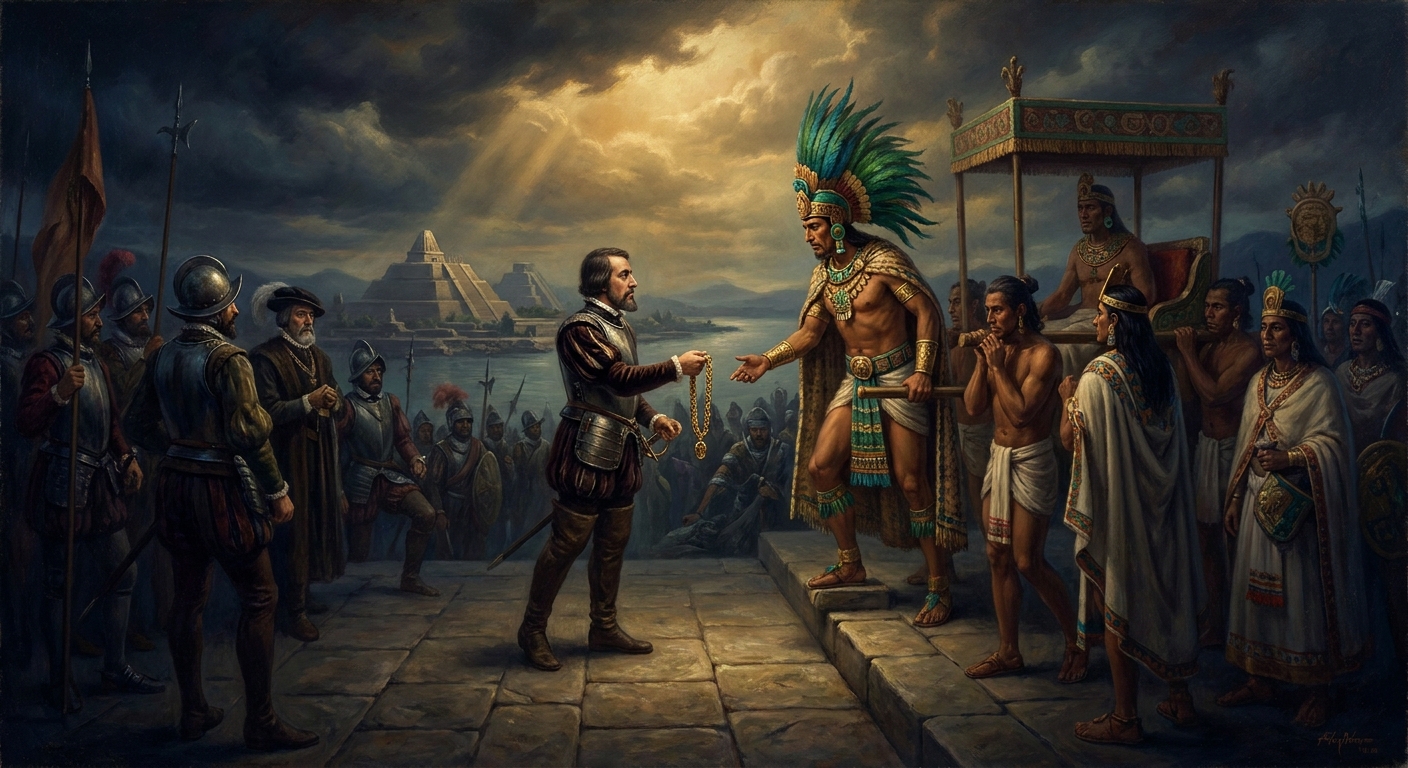
This is the first impossible thing. Moctezuma II — lord of the Triple Alliance, he before whom ambassadors prostrate themselves, he whose face no commoner may look upon — descends from his golden litter and places his sandaled feet on the stones of the causeway. His attendants spread cloth before him so the earth does not touch him directly. He walks anyway. Toward the strangers. On foot.
It is November 8, 1519. The year One Reed on the Aztec calendar. The very year the feathered serpent was supposed to return.
The omens have been arriving for a decade.
A comet stands above Tenochtitlan for a year. The temple of Huitzilopochtli catches fire with no source. The lake boils up in windless storms and floods the city. A woman’s voice, heard at night, repeats: my children, we are lost. A two-headed man is brought to the palace and vanishes before Moctezuma can question him. The emperor summons his soothsayers. They cannot explain the signs. He has them jailed. He is not a superstitious fool — he is one of the most formidable rulers of his age, a man who administers a empire of perhaps five million people, conducts war with strategic precision, and understands theology at a level most of his priests do not. That is exactly the problem. He understands what the omens mean, and they mean the calendar is keeping a promise.
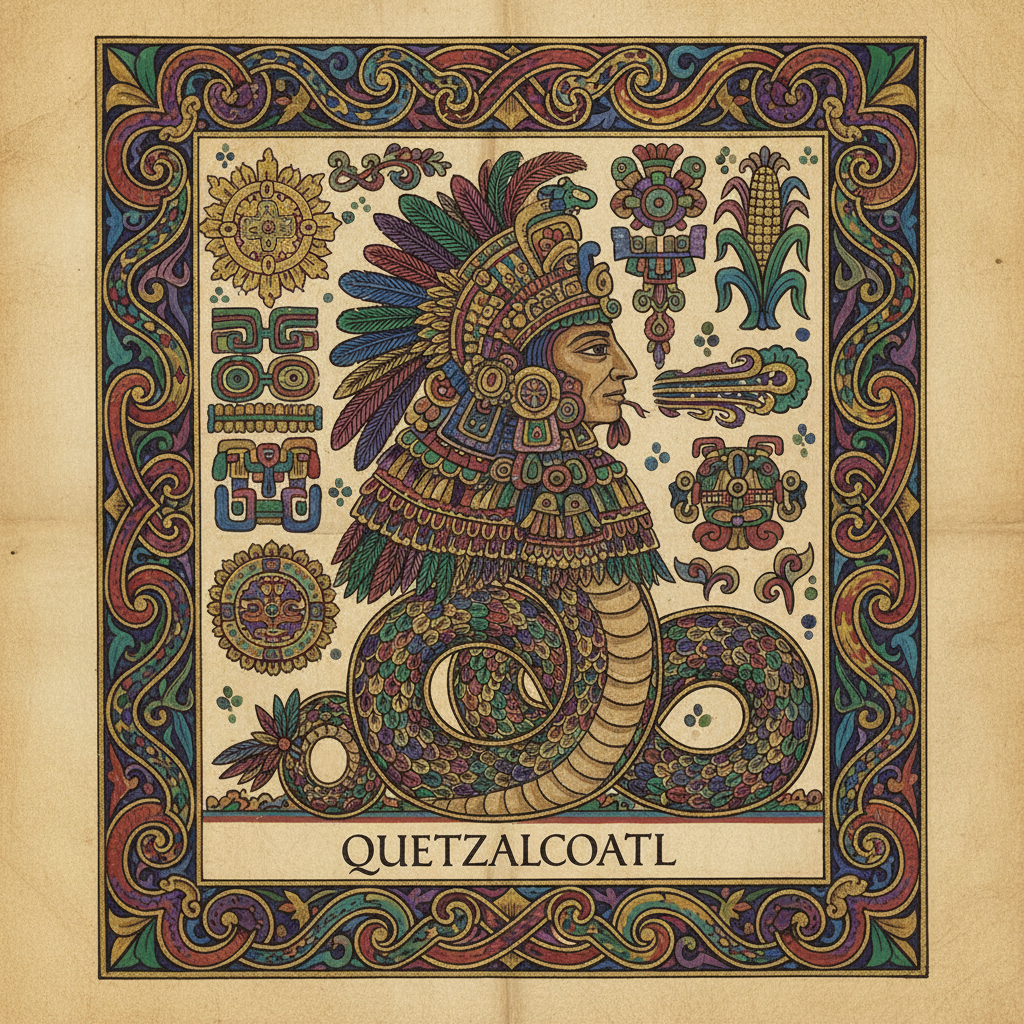
Quetzalcoatl, the feathered serpent, the wind-god, the lord of civilization — priest-king of the ancient Toltec city of Tula — was driven out by Tezcatlipoca, the smoking mirror, the god of night and conflict, using sorcery and humiliation. Quetzalcoatl fled east across the sea. Before he left he said he would return. The year One Reed was his sacred year, his name-year, and One Reed was also a 52-year calendar cycle. When the cycle came around again — it always came around — he would be due.
The cycle is due now. And bearded men with iron skin have arrived from the east.
The woman standing beside Cortés is the second impossible thing, and no one on either side fully sees her yet.
La Malinche — Doña Marina to the Spaniards, Malintzin to the Nahuas — is a Nahua noblewoman sold into slavery to the Maya and then given as tribute to Cortés. She speaks both Nahuatl and Mayan. She picks up Spanish in months. She is, from this moment forward, the tongue through which empire is negotiated, the voice through which Moctezuma’s words reach Cortés and Cortés’s claims reach the Aztec court. She is twenty years old. History has called her a traitor for five centuries without asking what she owed to the rulers who sold her as a child.
On the causeway, she translates Moctezuma’s greeting. The emperor’s words, as recorded by Sahagún’s indigenous informants, are extraordinary: You have come to your city. You have come to sit on your throne. Oh, it has been reserved for you, it has been kept for you. The rulers who governed your city — they were your caretakers. They kept it for you.
He believes it. The letters he sends before their meeting — transcribed, analyzed — are not diplomatic flattery. They are a man trying to hold his theology together in the face of its fulfilment.
Cortés is not a god.
He is a thirty-four-year-old lawyer’s son from Extremadura, Spain — ambitious, violent, brilliant, and deeply Catholic. He has no idea what Moctezuma is actually saying to him. He smiles and puts the necklace of glass beads around Moctezuma’s neck and tries to embrace him, and the emperor’s attendants stop him — you do not touch the emperor — and the moment is smoothed over, and they walk into the city together.
Tenochtitlan stops him cold even as he plans to take it.
It is bigger than any city in Spain. Bigger than Paris or London. Two hundred thousand people on a lake, connected by causeways, fed by aqueducts, organized into precincts with markets larger than Salamanca’s. The great market at Tlatelolco sells everything from gold jewelry to live eagles. Bernal Díaz, who has seen Istanbul and Rome, writes that he did not know how to describe it, that it was like the things in the book of Amadís of Gaul, things from enchantment — and he is a man not easily enchanted. He is looking at a city that has perfected its civilization for a thousand years, and he is about to help destroy it.
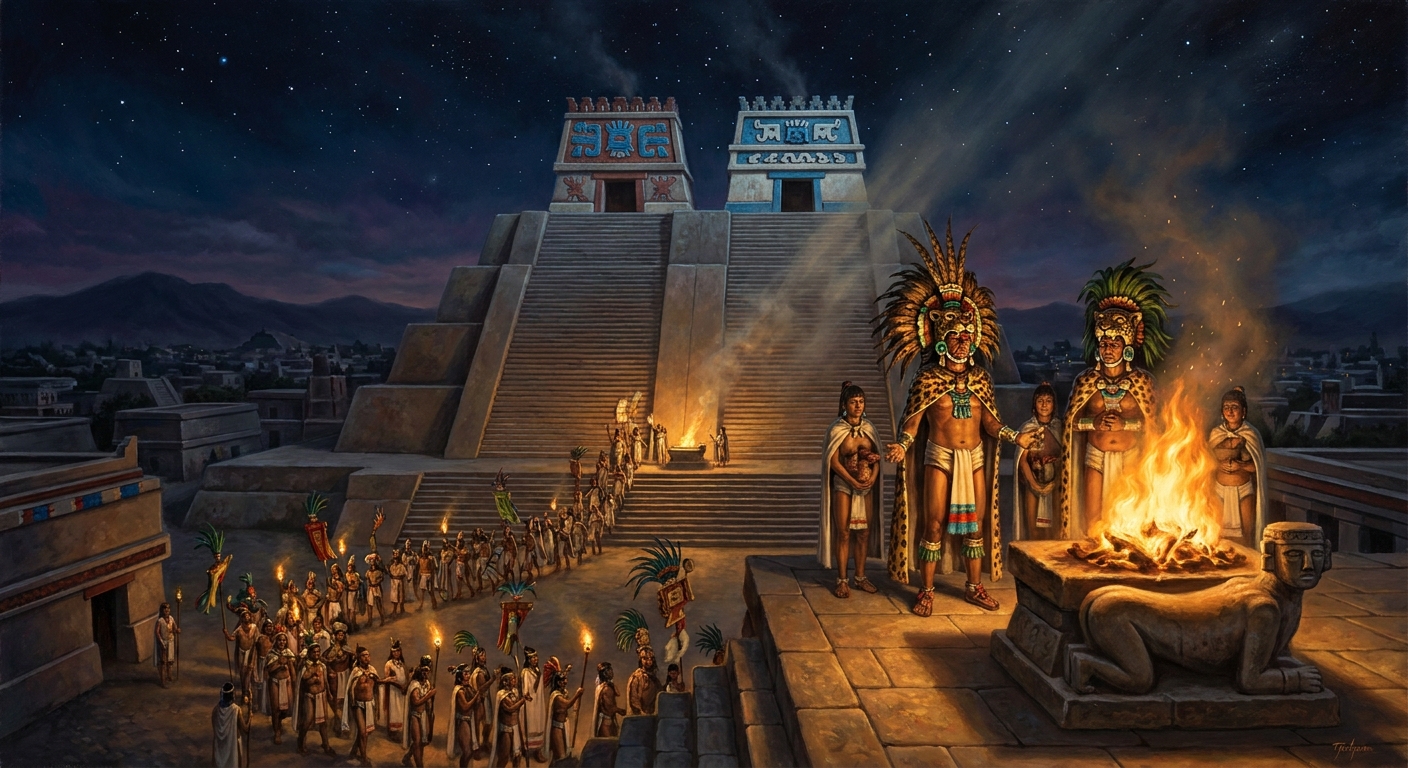
The Templo Mayor rises at the city’s center: a double pyramid seventy meters high, blood-dark with ochre and the accumulated residue of sacrifice, the shrines to Huitzilopochtli and Tlaloc at the summit. The Spaniards climb it. They look out over the lake, the causeways, the aqueducts, the canals where canoes move in the thousands. Cortés asks permission to place a cross at the top. The priests say no. The skull rack at the pyramid’s base is as tall as a man and long as a city block. The Spaniards count the skulls. Bernal Díaz gives up at 136,000.
They are not in a civilization declining into superstition. They are in a civilization at the height of its power, practicing its religion at full operational scale. The Aztec sacred calendar is more accurate than the Julian calendar the Spaniards use. The astronomical observations embedded in Tenochtitlan’s architecture will not be surpassed in Europe for another century. This is what they are going to unmake.
Within seven months Cortés takes Moctezuma hostage.
Within eight months Moctezuma is dead — stoned by his own people, say the Spaniards; killed by the Spaniards, say the Aztec sources. The truth is not recoverable. What is recoverable is that the emperor who walked across the causeway dies in Spanish custody, and his death does not end the empire but begins the war that will.
The siege of Tenochtitlan lasts seventy-five days. By August 1521 the city is rubble and the canals run with the dead. Smallpox — a disease with no name in Nahuatl because it has never arrived before — is already through the population. The estimates range from fifty to ninety percent mortality in the following decades. The priests are killed. The codices burn. The sacred calendar is suppressed. Mexico City is built on Tenochtitlan’s foundations, stone by stone removed and reused, the lake drained over centuries until the floating city is a legend you have to excavate to prove.
The year One Reed kept its promise. Just not the promise anyone expected.
Scholars argue now — Camilla Townsend has argued it carefully and with evidence — that the Quetzalcoatl identification was largely a post-conquest construction, a story that indigenous nobles and Spanish friars together wove backward onto the events to make them legible. The Aztecs needed to explain why the world ended. The Spanish needed to explain why God had prepared a people to receive them. The Quetzalcoatl story served both.
But Moctezuma’s letters are real. His behavior on the causeway is real. Something in his theology opened a door at the exact wrong moment, and through it came men who understood neither the theology nor the door but were very clear about what they wanted on the other side.
Every tradition that waits for a returning god faces this:
The god does not come. Something else does. And it comes wearing the god’s date.
The Aztec calendar was not wrong. The year One Reed arrived exactly when it was supposed to. The feathered serpent did not. This is the difference between a calendar and a prophecy, and it is a difference measured in the deaths of an empire.
Townsend’s revisionism matters but does not close the case. The Spanish chronicles are contaminated. The indigenous sources are contaminated. What remains is a causewayside encounter between a man who believed he knew what he was seeing and a man who did not know, and had no reason to care, and the ten million people whose world depended on the difference.
Scenes
The meeting on the causeway at Ixtapalapa, November 8, 1519
Generating art… The Templo Mayor at the heart of Tenochtitlan, where the living religion of Huitzilopochtli and Tlaloc still operated at full scale when the Spaniards arrived — priests, sacrifices, the skull rack dense with offerings
 Generating art…
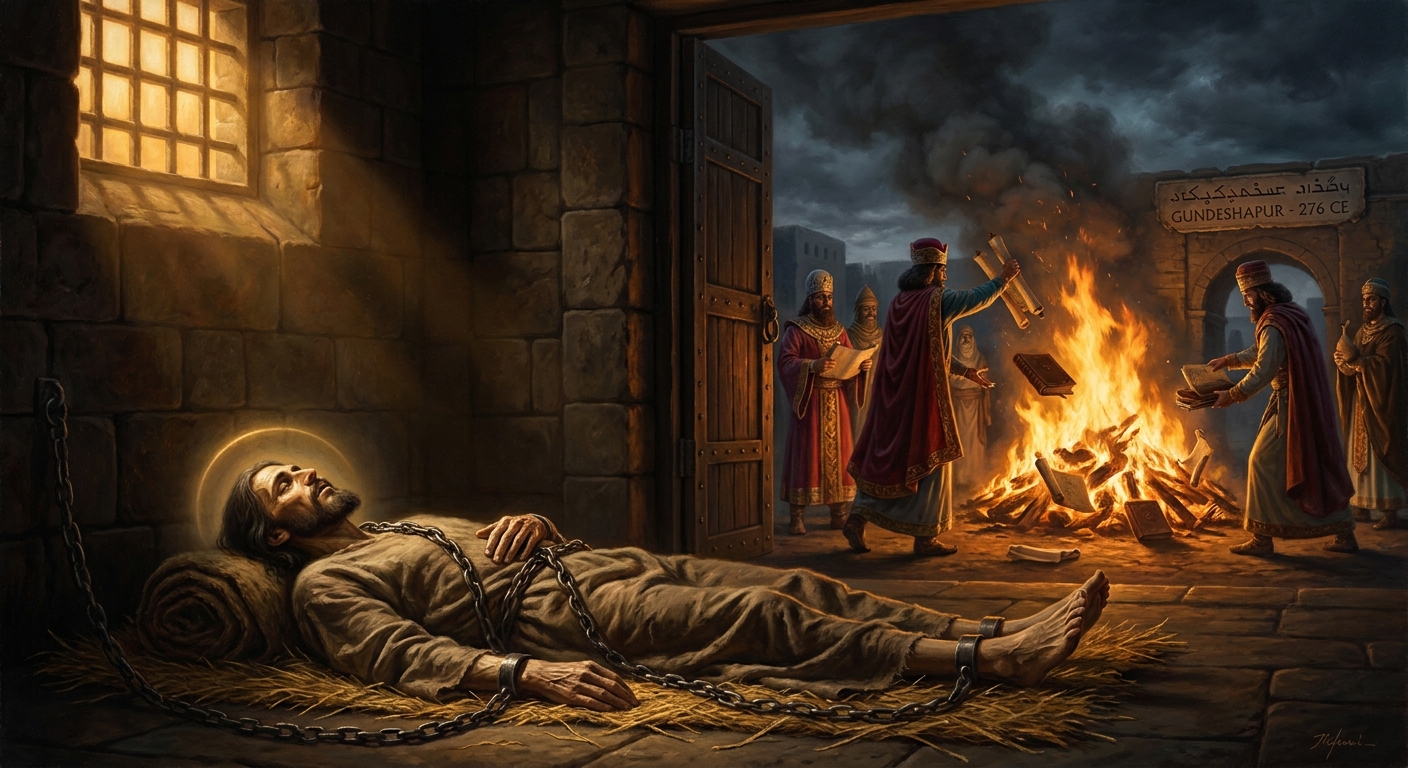
 The burning of the codices at Maní, 1562 — Bishop Diego de Landa orders the Maya books destroyed as works of the devil
 Generating art…
 Echoes Across Traditions
Entities
- Moctezuma II
- Quetzalcoatl
- Tezcatlipoca
- Hernán Cortés
- La Malinche


Sources
- Bernal Díaz del Castillo, *The True History of the Conquest of New Spain* (c. 1568)
- Bernardino de Sahagún, *Florentine Codex* (c. 1577)
- Hugh Thomas, *Conquest: Montezuma, Cortés, and the Fall of Old Mexico* (1993)
- Camilla Townsend, *Burying the White Gods: New Perspectives on the Conquest of Mexico* (2003)
- *Codex Chimalpopoca* (Anales de Cuauhtitlan)