The Burning Plate
May–June 1606 CE · Lahore, Mughal Empire · Lahore Fort, then the bank of the Ravi river, under the Mughal emperor Jahangir
Contents
In Lahore, in the midsummer heat of 1606, the Mughal emperor Jahangir orders the fifth Sikh Guru tortured to death for allegedly supporting a rebel prince. Arjan Dev is made to sit on a burning iron plate while boiling sand is poured over him. He prays without ceasing. He is the first Sikh martyr — and the tradition will build every subsequent Guru around the fact of his death.
- When
- May–June 1606 CE · Lahore, Mughal Empire
- Where
- Lahore Fort, then the bank of the Ravi river, under the Mughal emperor Jahangir
He compiled the scripture himself.
Five years earlier, Arjan Dev — the fifth Guru, grandson of Nanak’s line, builder of the Harmandir Sahib at Amritsar — gathered the hymns of the first four Gurus and added his own, 2,218 verses, and set them in the Adi Granth, the first Sikh scripture. He installed it in the Golden Temple on a raised platform, covered it with a canopy, and appointed a reader to recite it without ceasing through every day the temple was open. He gave Sikhism its book. He taught that the text itself was Guru. He was the most powerful Sikh teacher since Nanak.
This is why Jahangir had him killed.
The charge is political, and the Jahangirnama — the emperor’s own diary — does not trouble to disguise it.
Prince Khusrau, Jahangir’s eldest son, has rebelled and fled north. He stops at Goindval and receives a blessing from Arjan Dev; the Guru gives the rebel prince money and perhaps a tilak — the sources argue the detail. Khusrau is captured. Jahangir has him blinded. Then he turns to the Guru.
He records his reasoning without embarrassment: Arjan Dev passed off as a Muslim pir a shop of falsehood. He seduced many simple Hindus and Muslims. This business needed to be stopped. He orders Arjan brought to Lahore and tortured until he recants or dies. Chandu Shah, a Hindu revenue officer who bears his own grievance against the Guru, oversees the arrangements. Mian Mir, a Sufi saint who is Arjan’s friend and disciple, rides to Lahore to beg the emperor to stop. Jahangir refuses him entry. The sentence stands.
They take him to Lahore in summer.
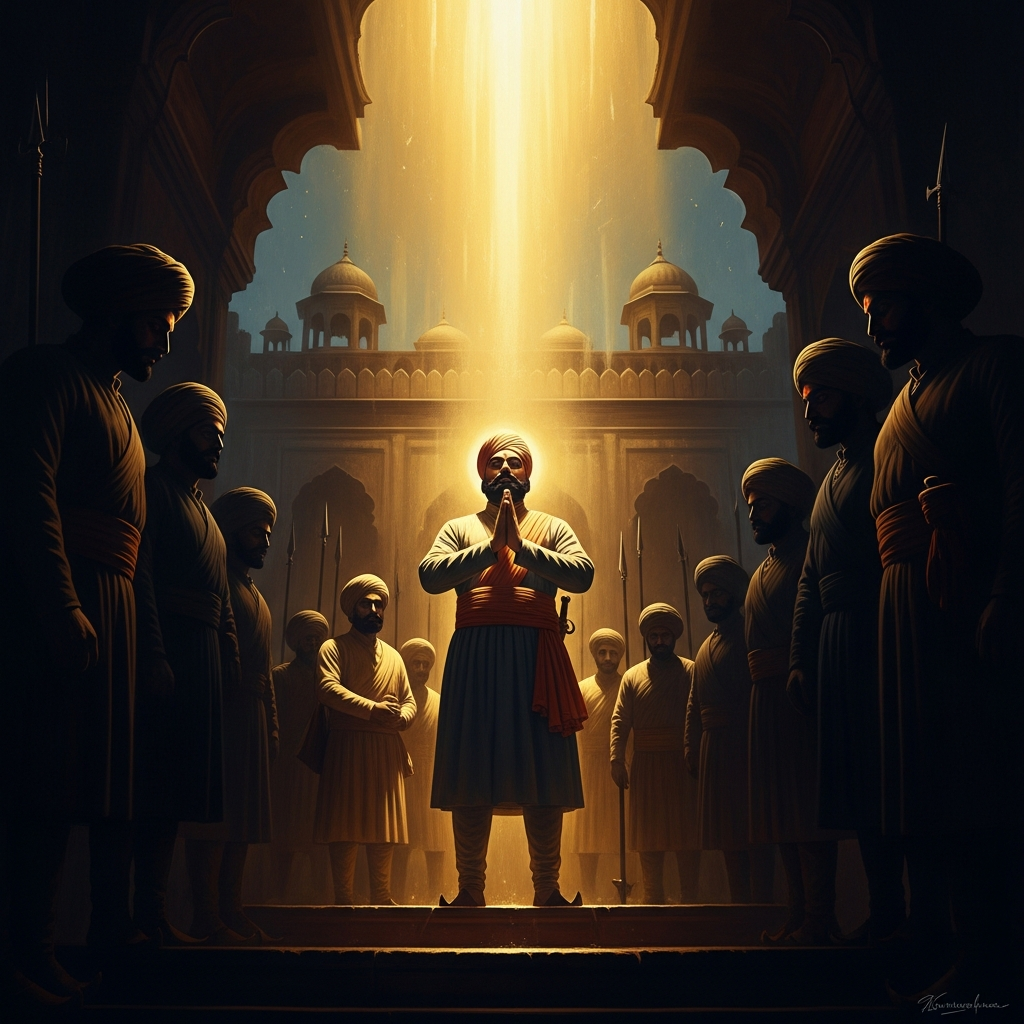
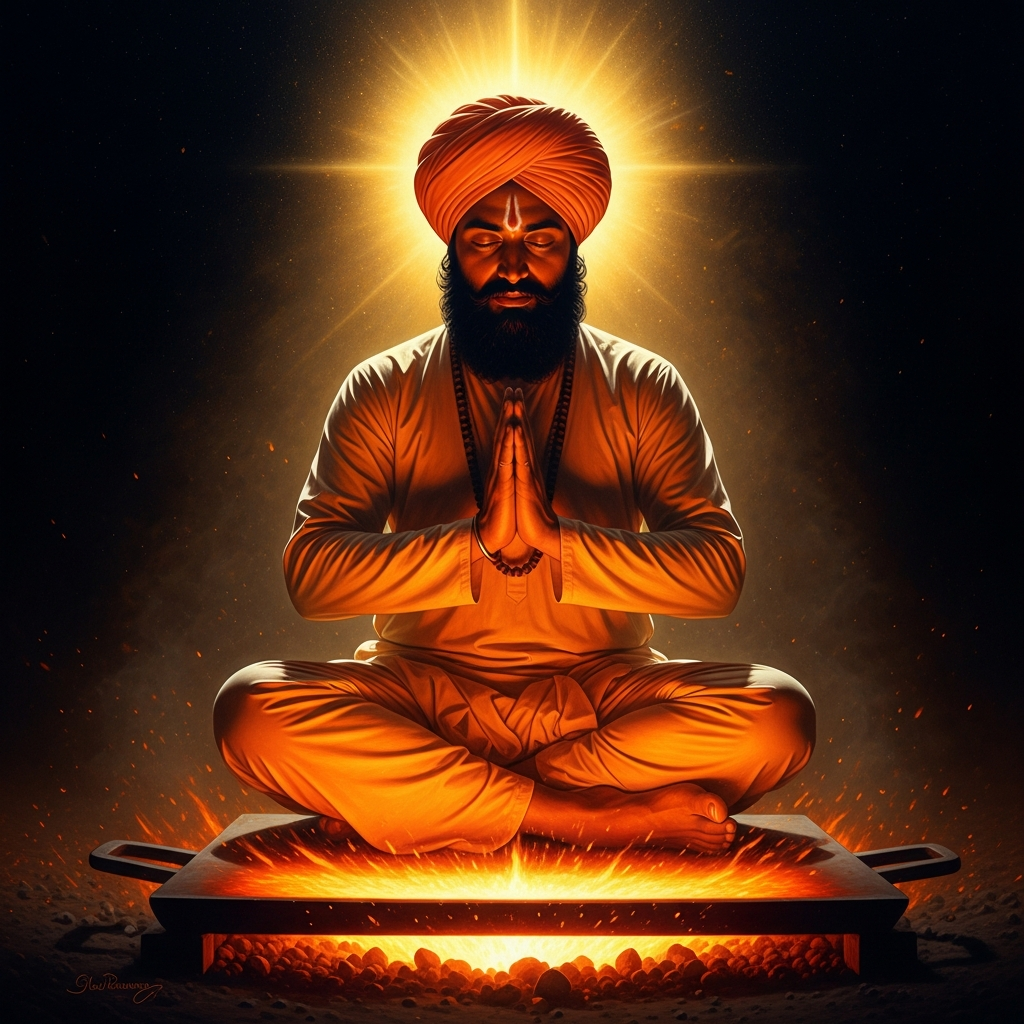
It is the worst season for this work and they have chosen it deliberately. The iron plate sits in the open courtyard of the fort, and by midmorning the Punjab sun has done half the executioner’s labor for him. They heat it further with a fire underneath. Then they bring Arjan Dev in chains and set him on the plate.
He sits in the posture he has used his whole life for prayer — cross-legged, spine straight, hands folded in ardas. He closes his eyes. His body registers the heat the way a thermometer registers heat — accurately, completely, without protest. He begins to recite. He recites what he wrote: Tera kiya meetha lage — Your will tastes sweet to me. Whatever You do, I accept with joy. He recites it the way he compiled the scripture: methodically, completely, without omission.
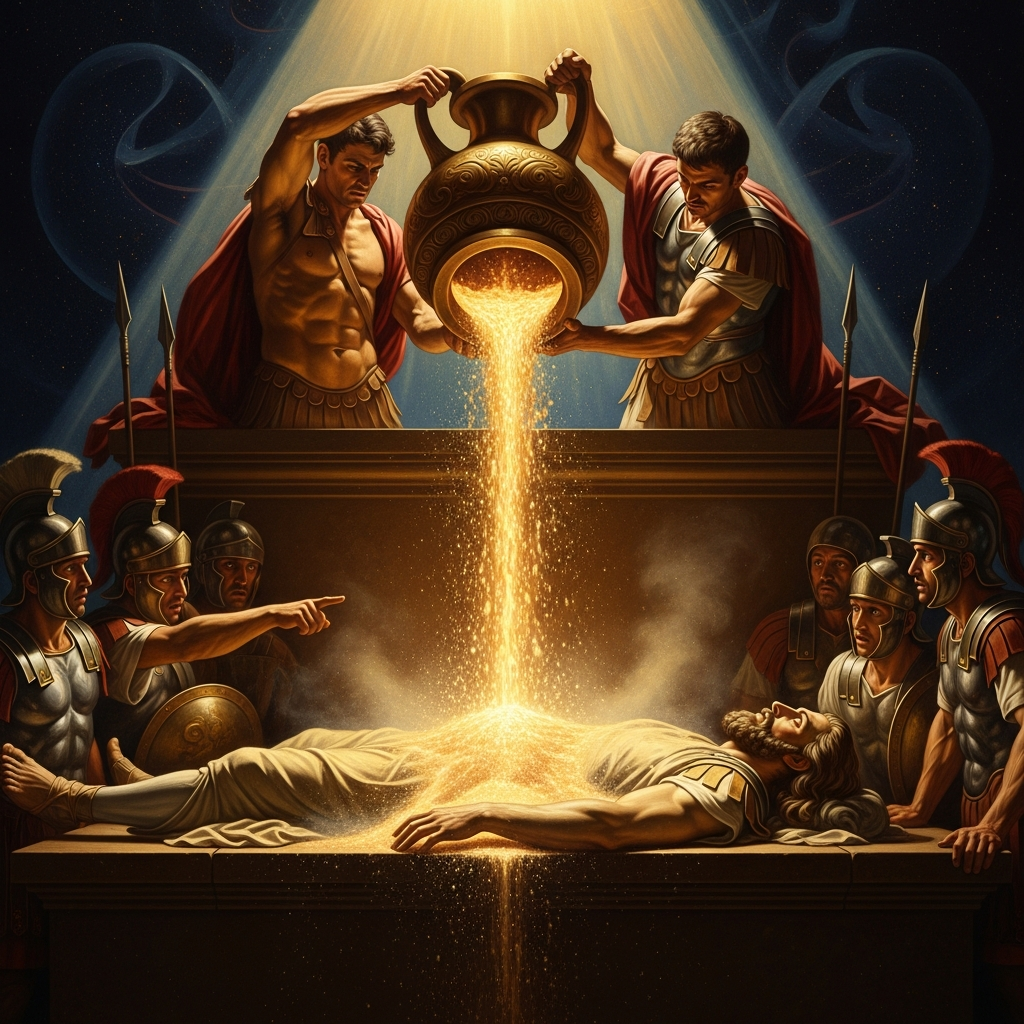
They pour boiling sand over him from above.
He sits for five days.
The guards who stand watch report what they see and the reports do not translate. A man is sitting on a burning plate in the midsummer sun with boiling sand being poured over his head and he is praying. He is not screaming. He is not begging. He is not, as far as anyone watching can determine, in the kind of despair that torture is designed to produce. He is — the only word the accounts reach for — calm. Specifically calm, the way the Harmandir Sahib is specifically placed in the middle of water: surrounded, and not drowned.
Chandu Shah visits on the third day and offers to end the torture if Arjan will convert, recant, or pay a fine. Arjan Dev looks at him without hatred. He says: I bear no ill will toward anyone. It is God’s will, and I submit to it. Chandu Shah leaves the courtyard faster than he entered it.
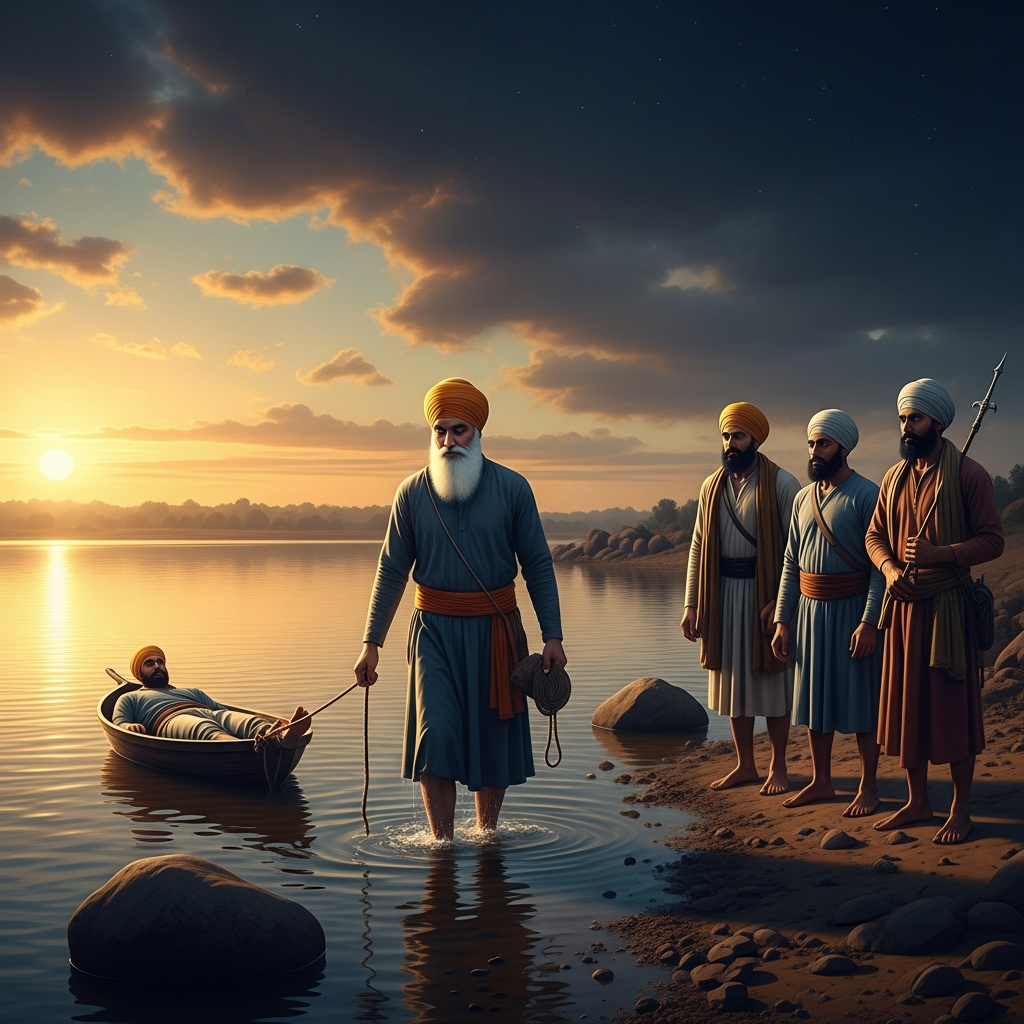
On the fifth day Arjan Dev asks permission to bathe in the Ravi.
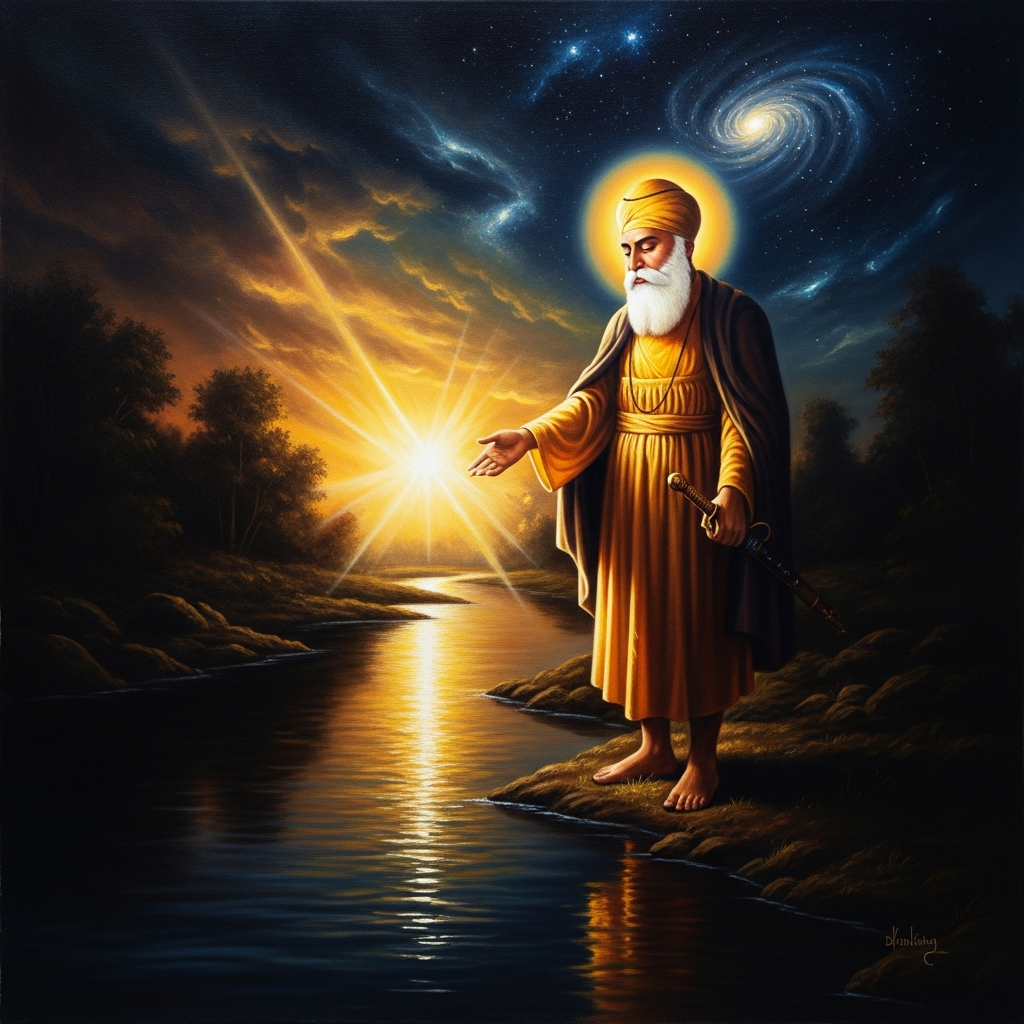
This is granted — either as a mercy or as a final humiliation, since the body by this point is a catalog of burns and the cold water of the river is as likely to kill as to comfort. He is unchained. He walks, without assistance, down to the bank of the Ravi. Thousands of Sikhs who have gathered along the riverbanks — Jahangir’s guards cannot keep them all back — watch him reach the water. He wades in. He begins to pray aloud, the Japji, Nanak’s founding hymn, the one that begins Ik Onkar. His voice carries across the water. He walks deeper. The current takes him. He does not come out.
His body is never recovered. The Ravi keeps it.
His son Hargobind, age eleven, receives the news in Amritsar.
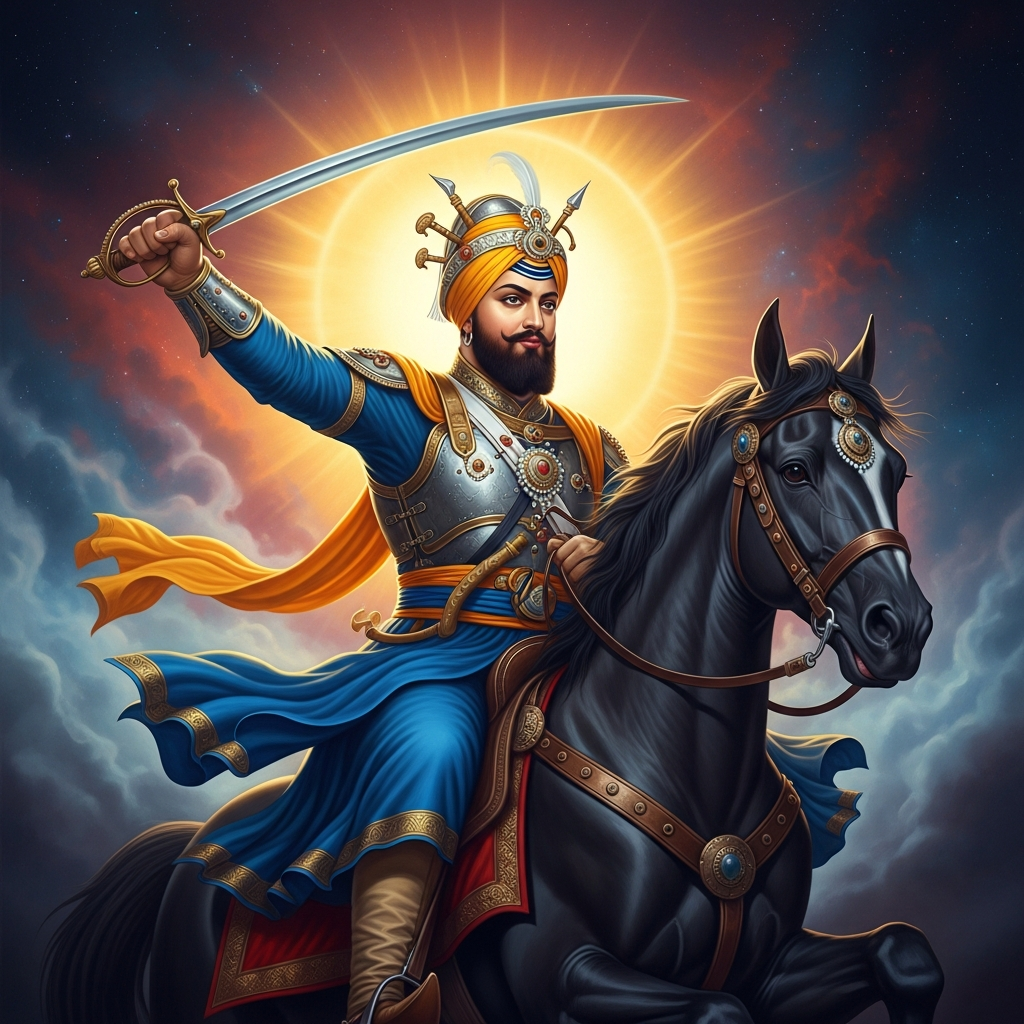
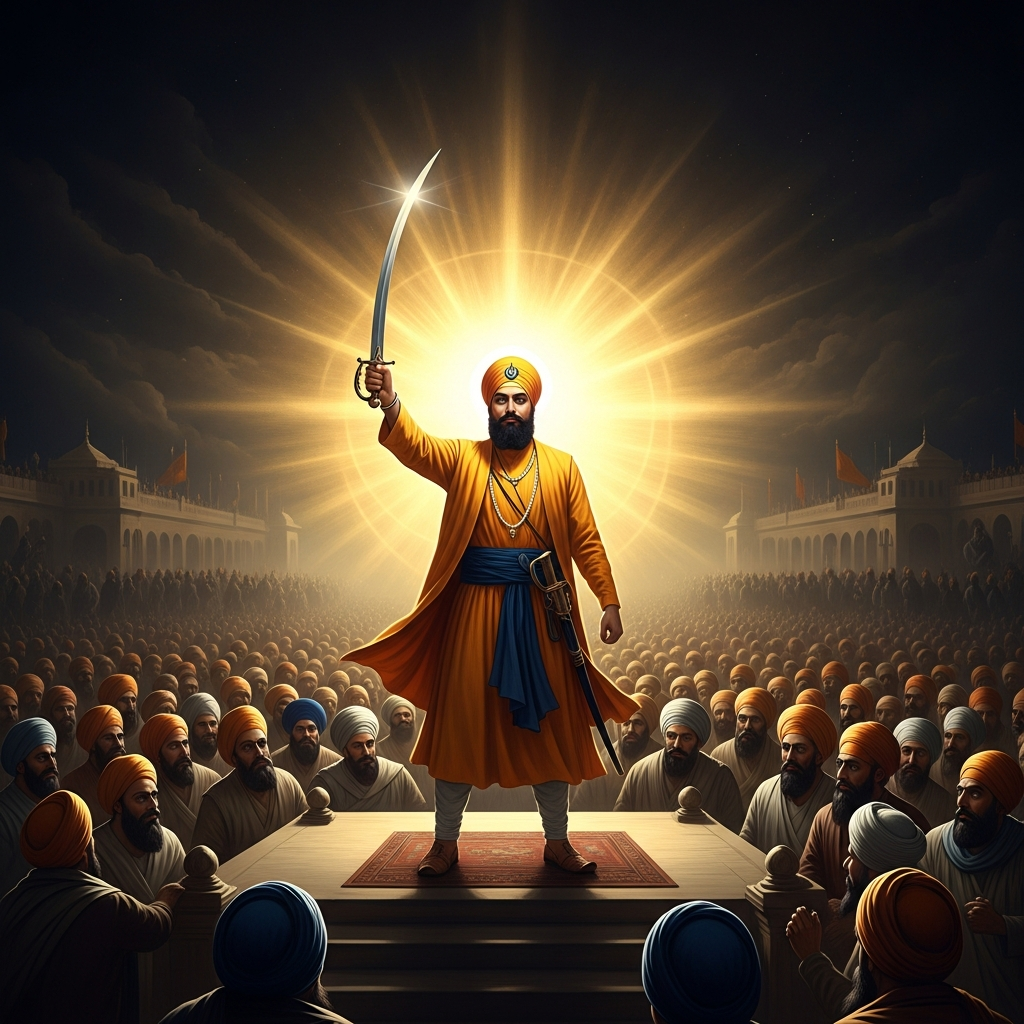
He is brought to the ceremony where the Sixth Guru is to be installed and he asks the elder Bhai Budha Ji to place two swords on him instead of one. One for miri, temporal power. One for piri, spiritual authority. The elder Sikh tradition had never separated the two because it had never needed to. Hargobind installs them on his body in a single gesture and does not explain himself, because the explanation rode a river out of Lahore and does not need to be spoken.
From this day forward, every Sikh Guru carries a sword. Within a century, the tenth Guru will create the Khalsa — the order of saint-soldiers who defend the faith Arjan built. The golden temple where Arjan placed his scripture still stands in Amritsar, in the middle of its reflecting pool, canopied, attended, receiving an unbroken recitation that has not stopped since he began it.
Every year on the anniversary of his martyrdom, Sikhs across the world prepare langar — free meals, the tradition Nanak founded on the principle that no one goes hungry at a Guru’s table — and serve it to strangers in the streets of every city where a gurdwara stands, which is to say in nearly every city on earth.
Scenes
Midsummer, Lahore
Generating art… The executioners pour boiling sand over his body from above
 Generating art…
 On the fifth day he asks permission to bathe in the Ravi
 Generating art…
 Echoes Across Traditions
Entities
- Guru Arjan Dev Ji
- Emperor Jahangir
- Chandu Shah
- Mian Mir
- Bhai Budha Ji
- the Ravi river

Sources
- Emperor Jahangir, *Tuzuk-i-Jahangiri* (the *Jahangirnama*) — the emperor's own record, citing Arjan's alleged support of Prince Khusrau
- *Gurbilas Chhevin Patshahi* (17th c.) — the primary Sikh narrative of the martyrdom
- *Sri Guru Granth Sahib* — Arjan's own hymns, including *Tera kiya meetha lage* (Your will tastes sweet to me)
- W. H. McLeod, *The Sikhs: History, Religion and Society* (Columbia University Press, 1989)
- Pashaura Singh, *The Guru Granth Sahib: Canon, Meaning and Authority* (Oxford University Press, 2000)
- J. S. Grewal, *The Sikhs of the Punjab* (Cambridge New History of India, 1990), ch. 3