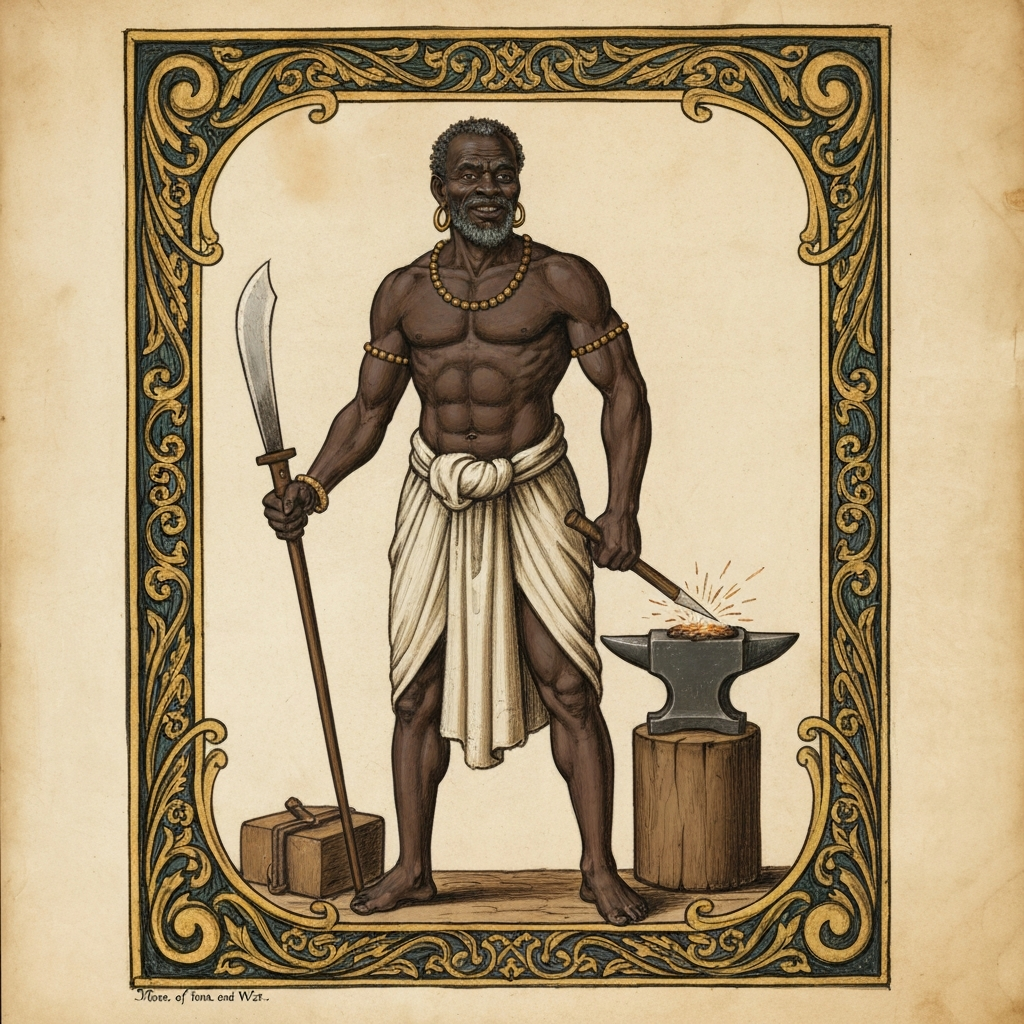
Yemoja at the Bottom of the Atlantic
c. 1600 CE–present (active transformation) · The Ogun River, Yorubaland; the Atlantic Ocean; the Black Atlantic diaspora
Contents
Yemoja, the Yoruba orisha of rivers and fresh water, followed the enslaved across the Middle Passage and became the guardian of the dead beneath the Atlantic. A freshwater deity transformed by salt and grief — and what that transformation cost her, and what it gave the living who poured libations into the sea.
- When
- c. 1600 CE–present (active transformation)
- Where
- The Ogun River, Yorubaland; the Atlantic Ocean; the Black Atlantic diaspora
She begins as a river.
This is important. Yemoja — whose name in Yoruba contracts to Yèyé Omo Eja, Mother Whose Children Are Like Fish — is born in the Ogun River in what is now southwestern Nigeria, a river that flows down from the granite plateau near Abeokuta and spills eventually into the Lagos Lagoon and from there into the sea. She is fresh water. Her domain is the river’s edge, the fisherman’s prayer at dawn, the woman who cannot conceive kneeling at the bank with shea butter and blue cloth and the precise request she has rehearsed for weeks. Fresh water is knowable. Fresh water has a direction. It goes somewhere. Yemoja, in her original form, goes somewhere too.
Then the ocean comes to the river, or the river is carried to the ocean, and nothing is the same afterward.
The Yoruba of the Ogun River basin did not have a theology of the Atlantic. Why would they? The Atlantic is irrelevant to you unless you live on its coast, and even coastal peoples understood it as the edge of something, the place where land ended and the uninhabitable began. There was an ocean deity — Olokun, enormous and alien, god of the deep water and of unfathomable wealth — but Olokun was not Yemoja. They were neighbors, not the same.
The trade routes change this. The raids change this. By 1650, by 1700, by the height of the Atlantic slave trade in the eighteenth century, the Ogun River basin is no longer a watershed but a funnel. People are taken from their villages, marched to the coast, held in the slave forts at Badagry and Lagos and Ouidah, and then loaded onto ships. The crossing takes six to eight weeks if nothing goes wrong. If something goes wrong — storm, disease, crew violence, suicide, the blind refusals of bodies that have decided they will not continue — it takes longer, or it ends early, beneath the water.
What do you take with you when you are taken? Not land. Not your house or your iron tools or your grandmother’s pots. But something travels. The orishas travel. Yemoja, river deity, fresh water deity, deity of the Ogun basin and the women who kneel there, comes with her people into the salt.
The theologians of the diaspora — the priests and priestesses who reconstructed Yoruba practice in Cuba, Brazil, Haiti, Trinidad — did not decide in advance what Yemoja would become. She decided. This is how orisha theology works: the deity is not a doctrine. The deity is a personality, a force, an intelligence that responds to circumstances. Yemoja encountered the Atlantic and the Atlantic encountered Yemoja and what emerged from the encounter was larger than either.
She becomes the guardian of the dead beneath the water.
This is the piece that the river deity did not carry before: the uncountable dead. The scholarly estimates run from ten to twelve million people transported in the Atlantic trade, with an additional two million or more who died in the crossing and were thrown overboard, or who threw themselves overboard, or who were killed. Two million people at the bottom of the ocean with no burial, no libation, no ceremony, no priest, no one to negotiate with Egun — the collective ancestral dead — on their behalf. The Atlantic is the largest mass grave in human history, and it belongs to no country, and it has no marker, and the water goes over it every day.
Yemoja claims it. This is not a decision anyone records in a text. It happens in the practice — in the ceremonies that enslaved Yoruba and their descendants perform at the shore, wading into the surf, releasing the blue cloth and the mirrors and the food and the flowers, speaking the names of those who were taken. She receives the offerings. She receives the dead. She becomes what the situation requires.
The transformation costs her something. The oral traditions of Candomblé and Santería carry traces of this — the sense that Yemoja at the ocean is not only larger but harder than Yemoja at the river. The river deity is nurturing, fecund, generous with children. The ocean deity is those things too, but she is also the deity who has held two million dead for four hundred years and has not been allowed to let go. She knows things about grief that the river does not teach. She is capable of a severity the river cannot contain.
There is a liturgy in Brazilian Candomblé, sung at the water’s edge, that addresses her directly: Odoyá, Iemanjá, mother of waters, queen of the sea, you who carry those who cannot be carried. The phrase — you who carry those who cannot be carried — is not in the older Yoruba praise poetry. It comes from the Atlantic. It is what the diaspora added to the theology, which is to say: it is what two million dead added.
She does not put them down. This is the part that makes her fearsome and beloved simultaneously. She could, perhaps, release them — let the current take them somewhere, let them become ocean. She does not. She holds them in the deep water, luminous and enormous, and she knows each name, and she answers when the living wade into the surf with blue cloth and mirrors and shea butter and grief.
The living are her children too. This is what the diaspora does not forget. Yemoja at the Atlantic is not only a goddess of the dead. She is the orisha who stayed — who followed the enslaved across a crossing designed to strip everything away, including religion, including identity, including the continuity that makes a person a person rather than a unit of cargo. She was not stripped. She traveled in the bodies of her devotees, in the memory of the prayers, in the rhythms of the ceremonies, and she arrived intact on the other side.
Or she arrived changed, which in orisha theology is not different from arriving intact. She is a deity of water. Water changes. Water takes the shape of what contains it and when you pour it out it takes a different shape and it is still water.
In Salvador, in Havana, in Port-au-Prince, in New Orleans, at every shoreline where the descendants of the Atlantic trade live, she is poured into the sea. The offerings dissolve or drift or sink. The prayers go down with them. The dead, at the bottom, receive what is sent.
She holds them. She has always held them. She will not stop.
The question the diaspora asks at the shore is not ‘why did this happen’ — that question has no theological answer and Yemoja does not pretend otherwise. The question the shore-ceremony asks is: are they still here? Are the ones who went down still somewhere? And the answer the water gives, when the offerings are accepted and the ceremony is complete and the surf takes back what was given, is: yes. They are here. She has them. The Atlantic is not an absence. It is the largest temple in the world, and she is its keeper, and the dead inside it are not lost — they are held, which is different, which is everything.
Scenes
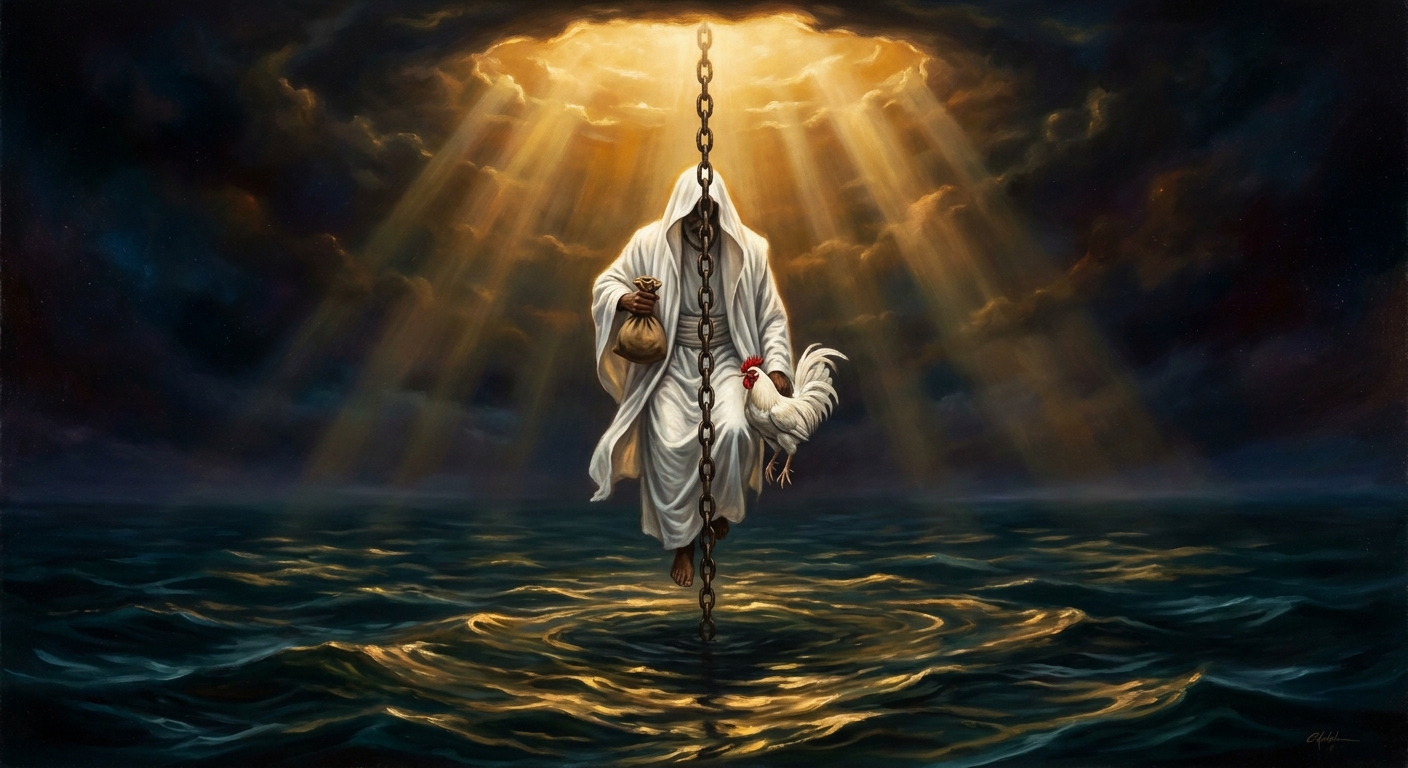
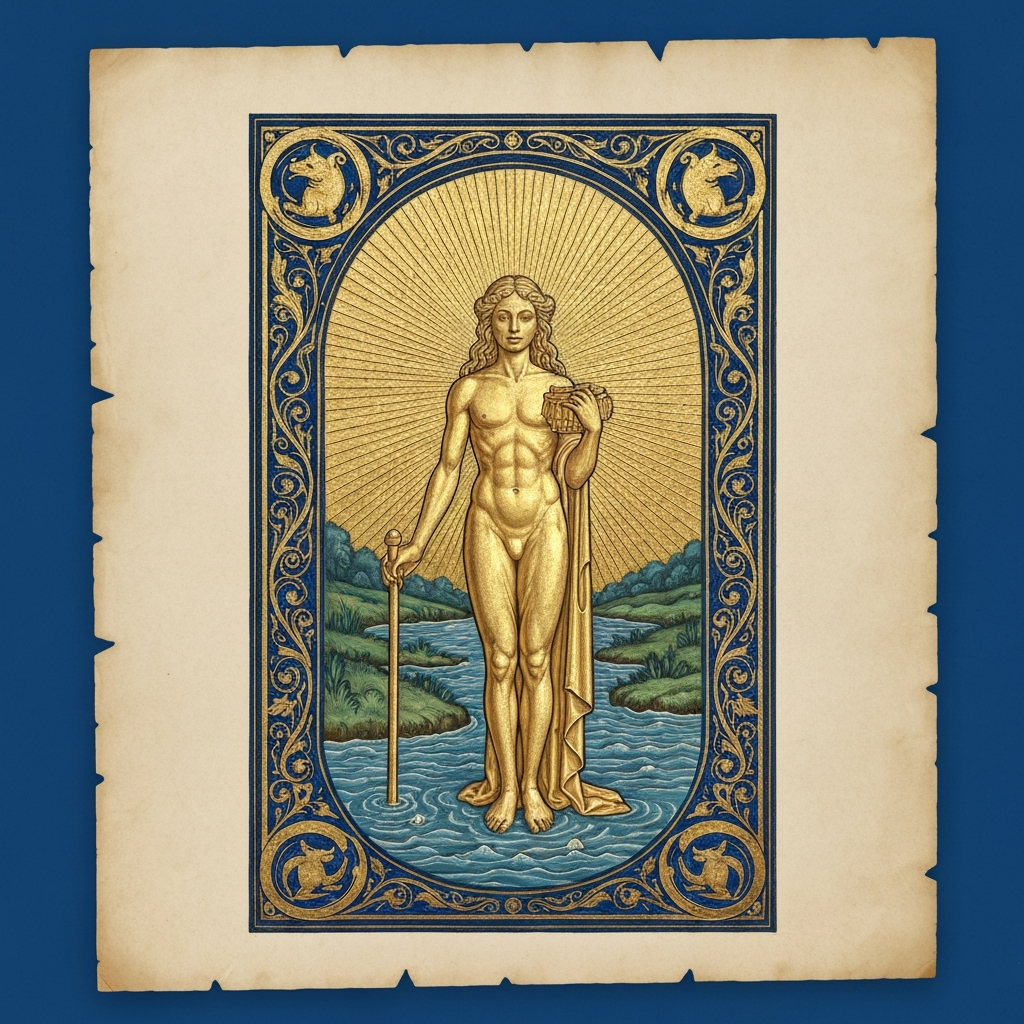
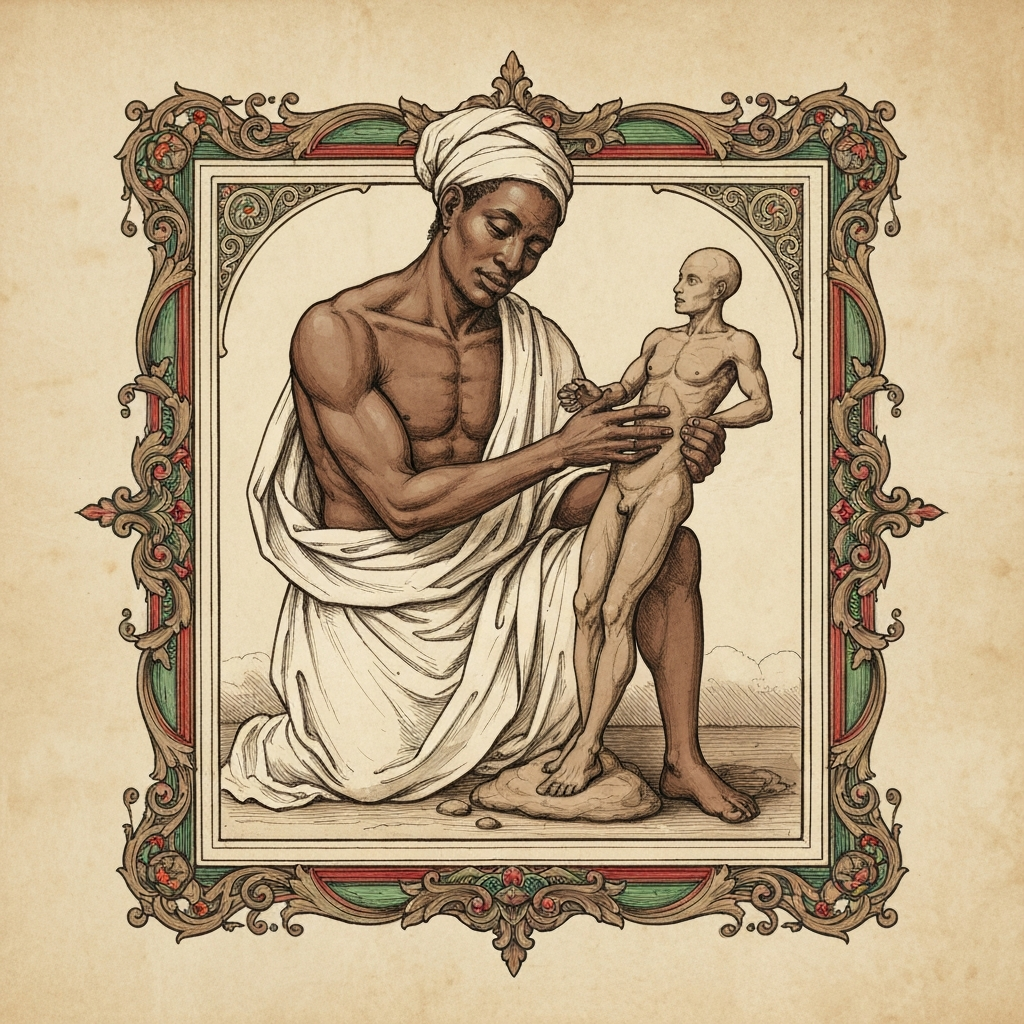
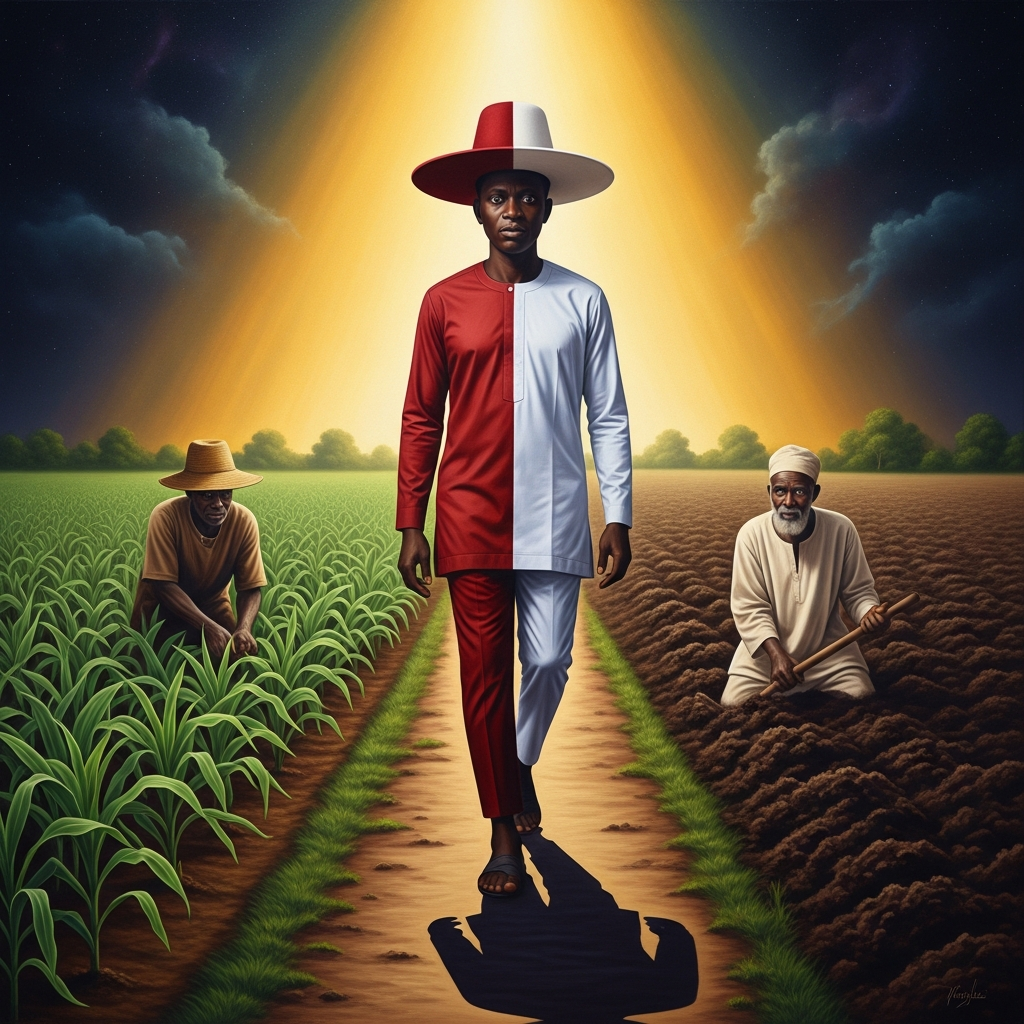
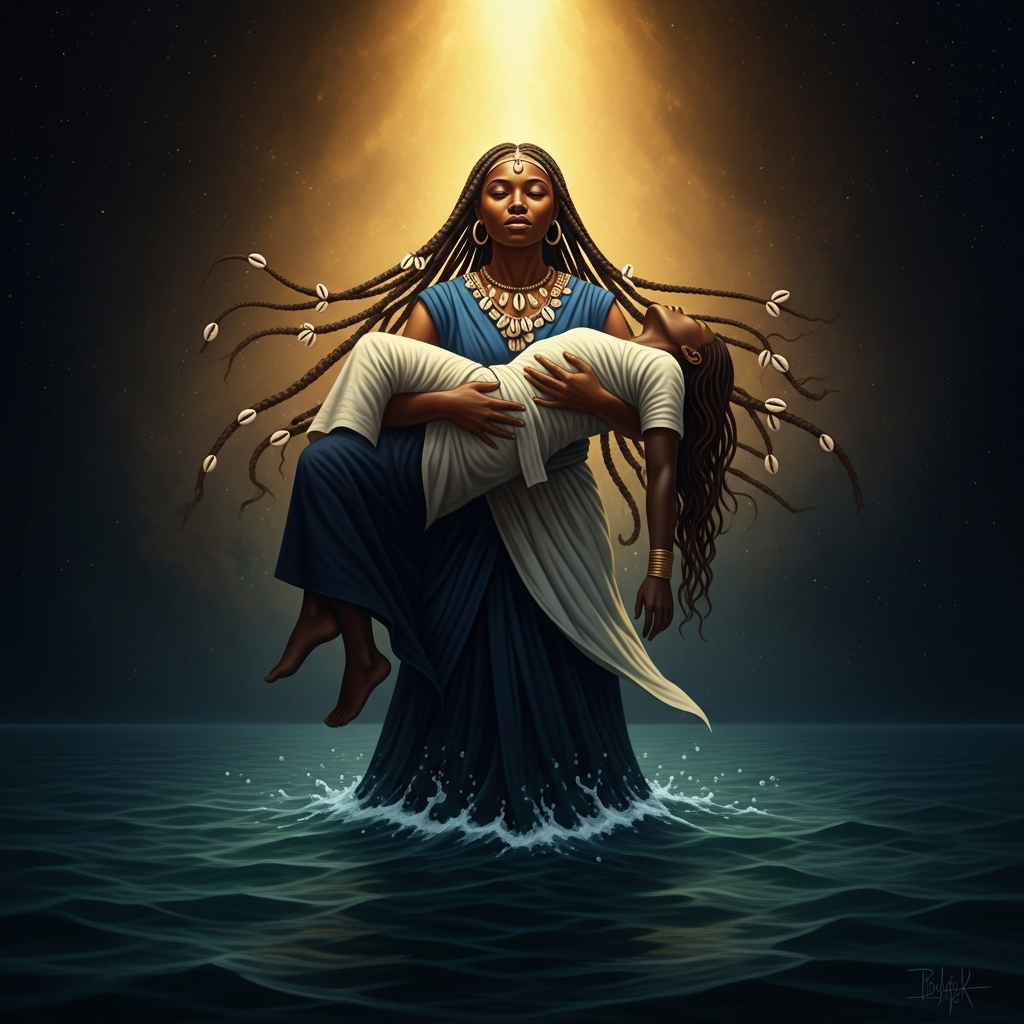
Yemoja rising from deep Atlantic water, her body half-river and half-ocean, cowrie shells streaming from her braids, her robes indigo and white and the dark blue-black of water with no light in it
 Generating art…
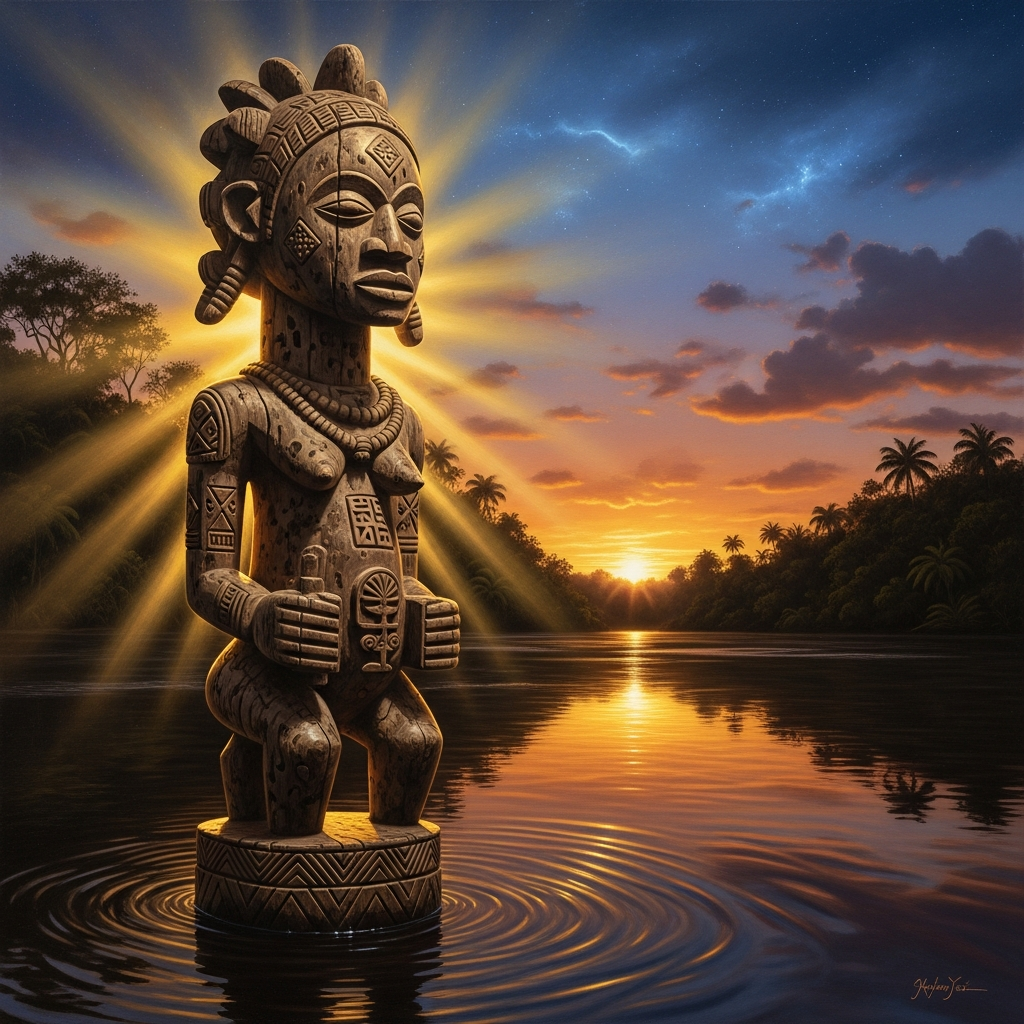
 The Ogun River at dusk
 Generating art…
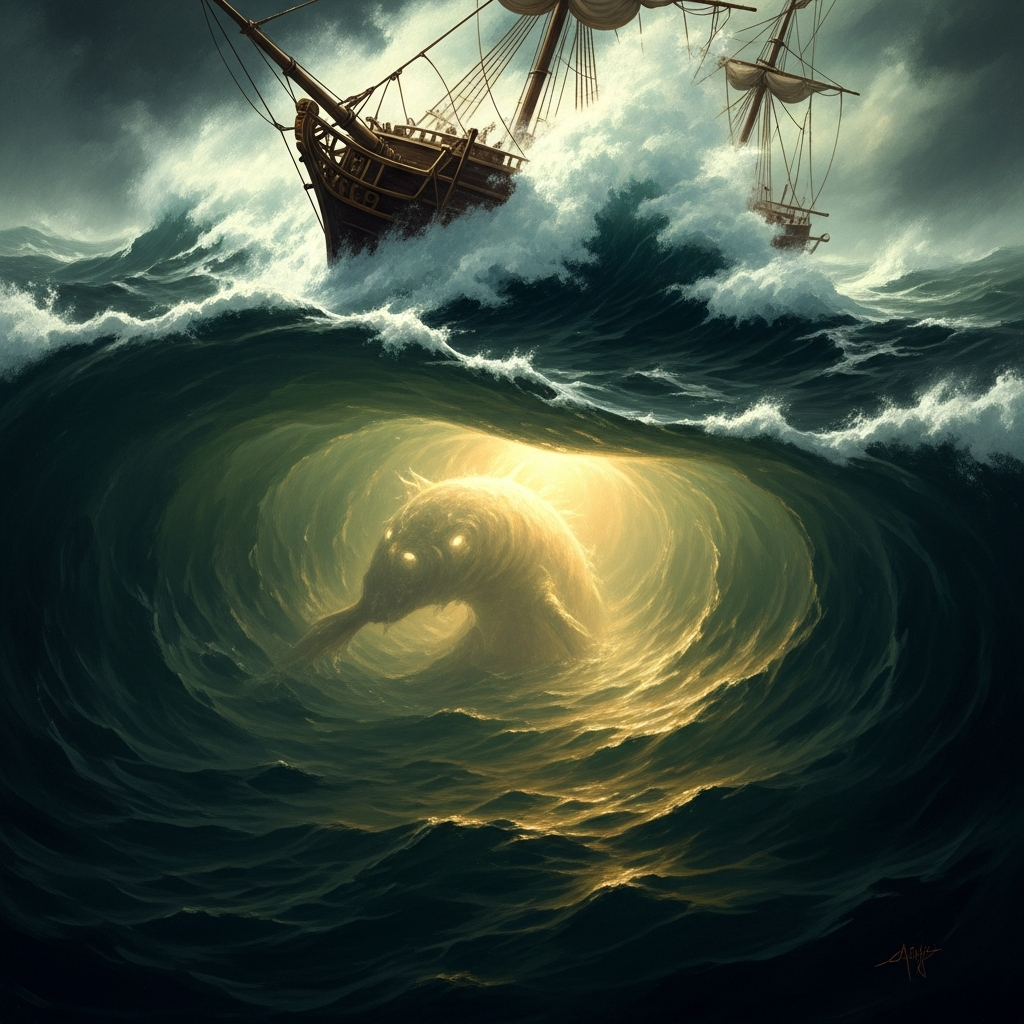
 A slave ship in Atlantic storm, waves the height of masts, the sea green-black and violent
 Generating art…
 A Candomble ceremony in Salvador, Bahia
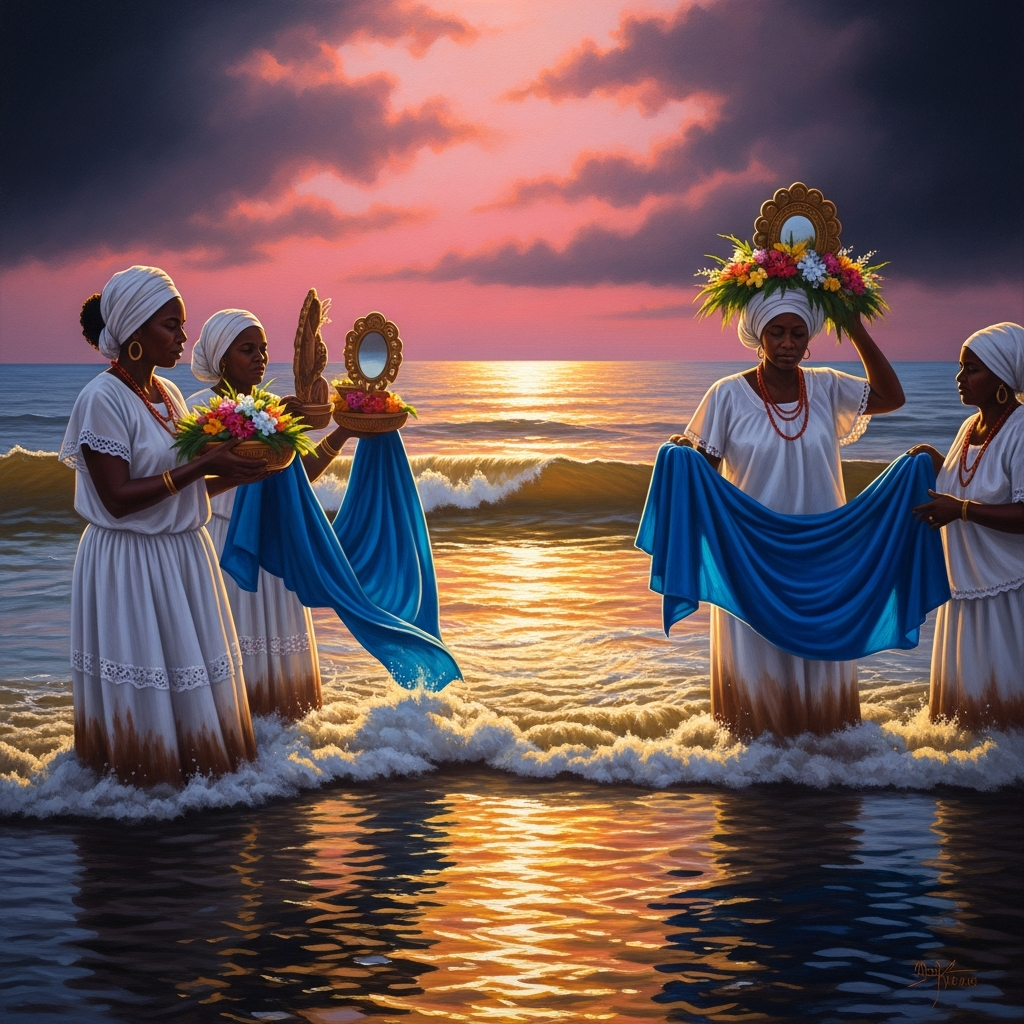 Generating art…
 The floor of the Atlantic: Yemoja enthroned among bones and cowries and iron chains gone orange with rust
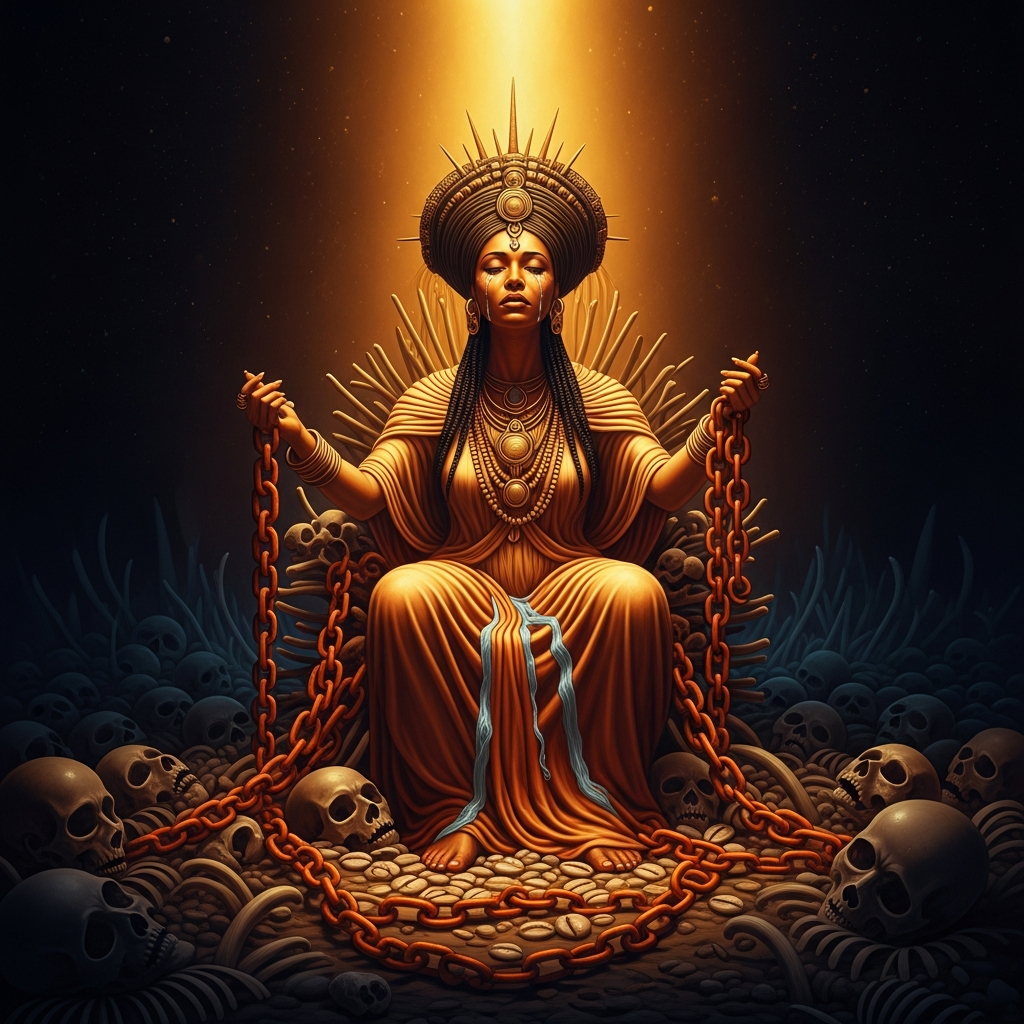 Generating art…
 Echoes Across Traditions
Entities
- Yemoja
- Olokun
- Ogun
- the Atlantic dead

Sources
- Lydia Cabrera, *Yemayá y Ochún: Kariocha, Iyalorichas y Olorichas* (Ediciones Universal, 1980)
- Robert Farris Thompson, *Flash of the Spirit: African and Afro-American Art and Philosophy* (Random House, 1983)
- Abiodun Rowland (ed.), *Yoruba Art and Aesthetics* (Centre for African Art, 1991)
- Dianne M. Stewart, *Three Eyes for the Journey: African Dimensions of the Jamaican Religious Experience* (Oxford University Press, 2005)
- Stephan Palmié, *The Cooking of History: How Not to Study Afro-Cuban Religion* (University of Chicago Press, 2013)