Inkarri's Head Is Still Growing
Historical and eschatological time · execution of Atahualpa 1533; myth recorded by Jose Maria Arguedas and others, 1956-1966 · Cajamarca and Cusco, Peru
Contents
The Spanish executed the last Inca king and scattered his body across the empire to prevent resurrection. But the head was buried in Cusco, and underground it is growing a body back. When the body is complete, Inkarri will return, the Spanish order will be overturned, and the Andean world will be remade. This myth — collected from Quechua communities in the 1950s and still alive — is South America's most powerful messianic tradition.
- When
- Historical and eschatological time · execution of Atahualpa 1533; myth recorded by Jose Maria Arguedas and others, 1956-1966
- Where
- Cajamarca and Cusco, Peru
The body is underground and it is growing.
This is not a metaphor. This is not the kind of statement that requires interpretive softening, the reassurance that we are speaking poetically about grief or cultural memory or the persistence of identity through trauma. The Quechua communities in the mountains of Ayacucho and Cuzco who told this story to the anthropologist Jose Maria Arguedas in 1956 said it plainly, with the matter-of-fact precision of people reporting a known fact: Inkarri’s head is buried beneath Cusco, and the body is growing back from it, and when it is complete, Inkarri will return, and the world will turn over.
Pachacuti — world-overturning. The same word the Inca used for catastrophic upheaval, the same word the ninth Inca ruler took as his throne name when he built Machu Picchu and reorganized the empire. The world turns over. This is not unprecedented. The world has turned over before and was remade. The Spanish conquest was a pachacuti. It will be answered by another.
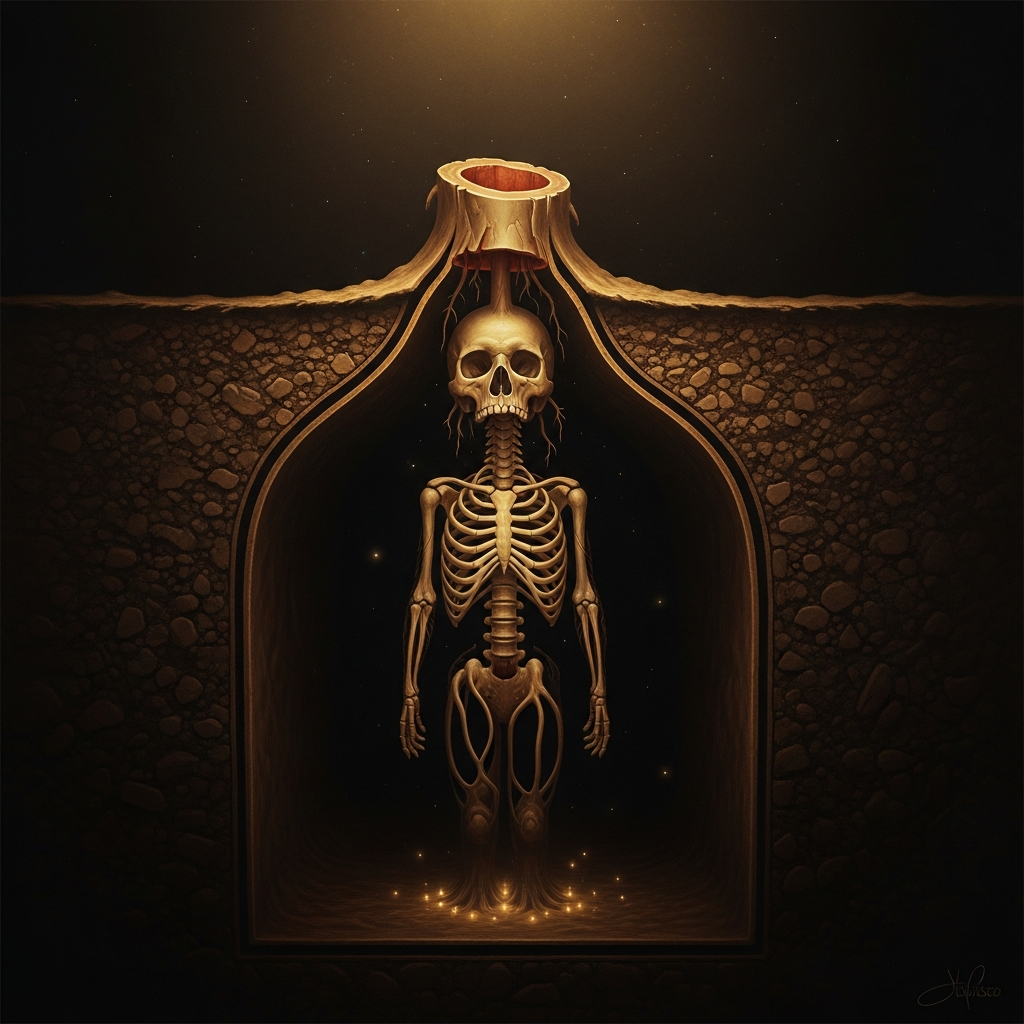
The body grows in the dark, downward from the head, spine first.
Inkarri is not Atahualpa, exactly.
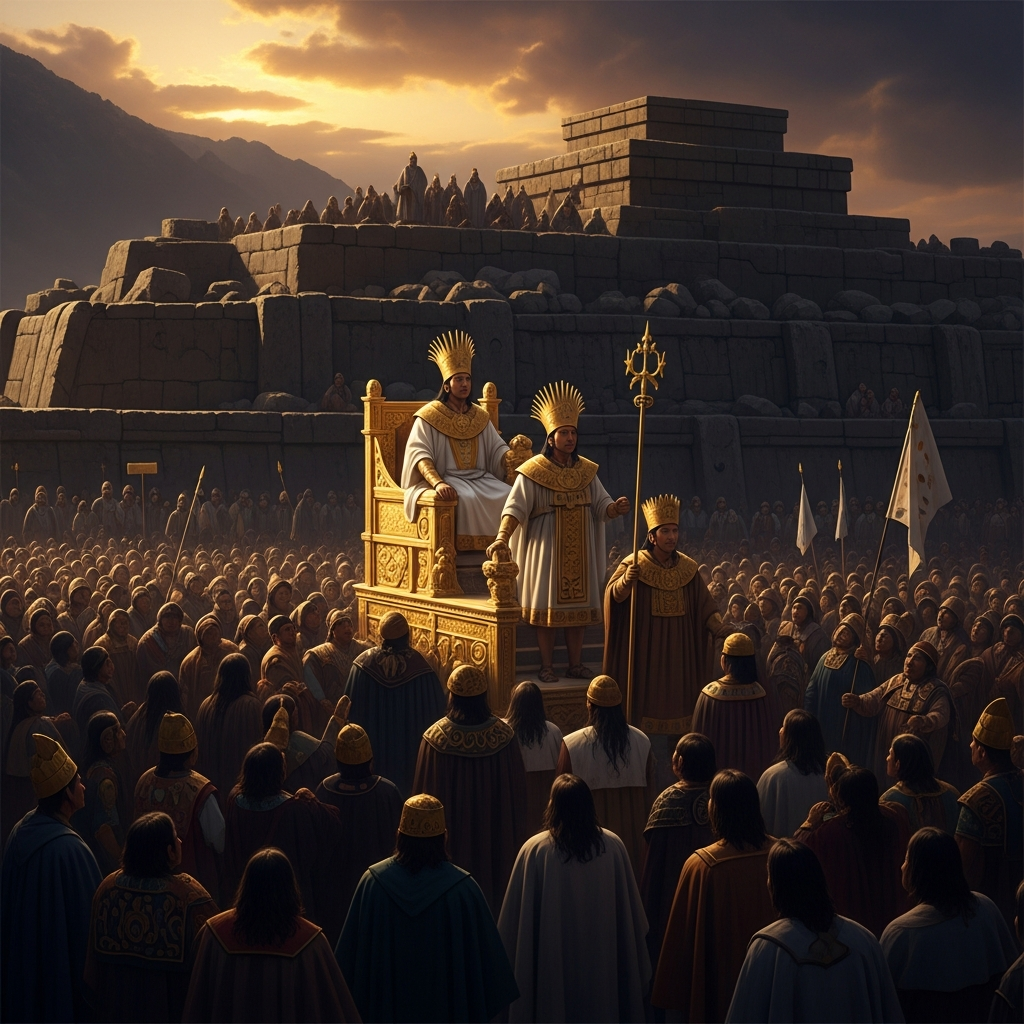
This matters, and it is one of the things the anthropologists who first recorded the myth spent considerable energy clarifying. The myth does not simply record the historical execution of the last Inca ruler by Francisco Pizarro in Cajamarca in 1533. It does something more complex: it collapses and condenses the entire experience of conquest into a single figure whose name — Inkarri, from Inka and Rey, the Quechua and Spanish words for king pressed together — announces the collapse. He is not just the last Inca. He is the Inca principle itself, the divine kingship, the sapa inca, the one who held the solar order together.
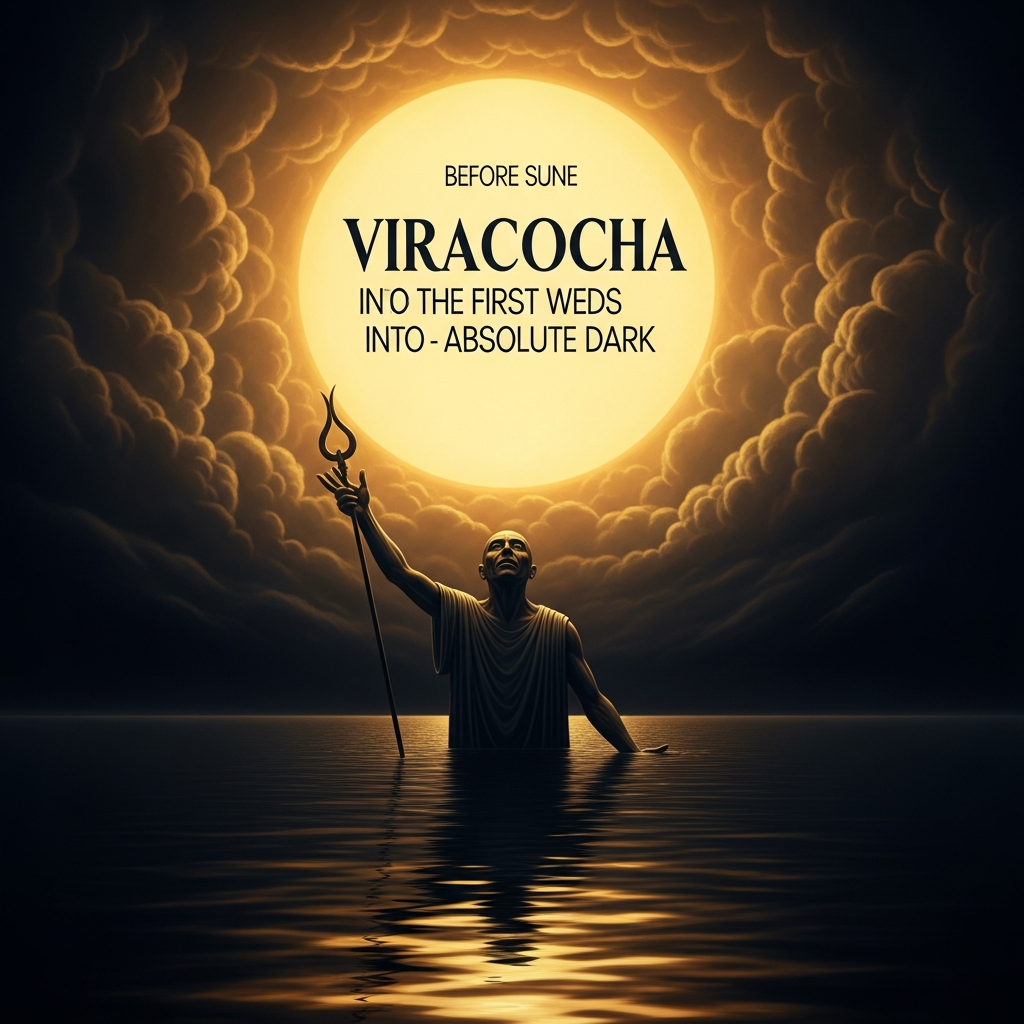
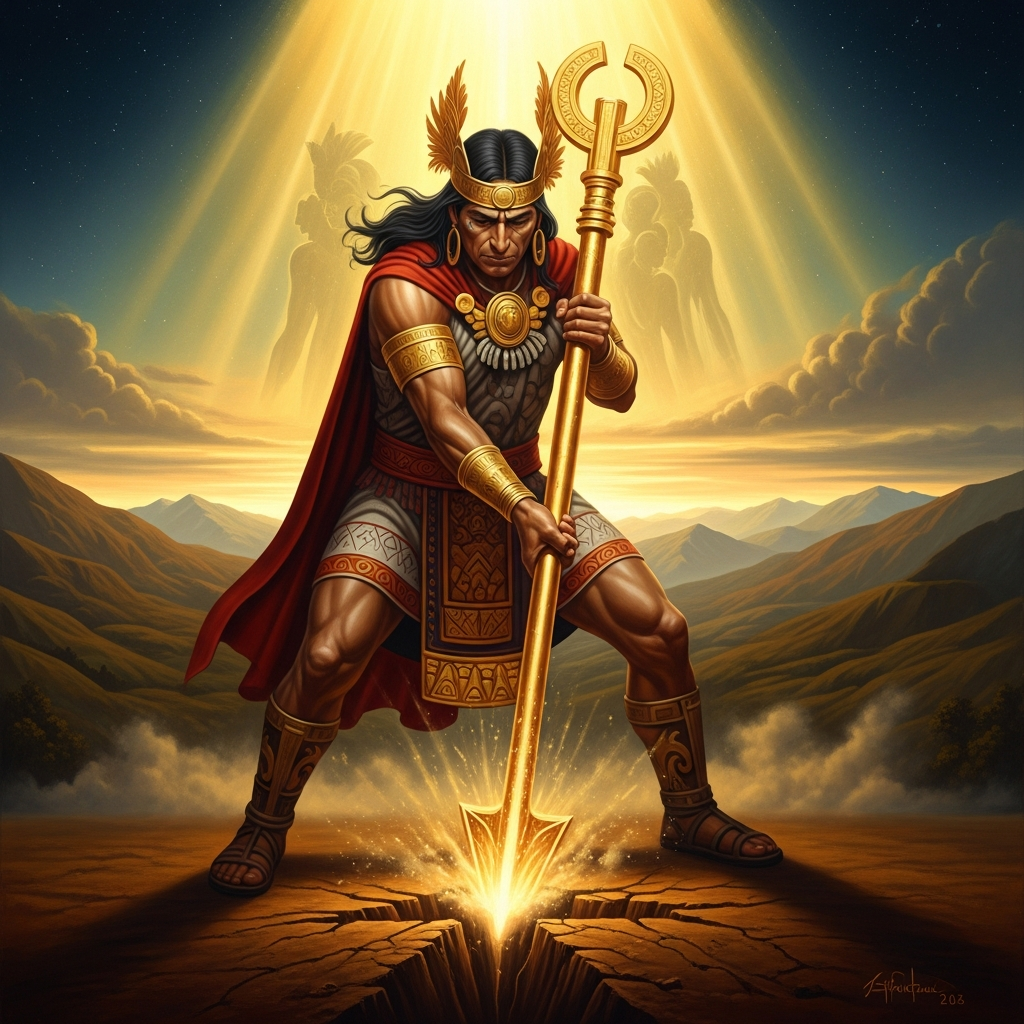
He was created, the myth says, by the sun himself — Inti sending down his divine fire to father a son on the earth. The son was born to organize the world: to teach the human beings the correct relationship with the mountains and the rivers, to establish the agricultural calendar, to build Cuzco from the center of a spider’s web of sacred lines. Inkarri did these things. The world was in order.
Then the Spanish arrived.
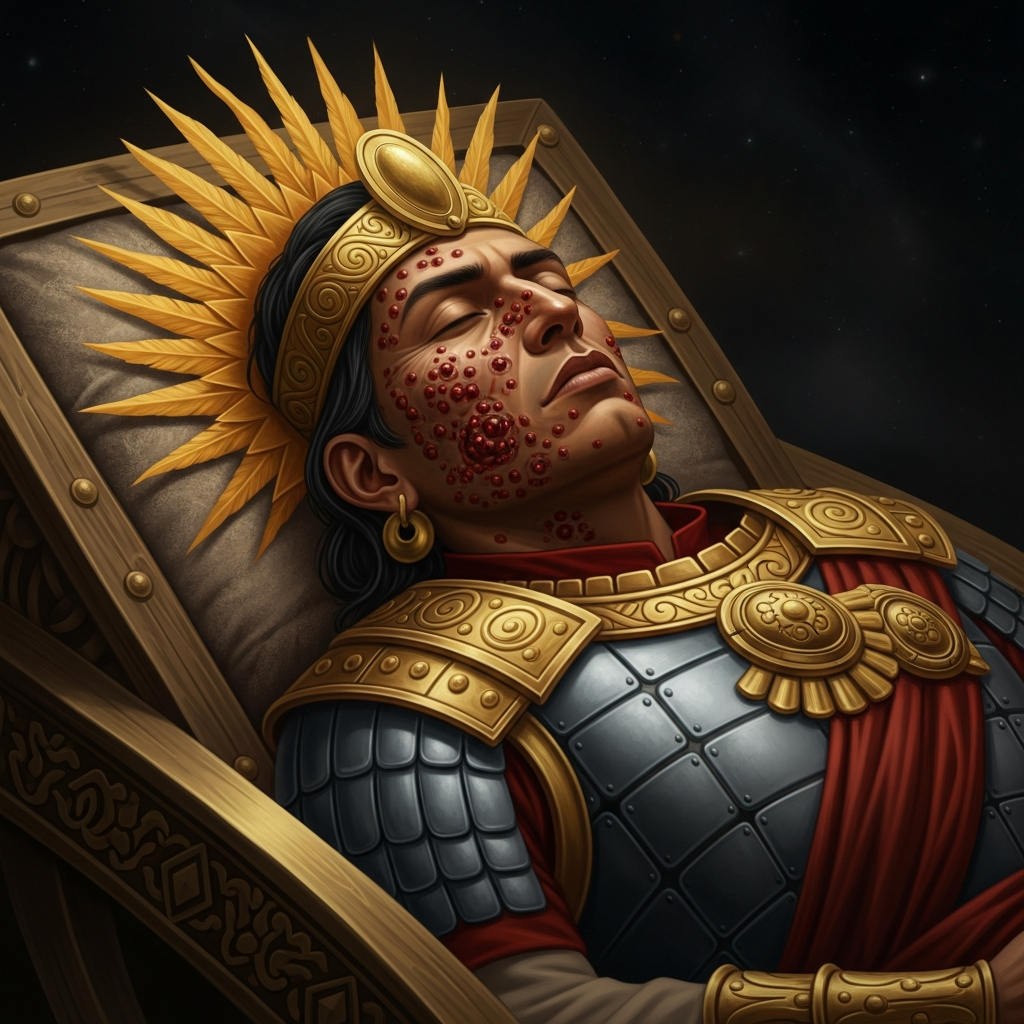
The historical record is not soft about what happened. In the plaza of Cajamarca, on November 16, 1532, Francisco Pizarro’s forces surrounded the Inca Atahualpa during a planned negotiation and slaughtered the unarmed nobles and guards who accompanied him — somewhere between two thousand and ten thousand Andean dead in a single afternoon, by various accounts. Atahualpa himself was taken prisoner. He negotiated a ransom that filled a room with gold and half-filled it again with silver. The Spanish accepted the ransom and executed him anyway, by garrote, on August 29, 1533.
The myth remembers this and transforms it: the Spanish, fearing that a whole body could be resurrected, scattered the pieces. Arms buried in one province, legs in another, torso somewhere else. But the head — they could not agree on what to do with the head, and the head was buried under Cuzco, the city they were already beginning to build their own city on top of.
This is the error from which the entire eschatology proceeds.
The head holds the identity.
This is not an arbitrary detail. In Andean mortuary practice and ancestor theology, the head is the seat of animating force — the location of the camaquen, the life-essence that makes a person who they are and that persists after death. The mummified bodies of Inca rulers, the mallquis, were maintained and consulted by their descendants, carried in procession on feast days, asked for advice on agricultural and military decisions. They were not dead in any complete sense. They were present differently.
The Spanish, who understood this practice and found it appalling, systematically destroyed the royal mummies in the 1550s, burning them and scattering the ashes. They understood correctly that as long as the Inca royal ancestors maintained a physical presence in the world, the theological continuity of Inca authority was intact.
What they could not do was find and destroy a head they did not know they were looking for.
The myth says the head is under Cusco, beneath the colonial city, beneath the Cathedral of Santo Domingo that the Spanish built directly on the foundations of the Coricancha — the Temple of the Sun, the most sacred site in the Inca world. The cathedral over the temple. The city over the city. And below the city, below the temple’s foundations, below all of it: Inkarri’s head, alive in the dark, growing.
The spine is the first thing to emerge. Then the ribs, arching out from the vertebrae. Then the hips, the pelvis, the long bones of the legs descending through the soil. The arms last, reaching out from the shoulders. The body assembles itself in silence and darkness, the way seeds assemble themselves into plants without anyone watching, following the intelligence encoded in the head, which holds everything.
The witnesses are the mountains.
The Andean theological tradition holds that the great mountain peaks — the Apus, the mountain lords — are conscious and watchful. Ausangate above Cuzco, Salcantay above the Urubamba valley, the Inca Apu of Ayacucho — these are not metaphors for divine presence. They are divine presence, embodied in stone, watching the altiplano with the patient attention of beings who think in geological time.
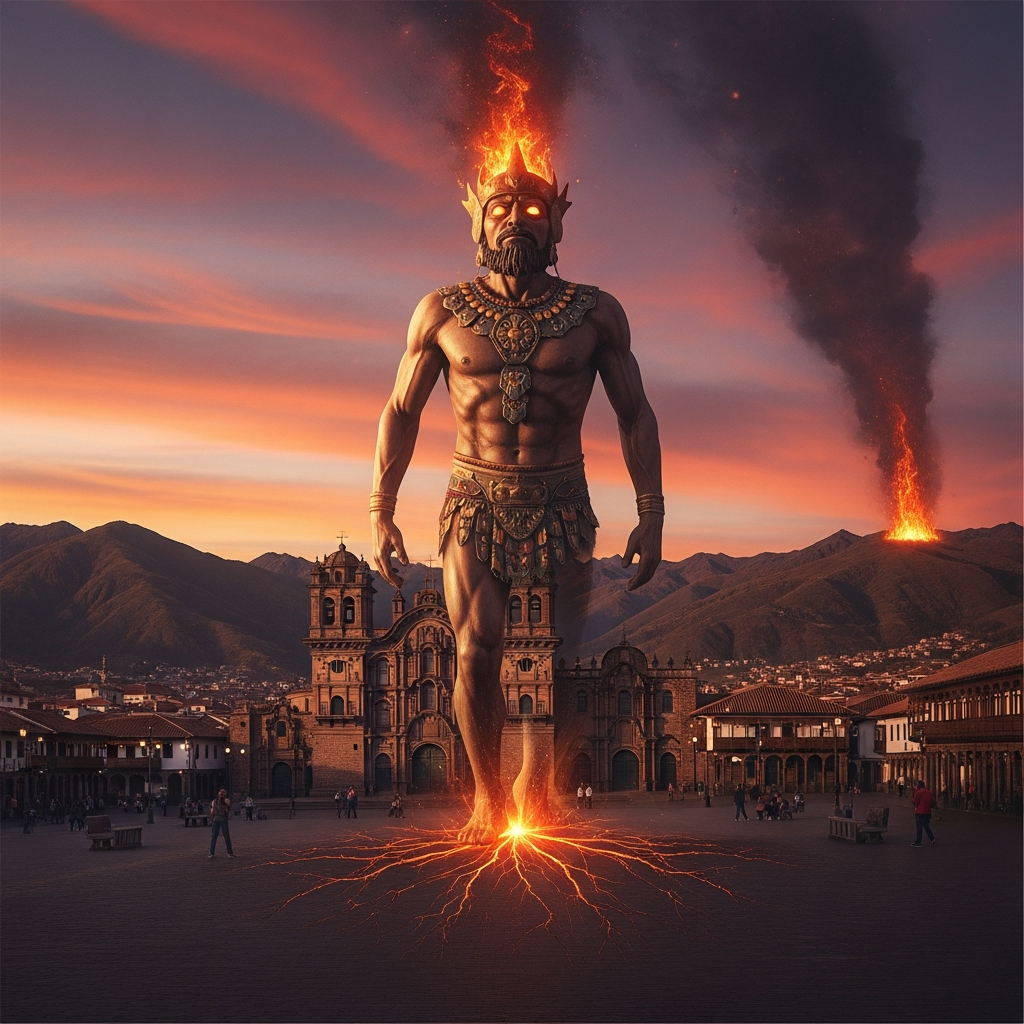
The Apus know about Inkarri. They are the ones who kept the secret from the Spanish, who misdirected the inspectors, who arranged the landslides that buried the roads the colonial expeditions used when searching the sacred places. They are waiting. They know the body is growing. They are waiting for the signal — the completion of the reconstitution, the moment when the feet are formed and the toes extend into the earth and the whole enormous body flexes for the first time — and then they will know what to do next.
Pacha kutiy — the world turning over, the verb form, the active act of upheaval. When Inkarri rises, the Spanish order will be overturned not metaphorically but structurally: the cathedral will fall into the temple foundations it was built on, the Inca administrative system will reconstitute itself, the ceque lines will be active again, the solar calendar will be recalibrated, and the Andean world will resume the order that the conquest interrupted.
The myth does not specify what happens to the Spanish. This is not oversight. The transformation is cosmic, and what happens to the Spanish in a remade Andean cosmos is a question the myth understands as outside its scope. It is focused on what is restored, not on what is displaced.
Arguedas collected the myth in Puquio, in the highlands of Ayacucho, from several different informants, and published his findings in 1956. He found it in Cuzco as well, and in Q’ero — the remote community high in the mountains above the Sacred Valley that maintained the most uninterrupted Inca cultural tradition through the colonial period. The variants differed in detail. Some said only the head was buried in Cuzco; others said the head and the hands. Some said the body was scattered across the four suyus of Tawantinsuyu, the four quarters of the empire, so that each region holds a piece. Some said the growing will be complete within one generation; others say it takes longer, and we cannot know.
What they agreed on: the head is there. The body is growing. The return is coming.
The academic literature on the Inkarri myth is substantial — Arguedas, then Pease, then Wachtel, then Stern and Szemiński, then dozens of subsequent scholars who found the myth still alive and still elaborating itself with each generation that tells it. Some scholars argue that the myth is primarily resistance discourse — a way of maintaining political hope under colonial conditions by refusing to accept the permanence of the conquest. Some argue it reflects genuine cosmological belief. The distinction may be meaningless. A story that sustains a people’s identity through five hundred years of dispossession is not a political strategy. It is theology in its most functional sense: the account of reality that makes life livable under impossible conditions.
The Tupac Amaru rebellion of 1780-1781, the most massive indigenous uprising of the colonial era, drew directly on the Inkarri myth. Its leader, José Gabriel Condorcanqui, took the name Tupac Amaru II — a direct claim to Inca lineage — and mobilized the expectation of return. The Spanish executed him in Cuzco in May 1781, with the same ritual logic Inkarri’s executioners used: dismemberment, body parts sent to the four corners, the head displayed. They were trying to close the myth. They were adding another layer to it.
The body is still growing.
This is the patience the myth teaches. Not the patience of resignation — not the acceptance of suffering as divine will — but the patience of a people who understand that cosmic cycles are longer than colonial administrations, that the world has been remade before and will be remade again, that the current arrangement of things is not the final arrangement.
Quechua speakers in the Andes today — in communities that have been officially Catholic for four hundred years, that have televisions and cell phones and children who go to universities in Lima — still tell this story. The forms vary. Some tell it as history, some as prophecy, some as something between. But the core remains: the interruption of the Andean world was not its end. The head holds everything the world needs to reconstitute itself.
And underneath Cuzco, underneath the colonial city that was built to demonstrate the permanence of the Spanish order, underneath the cathedral that was built to replace the temple of the sun — the body grows.
The theological move that makes Inkarri survivable as a myth is the move that every effective messianic tradition makes: it transforms historical defeat into cosmic deferral. The Inca king was not overthrown. He was interrupted. The world-order he embodied was not destroyed. It was temporarily suppressed. This is not wishful thinking or denial. It is a precise theological claim about the nature of time: that the current moment is not the last moment, that history is not finished, that what appears to be ending is in fact a very long pause. The body grows in the dark. The Apus watch. The world waits for the feet to form.
Scenes
The plaza of Cajamarca in 1533 — Spanish soldiers surrounding the Inca Atahualpa, gold and silver piled high as ransom but the execution proceeding regardless, the Inca king dying by garrote while the Andean lords watch in horror, the mountains visible above the rooflines in the dying light
 Generating art…
 Underground beneath Cusco in deep cross-sectional view — the severed head of Inkarri in the dark earth, and from the neck stump a body slowly growing downward through the soil, spine and ribs emerging from the base of the skull, the soil glowing faintly around the growing form
 Generating art…
 A vision of the Andean world-reversal — Inkarri rising whole from the earth in the Plaza de Armas of Cusco, the colonial cathedral behind him cracking at its foundation, the mountains surrounding the city catching fire at their peaks, the sky turning the deep rose color of dawn
 Generating art…
 Echoes Across Traditions
Entities
- Inkarri
- Atahualpa
- Francisco Pizarro
Sources
- Jose Maria Arguedas and Francisco Izquierdo Rios, *Mitos, Leyendas y Cuentos Peruanos* (Casa de la Cultura del Peru, 1947)
- Franklin Pease, *El Dios Creador Andino* (Mosca Azul Editores, 1973)
- Nathan Wachtel, *The Vision of the Vanquished: The Spanish Conquest of Peru Through Indian Eyes* (Barnes and Noble, 1977)
- Steve Stern, *Peru's Indian Peoples and the Challenge of Spanish Conquest* (University of Wisconsin Press, 1982)
- Jan Szemiński, *La Utopia Tupamarista* (Pontificia Universidad Católica del Peru, 1984)
- Garcilaso de la Vega, *Royal Commentaries of the Incas* (1609; translated by Harold Livermore, University of Texas Press, 1966)