Lü Dongbin Finds the Peach of Immortality
Tang dynasty, c. 798-late 9th century CE — the historical Lü Dongbin period · Zhongnan Mountains of Shaanxi Province — the sacred range of Taoist hermits
Contents
The wandering Taoist sage Lü Dongbin receives a single peach from an old man on a mountain path, and the peach takes him through a vision of his entire future life — all the joys, failures, and losses — before he opens his eyes and finds he has eaten nothing.
- When
- Tang dynasty, c. 798-late 9th century CE — the historical Lü Dongbin period
- Where
- Zhongnan Mountains of Shaanxi Province — the sacred range of Taoist hermits
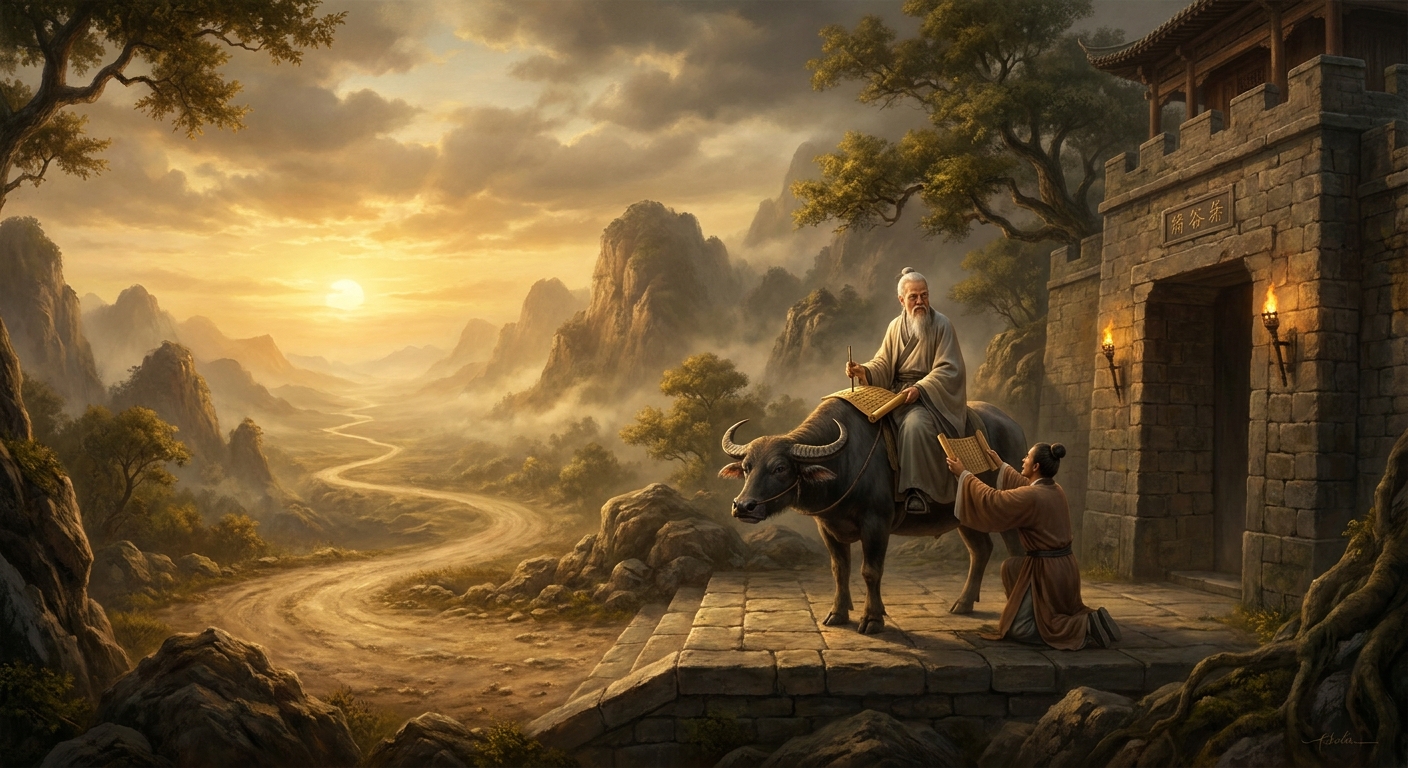
He meets the old man on the mountain path in the autumn.
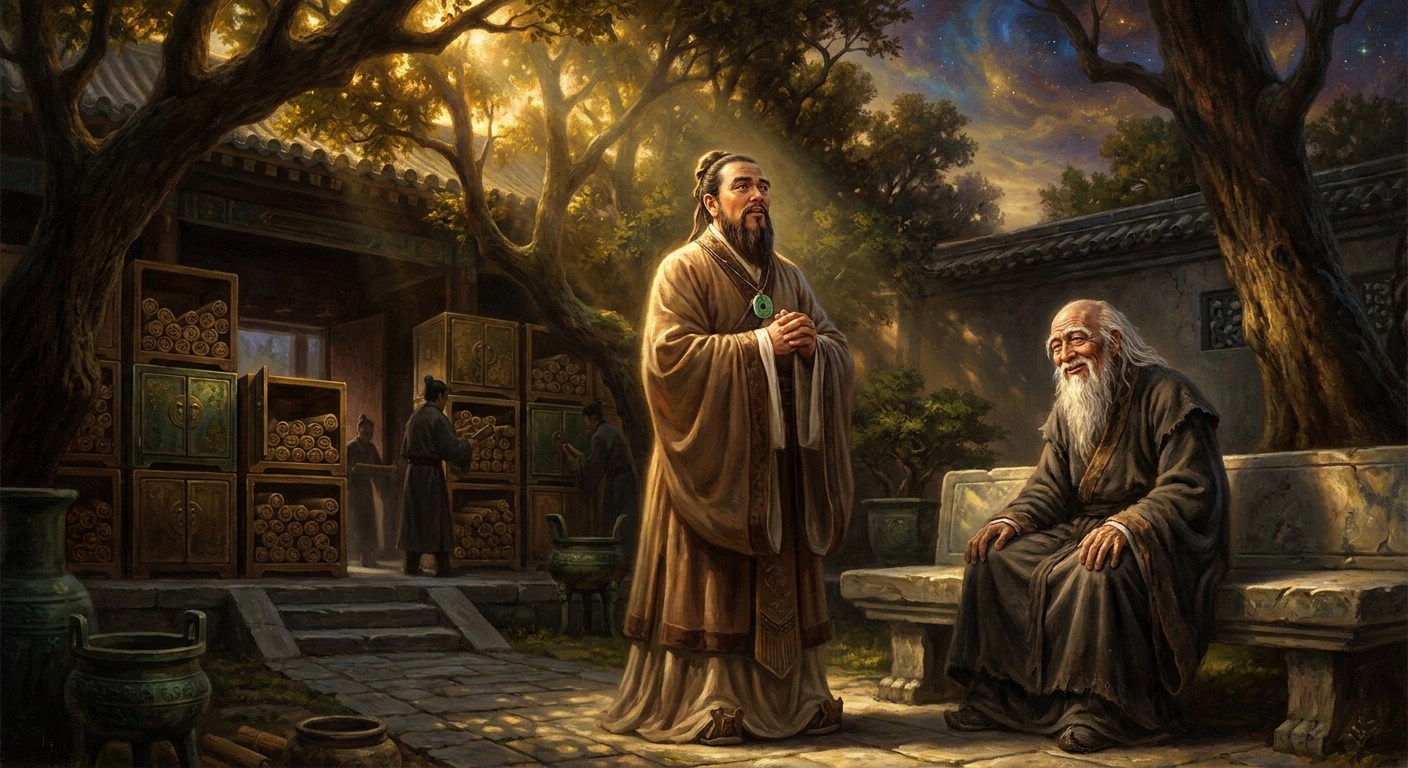
The old man is selling peaches from a basket balanced on a carrying pole, the peaches red on one side and golden on the other, smelling of something between rain and incense and the inside of ancient wood. Lü Dongbin is twenty-nine years old, a scholar twice failed at the imperial examinations, walking in the mountains because walking in mountains is what scholars do when they need to think and there is nothing to think about that comforts them.
The old man offers him a peach.
Lü Dongbin takes it, bites in — and goes somewhere else.
He is in the capital. He has passed the examination. He has been appointed to office. He has a position, a salary, a wife who is beautiful and competent, children who grow up and are a source of pride and of the ordinary grief that children cause their parents simply by being human. He is promoted. He is demoted. He makes a political mistake and is exiled for three years. He is recalled and promoted again. His wife dies. His children have children. His grandchildren know his face only from visits. He is old. He is celebrated. He dies.
The entire life takes the length of a millet grain cooking.
He opens his eyes on the mountain path. The old man is watching him with the expression of someone who has given this particular gift before and knows exactly what the receiver sees when they come back. The peach is in Lü Dongbin’s hand, whole, uneaten.
The old man is Zhōng Lí Quán, the immortal — though Lü Dongbin does not know this yet. Zhōng Lí Quán has the fan and the broad belly and the air of the former general who found the Tao and decided that the Tao was more comfortable than command. He is testing Lü Dongbin in the way the tradition tests all candidates: not for intelligence, not for virtue in the conventional sense, but for the capacity to see through. To taste the whole life and return from it without the grasping that the tasting usually produces.
Lü Dongbin looks at the peach in his hand. He looks at the mountain. He looks at the old man. He puts the peach back in the basket.
The old man takes it. He puts it back among the others. He offers Lü Dongbin another, different kind of teaching — the ten temptations, in the longer version of the story, each one more precisely calibrated to Lü Dongbin’s specific vulnerabilities than the last. The scholar who failed the examination: he is offered success. The lonely man: he is offered companionship. The son who failed his parents: he is offered the chance to redeem it. Each temptation says: you could have the thing you most wanted. Here. Now. Each time Lü Dongbin declines.
After the tenth temptation, Zhōng Lí Quán reveals himself and accepts Lü Dongbin as a student. He gives him a sword — the sword that cuts through illusion, that strikes at the roots of attachment, that is the opposite of a weapon because what it destroys is the desire for weapons. He gives him the Tao.
Lü Dongbin wanders for the next millennium. He is spotted in wine shops in every dynasty. He tests scholars, merchants, thieves, priests, and generals with the particular flavor of test he received on the mountain: the life you want, presented in miniature, available to consume. He watches what people do when they taste it.
Most people swallow. Most people want the whole life, the whole career, the whole love affair, the whole accumulation, and they do not understand why the swallowing leaves them exactly where they were, only hungrier. Lü Dongbin holds out the peach. He watches. He rarely explains. The sword at his back catches the light of any kind of fire — the divine light if there is divine light, the fire in the wine-shop hearth if that is all there is, which is usually enough.
Echoes Across Traditions
Entities
- Lü Dongbin
- Zhōng Lí Quán
- the Yellow Millet Dream
- the sword of discernment
Sources
- Zhongli Quan and Lü Dongbin tradition, Tang-Song hagiography
- Eva Wong, *Seven Taoist Masters* (Shambhala, 1990)
- Thomas Cleary, *Immortal Sisters: Secret Teachings of Taoist Women* (North Atlantic, 1996)
- Faure, Bernard, *The Power of Denial: Buddhism, Purity, and Gender* (Princeton, 2003)