Contents
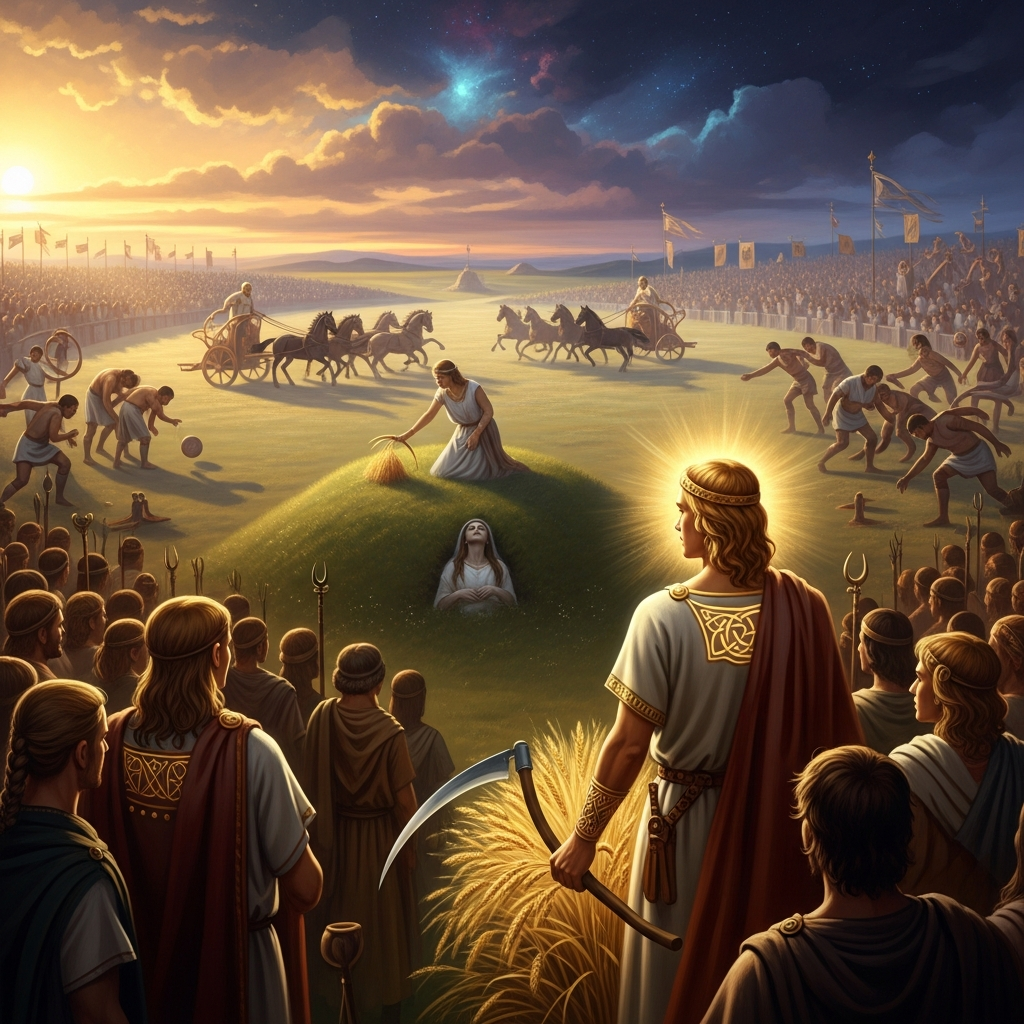
Lugh institutes the harvest festival at the beginning of August as a memorial to his foster-mother Tailtiu — a woman who cleared the plains of Ireland for agriculture until the work killed her — and for as long as Ireland remembers her name, the harvest games are her monument.
- When
- mythic foundation, continuously celebrated — August 1
- Where
- Teltown (Tailteann), County Meath — the site of the Óenach Tailteann, the great assembly
She cleared the plains of Ireland with her own hands.
Tailtiu is the foster-mother of Lugh — the woman who raised the light-god when he was sent from the divine world to the mortal one, who fed him and protected him and prepared him for the life that his divine birth had set in motion. She is also a figure from before the Tuatha Dé Danann: a queen of the Fir Bolg, the people who held Ireland before the divine race came, and she continued to serve the new order after her husband’s people were defeated.
Her service in the new Ireland is agricultural. She oversees the clearing of the forest on the plains of County Meath — the great labor of turning dense Irish woodland into the flat farmland that becomes the Midlands. The sources say she leads the work herself, that she does not merely direct but digs and cuts and burns alongside the people she is supervising. The plains of Brega are cleared in her lifetime.
She dies of exhaustion. The work kills her.
The dying is described in the sources with the specific weight of someone who knows exactly what she is spending and spends it anyway: “She died in Tailltiu after the burden of clearance of the great wood from her.”
She is buried in Teltown, County Meath, on the plain she made. She is buried in August, when the first grain is ready to cut — the first harvest of the fields she cleared.
Lugh mourns her.
The grief of a god for a foster-mother is a theological claim: the divine world values the human relationship that sustained it, even after the god has grown into his power and no longer needs the woman who cleared the plain. Lugh does not only grieve privately. He institutes a public memorial.
The Óenach Tailteann — the great assembly at Teltown — is held every year on the first day of August. It combines what grief and celebration require: the memorial rites for Tailtiu, the athletic games that honor her by demanding the best effort from the living, the trading and the matchmaking and the legal assemblies that require the same cleared plain she made possible.
The games at Teltown are the oldest organized athletic competition in Ireland — chariot-racing, running, jumping, sword-fighting, the full display of the physical excellence that the harvest season rewards. The grain stands in the fields. The cattle are fat. The cleared plain that Tailtiu made supports the lives of everyone who gathers there.
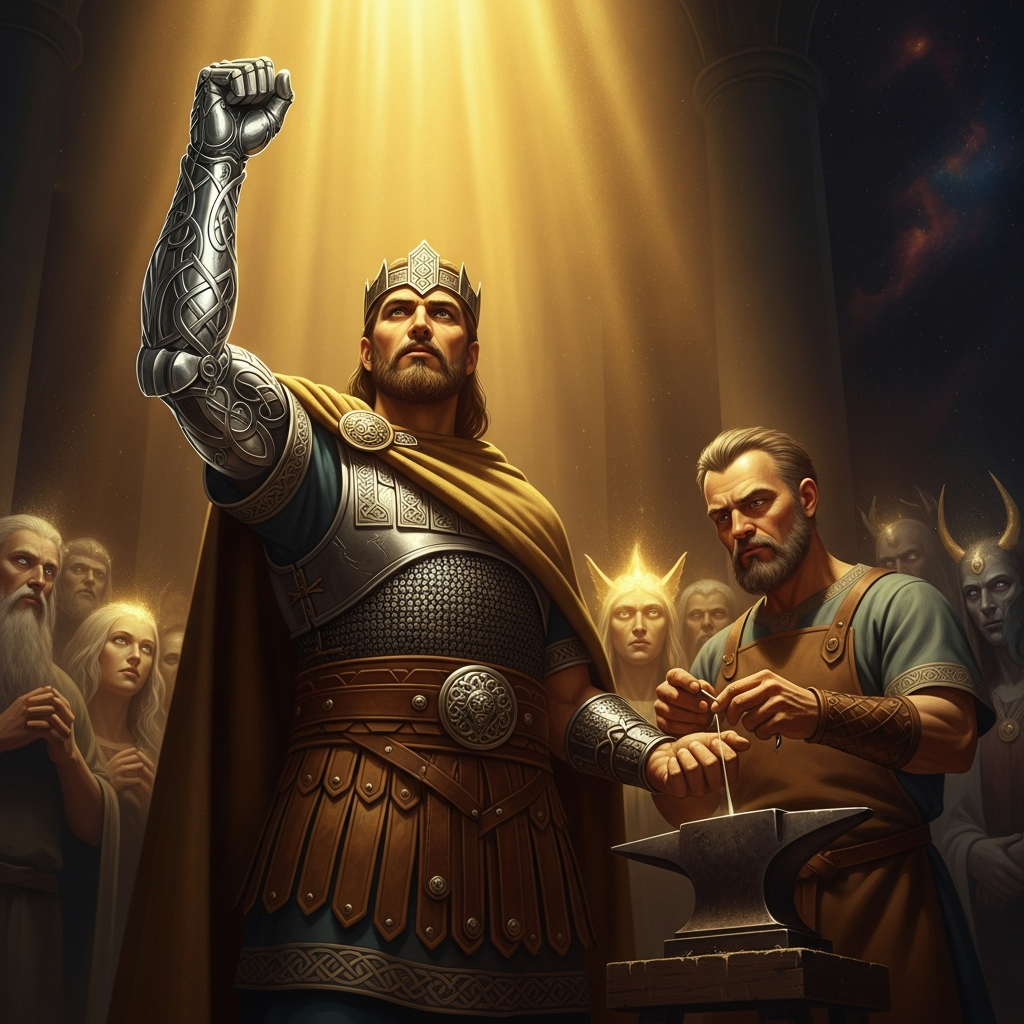
Lugh stands at the center of it. The light-god, the god of every art, the polymath who arrived at Tara listing every skill he possessed — on the first day of August he is not showing off his skills. He is remembering the woman who made him possible.
The festival continues for centuries. The Tailteann Games at the site of Teltown persist into the medieval period. After the Famine and the cultural rupture of the eighteenth and nineteenth centuries, they are revived in the twentieth — last held in 1927.
The mountain of Croagh Patrick in Mayo — where pilgrims climb barefoot on the last Sunday of July, called Reek Sunday or Garland Sunday — carries the Lughnasadh resonance in Christian dress. The pilgrimage to the high place, the communal gathering, the harvest-season timing: Tailtiu’s festival is still being held, in different clothes, on the same hills.
The plain she cleared is still flat. The grain still grows in August on the Meath plains. She is still in the ground underneath it.
Echoes Across Traditions
Entities
- Lugh Lámhfhada
- Tailtiu
- The Tuatha Dé Danann
- The Fianna
Sources
- Máire MacNeill, *The Festival of Lughnasa* (Oxford University Press, 1962)
- Ronald Hutton, *The Stations of the Sun: A History of the Ritual Year in Britain* (Oxford University Press, 1996)
- Dáithí Ó hÓgáin, *Myth, Legend and Romance: An Encyclopaedia of the Irish Folk Tradition* (Prentice Hall, 1990)