Spider Woman and the Hopi Emergence
Before history — the time of the underworld journeys · The underworlds below; the sipapu emergence point near the Colorado River; the Hopi mesas of Arizona
Contents
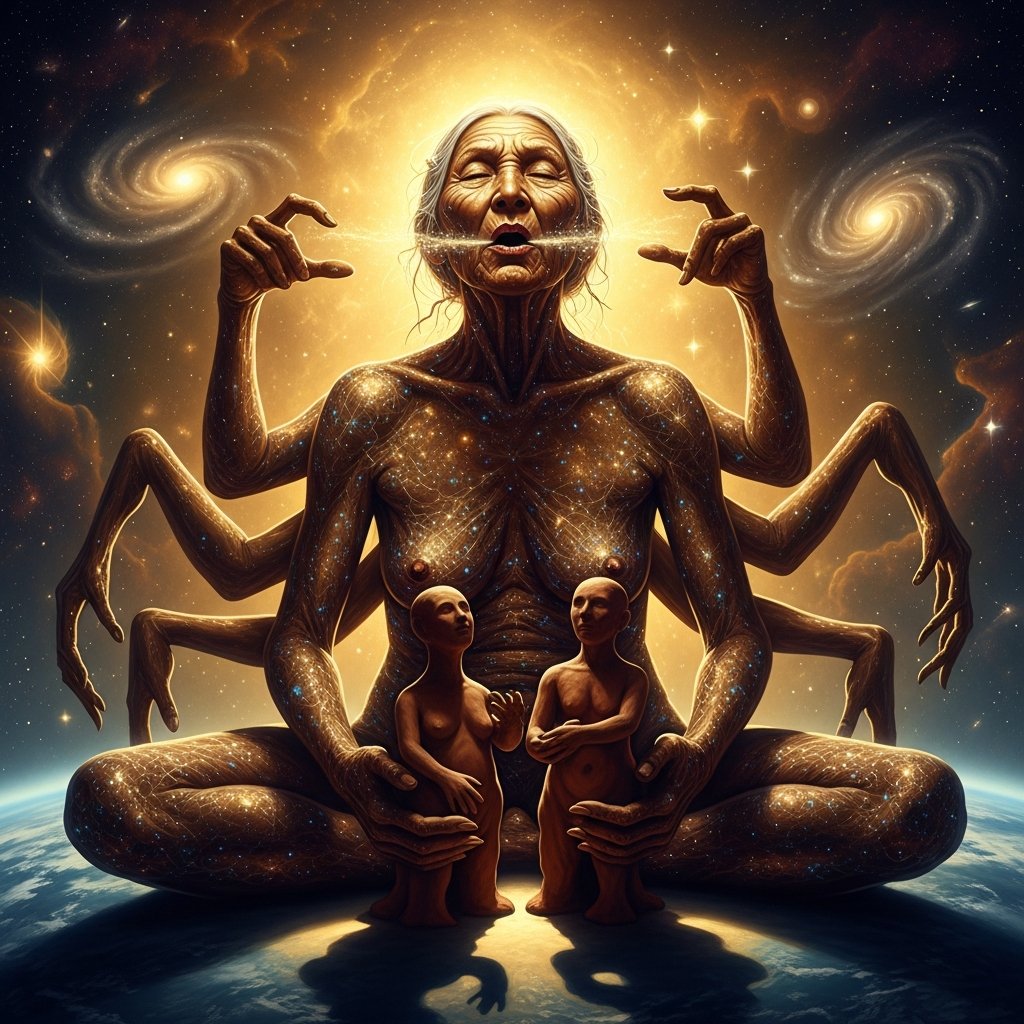
Spider Grandmother — Kókyangwúti — guides the Hopi people through the underground worlds and up through the sipapu into this world, weaving the path of their journey like a thread through darkness into light.
- When
- Before history — the time of the underworld journeys
- Where
- The underworlds below; the sipapu emergence point near the Colorado River; the Hopi mesas of Arizona
Before this world there were other worlds.
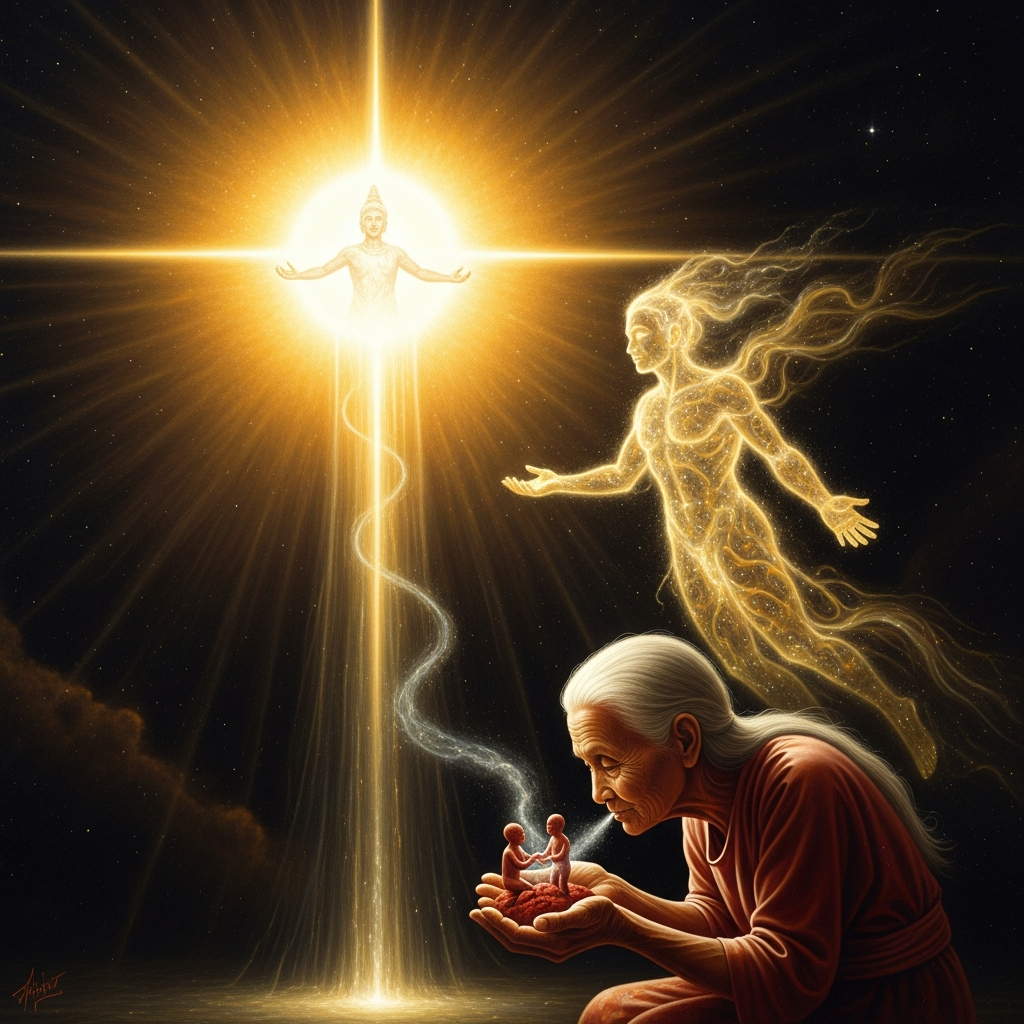
Taiowa, the infinite, creates Sotuknang to be the first being of form, and Sotuknang makes Spider Grandmother — Kókyangwúti — to do the detailed work of creation, to make the living things that will inhabit what Taiowa has conceived. She is very small. She is very old. She has been present at the making of every world.
She takes red clay and mixes it with her saliva and shapes the first two beings: Pöqánghoya and Palöngawhoya, the twins who will become the keepers of the poles, who make the earth rotate, who keep the world in balance. Then she makes the plants, the animals, the people — all from clay and saliva, all with a thin covering of creative wisdom that is the breath of Taiowa, all in the four colors: yellow, red, white, and black.
The first world, Tokpela, is perfect.
But the people forget who made them. They begin to quarrel, to break the harmony, to lose the thread that connects them to Taiowa. Sotuknang comes and tells Spider Grandmother to warn the people who still remember: gather at the center, the world is ending. Those who remember follow Spider Grandmother to the hollow of a tall tree. The world is destroyed by fire. The tree carries them upward into the second world.
The second world, Tokpa, is larger. They do better here, but eventually they forget again. The error is the same: they put their attention on material things and forget the thread. Sotuknang comes again. Spider Grandmother warns the ones who remember. They are carried upward in hollow reeds as the second world is destroyed by ice.
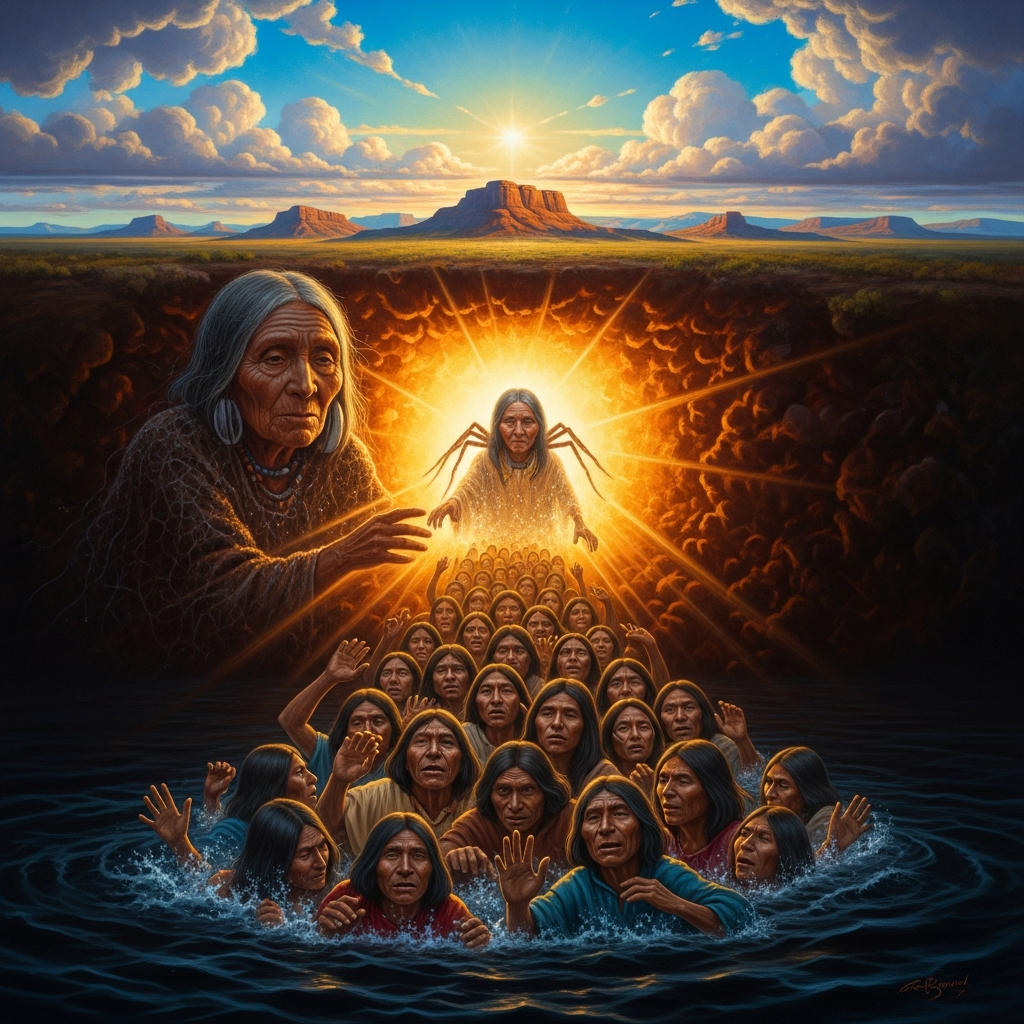
The third world, Kuskurza, is the world of cities and things. The people build great ant-hill cities and lose themselves in busyness. Corruption enters. They forget why they built. Sotuknang and Spider Grandmother discuss. The third world is destroyed by flood — the waters come from below and above and the people float on the surface in sealed vessels, carried on the waves until the water is everywhere.
Spider Grandmother leads them to the fourth emergence.
She tells them to look for a place where the water ends. They paddle their vessels for a very long time — some say four days, some say many years — through the dark water. She sits with them in the vessels and sings the songs that keep the mind from breaking in the darkness of the flood.
Then they see a light above.
They follow the light up through the sipapu — the emergence hole, the navel of this world — and they come into the Fourth World, the world we inhabit now. It is harder than the others. It has cold and heat and drought and predators. Spider Grandmother says: this is the world where you will learn what the other worlds could not teach you, because this world does not give you comfort easily. Here you must remember on your own.
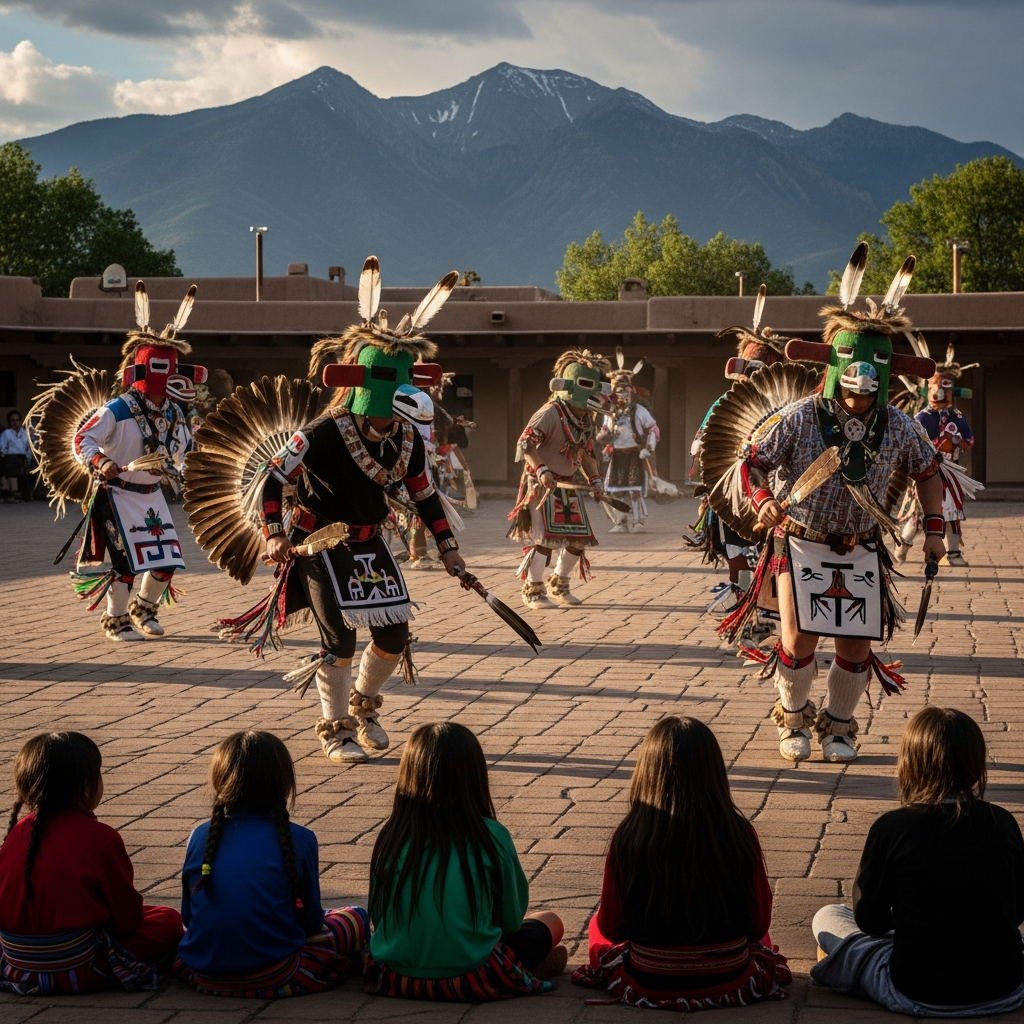
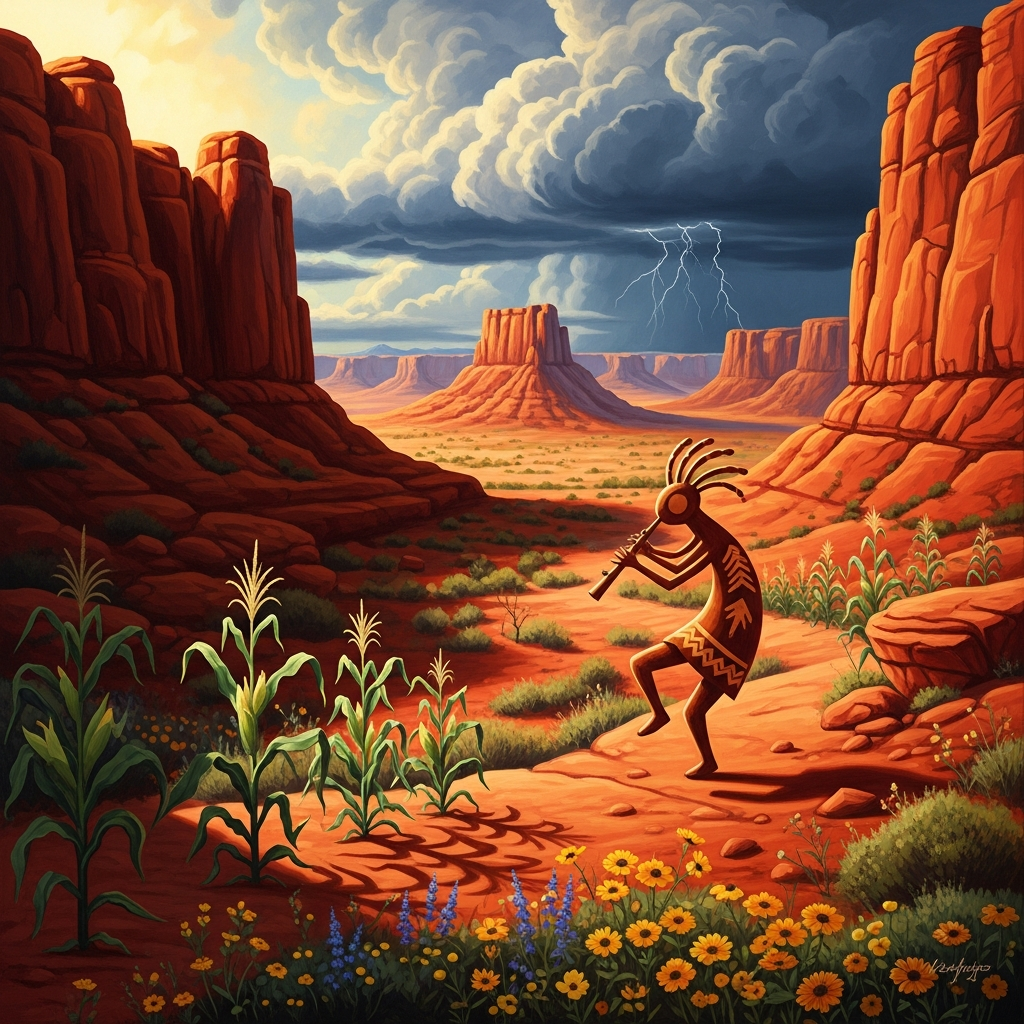
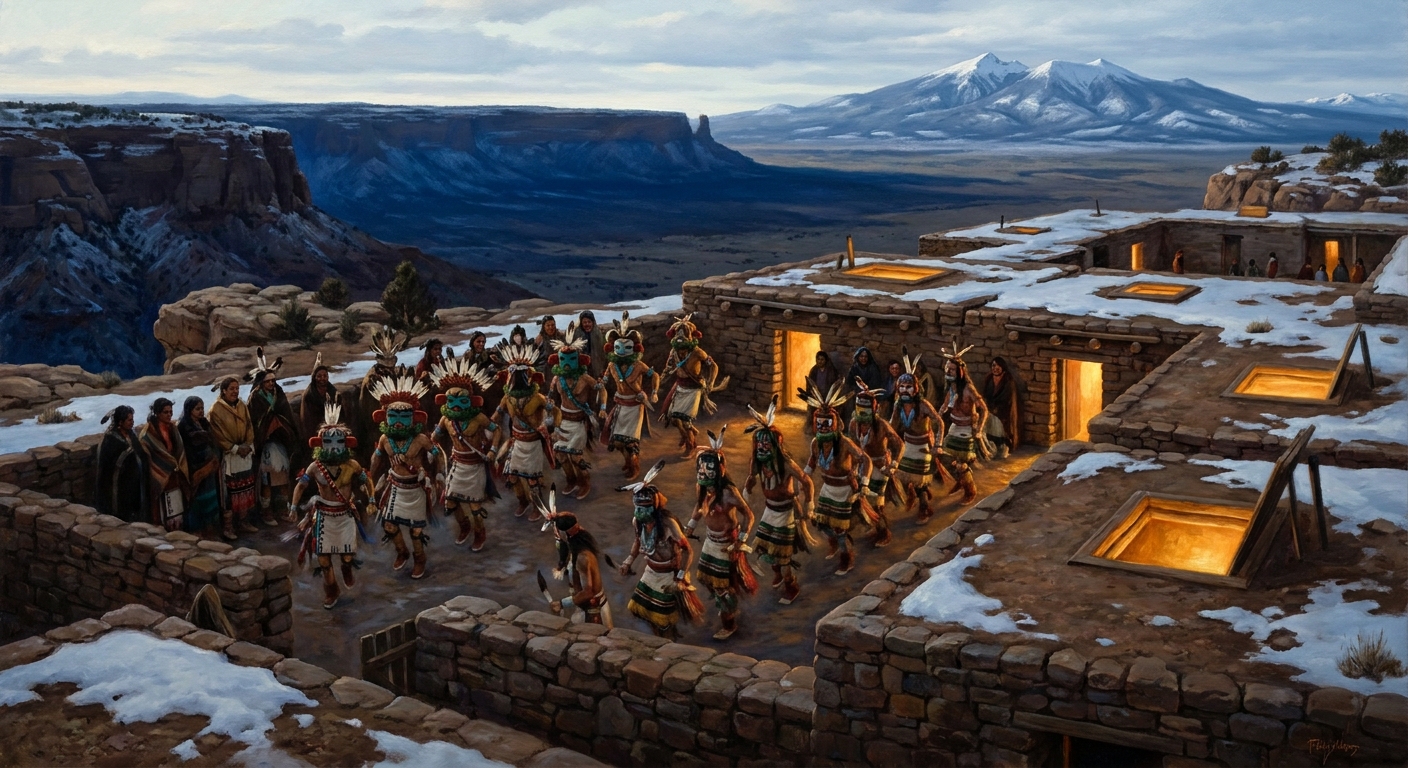
She gives them the ceremonial cycle — the Kachina ceremonies for rain, the Soyal for winter, the Niman for summer — and tells them that as long as the ceremonies are kept, the world will hold. As long as someone in the village knows the songs, the thread between the people and Taiowa will not break.
Then she goes back to her place.
The sipapu in the floor of every kiva is the hole she came through. It is small and covered with a wooden plug, and at certain ceremonies the plug is removed and the beings of the lower worlds are invited to enter through it, and the songs of this world go down through it into the earth.
The thread is still there.
It has never broken.
Echoes Across Traditions
Entities
- Spider Grandmother (Kókyangwúti)
- Taiowa (the Creator)
- Sotuknang (the nephew of Taiowa)
- the Hopi people
- the sipapu
Sources
- Frank Waters, *Book of the Hopi* (Viking Press, 1963)
- Ekkehart Malotki, *Hopi Animal Tales* (University of Nebraska Press, 2001)
- Alfonso Ortiz, ed., *Handbook of North American Indians, Vol. 9: Southwest* (Smithsonian, 1979)