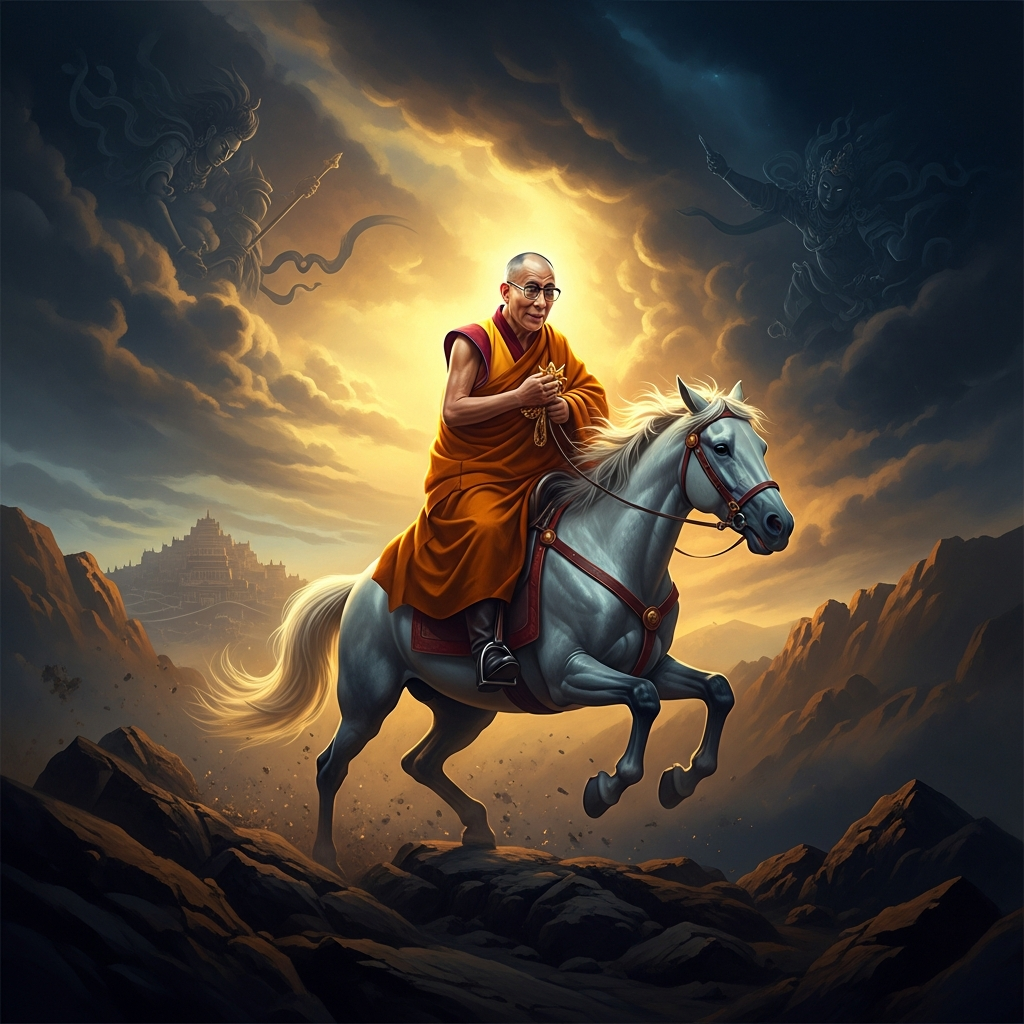
The Dalai Lama Flees Lhasa
17 March 1959 · Lhasa, Tibet, across the Himalayas to Tawang, Arunachal Pradesh, India
Contents
March 1959. The 23-year-old 14th Dalai Lama disguises himself as a soldier, slips out of the Norbulingka Palace on a moonless night, and crosses the Himalayas on foot in winter. Twenty thousand Tibetans have gathered in the streets to shield him. He will not return.
- When
- 17 March 1959
- Where
- Lhasa, Tibet, across the Himalayas to Tawang, Arunachal Pradesh, India
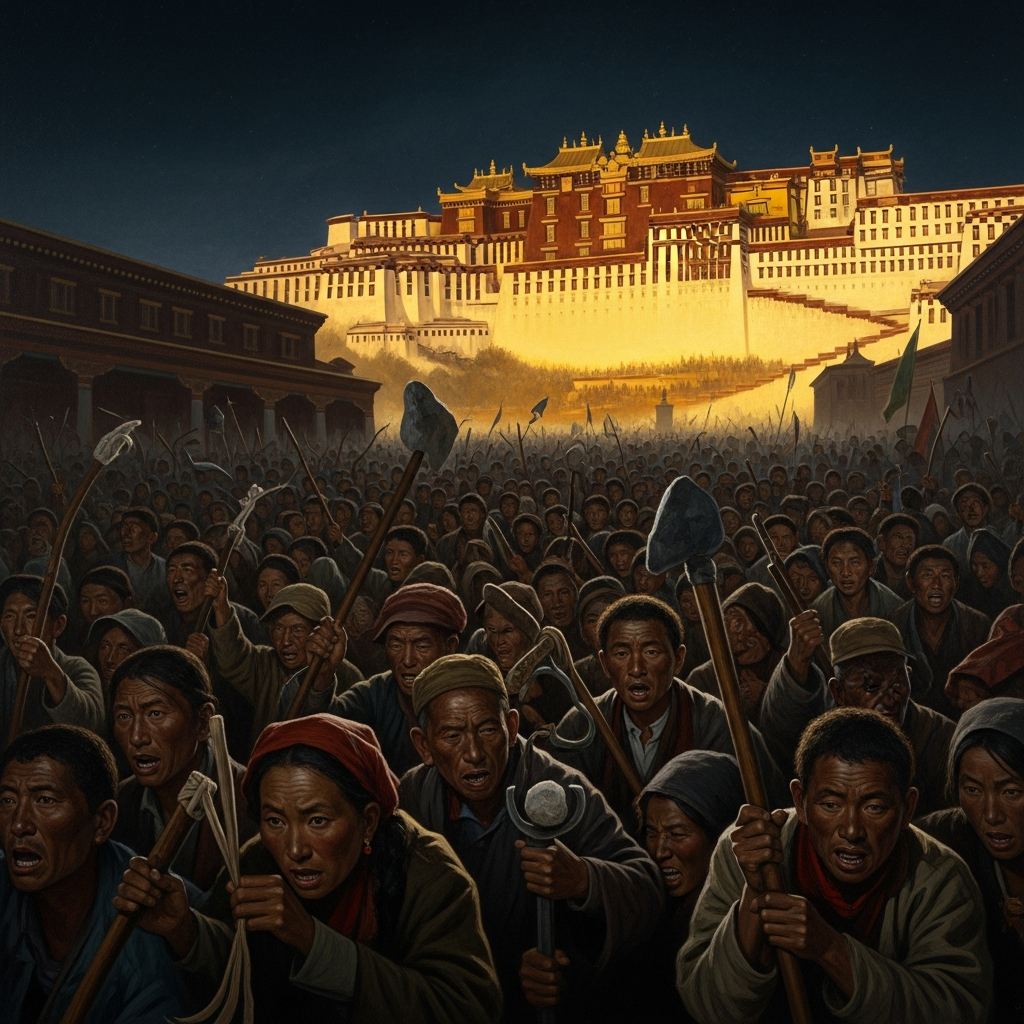
The rumor arrives on March 10, 1959, and by dawn twenty thousand Tibetans are standing outside the Norbulingka Palace.
The rumor is specific: the Chinese military command in Lhasa has summoned the Dalai Lama to a meeting at the military camp, unescorted, without his customary bodyguard, without the ceremonial protocols that attend a head of state. The Tibetan population understands what this means. They have watched the People’s Liberation Army consolidate control over their country for nine years, since the Seventeen Point Agreement of 1951 brought Tibet formally under the People’s Republic. They have watched the eastern Tibetan province of Kham erupt in armed resistance in 1956 and be suppressed with air bombardment. They know what happens to Tibetan leaders who accept unescorted invitations to Chinese military camps.
They come to stand between him and the car that will take him.
By midday twenty thousand people surround the palace. By nightfall the number is larger. They are mostly unarmed — monks, merchants, nomads, housewives from the Lhasa lanes — and they are forming a human shield around a twenty-three-year-old man who is, in their understanding, the eighty-third incarnation of the Bodhisattva of Compassion in a lineage that has run continuously since the 14th century. He is also the political head of state of Tibet. He is also a young man who has been in Beijing sitting with Mao Zedong and has concluded — after Mao told him that religion is poison — that there is no political accommodation possible.
Inside the palace, Tenzin Gyatso is receiving reports that he finds increasingly alarming in a specific way.
The crowd outside is a shield but it is also a target. The Chinese artillery positions that he can see from the upper windows are aimed at the palace. If the crowd does not disperse and the situation develops — and the situation is clearly developing — the palace becomes an artillery engagement. Twenty thousand people.
He has been asking his oracles, consulting his astrologers, sleeping very little. On March 16, an oracle goes into trance and, unusually, grabs a pen and writes, without being asked, the word go. The word go, written in Tibetan script, by a deity possessing a monk in trance. This is not an ambiguous message.
He begins planning the escape.
On the night of March 17, with a new moon making the Lhasa streets as dark as they get, three groups slip out of the Norbulingka through a postern gate. He is in the second group. He wears a soldier’s dark coat over his robes and carries no identifying marks and no religious items. His glasses, which the crowd would recognize immediately, are left in the palace.
He has never been ordinary in the sense of anonymous. Since he was two years old and identified as the incarnation, he has been dressed in saffron, addressed in formal registers, surrounded by ceremony. He walks out into the dark streets of Lhasa as an anonymous soldier and no one stops him.
The crowd is still there, at the front of the palace. He goes out the back.
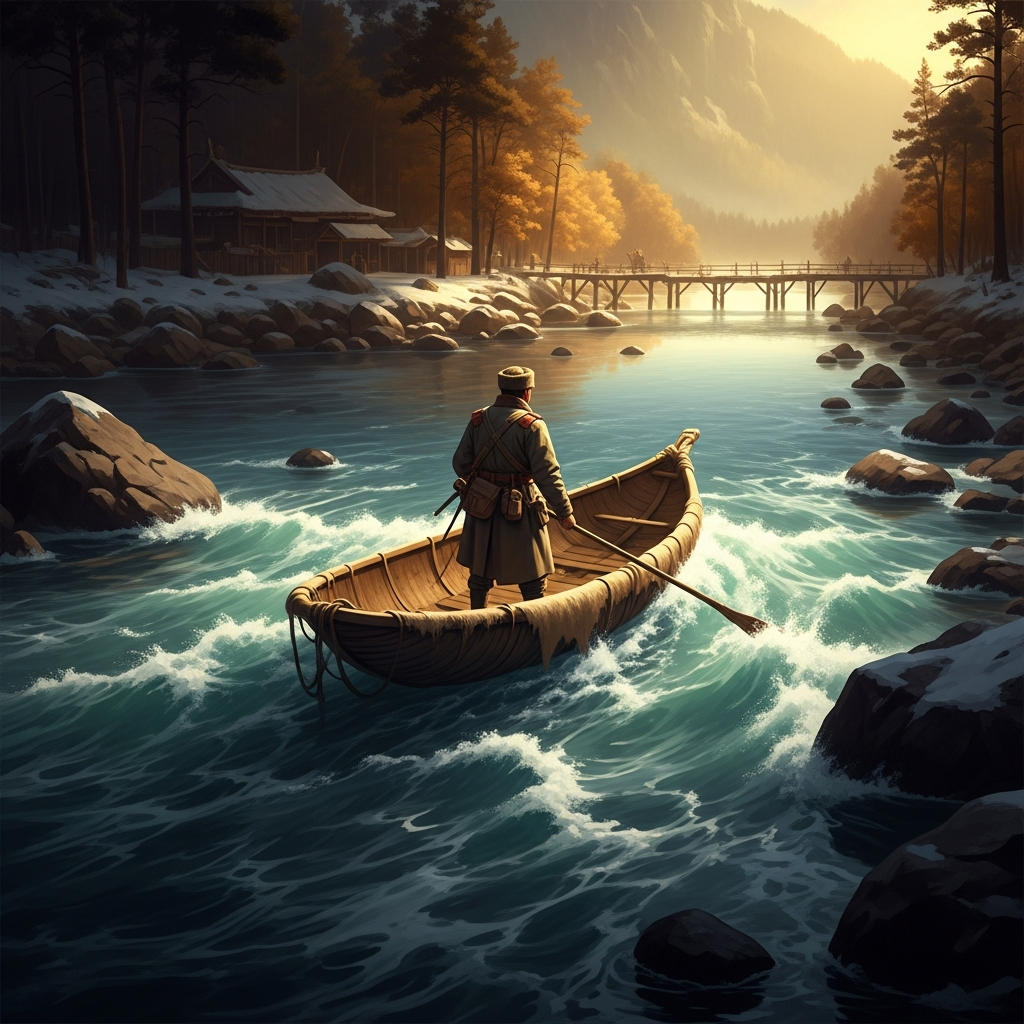
They move south on foot to the Kyichu River, downstream of the Chinese garrison. The river is running high — snowmelt off the plateau — and they cross it on coracles, the round yak-hide boats that Tibetan river-crossings use. He gets into one with three other people and they paddle across in the dark without lights.
On the far bank, horses are waiting. His party — roughly eighty people: family members, ministers, bodyguards, senior monks — rides south toward the Brahmaputra. They cross the Brahmaputra on March 19, again at night, again on coracles, with Chinese patrols on both banks. The crossing is not discovered.
Then they enter the mountain corridor between Tibet and India: the Kyimtong Lha pass, the Karpo La pass, the Zaro La. It is mid-March at altitude. The snow is deep and the passes are at over seventeen thousand feet. He is twenty-three years old and he has spent most of his life indoors studying texts and receiving officials. He crosses all three passes on horseback and then on foot. One member of the party later describes the cold as the kind that stops your thoughts.
In Lhasa, on March 19, the crowd finally realizes he is gone. The Chinese artillery fires on the Norbulingka Palace on March 20. The palace is destroyed. Several thousand Tibetans die in the shelling and the fighting around it. The Potala Palace — the great dzong above Lhasa that has been the seat of the Dalai Lamas since the 17th century — is occupied by March 26.
He is in the mountains, riding toward India, and he has a radio. He receives the reports.
He composes a statement, sitting on a hillside in a wind that makes writing difficult, formally repudiating the Seventeen Point Agreement. He is no longer attempting to work within the Chinese framework. He is now, officially, a government in exile.
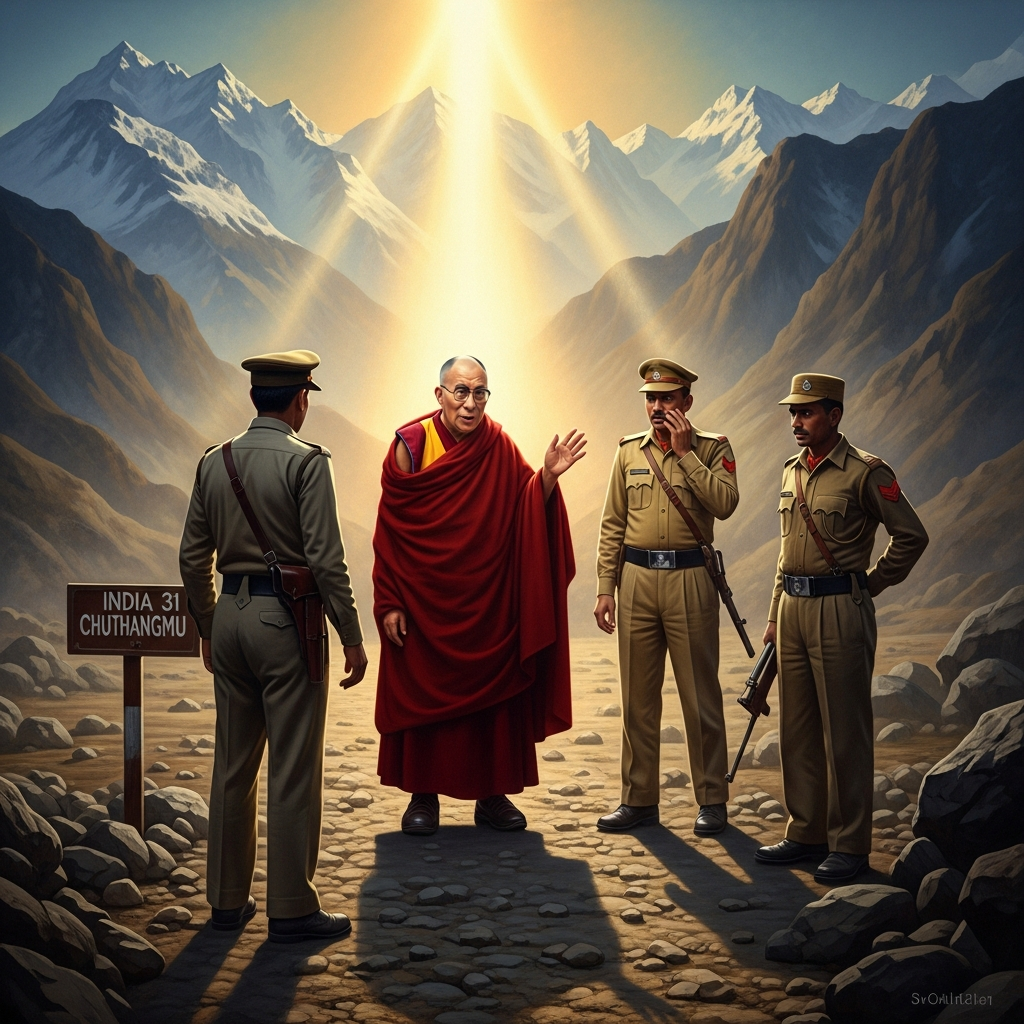
He crosses the Indian border at Chuthangmu on March 31, 1959. The crossing takes fourteen days from Lhasa. He is met by Indian border guards who do not recognize him. He tells them who he is. There is a silence.
Nehru, the Indian prime minister, has been watching the situation since March 10. He has been under pressure from Beijing not to grant asylum. He grants asylum anyway, citing both legal obligation and what he calls the obvious necessities of common humanity. The Dalai Lama is transported to the hill station of Mussoorie, in the Uttarakhand hills above Dehra Dun, and then, when Nehru identifies a more permanent location, to Dharamsala — a former British hill station above the Punjab plains, elevation 1,460 meters, surrounded by cedar forest and visible from the plains below.
He has been told he can use it. He will live there for the next seven decades.
In Dharamsala he establishes a government in exile with a democratic constitution — the first democratic structure in Tibetan political history — and begins a teaching ministry that will eventually carry him to sixty countries. He learns English. He studies quantum physics. He meets with the neuroscientists who want to measure what meditation does to the brain. He accepts the Nobel Peace Prize in Oslo in 1989 and uses the speech to call for a Zone of Ahimsa — non-violence — across the entire Himalayan plateau.
He does not return to Tibet. As of 2026 he is ninety years old. The question of his reincarnation — who will identify the next Dalai Lama, and how, and under whose authority — is the subject of active dispute between the Tibetan Buddhist tradition and the Chinese government, both of whom claim the right to manage the succession.
The crowd that stood outside the Norbulingka Palace on the night of March 17, 1959, protected a young man who was already gone. This, too, is a teaching the tradition preserves: the protection was real and the form it took was not what anyone expected, and both of these things were true simultaneously.
The fourteenth Dalai Lama is the most recognizable Buddhist teacher alive. His country is occupied. The paradox that Tibetan Buddhism is more widely practiced in 2026 than it was in 1959 is the kind of paradox his tradition was built, over fourteen centuries, to hold.
Scenes
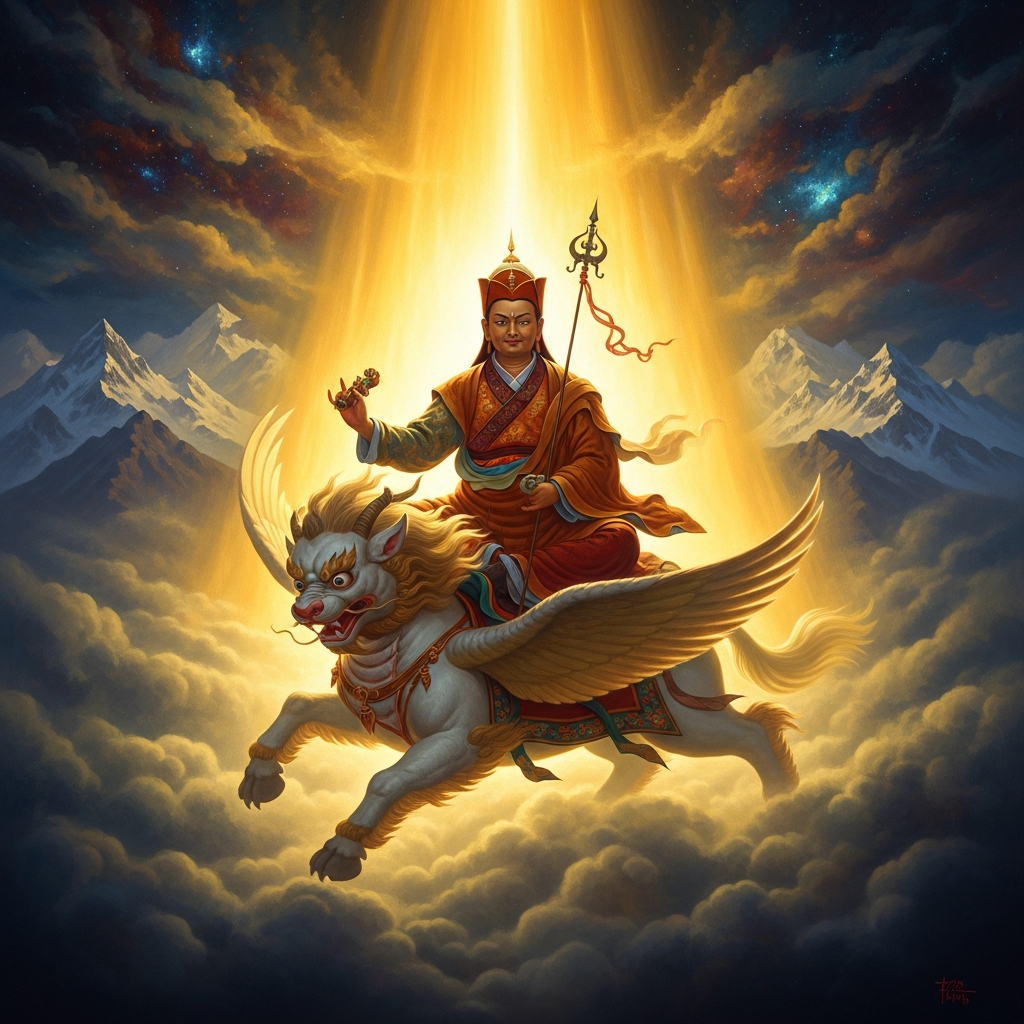
The crowd outside Norbulingka Palace on the night of March 17, 1959
 Generating art…
 The crossing of the Kyichu River at Ramache, downstream of the Chinese garrison, on a coracle of yak-hide
 Generating art…
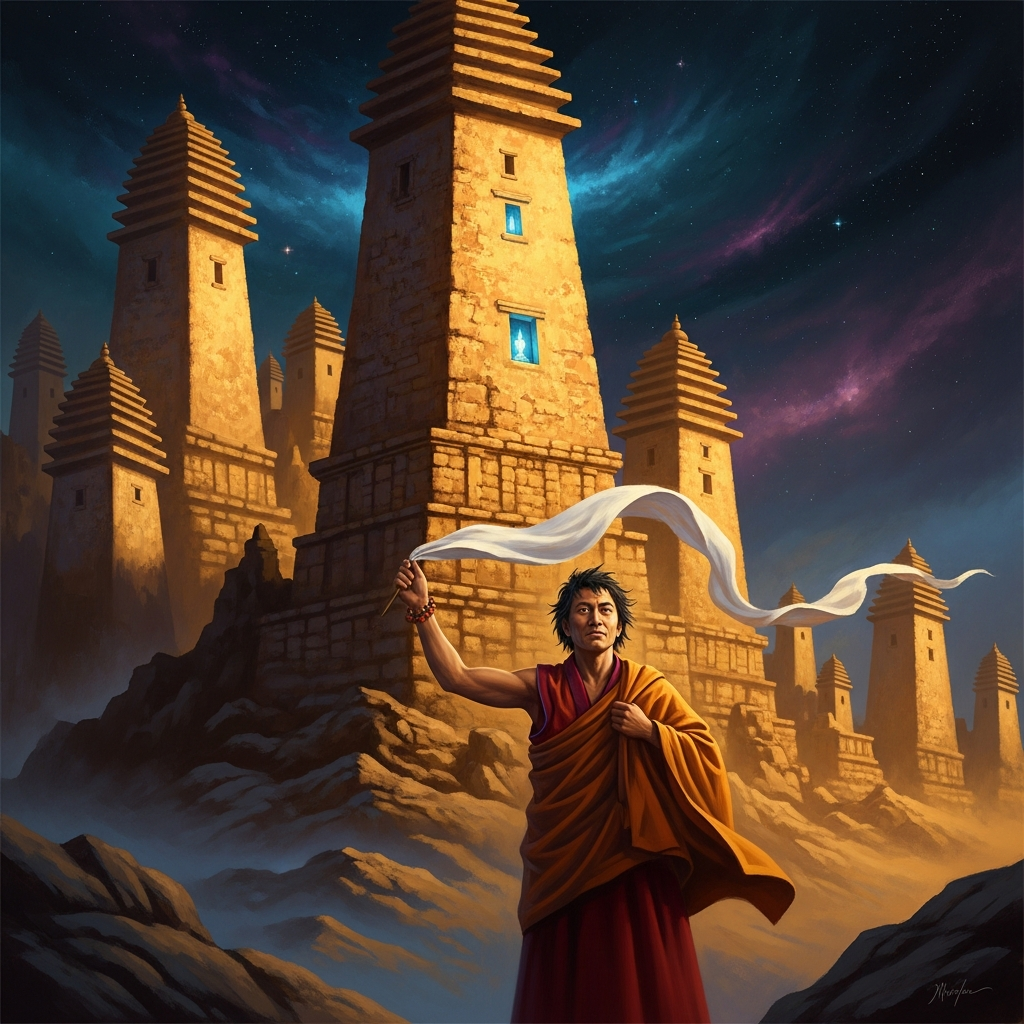
 He crosses the Indian border at Chuthangmu on March 31, 1959
 Generating art…
 Echoes Across Traditions
Entities
- Tenzin Gyatso
- 14th Dalai Lama
- Panchen Lama
- Nehru
Sources
- Tenzin Gyatso (14th Dalai Lama), *Freedom in Exile: The Autobiography of the Dalai Lama* (HarperCollins, 1990)
- John Avedon, *In Exile from the Land of Snows* (Knopf, 1984)
- Melvyn Goldstein, *A History of Modern Tibet, Vol. 3: The Storm Clouds Descend, 1955-1957* (University of California Press, 2014)
- Patrick French, *Tibet, Tibet: A Personal History of a Lost Land* (Knopf, 2003)
- Tsering Shakya, *The Dragon in the Land of Snows: A History of Modern Tibet Since 1947* (Columbia University Press, 1999)