Exu
Messenger, Trickster, and the Most Misunderstood Spirit in the Diaspora
Combat Profile
Abre Caminhos
opens sealed paths and reveals hidden crossroads, allowing passage through barriers between worlds and manifesting unexpected opportunities or obstacles
Guardião das Encruzilhadas
inhabits all liminal spaces and thresholds, granting mastery over negotiation, commerce, sexuality, and the boundary between chaos and order
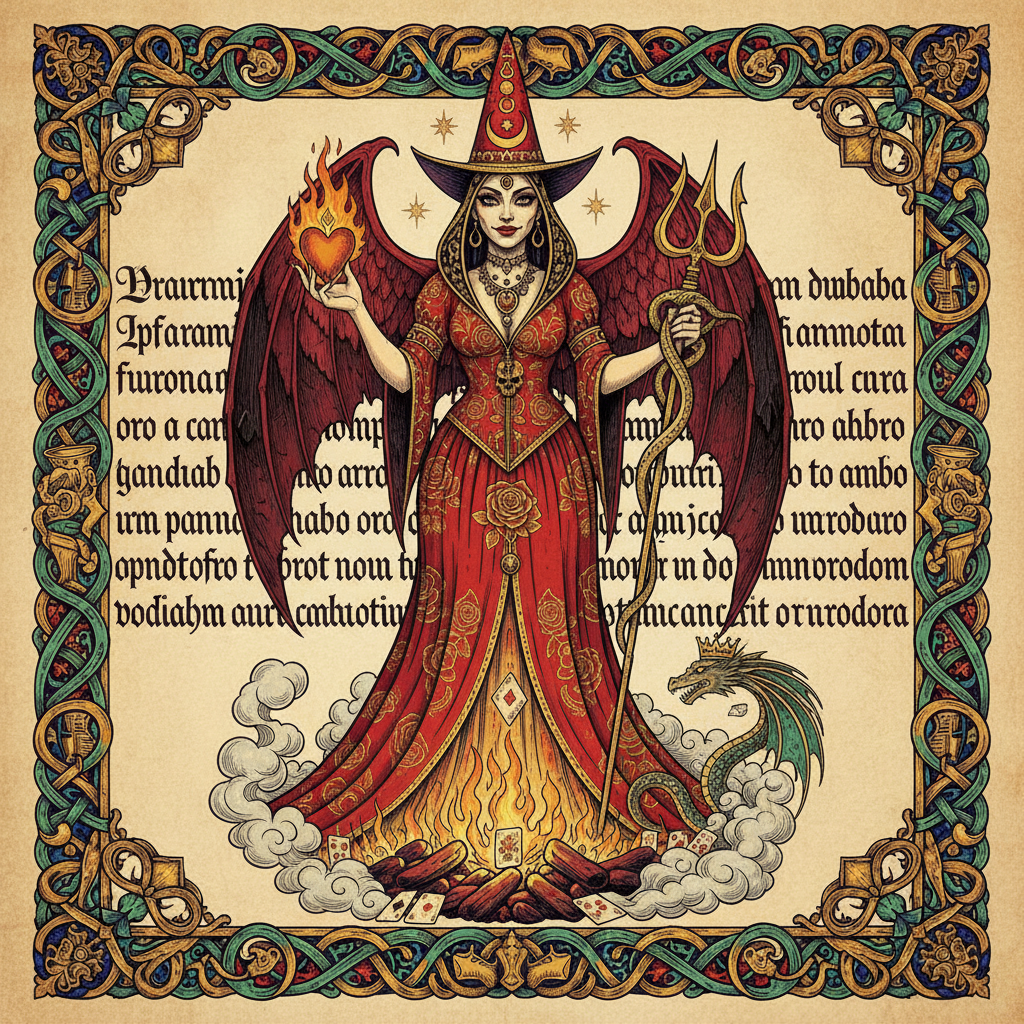
Misrepresentation. No spirit in the African diaspora has suffered more from willful misreading than Exu. Catholic missionaries identified him with the Devil because of his association with sexuality, the crossroads, and transgression. This identification -- which is theologically illiterate -- reshaped his presentation in Umbanda, where the "left-side" Exus became genuinely demonic figures. The original Yoruba Eshu was not the Devil. What happened to Exu in Brazil is the story of colonialism's effect on theology
“Exu is the one who makes the path passable. He is also the one who closes the road and makes you find another way. Both are his gifts.” — Candomblé tradition
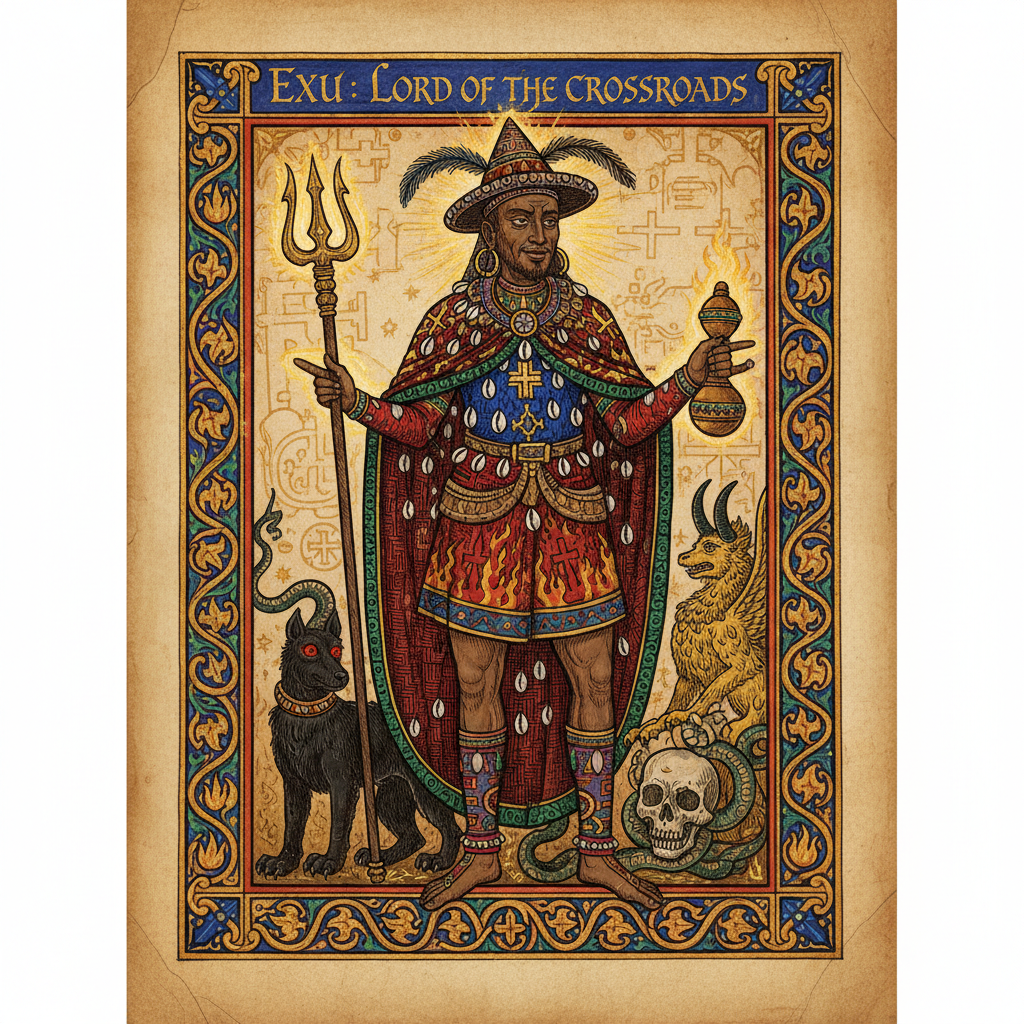
Lore: Exu’s story is one of the most instructive theological case studies in this entire compendium: a case study in how colonialism deforms indigenous spiritual traditions from the outside, and how those traditions respond. Eshu in Yoruba tradition (see Yoruba.md) is the divine messenger, the trickster, the guardian of the crossroads — morally complex but fundamentally necessary, the cosmic principle that prevents the universe from becoming rigid. When Catholic missionaries encountered Eshu in Brazil, they saw his association with sexuality, transgression, the left hand, and the crossroads — and they mapped him onto their existing category: Satan. This identification was catastrophic and deliberate. By labeling Eshu as the Devil, they made Candomblé worship equivalent to Satanism in the eyes of Brazilian law and society. The tradition survived by adapting.
In Candomblé, Exu retained most of his Yoruba character. He is the messenger, the opener, the cosmic hinge on which all ceremony turns. Every Candomblé session begins with “padê de Exu” — the propitiation ceremony that sends Exu away to the crossroads so that the main ceremony can proceed without disruption. This is not banishing a demon. It is feeding a respected essential figure and asking him to hold his post at the gate while the congregation meets.
In Umbanda, Exu’s character split under the pressure of the Spiritist theology that Umbanda absorbed. The “Exus” of Umbanda — Exu Caveira (Skull), Exu Tranca-Ruas (Lock-the-Streets), Exu do Lodo (Muddy), Exu Morcego (Bat) — are not precisely Yoruba Eshu. They are spirits who work in the moral margins, who carry out work that gentler spirits won’t, who understand the streets, the prisons, the brothels, and the spaces where official religion refuses to go. Whether this represents corruption or evolution is itself a live theological debate within the tradition.
Parallel: Exu is Eshu (see Yoruba.md) is Papa Legba (see Haitian-Vodou.md) — the same crossroads spirit in three different countries, three different names, three different faces. The evolution is itself the teaching: the same divine principle takes the shape that each context requires. In Nigeria he is the cosmic trickster; in Haiti he is the old man who guards the gate; in Brazil he is simultaneously the sacred prerequisite of every ceremony AND a figure Christians call demonic. That the same deity can be angel and devil depending on which tradition is speaking is not a theological problem — it is a theological fact about the relationship between the sacred and the culturally determined. Hermes becomes Mercury becomes a crossroads-demon in medieval Christian demonology. Exu is that transformation observed in real time, in living tradition.
2 min read
In Candomblé: nothing counters Exu -- he is the prerequisite for everything else. No ceremony, no prayer, no ritual works unless Exu opens the path. Neglect him at your peril. In Umbanda's framework: his "dark" forms can be addressed through the mediation of higher spirits and through proper ritual protocol
Roger Bastide, *The African Religions of Brazil* (1978); Stefania Capone, *Searching for Africa in Brazil* (2010); J. Lorand Matory, *Black Atlantic Religion* (2005)