Combat Profile
Xiuhcoatl
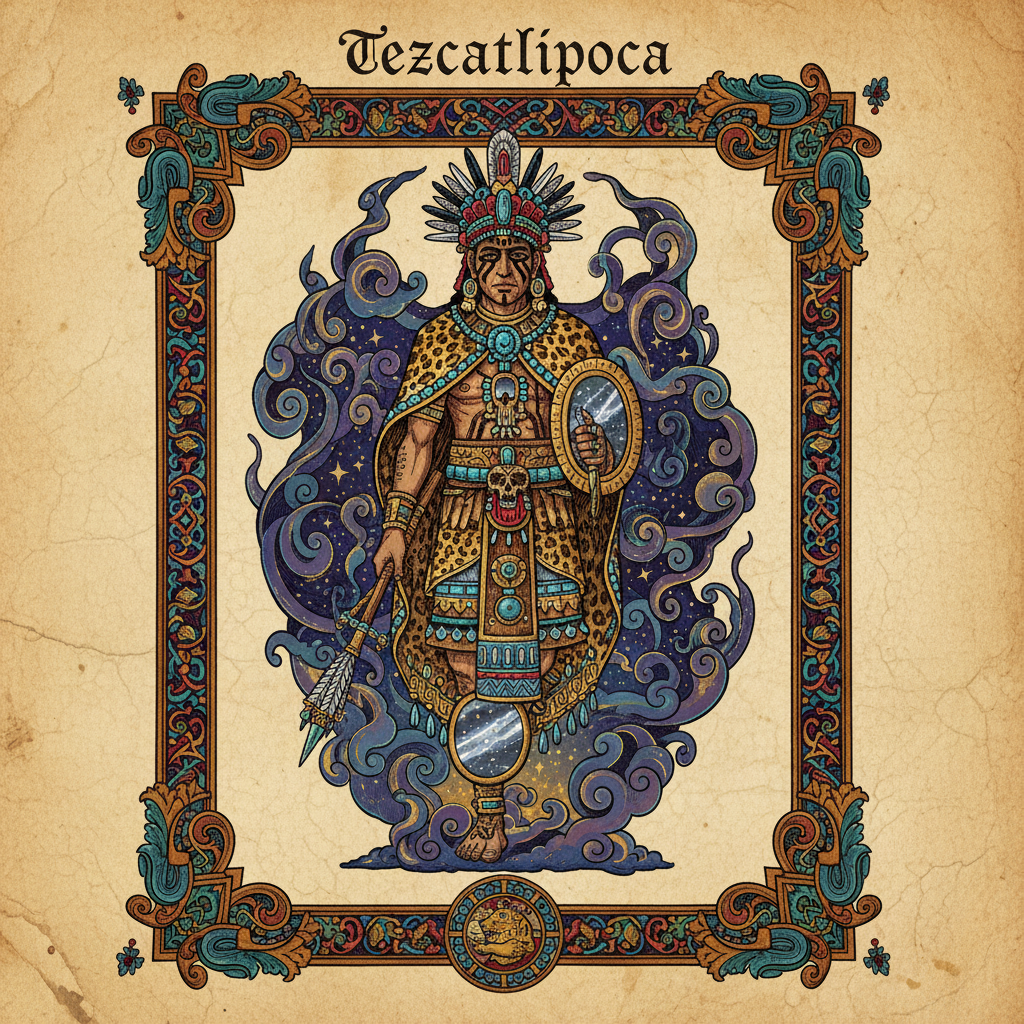
Huitzilopochtli wields the turquoise serpent of fire, the weapon of dawn, decapitating the moon and scattering the stars; the sun itself rises in the wake of the strike.
Patron of the Mexica
Huitzilopochtli's chosen people cannot be defeated as long as his temple drinks; his demand for blood is the cost of empire and the engine of dawn.
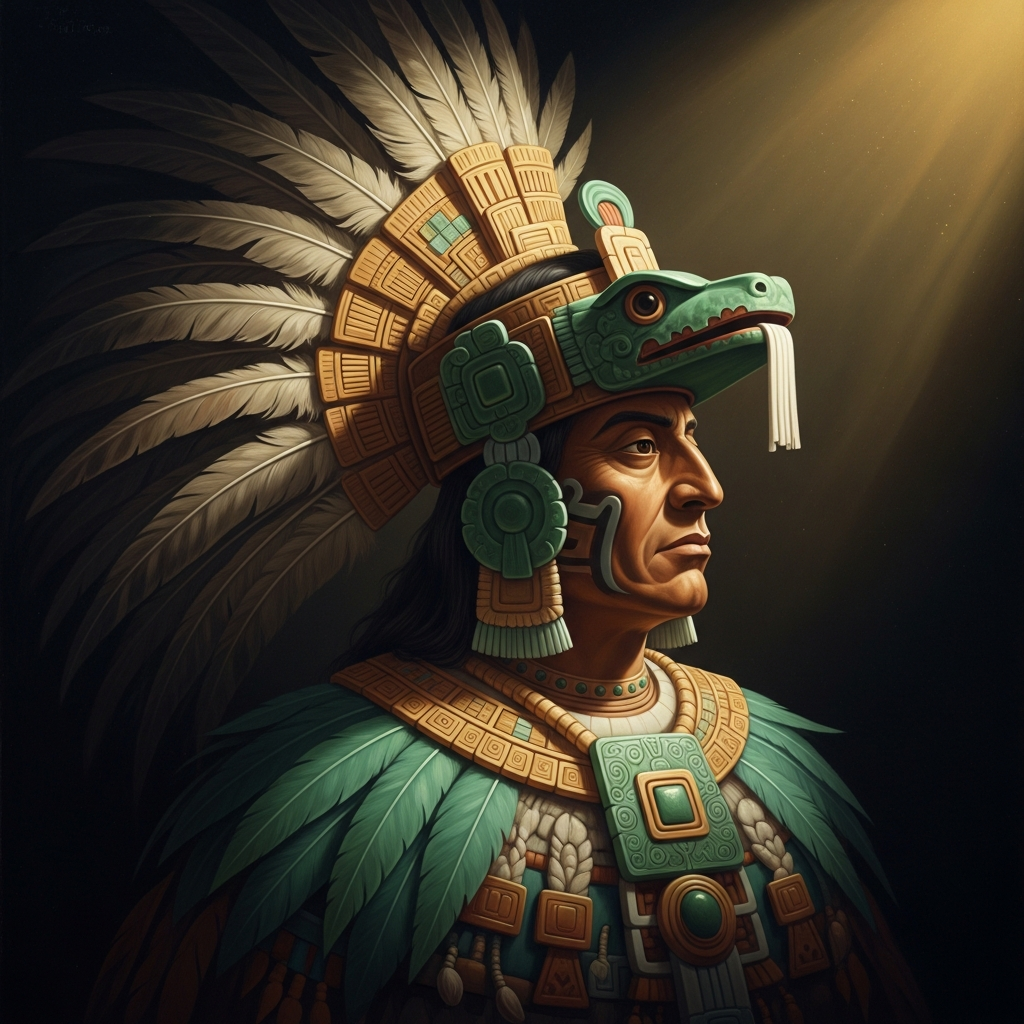
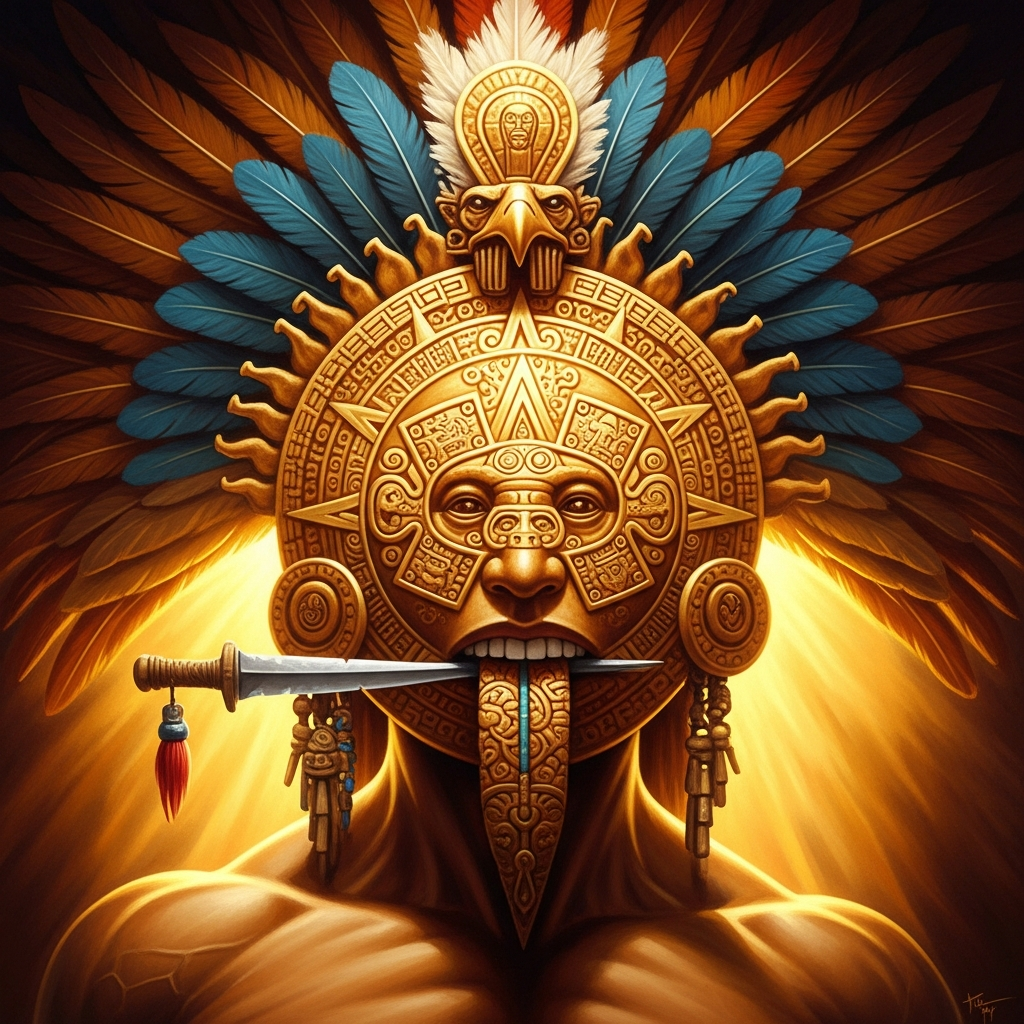
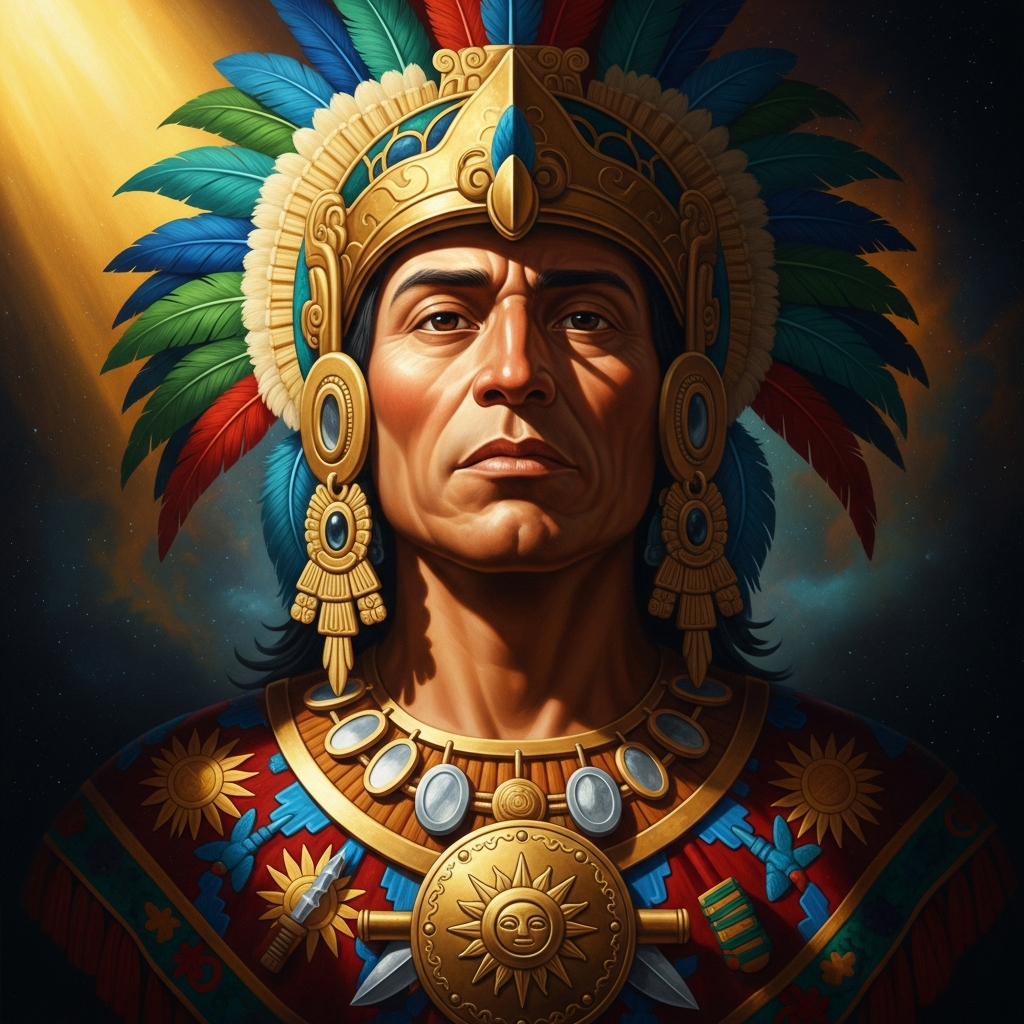
Huitzilopochtli (“Hummingbird on the Left,” or “Hummingbird of the South”) is the patron god of the Mexica — their tribal deity, the one who led them out of Aztlan, the one whose vision identified the founding spot of Tenochtitlan, the god to whom the highest temple of the Templo Mayor was dedicated. He is sun, war, and sacrifice in a single blazing form. His birth myth is among the most violent in world mythology: his mother, Coatlicue (“Skirt of Serpents”), was magically impregnated by a ball of feathers that fell from heaven; her existing daughter Coyolxauhqui (the moon goddess) and her four hundred sons (the southern stars, Centzon Huitznahua) were so enraged at the disgrace that they marched up the holy mountain of Coatepec to murder their pregnant mother. At the last moment Huitzilopochtli was born — fully grown, fully armed, brandishing the Xiuhcoatl, the turquoise serpent of fire. He decapitated Coyolxauhqui and dismembered her, scattering her body down the mountainside. Then he hunted down the four hundred southern stars one by one.
This is the foundational sacrifice. The Templo Mayor itself was the Coatepec — the snake-mountain — recreated as architecture. At its base lay the great stone disk of dismembered Coyolxauhqui (rediscovered in 1978, triggering the modern excavations). At its summit, victims were offered to Huitzilopochtli, their hearts torn out, their bodies cast down the steps to lie at the goddess’s stone in mimetic re-enactment of the cosmic drama. Every dawn was the moment of his birth. Every dawn required blood. The sun rose because the warrior-god killed his sister again.
Biblical Parallels: Huitzilopochtli’s birth — fully armed, leaping from the womb to slay his enemies — parallels the Greek Athena born from Zeus’s head, but his role as sun-warrior who destroys his sister-moon to inaugurate the day has no precise biblical analogue. The closest Hebrew Bible parallel is YHWH the Ish Milhamah (Man of War, Exodus 15:3) and the divine warrior of the Psalms (Psalm 18). His demand for blood as sustenance inverts the biblical principle that “the life is in the blood” (Leviticus 17:11) — where Israel was forbidden to consume blood because it belonged to God; for the Mexica, the gods required the blood for the same reason.
Cross-Tradition: Huitzilopochtli parallels Vedic Indra — the warrior-god who slays the serpent (Vritra) at dawn to release the cosmic waters. He parallels Norse Thor in his hammer-wielding role as defender of the cosmos against the giants. His decapitation of the moon-goddess parallels the Egyptian Set’s mutilation of Osiris — sibling violence as cosmic engine. The dawn-myth of the warrior who must kill his sibling each morning recurs in many Indo-European mythologies.
2 min read