Combat Profile
Kevala Jnana
Attains perfect omniscient knowledge of all past, present, and future, transcending mortal comprehension
Tirthankara Ascendant
Radiates spiritual enlightenment that guides souls toward liberation from the cycle of rebirth
Tirthankar | Jain
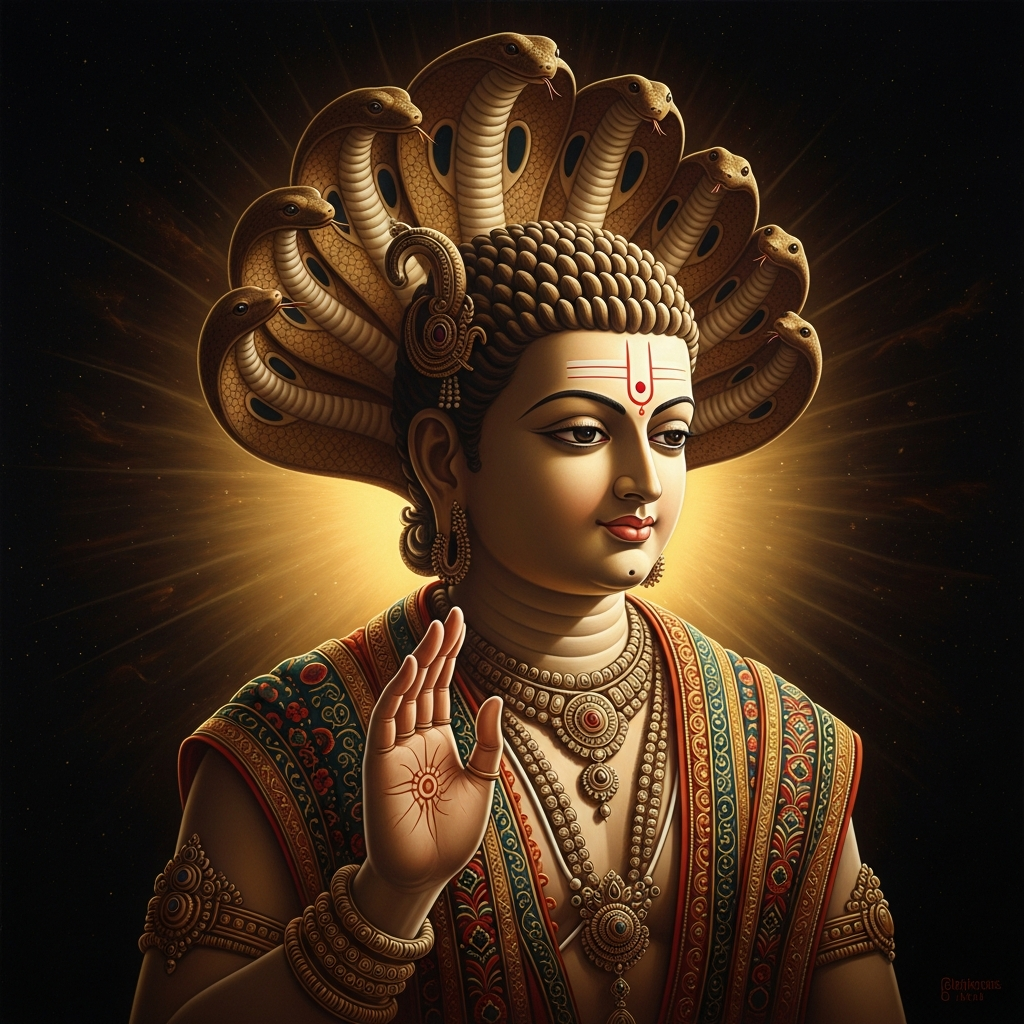
The 23rd tirthankar and the first that most scholars accept as historical, Parsvanatha lived around the 9th–8th century BCE and founded a monastic community that survived unbroken to Mahavira’s time. He taught a fourfold restraint — non-violence, truth, non-stealing, and non-possession — to which Mahavira later added a fifth: celibacy. His symbols are a serpent hood and cobra canopy, and his yakshi attendant Padmavati (associated with serpents) is among the most widely venerated figures in Jain popular devotion.
Parallels: John the Baptist (historically attested precursor whose community feeds into the next great teacher); Elijah (prophet whose tradition is inherited and completed by a successor). See also: Mahavira (Vardhamana), [Yaksha and Yakshi](#yaksha-and-yakshi----the-guardian-attendants)
1 min read