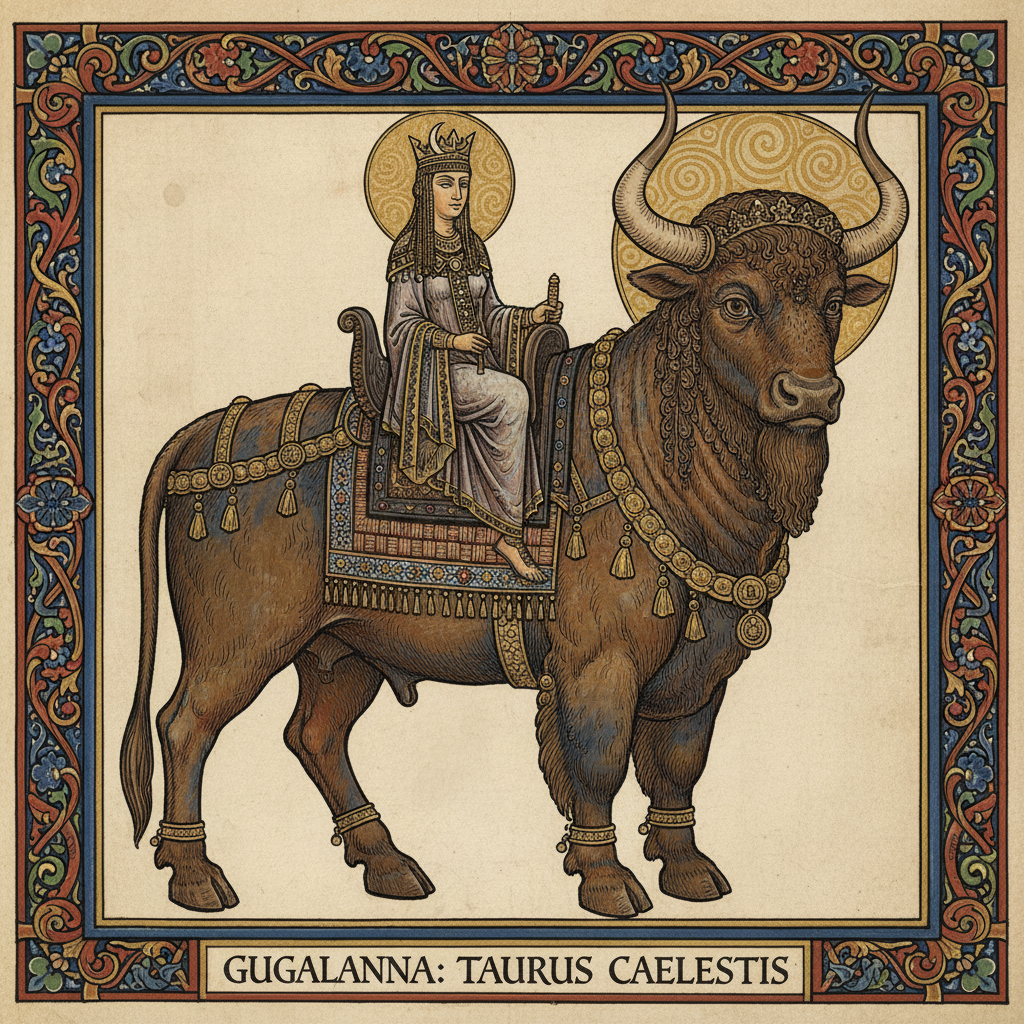
Combat Profile
Celestial Scourge
Gugalanna unleashes devastating divine punishment that strips enemies of protection and inflicts cascading droughts of vitality.
Instrument of Wrath
Gugalanna's presence intensifies all divine judgments and cannot be swayed by mortal persuasion or mercy.
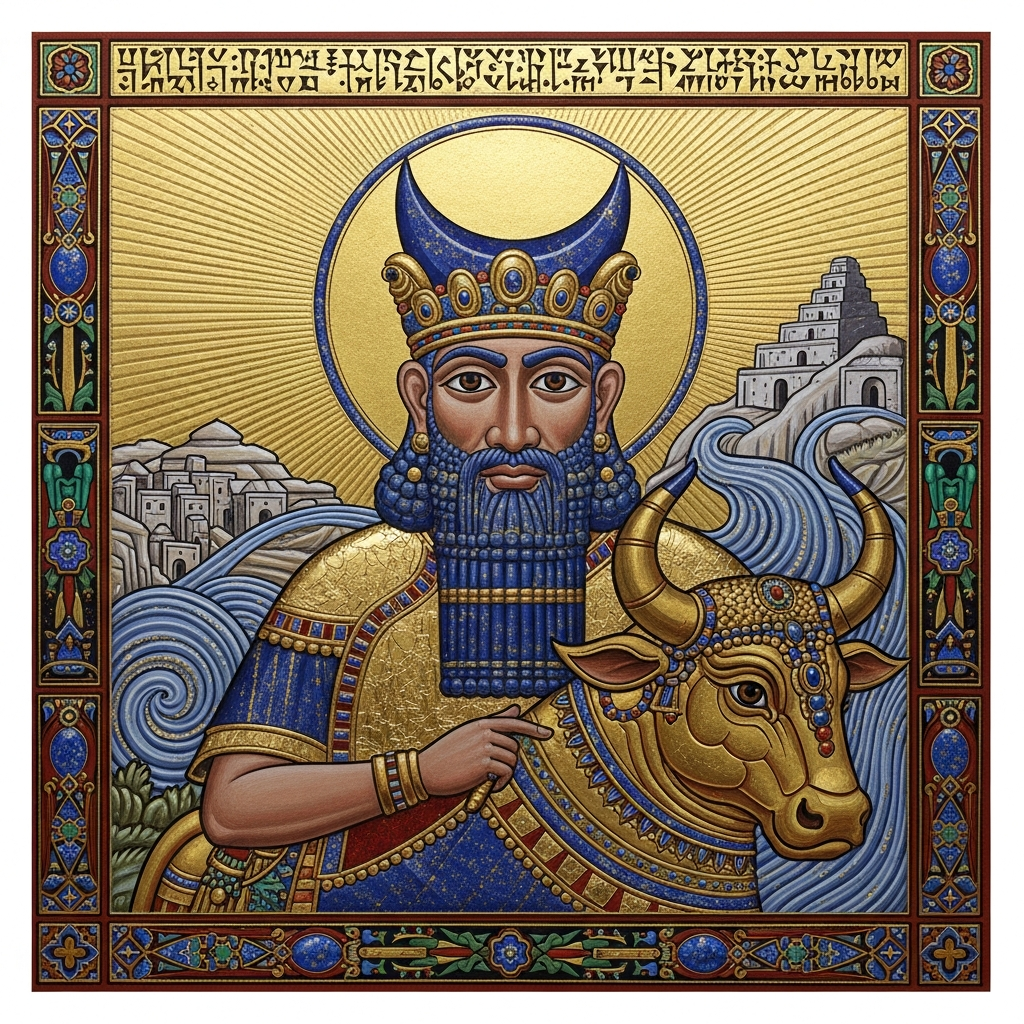
“The Bull of Heaven descended from the sky, bellowing with such fury that the earth trembled. Where his hooves struck, the ground opened. Seven men fell from the pit with each roar. But Enkidu seized his tail, and Gilgamesh drove his sword into its heart.”
Gugalanna is the Bull of Heaven — a celestial weapon sent by Ishtar when Gilgamesh rejects her sexual advances. The bull’s mere presence causes devastation: the ground splits open, and Uruk’s citizens fall into the chasms. But Gugalanna is not particularly intelligent or willful — he is a force of nature, a divine instrument of punishment. Gilgamesh and Enkidu cooperate to kill him: one grabs the tail while the other drives the sword home. The bull’s death enrages Ishtar, who curses Enkidu to die. The theological lesson is crucial: a hero can defy even the gods’ designated punishment, but the cost is always paid. Gilgamesh survives the Bull, but Enkidu dies as a result. The biblical parallel is the Angel of Death in Exodus 12 and 2 Kings 19, who is an instrument of divine wrath, not a negotiating agent. Both traditions recognize that sometimes the gods’ vengeance arrives not as a personal being with motives but as a mechanism — like Gugalanna, like the angels, simply executing divine will.
1 min read
Epic of Gilgamesh VI; Stephanie Dalley, *Myths from Mesopotamia*