Combat Profile
Civilizing Touch
transforms wild or chaotic entities through intimate wisdom, granting them insight and cultural knowledge that permanently alters their nature
Agent of Inanna
radiates an aura of sacred sexuality and divine favor that charms and enlightens those nearby, increasing their wisdom and connection to civilization
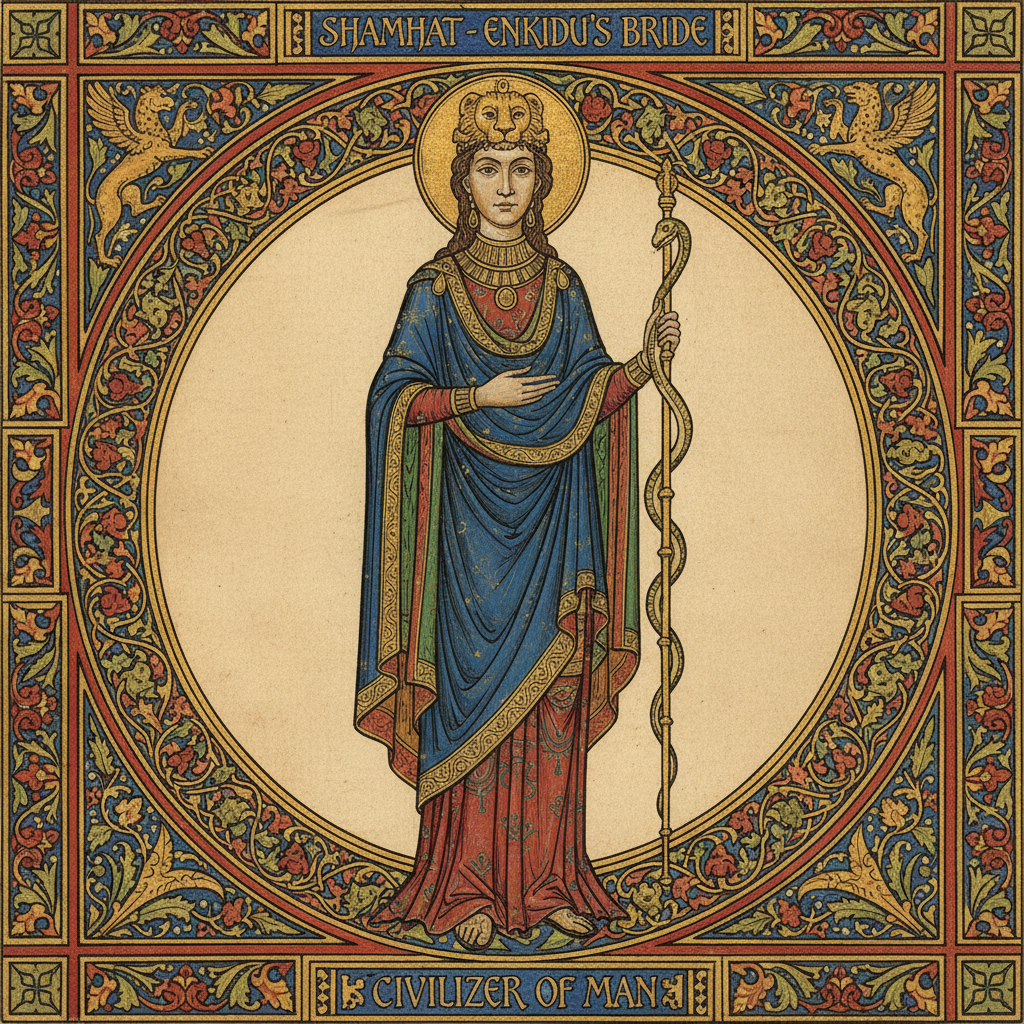
“For six days and seven nights Shamhat and Enkidu made love. When he had had his fill of her charms, he set his face toward his wild beasts. But when the gazelles saw him, they ran away. His body had changed, his understanding was broadened. He returned to Shamhat and sat at her feet, listening to her speak.”
Shamhat is the woman through whom innocent becomes knowledge, the sexual agent who civilizes the wild. In the Gilgamesh epic, she is sent deliberately to seduce Enkidu and sever his connection to the natural world. She succeeds absolutely: after seven days of lovemaking, Enkidu has acquired language, shame, and understanding — he has lost his innocence and his home. The parallel to the serpent and Eve in Genesis is unavoidable: both involve a woman, sexuality, knowledge, and the irrevocable loss of a natural paradise. But Shamhat is not evil — she is doing exactly what she was created to do, the agent through which civilization advances at the cost of innocence. The biblical tradition judges this as a fall; the Mesopotamian tradition neither judges nor celebrates it — it simply states it as fact. Shamhat’s story acknowledges a truth the Bible later struggles with: knowledge, civilization, and sexuality are inseparable, and acquiring one means losing innocence forever.
1 min read
Epic of Gilgamesh I; ETCSL