Combat Profile
Heavenly Illumination
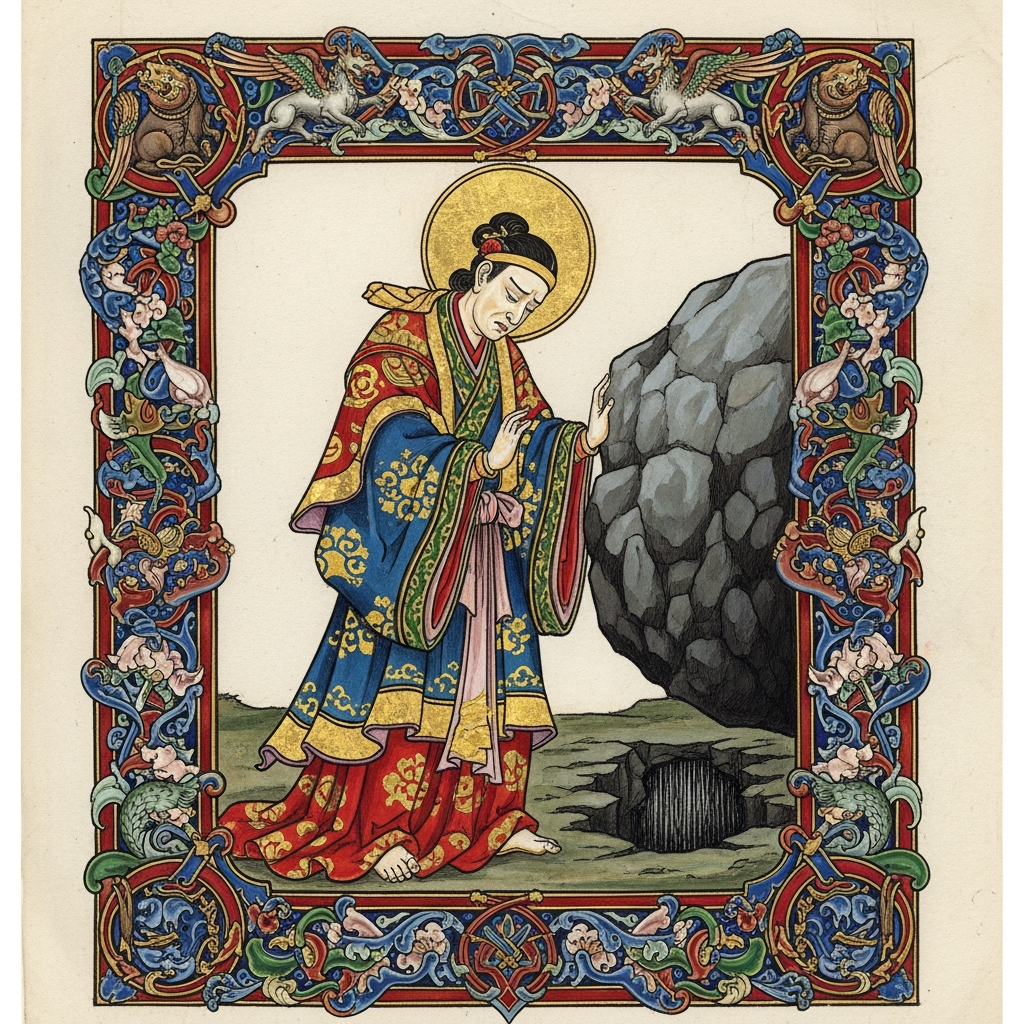
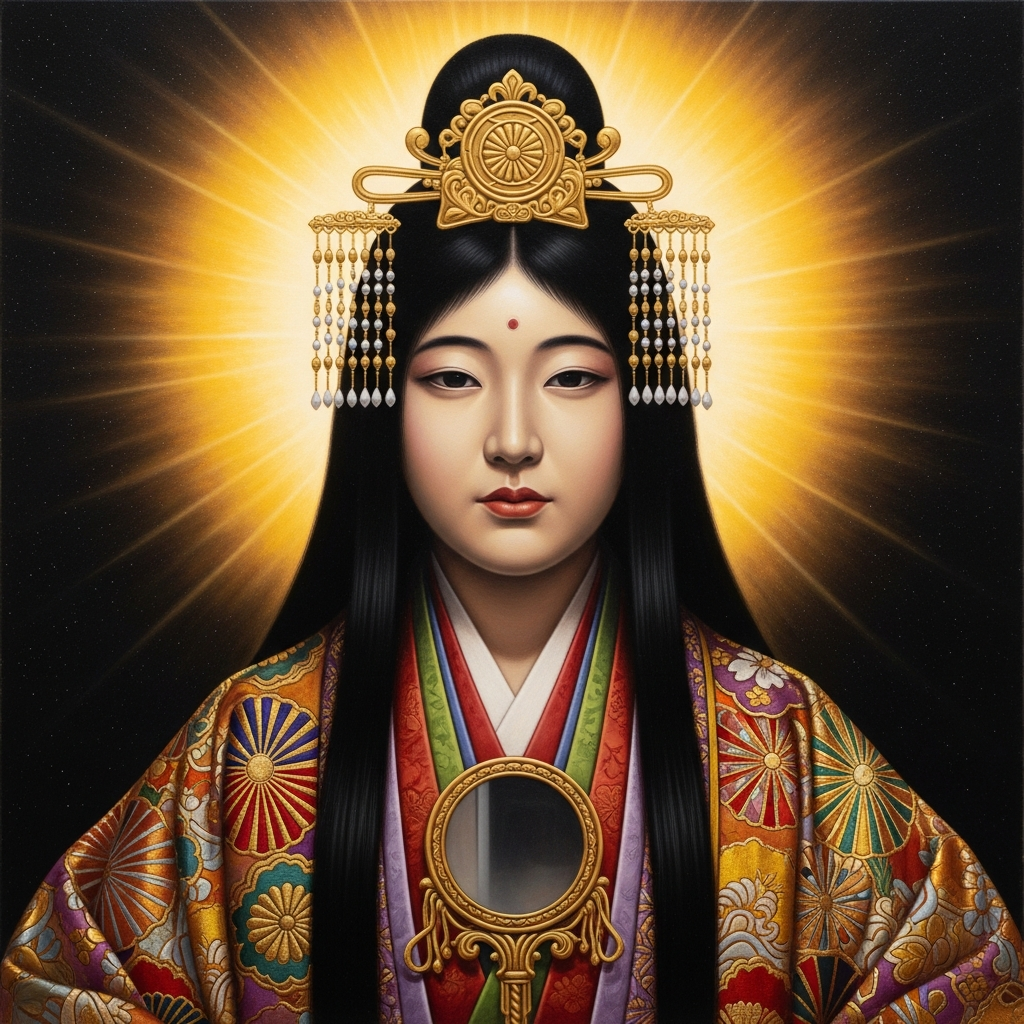
Amaterasu withdraws into the Heavenly Rock Cave, plunging the world into darkness until appeased, then returns with devastating radiance that restores cosmic order.
Divine Ancestry
All mortals of the imperial line draw sustenance and legitimacy from her presence; her light perpetually sustains agriculture, crafts, and the natural cycles of creation.
Susanoo's destructive rampage so distressed her that she withdrew into a cave, plunging the world into darkness -- even the supreme kami can be overcome by grief and rage
“The entire plain of high heaven was darkened, and the whole Central Land of Reed Plains was in complete darkness. Thereupon, the eternal night prevailed.” — Kojiki
Lore: Amaterasu Omikami, the Great August Deity Who Shines in the Heavens, is the supreme deity of the Shinto pantheon and the divine ancestor of the Japanese imperial family — a claim that makes the Japanese imperial house the oldest continuous dynasty in the world, tracing its lineage (in myth) directly to the sun goddess through her grandson Ninigi-no-Mikoto, who descended to earth carrying the Three Imperial Regalia: the mirror Yata no Kagami (representing truth/wisdom), the sword Kusanagi no Tsurugi (valor), and the jewel Yasakani no Magatama (benevolence).
Her most famous myth is the Iwato-gakure — the cave incident. After her brother Susanoo committed a series of escalating outrages in heaven — destroying rice paddies, filling irrigation ditches, flaying a divine horse and hurling its carcass through the roof of her weaving hall (killing one of her attendants) — Amaterasu withdrew into the cave of Ama-no-Iwato and sealed the entrance with a boulder. Without the sun, the world plunged into total darkness. Evil spirits ran rampant. The eight hundred myriad kami gathered before the cave, and the goddess Ame-no-Uzume performed an ecstatic, ribald dance on an overturned washtub, exposing herself so comically that the assembled gods burst into uproarious laughter. Amaterasu, curious why anyone could be laughing when the world was in darkness, cracked open the cave. The kami held up the sacred mirror (the Yata no Kagami). Seeing her own dazzling reflection, she stepped closer. The strong god Ame-no-Tajikarao seized her arm and pulled her out. Light returned.
This is the most important myth in Shinto. The Yata no Kagami (sacred mirror) is one of the three Imperial Regalia of Japan, kept at the Ise Grand Shrine. The annual festival cycle of Shinto re-enacts the cosmic rhythm of the sun’s withdrawal and return.
Parallel: A supreme sun deity who is also female is extremely rare in world mythology — most solar deities worldwide are male (Ra, Helios, Surya, Sol Invictus). Japan’s choice to place a goddess at the apex of the divine order is culturally distinctive. The sun deity withdrawing and plunging the world into darkness appears in the Hittite myth of Telepinu and in the Greek myth of Demeter’s withdrawal after Persephone’s abduction. The use of laughter and ribaldry to lure back the withdrawn deity is remarkably specific: in the Demeter myth, it is the old woman Baubo (or Iambe) who makes the grieving goddess laugh through obscene gestures. That two unrelated traditions independently arrived at “comic obscenity solves cosmic catastrophe” is either an extraordinary coincidence or evidence of a very deep mythological stratum. In the Buddhist-Shinto synthesis, Amaterasu was identified with Dainichi Nyorai (Mahavairocana), the Cosmic Buddha of radiant light.
2 min read
Susanoo (brother and antagonist); the cave-darkness (her own withdrawal threatened all creation)
*Kojiki* I.14-17; *Nihon Shoki* I; the Ise Grand Shrine traditions