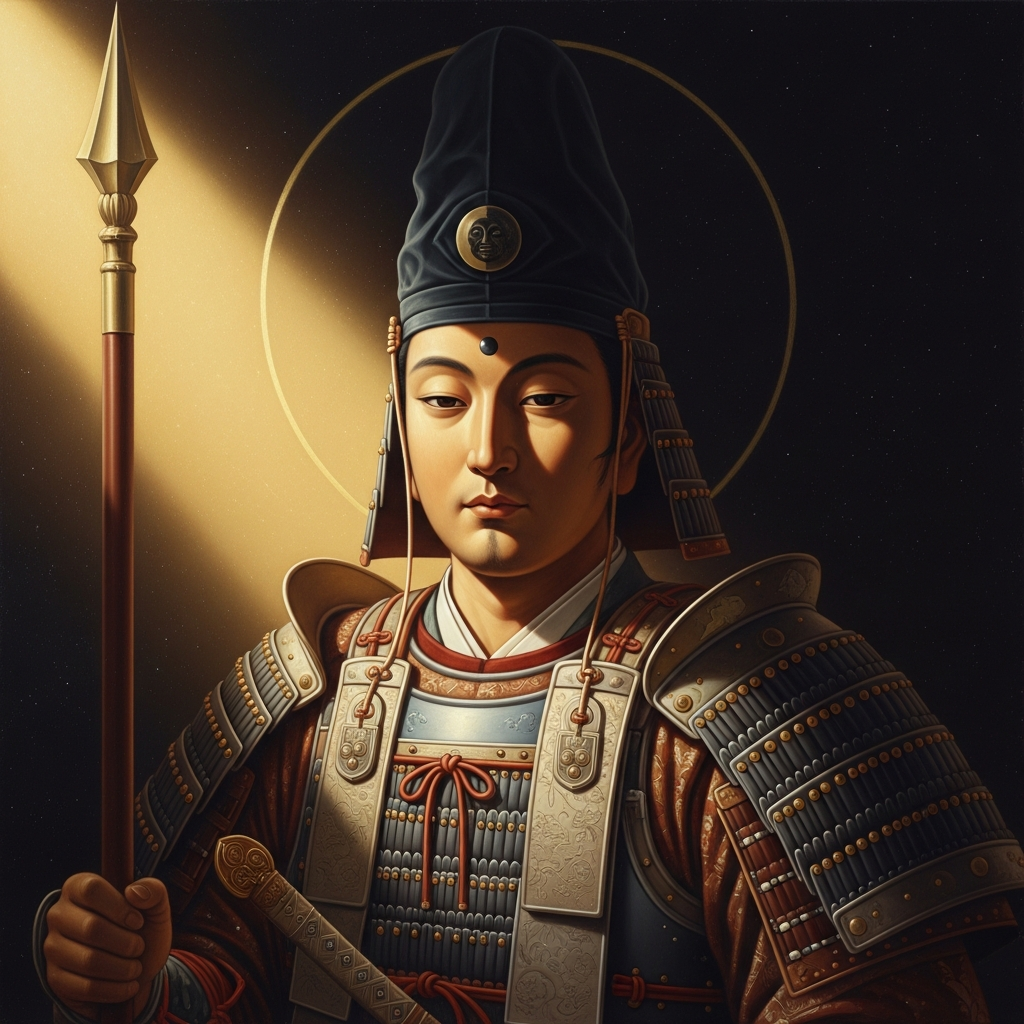
Combat Profile
Lunar Decree
Tsukuyomi manipulates the passage of night and time itself, forcing all combatants to skip their next turn as the moon's cycle advances inexorably forward.
Moon's Order
Tsukuyomi's presence brings perfect predictability; all future actions within combat are revealed to allies and enemies gain no benefit from luck-based effects.
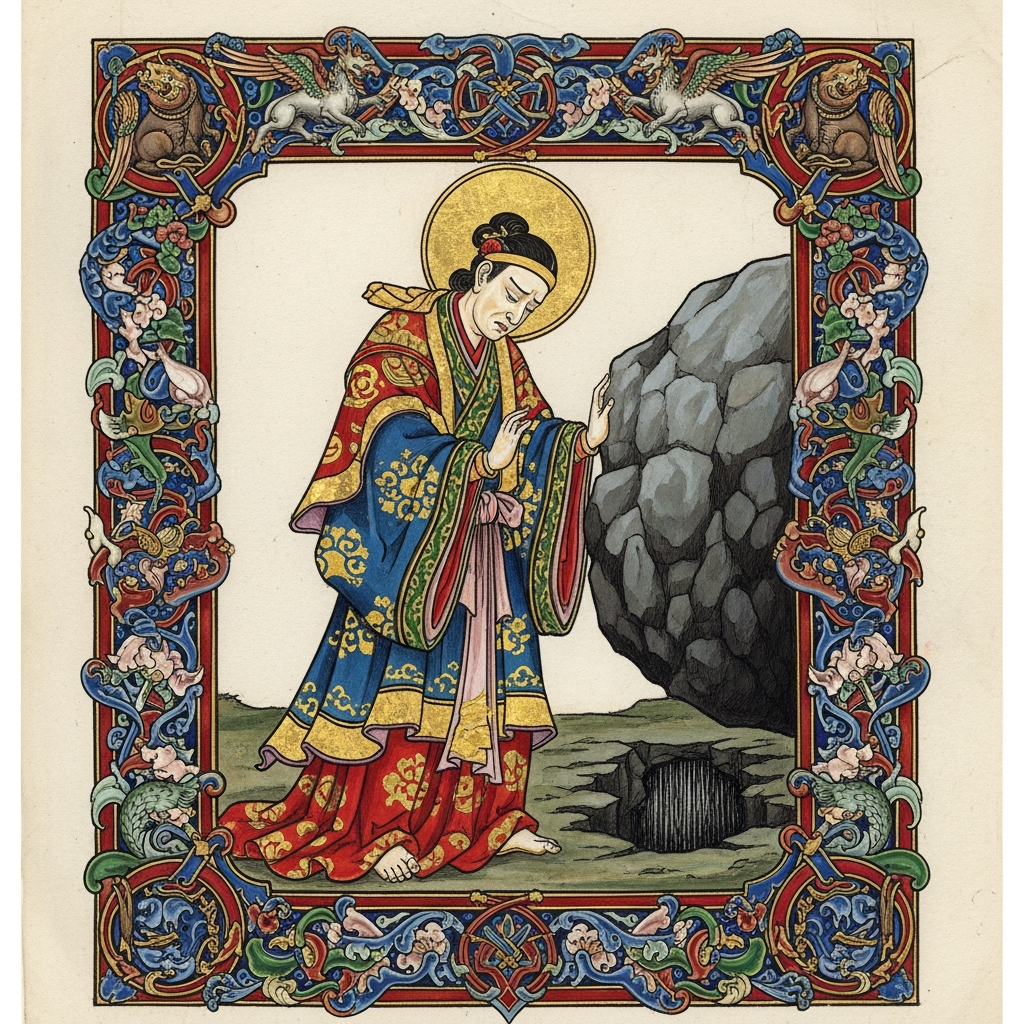
His rigid sense of propriety led him to kill a fellow deity over a perceived insult, resulting in his permanent banishment from the sun's presence
“Amaterasu was greatly angered, and said: ‘Thou art a wicked deity, whom it is not for me to see.’ After that, the Sun and Moon dwelt apart, separated by one day and one night.” — Nihon Shoki
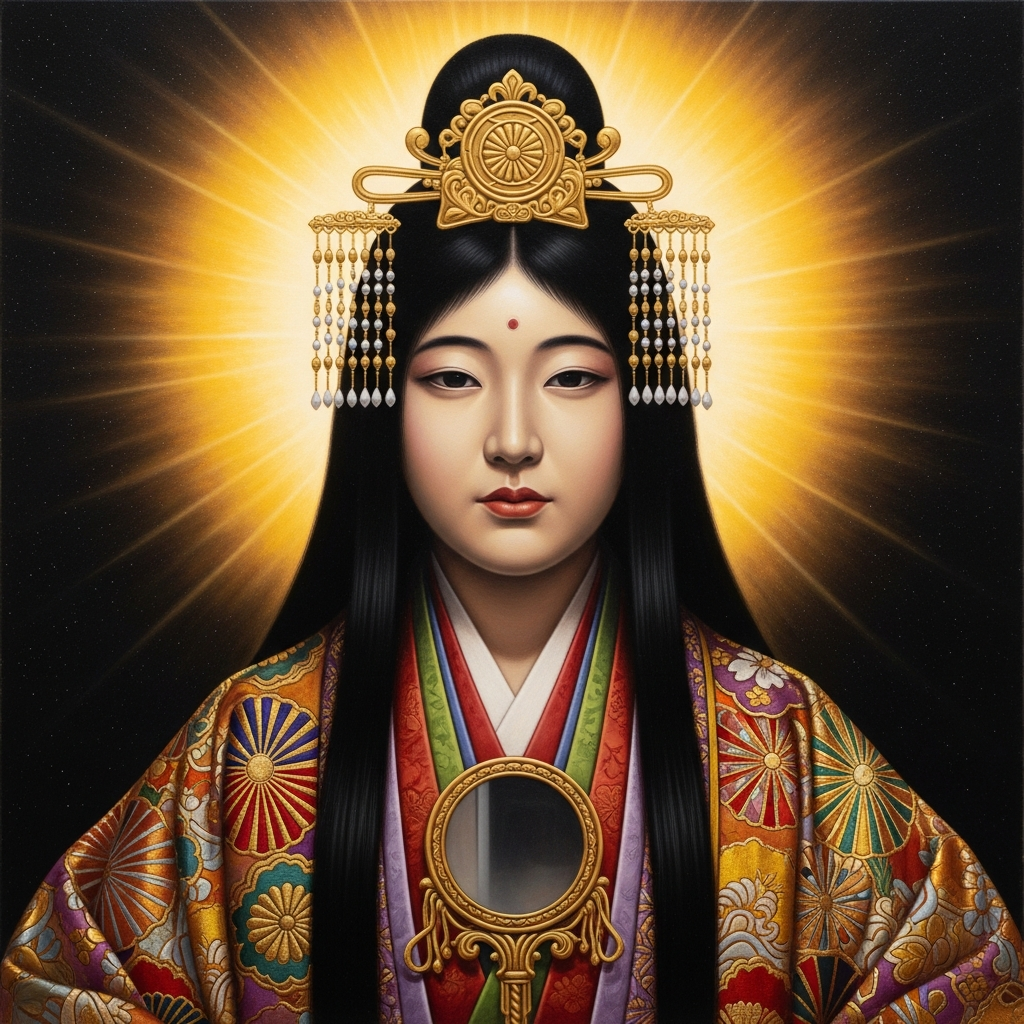
Lore: Tsukuyomi is the most enigmatic of the Three Noble Children. Born from Izanagi’s right eye during the post-Yomi purification, he was assigned to rule the night as Amaterasu rules the day. Yet the Kojiki barely mentions him — most of his mythology comes from the Nihon Shoki. His defining act is a murder motivated by disgust: Amaterasu sent Tsukuyomi to attend a feast prepared by the food goddess Uke Mochi (or Ogetsuhime in the Kojiki variant, where it is Susanoo who commits the killing). Uke Mochi produced food from her mouth, nose, and rectum — rice, fish, game, all manner of delicacies. Tsukuyomi found this so revolting that he drew his sword and killed her.
From her corpse grew the five grains (rice, wheat, millet, soybeans, red beans), silkworms from her head, and rice paddies from her eyes. Amaterasu was furious — not at the manner of food production but at the murder of a fellow deity. She declared Tsukuyomi a wicked god and refused to ever look upon him again. Day and night have been separated ever since.
Parallel: The “slain deity whose body becomes the world’s food supply” is one of the most widespread mythological motifs on Earth. The Indonesian Hainuwele, the Aztec corn gods, and the dismembered Purusha of the Rig Veda all follow the same pattern — the anthropologist Adolf Jensen termed it the “Dema deity” archetype. That Japan places this act of sacred murder at the origin of agriculture and simultaneously uses it to explain the astronomical separation of sun and moon is an elegant piece of mythological engineering. Tsukuyomi’s banishment for violence against a fellow deity parallels Cain’s exile after killing Abel.
1 min read
Amaterasu (his sister, who cast him out -- the separation of day and night)
*Nihon Shoki* I; *Kojiki* (barely mentioned -- the *Kojiki* attributes the killing to Susanoo); Ashkenazi, *Handbook of Japanese Mythology*