Branwen: The Sister Sacrificed for Peace
circa 500-700 CE — the mythic age of the Mabinogion · Britain and Ireland — the court of Matholwch in Ireland, then the war across both islands
Contents
Given as a bride to the King of Ireland to seal a treaty between nations, Branwen spends three years in the Irish kitchen, beaten daily, before she trains a starling to carry a message home — and the rescue her brother launches destroys both islands.
- When
- circa 500-700 CE — the mythic age of the Mabinogion
- Where
- Britain and Ireland — the court of Matholwch in Ireland, then the war across both islands
She is the most admired woman in the world when they give her away.
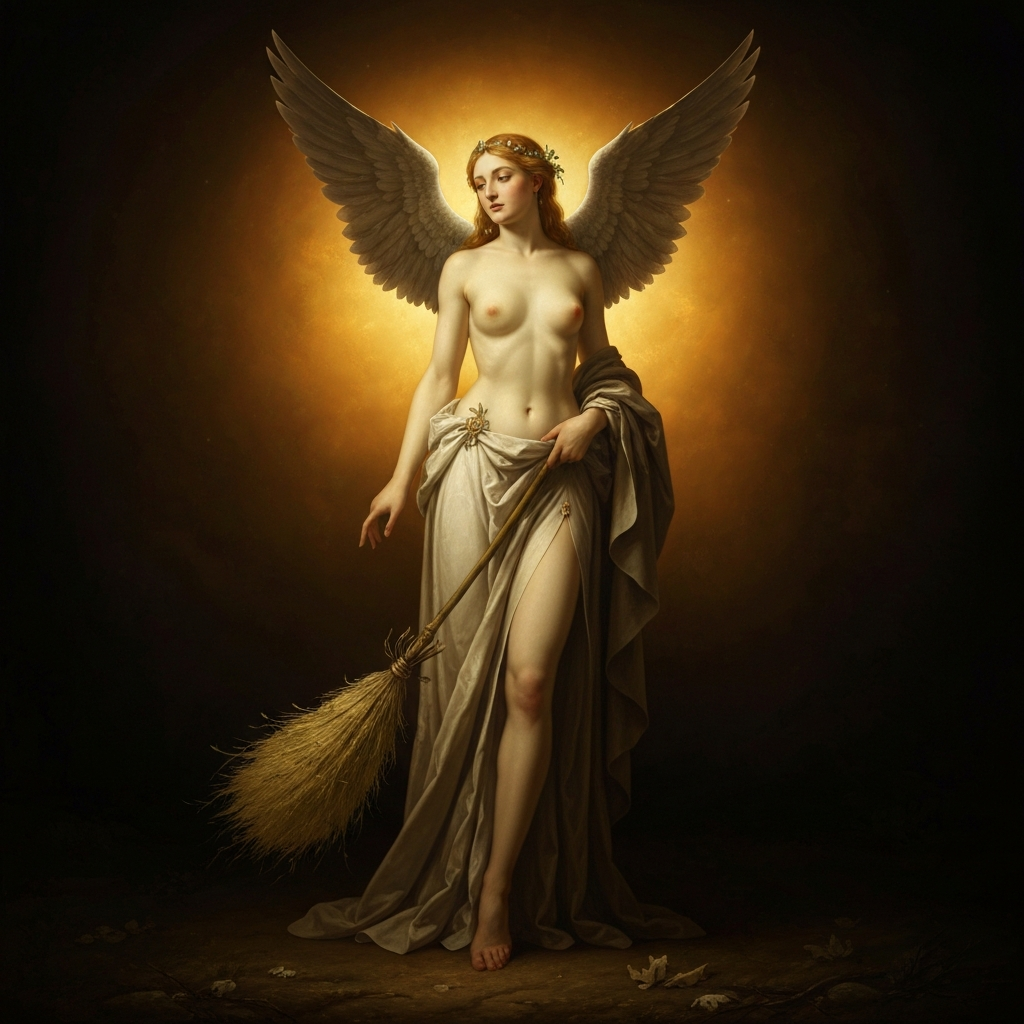
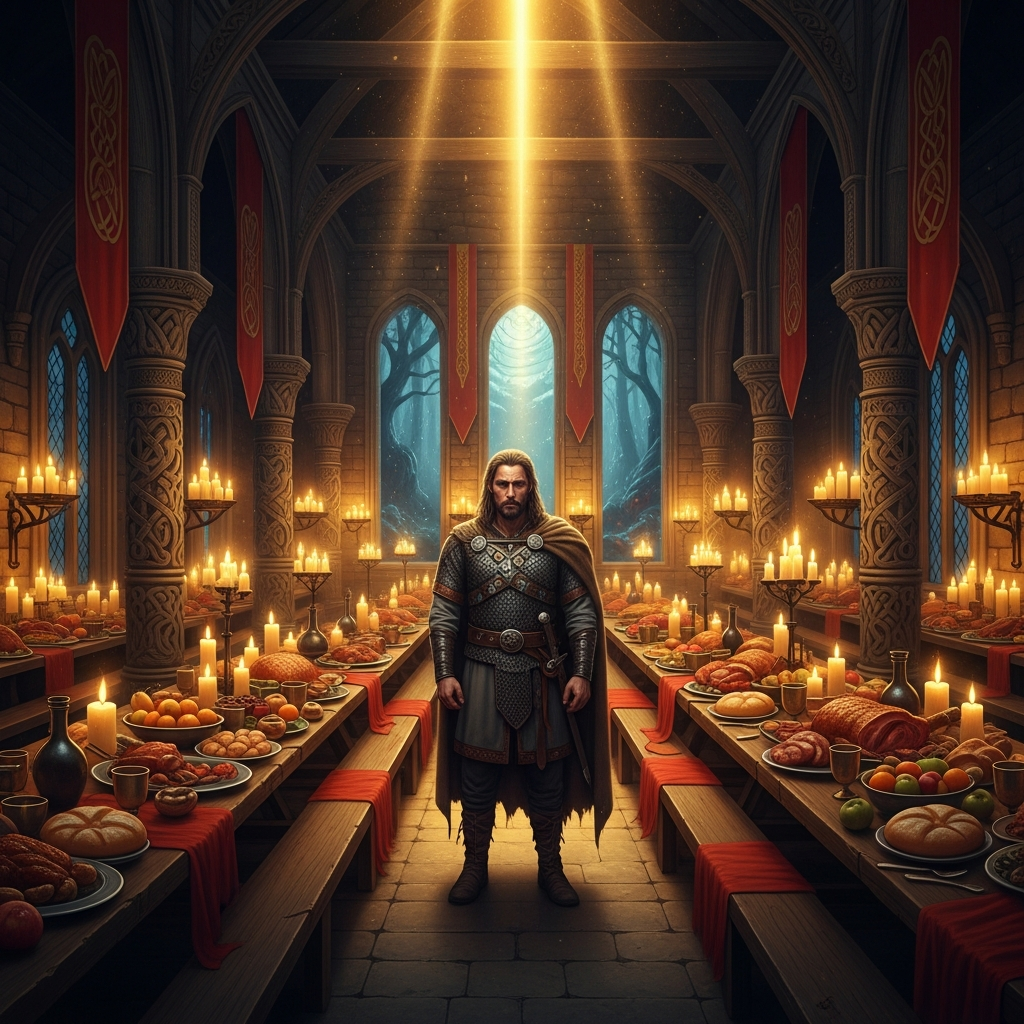
Branwen, daughter of Llŷr, sister of the giant-king Bendigeidfran, is given to Matholwch the King of Ireland to seal a treaty between the islands. This is ordinary diplomacy in a world where women are the medium of exchange between kingdoms. The wedding happens at Aberffraw, the feast is tremendous, the treaty is made.
Then Efnysien — Branwen’s half-brother, the man the sources describe as a source of strife wherever he goes — hears about the marriage after the fact and feels dishonored that his half-sister was given without his consent. He takes his revenge by mutilating Matholwch’s horses: lips, ears, eyebrows, tails, cut to the bone.
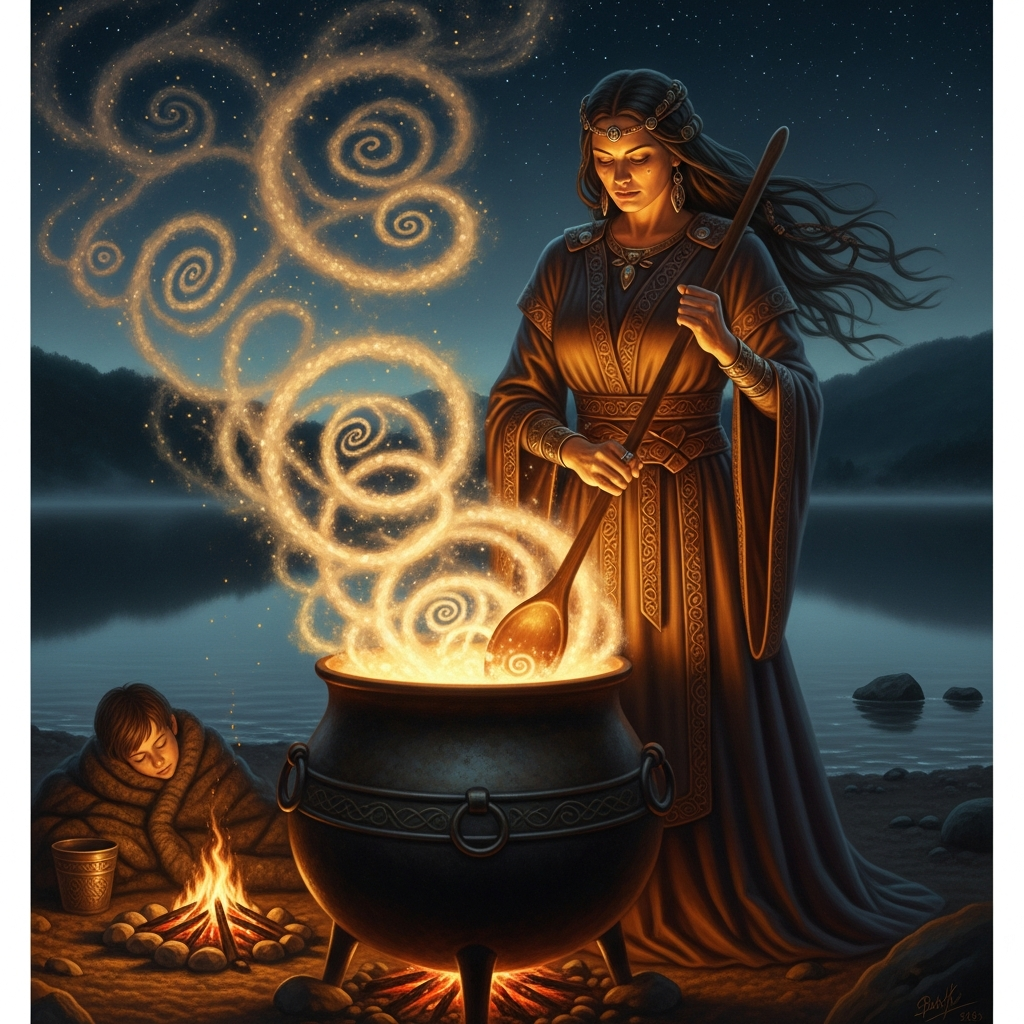
Bendigeidfran, horrified, makes restitution. He replaces every horse. He gives the Irish king a magic cauldron that brings the dead back to life. The treaty is repaired, technically.
But in Ireland the courtiers do not forget the insult. Matholwch, under pressure from his own nobles, cannot publicly dishonor the settlement — but the settlement cannot quite hold against the memory of what was done to his horses. He demotes Branwen from the queen’s hall to the kitchen. He has her struck every day. He forbids anyone to bring word to Britain.
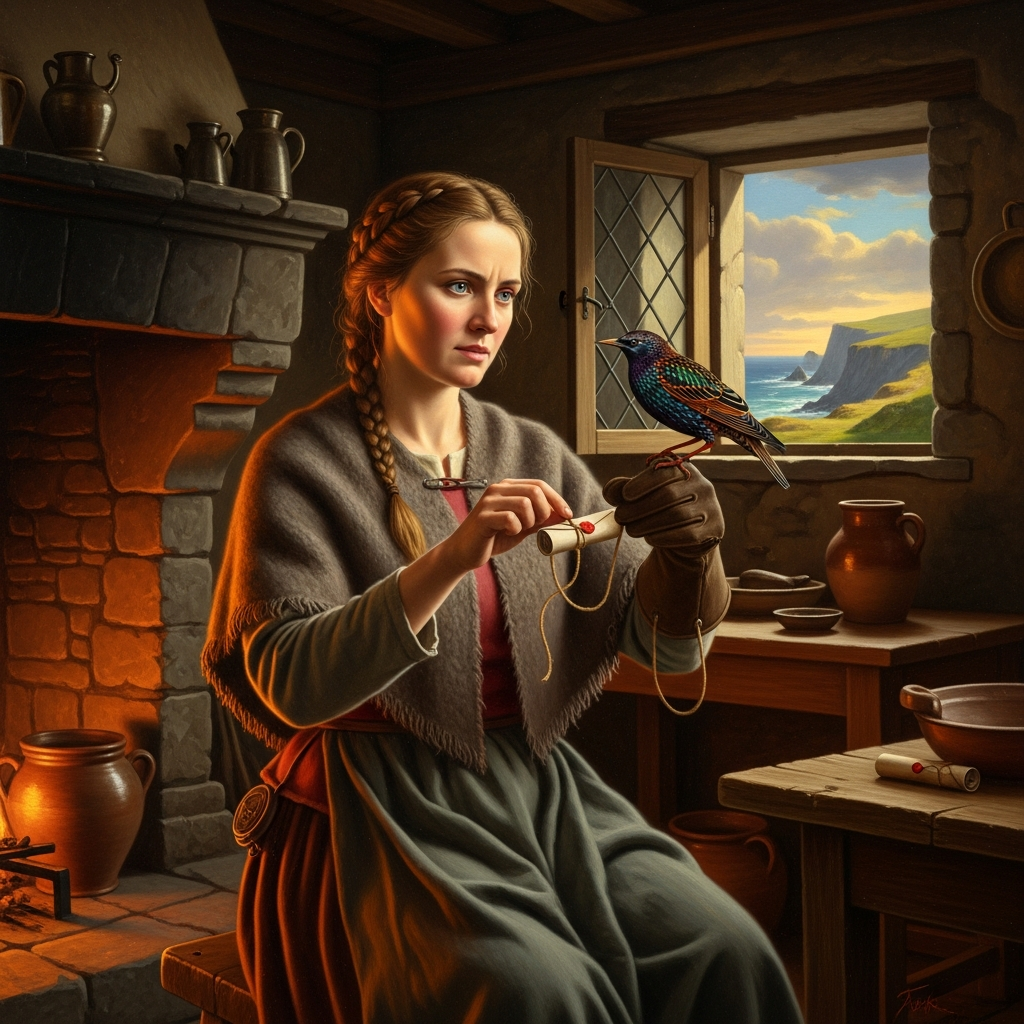
She trains a starling.
This is not a small thing. Wild birds do not learn messages easily, and Branwen’s access to birds in the kitchen is limited, and she has no way of knowing if the message will arrive or what it will set in motion. She trains the bird anyway, attaches a letter to its wing, and sends it. The letter reaches Caernarfonshire. It reaches Bendigeidfran.
He comes.
The giant king of Britain literally wades the Irish Sea — he is too large for ships. His fleet sails alongside him. The Irish see the ships and ask Branwen what they are. She tells them: “That is the whole force of Britain, come for me.”
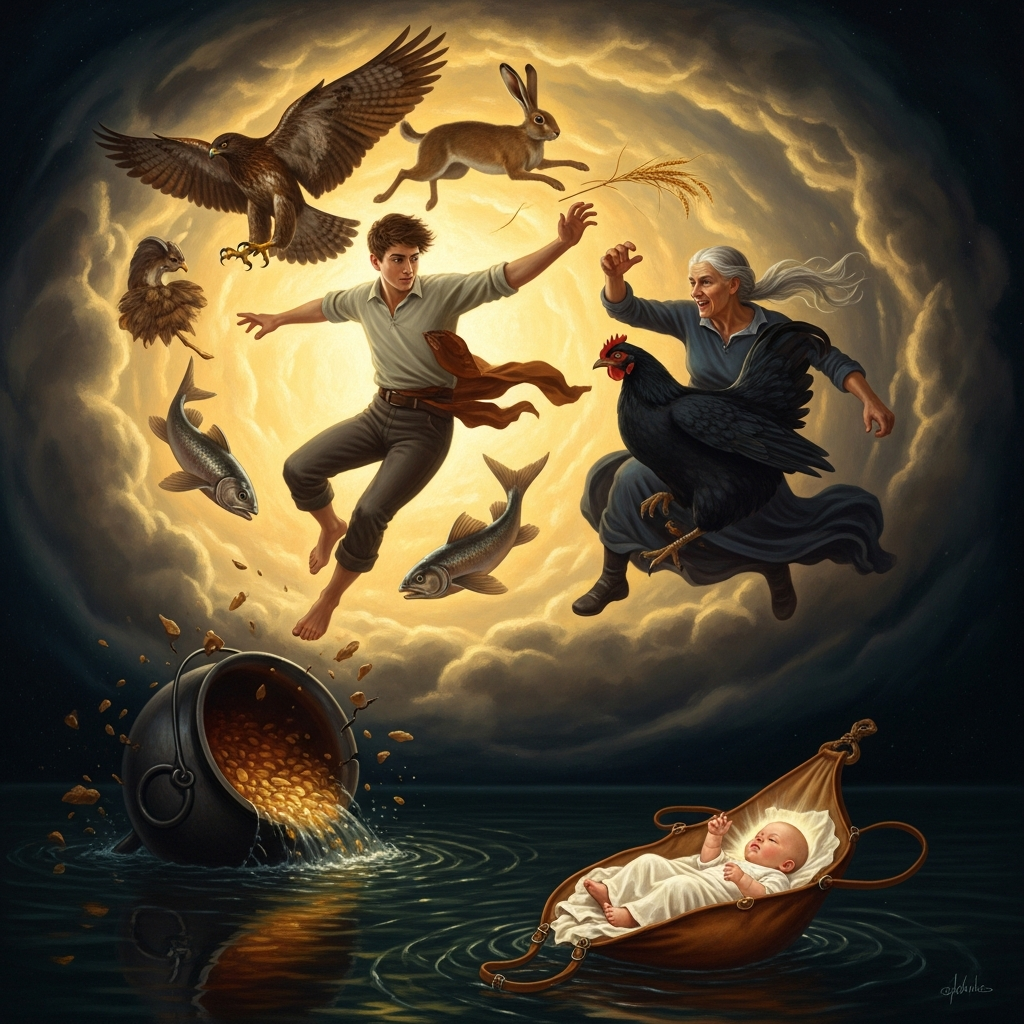
The war that follows is the destruction of Ireland. The cauldron that Bendigeidfran gave as wedding-gift is turned against his own men — the Irish put their dead warriors in it every night and they come back without the power of speech, which is a specific Irish horror: the revived dead who cannot tell you what they saw. Efnysien, whose original insult began everything, destroys the cauldron from within by hiding inside it and breaking it apart with his body.
Bendigeidfran is wounded by a poisoned spear. He dies.
Seven men survive on the British side. Ireland is essentially empty.
Branwen is taken back to Britain and they land on the Welsh shore. She looks at the two islands — Ireland destroyed, Britain diminished, thousands dead on both sides — and she says: “Woe that I was born. Two good islands have been destroyed because of me.”
She dies there on the riverbank, of grief, sitting on the grass.
The starling did its work. The rescue came. The rescue cost everything.
She is buried in a four-sided grave, the square grave of a woman of consequence, on the bank of the Alaw. She did nothing wrong. She sent the letter that was the only act available to her. The cataracts of consequence that followed were not hers to predict or prevent.
The grave is still there, under a mound near Llanidan. It is called Bedd Branwen. The grave of Branwen. The square in the ground that is the world’s record of what diplomatic marriages cost the people who are inside them.
Echoes Across Traditions
Entities
- Branwen
- Bendigeidfran
- Matholwch
- Efnysien
- Gwern
Sources
- Jeffrey Gantz, trans., *The Mabinogion* (Penguin, 1976)
- Sioned Davies, trans., *The Mabinogion* (Oxford World's Classics, 2007)
- Juliette Wood, 'The Mabinogi and International Storytelling Tradition,' *Folklore* 108 (1997)