Confucius and the Danger of Wrong Names
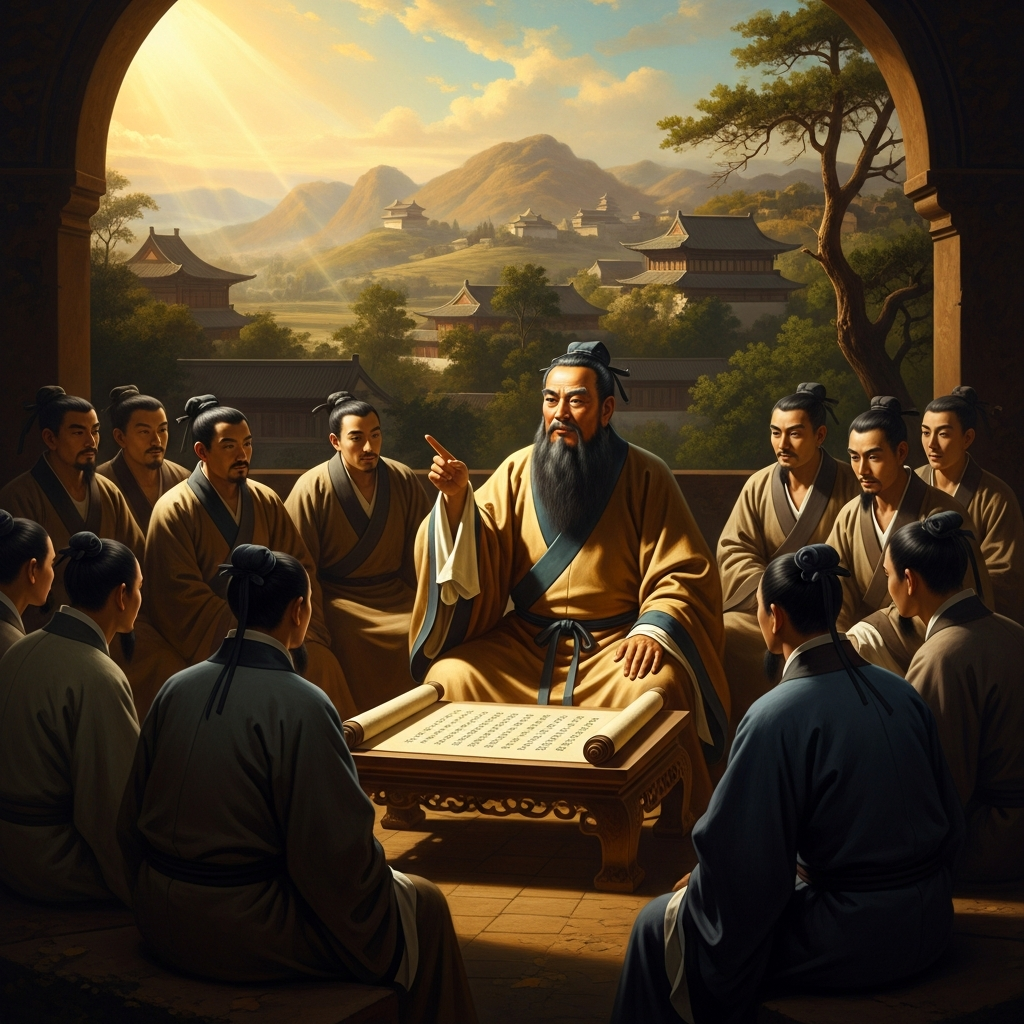
c. 496-484 BCE — Confucius in the state of Wei during his years of wandering · The state of Wei in what is now Hebei Province — one of the states where Confucius sought office
Contents
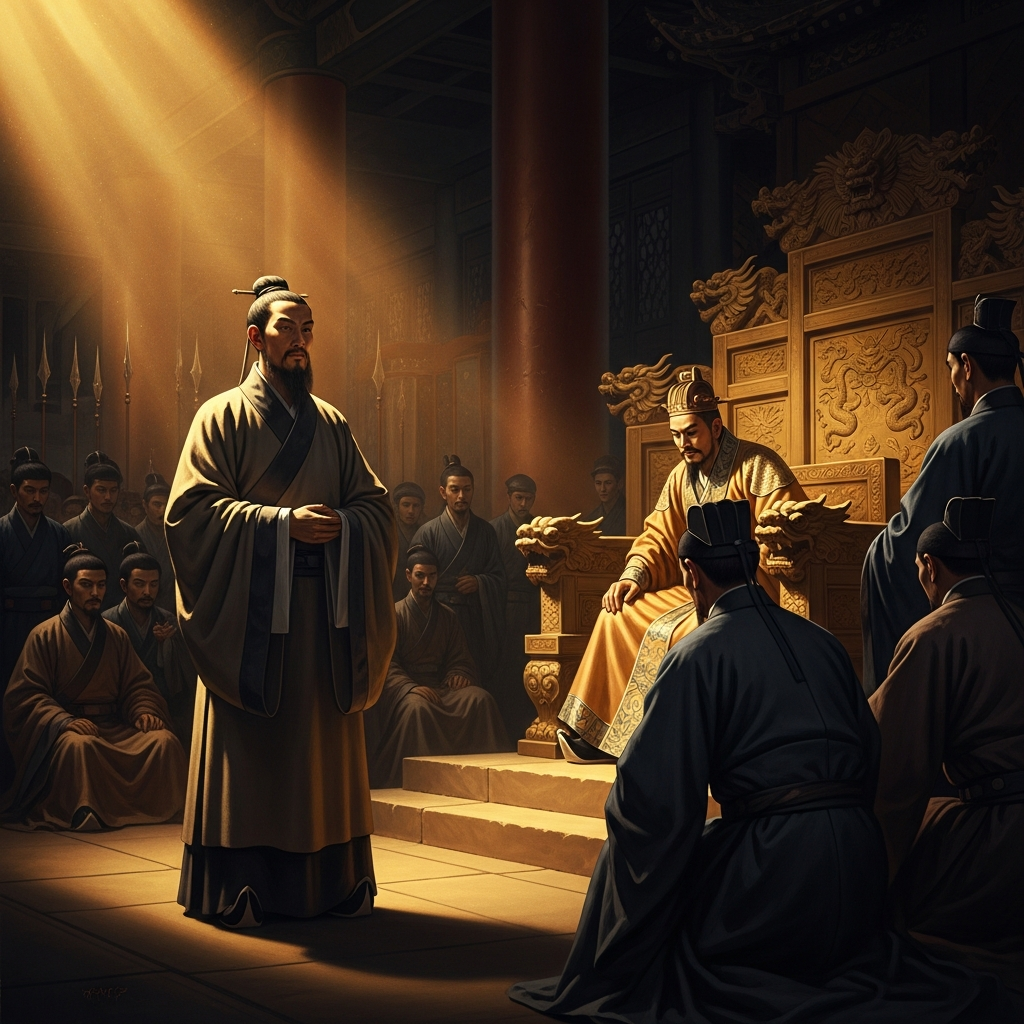
When Zilu asks Confucius what he would do first if given charge of the government of Wei, Confucius answers without hesitation: rectify the names — and then explains why that is the only possible answer.
- When
- c. 496-484 BCE — Confucius in the state of Wei during his years of wandering
- Where
- The state of Wei in what is now Hebei Province — one of the states where Confucius sought office
Zilu asks the question directly, which is his method: if you were in charge of Wei, what would you do first?
He expects a political answer. A military answer. An economic answer. Wei is in difficulty — the Duke’s heir is in conflict with his father, the political situation is unstable, the government is poorly organized. A wise administrator’s first priority might be any number of concrete things.
Confucius says: first, I would rectify the names.
Zilu is a practical man, a soldier, a person who trusts action over abstraction. He says: you’re being pedantic. Why does that come first?
Confucius explains.
If the names are not right, what is said will not match what is meant. If what is said does not match what is meant, what needs to be done will not get done. If what needs to be done does not get done, the rites and music will decay. If the rites and music decay, the punishments will not fit the crimes. If the punishments do not fit the crimes, the people will not know where to put their hands and feet.
This is the cascade. It starts with a word used inaccurately and it ends with people who cannot function because they cannot trust the relationship between what things are called and what they are.
The example he has in mind is specific. In Wei, the heir who calls himself the legitimate ruler is not the legitimate ruler — the situation of dynastic succession is confused, and the title does not match the reality it is supposed to name. When a minister is called a minister but is not acting as a minister — when a father is called a father but has abandoned the duties of a father, when a state is called a state but is not being governed as a state — the word and the thing have come apart.
The word and the thing are not supposed to come apart. In the Confucian system, names are not arbitrary labels. They are commitments. To name someone a minister is to invoke a whole structure of obligations — to the ruler, to the people, to the rites — that the name itself carries. The minister who accepts the name accepts the obligations. When the obligations are not met, the name is being used fraudulently. And fraud in naming corrodes everything downstream.
This is why the rectification of names comes first. Not because language is more important than food, or more important than military defense, or more important than economic stability. But because those things all depend on people doing what they have been named to do, and people do what they have been named to do when the names mean something, and the names mean something only when their use is disciplined and honest.
Zilu does not look convinced. He is a man of action. He will die in Wei, a few years later, killed in a coup, with his cap still tied correctly because an arrow had cut the strings and he stopped to tie them before dying, because a gentleman does not die with his cap untied, because the name of gentleman requires even this last punctuation of correctness.
Confucius hears the story and says: Zilu is dead. From the moment he stopped to tie his cap, no one would have been able to save him. He understands the grief and the pride in that assessment simultaneously. His student died correctly. The name held. Whatever else failed, Zilu kept his name accurate to his last moment.
Echoes Across Traditions
Entities
- Confucius (Kong Qiu)
- Zilu
- Duke Ling of Wei
- the rectification of names (zhengming)

Sources
- Analects (論語), book 13, chapter 3 — the zhengming passage
- D.C. Lau, trans., *The Analects* (Penguin, 1979)
- Simon Leys, trans., *The Analects of Confucius* (Norton, 1997)
- Benjamin Schwartz, *The World of Thought in Ancient China* (Harvard, 1985)