Hiranyagarbha: The Golden Embryo on the Cosmic Waters
Late Bronze Age, c. 1500–1200 BCE · The primordial waters before any shore
Contents
In the beginning, before the gods, before time, the Golden Embryo floated alone on the primordial waters. It was the only thing that existed. It became the breath of life, the holder of sky and earth, the one lord of all that breathes — and the hymn asks at the close of every verse the unanswered question: who is this god? To whom shall we offer our sacrifice?
- When
- Late Bronze Age, c. 1500–1200 BCE
- Where
- The primordial waters before any shore
In the beginning was the Golden Embryo, and it arose, and it was the one lord of all that came to be. It held the earth and the heaven. To which god shall we offer our sacrifice?
This is how Rig Veda 10.121 begins, and the refrain — kasmai devaya havisha vidhema, “to which god shall we offer our sacrifice?” — closes every one of its ten verses. The hymn is sometimes called the Hymn to Ka, because Ka means “who” in Sanskrit, and the Vedic priests, perplexed by the constant question, eventually began to treat Ka itself as the name of the unknown god. To Ka, they would say, we offer this oblation. To Who.
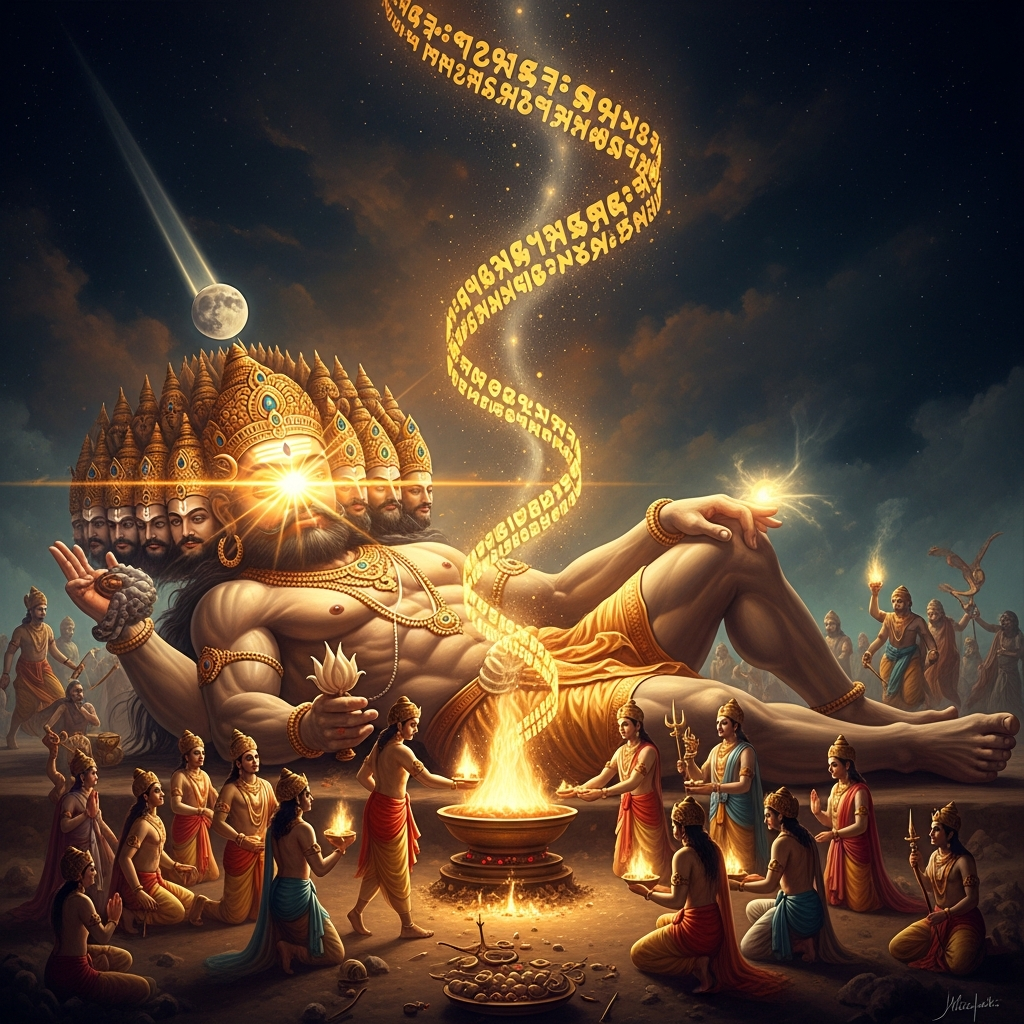
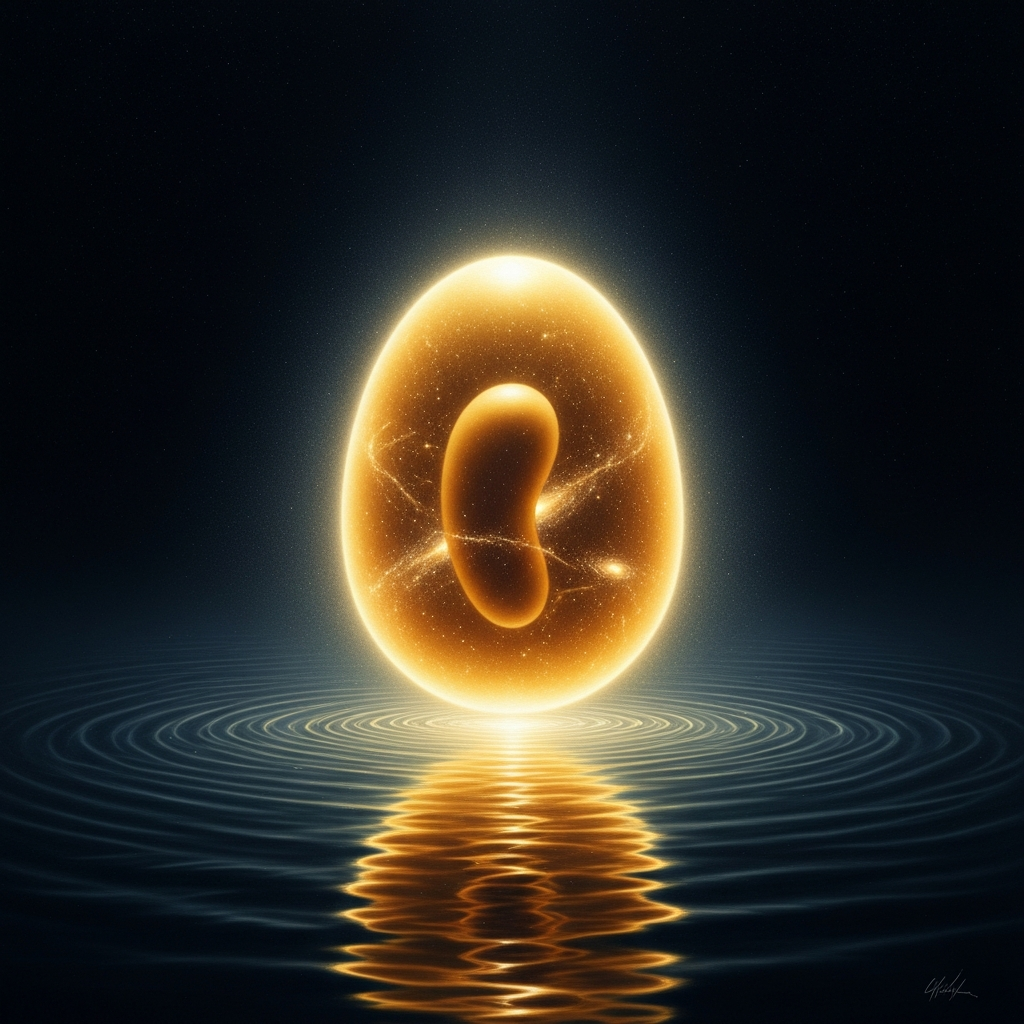
The Golden Embryo — Hiranyagarbha — floats on the primordial waters. The waters have no shore. There is no above and no below. There is no sun, no moon, no earth. There is only the embryo, and the embryo is golden, and it contains the seed of everything that will be. The hymn does not say who put it there. It does not say where the waters came from. It begins, like the Nasadiya, in a place where origin is already obscured.
Then — the verses do not narrate exactly when — the embryo opens. From it comes prana, the breath of life. From it comes the force that holds the sky and earth apart. From it comes the lord of all things that breathe, all things that blink, all things that move on two legs or on four. It is the giver of vital force; the giver of strength; whose command the gods themselves obey. Its shadow is immortality. Its shadow is also death.
And after every verse the priests asked: who is this god? To whom shall we sacrifice? Because they did not know its name.
That is the strange and beautiful thing about this hymn. The Rig Veda has hundreds of named gods. It knows Indra and Varuna and Agni and Soma and Surya. It can sing to each of them with confident specificity. But this thing — this Golden Embryo, this lord of breath, this holder of heaven and earth — has no name yet. The seers can describe its functions. They can list its attributes. They cannot say what it is called.
Some scholars think this hymn marks a turning point in Vedic religion — the point at which the older polytheism began to feel insufficient, and the priests began to grope toward a single divine principle behind all the named gods. The hymn knows there is something there. It has felt the weight of it. But it does not yet have a vocabulary, and so it keeps asking.
Later editors of the Veda could not stand the openness. They added a final verse — a kind of theological closure — naming Prajapati, the Lord of Creatures, as the answer. Yes, the appended verse says, this is Prajapati; he is the one to whom we sacrifice. The matter is closed. But scholars have long noticed that this verse does not match the meter or the diction of the rest, and was almost certainly grafted on by a later hand uncomfortable with so much unresolved wonder.
The original hymn does not close the question. It is content to ask it ten times in a row. Who? Who? Who?
This question would become a path. The Upanishads, composed centuries later, would take it up: who is this self? Who is this breath? Who is the knower of the known? They would push the question inward — past the cosmic waters, past the embryo, past Prajapati, into the cave of the heart — and find at the end the same answer, the same not-quite-an-answer: tat tvam asi, you are that. The unknown god is the questioner.
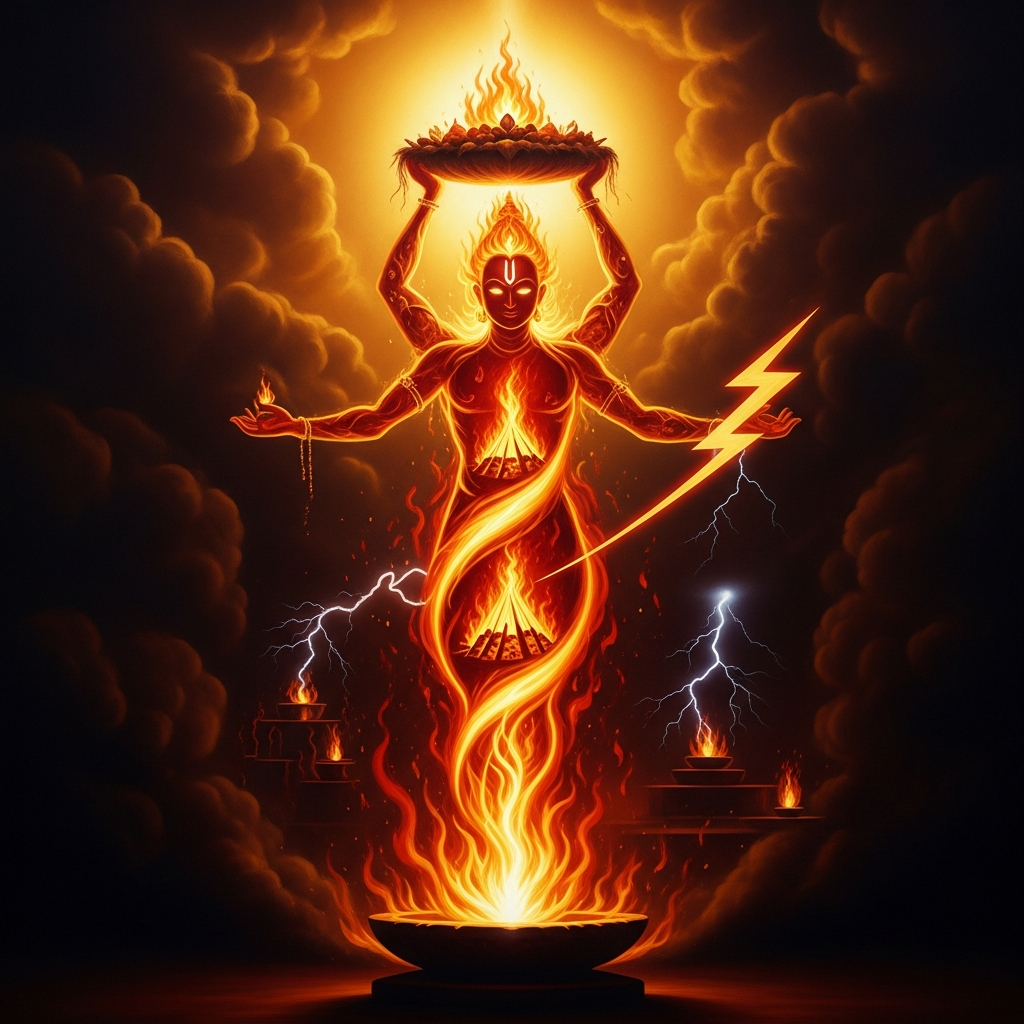
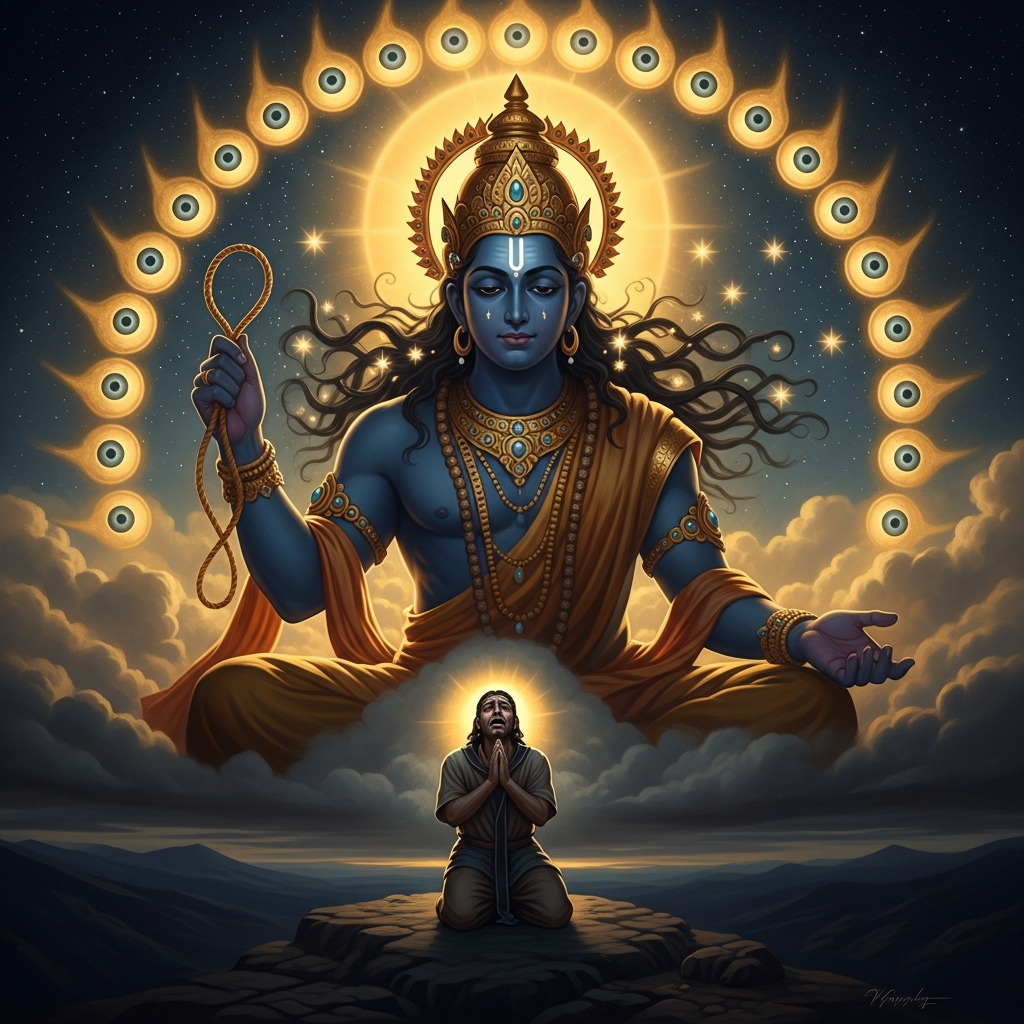
But here, in 10.121, that path has only just begun. A priest stands at the altar pouring butter into the fire. He does not know the name of the god he is feeding. He sings the function: holder of the heavens, lord of breath, root of the world. And after each verse he confesses the missing word. To which god shall we offer our sacrifice?
It is one of the most honest gestures in any liturgy ever composed. The priest is making the offering. The priest is saying: I do not know to whom. The fire takes the butter anyway. The flames rise toward something. And whatever it is, in some hidden golden chamber on the cosmic waters, opens its eyes and accepts what we have brought.
Echoes Across Traditions
Entities
- Hiranyagarbha
- Prajapati
- Tad Ekam
Sources
- Rig Veda 10.121 (the Hiranyagarbha Sukta)
- Atharva Veda 4.2
- Shatapatha Brahmana 11.1.6