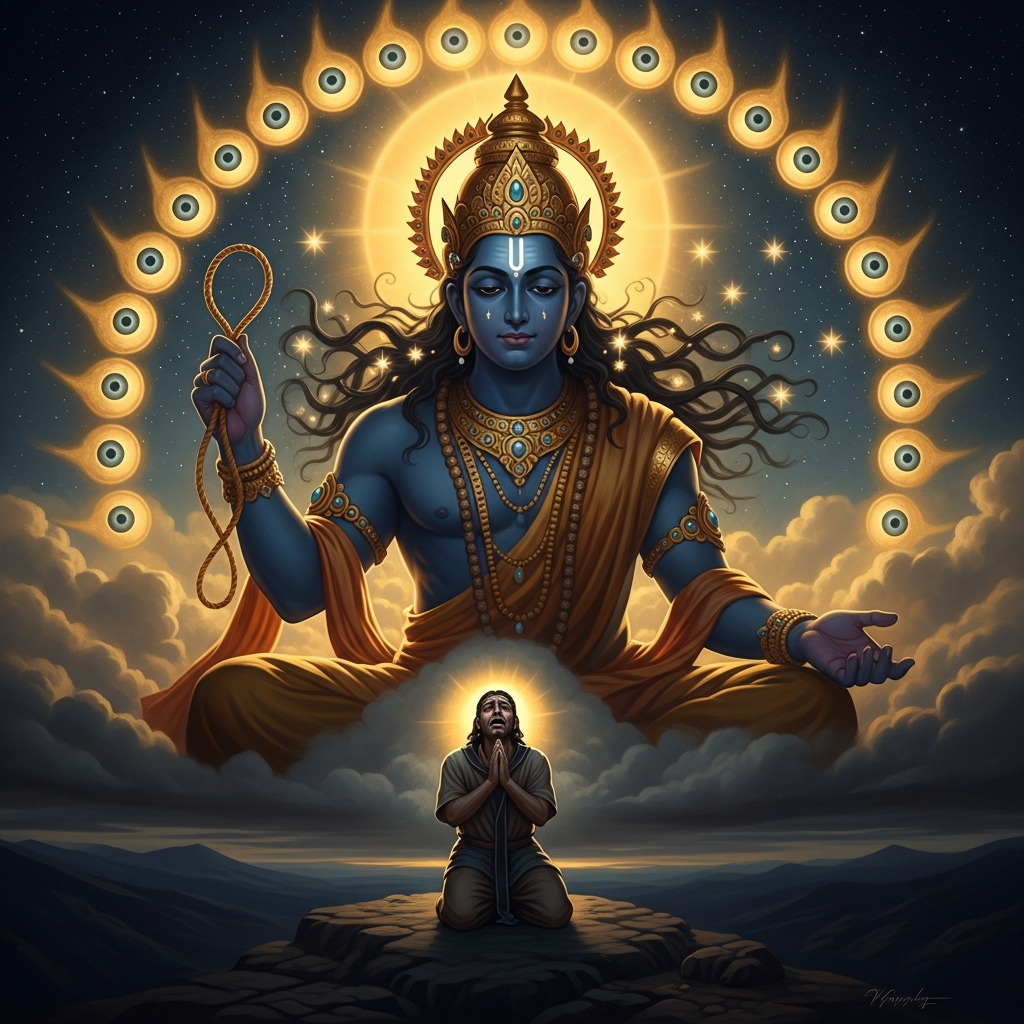
The Nasadiya Hymn: Before Being and Non-Being
Late Bronze Age, c. 1500–1200 BCE · The Indus and Sarasvati river plains
Contents
In the beginning there was neither existence nor nonexistence, neither air nor sky beyond it. Something breathed without breath, by its own impulse. Then desire arose — the first seed of mind — and the hymn ends not in answer but in a question even the gods cannot answer.
- When
- Late Bronze Age, c. 1500–1200 BCE
- Where
- The Indus and Sarasvati river plains
There was neither non-existence nor existence then. There was no realm of air, no sky beyond it. What stirred? Where? In whose protection? Was there water, fathomless and deep?
There was no death then, nor anything immortal. There was no distinction between night and day. That One breathed, without breath, by its own impulse. Other than that there was nothing whatsoever.
Darkness was hidden by darkness in the beginning. With no distinguishing mark, all this was water. The life-force that was covered by emptiness — that One arose through the power of heat. Then, in the beginning, desire descended on it — desire, which was the first seed of mind. The wise, searching in their hearts with thought, found the bond that connects existence to non-existence.
Their cord was extended across — was there a below, was there an above? There were impregnators, there were powers; there was instinct beneath, and giving-forth above. Who really knows? Who can here proclaim it? Whence was it produced? Whence is this creation? The gods came afterwards, with the creation of this universe. Who, then, knows whence it arose?
Whence this creation arose — perhaps it formed itself, or perhaps it did not — the One who looks down on it from the highest heaven, only He knows. Or perhaps even He does not know.
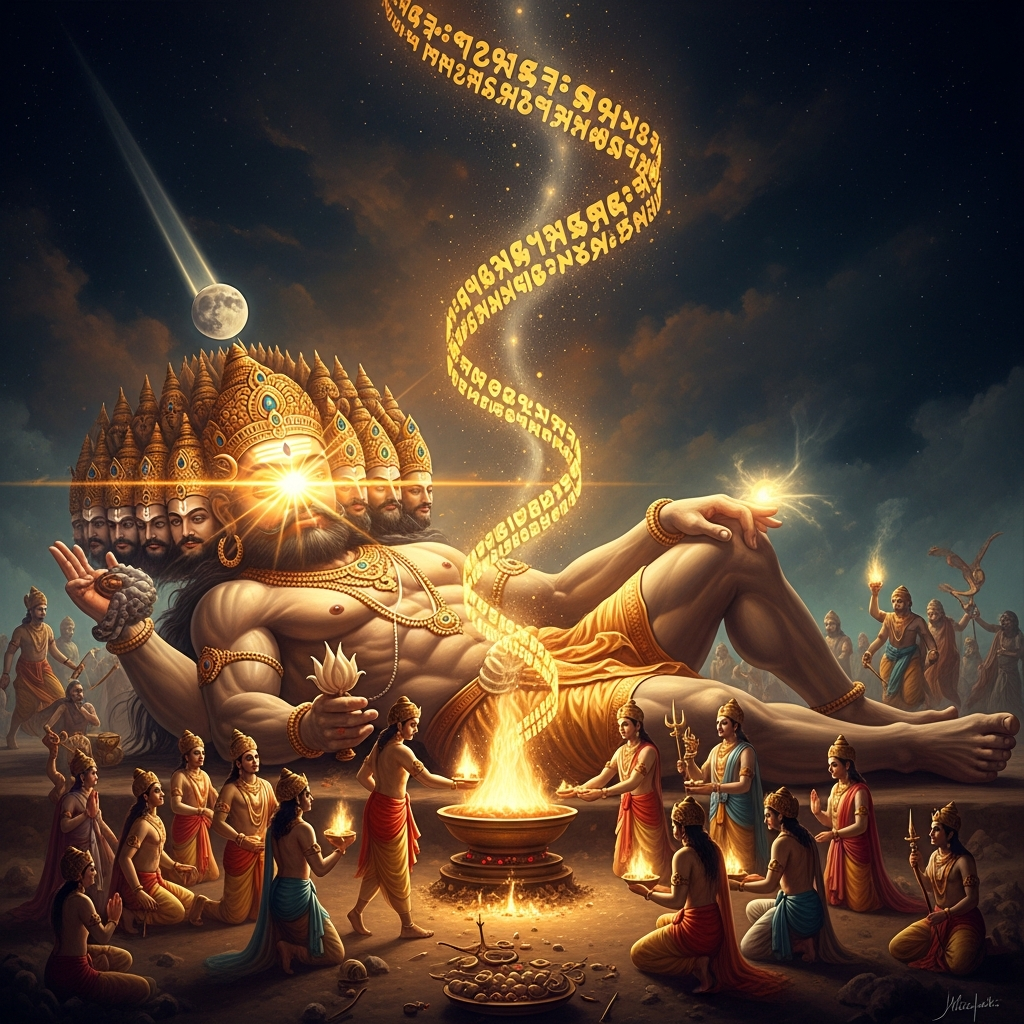
This is the great hymn of Rig Veda 10.129, set down in the late Bronze Age by a seer whose name is lost. It is the place in the Vedic corpus where the bards stop singing the deeds of the gods and begin to wonder whether anyone — bard, priest, or god — could ever say from what root the world grew. Indra is not here. Agni is not here. The thousand-fold sacrifices have not yet been offered. There is only that One, breathing without breath, in the primordial dark.
Later commentators tried to fix the meaning. The Brahmanas would say it was Prajapati, the lord of creatures, who emerged. The Upanishads would call it Brahman, the formless ground. But the hymn itself refuses these names. It speaks of tad ekam — “that one” — as if to point at what cannot be pointed at, and then to withdraw the finger.
The seers who composed this verse were not skeptics in the modern sense. They believed in the gods; they sang to Indra and Varuna and Ushas with full conviction. But they understood that creation lay before the gods, and so behind any answer the gods could give. To say “He created us” was already to say less than the truth. The truth, if it could be said, would have to be said by something older than language — and the hymn knows it cannot be said.
So the Nasadiya ends in suspended breath. The cord is stretched across. Above and below cannot yet be told apart. And the seer, with the most ancient honesty in the world, says: perhaps even the highest god, looking down from the highest heaven, does not know. Three thousand years later, no philosophy has improved on this answer.
Echoes Across Traditions
Entities
- Tad Ekam
- Prajapati
Sources
- Rig Veda 10.129 (Nasadiya Sukta)
- Shatapatha Brahmana 10.5.3