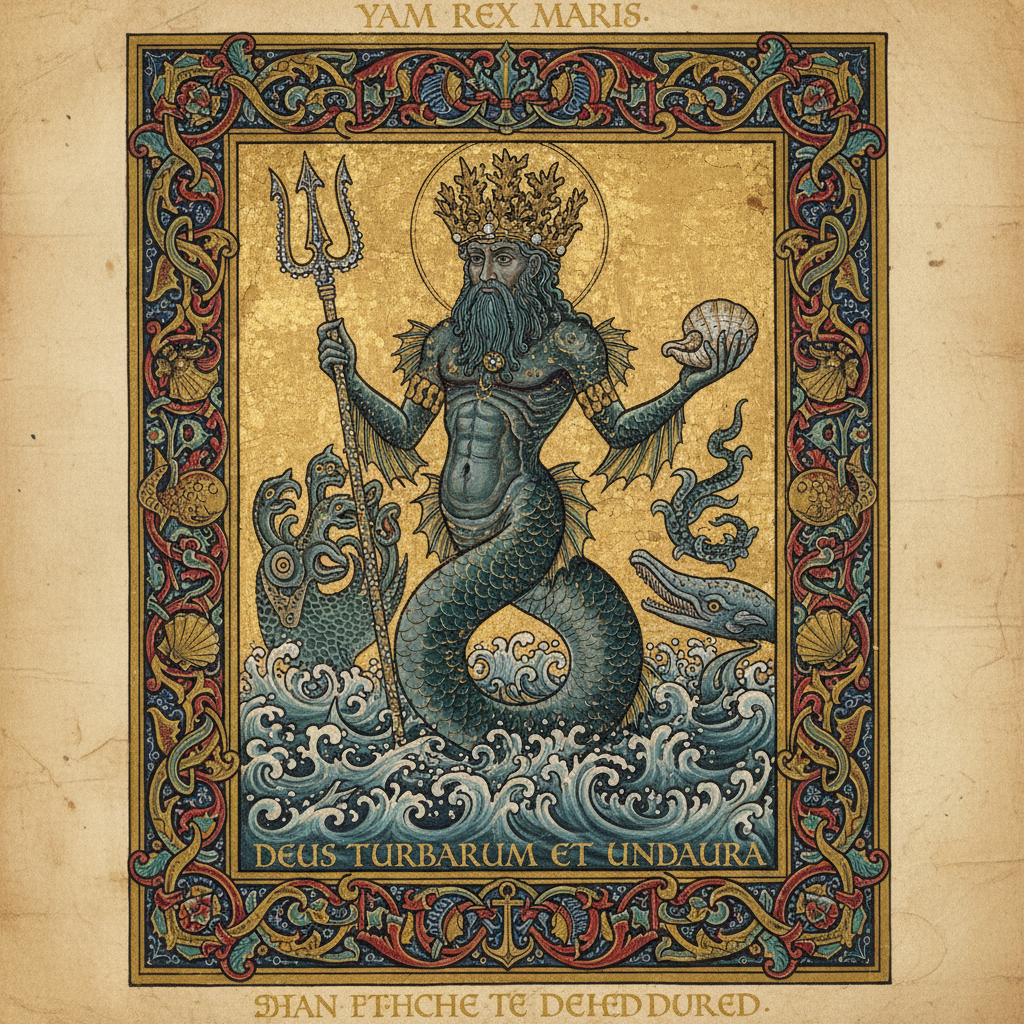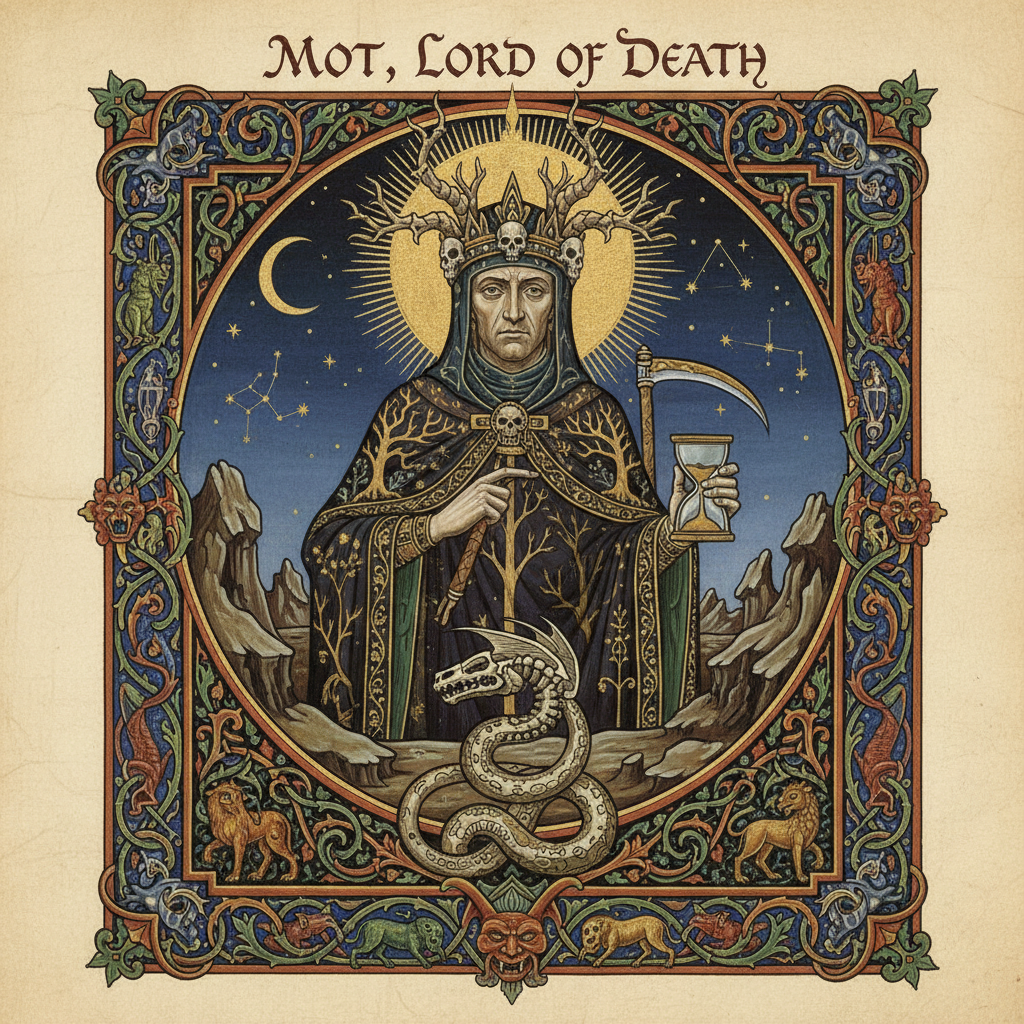
Mot is Scattered; the Grain Rises
~1200 BCE, Jezreel Valley; myth recorded at Ugarit ~1350 BCE · The Jezreel Valley and the hills of Canaan; Ugarit on the Syrian coast
Contents
Mot's scattered body becomes the autumn sowing. A Canaanite farmer in the Jezreel Valley in 1200 BCE performs the plowing ritual at the turn of the season, reciting fragments of what we now call the Baal Cycle. The myth as agricultural calendar. The myth as practical theology. The myth as the thing a man says when he puts seed into the ground and hopes.
- When
- ~1200 BCE, Jezreel Valley; myth recorded at Ugarit ~1350 BCE
- Where
- The Jezreel Valley and the hills of Canaan; Ugarit on the Syrian coast
The man’s name is not recorded anywhere.
In the autumn of 1200 BCE, a farmer in the Jezreel Valley loads a basket with emmer wheat seed and walks out to his field at dawn. He has a plow of acacia wood with a bronze tip, and he has an ox, and he has a field that has been lying fallow through the dry summer months, cracked and pale under a sky that Baal vacated in the spring. The summer is the god’s absence. It has always been the god’s absence. The farmer knows this the way he knows the seasons themselves — not as a proposition to be argued but as the weather he lives inside.
He does not call it mythology. He does not call it religion. He calls it the time to plow.
But before he puts the share into the earth, he speaks. He speaks the words that the scribes at Ugarit, two hundred miles up the coast, are pressing into wet clay at this same moment — or have already pressed, or will press, the tablets being indifferent to the exact synchrony. The words are fragments of what we now call the Baal Cycle, the story of the storm-god and the sea-god and Death and Anat who threshes Death on the threshing floor. He may not know all of it. He knows the part that belongs to this moment: the part about what happens when the goddess takes Death between the millstones.
He speaks it to his field. Then he plows.
The theology of the plow is older than the tablets.
Long before the scribes at Ugarit fixed the Baal Cycle in cuneiform alphabetic script — around 1350 BCE, in the library of the chief priest of Baal — farmers in the hill country and the valley floors of Canaan were living inside the myth as a practical calendar. The myth tells them when. It tells them why. It tells them what they are doing when they do the thing they do.
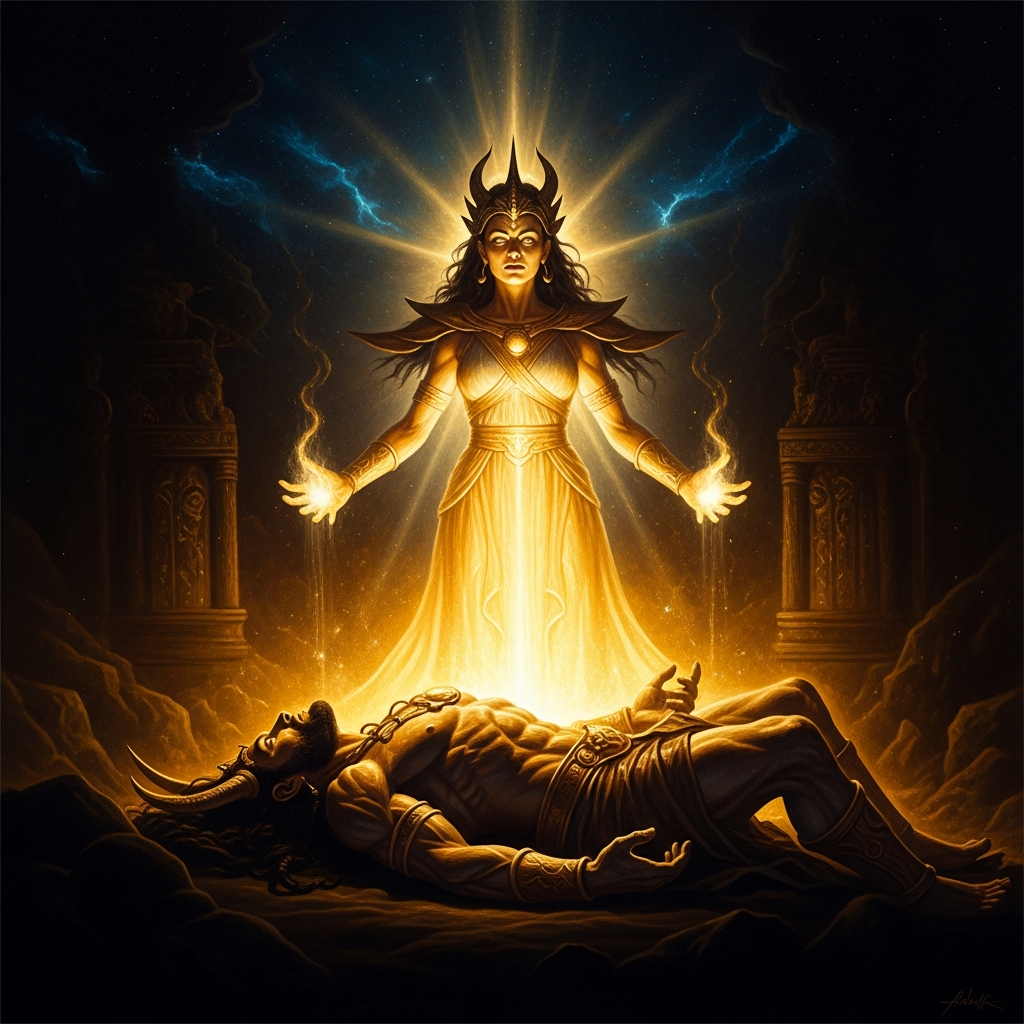
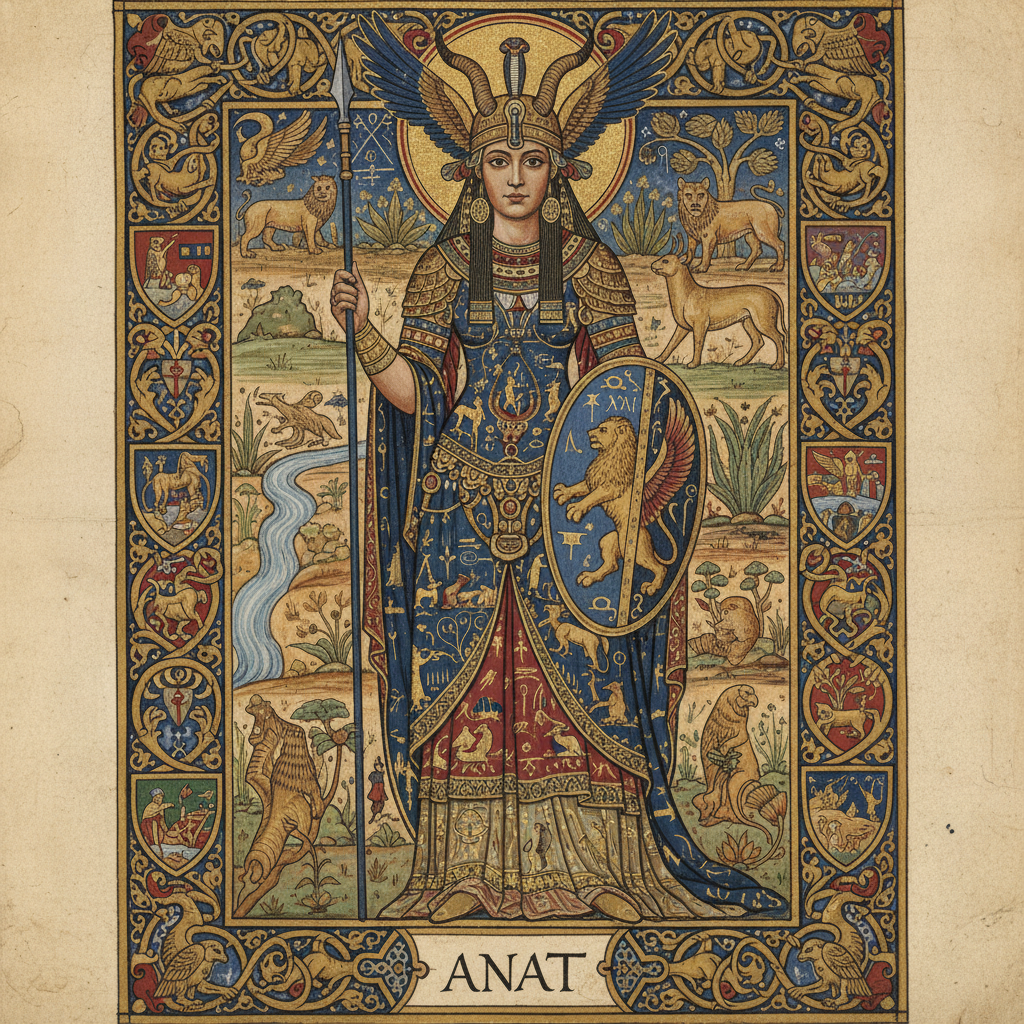
In the Baal Cycle, Mot is the god of Death, the god of the underworld, the god of the dry summer that kills the things that grew in spring. Anat kills him — cleaves him with a sword, fans him with a winnowing fan, burns him, grinds him between millstones, scatters him in the fields. She does to the god of Death what the farmer does to the grain at harvest. The grain at harvest is cut, winnowed, burned in the stalks on the threshing floor, ground at the millstone, scattered as seed in the autumn furrows.
Mot is the grain. The grain is Mot. The harvest is the violence that transforms Death into seed. The autumn plowing is the act that puts Death back into the ground so that the thing that grows from Death — which is everything that grows, because nothing grows except from what has died before it — can rise again in the spring rains.
The farmer knows this when he speaks the words before the plowing. He is not reciting a poem. He is identifying what he is about to do.
The first clouds come.
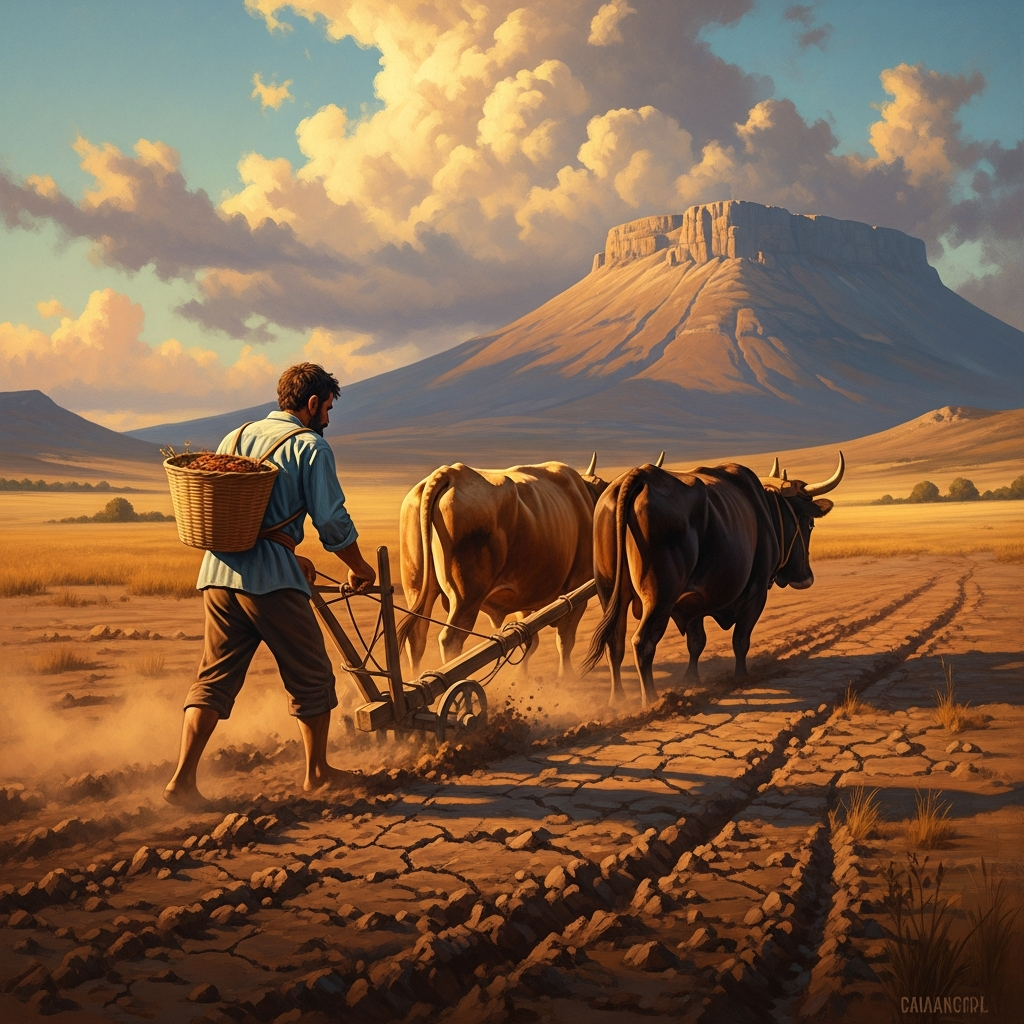
This is the signal the farmer has been watching the western horizon for since September began — the clouds that build above Mount Carmel and drift east across the valley, the clouds that mean Baal is returning from Mot’s throat, the clouds that mean the dry season is ending and the agricultural year can begin. He watches them the way the people of Ugarit watch them, which is the way the tablets describe Baal’s return: the heavens rain oil, the wadis run honey, the earth opens its mouth.
His earth opens its mouth now, cut by the bronze tip of the plow, the acacia blade turning the cracked surface over and exposing the soil beneath that has been waiting through the summer in a state the myth would call dormancy and the farmer calls being dead. The ox pulls. The share cuts. The furrow opens in a line that runs east toward the hills, then turns, runs west toward the valley floor. The furrow is the mouth of the field.
Into it he drops the seed.
He has saved this seed from last year’s harvest — kept it through the summer in the storage jars in his house, the clay jars with the tight lids, the ones the mice cannot open and the heat cannot penetrate. He protected it through the dry months when Baal was absent and the land was Mot’s. Now he drops it into the mouth of the field, into the furrow that Mot’s scattered body has made fertile.
He is planting in the body of Death. He knows it. The myth told him.
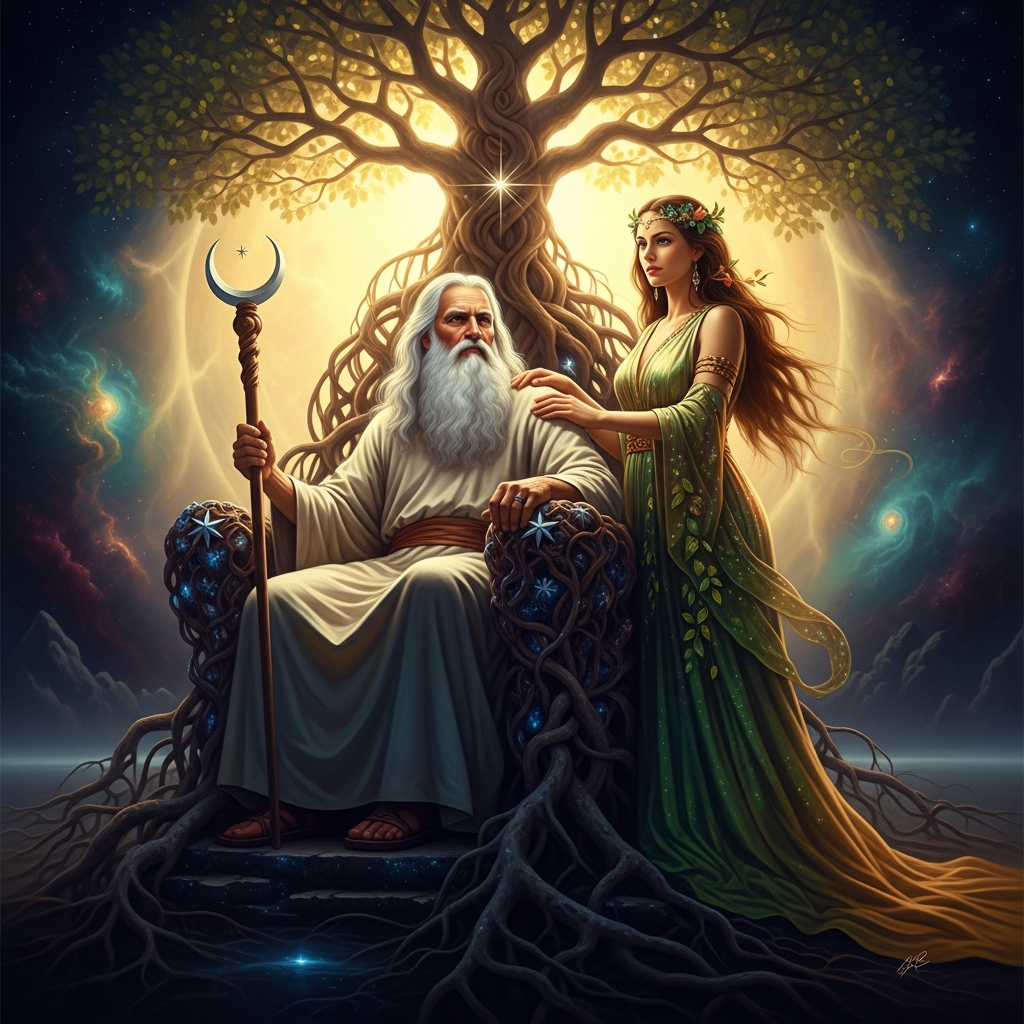
Dagon is the father of Baal.
This is the title the Baal Cycle uses for the storm-god — son of Dagon, son of the grain-god. Dagon, whose temples stood at Ashdod and Gaza and Ugarit, whose worship stretched across the Levant for two millennia, is not primarily a storm-god. He is the god of grain. He is the god of what grows in the ground after the plowing and the sowing. He is the god of the thing the farmer is doing now.
The son of the grain-god is the storm-god, because in the agricultural theology of Canaan, rain and grain are not separate categories of divine power. The storm brings the rain. The rain makes the grain grow. The grain is what the storm is for. Baal and Dagon are the same story told at two different altitudes — sky and field, storm and harvest, the god who sends the rain and the god who is in what the rain falls on.
The farmer plowing in the Jezreel Valley knows Dagon the way he knows seed: as the ground condition of his work. He calls on Dagon before he sows because Dagon is what the sowing is. He calls on Baal when the clouds gather because Baal is what the rain is. He tells the story of Anat and Mot because the threshing floor is where the story is true, where you can pick up the tools and perform the myth with your hands and see the grain that comes out of the millstone and understand that you are holding what was Death and will be bread.
The seed goes in.
Row by row, the farmer works the field through the morning. The clouds above Carmel have thickened. There is moisture in the air — not rain yet, but the smell of rain, the smell of a sky that is about to change. He works the furrows in silence now, the words already spoken before the plow went in, the ritual already performed. The work itself is the continuation of the ritual.
He is doing what Anat did. She scattered Mot in the fields. He scatters seed in the fields. The distinction between the two acts — between the goddess dispersing a god’s remains across the sacred landscape and a farmer dropping grain into a furrow — is exactly the distinction the myth refuses to maintain. The myth says: these are the same act. The god of death scattered in the field and the seed scattered in the field are participating in the same process, the process by which what has ended becomes the condition for what begins.
By noon the field is half sowed. By afternoon the rain has begun — not the heavy rains of January that will fill the cisterns, but the first thin rain of autumn, the tentative beginning that means Baal has returned to his palace on Zaphon and opened the windows Kothar-wa-Khasis argued him into installing. The farmer feels it on his face. He keeps working.
The ox is patient. The seed goes in. The field closes over it.
The scribes at Ugarit press the story into clay.
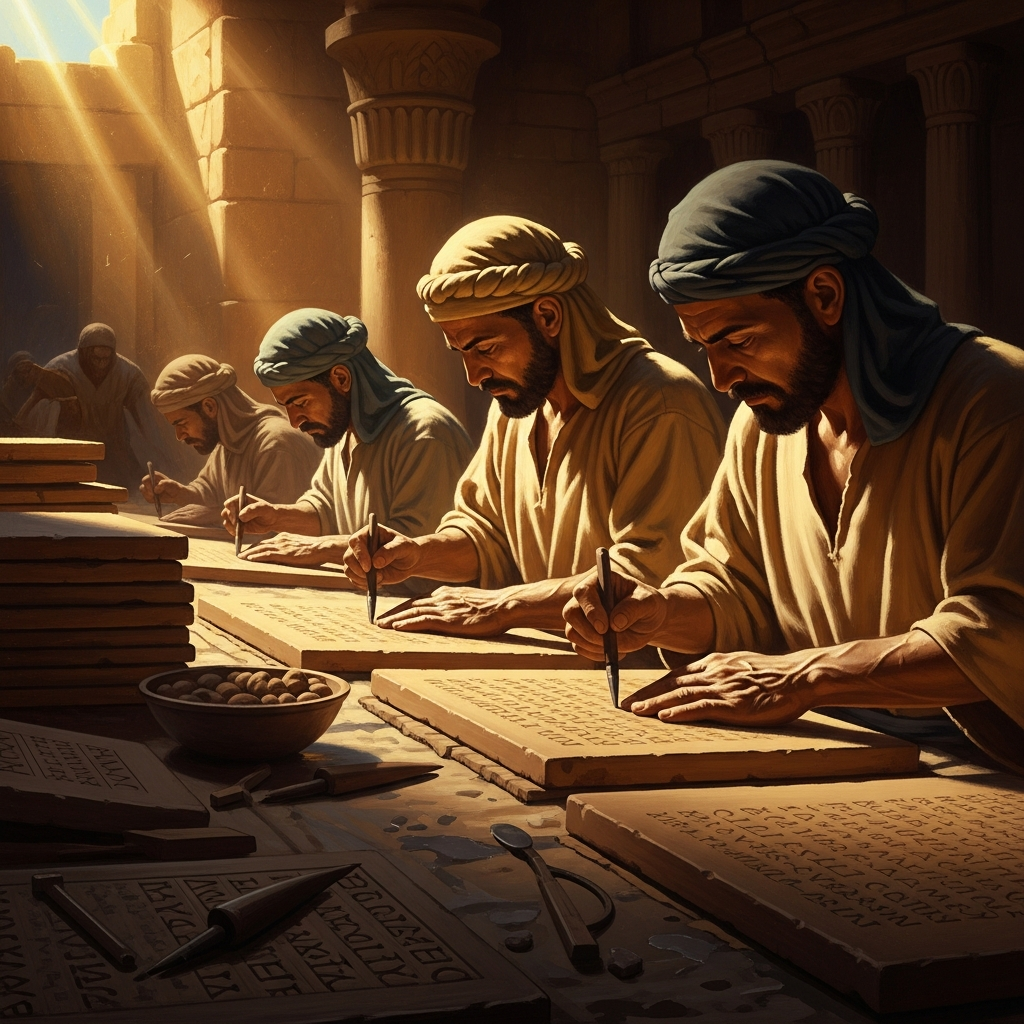
Two hundred miles up the coast, in the library of the chief priest of Baal, the scribes of the late Bronze Age temple school are transcribing the Baal Cycle onto tablets that will be baked by the fire that destroys their city in 1185 BCE and preserved by that same fire for three thousand years. They are recording what the farmer knows in his hands as formal narrative — the combat with Yam, the descent into Mot’s throat, Anat’s threshing of Death, the return of the rains.
They do not know they are producing the oldest sustained literary treatment of the resurrection theme in the Semitic world. They are doing their job: preserving the tradition that organizes the world. The farmer in the Jezreel Valley, putting emmer wheat into the furrow, is also doing his job: the job that is identical to the tradition they are preserving, the job that the tradition explains.
In 1929, a Syrian farmer plowing near the coastal village of Ras Shamra — the modern name for Ugarit — strikes the roof of the underground library with his plow share. The tablets are excavated. Scholars read them. The history of Canaanite religion, and with it the history of the Hebrew Bible and of ancient Near Eastern theology, has to be rewritten.
The farmer in 1929 was plowing in autumn, at the turn of the season, when the first rains come. He did not know what was under his field.
But the act — the plow going in, the earth opening, the old thing coming up into the light — was the right act for the season, and the season was exactly what the tablets said it was.
The Baal Cycle is not a myth about gods who happen to control agriculture. It is a myth about agriculture that uses gods to explain the process with the precision that the process demands. Why does the grain die in summer? Because the rain-god is in the underworld. Why is death the condition of fertility? Because Anat ground Death between millstones and what came out was seed. Why does the rain return in autumn? Because the goddess who loves the storm-god did not accept the permanence of the dry season.
The farmer in the Jezreel Valley in 1200 BCE understood his field the way the tablets understand it: as a place where the cosmic story plays out in miniature every year, where the myth is not a story you tell around a fire but a process you enact with your hands and your ox and the seed you saved through the summer of the god’s absence.
He spoke the words before the plow went in because the words identified what he was doing. He was putting Mot into the ground. He was preparing the ground of death for what grows from death. He was doing what Anat did, with humbler tools, in a field that was not the wilderness at the edge of the underworld but was, in the theology he inhabited, exactly that wilderness.
The seed went in. The rain came. The grain rose in the spring. Baal came back.
This is what the Baal Cycle means when it says the fat of the earth runs and the heavens rain oil and the wadis run with honey. It means the man in the Jezreel Valley got his harvest. It means the jar in the house was full through the winter. It means the theological argument — that the god who makes the rain come has returned from wherever the god goes in the dry season — was true enough to eat.
Scenes
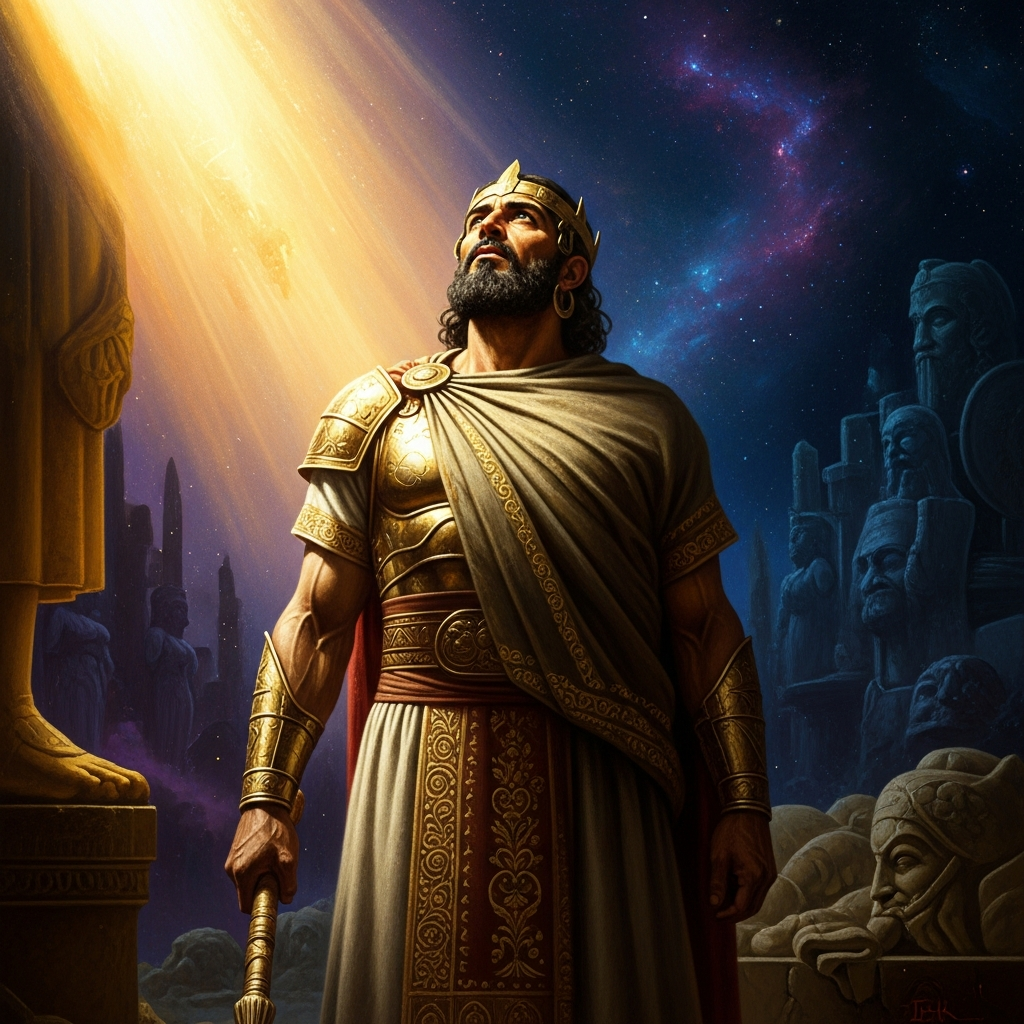
A Canaanite farmer drives his ox-plow through the cracked earth of the Jezreel Valley at the turn of the season, the first autumn clouds gathering above Mount Carmel behind him, the seed basket at his hip
 Generating art…
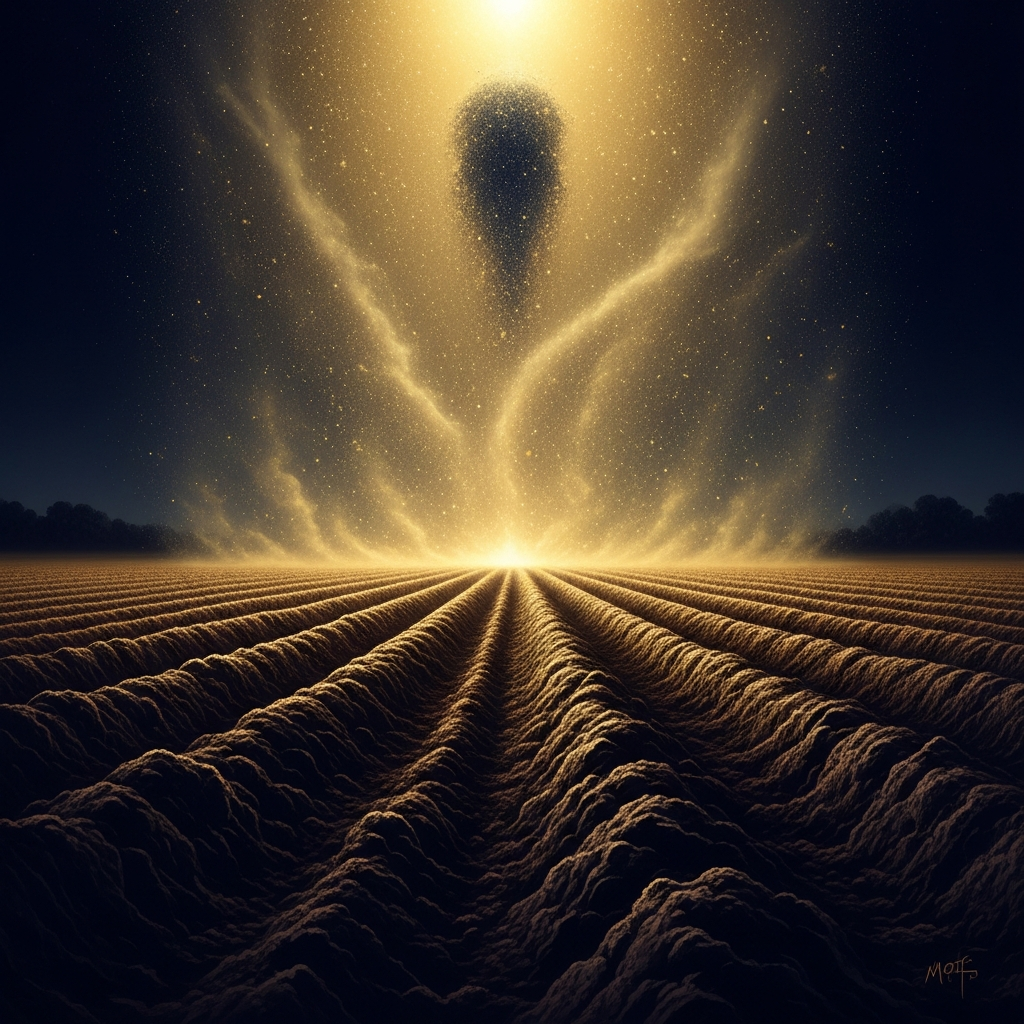
 The scattered dust of Mot settling into the furrowed fields at sowing time — Death becoming the ground condition for what grows, the grinding and scattering completed, the earth ready to receive
 Generating art…
 Scribes in the temple precinct at Ugarit pressing cuneiform wedges into wet clay, recording the words of the Baal Cycle onto tablets that will survive the city's burning by three thousand years
 Generating art…
 Echoes Across Traditions
Entities


Sources
- Mark S. Smith, *The Ugaritic Baal Cycle*, vol. I (Brill, 1994)
- Nicolas Wyatt, *Religious Texts from Ugarit* (Sheffield Academic Press, 2002)
- John Day, *God's Conflict with the Dragon and the Sea* (Cambridge University Press, 1985)
- Frank Moore Cross, *Canaanite Myth and Hebrew Epic* (Harvard University Press, 1973)
- Michael D. Coogan & Mark S. Smith, *Stories from Ancient Canaan* (Westminster John Knox, 2012)