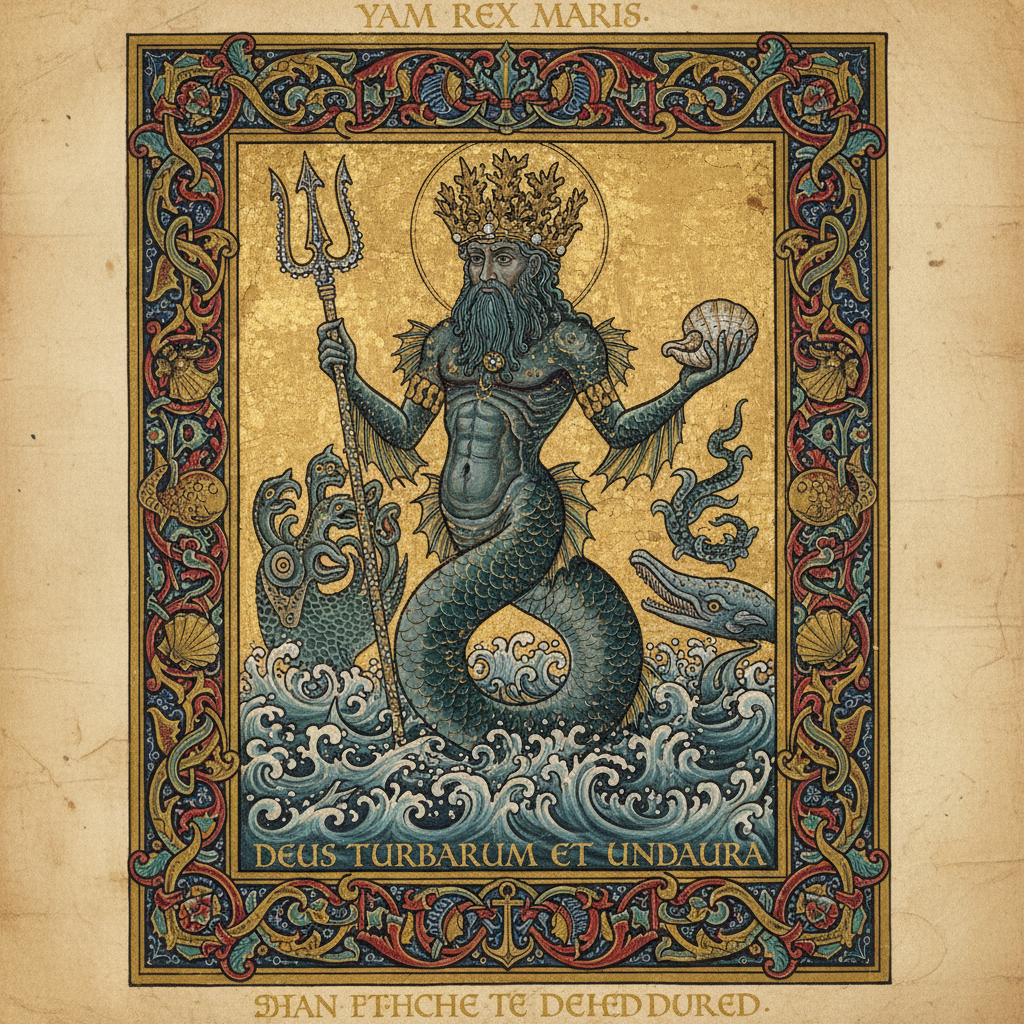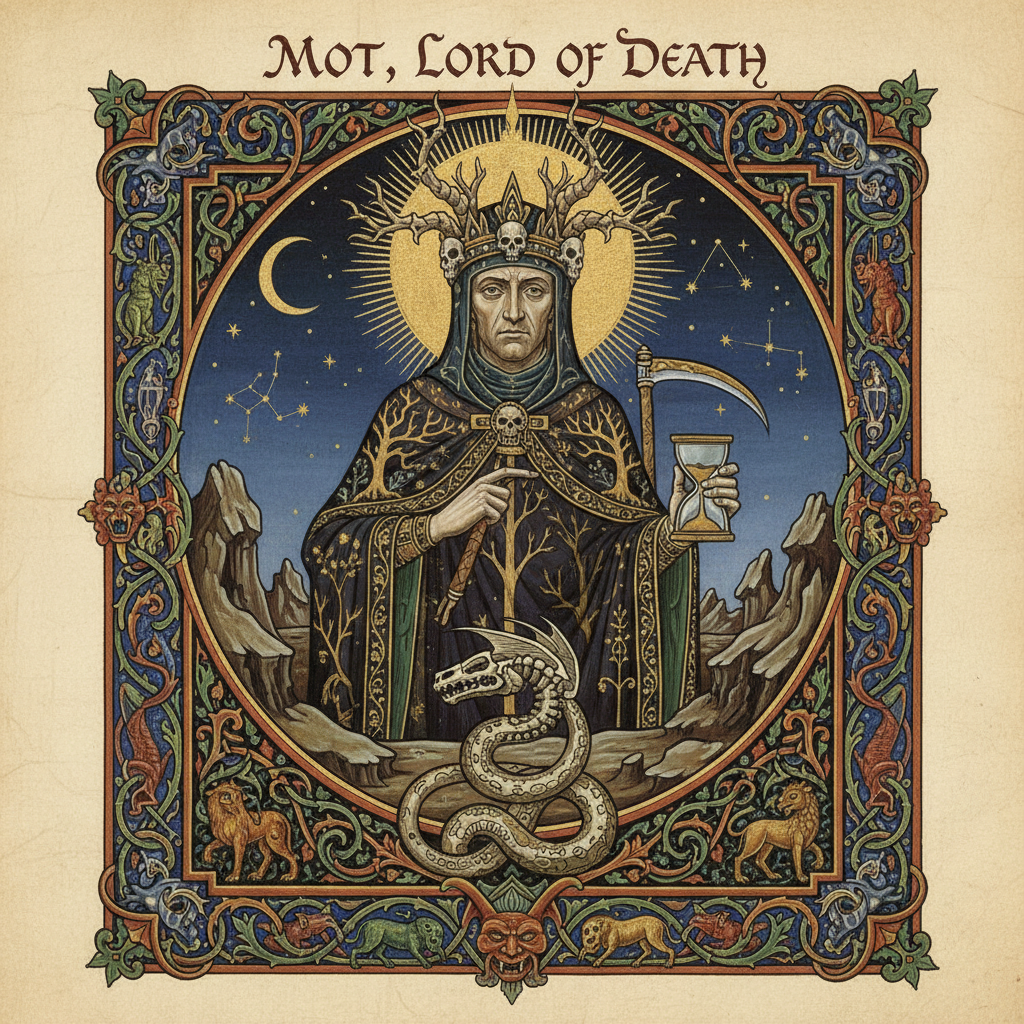
Baal Descends into Mot's Throat
Mythic Time · tablets recorded ~1350 BCE, Ugarit · Mount Zaphon, the underworld city of Mot, and the wilderness between
Contents
Baal, master of storm and rain, lord of Zaphon, sends his messengers into the underworld to invite Death to a banquet. Mot answers with a counter-invitation: descend into my throat. Baal sends clouds, wind, lightning, and rain as heralds, but then goes himself. El mourns in ash. Anat searches. The seasonal cycle as theological argument.
- When
- Mythic Time · tablets recorded ~1350 BCE, Ugarit
- Where
- Mount Zaphon, the underworld city of Mot, and the wilderness between
The palace is finished.
Cedar from Lebanon. Silver from the earth’s own veins. Gold leaf on the beams that Kothar-wa-Khasis argued over and Baal finally approved. The windows Baal refused and then relented about are in — windows through which the lightning pours out over the valleys, through which the thunder rolls down toward the cities that burn offerings on the hilltops. The palace on Mount Zaphon is the most beautiful structure in the world because the world has never had a structure like it before, built for a god who defeated the sea and earned this mountain and this view.
Baal looks at what he has built and decides to send greetings to Mot.
He is not naive. He knows what Mot is. But he is king now — king recognized by the divine council, king with a palace and a mountain and the rain that the valleys below depend on — and a new king who has not settled his relationship with the one neighbor he hasn’t met is a king with an open border. He calls his messengers: Gupn and Ugar, the two servants of the cloud, the ones who carry his voice into places his storm cannot reach. He sends them into the underworld with words of invitation in their mouths: come to my table, lord of the dark earth. Come to the palace on Zaphon and eat bread and wine with the storm-god.
He watches them descend and does not know that he has just begun the story that ends with him in Mot’s throat.
Gupn and Ugar go down.
The tablets describe the road to Mot’s domain with the precision of a geographic document someone needed to use: go to the mountain Tharghazi, to the twin hills at the edge of the world, take up the underworld stone, incline toward the earth’s depths, descend to the house of freedom — that is what the tablets call it, Mot’s house, the counting-house of the underworld, freedom from the obligations of the living. It is two roads, both going down, arriving at a city called Hamriya. At the center of Hamriya is Mot himself.
They stand at the gate and speak Baal’s words. The invitation. The feast. The hospitality of the storm-god’s table.
Mot answers the way a throat answers. He opens. He describes himself — one lip to earth and one lip to heaven, an appetite so fundamental it precedes the distinction between hunger and existence. He has heard about Baal’s victory over Yam. Baal defeating the sea-god is to Mot what one wave swallowing another wave is to the ocean: interesting, perhaps, but not relevant to the larger situation. He is not a king who can be visited at his table and sent home with goodwill. He is a direction.
Tell your lord, Mot says, that I have seven portions. The eighth I will require of him. Let Baal descend into my throat. Let him enter my mouth as the olive is swallowed. As the fruit a man eats in the heat of summer.
Gupn and Ugar carry the message back up.
Baal hears it and is afraid.
This is the fact the tablets record with a brevity that does not hide what it means. The storm-god who held his arm back in El’s assembly, who went to Kothar and came back with named clubs, who threw Aymur between Yam’s eyes and watched the sea-god crumble on the shore — this god is afraid. Not of the fight, because there is no fight Mot is offering. Mot is not offering combat. He is offering the only thing he ever offers: a claim. The claim that everything living eventually makes good on.
Baal sends his messengers back with a second message. He will come. He will obey Mot’s demand. He is afraid, the message says so plainly, but he will go, and he will bring with him everything that constitutes his power: clouds, winds, lightning, rains, dews — the full apparatus of the storm, which is not separate from him and cannot be left behind on Zaphon any more than the sun can leave its heat at home.
Before he goes, he does what men do when they know the road they are walking does not come back. He lies with Asherah’s heifer in the wilderness and fathers a son. A child left behind. An heir. Something in the living world that carries his name and his charge when the storm-god is no longer above it.
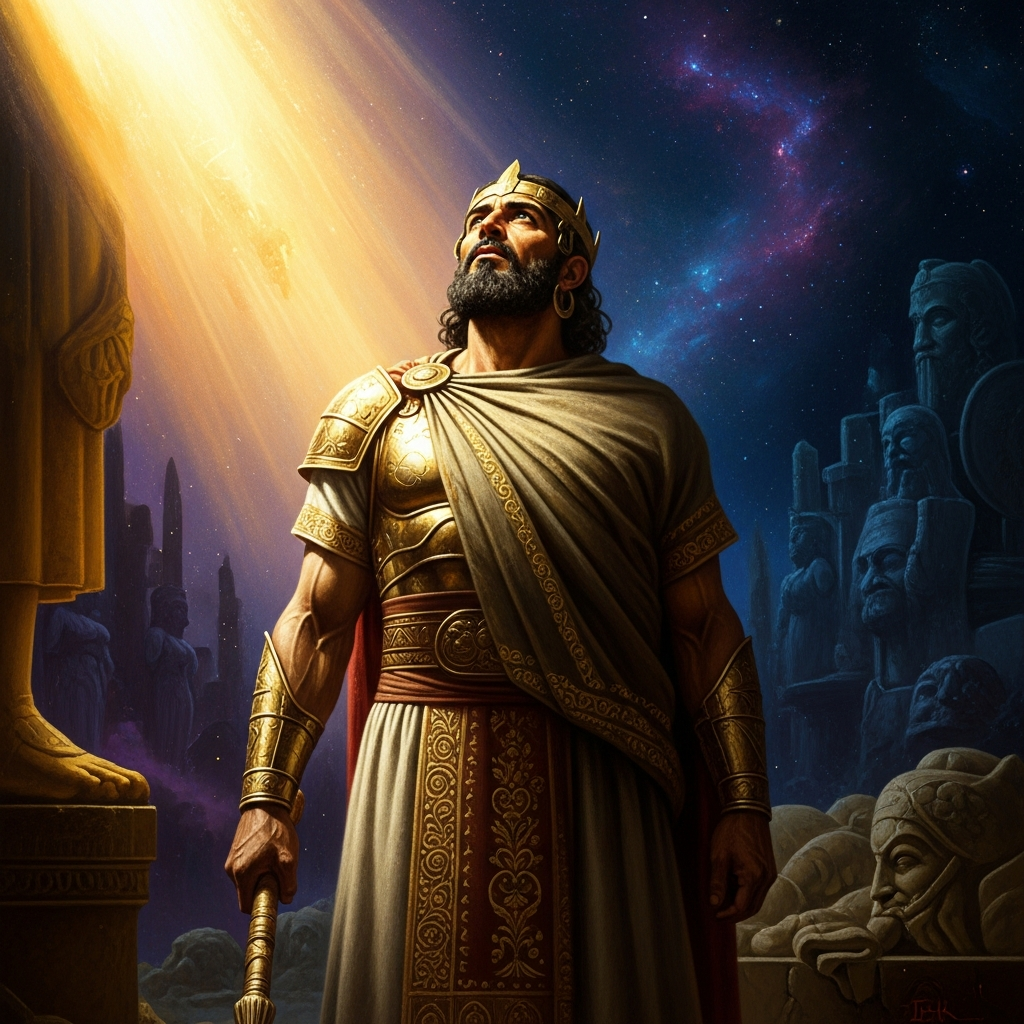
Then Baal, son of Dagon, rider of clouds, lord of the holy mountain, gathers his clouds and his wind and his rain in his arms like a harvest he is carrying somewhere it was never meant to go.
He descends into the throat.
Gupn and Ugar return to Zaphon without him.
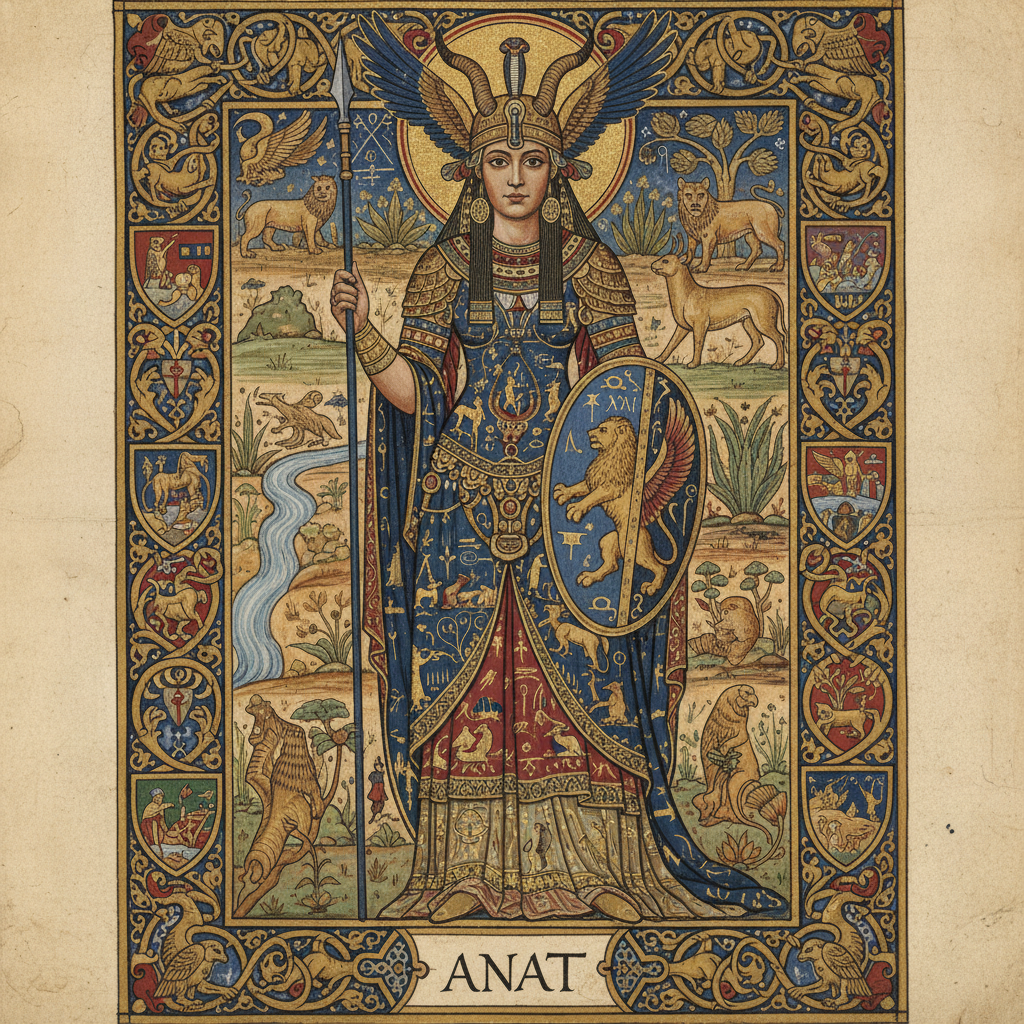
They find Anat — Baal’s sister, the warrior-goddess, the hunter who does not stop moving when there is something to find — and they open the wound of it the only way it can be opened: with the words that mean it. Baal has fallen to the earth. Dead is Mighty Baal. Perished is the Prince, Lord of the Earth.
The sun, the goddess Shapsh, hears it on her arc above the world and weeps.
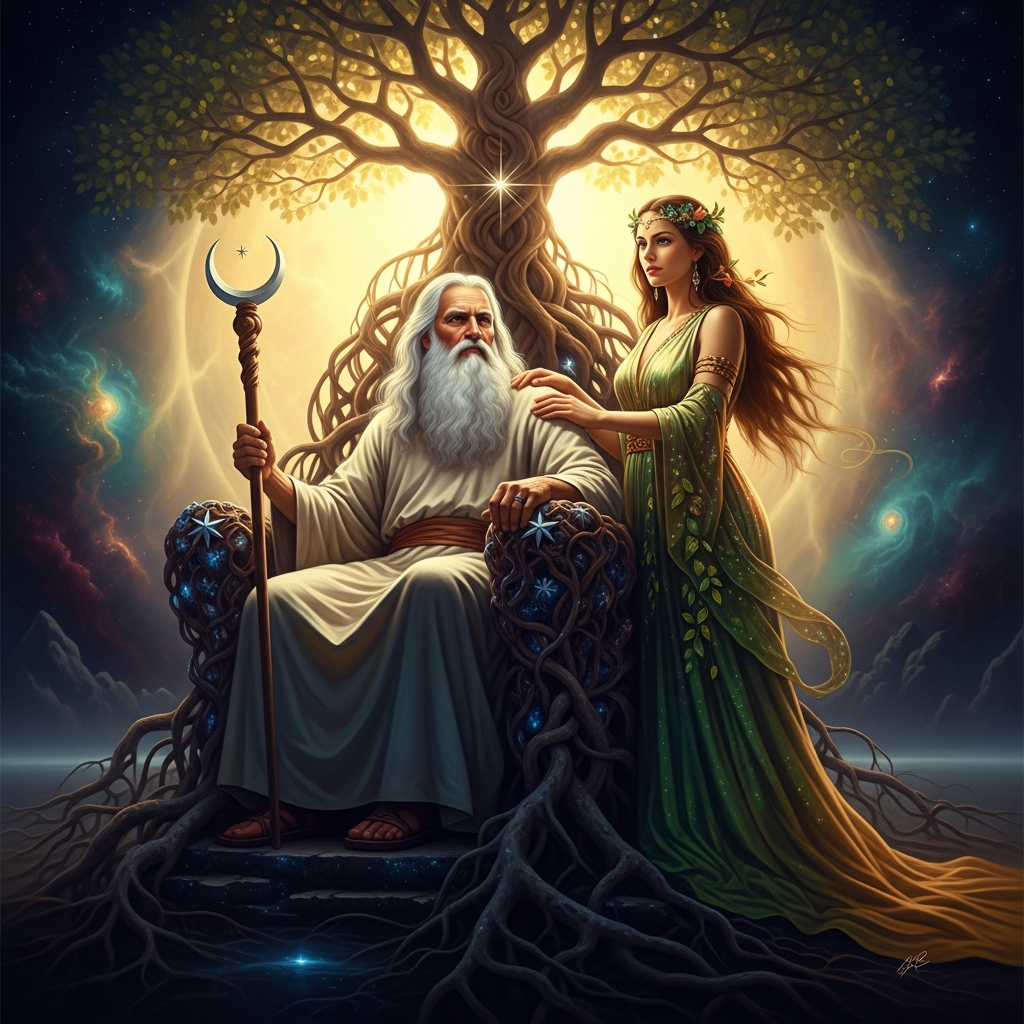
The news ascends to El. The patriarch is in his tent at the headwaters of the two rivers, at the confluence of the deep, at the source of everything — and when the news reaches him, he descends from his throne the way the tablets describe with the language of mourning that has not changed since the first human being understood that the thing they loved was gone. He descends from the throne to the footstool. He descends from the footstool to the ground. He pours ashes on his head. He covers himself with dust. He wears sackcloth. He takes a stone and cuts himself — cheek, chest — the furrows that mourning makes in a face that has no other way to show the interior damage.
He lifts his voice: Baal is dead. What will become of the people? What will become of the multitudes? I will go down into the earth after him.
He is not going anywhere. El is not the kind of god who goes anywhere. He is the patriarch who authorizes and mourns and assigns — the grief is real, the going is rhetoric. Someone else will go.
The sky closes.
This is what Baal’s death means in the valleys below Zaphon, in the terraced hillsides where barley and wheat grow or fail based on what the western winds carry in from the sea. The storm-god is in the ground. The storm went with him — he bundled it and took it, the clouds and the rain that he is and that are not separate from him. The sky above Canaan is the sky after the god of rain has left it: white, cloudless, silent, open-mouthed with no answer falling in.
The people of Ugarit did not need the tablets explained to them. They lived in a climate that required the rain to come in a narrow window — autumn through spring — or the cisterns went dry and the grain on the threshing floor represented not abundance but arithmetic. They knew this drought. They had lived inside it. What the myth gave them was not an explanation of the physics but an account of the meaning: the rain is not a weather pattern. The rain is an act of will by a god who is currently in Mot’s throat.
Baal is gone. The sky is shut. The earth opens its mouth and nothing falls in.
Anat goes searching.
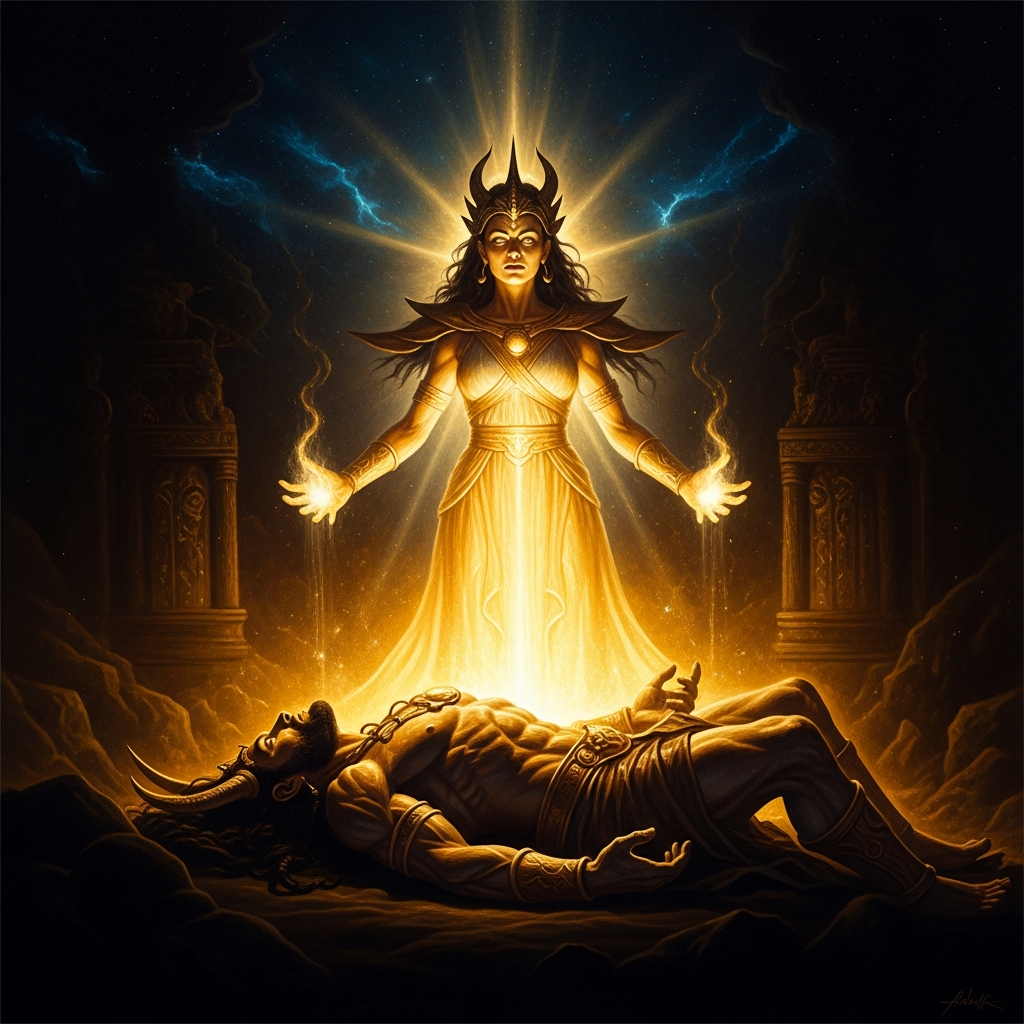
She travels the mountains. She covers the wilderness between the living world and the edge of Mot’s domain, the margin where the land thins into something that is neither the highlands of Canaan nor the underworld city of Hamriya. She finds Baal. The tablets’ account of the exact discovery is damaged, the clay broken at the critical line, but the outcome is clear: she finds his body somewhere at the margin, at the edge of the country the living do not enter, and she performs the rites herself.
She takes him on her shoulder. She carries him to the heights of Zaphon. She slaughters bulls and sheep and deer and ibex as his funeral offering and buries him in the ground of the holy mountain.
Then she turns toward Mot.
Burial is not the end of this story. The tablets know what Anat knows: that the storm-god cannot remain in the ground without the world dying above him, and that the world dying is not acceptable to the goddess who will do the difficult thing in the difficult place. She has buried Baal. Now she is going to find the god who swallowed him and do to that god what a farmer does to the grain in September.
But that is Anat’s story. Baal’s story ends here, in Mot’s throat, in the ground below Zaphon, in the dry sky above Canaan where the rain used to be.
The descent of Baal is the answer the people of Ugarit gave to the most urgent theological question in their world: why does the rain stop? The answer is not arbitrary. It is not punishment. It is not divine indifference. It is this: the god who makes the rain has been swallowed by the god who claims all living things, and the world is dry because its lord is absent.
The Hebrew Bible inherits this logic and reframes it: YHWH withholds rain not because he has descended, but because Israel has been unfaithful — specifically, because Israel has been following Baal. The drought in 1 Kings 17, Elijah’s three-year closure of the heavens, is announced in the same breath as the accusation of Baal-worship. The polemic works because both traditions agree on the mechanism: closed sky means absent or alienated lord. What changes is the reason.
Mot’s demand — descend into my throat — is the most honest description of death in ancient literature. Not a place. Not a kingdom. A direction. A claim made by something so much larger than the claimant that the only response is the one Baal gave: I am terrified, and I am going.
He sent his clouds and his wind and his rain ahead of him. The storm-god brought the storm into the underworld. That is the detail the tablets refuse to drop — not that Baal died, but that he took his work with him, and the world above went dark.
Scenes
Baal at the threshold of Mot's underworld city, clouds and lightning bundled in his arms like a harvest he is carrying into the dark — the storm-apparatus going below with its lord
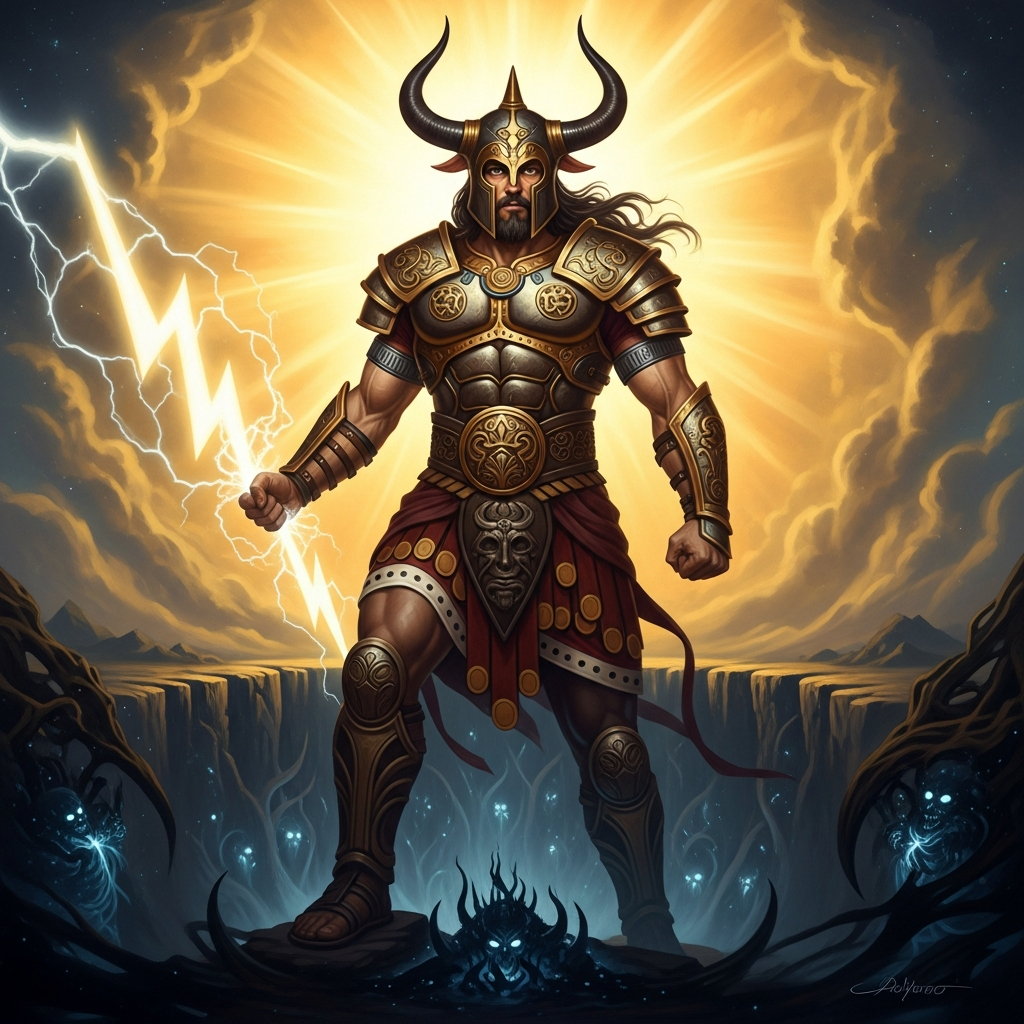 Generating art…
 El descends from his throne in ash and sackcloth, pouring dust over his head, his lament the only sound in the divine assembly as the news of Baal's death arrives
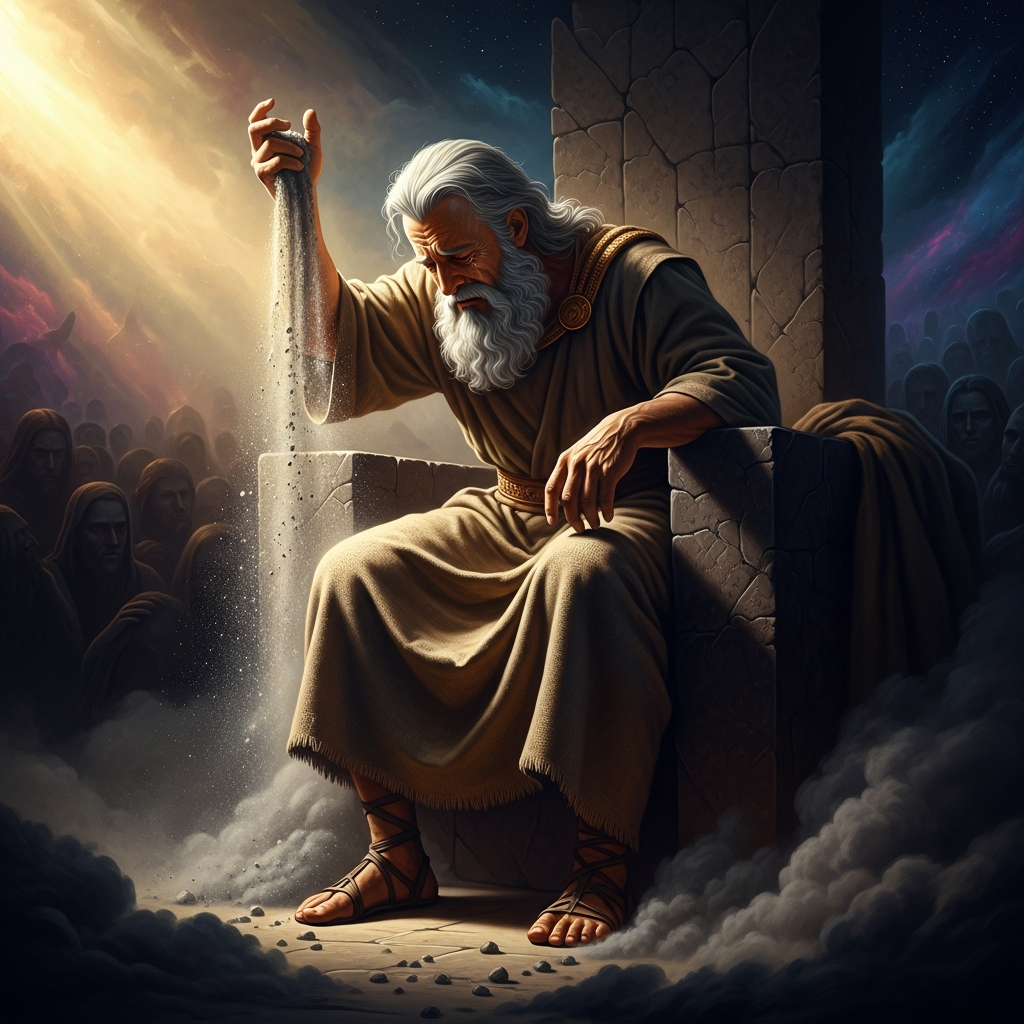 Generating art…
 Anat moves through the scorched wilderness between the living world and the dead, her face set like a blade, carrying Baal's body toward the heights of Zaphon for burial
 Generating art…
 Echoes Across Traditions
Entities


Sources
- Mark S. Smith, *The Ugaritic Baal Cycle*, vol. I (Brill, 1994)
- Nicolas Wyatt, *Religious Texts from Ugarit* (Sheffield Academic Press, 2002)
- John Day, *God's Conflict with the Dragon and the Sea* (Cambridge University Press, 1985)
- Frank Moore Cross, *Canaanite Myth and Hebrew Epic* (Harvard University Press, 1973)
- Michael D. Coogan & Mark S. Smith, *Stories from Ancient Canaan* (Westminster John Knox, 2012)