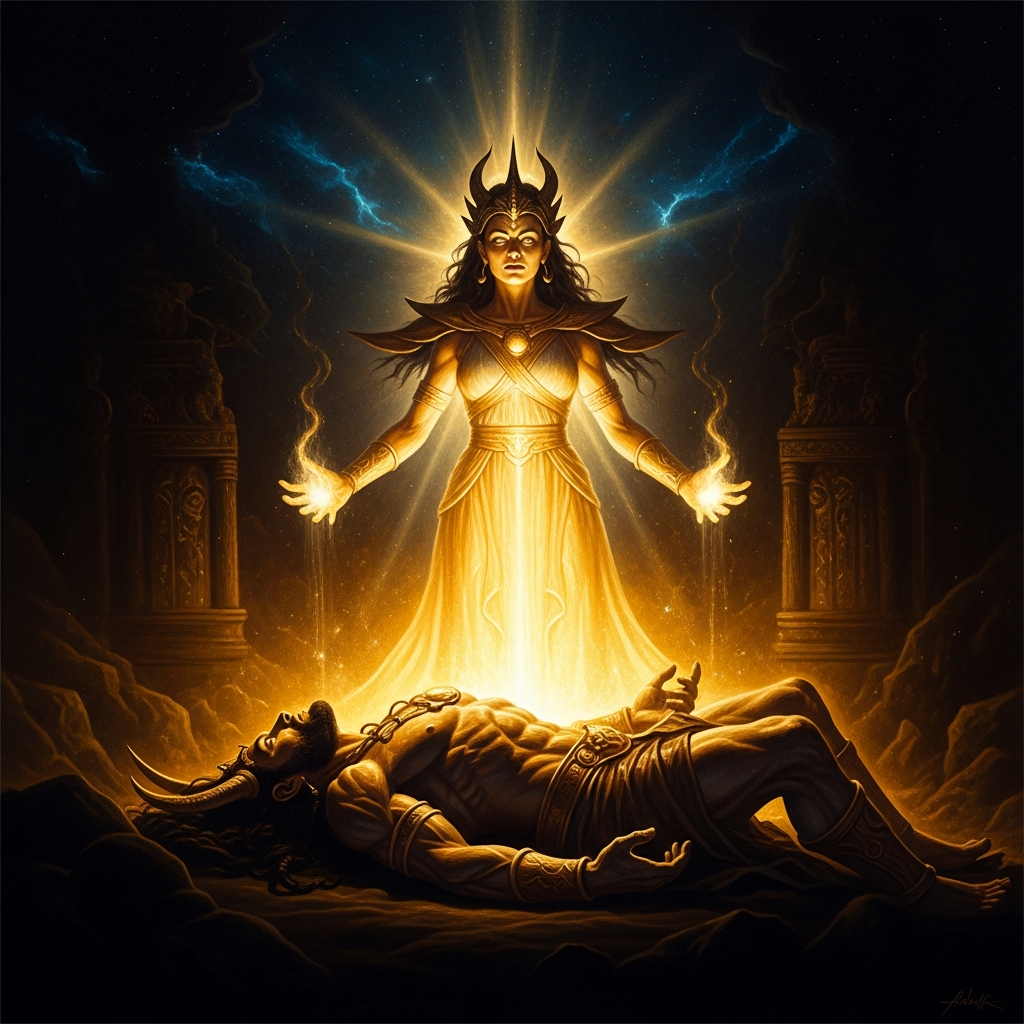
Anat Defeats Mot
Mythic Time · tablets recorded ~1350 BCE, Ugarit · The wilderness beyond the living world, and the fields below Mount Zaphon
Contents
The warrior-goddess Anat finds Mot, seizes him, and does to Death what farmers do to grain — she cleaves him with a sword, winnows him, burns him, grinds him between millstones, and scatters him in the fields. Baal rises. The rains return. This is what the agricultural cycle costs.
- When
- Mythic Time · tablets recorded ~1350 BCE, Ugarit
- Where
- The wilderness beyond the living world, and the fields below Mount Zaphon
Seven years.
That is how long the earth has been dry. Seven years since Baal descended into Mot’s throat, since the storm-apparatus went dark, since El sat in ash on the ground beside his throne and lifted his voice and asked what would become of the people. The sun-goddess Shapsh has been traveling her arc over a landscape that does not renew itself. The grain that was planted has not risen. The olive trees have not fruited. The vineyards have been stripped by the heat.
Anat is still looking for Mot.
She finds him.
The tablets do not describe the wilderness where she finds him with any architecture — it is the place between the living world and the dead one, the margin where neither Baal’s mountains nor Mot’s underworld has full claim. It is the kind of place you find someone who occupies both realms, who is neither fully above nor fully below, who has eaten the storm-god and is satisfied with himself.
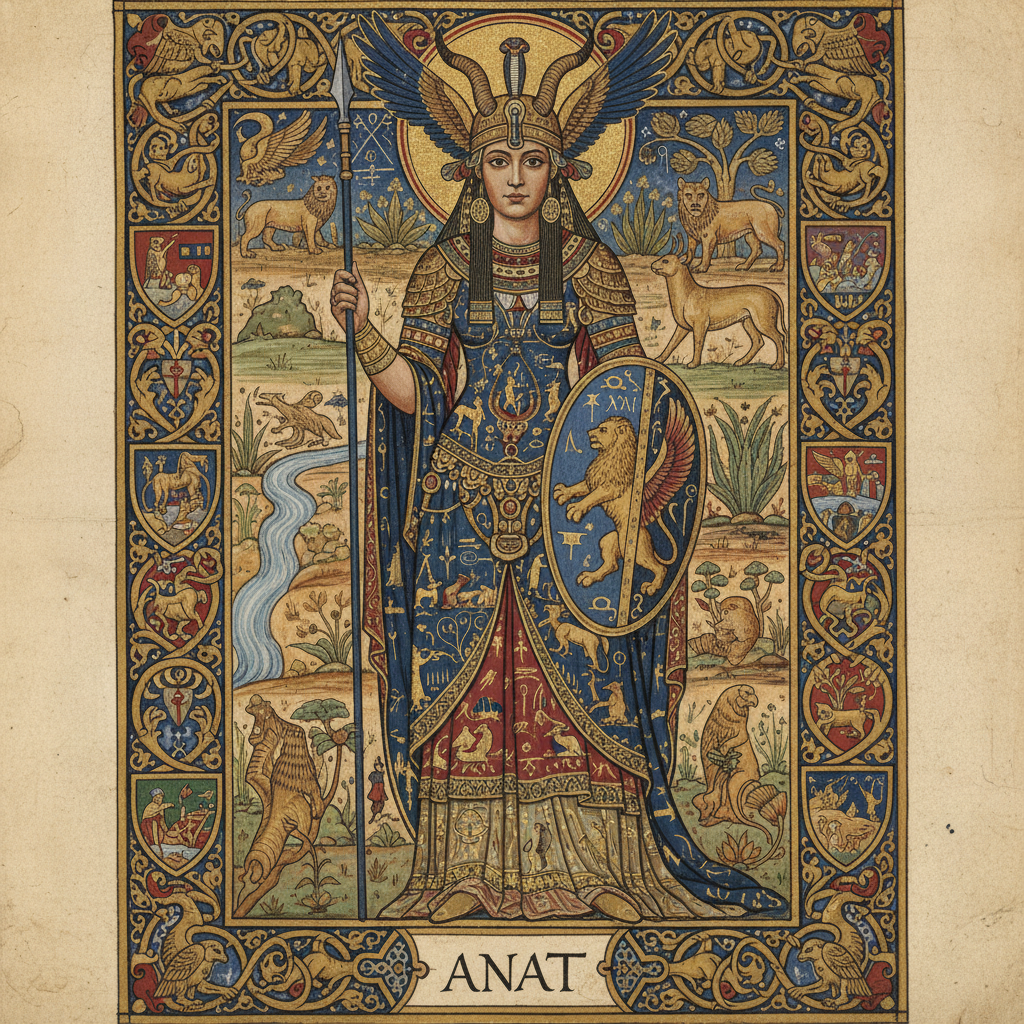
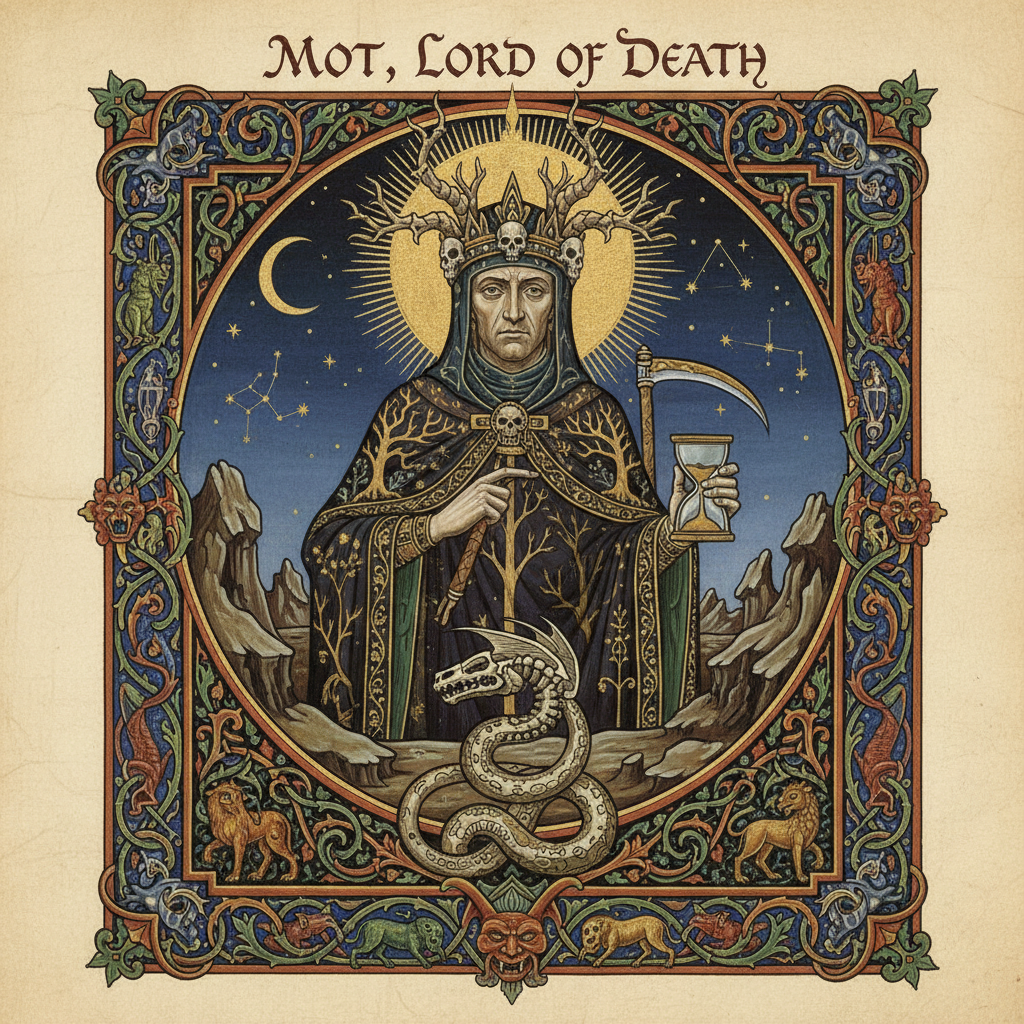
Mot is not expecting her. Or perhaps he is expecting her the way death is always expecting whatever comes next — with patience, with the certainty of a god who has never lost. She is the warrior-goddess. She has bathed in human blood before a banquet because the slaughter pleased her. He is the lord of the underworld who has just consumed the mightiest god on the Canaanite mountain. They assess each other across whatever margin this is.
Anat does not speak diplomatic words. She does not send messengers ahead.
She seizes him.
Then she does to him what farmers do to grain.
This is the moment where the myth and the agricultural cycle fuse so completely that the language cannot be separated: Anat takes a sword and cleaves Mot. She takes a fan and winnows him — scatters him the way threshed grain is scattered in the wind to separate chaff from seed. She takes fire and burns him. She takes millstones and grinds him. She takes the pieces that remain and scatters them in the fields.
She plants Death like seed.
The tablets present this without ceremony, without the drama that surrounds Baal’s combat with Yam or his descent into the underworld. It is methodical. It is agricultural. It is the work of someone who understands that Mot is not a personality to be negotiated with or a king to be overthrown — he is a substance, like grain, and substances are managed by the processes that transform them: cut, winnow, burn, grind, scatter.
Death becomes seed. Seed becomes the possibility of what grows next.
El dreams.
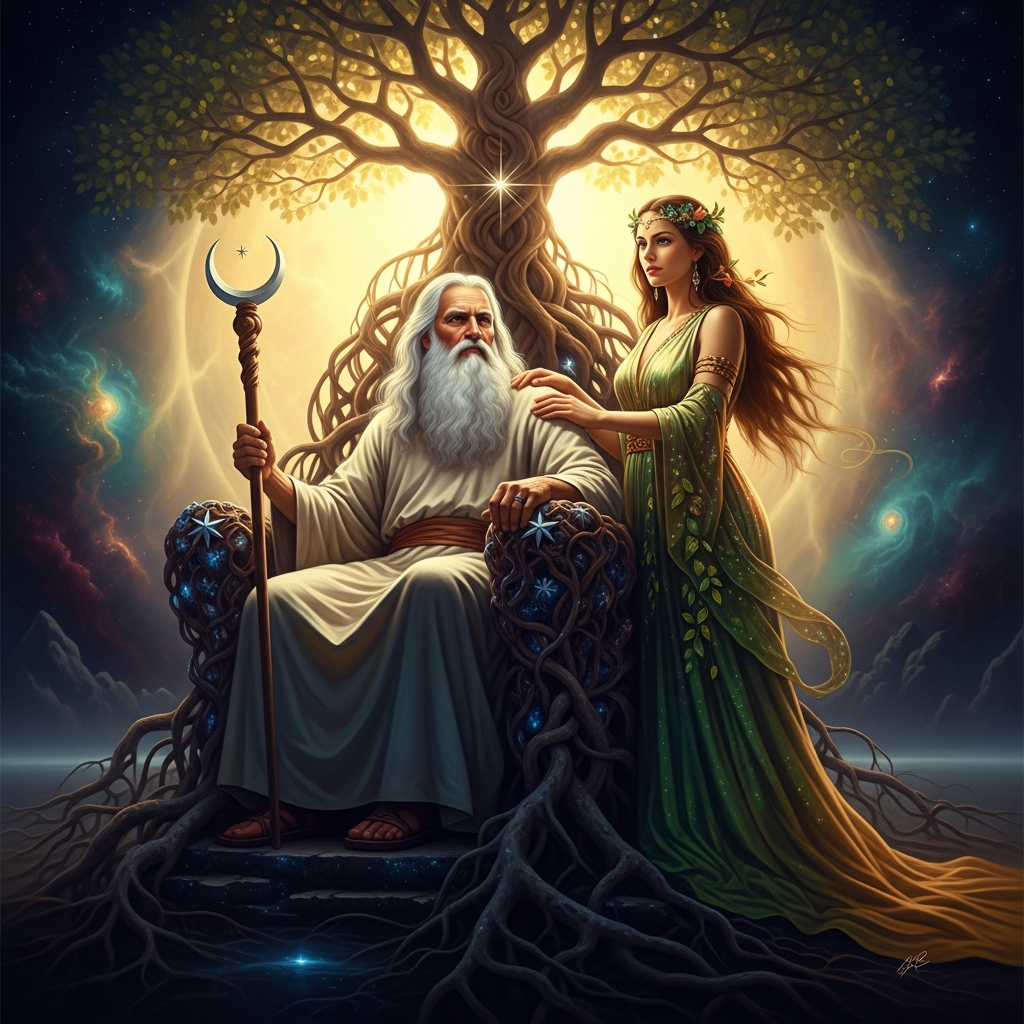
In the dream, the fat of the earth runs. In the dream, the heavens rain with oil and the wadis run with honey. El wakes from the dream and he knows what it means without being told, because El knows what rain means in the body and in the world. Baal is alive, he says. Let the fields exult. Let the valleys exult with Baal’s rain.
He calls for Shapsh. The sun-goddess is still making her arc. He gives her a new instruction: go down through the wilderness, find where Anat has scattered Mot, and tell me what grows.
Shapsh goes. What she finds the tablets do not fully preserve — the text is damaged here, lacunae swallowing the exact shape of the restoration — but the outcome is recorded. Baal is found. Baal rises to his seat. He drives his enemies from Zaphon. He returns to the mountain that is his and stands there the way the storm-god stands before the rains: with his hand raised and the clouds gathering below him.
The rains return.
Seven years of drought reverse in the time it takes the western wind to carry moisture in from the sea and find the hills warm enough to draw it up. The wadis run. The terraces drink. The grain that was planted and did not rise finds — by what mechanism the tablets do not say, by what miracle of residual life — that the god who makes growing possible has come back.
The world does not celebrate with speeches. The world celebrates the way it always celebrates a returning god: it grows. Olive trees fruit. The vineyards load. The barley in the terraced fields comes up green, then gold, then ready for the harvest that is itself a repetition of Anat’s action — cut, winnow, burn, grind.
She did to Mot what the harvest does to grain. The harvest does to grain what Anat did to Mot. The farmer who threshes barley on the threshing floor in September is performing, without knowing he knows it, the same act that restored the rain.
But Mot is not destroyed.
This is the part the myth does not let the listener miss. Anat ground Mot between millstones and scattered him in the fields. Mot is seed now, in the earth, waiting. After seven years — the tablets jump forward, they do not explain the arithmetic — Mot reconstitutes himself. He approaches Baal on Zaphon. He is furious. He has a grievance: the gods took sides, and Baal won through Anat’s intervention, and this is not over.
They fight. Properly this time, god to god, on the heights of Zaphon, and the tablets say they fight like oryx and they gore each other like wild bulls and they wrestle and fall and cry out until Shapsh, the sun-goddess, intervenes. She tells Mot: El has empowered Baal. El’s decision holds. Your brothers the storm and the sea support him. The seven-year reckoning is done.
Mot hears it. He hears the full weight of the divine order in it — El behind Baal, El above Mot, El whose word was the original mistake about Yam and the original grief about Baal’s death, but whose final position is this — and he steps back.
He retreats to his throne in the underworld. He is not defeated. He is contained.
This is the theology of the agricultural year.
Baal lives: it rains. Baal descends: drought. Anat destroys Mot: the drought ends. Mot returns: Baal must fight him again. The cycle does not conclude. It repeats. The Canaanite farmer who planted in autumn, who watched the winter rains come or fail, who harvested in late spring and then waited through the long dry summer — was living inside this myth. Was living inside a world where the storm-god’s presence or absence was the only variable that mattered.
The threshing floor was a ritual site before it was an agricultural site. The grain that was cut and winnowed was Mot being made into seed. The first rains of autumn were Baal coming back. The seven lean years of Genesis — Jacob’s sons going down to Egypt when Canaan dried — are a story that makes theological sense only in the world of these tablets, in the Canaanite imagination where seven-year droughts are what happens when the god of rain is in the underworld.
Stories from Ancient Canaan does not use the word resurrection, because it is a word with a specific cargo of later theology. But the structure is exact. God descends. God lies dead in the earth. Something violent happens to the power that holds him there. God rises. The world is restored. This is 1350 BCE.
What Anat demonstrates that no other goddess or god in the ancient Near East demonstrates quite so precisely is this: the restoration of life does not come through mourning or through prayer or through negotiation. It comes through violence applied to the right target. Isis reassembles Osiris and breathes into him. Inanna is restored by a worm from Enki’s mud. Anat grinds Mot in a millstone.
She is the warrior-goddess. She does the thing the warrior-goddess does: she finds the enemy and she destroys him, and the fact that the enemy is Death, that destroying Death requires the agricultural toolkit rather than the combat toolkit, does not slow her down. She simply identifies the right tool.
The myth is telling you something about how resurrection works in the Canaanite world. It does not happen because the cosmos is merciful. It happens because someone who loves the dead god more than they fear his killer goes out into the wilderness and does what needs to be done.
Anat went. Baal came back. The rain followed.
Scenes
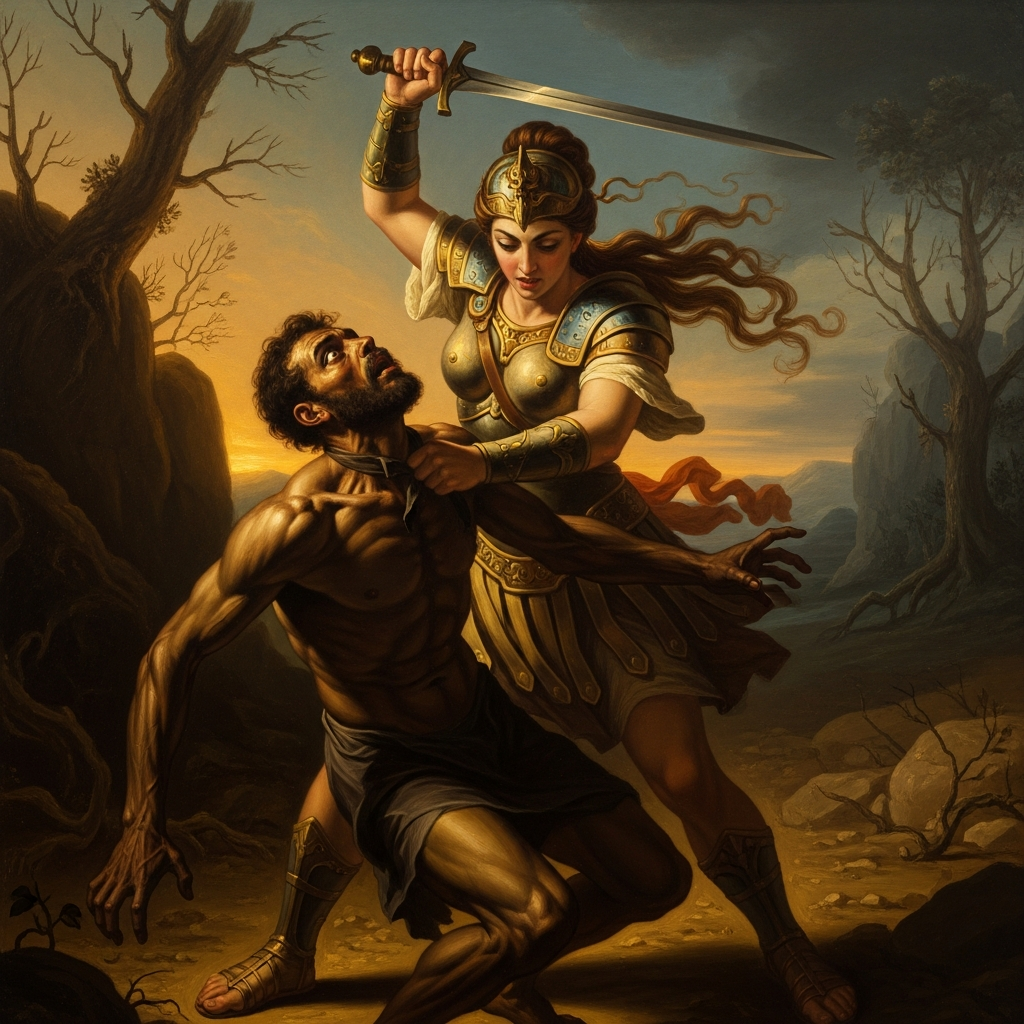
Anat seizes Mot in the open wilderness — her hand in his collar, her sword already drawn, the full violence of what she is about to do organized in her face like a plan
 Generating art…
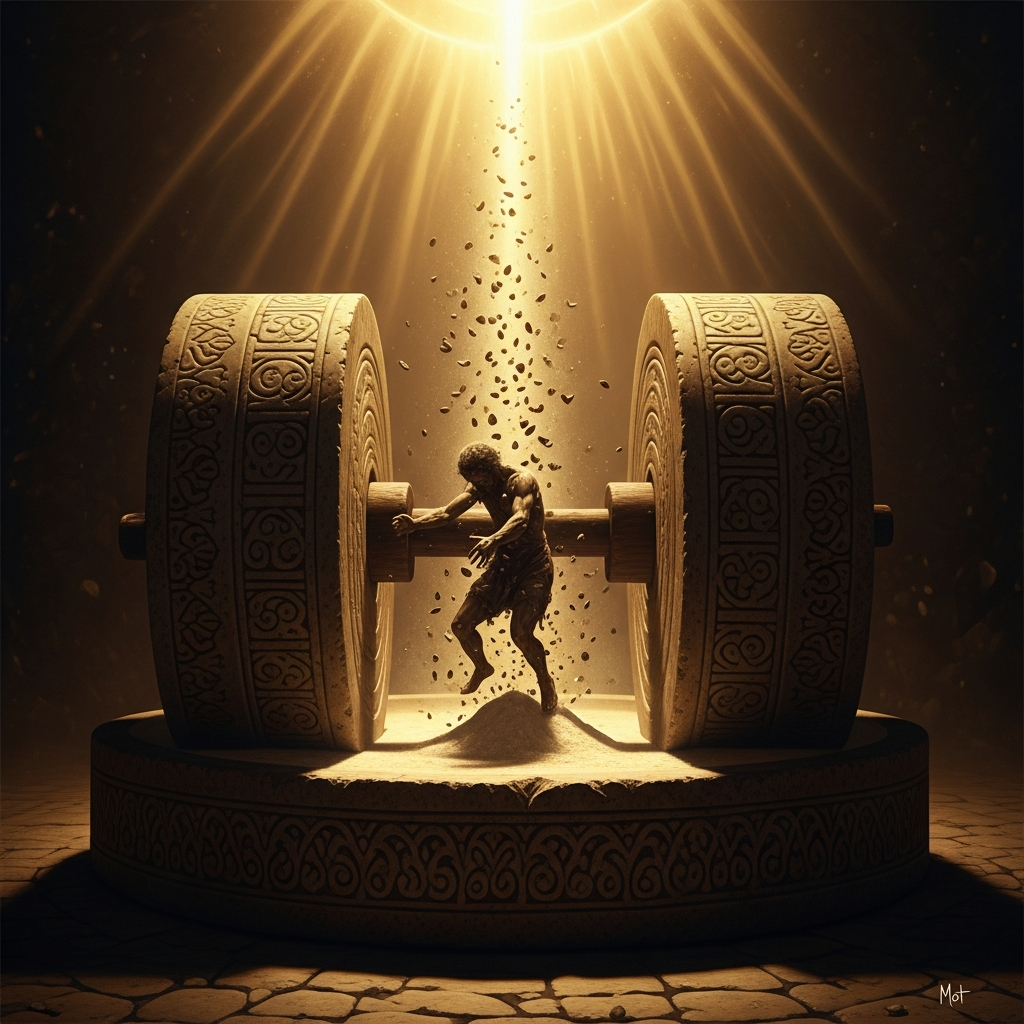
 The millstones turn and Mot is between them — ground into flour, scattered on the wind, sown in the fields as seed, death returned to the earth that death feeds
 Generating art…
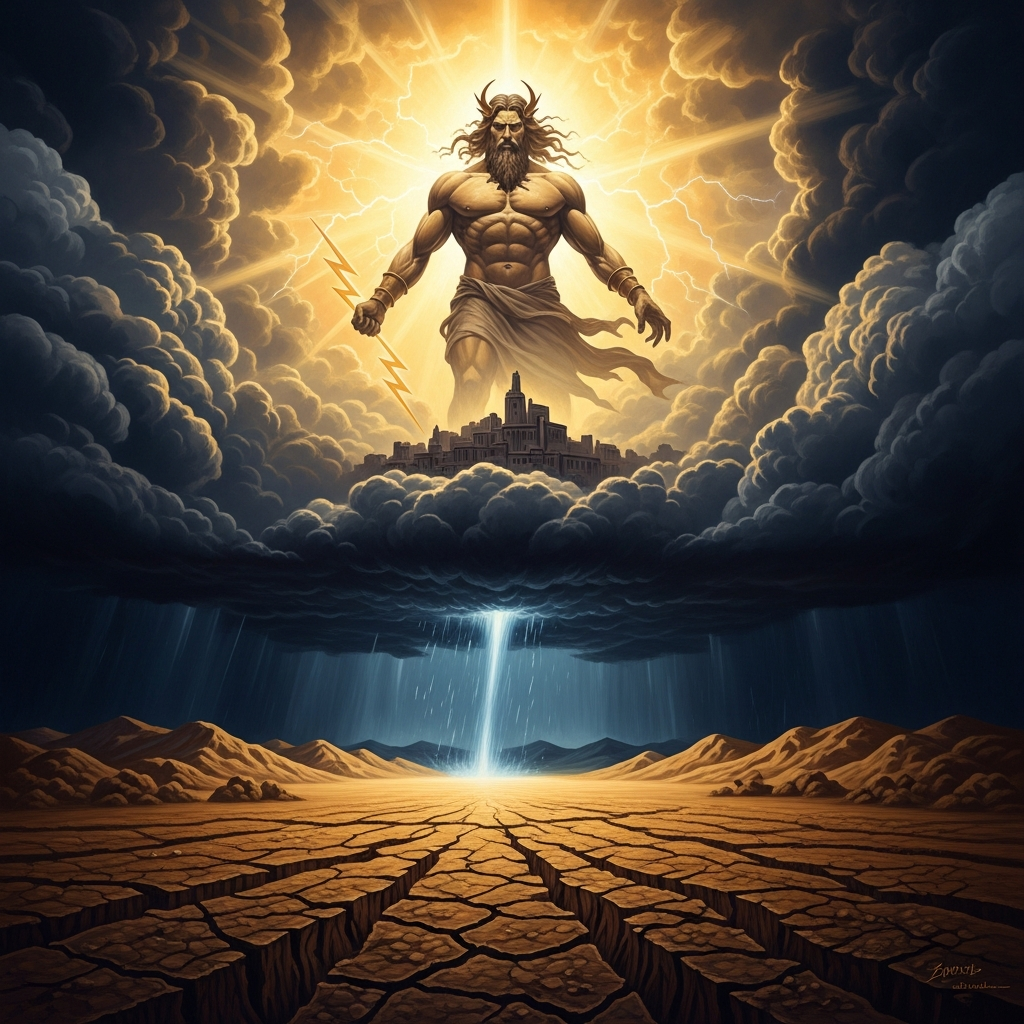
 Baal rises above Zaphon as the clouds gather again — the first rain in seven years breaking over the dry hills of Canaan, the earth opening its mouth to receive it
 Generating art…
 Echoes Across Traditions
Entities


Sources
- *Baal Cycle* (KTU 1.6, cuneiform tablets, Ugarit, ~1350 BCE)
- Mark S. Smith, *The Ugaritic Baal Cycle*, vol. I (Brill, 1994)
- John C. L. Gibson, *Canaanite Myths and Legends* (T&T Clark, 1977)
- Michael D. Coogan & Mark S. Smith, *Stories from Ancient Canaan* (Westminster John Knox, 2012)