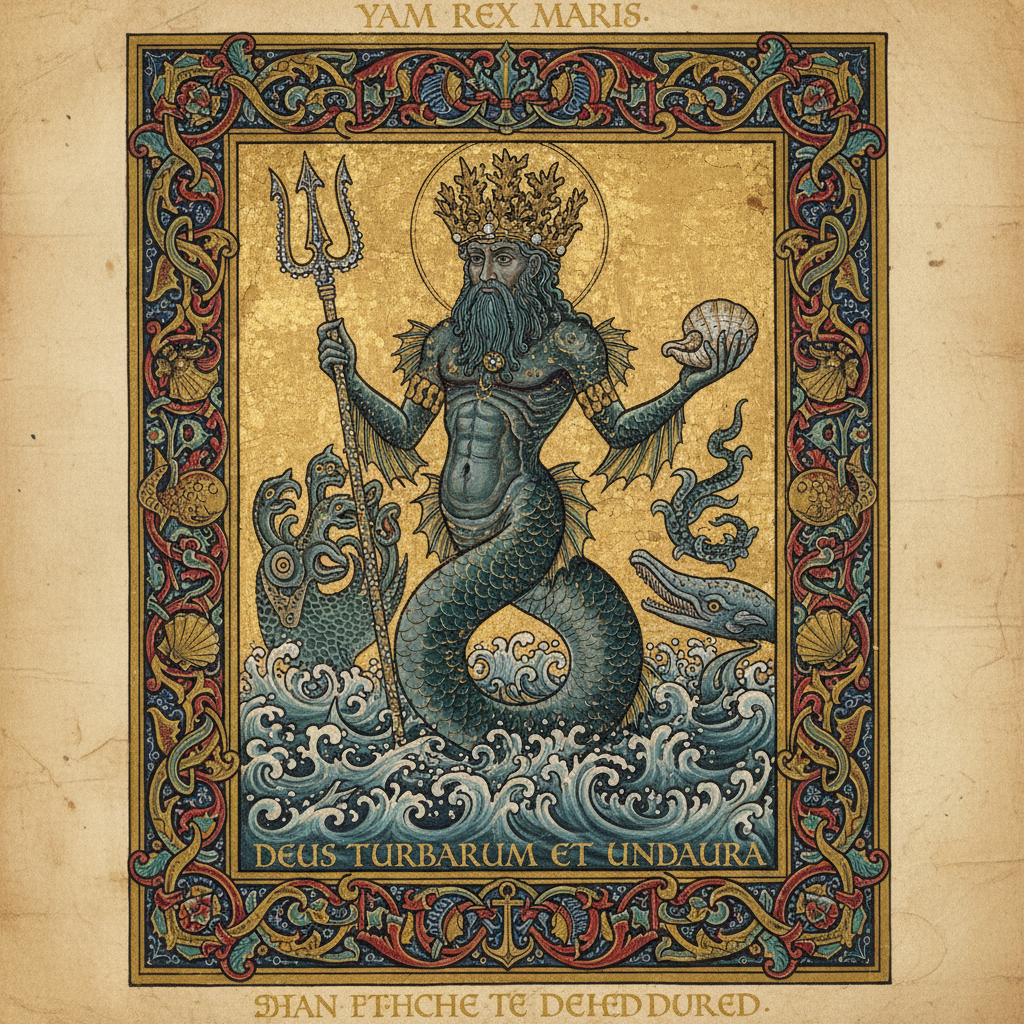
Baal Defeats Yam: The Storm God Earns His Palace
Mythic Time · tablets recorded ~1350 BCE, Ugarit · El's divine assembly, then the shore where sea meets sky, then Mount Zaphon
Contents
Yam, the sea-god, demands Baal as his slave before El's divine assembly. The craftsman-god Kothar-wa-Khasis forges two magical clubs named Yagrush and Aymur. The clubs fly from Baal's hands, strike Yam between the eyes, and the sea-god crumbles. Astarte rebukes Baal for going too far. The palace on Mount Zaphon is authorized.
- When
- Mythic Time · tablets recorded ~1350 BCE, Ugarit
- Where
- El's divine assembly, then the shore where sea meets sky, then Mount Zaphon
The messengers do not bow.
In El’s assembly, where the seventy sons of God are arrayed around the patriarch’s tent at the headwaters of the two rivers, the failure to bow is the opening move of a war. Yam’s heralds enter without inclining their faces toward the Bull, without acknowledging the host of heaven ranked at his feet. They walk to the center of the council and they speak their master’s demand as though the answer is already decided: deliver Baal to us. Give us the son of Dagon. Let him bind himself and come.
The gods of the assembly bow to the floor. Not all of them — Baal and Anat and Astarte do not — but the majority, the vast divine middle, drops its face toward the earth, because Yam is the one El has already named king, and the divine assembly is not a place for backing a losing side.
El speaks from his throne. His words are legal and final. Baal is your slave, O Yam. Baal is your prisoner, son of Dagon. He will carry your gold.
Baal’s hand goes to a weapon. He has weapons everywhere near him — he is the storm-god; weapons are what he is made of. Anat’s hand finds his arm first. Then Astarte. Both of them, the warrior-goddess and the Lady of the Stars, pulling him back from the space between himself and Yam’s messengers. Not yet. Not here. Not with El’s verdict still warm in the air. Baal understands. He does not disagree. He takes his hand off the weapon and watches the messengers leave with their faces still horizontal, still uninclined, still carrying the posture of a verdict Baal has decided is not final.
He goes to Kothar-wa-Khasis.
The craftsman-god lives at the far edge of the world, at Caphtor, where the forges burn below the sea and the smoke rises as steam from water meeting fire. He built El’s palace. He knows the names of things before they exist. Baal arrives and states his situation without ornamentation: Yam has a legal claim on him ratified by the father of gods. Baal intends to dispute the claim by force.
Kothar does not discuss theology. He is a craftsman. What interests him is whether the problem is solvable, and this one is: he has made weapons that won wars before and he knows what this particular war requires. He goes to his forge.
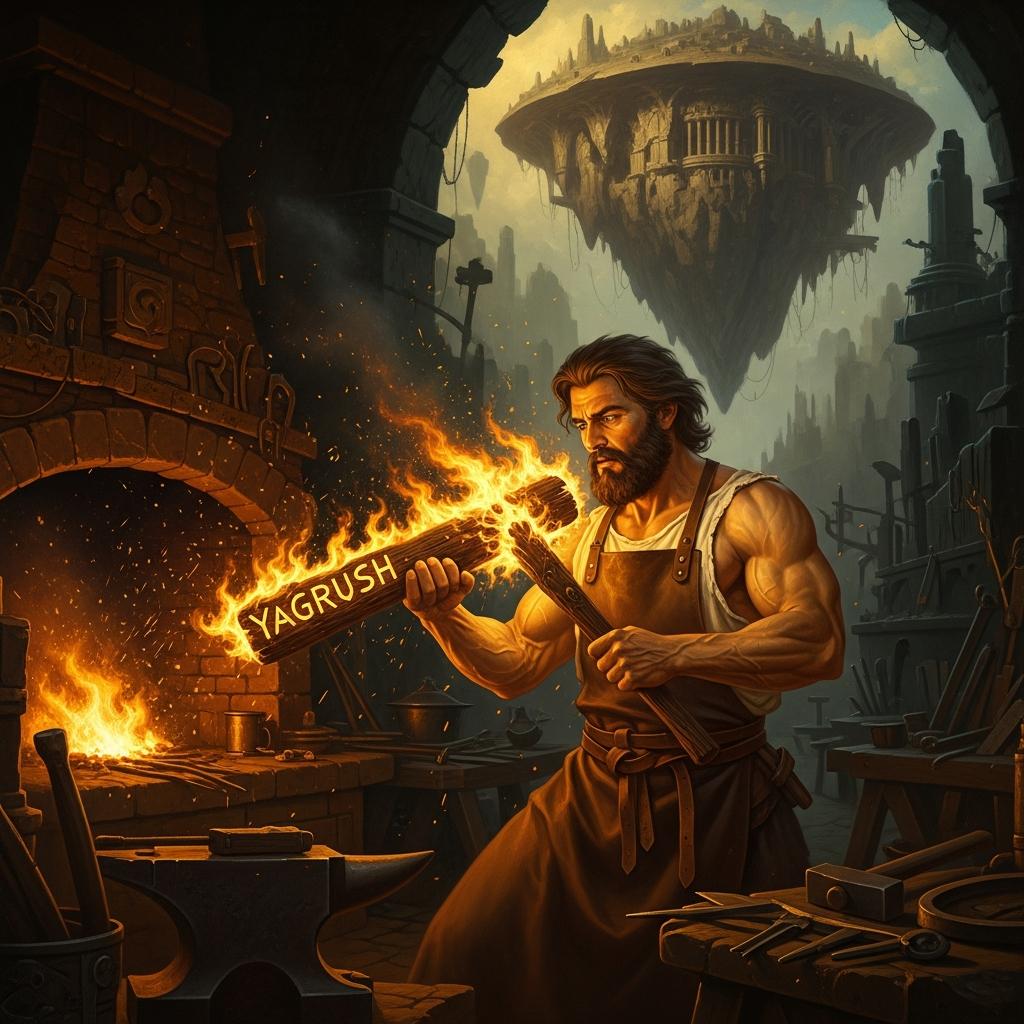
He makes the first club. He speaks its name into the wood as he works — Yagrush, which means Chaser. Your name is Chaser. You will chase Yam from his throne. You will drive him from the seat of his dominion. He makes the second club. He speaks its name — Aymur, which means Driver. Your name is Driver. You will drive Yam from the height of his rule. You will scatter the serpent from the water.
He places them in Baal’s hands and tells him: these will win. Not a reassurance. An engineering assessment.
Baal goes to the shore.
Yam is waiting there with the full amplitude of his nature assembled around him — his rivers, his seas, the deep salt waters that preceded the world and remember a time before Baal had a palace or a mountain or a name that the divine assembly recognized. He is not afraid of Baal. El named him king. Baal is supposed to arrive in chains. Instead Baal arrives with two clubs in his hands and the storm building behind his eyes, and Yam does not adjust his posture because his posture has never needed adjustment.
Baal throws Yagrush.
The first club strikes Yam across the shoulders. Yam staggers. He does not fall. He is the sea — the sea does not fall from a single blow the way a mortal body does. He rallies. The waters surge up around him, his full power, the chaos-ocean that preceded the order of the world. He straightens. He faces Baal again.
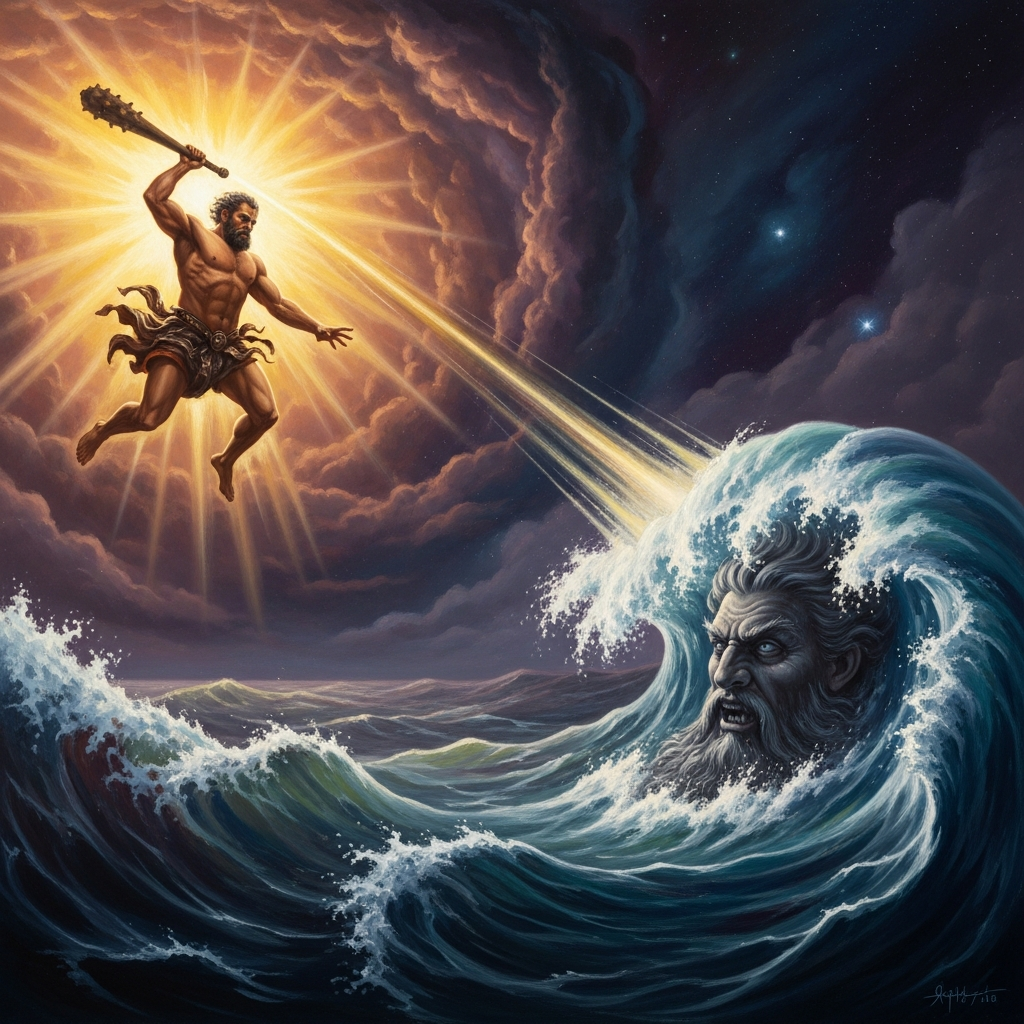
Baal throws Aymur.
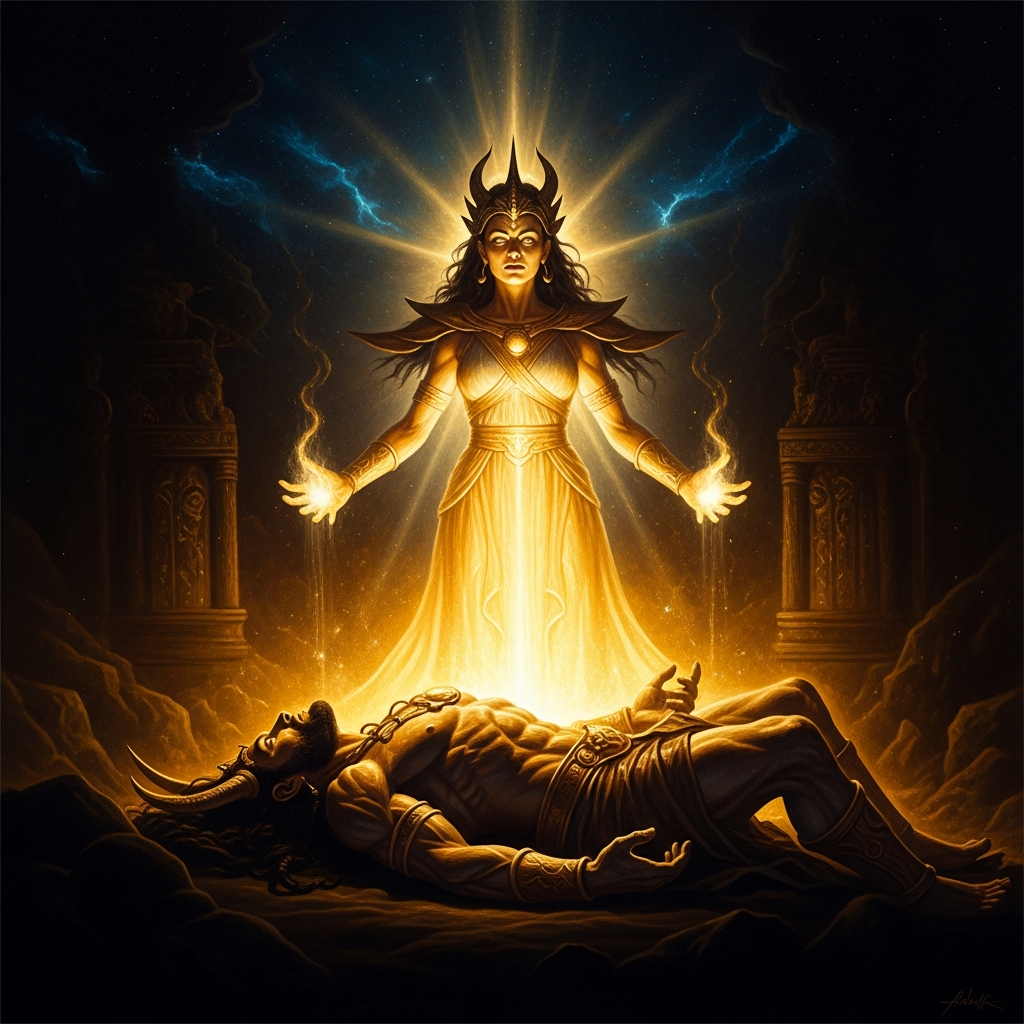
The second club strikes Yam between the eyes — the place where a god’s sovereignty is seated, where the power that makes a god recognizable as that god and no other is concentrated. It strikes with the force of a thing that knows its name and knows its purpose. Yam collapses. He falls into his own waters the way the sea collapses after a storm has spent itself on the shore — heaped, still, no longer a direction.
The shore opens up.
Asherah, the Lady of the Sea, sees it from the waterline. She calls out: Scatter him, O Mighty Baal. Let the sea not live. Do not take him prisoner. Destroy the enemy. Her voice carries the old coastal theology — the sea that nourishes is not the same as the sea that devours, and Yam has become the latter, and the distinction matters to everyone who depends on the shore for food and trade and life.
Baal scatters him.
Then Astarte appears.
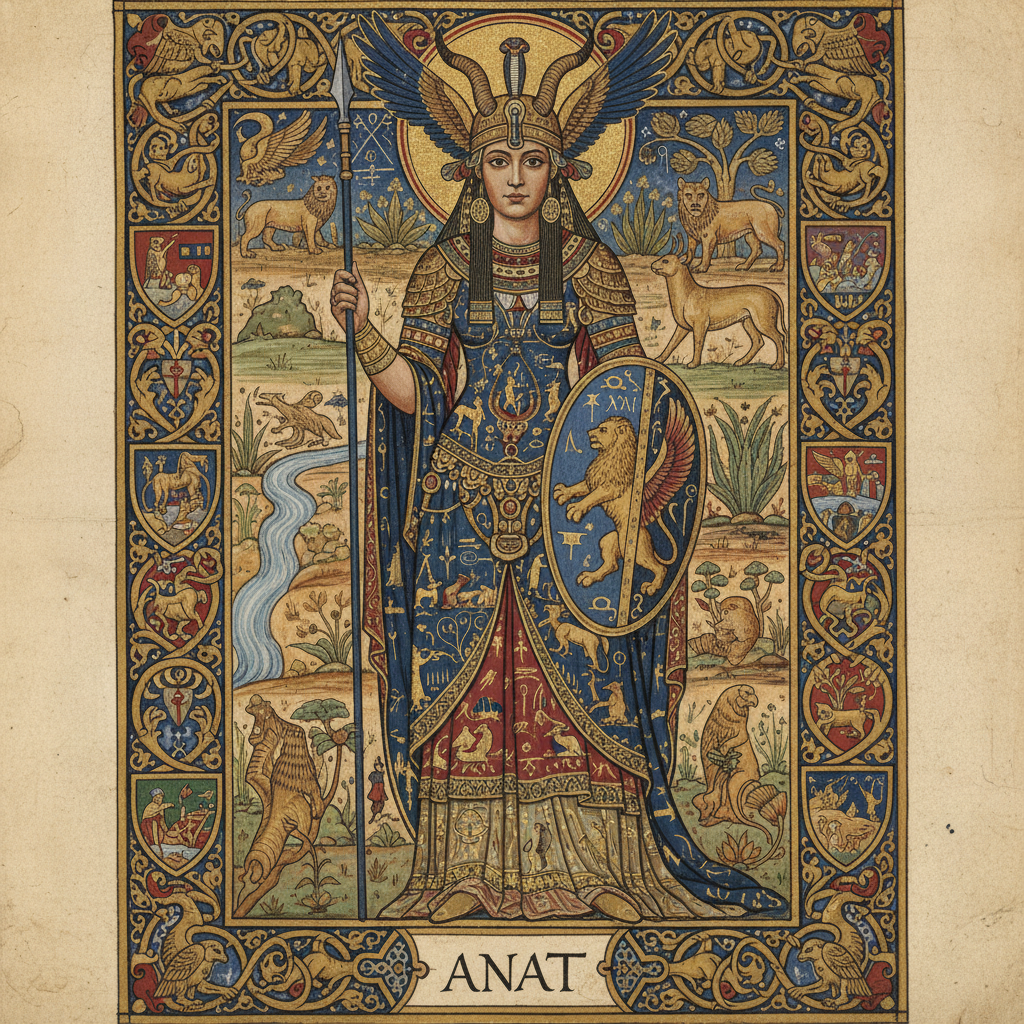
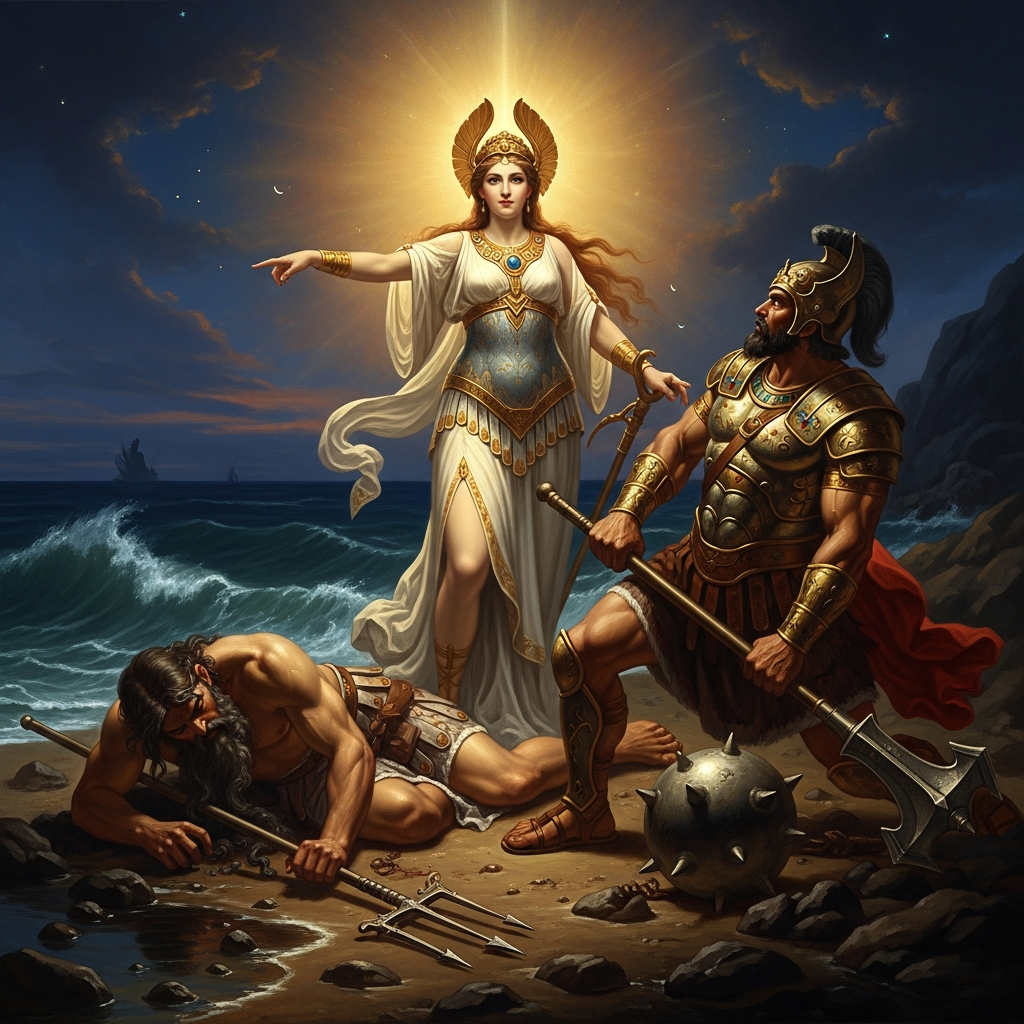
This is the rebuke the tablets preserve without fully explaining. Astarte — not Anat the warrior, not Asherah who urged the scattering, but Astarte the Lady of the Stars, goddess of love and war and the evening sky — steps forward and tells Baal: enough. You have done what was needed. The shame of it falls on Yam now, not on you. For sea was the gift of El and the gift of the Father of Years — he wanted to shame you. You should not seize what is Yam’s by origin. Leave him.
Baal hears her. He stops. He is a storm-god and stopping is not natural to him, but Astarte has a kind of authority over him that has no name in the tablets and doesn’t require one — the authority of someone who helped hold his arm back in El’s assembly and whose judgment he trusts enough to stop with Yam scattered but not annihilated.
He stops. He lets what is left of Yam remain in the waters.
The divine assembly reconvenes differently.
The geometry of the council has changed. El’s legal sentence — Baal is your slave — is technically still in the air, but the facts beneath it have reorganized. Yam is not in a position to receive a slave. Baal is standing on the shore with two clubs in his hands and the storm gathered above his head and a question in his posture that functions as a declaration: who is king now?
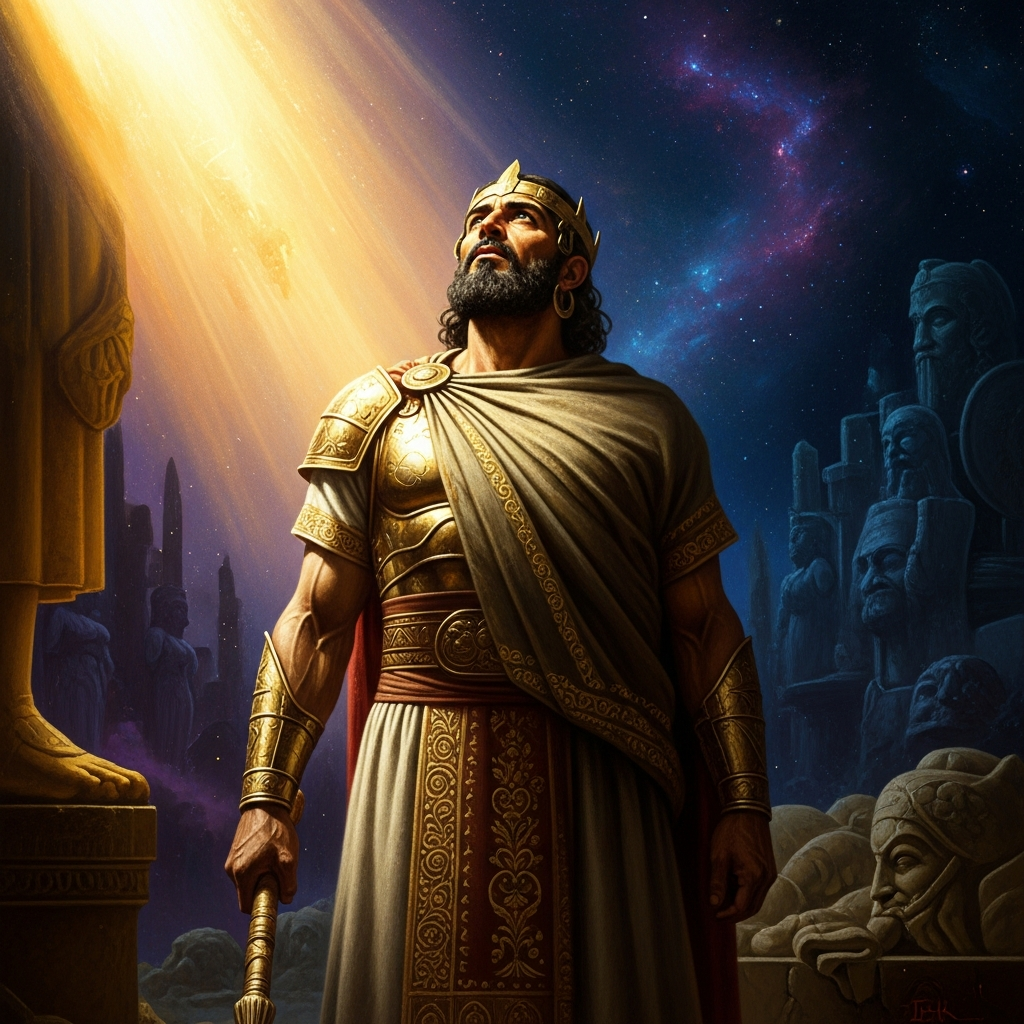
El does not reverse himself. El does not formally retract the verdict he gave in front of the full assembly, because El does not retract things, because the Bull does not un-speak his words. He does something quieter. He authorizes what the combat has already determined: Baal may build his palace on Mount Zaphon. The holy mountain, the peak above the valleys of Canaan, the lord’s seat from which the clouds go out and the rains are sent — that is Baal’s now.
Kothar-wa-Khasis begins drawing plans. He wants windows in the palace — windows for the lightning, windows for the thunder-voice of the god to pour out through and reach the valleys below. Baal says no to the windows. He is thinking about Mot, the way you think about a neighbor whose territory you have not yet settled. Kothar is persistent. He will eventually win the argument about the windows.
But that is later. Right now the palace is being built.
The rains begin.
This is what the combat means at ground level, in the terraces and valley floors where barley grows or fails depending on what happens between the storm and the sea. When Yam ruled — when the sea had a claim on Baal, when the divine assembly bowed to the heralds and El’s verdict named the storm-god slave — the waters were chaos. Rain was not ordered. The clouds did not gather at a god’s command and open over the right hillside at the right time.
When Baal rules from his palace on Zaphon, rain is an act of will. Baal sends it. The people of Ugarit knew this the way farmers know weather: personally, practically, as a matter that required correct relation with the one who controlled it. They brought bulls and grain to Baal because they had heard the story of the clubs and understood what the clubs meant. The storm-god won. The palace was built. The windows, when they finally went in, let the lightning speak.
Yagrush and Aymur are the oldest named weapons in surviving literature. Two clubs, shaped in a divine forge, spoken into identity by a craftsman who understood exactly what was required. They flew from Baal’s hands and returned — or they stayed in the target; the tablets do not specify which way the physics worked, because the physics is not the point. The point is that the right tool, made by the right maker, placed in the right hands, does the thing it was made for.
Yam is scattered. The shore belongs to whoever the sea-god cannot claim.
The Baal Cycle tablets were found in 1929 at Ras Shamra on the Syrian coast, buried under three thousand years of destruction. The city of Ugarit ended around 1185 BCE, burned by raiders whose exact identity we have not determined, and the clay tablets that held the myth survived the burning because clay survives fire. What the tablets revealed was a Canaanite mythology fully formed, contemporary with ancient Israel, using story structures and divine titles that appear throughout the Hebrew Bible in altered forms.
Baal is called rider of clouds. YHWH is called rider of clouds in Psalm 68. Baal defeats the sea; YHWH defeats the sea in Psalm 74 and Job 38. The divine combat is not a metaphor the biblical authors invented — it is a tradition they inherited and redirected. The claim is not that there are no chaos-waters, but that the right god has already defeated them.
Kothar-wa-Khasis made two clubs for a specific war and named them. The naming is the act — the moment a weapon knows what it was built for is the moment it can do it. Every tradition that has named its sacred instruments — the ark before the armies of Israel, Thor’s Mjolnir, the sword of state — is working inside the logic Kothar established at Caphtor.
The clubs flew. Yam fell. The palace went up on the mountain.
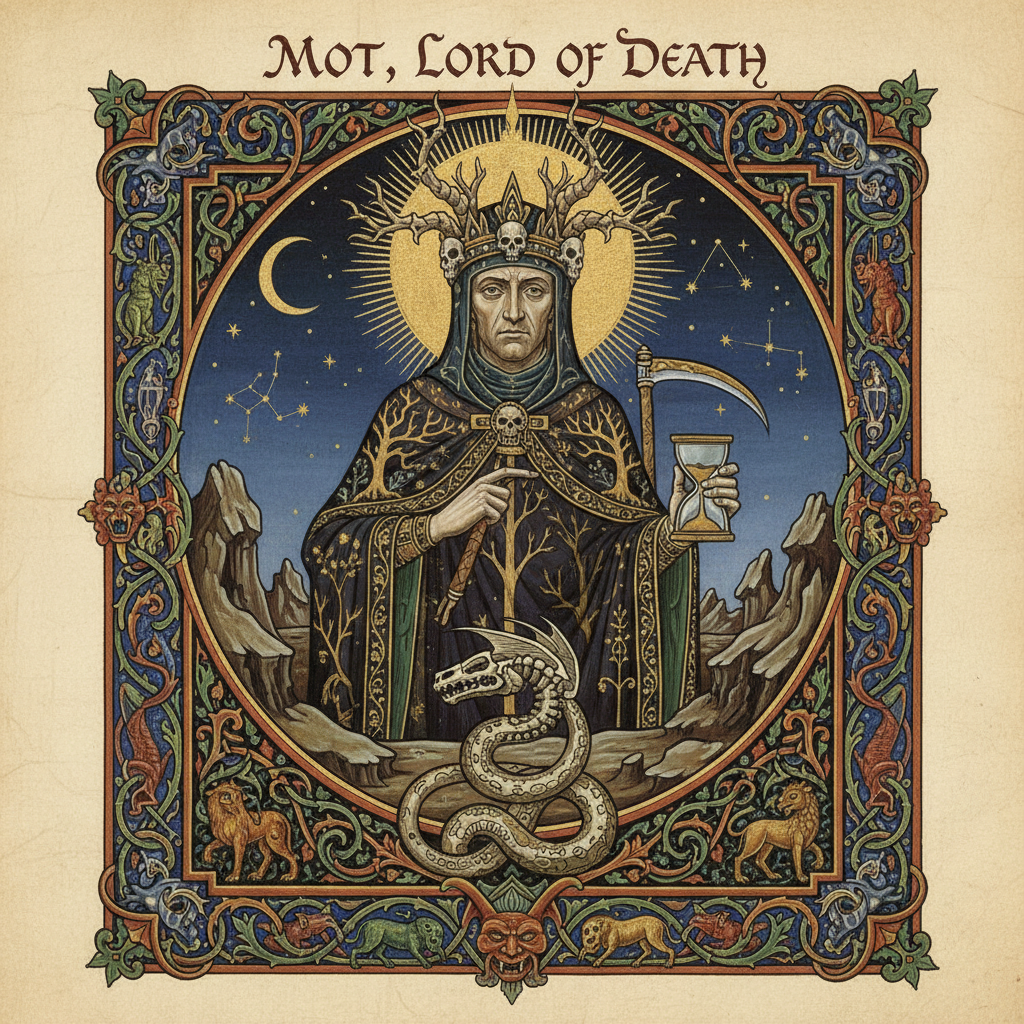
Mot was watching from his throat in the earth, and he was not impressed, and in time he would say so.
Scenes
Baal hurls the named club Aymur at Yam's forehead — the sea-god's body sprawling across the shore, the waves retreating, the storm crown already blazing above the victor
 Generating art…
 Kothar-wa-Khasis at his forge below Caphtor, speaking the name Yagrush — Chaser — into the wood of the first club as fire runs along the grain like a vein of gold
 Generating art…
 Astarte, Lady of the Stars, stands between Baal and the fallen Yam on the shore, one hand raised — she is not pleading, she is instructing: this is far enough
 Generating art…
 Echoes Across Traditions
Entities
- Baal
- Yam
- Kothar-wa-Khasis
- El
- Astarte


Sources
- Mark S. Smith, *The Ugaritic Baal Cycle*, vol. I (Brill, 1994)
- Nicolas Wyatt, *Religious Texts from Ugarit* (Sheffield Academic Press, 2002)
- John Day, *God's Conflict with the Dragon and the Sea* (Cambridge University Press, 1985)
- Frank Moore Cross, *Canaanite Myth and Hebrew Epic* (Harvard University Press, 1973)
- Michael D. Coogan & Mark S. Smith, *Stories from Ancient Canaan* (Westminster John Knox, 2012)