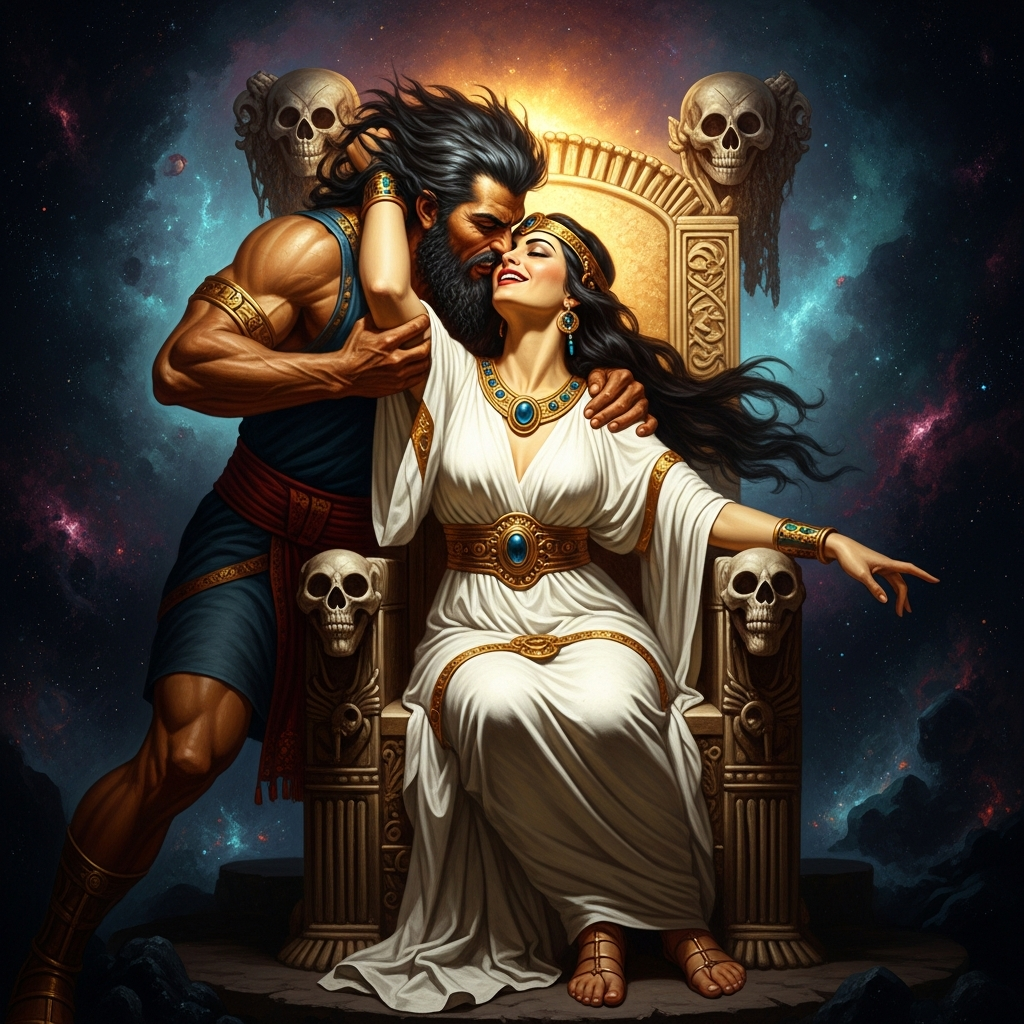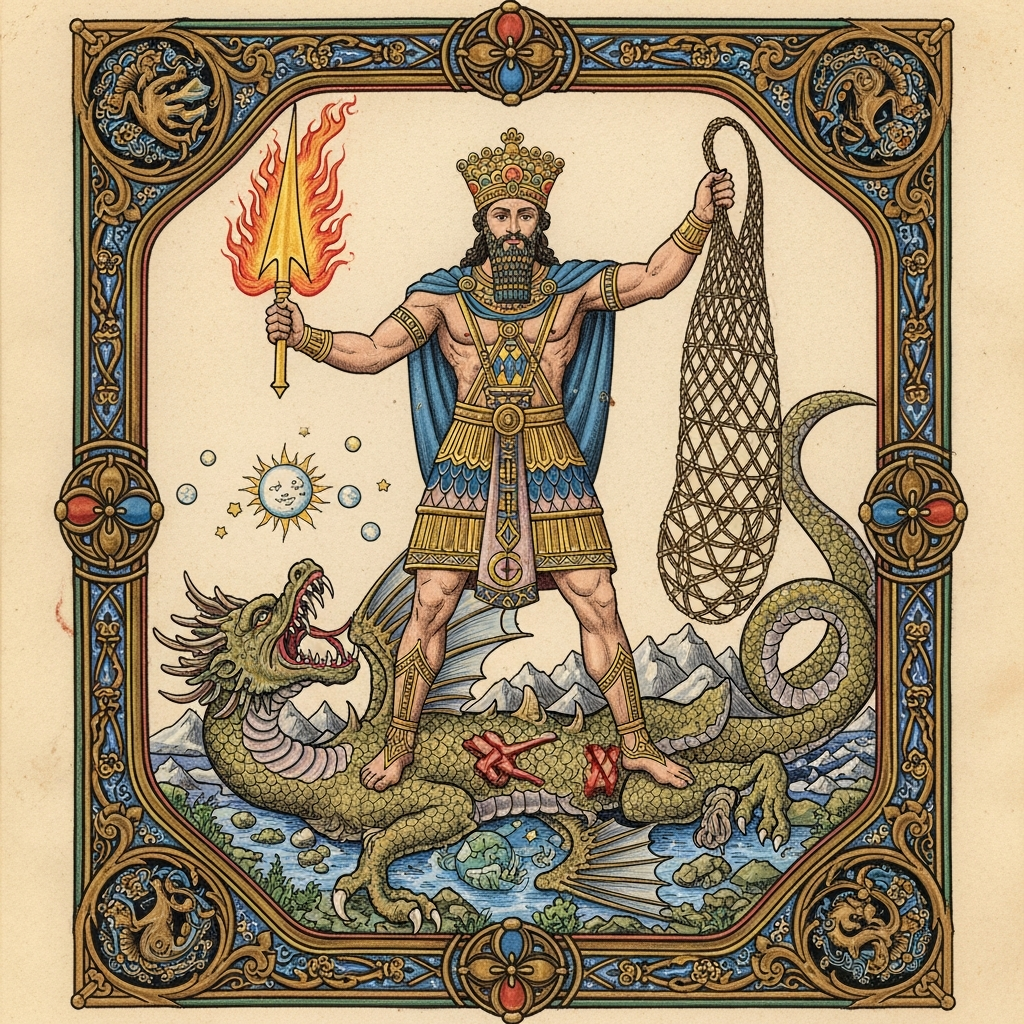
Enuma Elish: Marduk Makes the World
Composed ~12th century BCE · seven tablets, Akkadian cuneiform · Babylon — the cosmic temple Esagila, raised over Tiamat's body
Contents
After splitting the dragon-mother Tiamat in half, Marduk stretches her body into sky and earth, drains rivers from her eyes, and makes humanity from the blood of her general — then takes the throne the older gods could not hold.
- When
- Composed ~12th century BCE · seven tablets, Akkadian cuneiform
- Where
- Babylon — the cosmic temple Esagila, raised over Tiamat's body
She is dead, and she is enormous.
Marduk stands on Tiamat’s chest in the dark before there is a sky, and he understands, the way a young king understands the weight of a kingdom in his first hour on the throne, that killing her was the easy part. Now he has to do something with the body. Forty miles of dragon-mother, jaws still locked open from the wind he drove down her throat, her belly split from sternum to tail by the spear he put through her. The Apsu lies still beneath her. Above, the gods are watching from a council chamber that has no walls because there is not yet a sky to hold them up.
He looks at the corpse. He sees a building.
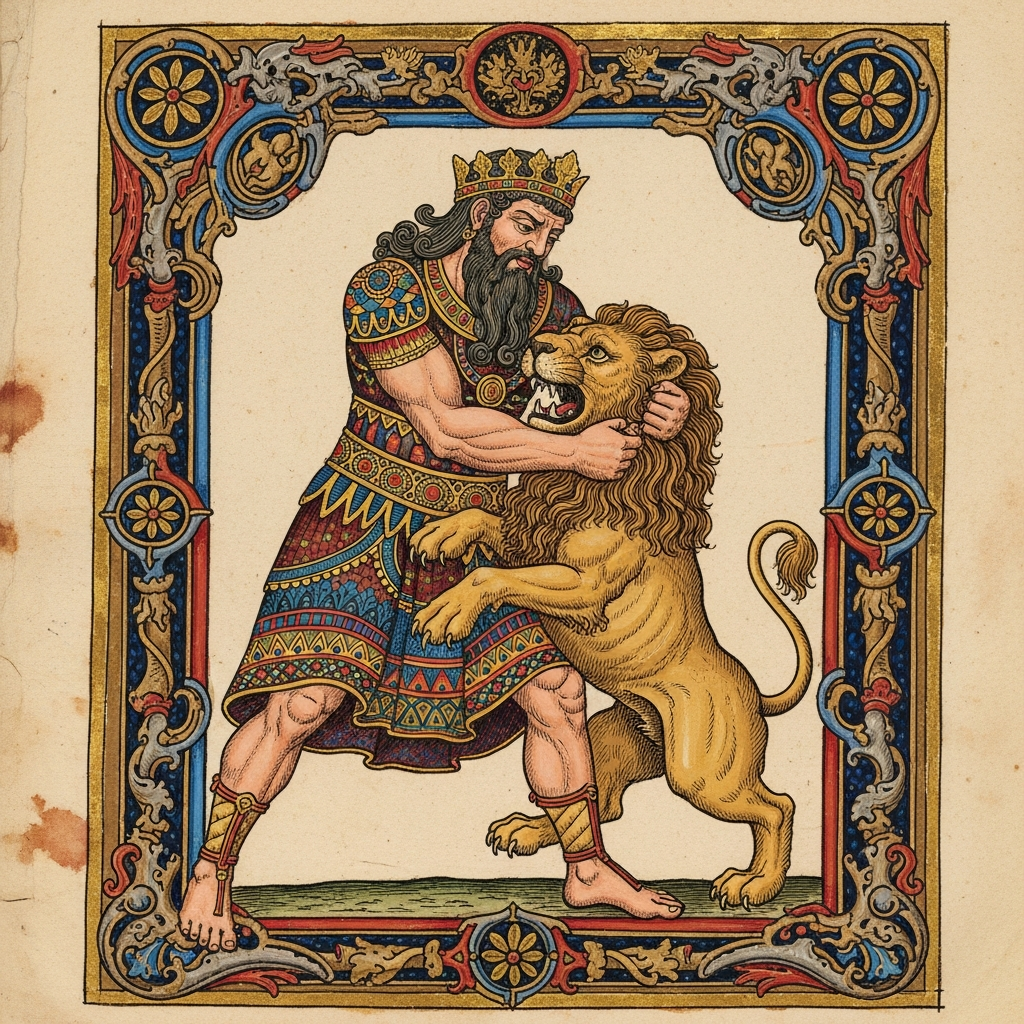
He cuts her in half lengthwise, the way a butcher splits a fish, and he lifts the upper half over his head.
It is impossible. It is also the first thing he does. He stretches her dorsal half — skin, scales, ribs — until it spans the abyss, and he posts guards at the four corners — the four winds Ea gave him as weapons — to hold the membrane taut. The water that was inside her, that had been her substance, presses down against the membrane from above. He does not let it through. Not a drop is to fall, he tells the wind-gods. Not until I say.
This is the sky. This is what every later civilization will look up at and call heaven. It is the inside of a dragon’s back, held aloft by the wind, leaking only when Marduk allows it to leak.
He turns to the lower half.
He raises it beneath his feet and stretches it flat. Mountains he heaps from her skull, breaking the bone where he needs ridges, leaving it intact where he needs plateaus. He drives Tiamat’s two great eyes into the bedrock and does not close them — he wants the rivers to run. From the left socket, the Tigris begins to flow. From the right, the Euphrates. The water of her own body, draining now through the ducts of her own face, will irrigate the cities that have not yet been built by people who do not yet exist.
He drills holes in her ribs to let underground springs through. He arranges her teeth as the standing stones at the boundaries of the world. He sets her tail curled around the earth as the horizon — the line beyond which mortals will never see, because the line is a piece of the dragon they live inside.
The gods, watching from above, begin to understand that they have not just been saved. They have been housed.
He turns to Kingu.
Kingu was Tiamat’s general — her second husband, after Apsu, the one she elevated when she made war on the younger gods. She had hung the Tablet of Destinies around his neck, the cuneiform clay that decrees what happens and what does not, and she had told him: Whatever you say, let it stand. Marduk took the tablet from his neck during the battle. Kingu has been bound in chains since the dragon fell, kneeling in the water beside his mother’s split body, waiting to learn what kind of god Marduk has become.
He learns now.
Marduk speaks to Ea. Bring a knife. We will make people from his blood.
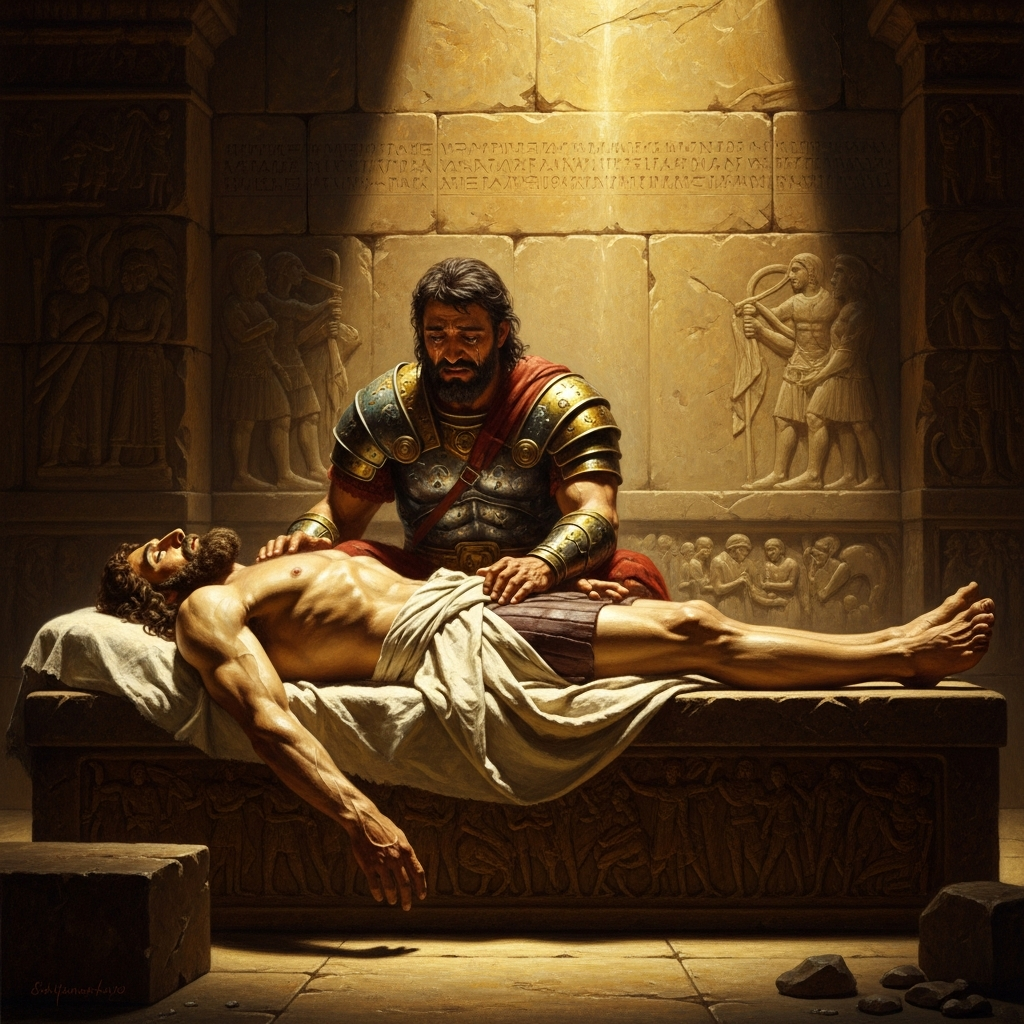
Ea does not protest. Ea has done worse things — it was Ea who killed Apsu, after all, who started the whole sequence by spell-binding the freshwater ocean and slitting his throat in his sleep. Ea is the god of clever murders. He brings the knife. He opens Kingu’s veins. Marduk catches the blood in clay he has scooped from the riverbank — clay that an hour ago was Tiamat’s skin — and he begins to mix.
Humanity is made from a rebel’s blood and a mother’s flesh. It is the explanation, the Enuma Elish tablets will say, for why people are restless. They carry the noise that started the war.
The gods are given their wages.
This is the part the priests will linger on at the Akitu Festival, every year, when the seven tablets are read aloud in Esagila’s high chamber and the king of Babylon stands ritually stripped of his office, slapped by the priest until he weeps, and reinstated only after Marduk has been re-enthroned in the recitation. We made humanity to carry the corvée. The gods had been laboring — digging the canals, hauling the offerings, maintaining the cosmos with their own backs — and this had been the original noise that woke Tiamat. Now the work falls to people. The gods rest. Humanity carries.
It is not a flattering theology. The Babylonians did not pretend it was. You are made of a traitor’s blood. You are here to carry water for gods who could not be bothered to carry it themselves. But it is honest in a way later theologies will not be. It does not promise that you are loved. It does not promise that you are central. It only promises that you are necessary, and that the gods know your worth precisely — to the cubit, to the gallon, to the brick.
He builds Babylon last.
The gods volunteer, joyfully, because Marduk has lifted the labor from them. They lay the bricks of Esagila — the house whose top is heaven — in a single year. At its summit they place his throne room, where he sits with the Tablet of Destinies on his lap and the four winds at the four cardinal points, listening for the first noise that does not belong, the first ripple in the membrane overhead, the first sign that Tiamat’s children might come back.
The temple is a cosmos. The cosmos is a temple. The city is the seam where the two are stitched.
When the king of Babylon ascends Esagila on the New Year, slaps in hand, tablets unrolled, he is not just performing a ritual. He is — in the Babylonian understanding — holding the membrane up. If the chant fails, the sky leaks. If the king stumbles, the dragon stirs. The world, in this theology, is not a thing that exists. It is a thing that is maintained, second by second, by the right words said by the right mouth in the right room.
The Enuma Elish is, among other things, a charter for an empire. Marduk was not always king of the Mesopotamian gods — Anu was older, Enlil was elder, Ea was wiser. But Babylon needed a chief god, and Babylon’s scribes wrote one. The seven tablets are propaganda in the most exalted sense: a justification, written in cosmic ink, for why the political center had moved south.
And yet the text outlasts the empire. Babylon falls. Persia rises. Alexander burns Persepolis. Rome forgets the cuneiform shapes. The clay tablets sit buried under desert sand for two thousand years until British archaeologists dig them up in the 1840s — and what they find, when they translate, is the architecture of Genesis.
The exiles by the rivers of Babylon were watching. They listened to the Akitu chant. They saw what theology could do. And when they wrote their own creation, they kept the structure — the formless deep, the divine wind, the dividing of waters, the placing of lights — and removed the dragon. Just removed her. Left the verbs intact and edited the body out.
But she is still there. The Hebrew word for the deep is the dragon’s name with the vowels changed. The first sentence of the Bible is a translation of a Babylonian battlefield.
Scenes
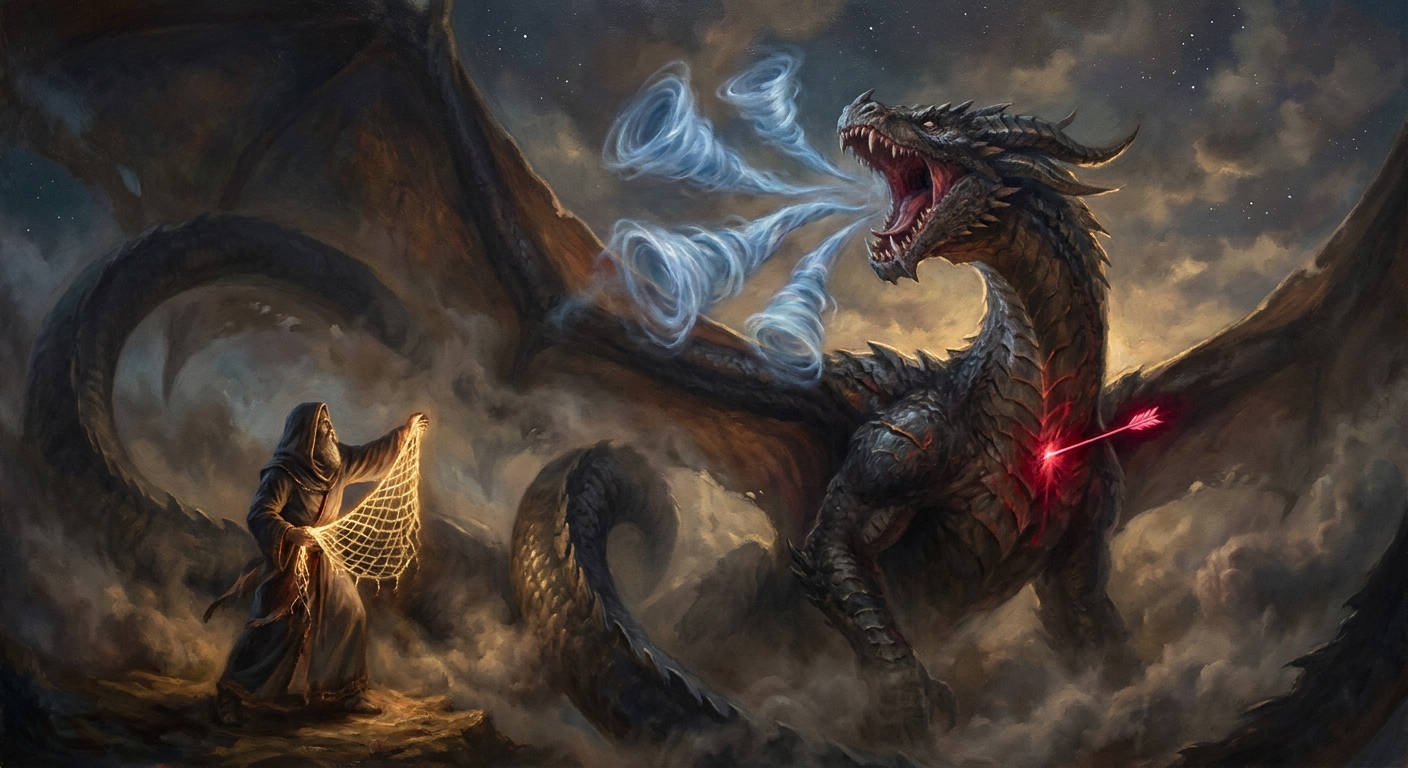
Marduk meets Tiamat at the edge of the world, the four winds opening a net across her jaws
 Generating art…
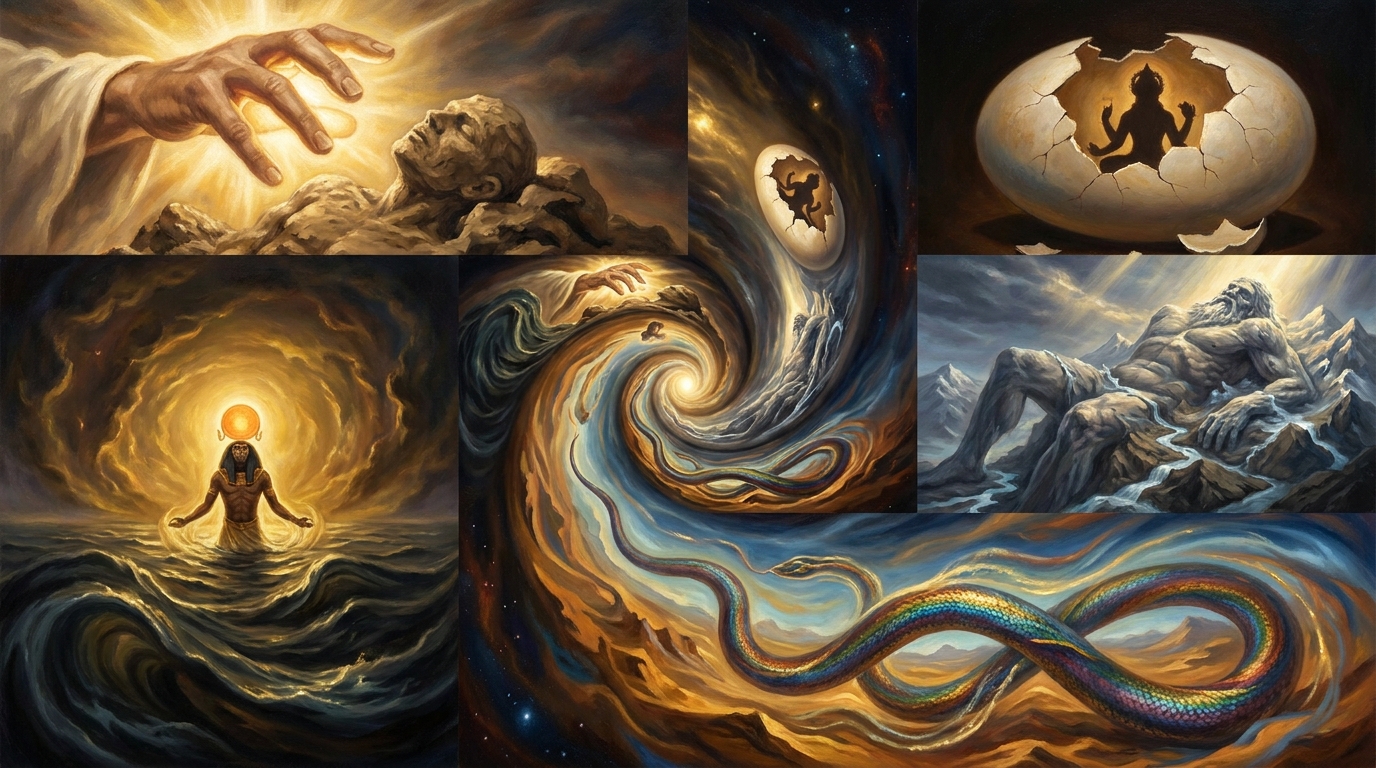
 The split body of the salt-sea becomes vault and floor — the first sky pinned at its corners so the water cannot return
 Generating art…
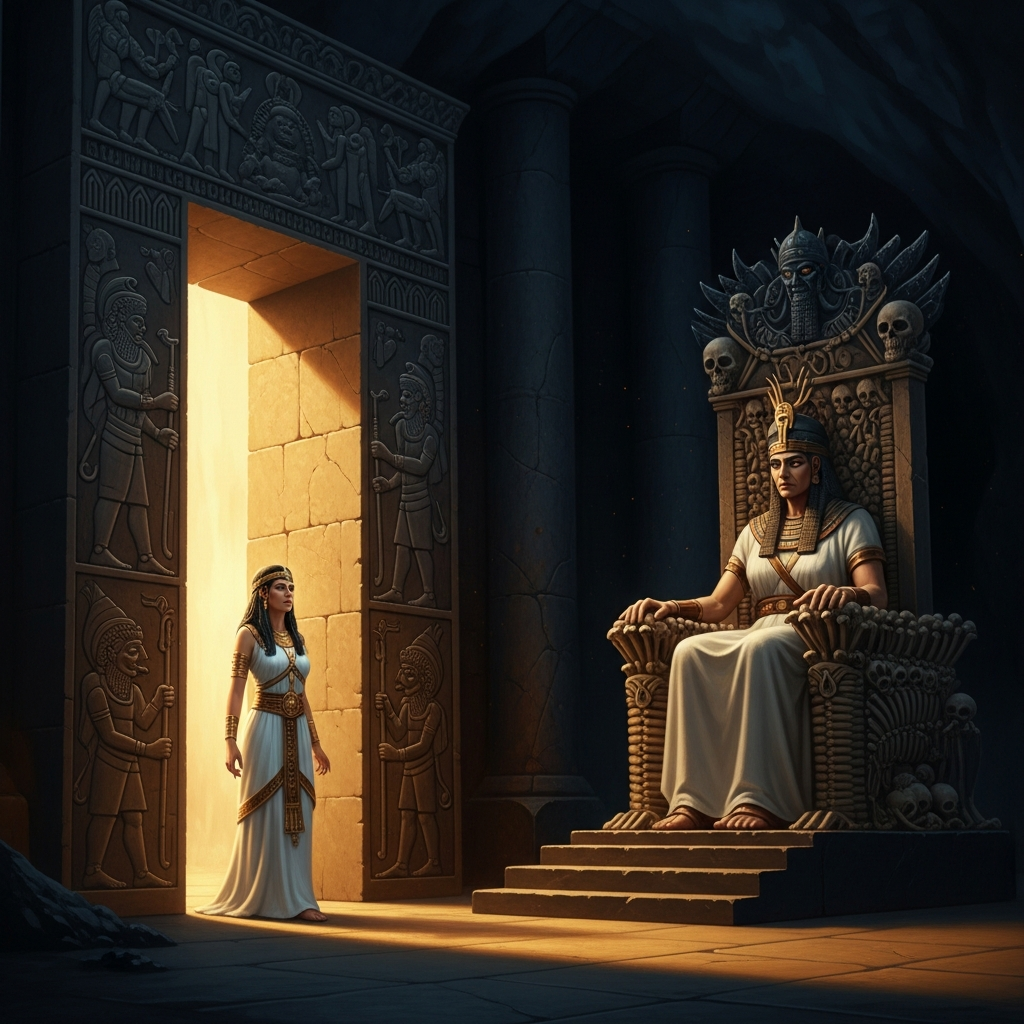
 Esagila rises from the corpse of Tiamat — the temple-cosmos at whose summit Marduk takes the throne the older gods could not hold
 Generating art…
 Echoes Across Traditions
Entities


Sources
- *Enuma Elish*, Tablets I-VII (Old Babylonian, surviving copies ~12th-7th c. BCE)
- Stephanie Dalley (trans.), *Myths from Mesopotamia* (Oxford, 1989/2000)
- Thorkild Jacobsen, *The Treasures of Darkness: A History of Mesopotamian Religion* (Yale, 1976)
- W.G. Lambert, *Babylonian Creation Myths* (Eisenbrauns, 2013)
- Benjamin Foster, *Before the Muses: An Anthology of Akkadian Literature* (CDL Press, 2005)