Enkidu Dies, Gilgamesh Refuses
~2100 BCE Sumerian; Standard Babylonian Epic ~1300 BCE; Tablets VII–VIII · Uruk — the palace, the death chamber, the city walls
Contents
Enkidu dreams the House of Dust in precise detail, wastes for twelve days while Gilgamesh refuses to accept what is happening, and dies. Gilgamesh will not believe it until the worm crawls from his friend's nose.
- When
- ~2100 BCE Sumerian; Standard Babylonian Epic ~1300 BCE; Tablets VII–VIII
- Where
- Uruk — the palace, the death chamber, the city walls
Enkidu wakes from the dream holding it between his hands like a body.
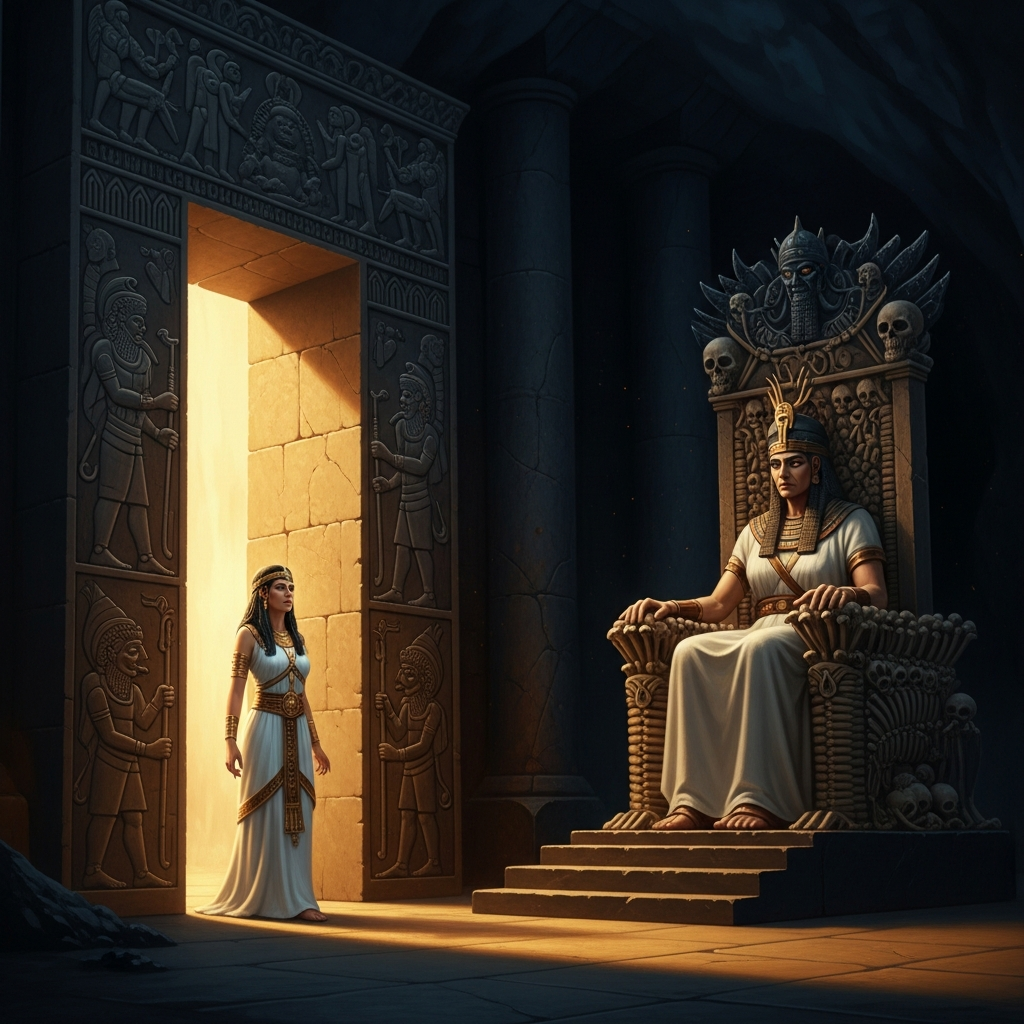
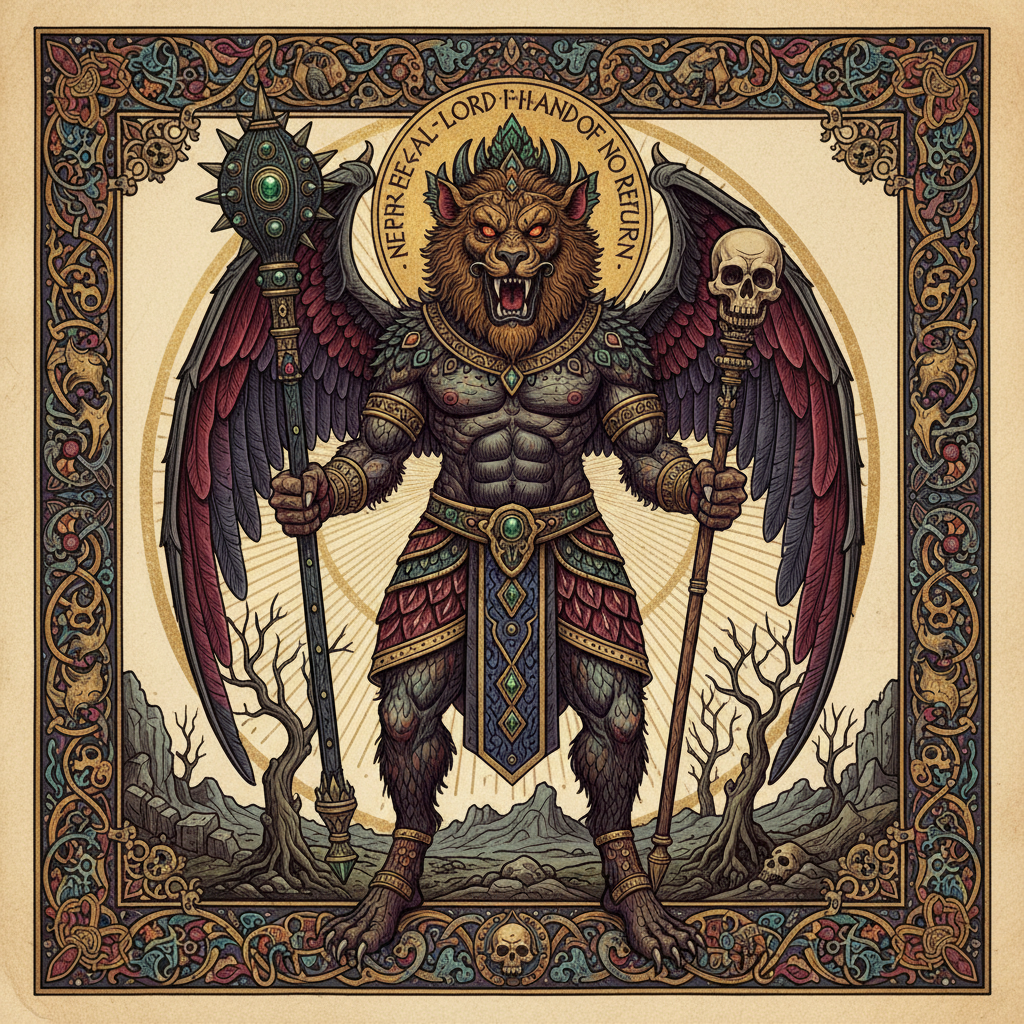
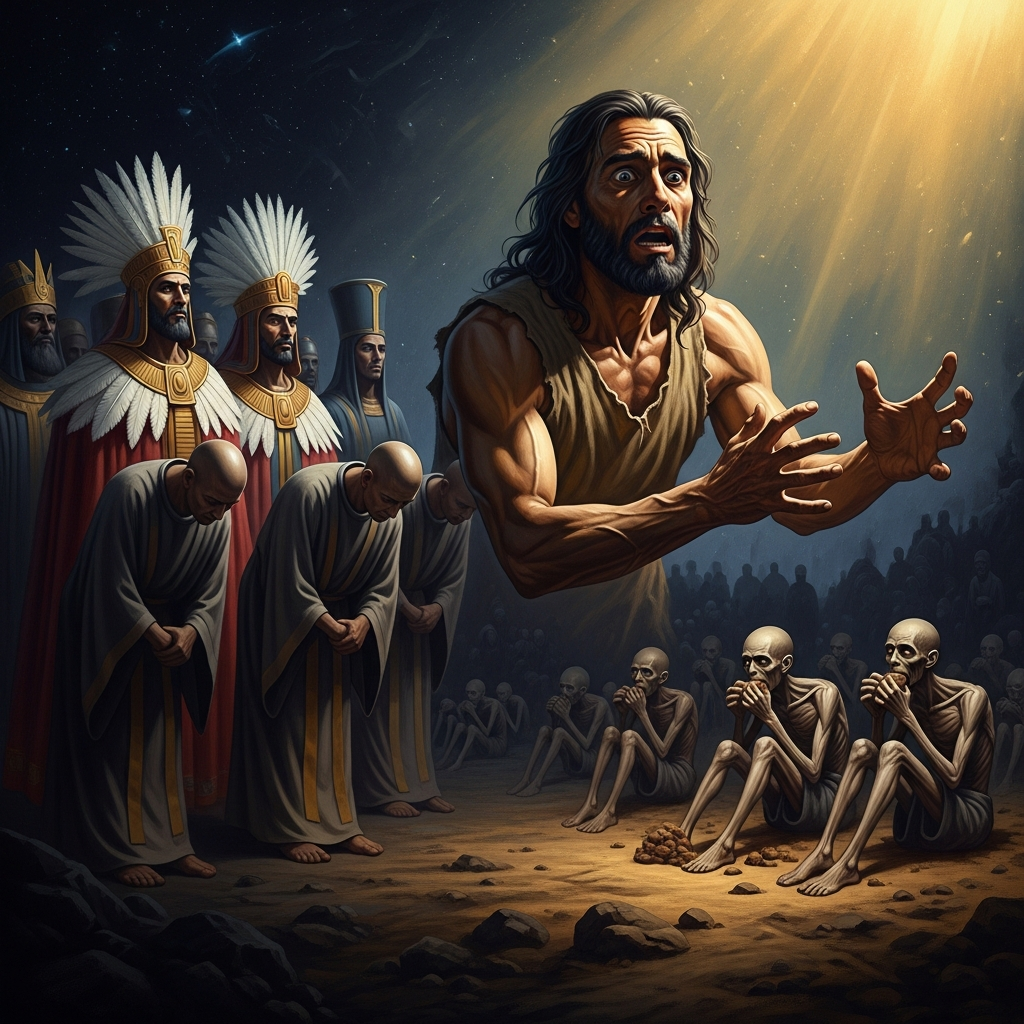
He has dreamed the house of dust, and the dream is not symbolic — it is a place with walls and doors and inhabitants, and he has seen it the way you see a place you have been and will return to. He tells Gilgamesh what he saw: the great below, the house of darkness, where the ones who enter never leave, where they eat clay and dust, where they dress in feathers like birds, crouched in the dark, where the kings of the earth kneel in the dirt alongside the priests who served them, where even the great ones who once sat at the summit of everything sit now in silence and no one brings them food. He names what he saw with the precision of a man who knows he is describing his own destination.
Gilgamesh does not hear him.
The sickness begins that night.
It does not come like a battle wound, which Enkidu would know how to face — sudden and bright and requiring an immediate response. It comes like the end of a long conversation, like a voice growing gradually quieter, like a fire that has burned down to coals and then to ash. Enkidu’s strength, which was the strength of the steppe where Ea made him, which was the strength of the animals he ran with before Gilgamesh, does not break. It drains. Day by day, the man who wrestled Gilgamesh to a standstill at the city gates and turned a king’s arrogance into brotherhood — that man grows smaller in his bed.
Gilgamesh comes every morning and asks if he is better.
On the third day Enkidu curses the trapper who first saw him at the watering hole and told a hunter about the wild man of the steppe.
On the fourth day he curses the temple prostitute Shamhat who lay with him for six days and seven nights and civilized him — taught him bread and beer and clothing and the city’s ways, drew him away from the animals who were his kin. He curses her with the great curse: let men reject you in the street, let flies settle on your table, let you never have a quiet house. And then Shamash the sun-god speaks from heaven, and reminds Enkidu what Shamhat gave him: Gilgamesh. The king who clothed him in a great robe. The friend who wept for him. The man who, when Enkidu is gone, will not eat for six days and seven nights, will not allow the dead to be buried, will dress himself in the skins of lions and wander the steppe in grief. Enkidu turns the curse into a blessing. But the sickness does not turn.
Twelve days Enkidu lies in the bed.
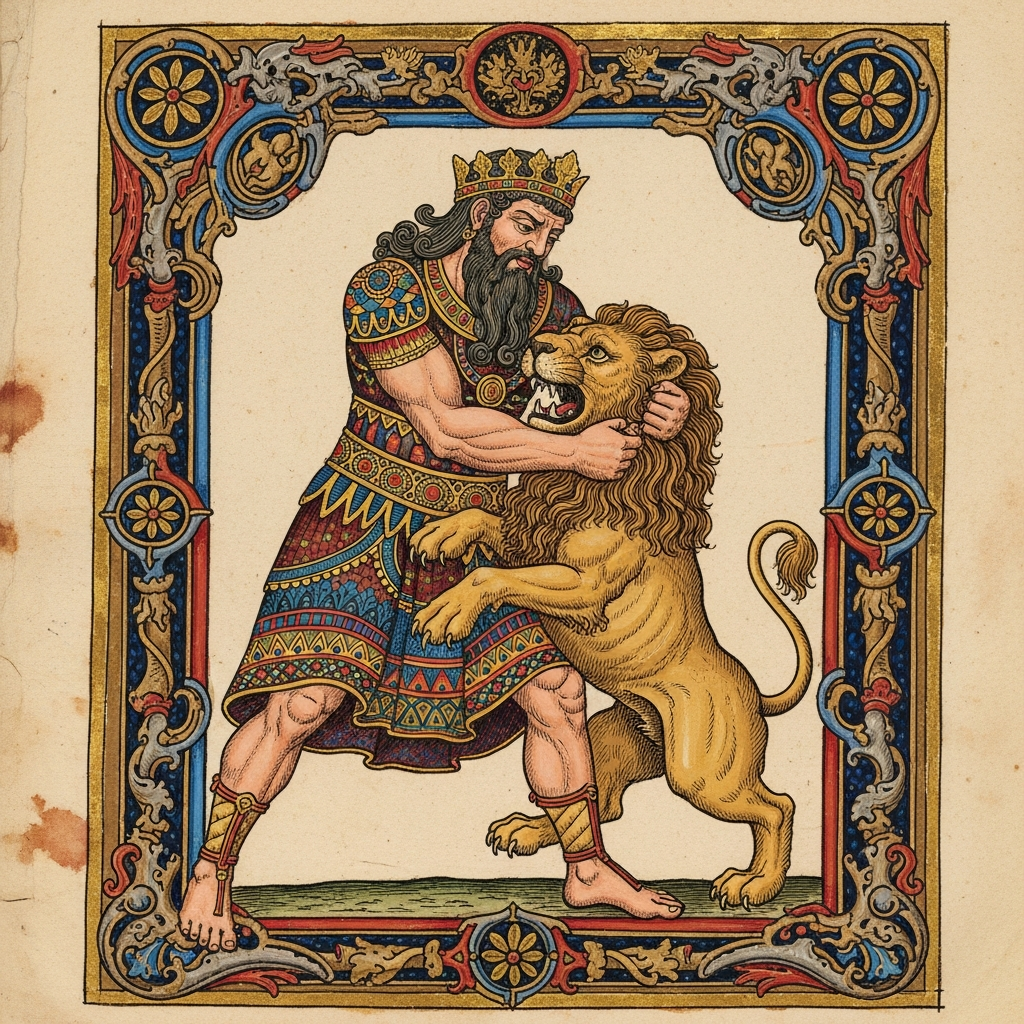
Twelve days Gilgamesh sits beside him and holds his hand and asks when he will rise, because Gilgamesh has never lost a battle and does not know how to recognize a battle he is already losing. He is the strongest man alive. He slew Humbaba in the Cedar Forest. He killed the Bull of Heaven with his bare hands. He is two-thirds god and the laws that govern ordinary men have never applied to him in the way they apply to ordinary men. He tells Enkidu every morning what they will do when he is well. He talks about the steppe they will walk through. He talks about the kings who will see them and tremble. He holds the shape of a future that is growing less probable with every hour, because Gilgamesh knows only how to go forward and grief requires a man to stop.
On the twelfth day, Enkidu calls his friend’s name one final time.
Gilgamesh watches Enkidu’s face change.
He watches the way a man watches the sun go down — the color in the face does not drain all at once but gradually, and there is a moment when you cannot tell if it is still happening or has already happened, and then the moment passes and it has happened and the face that looked like Enkidu’s face is now looking at something Gilgamesh cannot see from where he is standing. Enkidu’s chest does not rise. Enkidu’s hands, which made the statue of gold and lapis lazuli that Gilgamesh had the craftsmen build — those hands are the hands of a statue now, and the king covers them with a veil of linen and paces the room like a lion robbed of cubs. He calls the craftsmen of Uruk and the metalworkers and the stonecutters and tells them: make his image. Gold for the face, lapis for the chest, carnelian and iron and alabaster and obsidian. Make the image so that all the world will see what was here.
He does not say that Enkidu is dead.
He says it when the worm comes.
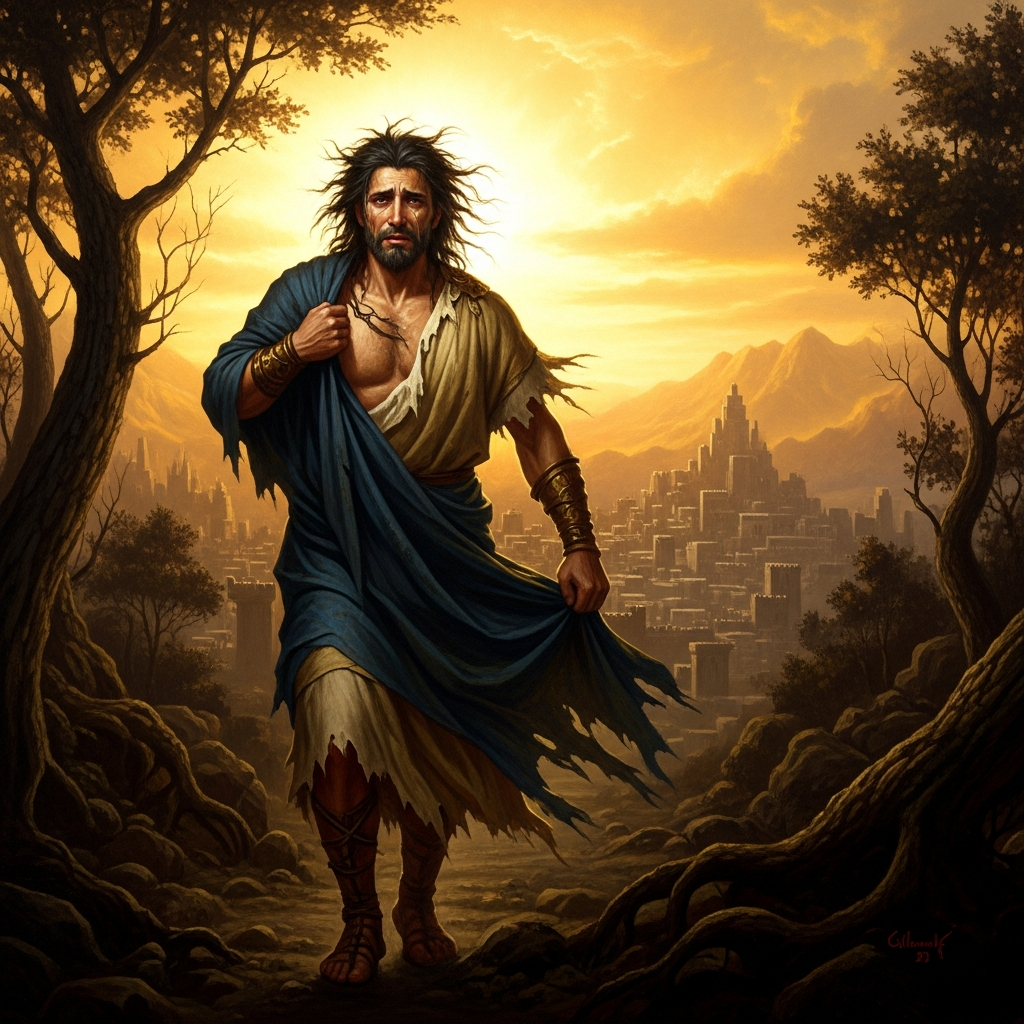
Six days and seven nights Gilgamesh sits beside the body and will not move and will not eat and will not allow the body to be taken away, because allowing the body to be taken away means acknowledging what the body now is. Six days and seven nights he waits for the chest to rise. On the seventh day, a worm drops from Enkidu’s nose. Gilgamesh looks at the worm. There is no further way to not know what he knows. He tears his fine clothing from his body. He pulls his hair. He covers himself in the skins of lions. He leaves the city that bears his name — the great walls of Uruk, baked brick and fired tile, the city that will outlast everything — and walks out into the wilderness alone, with the worm still there in his mind, the last argument he cannot answer. He will walk to the ends of the earth looking for what the gods kept for themselves. He will not find it. He will come home empty-handed and climb the walls of his own city and read what is written there, and what is written there will say: look at what Gilgamesh suffered. Look at what he lost.
The oldest story knows what the newest story still has not accepted: grief is the proof that the bond was real, and the man who weeps at the body of his friend is not weak — he is the most honest person in the room.
Scenes
Enkidu describes his dream of the House of Dust — kings in feather-cloaks, priests bowing in darkness, the dead eating clay forever
 Generating art…
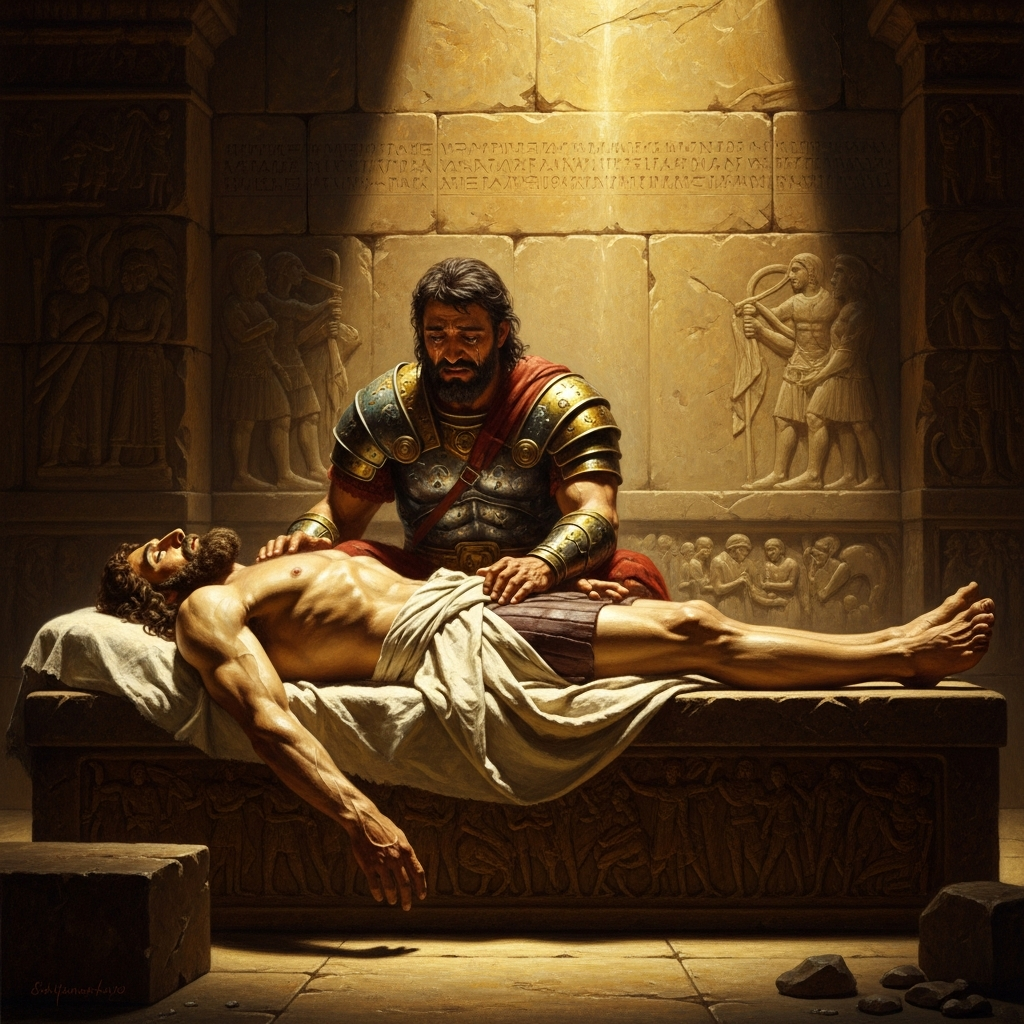
 Gilgamesh keeps vigil over Enkidu's body, refusing to acknowledge what has happened, waiting for his friend to move
Generating art… Gilgamesh tears his robes and lets his hair mat, walking out from Uruk into the wilderness with nothing but grief
 Generating art…
 Echoes Across Traditions
Entities
- Enkidu
- Gilgamesh
- Ereshkigal
- Shamash
- Anu


Sources
- Standard Babylonian *Epic of Gilgamesh*, Tablets VII–VIII
- Andrew George (trans.), *The Epic of Gilgamesh* (Penguin Classics, 2003)
- Stephanie Dalley (trans.), *Myths from Mesopotamia* (Oxford University Press, 1989)
- Martin West, *The East Face of Helicon* (Oxford University Press, 1997)