El and Asherah at the Source of the Rivers
Mythic Time · tablets recorded ~1350 BCE; goddess worshipped until at least 586 BCE · The source of the two rivers — the cosmic headwaters at the edge of the world
Contents
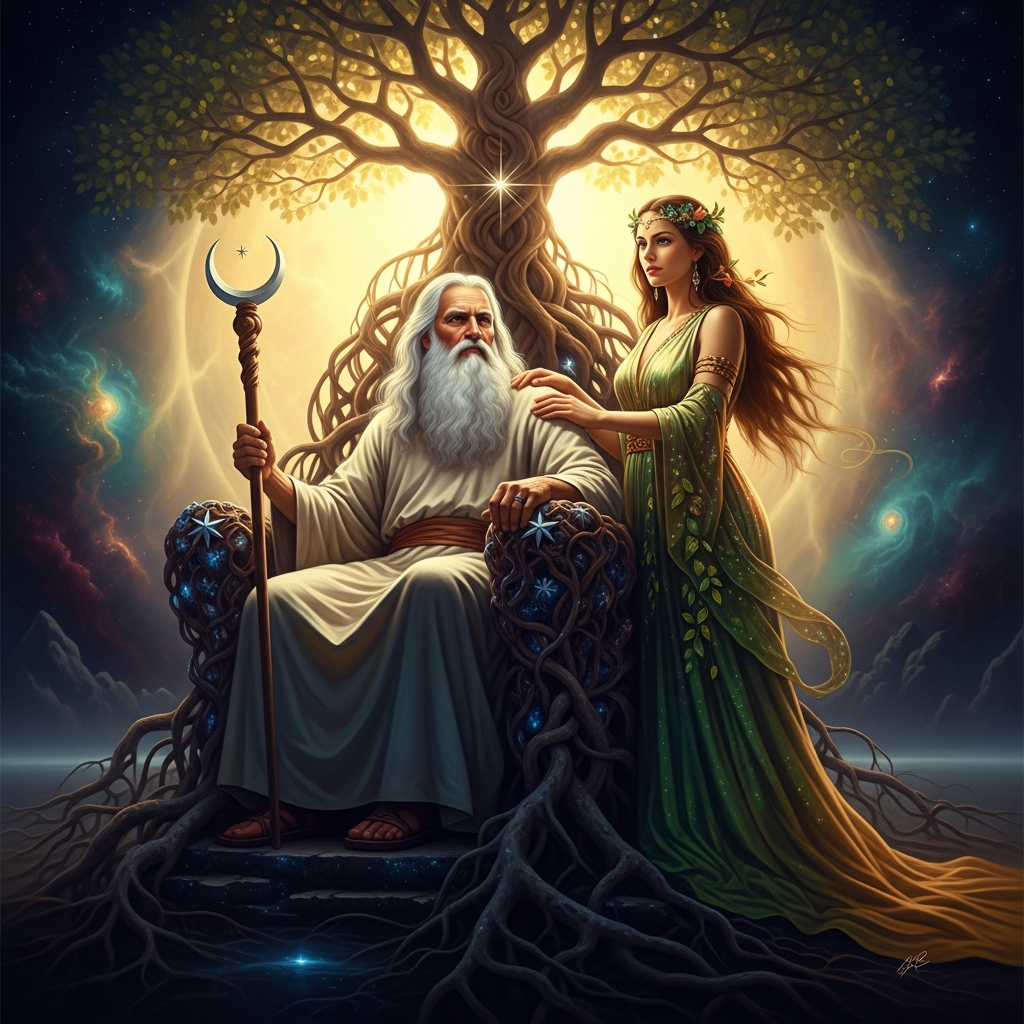
El, the aging patriarch of the gods, sits at the confluence of two rivers at the edge of the world, drinking wine with his seventy divine children. His wife Asherah — Lady of the Sea, mother of the gods — is the great intercessor: when Baal needs his palace, it is Asherah who goes to El and wins it. This is the theology behind the Asherah poles that the prophets of Israel spent five centuries trying to remove.
- When
- Mythic Time · tablets recorded ~1350 BCE; goddess worshipped until at least 586 BCE
- Where
- The source of the two rivers — the cosmic headwaters at the edge of the world
El sits at the source.
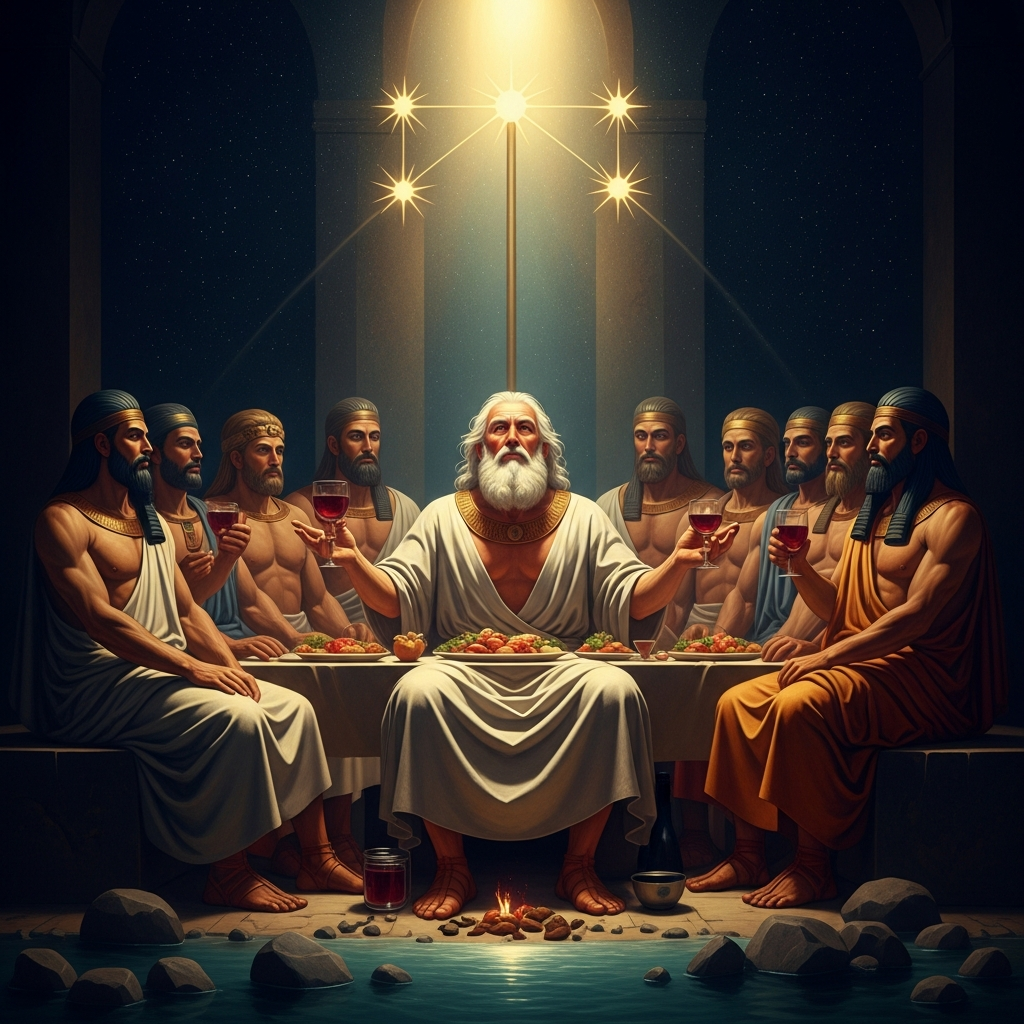
Not a source that any map has ever located — the confluence of the two rivers, the place where the fresh waters of the deep divide and flow outward toward the world. His tent is pitched there. His throne is there. His council gathers there, the seventy sons and daughters he fathered across the long span of divine time, each one a principle of the world, each one born from the great mother Asherah and carrying something of the headwaters in their nature.
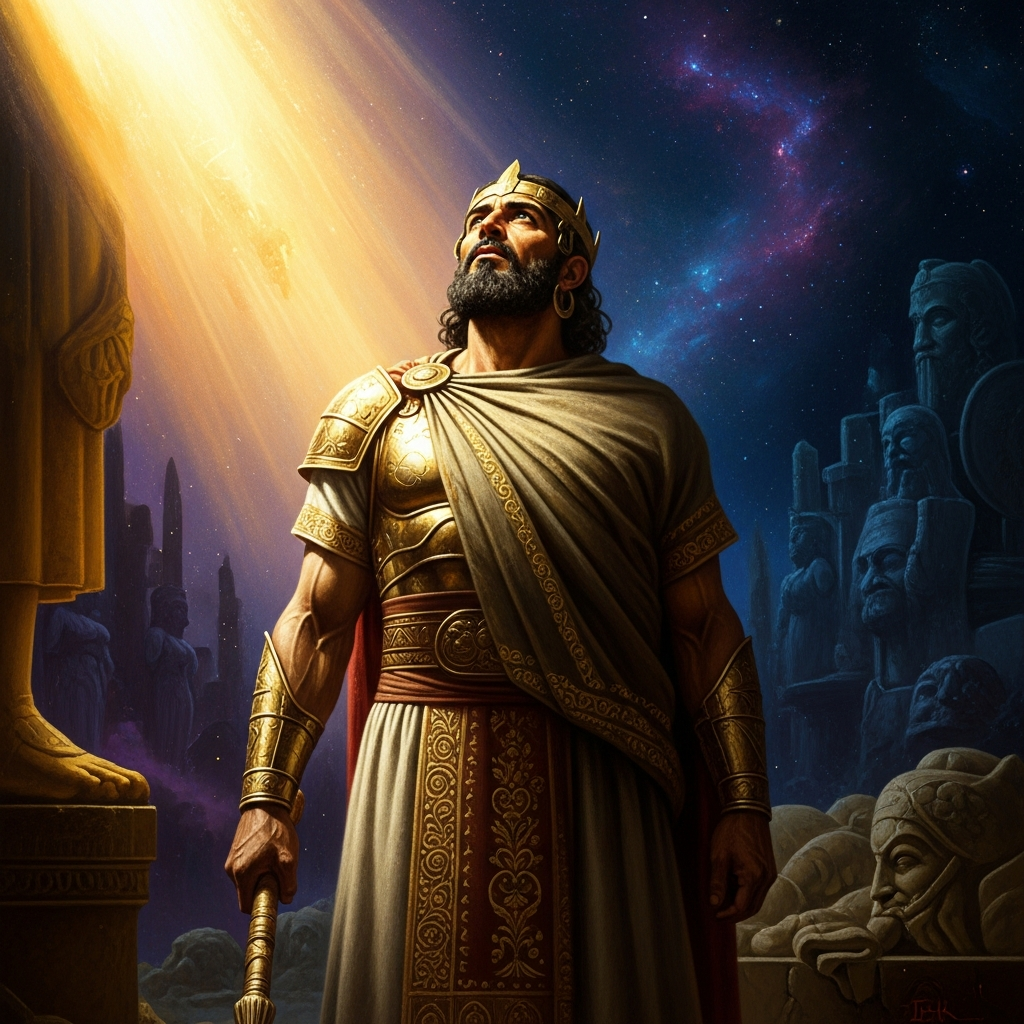
He is old. In the iconography of Ugarit, El is a bearded figure, seated, wearing the horned crown of divine authority, but seated — always seated, rarely in motion, the god whose power is expressed through decree rather than combat. The tablets call him the Bull El, the Merciful, the Compassionate, Father of Years. He has the patience of something that was here before the world knew what it was, and he will be here after the current arrangement is settled. He is not urgent. He drinks his wine.
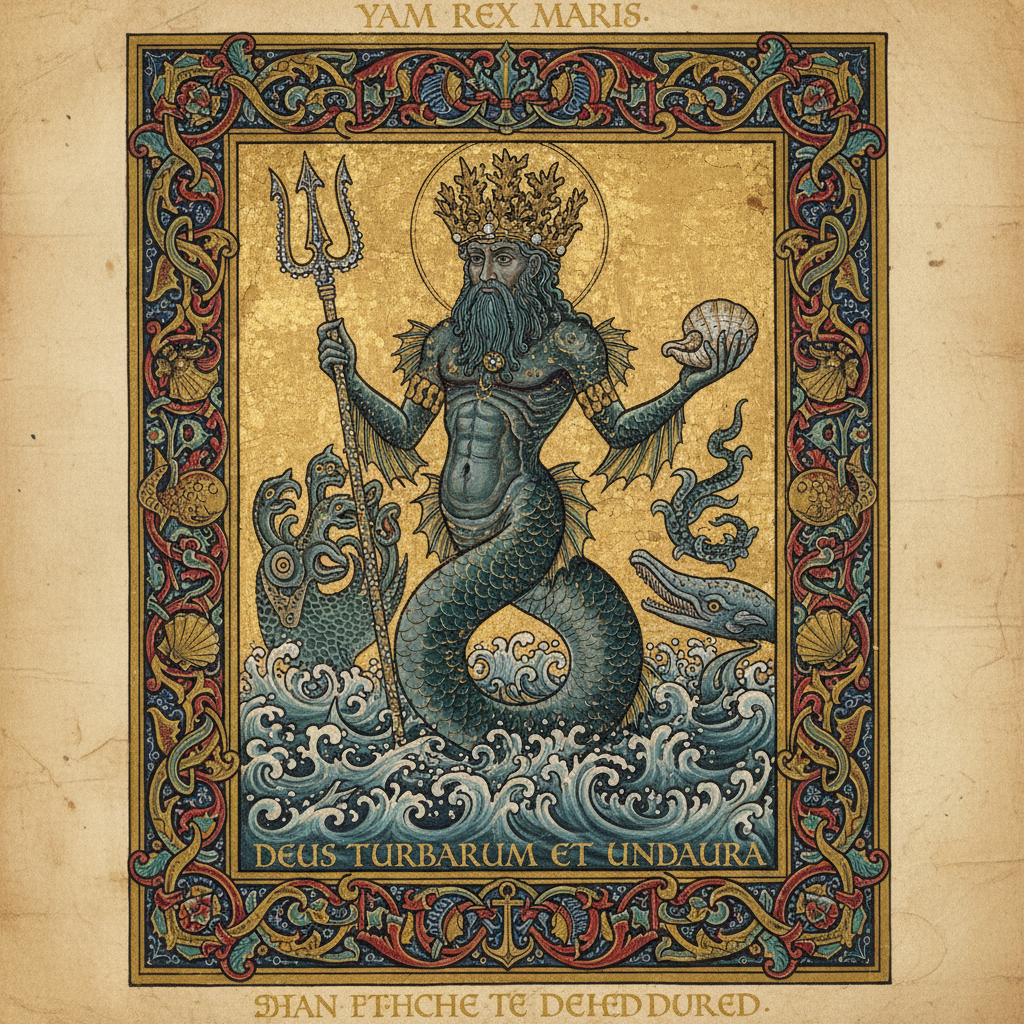
This is the first fact of Canaanite theology: the highest god is not the active one. El is the source of authority, the final ratifier, the one whose word makes a divine decision real. But the active gods — Baal with his storm, Anat with her sword, Yam with his floods — are the ones who do the work of the world. El watches. El drinks. El decides, when asked, with the deliberateness of an old man who has seen every argument made before.
Asherah moves.
The Lady of the Sea is the counterbalance to El’s stillness. Where El sits at the source, Asherah is in motion — through the divine court, through the negotiations and intercessions that are the real work of running a pantheon. She is the mother of seventy gods. She is the one to whom Baal must come when he needs something El controls.
Baal needs a palace.
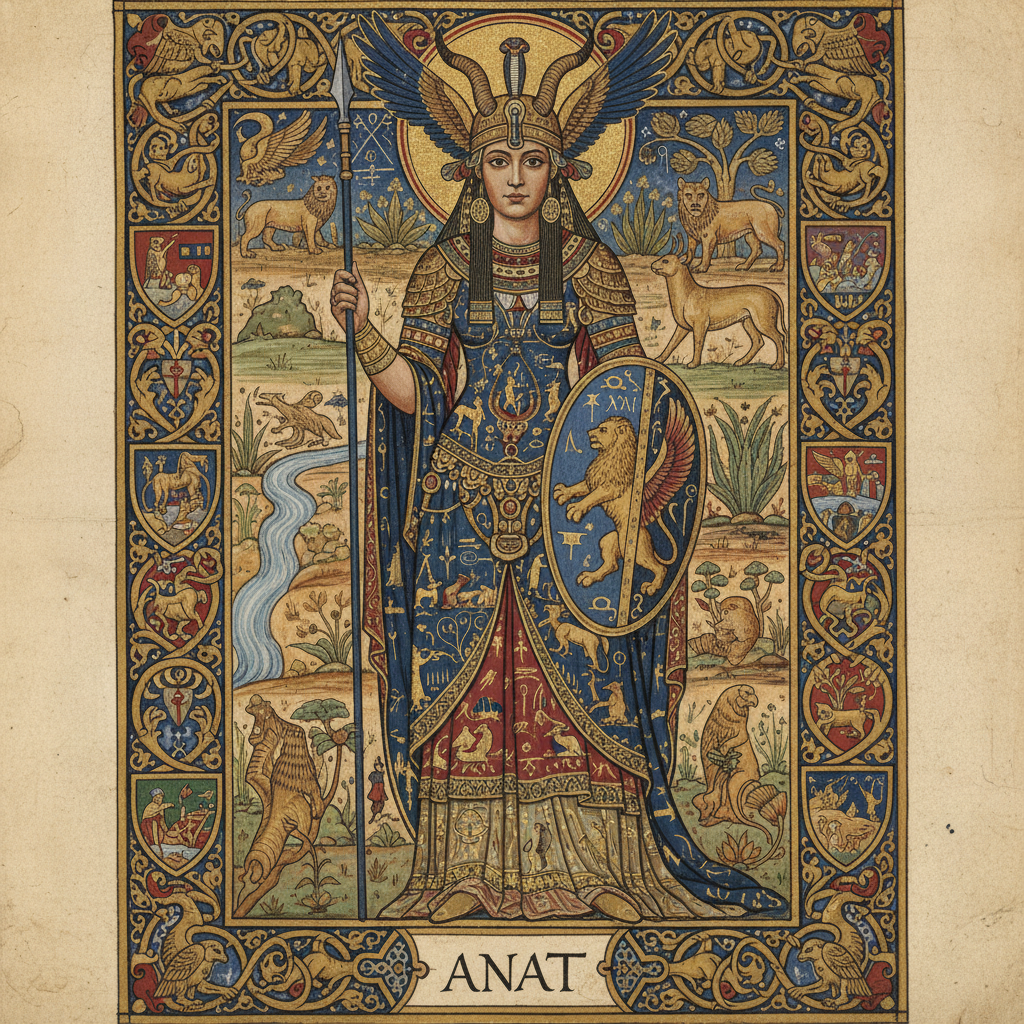
He has defeated Yam. He has been declared king of the gods. He has no house. Every great god has a house — Mot has his underworld city, Yam had his watery domain, El has his tent at the confluence of the rivers — and Baal, the newly crowned storm-god, sits on his mountain without a palace to sit in. He sends his sister Anat to plead his case. Anat goes to Asherah.
This is the structure the tablets reveal: to get to El, you go through Asherah. She is the intercessor. She is the one who knows how to approach the patriarch, when to approach him, what to say, how to frame the request so that the Bull El hears it as something he already wanted to grant. She is not powerful because she commands armies or controls the weather. She is powerful because she has the ear of the one who decides.
She approaches El’s tent with care.
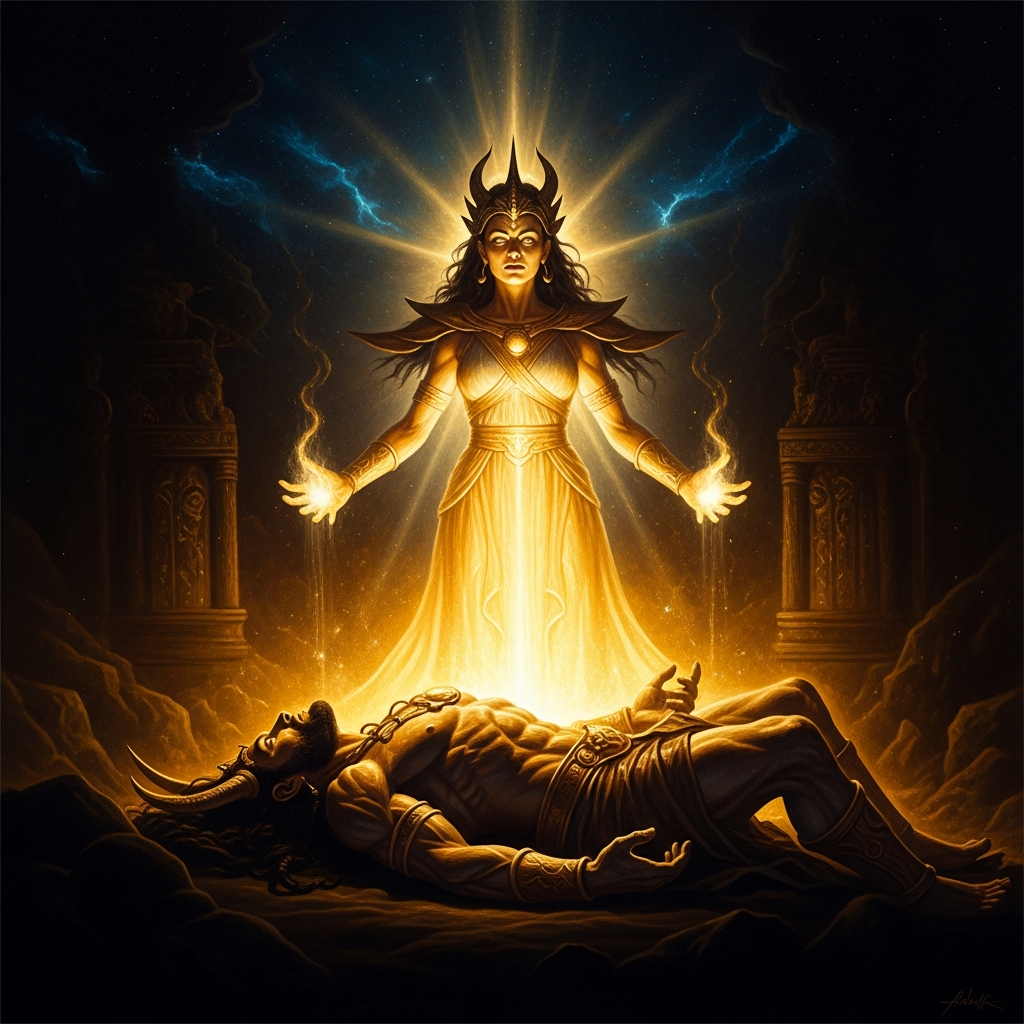
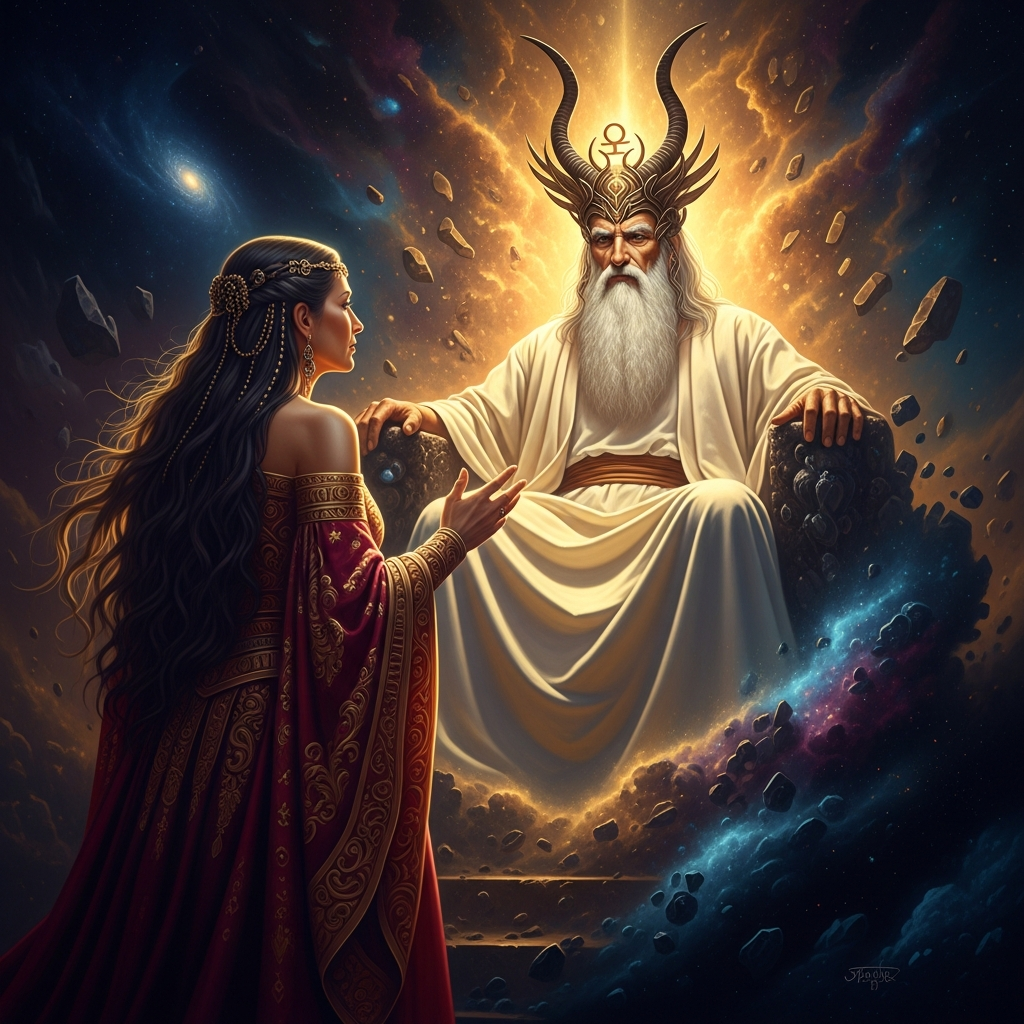
The tablets record the protocol in full — Asherah washes her hands, adorns herself, takes her spindle and her beads, puts herself in the full posture of a goddess approaching a king. She arrives at El’s tent at the source of the rivers and she bows. She does not command. She does not argue precedent. She is the great mother, and she knows that even the great mother must observe the forms.
El sees her and his face changes. The tablets record it with a warmth that is unusual in divine literature: he is delighted. He calls her the Lady Asherah of the Sea. He asks her what she needs, what she has come for. Is she thirsty? Is she hungry? Can he give her silver? Gold? Whatever she wants, she has it.
She asks for Baal’s palace.
El grants it.
This is the transaction. Baal’s palace — the cedar and silver throne room on Zaphon that the craftsman Kothar will build, the house from which the lightning speaks and the thunder answers, the seat of the rain-god’s authority over the world — is granted not because Baal won a combat with Yam, though he did. Not because the divine assembly voted, though they may have. It is granted because Asherah went to El and asked for it, and El, who loves Asherah, said yes.
The Asherah of the household is smaller.
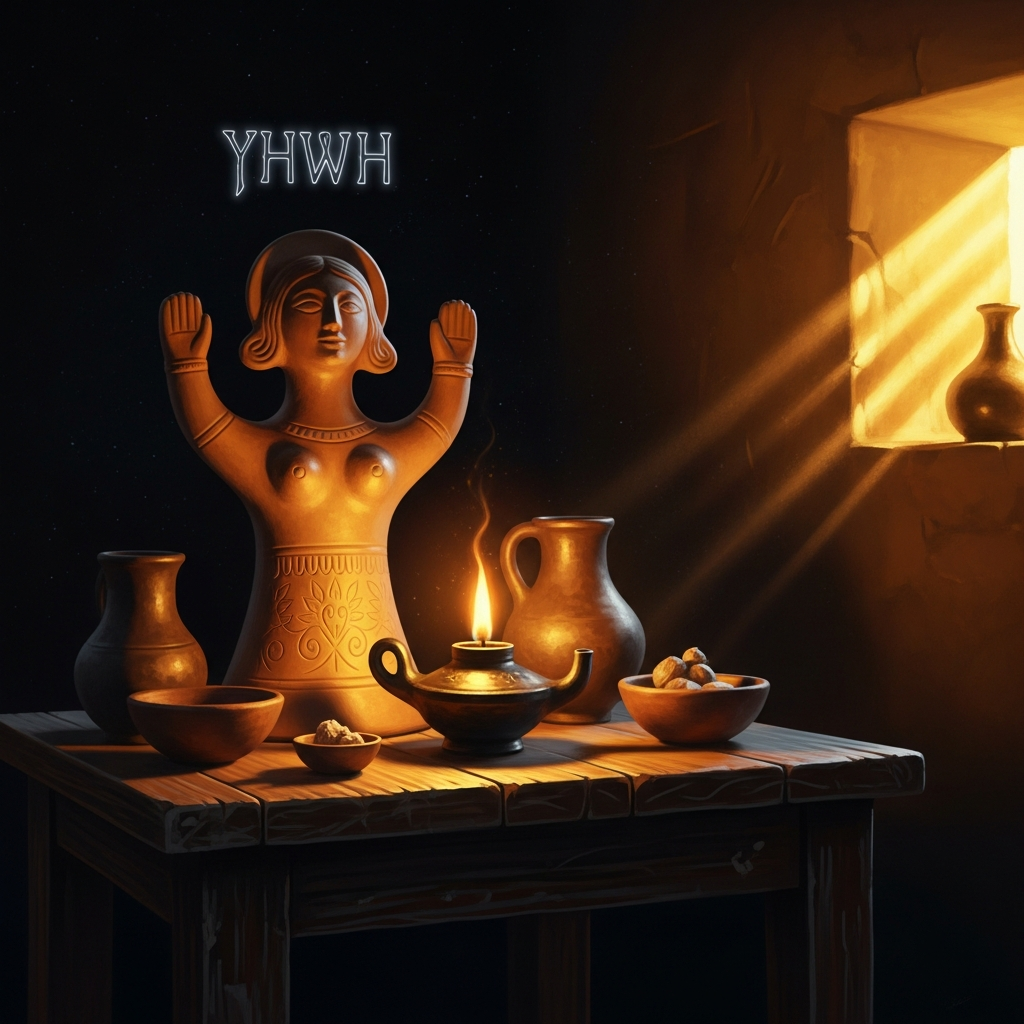
The one the archaeologists have found — in houses in Judah, in shrines across ancient Israel, in the stratigraphy of every period from the Iron Age to the Babylonian exile — is a clay figurine, pillar-based, with the full breasts and raised hands of a goddess offering blessing. She is not the cosmic intercessor of the Baal Cycle. She is the household goddess, the protector of women in childbirth, the one invoked when the lamp is lit and the bread is broken and the name of YHWH is also spoken.
She is both. The great Lady of the Sea and the clay figure in the kitchen are the same theological force at different scales: the divine feminine as the necessary intercessor, the one through whom the blessings of the highest god flow down to the world.
The Hebrew prophets understood this. They hated it with the specific hatred of people who understand exactly what they are fighting. The Asherah poles — trees or wooden pillars planted at the high places, beside the altars, at the entrances to cities — were not confused polytheism. They were a theology: the high god and his consort, the source of authority and the channel of intercession, the Bull and the Lady. The Israelites who planted those poles were not worshipping a foreign god. They were worshipping the same divine couple they had always worshipped, the same pair they had brought out of Canaan’s religious landscape, translated now into a context where El’s name had become YHWH’s and Asherah’s had not changed at all.
The inscriptions at Kuntillet Ajrud were found in 1975, in the Sinai desert, at an 8th-century BCE way station.
They are on storage jars and a plaster wall. One inscription reads: I bless you by YHWH of Samaria and by his Asherah. Another reads: I bless you by YHWH of Teman and by his Asherah. The possessive is grammatically impossible in Hebrew — Asherah, as a proper name, cannot take a suffix. But the author wrote it anyway, because they were not performing academic Hebrew. They were invoking the divine couple the way people had always invoked the divine couple, with the warm imprecision of a blessing that comes from the heart.
YHWH and his Asherah. The storm-god and the Lady of the Sea. The sky-father and the great mother. The inscription is from the same century as Isaiah and Amos and Hosea, the same century the prophets were insisting that YHWH alone was God and there were no others. The inscription does not know this. The inscription is from a household, a way station, a place where the theological debates of Jerusalem had not entirely arrived.
El drinks his wine at the source of the rivers.
He has always drunk his wine at the source of the rivers. The Psalms remember him there — Psalm 82 places El in the divine assembly, surrounded by the gods, pronouncing judgment on them, the scene unmistakably the council chamber of the Baal Cycle. Psalm 29 calls YHWH the god of thunder and storm in language borrowed directly from the Baal hymns — the voice over the waters, the voice breaking the cedars, the voice shaking the wilderness. The Hebrew scribes who wrote these psalms were working with material that came from Ugarit, from the same tablets that describe El at the headwaters and Asherah carrying her spindle toward his tent.
They did not erase her entirely. She is in the negative space. She is the tree. She is the woman at the well. She is the wisdom who built her house on seven pillars in Proverbs 9, who calls from the heights of the city, who is the way and the life and the gate of the divine household. She is the Shekinah, the divine feminine presence that rabbinic theology preserved as the indwelling of God in the world, unnamed but necessary, the one through whom the blessing descends.
The Asherah question is the question underneath a hundred other questions in the history of ancient Israel. Why do the prophets keep arguing about the high places? Because the high places keep reopening. Why do the Deuteronomic reformers keep burning the Asherah poles? Because people keep planting them. Why does the Jerusalem Temple itself, according to 2 Kings, contain an Asherah image during the reign of Manasseh — the very Temple of YHWH — for a full fifty-seven years?
Because the people who worshipped there believed what the Canaanite tablets record: that the highest god has a consort, that the consort is the intercessor, that you approach the divine father through the divine mother, and that the mother’s presence beside the altar is not a theological error. It is a theological necessity.
El sits at the source of the rivers, wine-flushed and patient, and Asherah moves through the courts of the gods, and between them the world gets what it needs. The prophets spent five centuries trying to change this arrangement. The clay figurines were still being made in Israelite homes when Nebuchadnezzar burned Jerusalem in 586 BCE.
They have never entirely stopped.
Scenes
El at the confluence of the two rivers, white-bearded and wine-flushed, the seventy gods arrayed around him like stars around a pole — the patriarch of the cosmos in the posture of a grandfather at a long feast
 Generating art…
 Asherah approaches El's tent: she has washed her hands, adorned herself, taken the full measure of her power as Lady of the Sea — and she opens her mouth to ask for Baal's palace
 Generating art…
 An Israelite household shrine from the 8th century BCE: a clay Asherah figurine beside the oil lamp, her hands raised, her body the shape of blessing — worshipped in the same house where YHWH's name is invoked
 Generating art…
 Echoes Across Traditions
Entities


Sources
- *Baal Cycle* (KTU 1.3–1.4, cuneiform tablets, Ugarit, ~1350 BCE)
- Mark S. Smith, *The Early History of God: Yahweh and the Other Deities in Ancient Israel* (Eerdmans, 2002)
- John Day, *Yahweh and the Gods and Goddesses of Canaan* (Sheffield Academic Press, 2000)
- William G. Dever, *Did God Have a Wife? Archaeology and Folk Religion in Ancient Israel* (Eerdmans, 2005)
- Kuntillet Ajrud inscriptions (8th century BCE), Israel Antiquities Authority